Key takeaways
- Peec AI is a monitoring-only platform. It tells you where you appear in AI search results but won't help you fix gaps or create content.
- Pricing starts at $100/month, which is manageable for some small businesses but steep if you're not sure AI visibility is worth tracking yet.
- It's genuinely useful if you already have someone on your team who can act on the data -- a marketer, SEO, or agency partner.
- For teams with no SEO budget and no one to interpret dashboards, the data will sit unused.
- There are cheaper entry points (Otterly.AI at $29/month) and more capable platforms (like Promptwatch) depending on what you actually need.
Small businesses are in a weird spot with AI search right now. You've probably noticed that fewer people are clicking through to websites after a Google search. Some of your customers are just asking ChatGPT or Perplexity for recommendations instead. And if your brand isn't showing up in those answers, you're invisible to a growing slice of your market.
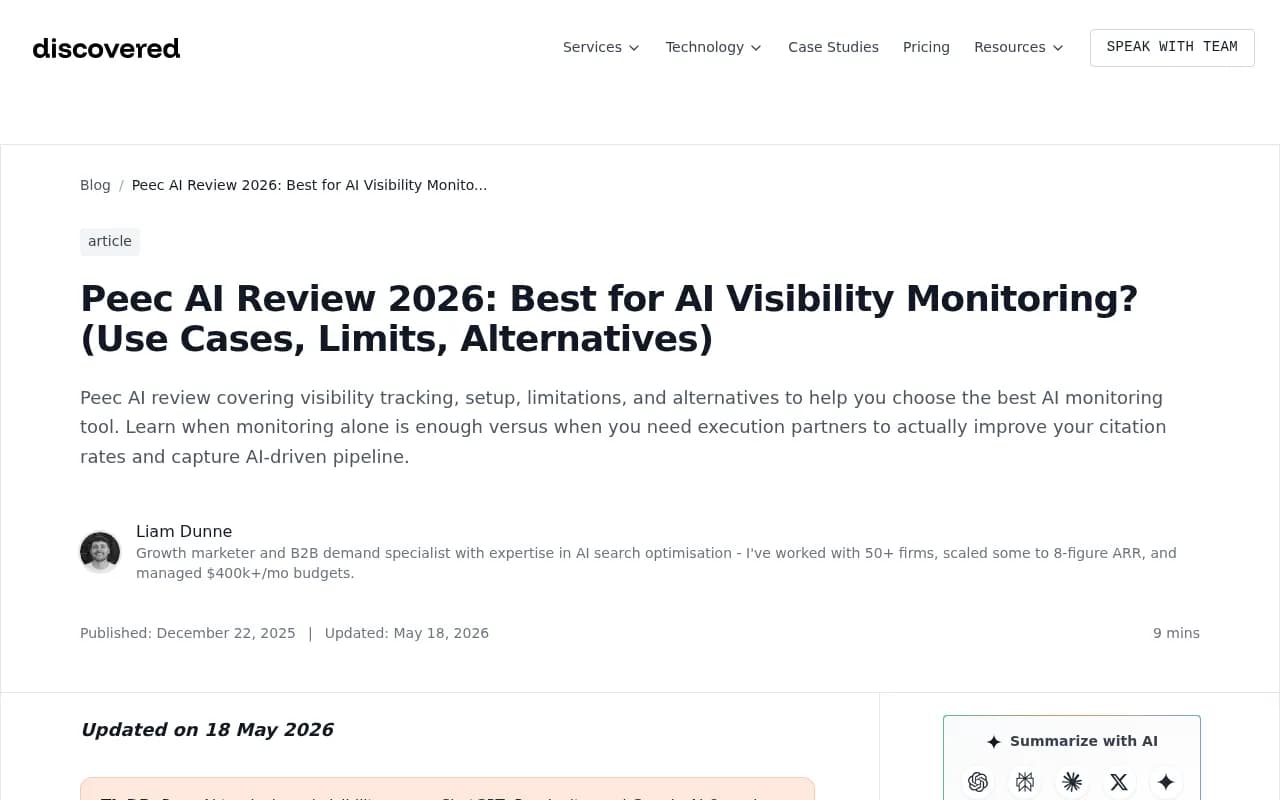
Peec AI is one of the tools built specifically to track this problem. It raised $29M, hit $4M+ ARR in under a year, and has become one of the more talked-about platforms in the AI visibility space. But "talked about" and "right for your business" are different things.
This guide is specifically for small business owners and lean marketing teams who don't have a dedicated SEO budget. Not agencies. Not Fortune 500 teams. You.

What Peec AI actually does
Peec AI tracks how often your brand appears when AI systems answer questions relevant to your category. It uses UI scraping to simulate real user interactions -- meaning it actually queries ChatGPT, Perplexity, Google AI Overviews, and others the way a human would, rather than just hitting the API.
The core output is share of voice and citation rate. You set up a list of prompts (questions your customers might ask), and Peec AI runs those prompts across AI engines and reports back: did your brand appear? Did a competitor? What source was cited?
That's genuinely useful information. Knowing that ChatGPT recommends three competitors but never mentions you is the kind of insight that should change your content strategy.
What Peec AI does not do:
- Write or suggest content to fix the gaps it finds
- Analyze why you're not being cited
- Give you a prioritized action plan
- Track AI crawler activity on your website
- Show you traffic or revenue from AI referrals
It's a dashboard. A good one, but a dashboard.
The pricing reality for small businesses
Peec AI's Starter plan is positioned at around $100/month. That's the entry point for teams that want to begin tracking AI search without a major commitment.
For context, here's how that stacks up against the broader market:
| Tool | Starting price | Monitoring | Content generation | Crawler logs | Best for |
|---|---|---|---|---|---|
| Otterly.AI | $29/mo | Yes | No | No | Entry-level monitoring |
| Peec AI | ~$100/mo | Yes | No | No | Mid-market analytics |
| Promptwatch | $99/mo | Yes | Yes | Yes (Pro+) | Teams that want to act on data |
| Profound | Enterprise | Yes | Limited | No | Fortune 500 |
| Rankscale | Budget tier | Yes | No | No | Budget-conscious teams |
$100/month is not outrageous for a B2B SaaS tool. But for a small business owner who's also managing ads, email, and social, it's a meaningful line item -- especially if the data just sits in a dashboard nobody looks at.
The honest question isn't "can I afford $100/month?" It's "do I have someone who will actually use this?"
When Peec AI makes sense for a small business
There are real scenarios where Peec AI is a good fit, even for lean teams.
You're in a competitive B2B category. If you sell software, professional services, or anything where buyers research on ChatGPT before reaching out, knowing your AI share of voice matters. A $100/month tool that tells you "your three main competitors are being cited and you're not" is worth the cost if it prompts you to create the content that fixes that.
You have a marketer who can act on the data. Even a part-time content person or an agency relationship changes the calculus. The monitoring data is only valuable if someone can do something with it. If you have that, Peec AI gives them a clear brief: here are the prompts where you're invisible, go create content that answers them.
You're already doing some SEO. If you're publishing content regularly and tracking traditional rankings, adding AI visibility monitoring is a natural extension. Peec AI slots in without requiring a complete workflow overhaul.
You operate in multiple languages or regions. This is one of Peec AI's genuine strengths. Its multi-language monitoring is solid, and for European businesses in particular, it's one of the better-positioned tools for EU compliance and international tracking.
When Peec AI is probably not worth it
You have no one to act on the data. This is the most common failure mode. A small business owner who checks the dashboard once a month, sees that competitors are being cited more, and has no time or resources to create content -- that's $1,200/year for a feeling of mild anxiety. The data doesn't fix itself.
You haven't validated that AI search drives traffic for you yet. If you don't know whether ChatGPT or Perplexity is actually sending customers your way, spending $100/month to monitor something you haven't confirmed matters is backwards. Start by checking your analytics for referral traffic from AI sources. If you're seeing meaningful volume, then monitoring makes sense.
You're looking for a tool that helps you rank, not just measure. Peec AI is explicit about what it does: it monitors. It doesn't optimize. If you want a tool that finds gaps and helps you create content to fill them, you need something different.
Your budget is genuinely tight. If $100/month is a stretch, there are cheaper options. Otterly.AI starts at $29/month and gives you basic monitoring across the main AI engines. It's less sophisticated, but for a small business just getting started, it's a lower-risk entry point.

The monitoring-only problem
This is worth spending a moment on, because it applies to Peec AI and most of its direct competitors.
Monitoring tools tell you where you stand. They're good at that. But the AI visibility problem isn't a measurement problem -- it's a content problem. AI models cite you when you have authoritative, well-structured content that answers the questions people are asking. If you don't have that content, no amount of monitoring changes your citation rate.
The gap between "knowing you're invisible" and "becoming visible" requires:
- Understanding which specific prompts and topics you're missing
- Creating content that directly answers those questions
- Publishing it in a format AI models can parse and cite
- Tracking whether the new content actually gets picked up
Peec AI handles the first part. The rest is on you.
For small businesses without a dedicated SEO team, that's a real limitation. You'd need to layer in a content tool, a brief-writing process, and some way to track whether your new content is actually being crawled and cited by AI engines.
Some platforms are starting to close this loop. Promptwatch is one of the few that combines monitoring with content gap analysis, AI content generation, and crawler log tracking -- so you can see not just where you're invisible, but get help fixing it and confirm when AI engines start picking up your new pages.

What the broader market looks like right now
The AI visibility tools space raised over $300M between mid-2025 and early 2026. Profound leads at $155M raised with a $1B valuation and a Fortune 500 client base. Peec AI is the fastest-growing challenger in the mid-market. And a wave of smaller tools has emerged for teams with tighter budgets.
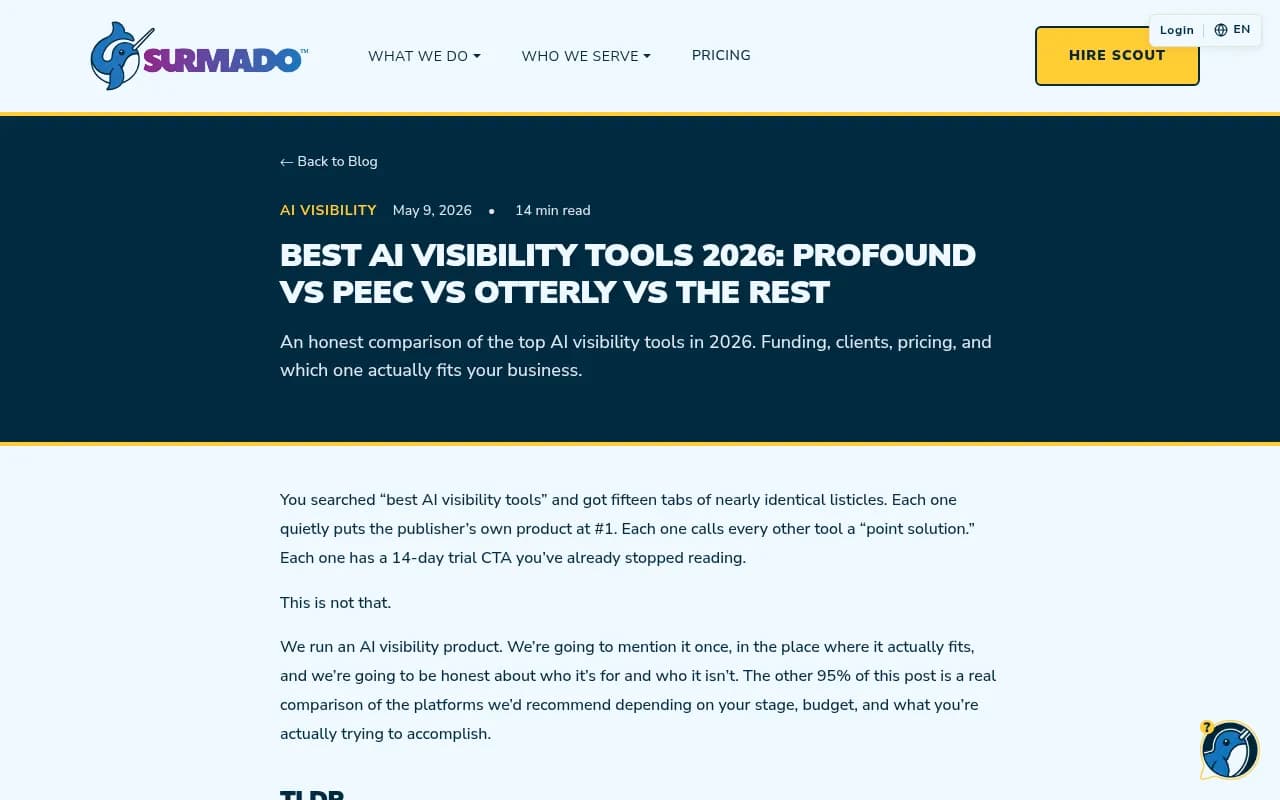
For small businesses, the relevant tier looks like this:
Entry-level monitoring ($29-$50/month): Otterly.AI and similar tools. Basic citation tracking, limited engine coverage, no content features. Good for getting a baseline without a big commitment.
Mid-market monitoring ($100-$150/month): Peec AI sits here. More sophisticated analytics, better multi-language support, cleaner UI. Still monitoring-only.
Monitoring + optimization ($99-$249/month): This is where Promptwatch operates. The price overlaps with Peec AI's Starter tier, but you get content gap analysis, AI-generated content briefs, and crawler logs on higher plans. More useful if you want to actually move the needle.
Enterprise ($500+/month): Profound, Bluefish, AthenaHQ. Not relevant for most small businesses.

Practical alternatives worth considering
If Peec AI doesn't feel like the right fit, here are a few tools worth looking at depending on your situation.
For pure monitoring on a tight budget: Otterly.AI at $29/month is the most accessible entry point. Less data depth than Peec AI, but enough to know whether you're showing up.
For monitoring plus some content help: Promptwatch's Essential plan at $99/month includes 50 prompts, 5 AI-generated articles per month, and basic tracking across 10 AI models. That's a more complete loop for roughly the same price as Peec AI's Starter.
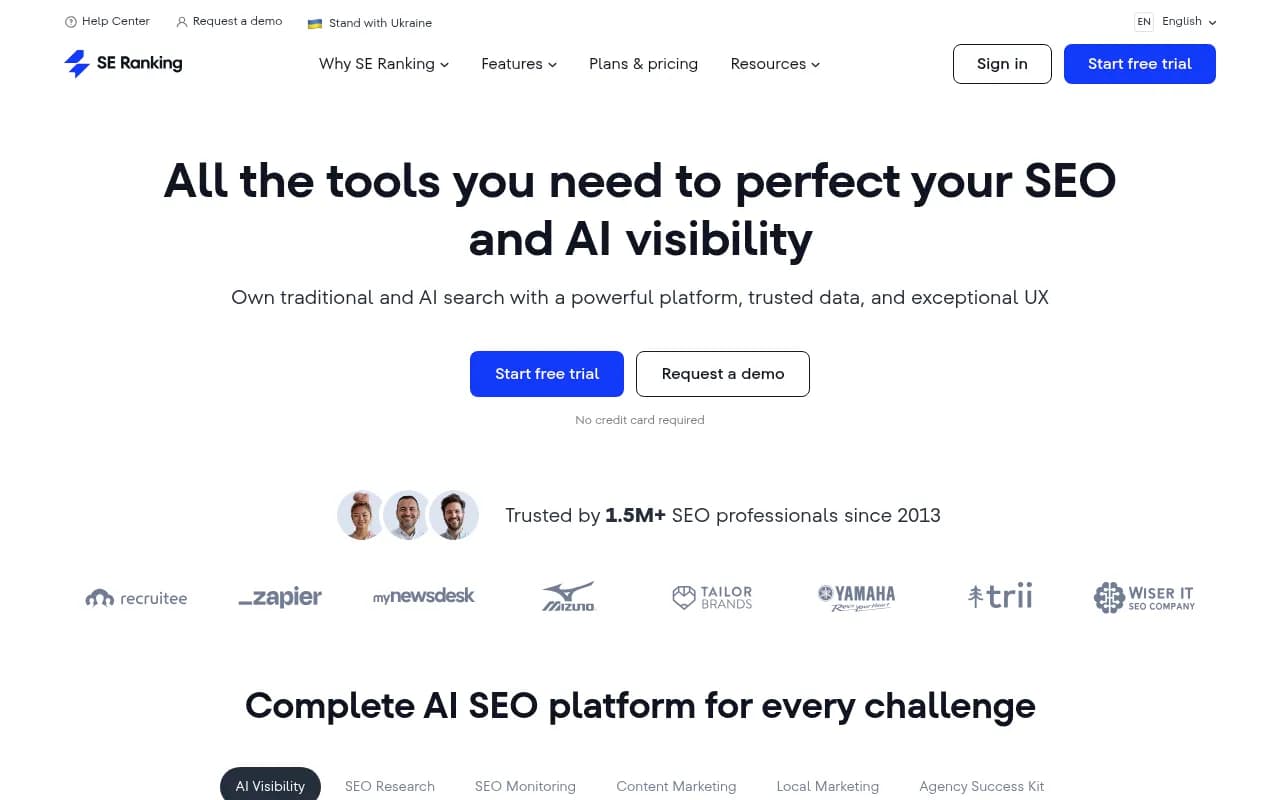
For teams already using SE Ranking: SE Ranking has added AI visibility features to its existing SEO platform. If you're already paying for it, the bundled AI monitoring might be enough without adding another tool.
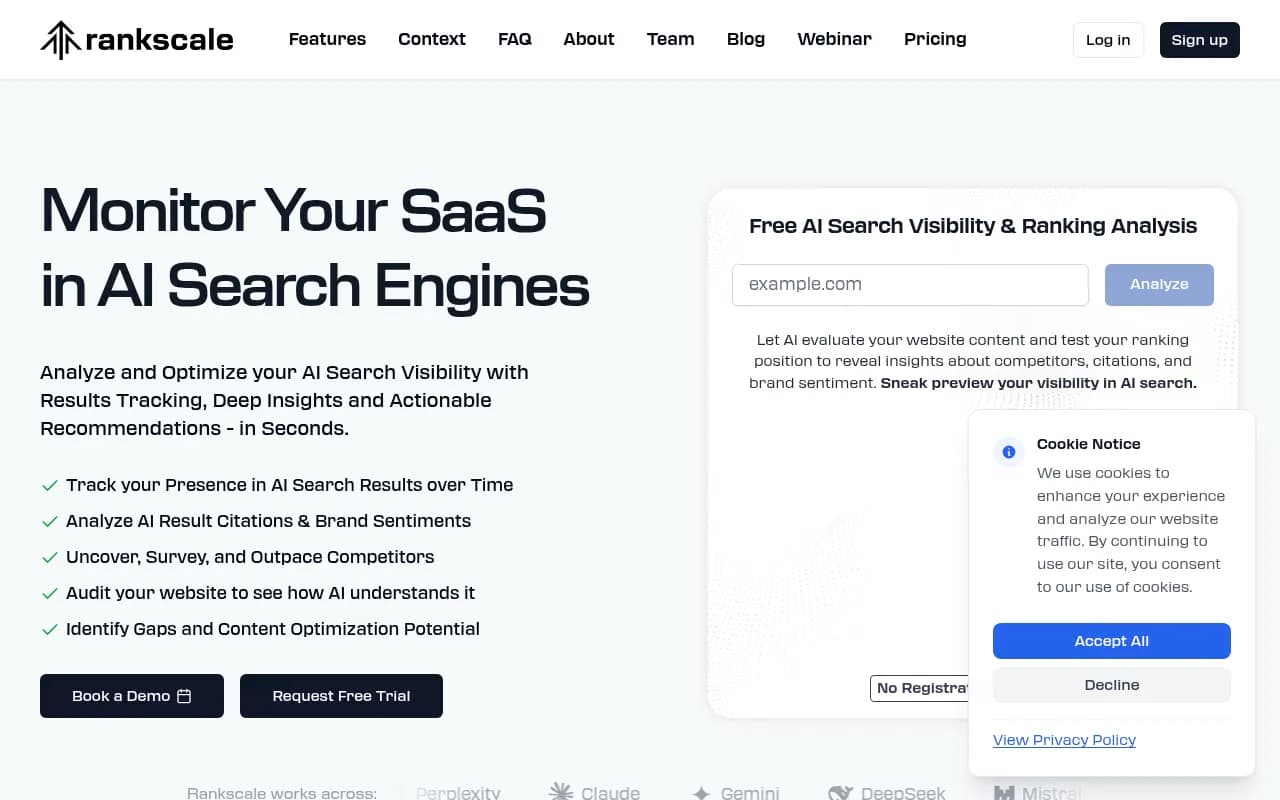
For budget-conscious teams who want broad engine coverage: Rankscale offers competitive pricing with wide AI engine coverage. Less polished than Peec AI but worth evaluating if cost is the primary constraint.
A realistic framework for small businesses
Before you sign up for any AI visibility tool, answer these three questions honestly:
-
Do I have evidence that AI search is already sending traffic or leads to my business? (Check Google Analytics for referrals from ChatGPT, Perplexity, etc.)
-
Do I have someone -- even part-time -- who can create content based on what the tool finds?
-
Is $100/month (or whatever the tool costs) a reasonable investment given my current marketing budget?
If you answered yes to all three, Peec AI is a reasonable choice. It's well-built, the data is reliable, and the multi-language support is genuinely good for international businesses.
If you answered no to question 2 or 3, start smaller. Otterly.AI at $29/month lets you validate whether AI visibility matters for your business before committing to a more expensive platform. Or consider a tool that helps you act on the data, not just observe it.
If you answered no to question 1, don't buy any monitoring tool yet. Spend that $100/month on creating one or two pieces of content that directly answer the questions your customers ask AI engines. Then check your analytics in 60 days. If you start seeing AI referral traffic, that's your signal to invest in monitoring.
The bottom line
Peec AI is a solid monitoring tool. The data quality is good, the interface is clean, and for a B2B marketing team that already knows how to act on visibility data, it's a reasonable investment.
For small businesses without a dedicated SEO budget, the honest answer is more conditional. The tool works. The question is whether your team can do anything with what it tells you. Monitoring your AI invisibility without a plan to fix it is an expensive way to feel bad about your content strategy.
If you're ready to act on the data, Peec AI is worth considering. If you want a tool that helps you close the loop from gap to content to citation, look at platforms that go beyond monitoring.