Key takeaways
- Qwairy focuses on GEO strategy and prompt tracking, but lacks content generation, crawler logs, and traffic attribution that most teams need to act on their data.
- The best alternatives in 2026 close the full loop: find visibility gaps, generate content to fix them, and track results back to revenue.
- Promptwatch is the only platform rated "Leader" across all evaluation categories in a 2026 comparison of 12 GEO tools, and the only one that combines monitoring, content generation, and AI crawler analytics in one place.
- Budget-friendly options like Otterly.AI and Peec AI work well for teams that just need basic mention tracking across a handful of LLMs.
- Enterprise teams should look at platforms with real prompt volume data, query fan-outs, and multi-region support -- not just dashboards that show share-of-voice scores.
Qwairy has carved out a niche as a GEO strategy tool. It helps you think about which prompts to target, how your brand is positioned in AI responses, and where competitors are showing up. For teams just getting started with AI search visibility, that framing is genuinely useful.
But here's the problem most Qwairy users run into: the platform tells you what to do without giving you the tools to actually do it. You get a strategy dashboard. You don't get content generation, AI crawler logs, or any way to connect your visibility scores to actual website traffic and revenue. At some point, "you should create content about X" stops being helpful if you have to go somewhere else to create it, somewhere else to track whether AI crawlers found it, and somewhere else to see if it drove any results.
That gap is why so many teams are looking for alternatives in 2026. The AI visibility category has matured fast. There are now platforms that handle the full cycle, and there are platforms that are still just dashboards. This guide covers both, so you can pick what actually fits your situation.
What to look for in a Qwairy alternative
Before jumping into the list, it's worth being specific about what "doing more" actually means. A few dimensions matter more than others:
Model coverage. Qwairy tracks a limited set of AI engines. The best alternatives cover 10+ models including ChatGPT, Claude, Perplexity, Gemini, Google AI Overviews, Grok, DeepSeek, Copilot, Meta AI, and Mistral. More coverage means fewer blind spots.
Prompt intelligence. Volume estimates and difficulty scores per prompt let you prioritize. Without them, you're guessing which prompts are worth winning.
Content generation. Monitoring-only tools show you gaps. Platforms with content agents help you fill them. This is the biggest functional difference between the top tier and everyone else.
Crawler logs. Knowing that ChatGPT or Perplexity crawled a specific page -- and when -- is data most tools don't surface at all. It's the difference between hoping your content gets picked up and actually knowing.
Traffic attribution. AI visibility scores are interesting. AI-driven revenue is what actually matters to stakeholders.
With that framework in mind, here's how the main alternatives stack up.
The best Qwairy alternatives in 2026
Promptwatch -- best overall for teams that need to act, not just monitor
Promptwatch is the most complete platform in this category right now. Where Qwairy gives you a strategy layer, Promptwatch gives you the full loop: gap analysis that shows exactly which prompts competitors rank for but you don't, content agents that generate articles and briefs grounded in real prompt data, and page-level tracking that shows which pages AI models are actually citing and how often.

The crawler log feature is particularly hard to find elsewhere. You can see in real time when ChatGPT, Claude, or Perplexity hits your site, which pages they read, any errors they encounter, and how long it takes for a crawled page to start generating citations. That kind of transparency is what separates optimization from guesswork.
A few specifics worth knowing: Promptwatch monitors 10 AI models, has processed over 4.5 billion citations and prompts, and tracks real user-facing responses rather than just API outputs (which can differ meaningfully from what users actually see). It also covers Reddit and YouTube as citation sources, which most competitors ignore entirely. Pricing starts at $99/month for a single site with 50 prompts.
For teams that have been frustrated by Qwairy's "here's the gap, good luck" approach, Promptwatch is the most direct upgrade.
Profound -- best for enterprise prompt research
Profound is a strong platform for larger teams that need deep prompt research capabilities and agency-friendly workflows. Its brand configuration and pitch environment features make it popular with agencies managing multiple clients.

The main trade-off versus Promptwatch: Profound is more expensive at the enterprise tier, doesn't track Reddit or YouTube as citation sources, and lacks ChatGPT Shopping tracking. It's a solid monitoring and research tool, but content generation isn't its strength.
Peec AI -- best for flexible model selection
Peec AI lets you choose which AI models to track, which is useful if you have a specific audience concentrated on certain platforms. It covers up to 10 models and supports multiple languages, making it a reasonable choice for international teams.

The limitation is that Peec AI is primarily a monitoring tool. It doesn't generate content or provide crawler logs. Think of it as a more flexible version of Qwairy's core tracking, not a replacement for the full workflow.
Otterly.AI -- best budget option
Otterly.AI starts at $29/month and is consistently recommended in SEO communities as the most accessible entry point into AI visibility tracking. It covers four base AI models and gives you brand mention rates, share of voice, and sentiment data.

If you're a small team or solo marketer who just needs to know whether ChatGPT is mentioning your brand and roughly how often, Otterly.AI is hard to beat on price. But it doesn't scale well -- no crawler logs, no content generation, no traffic attribution. It's a starting point, not a long-term solution for teams that want to grow their AI visibility.
SE Visible -- best for multi-brand, multi-country monitoring
SE Visible (part of SE Ranking) covers five AI models and is built for teams managing multiple brands across different countries. The interface is clean and the reporting is solid.
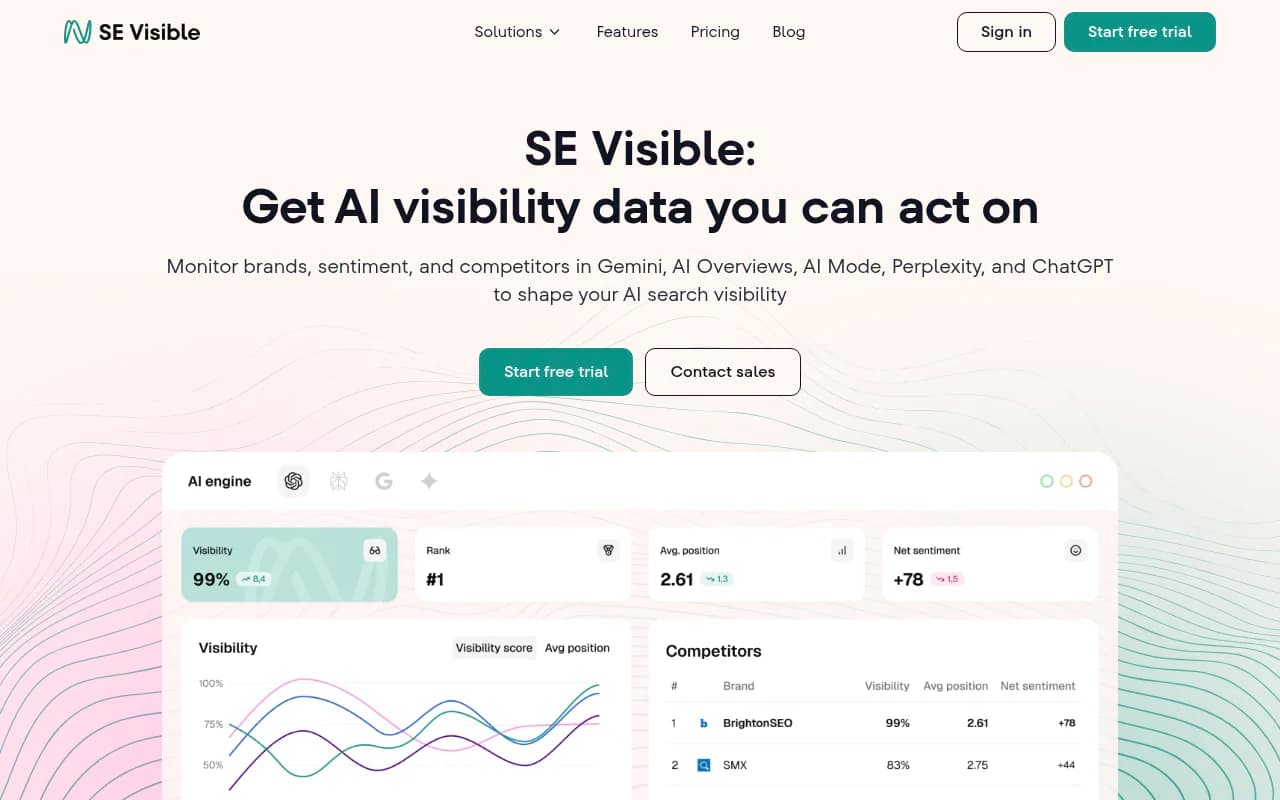
It's a monitoring-focused tool, but it integrates with SE Ranking's broader SEO suite, which is useful if you're already in that ecosystem. Not a content generation platform, but a reliable tracker.
AthenaHQ -- best for monitoring-focused teams that want clean data
AthenaHQ tracks 8+ AI search engines and presents visibility data in a well-organized dashboard. It's a step up from Qwairy in terms of model coverage and data quality.
The honest limitation: AthenaHQ is monitoring-focused and doesn't offer content optimization or generation capabilities. If you want to understand your current visibility clearly, it's a good tool. If you want to improve it, you'll need to combine it with something else.
Scrunch AI -- best for brands that want clean, focused AI search monitoring
Scrunch AI focuses on AI search visibility monitoring for modern brands. It's cleaner and more focused than some of the enterprise-heavy options, which makes it easier to get up and running quickly.
Like most monitoring-only tools, it doesn't close the loop into content creation or crawler analytics. But if Qwairy felt too strategy-heavy and you just want straightforward visibility data, Scrunch AI is worth evaluating.
Rankscale -- best for AI search ranking focus
Rankscale takes a ranking-first approach to AI search visibility, which will feel familiar to anyone coming from traditional SEO rank tracking.
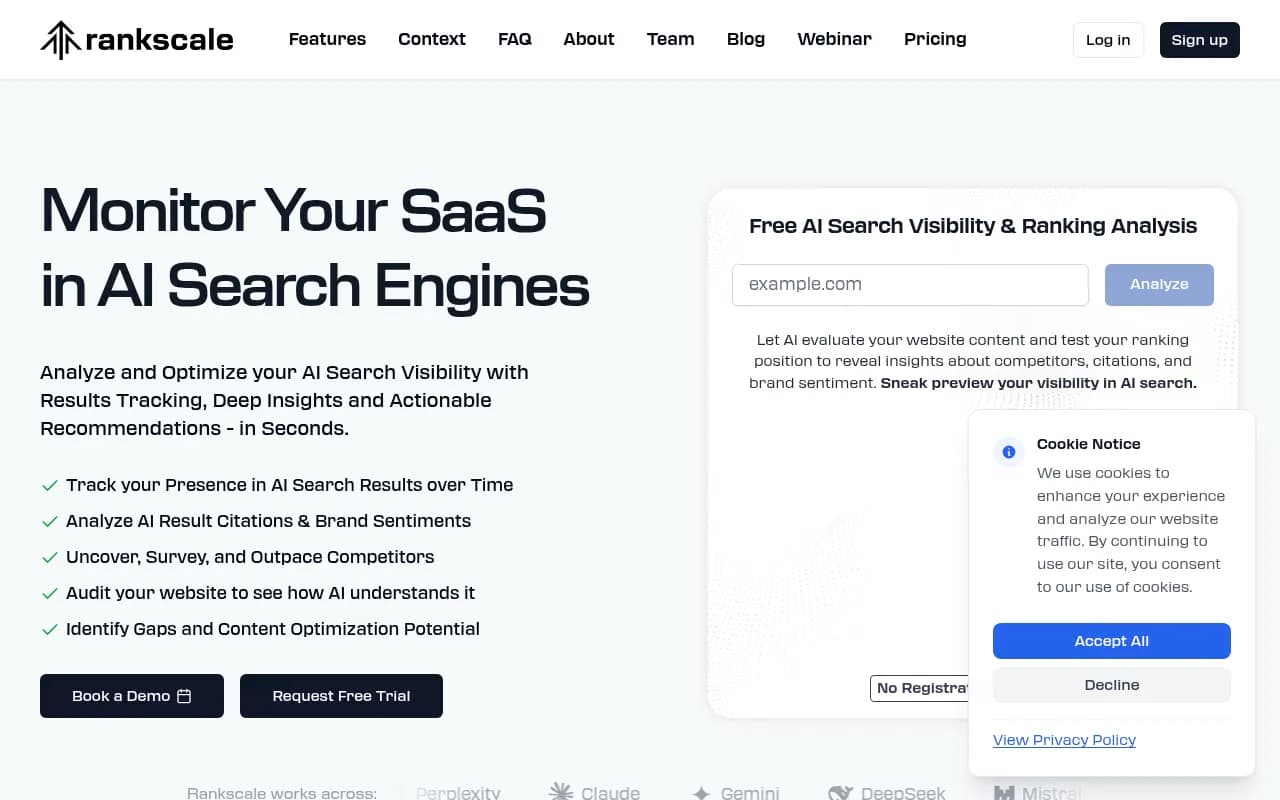
It's a solid tool for teams that think in terms of "where do we rank for this prompt" rather than "what's our share of voice." The framing is different from Qwairy's strategy-dashboard approach, which some teams will find more actionable.
Nightwatch -- best for teams that want SEO and AI monitoring in one tool
Nightwatch is primarily an SEO rank tracker that has added AI search monitoring as an add-on ($99/month on top of base plans). It covers four AI models and integrates with its existing rank tracking and reporting features.
If you're already using Nightwatch for traditional SEO and want to add AI visibility without switching platforms, this is the path of least resistance. It's not a dedicated GEO platform, but the integration is convenient.
Side-by-side comparison
Here's how the main alternatives compare on the dimensions that matter most for teams moving beyond Qwairy:
| Platform | AI models | Content generation | Crawler logs | Traffic attribution | Reddit/YouTube tracking | Starting price |
|---|---|---|---|---|---|---|
| Promptwatch | 10 | Yes (Content Agents) | Yes | Yes | Yes | $99/mo |
| Profound | Up to 10 | No | No | No | No | $99/mo |
| Peec AI | Up to 10 | No | No | No | No | €85/mo |
| Otterly.AI | 4 (base) | No | No | No | No | $29/mo |
| SE Visible | 5 | No | No | No | No | $99/mo |
| AthenaHQ | 8+ | No | No | No | No | Custom |
| Scrunch AI | Varies | No | No | No | No | Custom |
| Nightwatch | 4 | No | No | No | No | $32/mo + $99 add-on |
| Qwairy | Limited | No | No | No | No | Custom |
The pattern is pretty clear. Most tools in this category are monitoring dashboards. Promptwatch is the outlier that actually helps you do something with the data.
How to choose the right alternative
The right tool depends on where you are in your AI visibility journey and what you actually need to do next.
If you're just starting out and need basic tracking: Otterly.AI at $29/month gives you enough to understand whether AI models are mentioning your brand. Don't overthink it at this stage.
If you need multi-language or multi-country coverage: Peec AI's flexible model selection and SE Visible's multi-brand support are both worth a look. Promptwatch also covers multi-region with customizable personas.
If you're an agency managing multiple clients: Profound has the best agency-specific workflow features. Promptwatch's Business and Agency tiers are also built for multi-site management.
If you want to actually improve your AI visibility, not just measure it: This is where most Qwairy users end up frustrated. The monitoring data is fine, but without content generation, crawler logs, and attribution, you're stuck. Promptwatch is the most complete solution here, and the only one that connects the full cycle from gap identification to content creation to citation tracking to revenue.
If you're already in the SE Ranking ecosystem: SE Visible is the obvious choice for adding AI monitoring without switching tools.
The real problem with strategy-only dashboards
Qwairy's core value proposition is helping you think strategically about GEO. That's not nothing. But in 2026, "think strategically" isn't enough for most marketing teams. They have stakeholders asking for results. They need to show that their AI visibility work is driving traffic and revenue, not just improving a score on a dashboard.
The platforms that are pulling ahead in this category are the ones that close the loop. You find the gap, you create the content, you watch the crawler pick it up, you see the citation appear, you connect it to traffic. That's a workflow, not just a dashboard.
Most Qwairy alternatives in this list are still monitoring-only tools that stop at step one. If that's all you need right now, they'll serve you fine. But if you're building a serious AI search program, you'll outgrow them quickly.
The tools worth betting on are the ones built around the full optimization cycle. Right now, that's a short list.