Key takeaways
- The most common reason Peec AI users switch is hitting a ceiling: the data is there, but there's no clear path to acting on it
- Pricing at scale is the second-biggest trigger, especially for agencies managing multiple client accounts
- Most migrants land in one of three categories: full-stack GEO platforms, traditional SEO tools with AI bolt-ons, or lightweight trackers at a lower price point
- The right destination depends on whether you need to understand your AI visibility, improve it, or both
- A handful of platforms have emerged as the most common landing spots, each with meaningfully different strengths
If you've been using Peec AI for a while, you probably know the feeling. The dashboards are clean, the multi-language tracking works, and you can see which AI models are mentioning your brand. But at some point, you start asking: "OK, now what?"
That question is what's driving most of the Peec AI migrations happening right now. It's not that the tool is broken. It's that the category has moved fast, and monitoring-only platforms are starting to feel like half a solution.
This guide breaks down the most common reasons people leave Peec AI, where they're going, and what to think about before you make the move.

Why people leave Peec AI
Before getting into the destinations, it's worth being honest about the triggers. Based on what's showing up in community discussions and comparison searches, a few patterns repeat.
The insights-to-action gap. Peec AI tells you where you're visible and where you're not. What it doesn't do is help you close those gaps. There's no content generation, no brief builder, no answer gap analysis that shows you exactly what to write. For teams that want to actually improve their AI visibility (not just measure it), this becomes a real limitation.
Pricing at scale. The per-prompt or per-brand pricing model works fine for a single brand with a small prompt set. Once you're running multiple clients or tracking hundreds of prompts across several markets, the cost adds up faster than the value does.
Missing integrations. Teams that want to pipe data into their own reporting stack, connect to GSC, or feed results into a content workflow often find Peec AI's integration options limited.
No crawler or traffic data. Peec AI shows you AI model outputs, but it doesn't show you whether AI crawlers are actually visiting your site, which pages they're reading, or whether your AI visibility is translating into actual traffic. That's a significant blind spot for anyone trying to connect GEO to revenue.
None of these are fatal flaws. They're just the natural edges of a monitoring-focused tool in a market that's increasingly demanding optimization.
The three main migration paths
Most Peec AI users end up in one of three places, depending on what they actually need.
Path 1: Moving to a full-stack GEO platform
This is the most common path for marketing teams and agencies that want to go beyond tracking. Full-stack platforms combine monitoring with content gap analysis, content generation, crawler logs, and traffic attribution. The tradeoff is usually higher cost and more complexity.
Promptwatch is the most frequently cited destination in this category. It monitors 10 AI models (ChatGPT, Perplexity, Claude, Gemini, Google AI Overviews, Grok, DeepSeek, Copilot, Meta AI, and Mistral), but the core difference is what happens after the monitoring. Answer Gap Analysis shows you exactly which prompts competitors are visible for that you're not. Content Agents then generate articles, listicles, and briefs grounded in that real prompt data. And page-level tracking shows whether the new content is actually getting cited.

For teams that have been frustrated by the "now what?" problem with Peec AI, this loop -- find gaps, create content, track results -- is the main reason they switch.
Profound is another option in this tier, with solid tracking across major AI models and some content optimization features. It tends to sit at a higher price point than Peec AI, so it's more common among enterprise teams than SMBs.

AthenaHQ covers 8+ AI search engines with good monitoring depth, though it's more tracking-focused than action-focused -- closer to Peec AI's model, just with broader coverage.

Path 2: Moving to a traditional SEO platform with AI features
Some Peec AI users don't actually need a dedicated GEO tool. They need their existing SEO platform to handle AI visibility as one feature among many. This path is common for SEO teams that were using Peec AI as a standalone add-on and want to consolidate.
Semrush has added AI visibility tracking through its platform, though it uses fixed prompts rather than custom ones, which limits how targeted the monitoring can be.
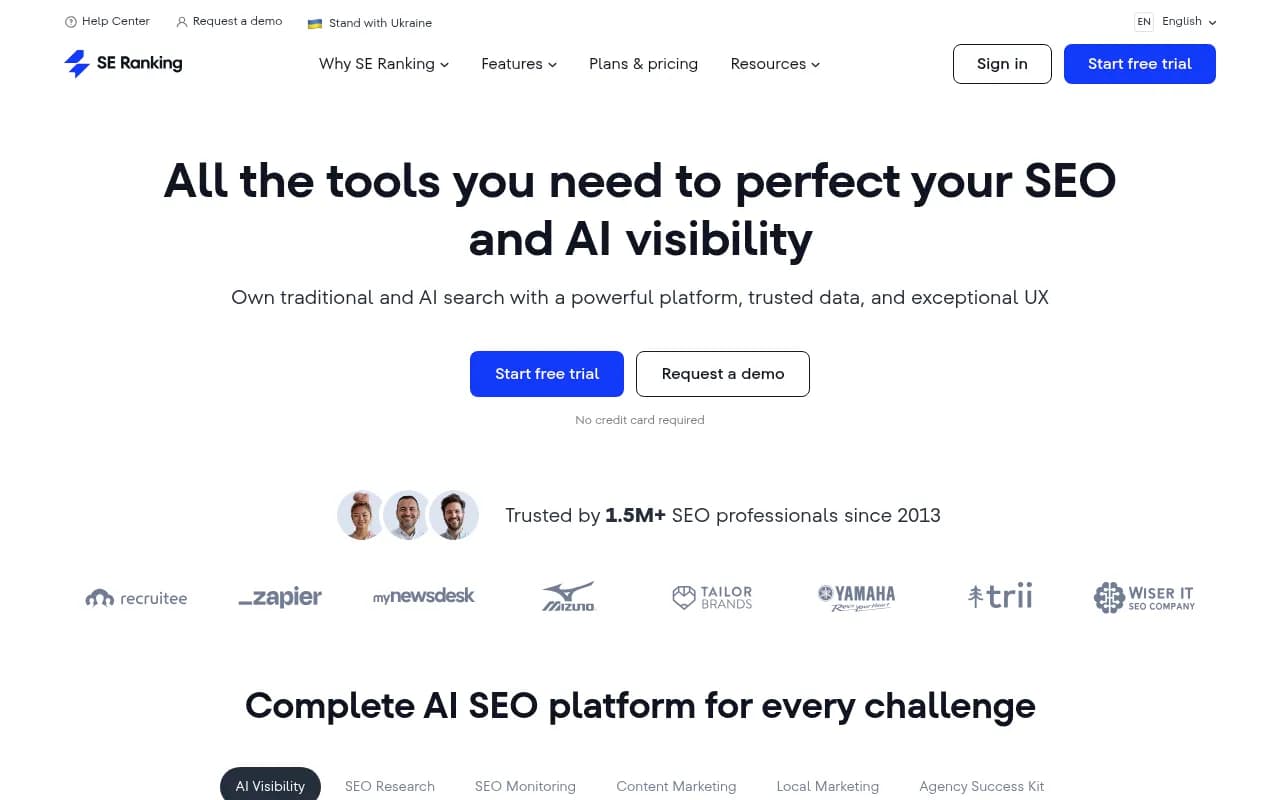
SE Ranking has built out an AI visibility toolkit that sits alongside its traditional rank tracking and site audit features. For smaller teams that want one bill instead of two, it's a reasonable consolidation play.
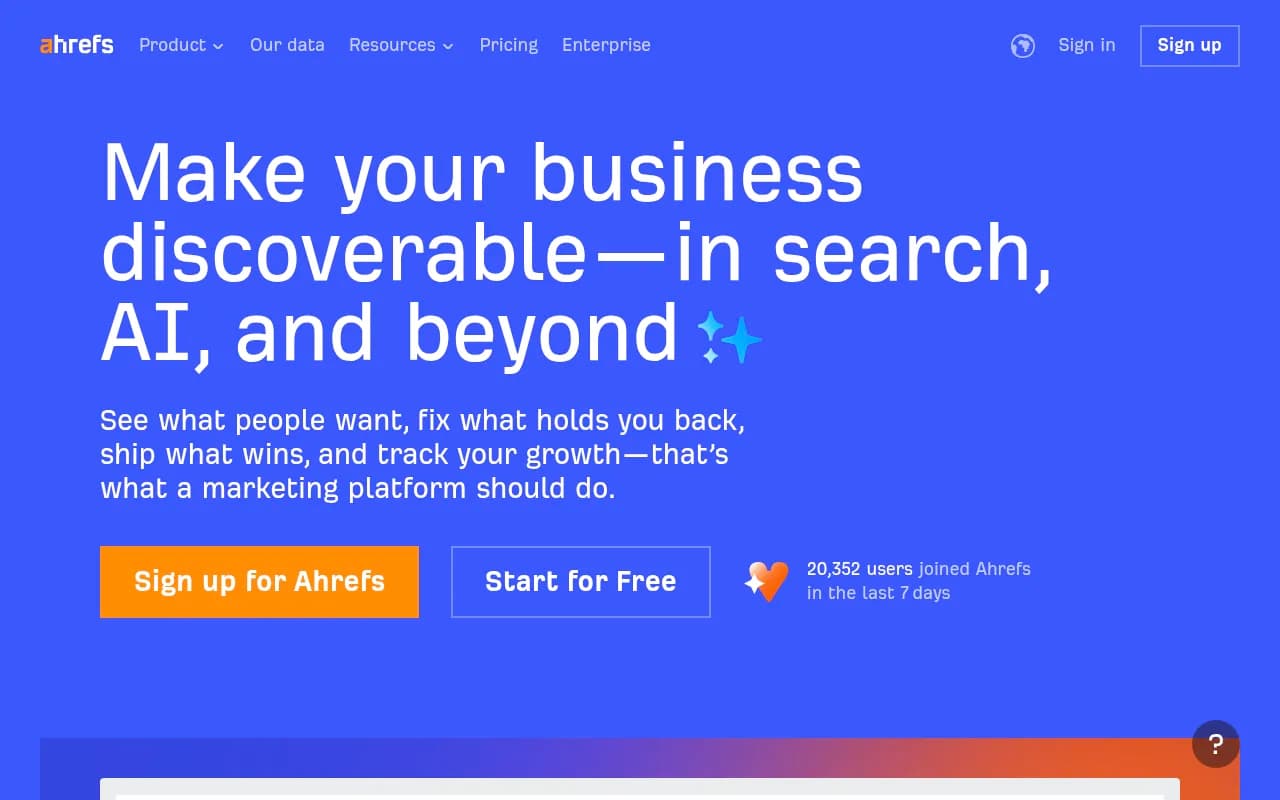
Ahrefs Brand Radar tracks brand mentions in AI search results. It's useful for brand monitoring but lacks AI traffic attribution and custom prompt tracking, so it works better as a supplement than a replacement.
The honest tradeoff here: these tools do AI visibility adequately, but it's not their core product. If AI search is a growing priority for your team, you'll probably outgrow the AI features before you outgrow the SEO features.
Path 3: Moving to a lighter, cheaper tracker
Not everyone needs more power. Some Peec AI users are switching because they want the same basic functionality at a lower price point, or because they're a solo operator who doesn't need agency-grade features.
Otterly.AI is a common landing spot here -- affordable, focused on monitoring, and straightforward to set up.

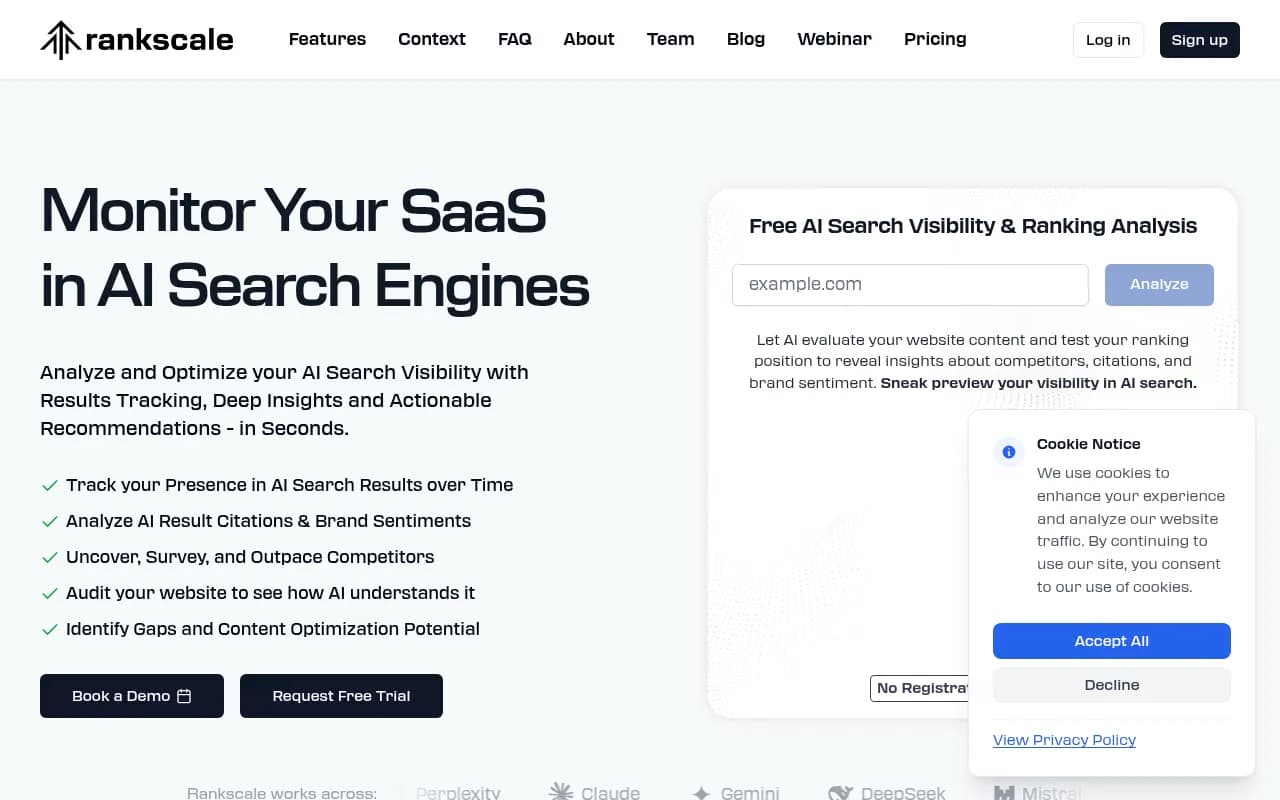
Rankscale offers AI search ranking and visibility tracking with a clean interface that works well for smaller teams.
Peasy is another option in this tier, focused on real AI performance tracking without the overhead of a full platform.
The limitation of this path is obvious: you're solving the pricing problem without solving the insights-to-action problem. If that's genuinely fine for your use case (maybe you just need a quick read on brand mentions), it's a valid choice. But if you switched because you wanted to do more with your AI visibility data, a cheaper monitoring tool won't get you there.
Feature comparison: Peec AI vs. common alternatives
| Feature | Peec AI | Promptwatch | Profound | Otterly.AI | SE Ranking |
|---|---|---|---|---|---|
| AI model monitoring | Yes | Yes (10 models) | Yes | Yes | Yes |
| Custom prompts | Yes | Yes | Yes | Limited | Limited |
| Multi-language | Yes | Yes | Partial | No | Partial |
| Answer gap analysis | No | Yes | Partial | No | No |
| Content generation | No | Yes | No | No | No |
| Crawler / traffic logs | No | Yes | No | No | No |
| Reddit / YouTube insights | No | Yes | No | No | No |
| ChatGPT Shopping tracking | No | Yes | No | No | No |
| Pricing (entry) | ~$49/mo | $99/mo | Higher | ~$29/mo | ~$44/mo |
| Best for | Monitoring | Full GEO optimization | Enterprise monitoring | Budget monitoring | SEO + AI combo |
What to check before you migrate
Switching platforms is disruptive. Before you commit, a few things are worth verifying.
Export your prompt data. Make sure you can get your historical data out of Peec AI in a usable format. Some platforms will let you import this directly; others won't, but at least you'll have a benchmark.
Map your actual use case. Are you switching because you want better monitoring, or because you want to actually improve your AI visibility? These are different problems. A cheaper tracker solves the first; a full-stack platform solves the second.
Check the prompt limits. Most platforms price by the number of prompts you track. If you're currently tracking 50 prompts in Peec AI, make sure the new platform's entry tier covers that without a big price jump.
Ask about crawler data. If you want to understand how AI engines are actually interacting with your site (which pages they crawl, which they skip, whether they're returning), check whether the platform has real crawler log integration. Most don't. This is one of the more meaningful differentiators between monitoring tools and optimization platforms.
Run a parallel trial. Most platforms offer free trials. Run your new platform alongside Peec AI for two to four weeks before cancelling. The data comparison will tell you more than any feature list.
The migration that makes the most sense for most teams
For the majority of Peec AI users who are leaving because they want to actually move the needle on AI visibility -- not just watch it -- the migration path that makes the most sense is toward a platform that closes the loop between insight and action.
The category has matured enough that "we track your brand mentions in ChatGPT" is table stakes. What separates platforms now is whether they can tell you why you're not being cited, what content would fix it, and whether that content is working after you publish it.
That's a meaningfully different product than what most monitoring tools offer, and it's the gap that's driving most of the migrations happening right now.
If you're evaluating options, the comparison table above is a reasonable starting point. But the most useful thing you can do is pick one or two candidates, run the free trials, and see which one actually changes what you do on Monday morning. A platform that gives you a to-do list is worth more than one that gives you a better dashboard.