Key takeaways
- Peec AI works well for single-brand monitoring but creates friction at agency scale -- billing, model flexibility, and multi-client management all have documented pain points
- The core limitation is that Peec AI is a monitoring tool: it shows you visibility data but doesn't help you act on it
- Agencies managing 10+ clients typically need per-project model selection, flexible prompt allocation, and content optimization features that Peec doesn't offer
- Several alternatives exist depending on what you need -- from lightweight trackers to full-stack GEO platforms that include content generation and crawler logs
- The agencies that get the most ROI from AI visibility tools are the ones that can close the loop from "we're invisible for this prompt" to "we published content that fixed it"
AI visibility monitoring went from a curiosity to a line item on almost every agency's tool stack in the last 18 months. And Peec AI was one of the first tools to make it accessible -- clean interface, multi-language support, reasonable pricing, and a focus on the prompts that actually matter to clients.
But here's what keeps coming up in agency conversations: Peec works great until it doesn't. There's a specific growth stage where the cracks start showing, and it's almost always around the same set of problems.
This guide is about those problems, when they tend to appear, and what agencies are doing about them.
What Peec AI actually does well
Before getting into the friction points, it's worth being honest about what Peec does well. It's not a bad tool. It's a focused tool.

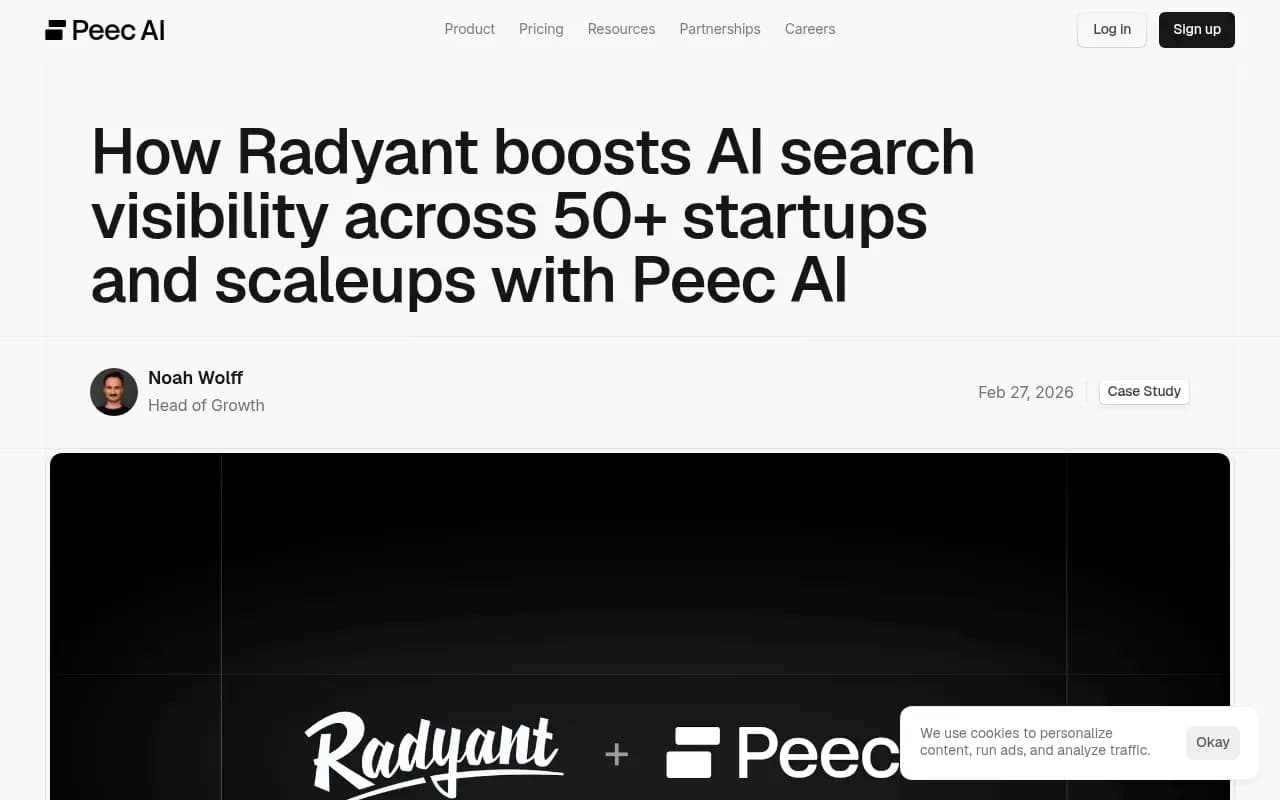
Peec tracks how your brand appears across major AI search engines -- ChatGPT, Perplexity, Google AI Overviews, and others. You set up prompts, it runs them, and you get visibility scores, citation data, and competitor comparisons. The multi-language support is genuinely good, which matters for European agencies in particular. The Radyant case study (a European organic growth agency managing 50+ startups) shows real results: one client went from 10% to 40% AI search visibility, and another doubled their citation share.
For a single brand or a small agency with a handful of clients, Peec is a reasonable choice. You get data, you can see trends, and you can report on it.
The problems start when you try to scale it.
Where Peec AI breaks down for growing agencies
The pricing structure punishes growth
Peec published a pricing update in March 2026 that actually acknowledged the core problem directly. Their co-founder described real scenarios from customer conversations:
A mid-sized agency signed their ninth client. Good news -- except their monitoring plan couldn't accommodate one more project without a full upgrade. The new client was worth $800/month in revenue. The required tool upgrade cost $500+ more per month. They had to delay onboarding.
That's a structural problem, not a pricing quibble. When your tool's cost curve runs parallel to your revenue curve, you're essentially paying a tax on growth.
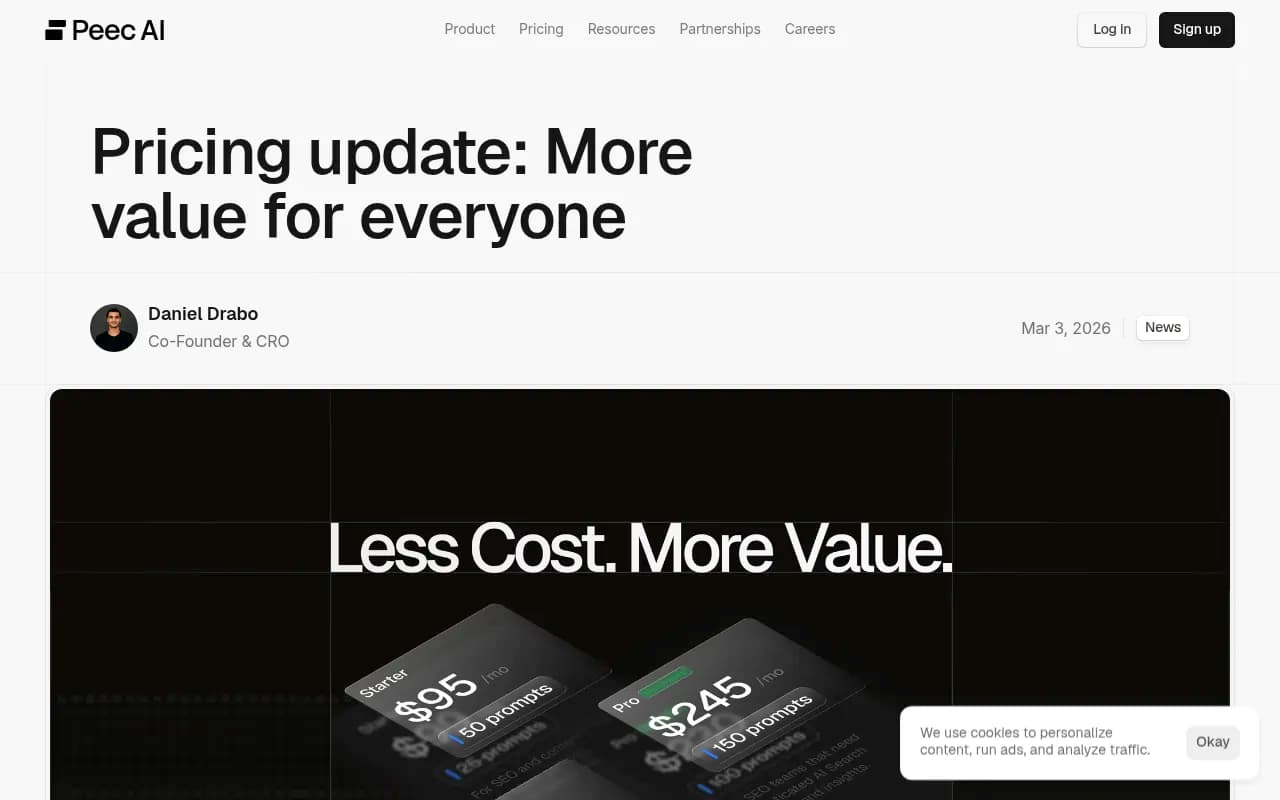
Peec has been working on this -- the March 2026 update was explicitly about making pricing more flexible. But the fact that they needed to address it at all tells you something about how agencies were experiencing the product.
Model selection is account-level, not project-level
This one is subtle but it causes real operational headaches. Most platforms lock model selection at the account level. If you want to track Google AI Overviews for one client but not another (say, because one client is in Germany where AI Overviews wasn't live yet), you either track it everywhere or nowhere.
Peec's own pricing update blog post mentioned a French agency paying for AI Overviews tracking in a market where it doesn't exist yet. Zero data. Zero value. No way to turn it off for just that project.
For an agency managing clients across different markets and verticals, this creates a lot of noise and wasted spend.
It monitors but doesn't optimize
This is the biggest issue, and it's not specific to Peec -- it's a category problem that Peec shares with most monitoring-first tools.
Peec tells you where you're invisible. It doesn't help you become visible.
That sounds like a small distinction but it's actually the whole job. An agency that finds out a client is missing from AI responses to "best project management software for construction" still has to figure out: what content is missing? What angle should we take? What do the AI models actually want to cite here? What's the prompt volume? Is this worth prioritizing?
Peec doesn't answer those questions. You get the gap, then you're on your own.
For agencies that are selling AI visibility as a service -- not just reporting on it -- this means you're paying for a dashboard that creates work rather than completing it.
No crawler logs or indexing intelligence
When a client's pages aren't being cited, there are two possible reasons: the content isn't good enough, or the AI crawlers aren't finding it. These require completely different fixes.
Peec doesn't show you which AI crawlers are hitting your client's sites, which pages they're reading, or whether there are crawl errors blocking discovery. Without that data, you're guessing at the root cause.
What agencies are switching to (and why)
The replacement decision usually depends on what broke first. Here's how it typically plays out.
For agencies that need monitoring + content optimization
The most common switch is to a platform that closes the loop between "here's your visibility gap" and "here's the content that will fix it." This is where Promptwatch comes up most often in agency conversations.

Promptwatch covers the monitoring side (10 AI models, multi-language, prompt volume scoring, competitor heatmaps) but also includes content gap analysis and AI content agents that generate articles and briefs grounded in actual prompt data. The key difference: when you find a gap, you don't have to leave the platform to address it. The content agents pull in citation data, competitor analysis, and brand guidance to generate content that's specifically engineered for the prompts you're missing.
It also has crawler logs -- real-time data on which AI agents are hitting your clients' sites, which pages they're reading, and when pages move from crawl to citation. For agencies trying to diagnose why a client isn't being cited, this is the missing piece that Peec doesn't offer.
Pricing runs from $99/month (single site, 50 prompts) to $579/month for five sites, with agency and enterprise tiers available. It's more expensive than Peec's entry point, but agencies managing 5+ clients typically find the per-client economics work out better once you factor in the content generation and optimization capabilities.
For agencies that want a monitoring upgrade without changing workflows
Some agencies don't need content generation -- they have writers and strategists, they just need better data. A few tools worth considering:
Profound is one of the more established options in this space, with solid enterprise features and a strong focus on brand tracking across AI models.

AthenaHQ covers 8+ AI search engines and has a clean interface that works well for client reporting.

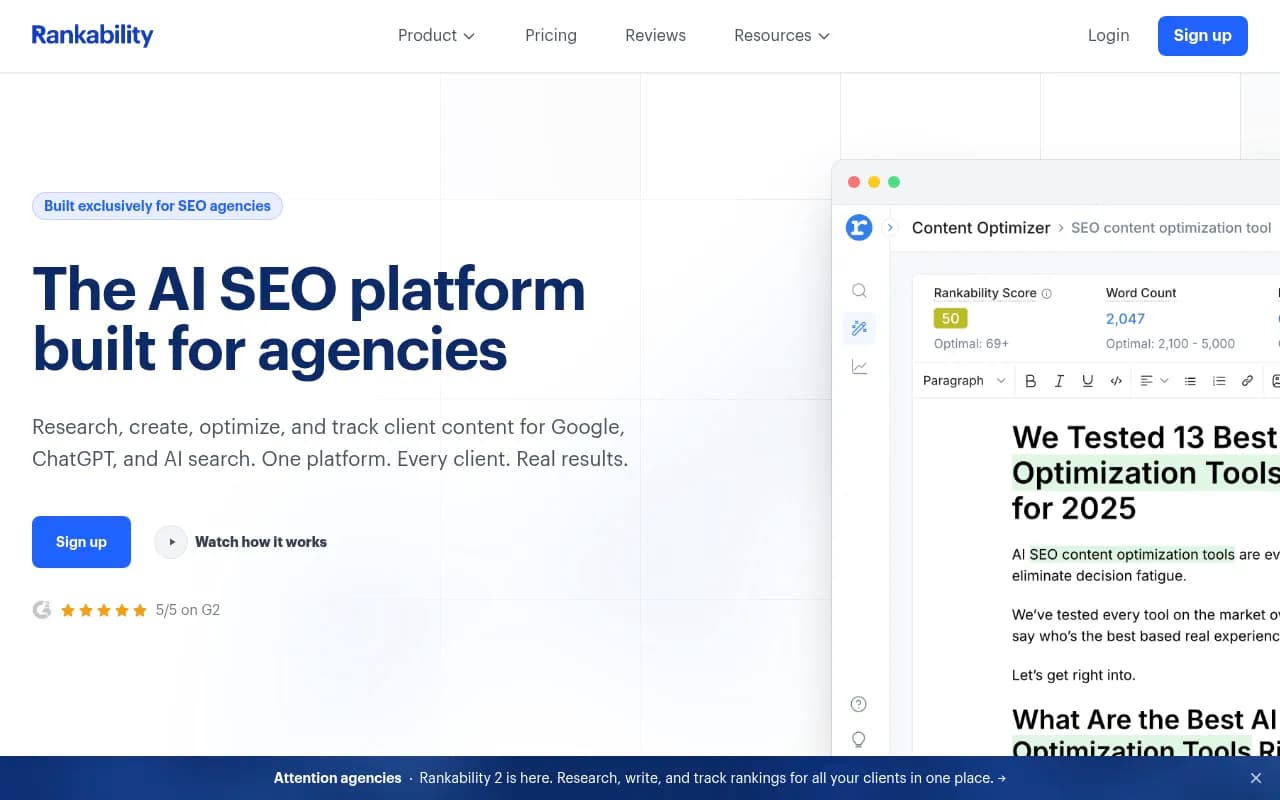
Rankability is specifically positioned for agencies, with analytics built around multi-client management.
For agencies that need lightweight and affordable
If the issue is purely pricing and you don't need the full stack, there are simpler options.
Otterly.AI is one of the most affordable monitoring tools in the category and works well for agencies that just need basic visibility tracking across a handful of clients.

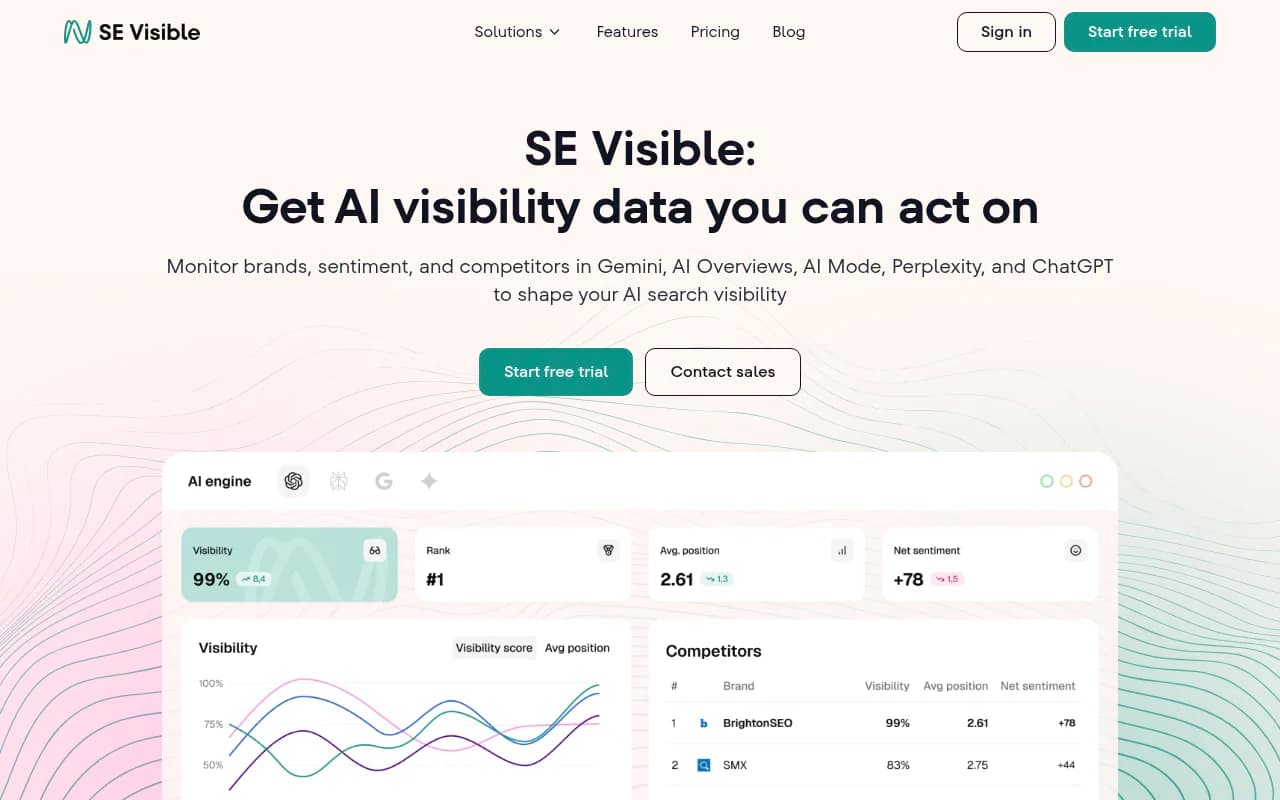
SE Visible (from SE Ranking) offers a user-friendly interface and integrates with SE Ranking's broader SEO toolkit, which is useful if your agency already uses it.
Feature comparison: Peec AI vs. the main alternatives
| Feature | Peec AI | Promptwatch | Profound | AthenaHQ | Otterly.AI |
|---|---|---|---|---|---|
| AI model coverage | 6+ | 10 | 8+ | 8+ | 5+ |
| Multi-language | Yes | Yes | Limited | Limited | Limited |
| Content gap analysis | No | Yes | No | No | No |
| AI content generation | No | Yes | No | No | No |
| Crawler logs | No | Yes | No | No | No |
| Prompt volume scoring | Limited | Yes | No | No | No |
| Per-project model selection | Limited | Yes | Partial | Partial | No |
| Reddit/YouTube tracking | No | Yes | No | No | No |
| ChatGPT Shopping tracking | No | Yes | No | No | No |
| Agency pricing | Yes | Yes | Yes | Yes | Yes |
| Entry price (monthly) | ~$49 | $99 | Custom | Custom | ~$29 |
The real question agencies need to answer
Before switching tools, it's worth being honest about what you're actually selling.
If you're selling AI visibility reports -- here's your score, here's how it changed, here's where competitors are beating you -- then a monitoring tool like Peec is probably sufficient. The question is whether the pricing and multi-client management work for your scale.
If you're selling AI visibility improvement -- we will make your brand appear more often in AI search results, and here's the content strategy to do it -- then you need a platform that helps you execute, not just observe.
That distinction matters because it changes what you're charging clients, how you're staffing the work, and what your deliverables look like. Agencies that have made the shift from "we track your AI visibility" to "we improve your AI visibility" are generally commanding higher retainers and seeing better retention. But they need tools that support the full workflow, not just the reporting layer.
Practical advice if you're currently on Peec
If Peec is working for you and your clients are happy, there's no urgent reason to switch. The March 2026 pricing update did improve flexibility, and the core monitoring data is solid.
The time to seriously evaluate alternatives is when:
- You're turning down new clients because the tool cost math doesn't work
- Clients are asking "what do we do about this?" and you don't have a clear answer from the platform
- You're managing clients in different markets and the model selection limitations are creating noise
- You need to show AI-driven traffic attribution, not just visibility scores
If any of those are true, the comparison table above is a reasonable starting point. Most of the platforms listed offer free trials, so you can run them in parallel before committing to a migration.
The agencies that are winning in AI search right now aren't the ones with the best dashboards. They're the ones that can find a visibility gap on Monday and have content published by Friday. The tool you use should make that cycle faster, not slower.