Key takeaways
- Profound is a capable AI visibility platform, but its pricing structure is steep: ChatGPT-only tracking starts at $99/mo, and full multi-model coverage requires enterprise pricing.
- Most alternatives fall into two camps: monitoring-only dashboards (useful but limited) and full optimization platforms that also help you create content and fix gaps.
- Model coverage varies significantly across tools -- some track only 2-3 engines, others cover 10+.
- If you want to go beyond tracking and actually improve your AI visibility, look for platforms with content gap analysis, content generation, and crawler log access.
- Promptwatch is the only platform in this comparison rated as a "Leader" across all categories in a 2026 evaluation of 12 GEO tools -- and the only one with a full action loop from gap detection to content creation to result tracking.
Profound was one of the first platforms to take AI search visibility seriously. It built real infrastructure for tracking how brands appear in AI-generated answers, and some of its features -- like front-end response capture and Amazon Rufus tracking -- are still genuinely hard to find elsewhere.
But "first mover" and "best fit" are different things.
The pricing structure is the most common complaint. The Starter plan at $99/mo covers ChatGPT only. Adding Perplexity and Google AI Overviews pushes you to $399/mo. Claude, Gemini, Grok, and the rest? Enterprise pricing, not published. At the Growth tier, you're capped at 100 tracked prompts with 3 user seats. For many teams, that math doesn't work.
The other issue is what the platform actually helps you do. Profound is strong on analytics. It's less clear on what you're supposed to do with them once you have them.
So here's a practical look at 10 alternatives worth considering in 2026 -- what they cover, what they're good at, and where they fall short.
How to think about this category
Before diving into the tools, it helps to understand what separates them. Most AI visibility platforms do roughly the same thing at the core: they run prompts against AI engines, store the responses, and show you whether your brand appeared. A basic version of this can be built in a few weeks.
What actually differentiates tools is:
- Where their prompt data comes from (fabricated queries vs. real user search behavior)
- Which AI models they cover and how deeply
- Whether they track real user-facing responses or just API outputs (these can differ)
- What they help you do after showing you the data
That last point is where the biggest gap exists. Most tools stop at monitoring. A smaller number help you identify what content is missing, generate it, and track whether it improves your visibility. That's a fundamentally different product.
Comparison table
| Tool | AI models covered | Content generation | Crawler logs | Best for | Starting price |
|---|---|---|---|---|---|
| Promptwatch | 10+ (ChatGPT, Claude, Gemini, Perplexity, Grok, DeepSeek, Copilot, Meta AI, Mistral, Google AIO) | Yes (Content Agents) | Yes | Full optimization loop | $99/mo |
| Profound | ChatGPT (Starter), more at higher tiers | No | No | Enterprise analytics | $99/mo (ChatGPT only) |
| Ahrefs Brand Radar | ChatGPT, Perplexity, Gemini, Claude, Copilot, Google AIO | No | No | Data-quality-focused teams | $50/mo |
| Semrush AI Visibility | ChatGPT, Perplexity, Google AIO, Gemini | No | No | Existing Semrush users | Bundled with Semrush |
| AthenaHQ | 8+ engines | Limited | No | Enterprise GEO | Custom |
| Otterly.AI | ChatGPT, Claude, Gemini, Perplexity | No | No | Budget brand monitoring | Free tier available |
| Peec AI | ChatGPT, Perplexity, Google AIO, Gemini | No | No | Multi-language tracking | From ~$49/mo |
| SE Ranking | Google AIO, ChatGPT, Perplexity | No | No | Google-first SEO teams | Bundled with SE Ranking |
| Scrunch AI | ChatGPT, Perplexity, Google AIO, Gemini | No | No | Crawler influence | Custom |
| Writesonic GEO | ChatGPT, Perplexity, Google AIO | Yes | No | Content-first teams | From $99/mo |
| Ranketta | ChatGPT, Google AIO, Perplexity (more at Enterprise) | Yes (limited) | No | E-commerce / product tracking | Custom |
1. Promptwatch
Promptwatch covers the most ground of any tool in this comparison -- 10 AI models including ChatGPT, Claude, Gemini, Perplexity, Grok, DeepSeek, Copilot, Meta AI, Mistral, and Google AI Overviews -- and it's the only platform here that closes the full loop from "where am I invisible?" to "here's content that fixes it."
The core differentiator is the action loop. Answer Gap Analysis shows exactly which prompts competitors rank for that you don't. Content Agents then generate articles, comparisons, and briefs grounded in that gap data -- not generic SEO filler, but content built around what AI models are actually asking for. Page-level tracking then shows when those pages get crawled and cited.
A few things that are genuinely hard to find elsewhere: real-time AI crawler logs (you can see ChatGPT, Claude, and Perplexity hitting your pages in real time), ChatGPT Shopping tracking, Reddit and YouTube citation analysis, and traffic attribution that connects AI visibility to actual revenue.
It's used by 1,480+ brands and agencies including Booking.com, Center Parcs, and Everflow. In a 2026 evaluation of 12 GEO platforms, it was the only tool rated as a "Leader" across all categories.
Pricing: Essential $99/mo (1 site, 50 prompts, 5 articles), Professional $249/mo (2 sites, 150 prompts, 15 articles, crawler logs), Business $579/mo (5 sites, 350 prompts, 30 articles). Free trial available.

2. Profound
Worth including here because it's the tool you're comparing against -- and it does have real strengths.
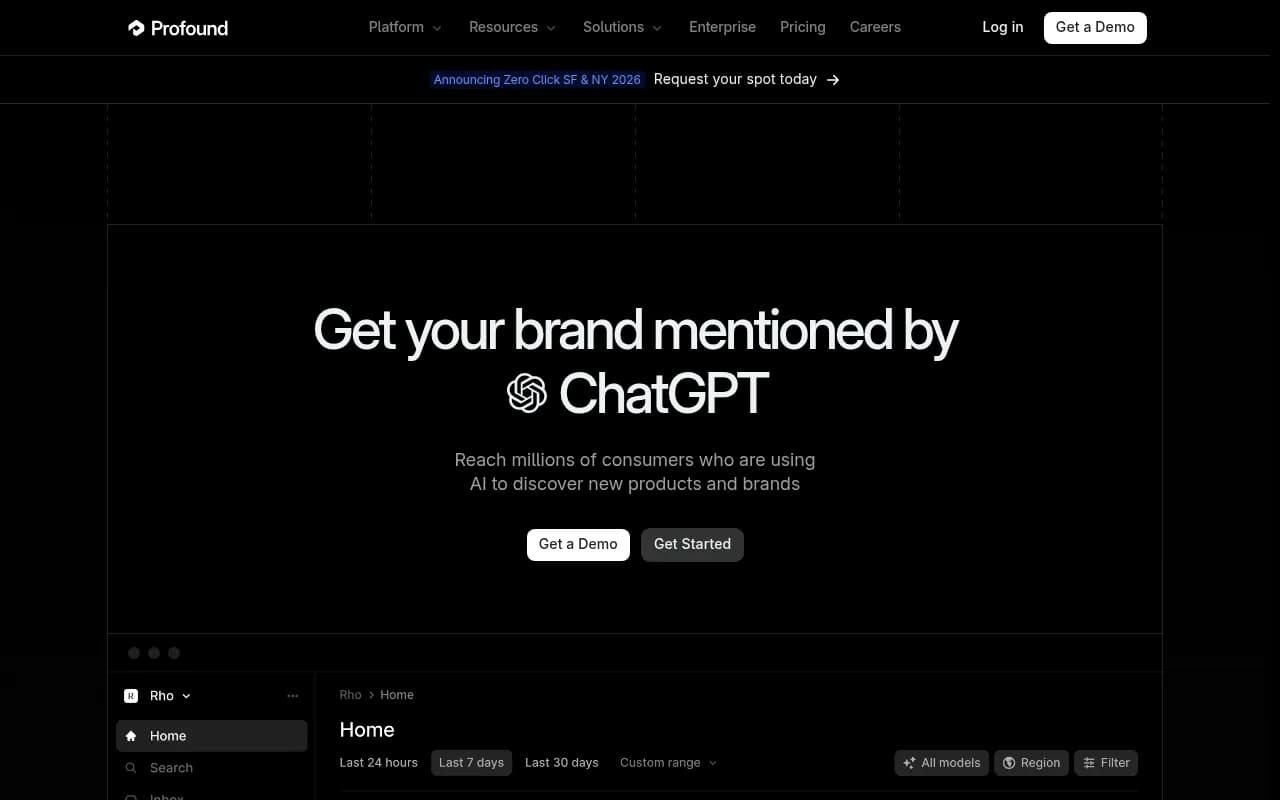
Profound's front-end response capture is genuinely useful. Most tools query AI engines via API; Profound captures what users actually see in the interface, which can differ. Its Amazon Rufus module for e-commerce shopping visibility is rare. The analytics depth is solid for enterprise teams that need detailed reporting.
The problems are pricing and scope. ChatGPT-only at $99/mo is a hard sell when competitors offer broader coverage at the same price. And there's no content generation or gap analysis -- you get the data, but you're on your own figuring out what to do with it.
3. Ahrefs Brand Radar
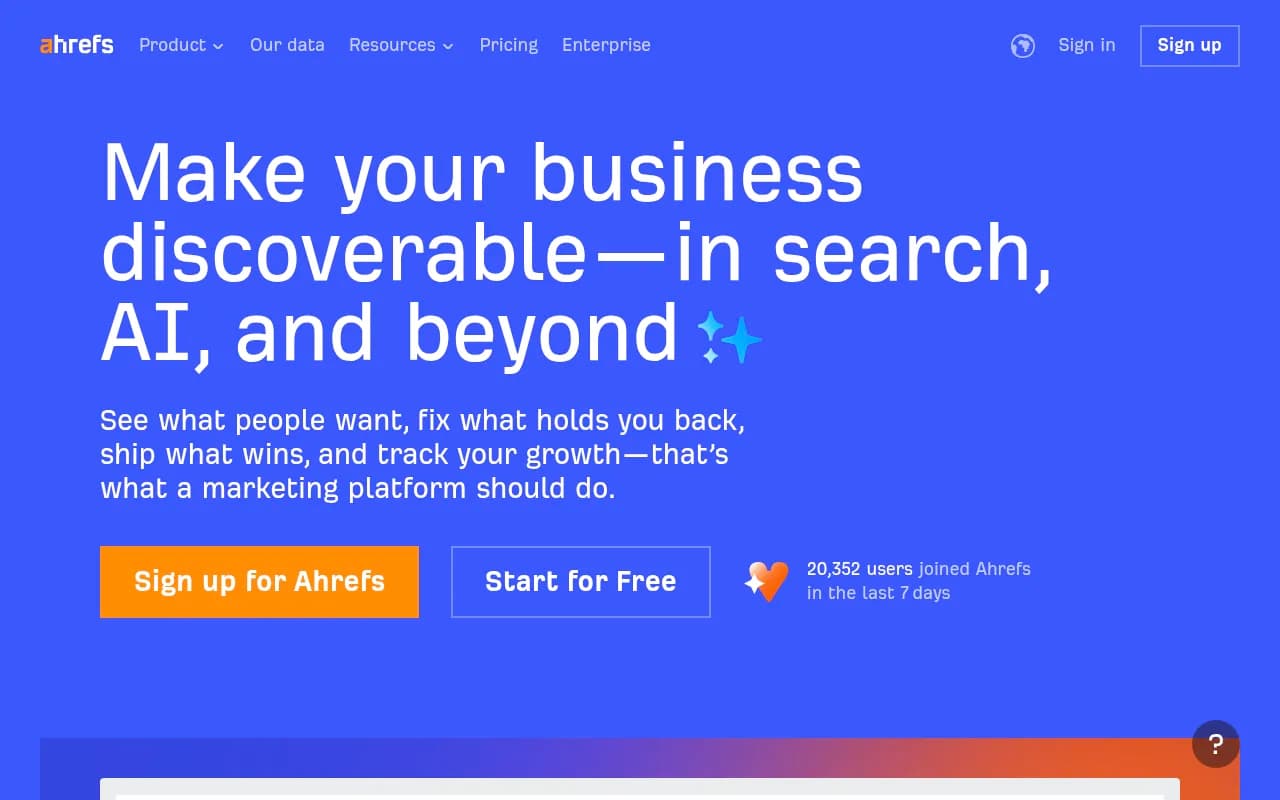
If data quality is your primary concern, Ahrefs Brand Radar makes a compelling argument. Its 243M+ prompts are sourced from real "People Also Ask" data with measurable search volume behind them -- not fabricated queries. That means the visibility scores you see reflect how AI responds to questions real people actually asked.
It covers ChatGPT, Perplexity, Gemini, Claude, Copilot, and Google AI Overviews. Pricing is more modular than most: $50/mo for 2,500 checks, up to $699/mo for all 6 AI indexes plus custom prompt checks.
The tradeoff: it's a monitoring tool. No content generation, no gap analysis, no crawler logs. If you're already deep in the Ahrefs ecosystem and want AI visibility data anchored in real search behavior, it's a natural add-on. If you need to act on the data, you'll need other tools.
4. Semrush AI Visibility Toolkit
Semrush's AI visibility features are bundled into its existing platform, which is either a strength or a limitation depending on your situation. If you're already paying for Semrush, you get ChatGPT, Perplexity, Google AI Overviews, and Gemini tracking without a separate subscription.
The fixed prompt structure is a real constraint though. You can't build custom prompt sets around your specific audience or product category, which limits how useful the data is for anything beyond high-level brand monitoring. There's also no AI traffic attribution -- you can see visibility scores but not connect them to actual site traffic or revenue.
For teams that want one platform for traditional SEO and AI visibility, it's a reasonable choice. For teams that need depth in the AI tracking specifically, it falls short.
5. AthenaHQ
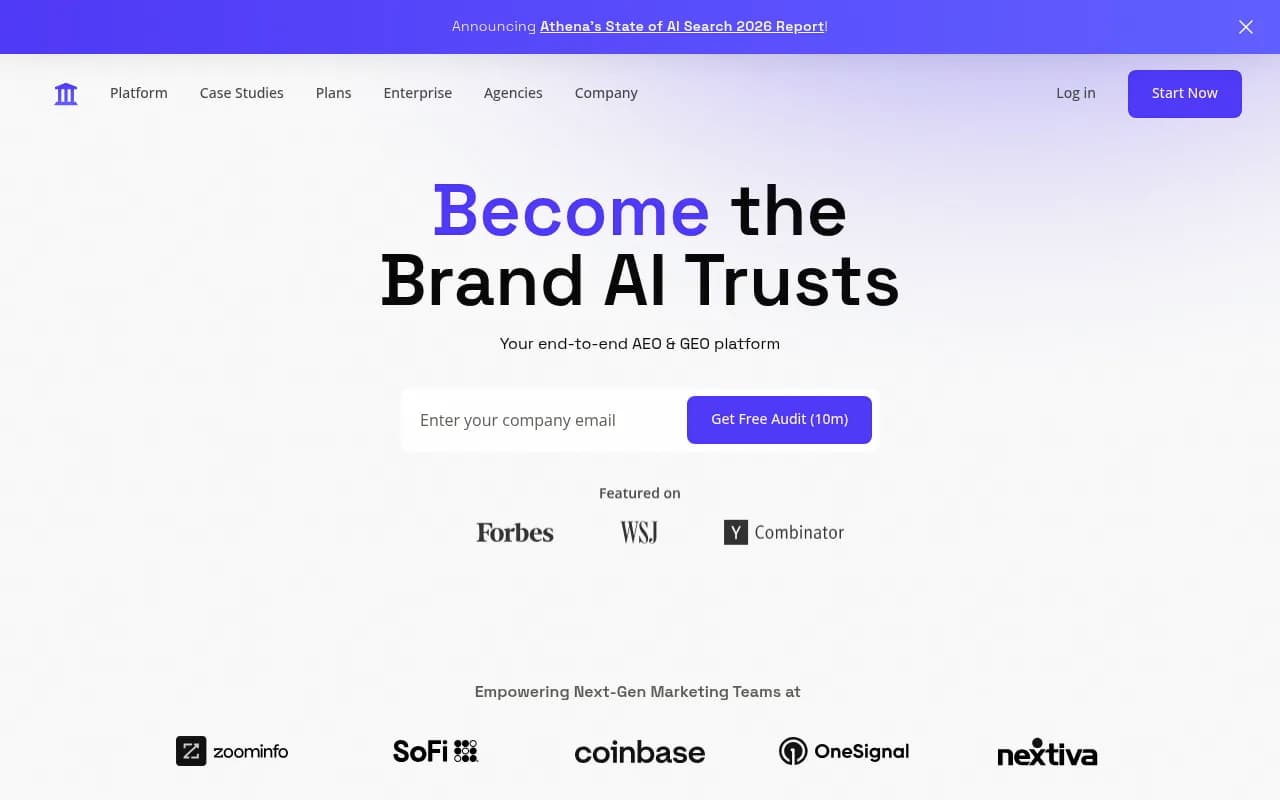
AthenaHQ positions itself as an enterprise GEO platform and covers 8+ AI engines. It's more feature-complete than most monitoring-only tools -- there's some automation and reporting depth that enterprise teams will appreciate.
The honest limitation: it's still primarily a monitoring platform. Content optimization and generation aren't core to the product. Pricing is custom and tends to land at enterprise budget levels, which makes it hard to evaluate without a sales conversation.
If you're a large brand that needs detailed AI visibility reporting and has a separate content team to act on the insights, AthenaHQ is worth evaluating. If you want the analysis and the content creation in one place, it's not the right fit.
6. Otterly.AI
Otterly is the most accessible entry point in this category. There's a free tier, paid plans start low, and the interface is straightforward. It tracks ChatGPT, Claude, Gemini, and Perplexity -- solid coverage for the price.
What you're getting is brand monitoring: see when your brand appears in AI responses, track sentiment, set up alerts. It's genuinely useful for PR teams, small businesses, or anyone who just wants to know if they're showing up at all.
What you're not getting: crawler logs, content generation, prompt volume data, gap analysis, or traffic attribution. It's a monitoring dashboard, not an optimization platform. That's fine if monitoring is all you need.

7. Peec AI
Peec AI focuses on prompt-level analytics and multi-language tracking, which makes it stand out for teams operating across multiple markets. It covers ChatGPT, Perplexity, Google AI Overviews, and Gemini, with decent depth on how your brand appears in different regional and language contexts.
The interface is clean and the data is reasonably actionable for a monitoring tool. Like most alternatives in this category, it doesn't help you create content or close the gaps it identifies -- but the visibility data itself is solid.
Good fit for marketing teams that need multi-language AI visibility without enterprise pricing.

8. SE Ranking
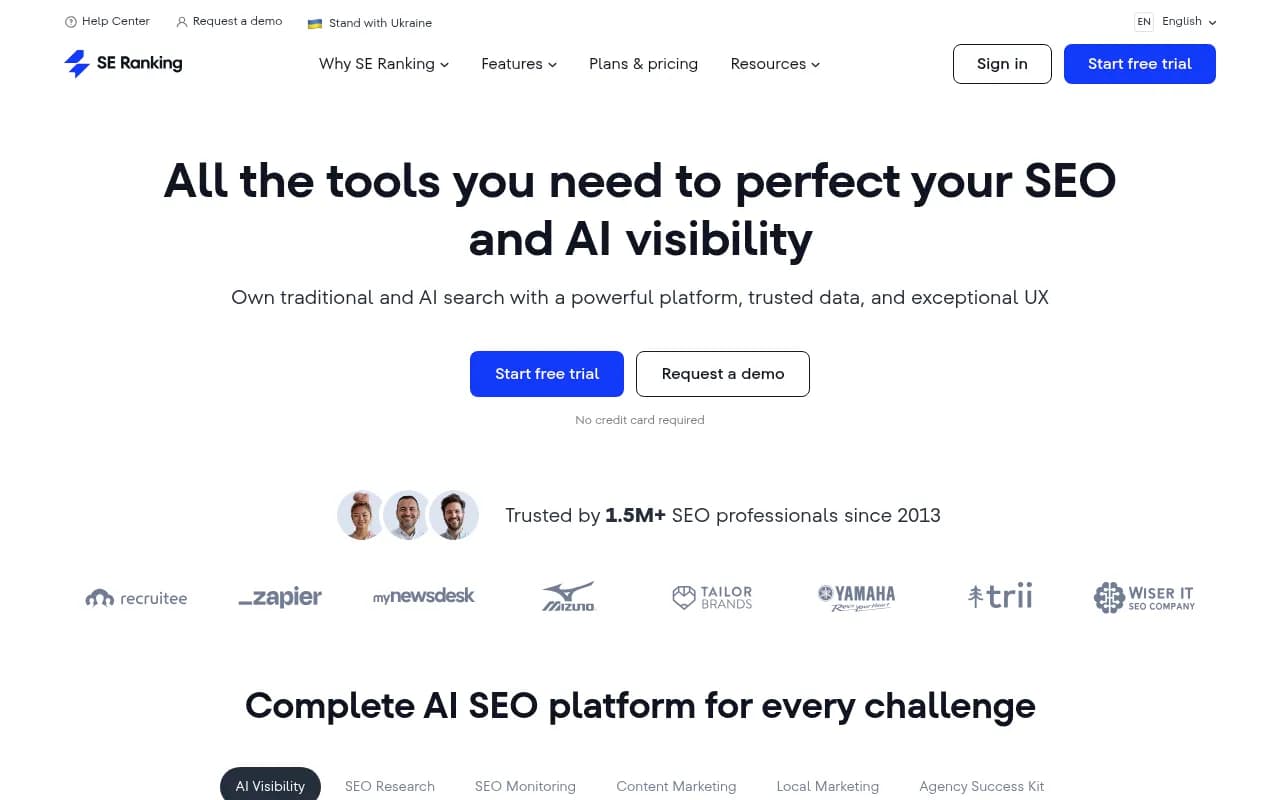
SE Ranking's AI visibility features live inside its broader SEO platform, similar to Semrush. It covers Google AI Overviews primarily, with ChatGPT and Perplexity tracking added more recently.
The strength here is integration. If you're tracking traditional rankings, running site audits, and monitoring backlinks inside SE Ranking already, having AI Overviews data in the same dashboard reduces tool sprawl. The AI tracking isn't as deep as dedicated platforms, but for Google-first SEO teams, it's a practical option.
9. Scrunch AI
Scrunch AI takes a different angle: rather than just tracking where you appear, it focuses on influencing how AI crawlers interact with your site. The idea is that by understanding and optimizing for AI crawler behavior, you can improve how AI models perceive and cite your content.
It covers ChatGPT, Perplexity, Google AI Overviews, and Gemini. Pricing is custom. The crawler-influence approach is interesting and somewhat unique, though the evidence base for how much you can actually influence AI crawler behavior is still developing.
Worth a look if you're interested in the technical side of AI indexability, not just visibility tracking.
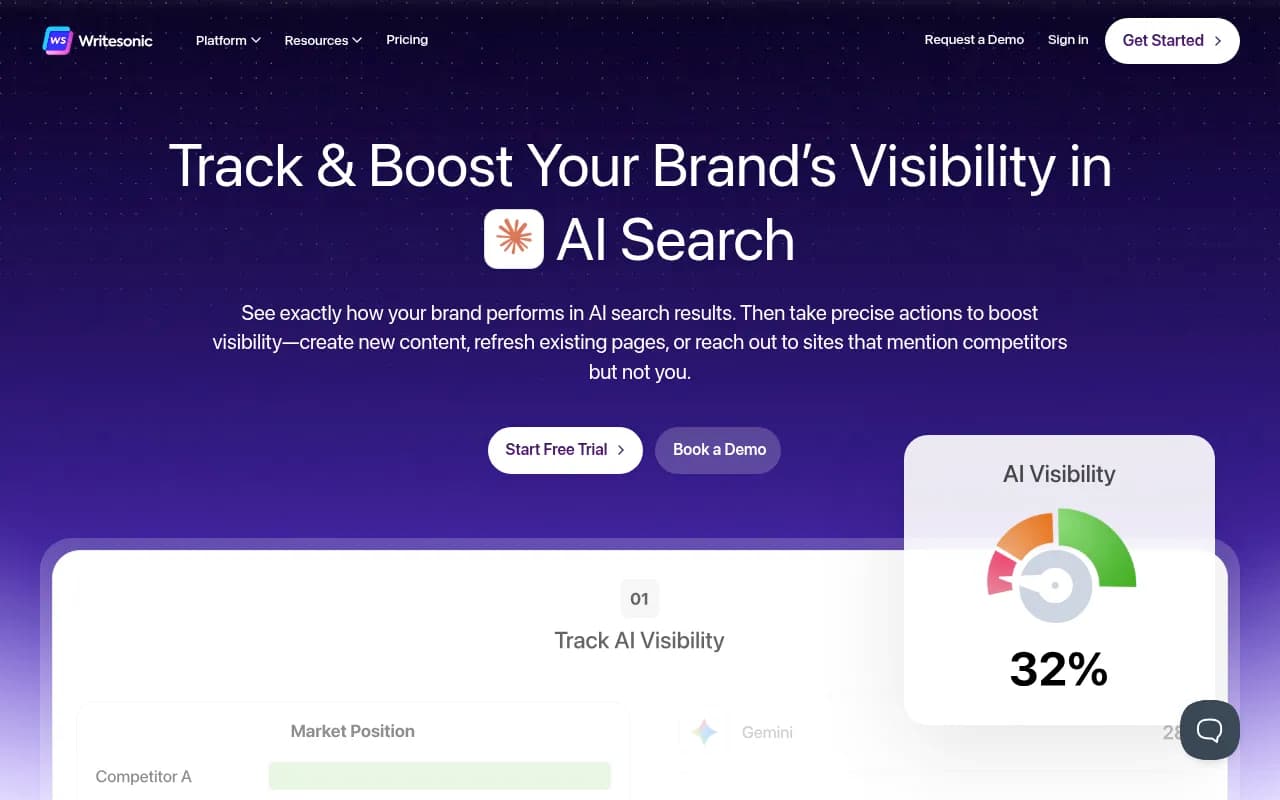
10. Writesonic GEO
Writesonic started as an AI writing tool and has built GEO tracking on top of its content creation capabilities. That origin story shapes the product: the content generation is genuinely good, and the GEO tracking is decent if not the deepest in the category.
It covers ChatGPT, Perplexity, and Google AI Overviews. The pricing is competitive -- often cheaper than Profound at comparable feature levels, with more content production capacity. For content-focused teams that want AI visibility tracking alongside their writing workflow, it's a reasonable package.
The limitation is depth on the tracking side. Prompt volume data, crawler logs, and gap analysis aren't as developed as dedicated GEO platforms.
11. Ranketta
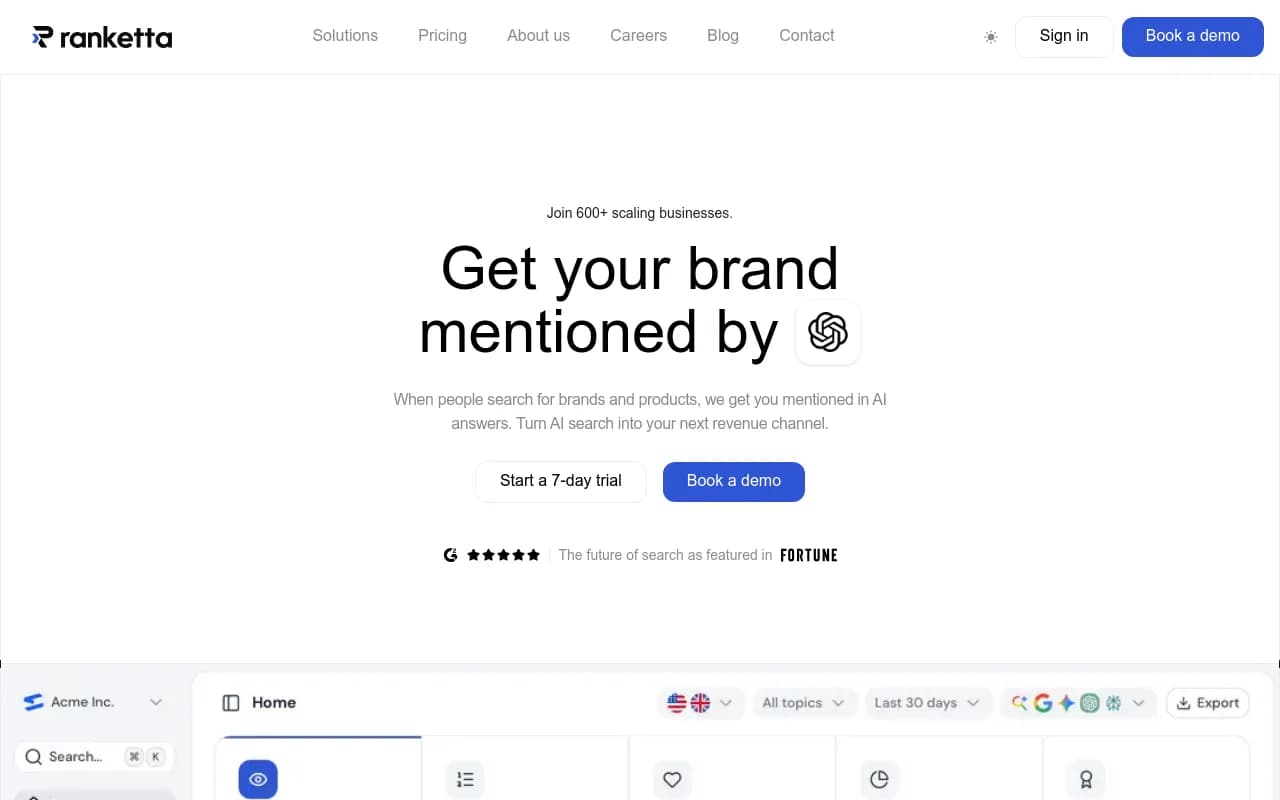
Ranketta is worth mentioning for e-commerce teams specifically. Most GEO tools track brand mentions; Ranketta tracks individual products inside AI Shopping results, including ChatGPT Shopping. That product-level granularity is hard to find elsewhere.
It covers ChatGPT (including ChatGPT Shopping), Google AI Overviews, and Perplexity on standard plans, with Gemini, Claude, Google AI Mode, and Copilot available at Enterprise. Founded in 2025, it's newer than most tools here, but the e-commerce focus is genuinely differentiated.
What most of these tools are missing
Looking across this list, a pattern is obvious: most tools are good at showing you data and not much else. You can see your visibility score, watch it change week over week, and compare yourself to competitors. What you can't do in most of these platforms is understand why you're invisible for certain prompts and generate content that fixes it.
That gap matters more as AI search matures. Knowing you're not appearing in Perplexity's answers about "best project management software for remote teams" is useful. Knowing exactly what content you'd need to publish to change that -- and having a tool that writes it for you -- is a different level of utility.
The tools that close that loop (Promptwatch being the clearest example, Writesonic partially) are genuinely different products from the monitoring-only dashboards. Which one you need depends on whether you're trying to understand your AI visibility or actually improve it.
How to choose
A few questions that narrow this down quickly:
How many AI models do you need to track? If you only care about ChatGPT and Google AIO, most tools here work fine. If you need Claude, Gemini, Grok, DeepSeek, and Copilot all in one place, the list gets short fast.
Do you need content creation, or just monitoring? Monitoring-only tools are cheaper and simpler. If you want to close the gaps they identify, you need a platform with content generation built in, or you're managing two separate tools.
Do you need crawler logs? Understanding how AI engines actually crawl and index your content is different from knowing whether you appear in responses. Very few tools offer this. Promptwatch's Professional plan and above include it.
What's your budget? Otterly and Peec AI are accessible entry points. Ahrefs Brand Radar is modular. Promptwatch's Essential plan at $99/mo covers 10 models with content generation included, which is hard to beat on a per-feature basis. Profound and AthenaHQ are enterprise-tier investments.
Are you in e-commerce? Ranketta's product-level tracking is worth a specific look if ChatGPT Shopping visibility matters to your business.
The AI search visibility category is still young and moving fast. The tools that will matter most by the end of 2026 are the ones that help you do something with the data -- not just collect it.