Key takeaways
- Social listening tools surface the exact questions, phrases, and topics your audience uses -- which are often the same prompts people type into AI search engines like ChatGPT and Perplexity.
- Conversations on Reddit, forums, and social media directly influence what AI models cite and recommend. Monitoring these channels gives you an early signal of where AI visibility gaps exist.
- The most effective approach combines social listening data with dedicated AI visibility tracking -- social tools tell you what people are asking, GEO platforms tell you whether you're showing up in the answers.
- Content that mirrors real conversational language, answers specific questions directly, and appears in the sources AI models trust (Reddit threads, authoritative articles) gets cited more often.
- Tracking your AI visibility alongside your social listening data closes the loop -- you can see whether the content you create based on social insights actually improves your presence in AI responses.
Most marketing teams treat social listening and AI search visibility as two separate workstreams. One team monitors brand mentions on Twitter and Reddit. Another team worries about whether ChatGPT is recommending competitors. These two things are actually the same problem, approached from different angles.
Here's the connection: AI models like ChatGPT, Perplexity, and Claude don't generate answers from thin air. They pull from the web -- and the web includes Reddit threads, YouTube comments, forum discussions, and social media conversations. When someone asks Perplexity "what's the best project management tool for remote teams," the answer it gives is shaped partly by what people have been saying in those spaces.
Social listening tools let you see exactly what's being said. That's a direct window into the raw material AI models use to form opinions and recommendations.
This guide walks through how to actually use that connection to improve your AI search visibility in 2026.
Why social conversations matter for AI search
AI models are trained on massive datasets that include a huge proportion of user-generated content -- Reddit, Quora, product reviews, Twitter/X threads, YouTube transcripts. When someone asks an AI engine a question, the model draws on patterns from all of that.
This means the conversations happening about your brand (or your category) right now are shaping how AI models will describe you months from now. A Reddit thread where users compare your product favorably to a competitor isn't just good PR -- it's potentially influencing what ChatGPT says when someone asks for a recommendation.
The reverse is also true. If the dominant conversations in your category don't mention your brand, or if they associate you with a problem you've since fixed, that narrative gets baked into AI responses.
Social listening gives you visibility into this raw signal before it becomes an AI recommendation. That's the core opportunity.
Step 1: Map the questions your audience is actually asking
The first thing to do with any social listening tool is stop looking for brand mentions and start looking for questions.
Go into your listening platform and search for question-based queries in your category. What are people asking on Reddit? What comes up in forum discussions? What questions appear in comment sections on YouTube videos in your space?
These questions are almost always the same prompts people type into AI search engines. Someone asking "is [your category] worth it for small businesses?" on Reddit is probably also asking that exact question to ChatGPT.
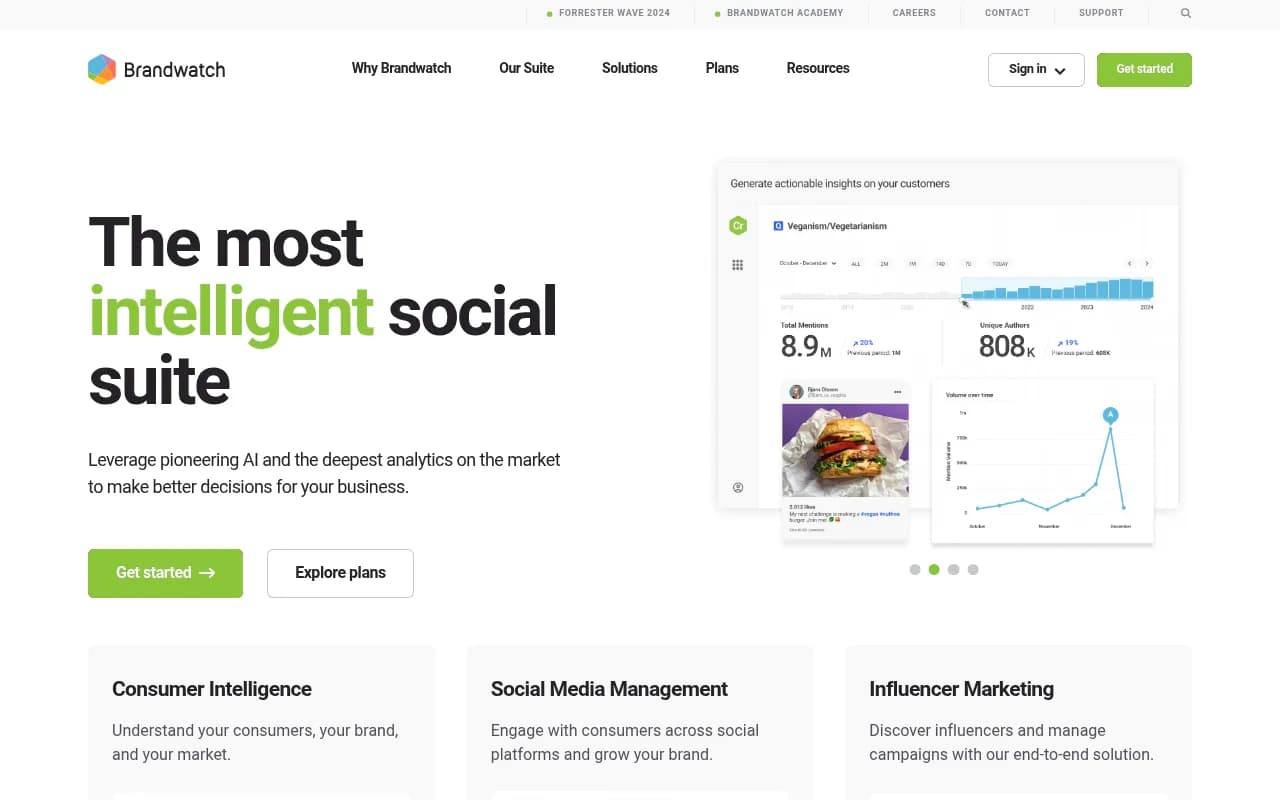
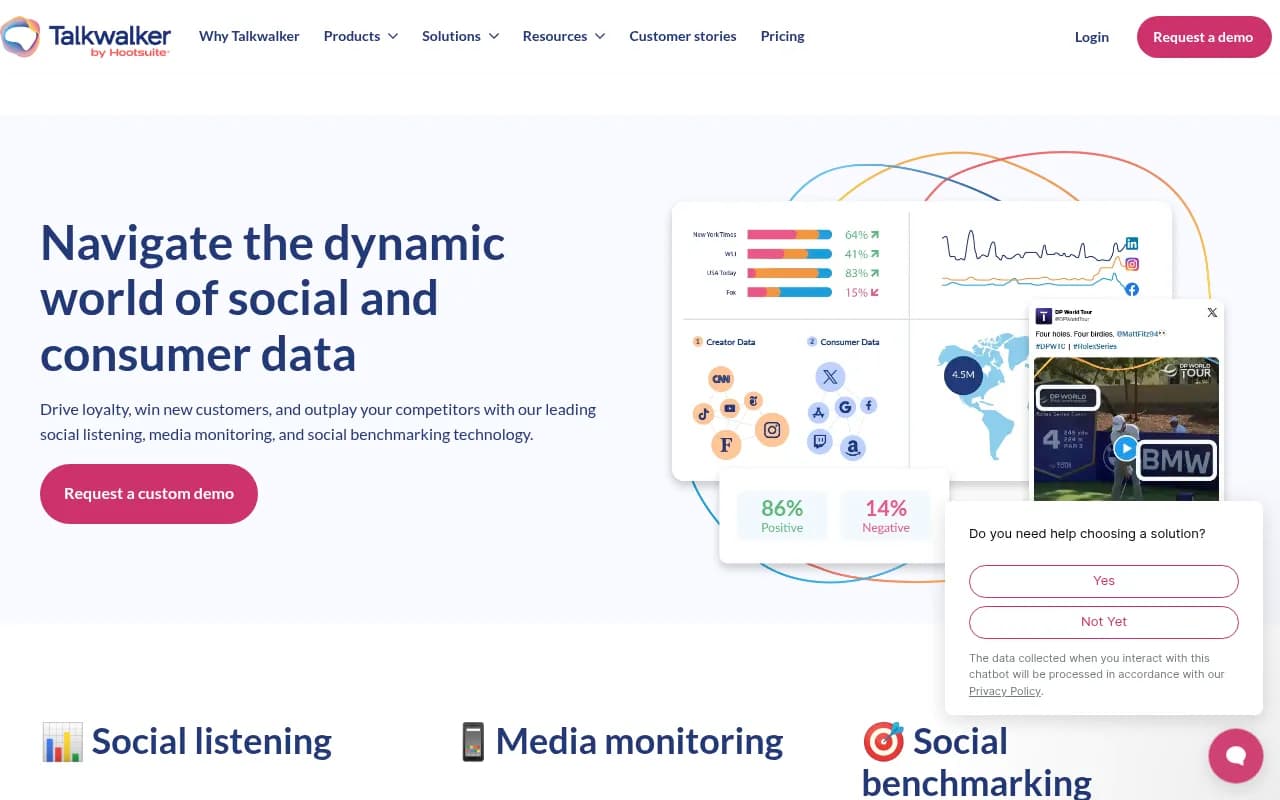
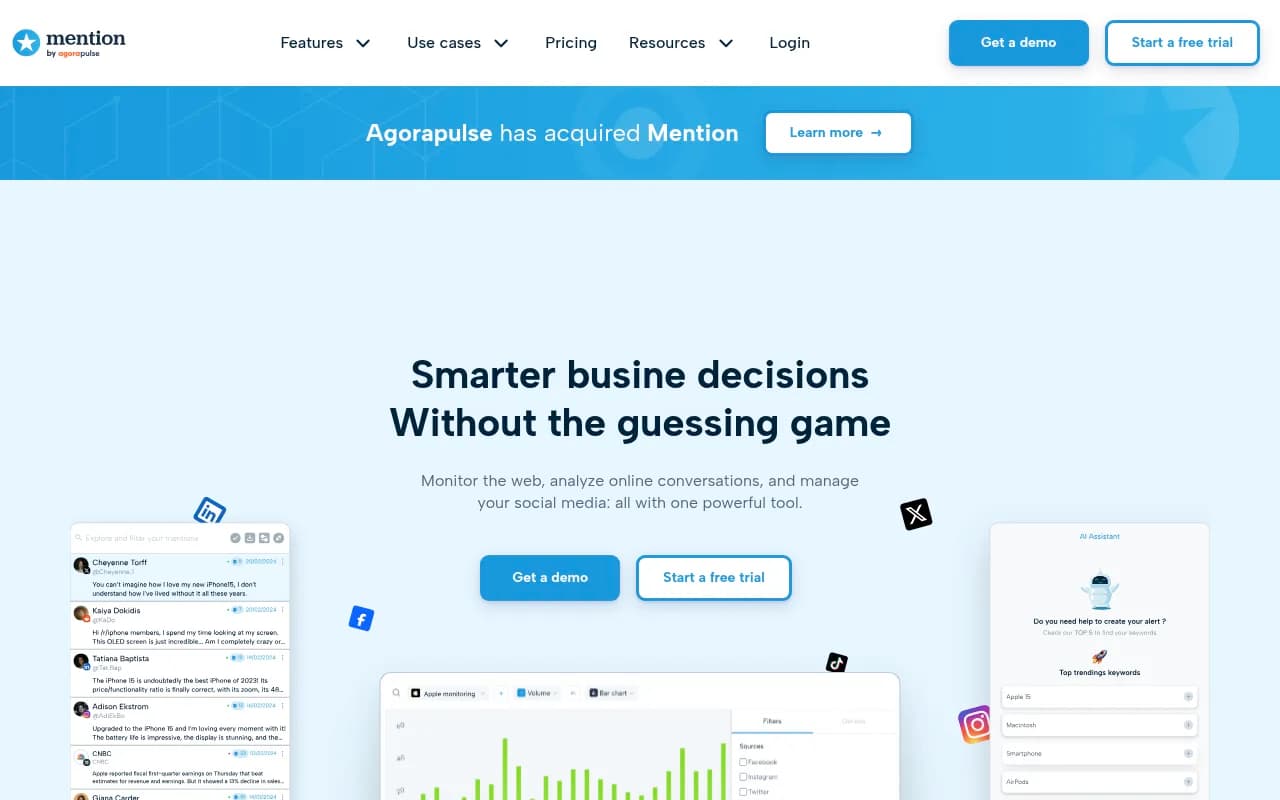
Tools like Brandwatch, Talkwalker, and Mention are well-suited for this kind of broad question mining across social platforms.
Brandwatch Consumer Intelligence
When you find recurring questions, document them. These become your target prompts -- the specific queries you want your brand to appear in when someone asks an AI model.
Step 2: Identify where AI models are pulling their sources
Social listening doesn't just show you what people are saying -- it shows you where they're saying it. And location matters a lot for AI visibility.
AI models have a strong preference for certain source types. Reddit consistently appears as a cited source in ChatGPT and Perplexity responses. YouTube transcripts get pulled in. High-authority blog posts and comparison articles get cited. Your company's own website gets cited if it's structured well and answers questions clearly.
Use your social listening data to identify which specific communities, subreddits, YouTube channels, and forums are most active in your category. These are the places where:
- Your brand should have a presence (authentic participation, not spam)
- You should be creating content that gets referenced and linked
- You should be monitoring for sentiment that might be influencing AI responses
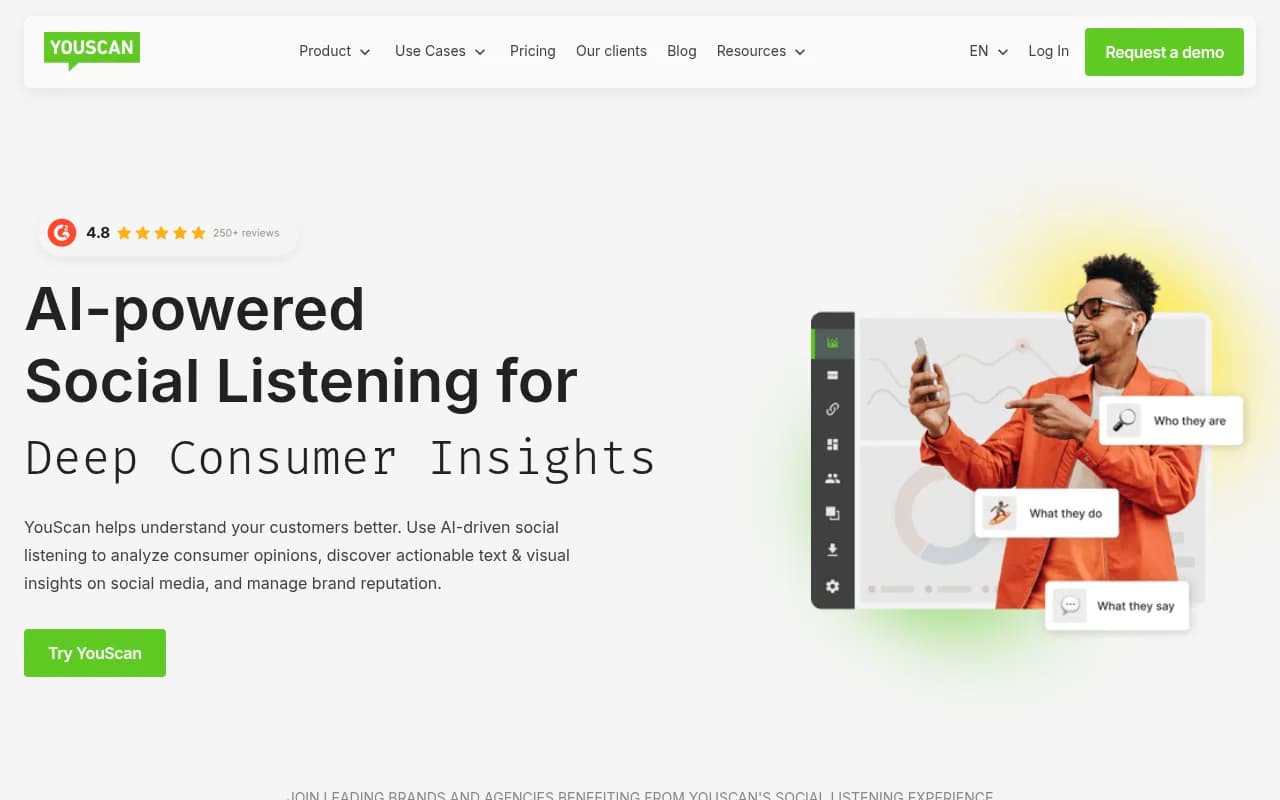
Platforms like Pulsar and YouScan go deeper than basic mention tracking -- they analyze audience behavior and visual content across these channels, which helps you understand not just what's being said but who's saying it and where it carries weight.
Step 3: Use sentiment analysis to spot narrative problems
Here's a scenario that plays out more often than people realize: a brand improves its product significantly, but the dominant online narrative is still based on older complaints. AI models pick up that older narrative and repeat it in responses.
Social listening tools with sentiment analysis can surface this problem. If you're seeing a shift in positive sentiment over the last six months but your AI search visibility still reflects the older negative framing, you have a content gap -- you need to create authoritative content that establishes the new narrative clearly enough for AI models to pick it up.
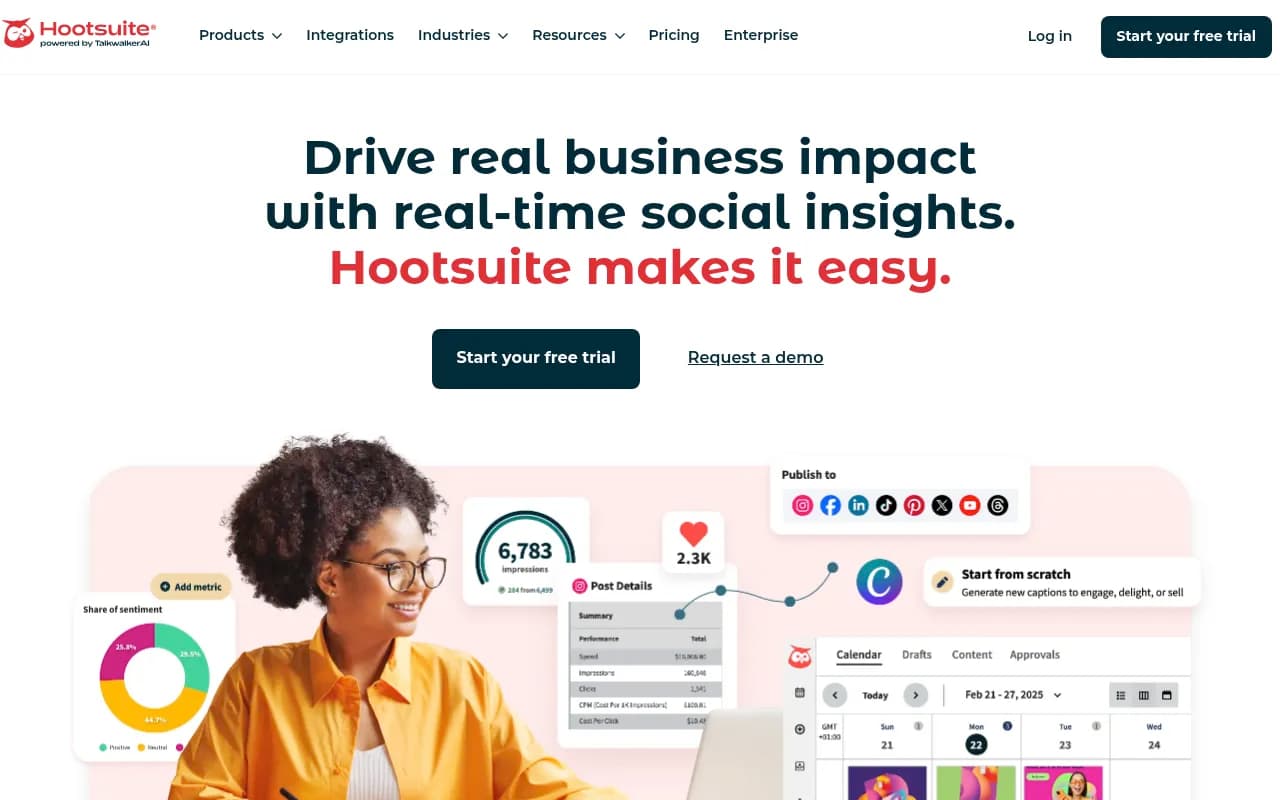
Hootsuite's AI listening features, for example, can detect sentiment shifts and flag emerging topics before they become dominant. That early warning gives you time to create content that shapes the narrative rather than reacting to it.
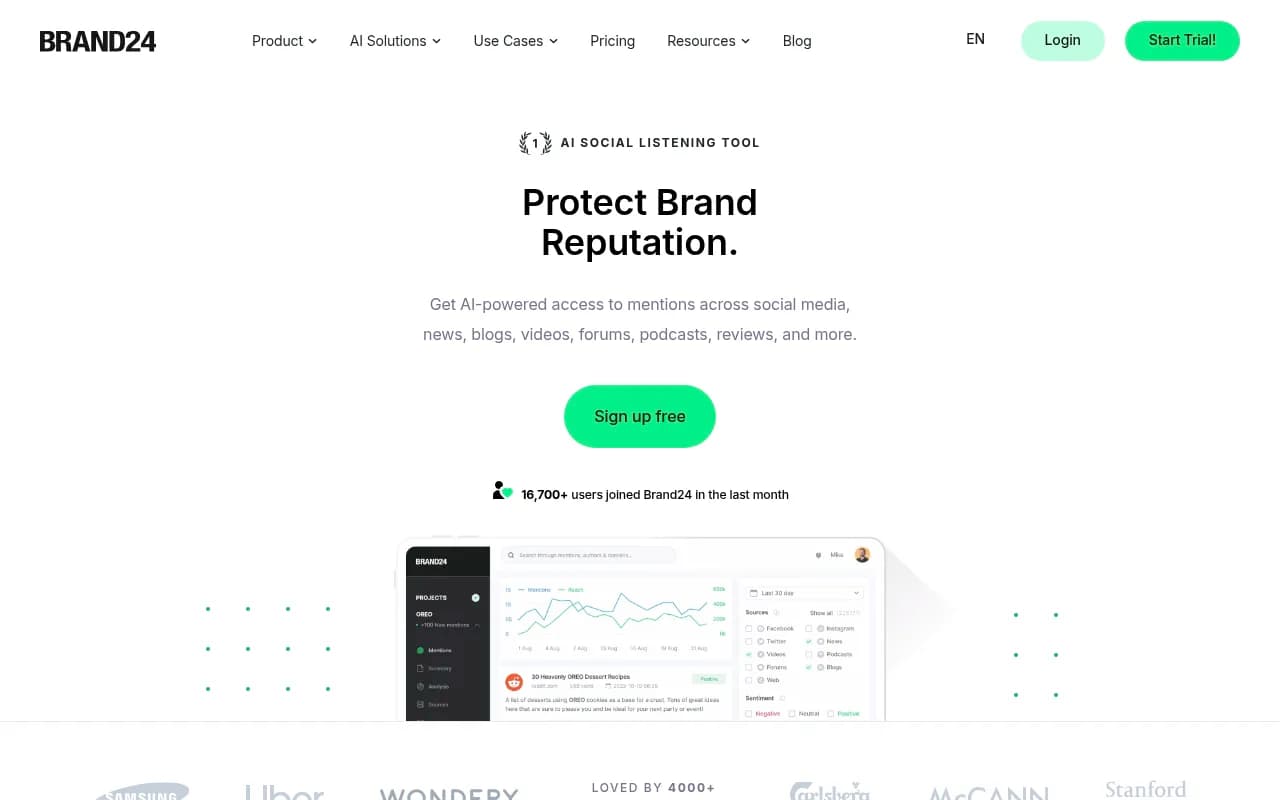
Brand24 is another solid option here -- it tracks mentions across 25 million+ sources in real time and surfaces sentiment trends that can tell you whether your brand's story is shifting in a direction that will help or hurt your AI visibility.
Step 4: Find the comparison conversations
One of the highest-value things social listening can do for AI visibility is surface comparison conversations -- places where people are actively comparing your brand to competitors.
These conversations are gold for two reasons. First, they tell you exactly which competitor comparisons people care about. Second, AI models love to answer "X vs Y" questions, and they pull heavily from existing comparison content when doing so.
If you find that people are frequently comparing you to a specific competitor on Reddit or in review sites, and you don't have strong comparison content on your own site, you're leaving AI visibility on the table. Someone asking ChatGPT "how does [your brand] compare to [competitor]?" is going to get an answer shaped by whatever comparison content already exists -- and if that content was written by your competitor, or by a reviewer who preferred them, that's what gets cited.
The fix is straightforward: create clear, direct comparison content on your own site. Not promotional fluff -- actual honest comparisons that answer the question directly. AI models cite content that answers questions well, not content that's obviously trying to sell something.
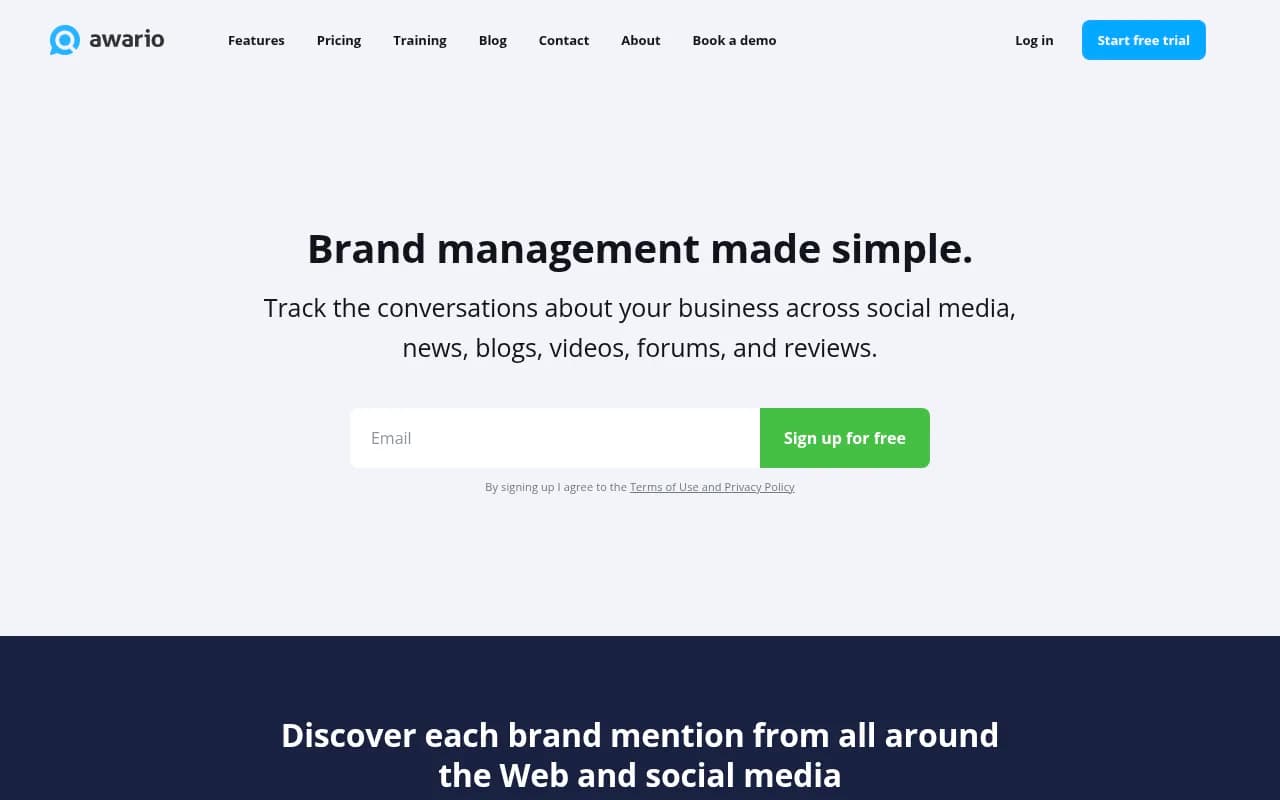
Awario is particularly useful for tracking these comparison conversations across the web, including on news sites and blogs that might not show up in standard social monitoring.
Step 5: Monitor Reddit specifically
Reddit deserves its own section because it punches well above its weight in AI citations.
Multiple studies and practitioners have noted that Reddit threads appear disproportionately often in Perplexity and ChatGPT responses. This is partly because Reddit has a massive volume of authentic, question-and-answer formatted content -- exactly the format AI models find useful.
If you're not monitoring Reddit as part of your social listening strategy, you're missing a major input channel for AI visibility. Set up keyword alerts for your brand name, your category, your key product features, and your main competitors. Read the threads. Understand the language people use.
Then -- and this is the part most brands skip -- participate authentically. Answer questions where you have genuine expertise. Don't pitch. Just be useful. A brand representative who consistently gives helpful answers in relevant subreddits builds the kind of presence that AI models notice.
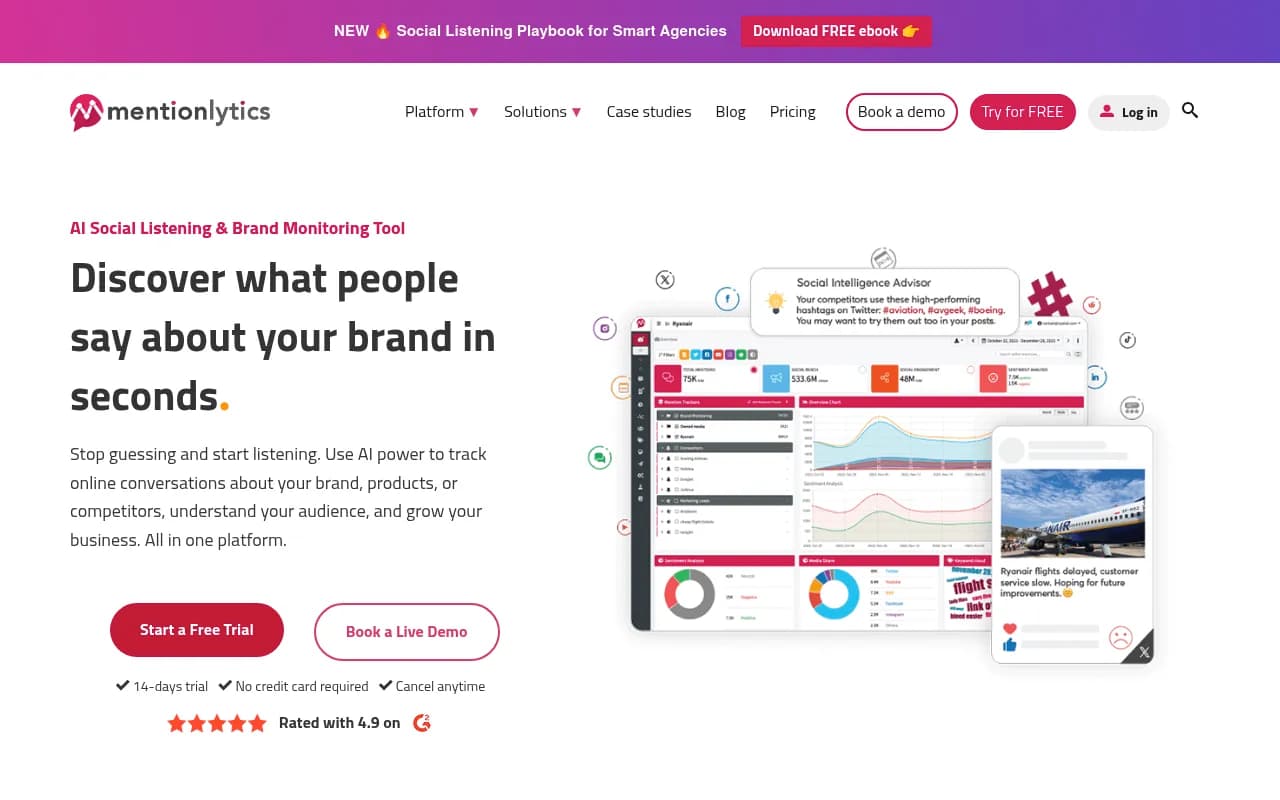
Mentionlytics tracks Reddit alongside other social channels and surfaces relevant conversations in a single dashboard, which makes this kind of monitoring manageable.
Step 6: Turn social insights into AI-optimized content
All of this listening is only valuable if it leads to content creation. Here's the workflow that connects social listening to AI visibility improvement:
- You identify a recurring question from social listening (e.g., "does [your product] work for enterprise teams?")
- You check whether your brand appears in AI responses to that question
- If you don't appear, you create content that directly answers it -- conversational tone, clear structure, direct answer in the first paragraph
- You publish and track whether AI models start citing that content
The content you create needs to match the language people actually use, not the polished marketing language your brand prefers. AI models respond to natural language that mirrors how questions are asked. If Reddit users ask "is it worth switching from X to Y," your content should use that framing, not "transitioning between platforms."
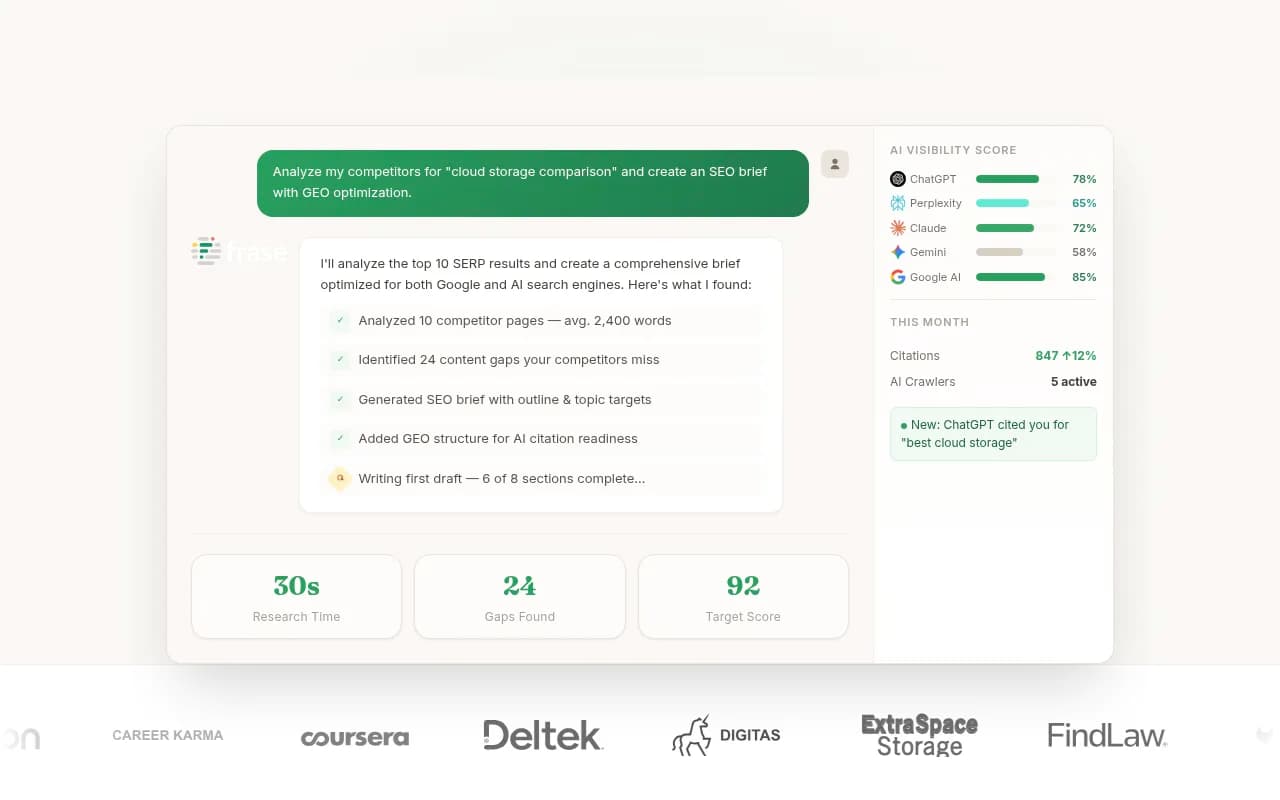
For the content creation side, tools like Frase and Clearscope help you structure content for AI readability -- they analyze what's already being cited and help you match that structure.

Step 7: Track whether your AI visibility is actually improving
Social listening tells you what the conversation looks like. But to know whether your content is getting cited by AI models, you need a dedicated AI visibility tracking tool.
This is where the two workstreams need to connect. Once you've created content based on social listening insights, you need to measure whether AI models are picking it up.
Promptwatch is built specifically for this -- it tracks how your brand appears across ChatGPT, Perplexity, Claude, Gemini, and other AI models, and shows you which pages are being cited and how often. It also has an Answer Gap Analysis feature that shows you which prompts competitors are appearing for but you're not, which feeds directly back into your social listening research.

The combination looks like this: social listening surfaces the questions people are asking, Promptwatch tells you whether you're showing up in AI answers to those questions, and the gap between the two is your content roadmap.
Other AI visibility trackers worth knowing:


Comparison: social listening tools for AI visibility use cases
| Tool | Best for | Reddit monitoring | Sentiment analysis | AI citation tracking |
|---|---|---|---|---|
| Brandwatch | Enterprise-scale social intelligence | Yes | Advanced | No |
| Talkwalker | Visual + text listening, trend detection | Yes | Advanced | No |
| Brand24 | Real-time mention tracking, SMBs | Yes | Yes | No |
| Mention | Broad web + social monitoring | Yes | Basic | No |
| Awario | Comparison and competitor conversations | Yes | Yes | No |
| Mentionlytics | Multi-channel including Reddit | Yes | Yes | No |
| Pulsar | Audience intelligence and behavior | Partial | Yes | No |
| YouScan | Visual content + social listening | Yes | Yes | No |
| Promptwatch | AI search visibility tracking | Via insights | N/A | Yes (core feature) |
The pattern here is clear: social listening tools are excellent at capturing the raw conversation data that influences AI models, but none of them tell you whether those conversations are translating into AI citations for your brand. That's a separate measurement problem that requires a dedicated GEO tool.
Putting it together: a practical workflow
Here's what this looks like as a repeatable monthly process:
Week 1 -- Listen and mine. Pull question-based conversations from your social listening tool. Focus on Reddit, YouTube comments, and forums. Document the top 10-15 questions people are asking in your category.
Week 2 -- Check your AI visibility. Run those questions as prompts in your AI visibility tracker. Note which ones your brand appears in, which ones competitors dominate, and which ones nobody answers well.
Week 3 -- Create. Write content that directly answers the gaps you found. Match the conversational language from social listening. Structure it clearly: question in the headline, direct answer in the first paragraph, supporting detail below.
Week 4 -- Track and iterate. Monitor whether new content starts getting cited. Check sentiment trends for any narrative shifts that need addressing. Feed new questions into next month's cycle.
This isn't a one-time project -- it's an ongoing loop. The brands that will dominate AI search in 2026 are the ones treating it as a continuous process, not a campaign.
A note on what actually moves AI visibility
Based on what practitioners are reporting in communities like r/b2bmarketing, the factors that consistently improve AI citation rates come down to a few things: clear positioning, direct answers to specific questions, strong comparison content, and consistent mentions across authoritative sources.
Social listening is the tool that tells you which questions to answer and which comparisons to address. AI visibility tracking is the tool that tells you whether your answers are working. Neither one alone is enough -- but together, they give you a feedback loop that most competitors aren't running yet.
That gap won't stay open forever.