Key takeaways
- One multi-engine tracker can replace four separate tools, but only if it queries the real interfaces of each engine and reports citations per engine, not as a blended score.
- Each engine cites a different number of sources and different sites, so a win in one doesn't predict a win in another.
- "Ranking" in AI search means mentions, citations, position in the answer, and sentiment. It is not a single rank number.
- Rank trackers with AI add-ons suit teams who need organic positions beside AI data. Dedicated AI visibility platforms suit teams who want to act on the gaps.
- Check vendor pricing pages yourself. Comparison tables written by vendors disagree with each other on price.
Why four tools became the default (and why that's a mess)
Most teams ended up with a patchwork. One tool for Google AI Overviews because it started as a rank tracker. Another for ChatGPT because someone on the team found it first. A spreadsheet for Perplexity. Manual spot checks in Gemini. Four logins, four definitions of "visibility," and no way to compare numbers.
The tracking problem is real, though. The engines don't behave alike. Searchable's analysis of 80,525 prompt-and-domain pairs cited by AI Overviews found that only 25.2% were also cited by ChatGPT. That's a vendor-reported number, but it matches what I see in practice: a tool that only checks ChatGPT tells you almost nothing about AI Overviews.
The fix isn't four tools. It's one tool that queries each engine separately and keeps the results separate in the report.
What "ranking" means in AI search
There's no page-one-position-three equivalent. Instead you track a handful of signals per engine:
- Mention: your brand name appears in the generated answer.
- Citation: the answer links to your site as a source.
- Position: where you appear in the answer or in the source list.
- Sentiment: how the engine describes you.
- Share of voice: your mentions relative to competitors across a fixed prompt set.
Mentions and citations are different things. Writesonic points out that you can earn a citation without a mention (your page supports the answer, but your brand isn't the answer) and a mention without a citation (the engine knows you from other sites). Tools that only log "present or not" hide this. Many AI Overview trackers also record only whether a citation exists, not where it sits, so position support is worth checking before you buy.
How the four engines differ
This is the reason a blended score misleads. According to Promptwatch Data on average sources per response, collected from the real interfaces of the major engines:
| Engine | Typical citations per answer | Behavior worth knowing |
|---|---|---|
| ChatGPT | About 5 (web-search answers only) | Drifts with model and retrieval updates |
| Google AI Overviews | About 10 | Steady over time |
| Perplexity | Almost exactly 10 | Very stable, so a useful test bench for your own content changes |
| Gemini | Varies | Tends to favor brands with strong Google data |
Source mix differs as well. In Promptwatch's social media citation data for Sep 28 to Oct 4, 2026, social platforms made up 0.46% of ChatGPT citations but 12.2% of AI Overviews citations and 2.7% of Perplexity citations. YouTube led on AI Overviews at 4.28%. Reddit fell to 0.09% on ChatGPT, after reddit.com's share of ChatGPT citations collapsed on August 14, 2026. A Reddit tactic that worked for ChatGPT last spring now does very little there.
Two takeaways for tracking. First, report every metric per engine. Second, expect platform-level shifts that have nothing to do with your content. Average citations per ChatGPT response dropped across models around the GPT-5.3 rollout on March 4, 2026, and a trend line from that period would have looked like a content problem when it wasn't.
The one-tool tracking setup, step by step
Step 1: Build a prompt set that mirrors real questions
Start with 30 to 50 prompts split three ways: category questions ("best X for Y"), comparisons against named competitors, and branded questions. Keep the set fixed so you can compare week to week. Add new prompts rather than swapping old ones.
Be aware that ChatGPT doesn't search your prompt verbatim. It generates its own queries. Promptwatch's query fanout data showed roughly 1.84 searches per response in early March 2026, and a single prompt can trigger 3 to 8 or more. Since then, ChatGPT began using the site: operator at scale on August 8, 2026, jumping from about 0.4% to about 17% of fanout queries. Your prompt set approximates behavior. It doesn't replicate it, so a tool that shows fanouts is a real advantage.
Step 2: Pick a tracker that hits real interfaces
User-facing answers can differ from API outputs. If a tool only calls model APIs, you're measuring what the model believes, not what a searcher sees. Ask vendors directly how they collect data for each engine, and whether they cover AI Overviews and AI Mode separately.
Step 3: Set country, language and location
AI Overviews vary by region, and local queries can change completely by city. Set these on day one. Changing them later breaks your trend lines.
Step 4: Define your metrics and thresholds
Read the metrics together rather than chasing one number:
- Low share of voice usually means a coverage problem: you aren't in the answers at all.
- Late position means a prominence problem.
- Mentions without self-citations point to a content or crawlability problem.
- Weak sentiment is a reputation problem.
Step 5: Review weekly, act monthly
Perplexity is steady enough to use as a test bench, since a change in your pickup there is more likely your own doing. ChatGPT is noisier and Copilot noisier still. Promptwatch notes Copilot's average swung from under 2 to nearly 17 sources within weeks. Judge noisy engines on monthly trends, and calm ones on weekly.
Tool options compared
Vendor comparison tables disagree on price (one lists Semrush at $139/mo and Advanced Web Ranking at $49/mo, another the reverse-ish at $99/mo and $139/mo). Treat all numbers below as directional and confirm on each pricing page.
| Tool | Type | Engines covered | Strength | Caveat |
|---|---|---|---|---|
| Promptwatch | AI visibility and GEO platform | ChatGPT, Gemini, Perplexity, AI Overviews, AI Mode, Copilot, Claude and more | Tracks and fixes: crawler logs, content gaps, content agent | More than you need if you only want a rank number |
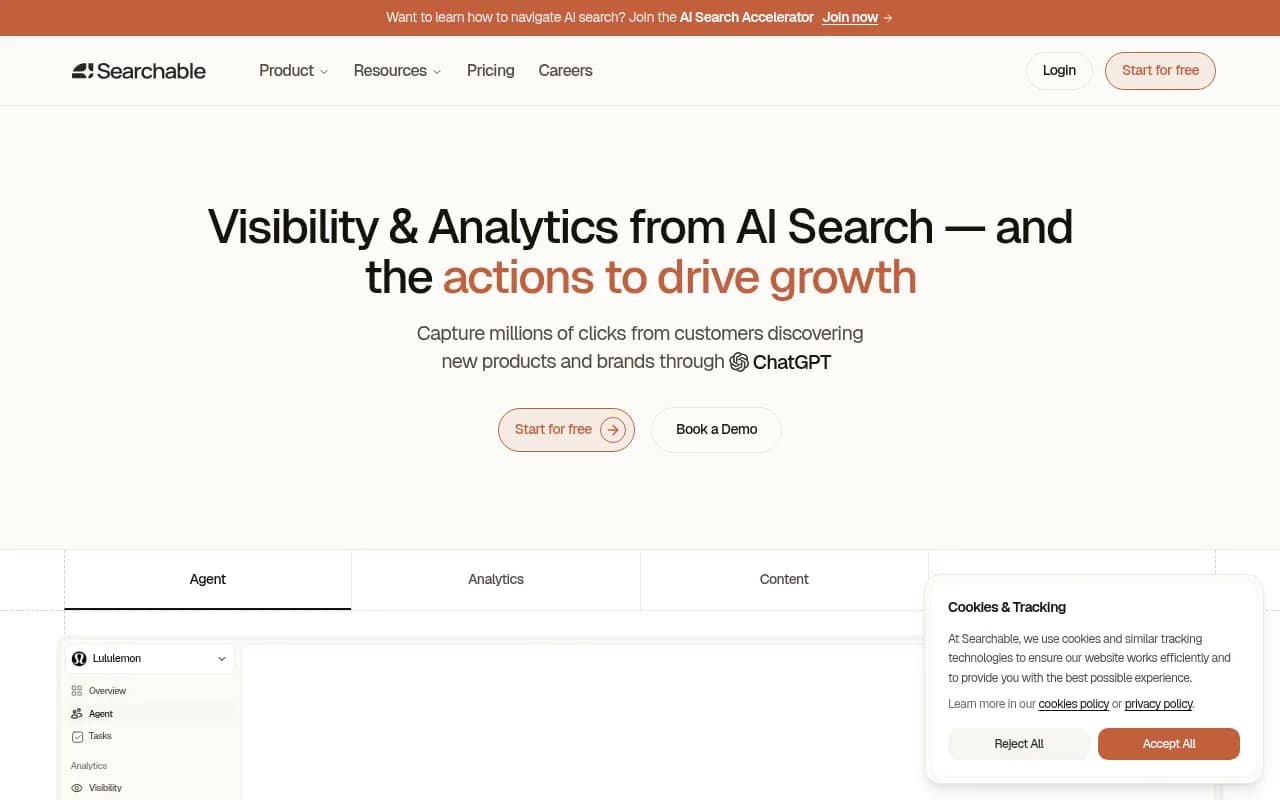
| Searchable | AI visibility | AI Overviews, ChatGPT, Perplexity and others | Mentions, citations, position, description | Its own comparison ranks itself first |
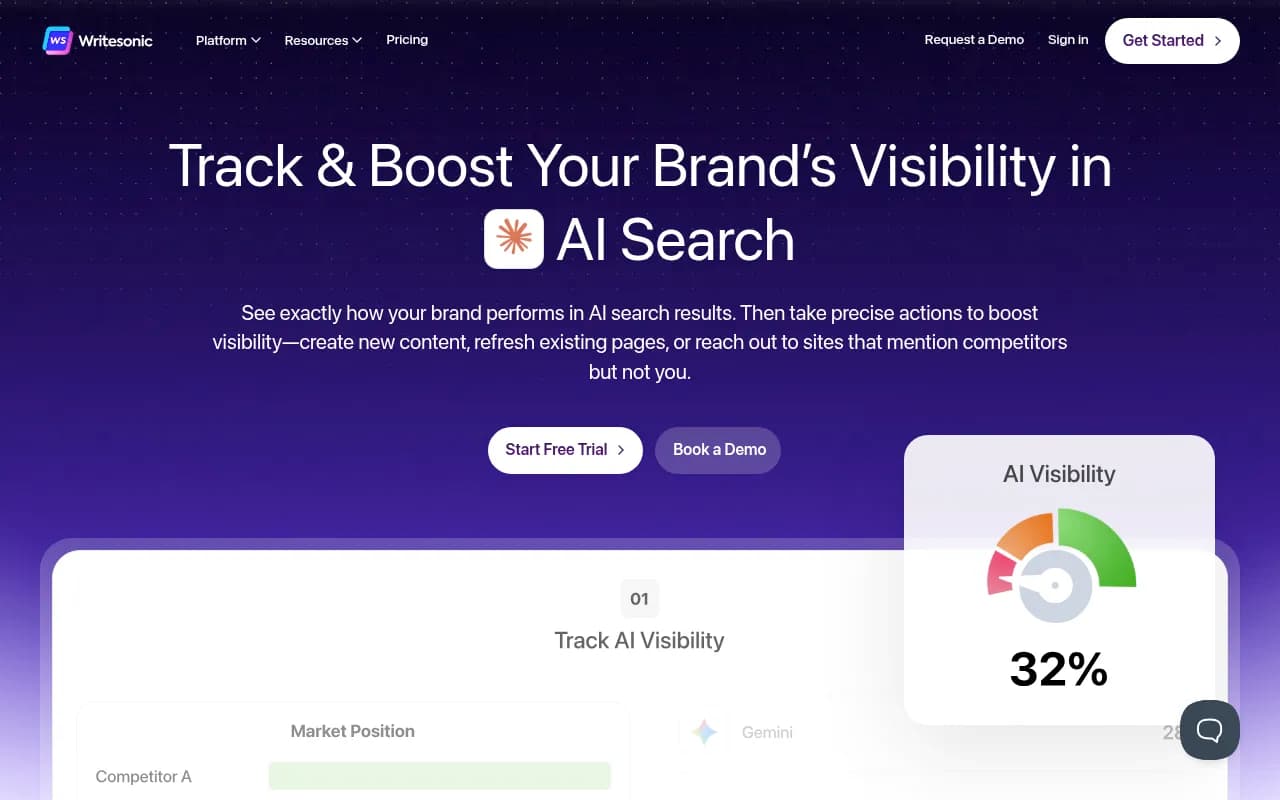
| Writesonic | AI visibility plus content | AI Overviews, ChatGPT, Gemini; more on Enterprise | Suggests fixes | Perplexity and AI Mode gated to Enterprise |
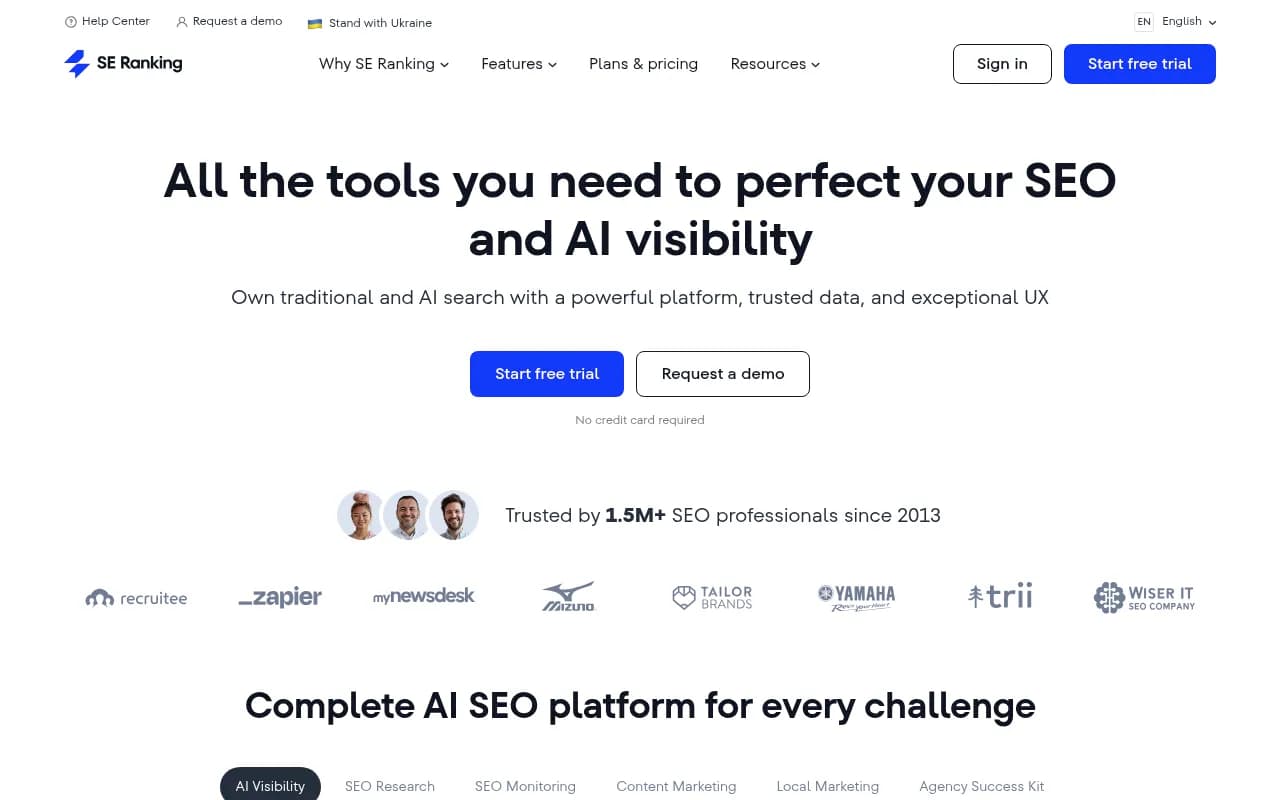
| SE Ranking | Rank tracker plus AI add-on | AI Overviews, AI Mode, ChatGPT, Perplexity | Organic and AI side by side | Add-on pricing stacks up |
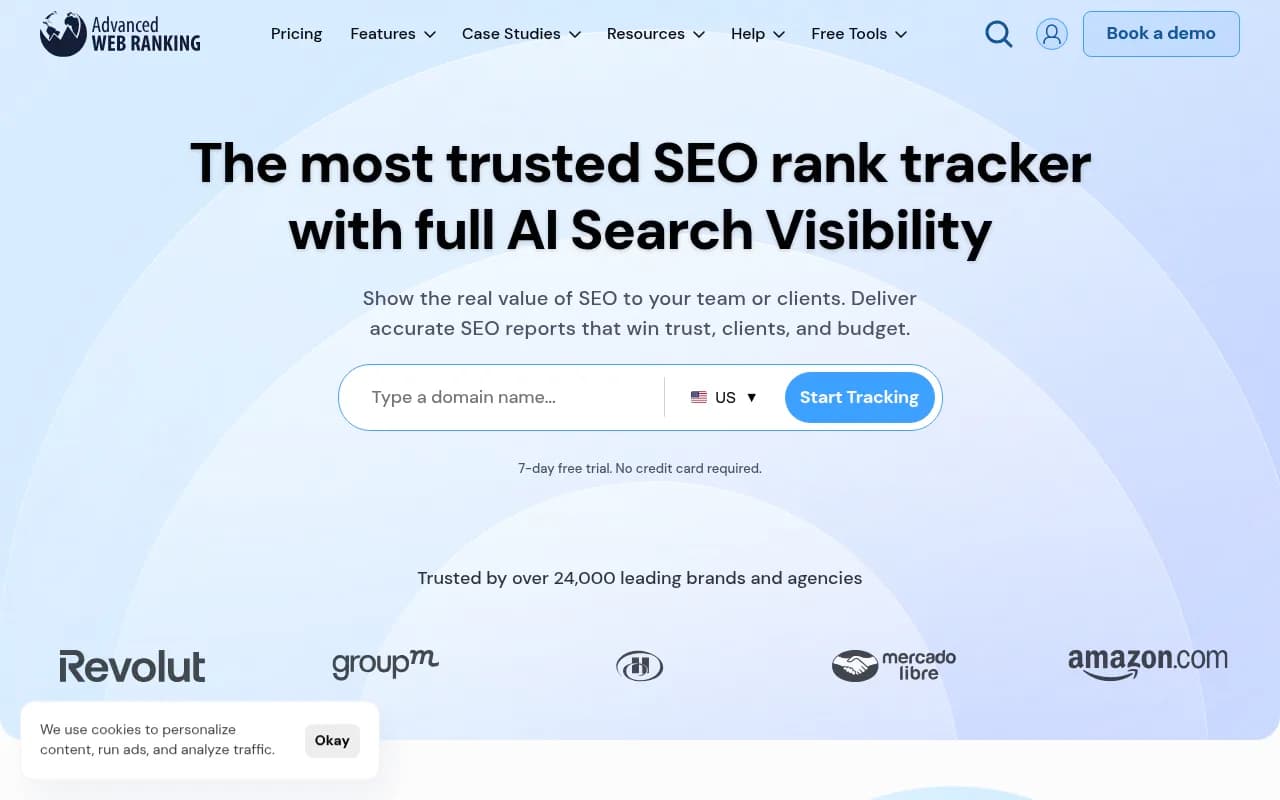
| Advanced Web Ranking | Rank tracker | AI Overviews, AI Mode, ChatGPT, Perplexity | Many locations, agencies | AI Mode needs its own project |
| Semrush | SEO suite | AI Overviews, AI Mode, ChatGPT, Gemini, Perplexity | Good if you already pay | Fixed prompt sets |
| ZipTie | Prompt tracker | AI Overviews plus six engines | Organic results beside AI | No citation position |
| Otterly.AI | Prompt tracker | Multi-platform | Affordable monitoring | Monitoring only |
Promptwatch
Promptwatch is the one I'd look at first if you want a single place to track all four engines and then do something about the gaps. It monitors the real interfaces of ChatGPT, Gemini, Perplexity, Google AI Overviews and AI Mode, with per-country and per-language tracking, and reports visibility, position, share of voice and sentiment separately per engine. Beyond monitoring, it adds IP-verified AI crawler logs, content gap analysis and an agent that writes and publishes content against the gaps, which most trackers don't have.

Searchable and Writesonic
Both cover AI Overviews alongside ChatGPT and Perplexity, and both publish comparison articles that put themselves first. They're worth a trial, just don't rely on their own rankings.
Rank trackers with AI bolted on
If organic rank tracking is still your main job, SE Ranking and Advanced Web Ranking show AI Overview presence next to your organic positions. AWR reports whether you appeared as a source only or as an inline link in AI Mode, which is useful detail.
Semrush is the same story for teams already inside that suite.
Lighter prompt trackers
ZipTie and Otterly.AI are simpler, cheaper starting points. Expect monitoring without much in the way of fixing.

For wider browsing, the GEO software directory at bestgeosoftware.com lists far more options than fit in a table.
What to ask before you buy
- Does it query the real UI or only APIs?
- Does it separate AI Overviews from AI Mode?
- Does it record citation position, or only presence?
- Can you track by country, city and language?
- Can it show you which pages get crawled and cited?
- Is pricing per prompt, per keyword or per credit, and what happens when you add engines?
Pricing model matters more than headline price. Per-prompt pricing with four engines multiplies fast.
Don't forget the traffic side
Rankings in AI answers are a leading indicator. Revenue shows up in analytics. Google AI Overview clicks land in GA4 as ordinary Google organic traffic, with no separate referral parameter, so you can't isolate them there. ChatGPT, Perplexity and others do send identifiable referrals. A tracker with visitor analytics, or a GA4 segment for AI referrers, closes that loop.
Also check crawler access. If AI bots hit errors on your pages, no amount of content work will earn citations. The AI crawler traffic data from Promptwatch shows which bots are active, and tools like Promptwatch log them per page.
A realistic weekly routine
- Monday: review the dashboard per engine, noting only changes larger than normal noise.
- Midweek: pull the prompts where a competitor is cited and you aren't, and pick two to address.
- Friday: check whether last month's published pages are being crawled, cited and clicked.
That's about an hour once the setup exists, versus the hour you'd spend just logging in to four tools.
Bottom line
One tool is enough if it covers all four engines through their real interfaces and reports each separately. If you live in organic rankings, start with a rank tracker's AI add-on. If you want to find gaps and fix them, pick a dedicated AI visibility platform and trial it on your 30 most important prompts. Whichever you choose, confirm current pricing on the vendor's own page before committing.