Key takeaways
- Traditional rank tracking tools don't show AI Overview visibility -- you need dedicated tools to see who's getting cited in AI-generated answers
- The gap between your brand and a competitor in AI Overviews is measurable: you can compare citation frequency, prompt coverage, and share of voice across models
- Google Search Console shows some AI Overview data but lacks competitor comparison -- you need third-party tools for that
- The most common reason competitors outrank you in AI Overviews is content gaps: they've answered questions you haven't published content for
- Spotting the gap is only half the job -- you also need a plan to close it
Something quietly shifted in how buyers find products and services. You might have noticed your organic traffic holding steady while leads slow down. Or you searched for your own category on Google and saw a competitor's name in the AI Overview box -- not yours.
That's not a coincidence. Google AI Overviews now appear for a huge share of informational and commercial queries, and they pull from a different pool than traditional blue-link rankings. A competitor can be invisible in positions 1-10 but dominate the AI-generated answer at the top of the page. And if you're not tracking that separately, you won't even know it's happening.
This guide walks through how to actually measure the gap -- what tools to use, what signals to look for, and what to do once you've found it.
Why AI Overview visibility is different from regular rankings
Before getting into the how, it's worth being clear about what makes this problem distinct.
When you rank #3 for a keyword, you can see that in Ahrefs or Semrush. When Google cites a competitor's page inside an AI Overview, that doesn't show up in traditional rank trackers. The AI Overview is a separate SERP feature -- it synthesizes multiple sources and presents them as a single answer. Your competitor might be cited there even if their page ranks #8 organically.
The same logic applies to ChatGPT, Perplexity, Claude, and Gemini. When someone asks "what's the best project management tool for remote teams," those models generate an answer from their training data and real-time web access. Which brands they mention -- and how often -- is a form of visibility that has nothing to do with your traditional keyword rankings.
So the first thing to accept: you need different data sources to understand this.
Step 1: Check your own AI Overview presence first
Before comparing yourself to competitors, establish your baseline.
Google Search Console (limited but free)
Google Search Console does show some AI Overview data. Under the Performance report, you can filter by "Search type" and look for AI Overview appearances. The data is incomplete -- GSC doesn't break down which competitors appear alongside you or instead of you -- but it tells you which queries are triggering AI Overviews for your site and how often you're being shown.
Look for queries where you have impressions but low clicks. That's often a sign the AI Overview is absorbing the answer without sending traffic to you.
Manual spot checks
Pick 10-20 queries that matter to your business and search them in Google. Note which AI Overviews appear and which brands are cited. This is tedious at scale but gives you a real feel for the competitive landscape before you invest in tooling.
Step 2: Use dedicated AI visibility tools to compare at scale
Manual checks don't scale past a handful of queries. To systematically compare your AI Overview presence against competitors, you need a tool built for this.
Here's how the main options stack up:
| Tool | Tracks Google AI Overviews | Tracks other LLMs (ChatGPT, Perplexity, etc.) | Competitor comparison | Content gap analysis |
|---|---|---|---|---|
| SE Ranking | Yes | Limited | Yes | No |
| Semrush | Yes (fixed prompts) | No | Limited | No |
| Ahrefs Brand Radar | Yes | No | Limited | No |
| Otterly.AI | Yes | Yes | Basic | No |
| Peec AI | Yes | Yes | Yes | No |
| Profound | Yes | Yes | Yes | No |
| Promptwatch | Yes | Yes (10 models) | Yes | Yes |
Promptwatch is worth calling out here because it covers the full picture -- not just Google AI Overviews but also ChatGPT, Claude, Perplexity, Gemini, Grok, DeepSeek, and more. The competitor heatmaps let you see, prompt by prompt, who's winning and who's invisible.

SE Ranking's AI Overviews tracker
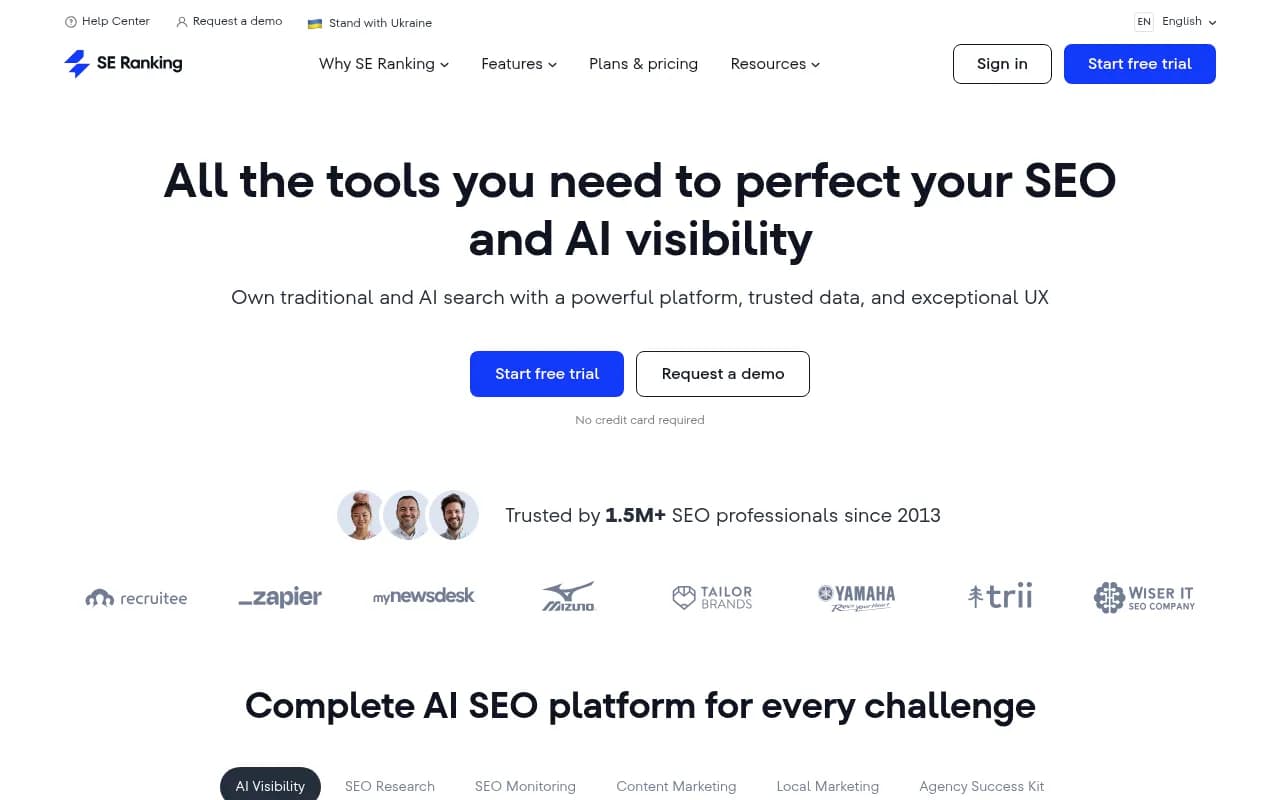
SE Ranking has a dedicated AI Overviews tracking module that monitors when your target keywords trigger AI Overviews, detects brand mentions inside those overviews, and shows you which sources Google is citing. It's a solid starting point for teams already using SE Ranking for traditional SEO.
Semrush and Ahrefs
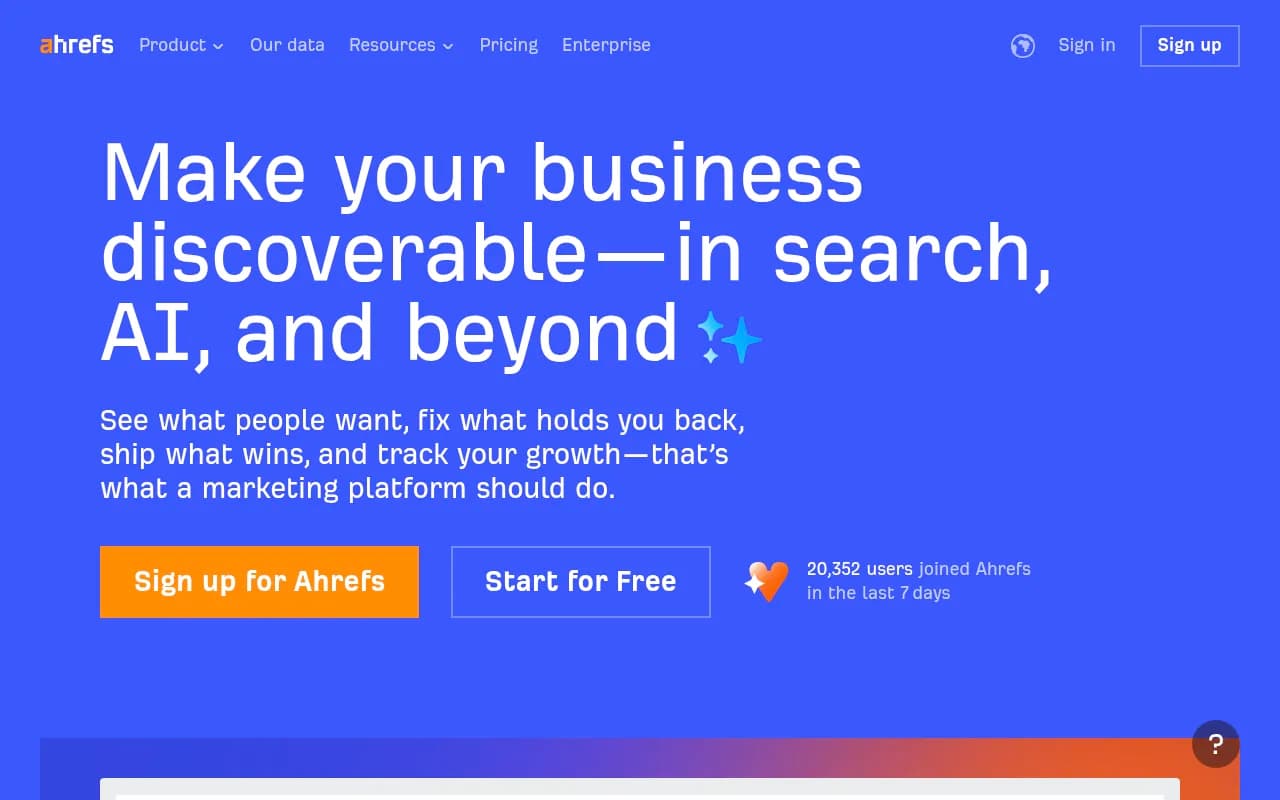
Both Semrush and Ahrefs have added AI Overview tracking, but with limitations. Semrush uses fixed prompt sets rather than letting you define your own queries, and Ahrefs Brand Radar doesn't include AI traffic attribution. They're useful supplements if you're already paying for these platforms, but neither was built specifically for this problem.
Otterly.AI and Peec AI
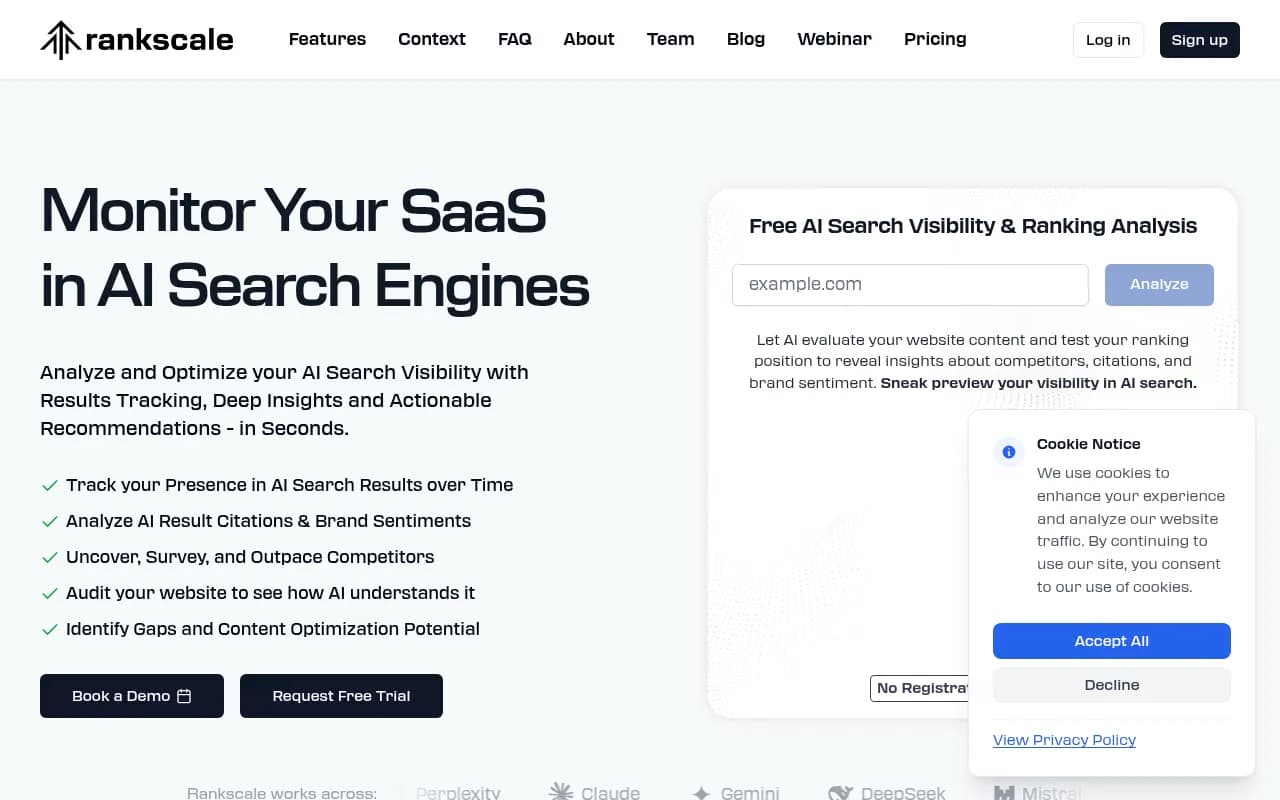
These are lighter-weight options that focus on monitoring. They'll show you when and where your brand appears in AI responses, and you can add competitors to compare. The limitation is that they stop at the data -- they don't help you figure out what to do about it.


Step 3: Identify which prompts your competitors are winning
Knowing that a competitor "shows up more" is vague. The useful question is: for which specific queries are they appearing and you're not?
This is what's sometimes called an answer gap or prompt gap analysis. The idea is simple: take a list of queries relevant to your category, run them through AI models, and map which brands appear in the responses. Where your competitor appears and you don't -- that's the gap.
Some tools automate this. Promptwatch's Answer Gap Analysis does exactly this: it shows you the specific prompts where competitors are visible and you're not, along with the content your site is missing to compete. That's more actionable than a dashboard showing you a visibility score of 34 vs their 61.

A few categories of prompts to prioritize when doing this analysis:
- Category-level queries ("best [product type] for [use case]")
- Comparison queries ("X vs Y", "alternatives to X")
- Problem-aware queries ("how to fix [problem your product solves]")
- Buying intent queries ("is [your product category] worth it")
These are the queries where AI Overviews and LLM responses have the most influence on purchase decisions. If a competitor is consistently cited in these and you're not, that's a real revenue problem -- not just a vanity metric issue.
Step 4: Analyze what's making them visible
Once you know which prompts a competitor is winning, the next question is why. A few common patterns:
They have content you don't
The most common reason. AI models cite pages that directly answer the question being asked. If your competitor has a detailed comparison page, a FAQ section, or a use-case-specific landing page that you don't have, they'll get cited and you won't.
Check their site for content types you're missing. Look at which of their pages are being cited in AI responses -- tools like Promptwatch show you page-level citation data, so you can see exactly which URLs are driving their AI visibility.
Their content is more structured
AI models prefer content that's easy to parse: clear headings, direct answers near the top of the page, FAQ sections, numbered steps. A competitor with a well-structured answer to a question will often beat a competitor with a longer but harder-to-read page.
They're being cited in third-party sources
AI Overviews and LLMs don't only pull from brand websites. They cite Reddit threads, YouTube videos, review sites, and industry publications. If a competitor is frequently discussed positively in these channels and you're not, that influences how AI models represent them.
This is an underappreciated channel. Tools that surface Reddit and YouTube citations -- not just direct website citations -- give you a more complete picture of why a competitor is winning.
Step 5: Track changes over time
A one-time snapshot tells you where things stand today. What you actually want is a trend line -- are you gaining or losing ground relative to competitors over time?
Set up regular monitoring for:
- Your share of voice across the prompts that matter to your business
- Which competitors are gaining visibility (not just the ones already ahead of you)
- Which of your pages are being cited, and how often
This is where the difference between a monitoring tool and an optimization platform matters. A monitoring tool gives you the data. An optimization platform connects that data to actions -- content to create, pages to update, gaps to close -- and then shows you whether those actions moved the needle.
Step 6: Close the gaps
Identifying that a competitor is outperforming you in AI Overviews is only useful if you do something about it. The most direct path to closing the gap:
Create content for the missing prompts
If your competitor is getting cited for "best [your category] for enterprise teams" and you have no page targeting that angle, write one. The content needs to directly answer the question, be well-structured, and be specific enough to be useful. Generic content doesn't get cited.
Update existing pages to be more AI-friendly
Sometimes you have the content but it's not structured in a way AI models can easily use. Add FAQ sections, put the direct answer near the top of the page, use clear H2/H3 headings that match how people phrase their questions.
Build presence in third-party sources
Contribute to relevant Reddit discussions (genuinely, not spammily). Get your brand mentioned in industry roundups and comparison articles. These third-party citations feed into how AI models represent your brand.
Monitor your crawler logs
AI models crawl your site before they can cite it. If there are pages that AI crawlers aren't reaching -- due to robots.txt issues, slow load times, or crawl errors -- those pages will never be cited regardless of how good the content is. Crawler log analysis shows you which pages AI bots are actually visiting and where they're hitting walls.
Putting it together: a practical workflow
Here's a simple workflow you can run monthly:
- Pull your target prompt list (start with 30-50 queries that represent your buyers' questions)
- Run them through an AI visibility tool to see your citation rate vs competitors
- Identify the 5-10 prompts where the gap is largest
- Check what content exists on your site vs competitors for those prompts
- Create or update content to address the gaps
- Re-run the analysis next month to see if your visibility improved
The tools that make this workflow faster:
What to watch out for
A few things that trip people up when they start doing this analysis:
Visibility scores vary by model. A competitor might dominate in Google AI Overviews but be less visible in ChatGPT or Perplexity. If your buyers use multiple AI tools (and they do), you need to track across models, not just Google.
Prompt phrasing matters a lot. "Best CRM for small business" and "top CRM tools for startups" might return completely different AI responses. Don't assume one prompt represents the full picture.
AI responses change frequently. A citation you had last week might be gone this week. This is why ongoing monitoring matters more than one-time audits.
Impressions without clicks still matter. Even if an AI Overview doesn't send traffic to your site, being cited builds brand familiarity. Buyers who see your name in an AI response are more likely to search for you directly later. Conversely, being consistently absent while a competitor is consistently present shapes perception over time.
The bottom line
The gap between you and a competitor in AI Overviews is real and measurable. It's not a mysterious black box -- it's a content and citation problem, and it has concrete solutions. The brands winning in AI search right now are the ones that figured out which questions their buyers are asking AI models, created content that directly answers those questions, and built the third-party presence to back it up.
The tools exist to do this systematically. The question is whether you're tracking it at all -- because if you're not, you won't know you're losing ground until the traffic and lead data makes it obvious.