Key takeaways
- ChatGPT has no fixed ranking. You "rank" by being cited as a source or named in the answer, and each response is shared with many other domains.
- Tracking only pays off when it feeds a weekly loop: diagnose the gap, ship one fix per gap, re-check in 48 to 72 hours, and judge the trend over four to six weeks.
- Product and landing pages are the biggest citation surface (about 39% of ChatGPT citations in Promptwatch's Sep 28 to Oct 4, 2026 data), so fix those before you write anything new.
- Third-party listicles, reviews and comparisons are how most brands get into the answer. Your own site makes you eligible; outside mentions make you the pick.
- Keep prompt sets fixed and count mentions and citations separately, or you will chase noise.
What "rank" actually means in ChatGPT
There is no position 1 in ChatGPT. There is a short list of sources the model pulls for one answer, and a short list of brands it names. Those lists change by run, by model version and by country.
That changes what you do after you start tracking. A Google rank tracker tells you where a URL sits. A ChatGPT tracker tells you three different things: whether you were mentioned, whether you were cited, and who else showed up. Treat them as separate metrics. A brand can be named from model memory without a single citation, and a page can be cited without the brand being named.
How crowded is the answer? Promptwatch's data on unique domains per ChatGPT response (Sep 28 to Oct 4, 2026) found that 47.6% of responses with citations cite 10 or more domains, and only 6% cite three or fewer. You will share nearly every answer. So the goal is not just to appear, it is to appear early, be described accurately, and show up on more prompts than your competitors.
Step 1: Read your tracking data before you touch anything
The temptation after the first report is to start publishing. Don't. Spend a session sorting your prompts into buckets, because each bucket has a different fix.
| Pattern in your data | What it usually means | First fix |
|---|---|---|
| Mentioned and cited | Working | Protect it, refresh the cited page |
| Mentioned, never cited | Model knows you, but your pages are not the source | Fix page structure, add answer-first copy, check crawler access |
| Cited, never named | Content is used, brand is not attached | Strengthen brand facts and entity consistency |
| Competitor named, you absent | Coverage gap | Get into the third-party pages that cite them |
| Wrong or negative claim | Bad source upstream | Trace and correct the page behind the claim |
If you are still choosing a tracker, tools like Promptwatch cover this end to end, and the directories at ai-rank-tools.com list the lighter options. Whatever you use, make sure it shows exact cited URLs, not only a visibility score. Without URLs you cannot tell what to fix.

One more rule: do not compare runs of different prompt sets. Lock a set of 30 to 50 buyer prompts, grouped by intent (commercial, informational, branded, competitor comparison), and leave it alone for at least a month. Single answers vary between runs, so you want trend lines, not anecdotes.
Step 2: Make sure ChatGPT can actually reach you
This is the cheapest fix and the one people skip. It takes an afternoon, and it decides whether anything else pays off.
- Allow OpenAI's search crawler (OAI-SearchBot) in robots.txt. If you block it, ChatGPT search cannot retrieve your pages for live answers. GPTBot is a separate decision about training data, and ChatGPT-User covers fetches triggered by users.
- Check that your CDN, WAF or bot protection is not quietly returning 403s to AI user agents. This happens a lot on sites behind Cloudflare or similar.
- Confirm the pages are indexed in Bing, since ChatGPT search leans on it for retrieval.
- Keep key content in server-rendered HTML. If your pricing table only exists after JavaScript runs, a crawler may never see it.
- Keep docs public. Documentation is one of the more durable citation types.
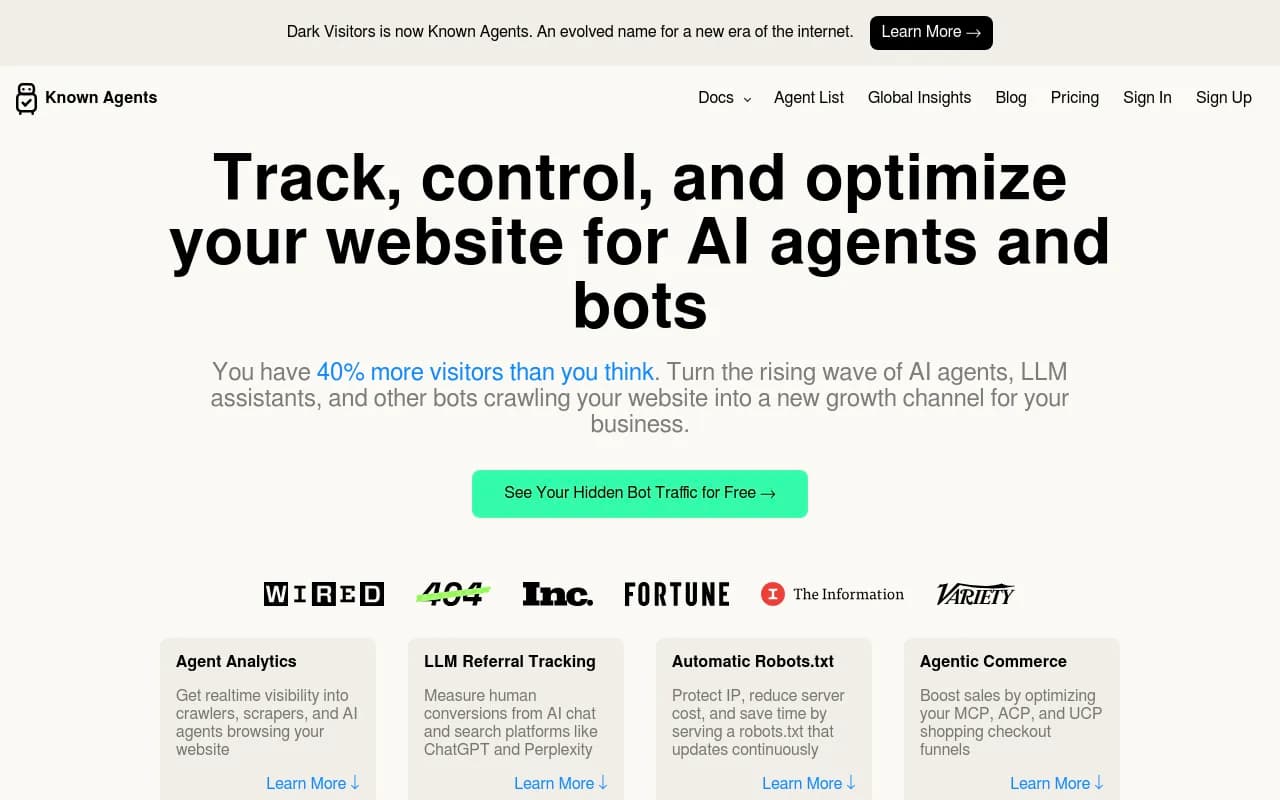
To verify rather than guess, you need crawler logs that show which AI bots hit which pages and what status they got back. Server logs work if you have the patience. Promptwatch has IP-verified AI crawler logs built in, and DarkVisitors is a lighter option focused on bots and LLM referrals.
The Agentic Readiness Check from Promptwatch is a free way to see which AI crawlers can read your site before you set up logging.
Step 3: Fix the pages ChatGPT already prefers
Most teams jump to blog posts. The data says to start somewhere else.
In Promptwatch's report on which content types ChatGPT cites (Sep 28 to Oct 4, 2026), the split across all prompts looked like this:
| Content type | Share of ChatGPT citations |
|---|---|
| Product pages | 22.4% |
| Landing pages | 16.8% |
| Listicles | 13.6% |
| How-to guides | 8.7% |
| Documentation | 7.5% |
| General articles | 6.1% |
| Comparisons | 5.9% |
| News | 5.7% |
| FAQ pages | 3.3% |
| Reviews | 1.7% |
Product and landing pages together are about 39%. For commercial prompts like "best CRM for small businesses", product pages, landing pages, listicles and comparisons add up to almost 70% of citations.
So the practical order of work is:
- Rewrite your product and landing pages so specs, prices, who it is for and how it differs are complete and factual. Vague marketing copy gives a model nothing to quote.
- Open each priority page with a self-contained answer, ideally in the first 40 to 60 words, under a heading phrased like the question a buyer asks.
- Add schema.org markup on key pages so facts parse cleanly.
- Add a real FAQ page. FAQ pages are a small share overall (3.3%) but they match how prompts are written.
- Publish comparison pages against your main competitors. Comparisons climb to 7.9% of citations on commercial prompts.
One note on formats: markdown files make up just 0.05% of AI search citations in Promptwatch's markdown data. Spending a week on a markdown version of your site for ChatGPT search is not where the gain is.
Step 4: Earn the third-party citations
Here is the uncomfortable part. Optimizing your own site gets you eligible. For many prompts, what gets you chosen is being named on pages you do not control: listicles, comparisons, review sites, and forums.
The practical process:
- In your tracker, open the cited sources for your ten most valuable prompts where you are absent.
- List the third-party URLs that appear repeatedly. Those are your targets.
- For each, work out the way in. A roundup might accept an update or a correction. A review site needs customer reviews. A publication needs a data point worth quoting.
- Offer something specific: current pricing, a fresh statistic, a clearer product description. "Please add us" rarely works. "Here is updated data for your 2026 comparison" sometimes does.
Who you target matters too. Promptwatch's domain rank data for August 2026 shows sites with domain rank 46 to 75 earned almost half of ChatGPT citations, while DR 91 to 100 sites fell to about 3%. Mid-authority niche sites are worth more outreach time than you might think. Don't just chase the biggest names.
Industry matters as well. For software prompts, Promptwatch's October 2026 software citation data shows GitHub, Microsoft's docs and G2 leading, with documentation and help centers taking the largest share. In travel, booking and search sites take more than half. Check your own category before assuming a playbook transfers.
Don't build a plan around Reddit and social
If your strategy was "get mentioned on Reddit so ChatGPT picks it up", revisit it. Reddit's share of ChatGPT citations fell from about 4% to 0.5% on August 14, 2026, and in the Sep 28 to Oct 4 window ChatGPT drew only 0.46% of citations from social platforms, against 12.2% for Google AI Overviews. Community work still helps with other engines and with real people. It just is not a ChatGPT lever right now.
Step 5: Match content to intent, then refresh on a schedule
Prompt intent changes which formats win. Branded prompts lean on product pages (23.3%), landing pages (22.8%) and reviews, which hit 5.6%, more than three times their overall share. Informational prompts lift how-tos to 10.7% and docs to 8.5%. So if your branded prompts show you cited but described badly, the fix is review collection on trusted sites, not more blog posts.
Then think about decay. Promptwatch's content half-life study tracked every page ChatGPT cited on July 6, 2026 for 90 days:
- Landing pages: 78% still cited after 30 days, 69% after 60.
- Docs: 76% after 30 days, 67% after 60.
- Comparisons: 72% after 30 days, 63% after 60.
- Product pages, reviews and how-tos: about 55% after 60 days, with a half-life of 74 to 77 days.
- News: half the pages gone after 36 days.
What to do with that:
- Treat landing, docs and pricing pages as long-term assets. Keep them accurate and leave their URLs alone.
- Refresh product pages on a calendar. Prices, availability and specs go stale, and stale pages drop out.
- Use news and press for short bursts, not as a base.
- When something you were cited for slips, update the facts, dates and prices on that exact page first. It is the quickest fix on this list.
Step 6: Keep your brand facts consistent
Models build an impression from everything they see. If your category, pricing and description differ between your site, your LinkedIn page, review profiles and partner pages, answers get muddled or wrong.
Do a one-hour audit. Search for your brand name and check the same five facts everywhere: what you are called, what category you are in, who you serve, what it costs, and your top differentiator. Fix the outliers.
If ChatGPT says something wrong about you, do not argue with the model. Find the page behind the claim (your tracker's citation view helps) and correct it at the source. If you do not control the page, contact the owner with the correct information and a link to proof.
Step 7: Run a weekly operating loop
The fixes above are one-off. The habit that keeps improving your rank is the loop. A version that works without a dedicated team:
| Day | Task | Time |
|---|---|---|
| Monday | Review last week's mentions, citations and share of voice. Flag drops and new competitors. | 20 min |
| Tuesday | Pick one or two gaps and decide the fix type (page rewrite, outreach, technical). | 30 min |
| Wednesday and Thursday | Ship the fixes. Small and specific beats large and vague. | Varies |
| Friday | Check whether fixes moved anything. Record results. Reprioritize. | 20 min |
Two timing rules save a lot of false conclusions. Re-check a fix 48 to 72 hours after shipping if your tool refreshes daily. And only judge a strategy on four to six weeks of trend, because individual answers wobble.
When you drop overnight
Sometimes visibility falls and nothing on your side changed. Before panicking, check for a platform-level shift. For example, average citations per response dropped across GPT-5.3, GPT-5.4 and GPT-5-Mini around the March 4, 2026 rollout, and on August 8, 2026 ChatGPT started using the site: operator at scale, jumping from about 0.4% to about 17% of fan-out queries. Industry-wide moves like these hit everyone.
If it is only you, the same-day diagnosis is quick:
- Confirm the drop on the same fixed prompts, not a handful of new ones.
- Check crawler logs for new errors or blocks.
- See whether a cited third-party page changed or disappeared.
- See whether a competitor gained a citation you lost.
- Fix the cause: restore access, update the stale page, or contact the domain that dropped you with updated data.
Step 8: Pick tools that help you act, not just watch
Most of the market is monitoring. That is fine at the start, but once you have a baseline you need something that shows why a competitor is cited and what to do about it. Here is how a few catalog options differ.
| Tool | Strength | Fits when |
|---|---|---|
| Promptwatch | Tracking plus crawler logs, AI traffic analytics, content gap analysis and a content agent that publishes to your CMS | You want one place from diagnosis to published fix |
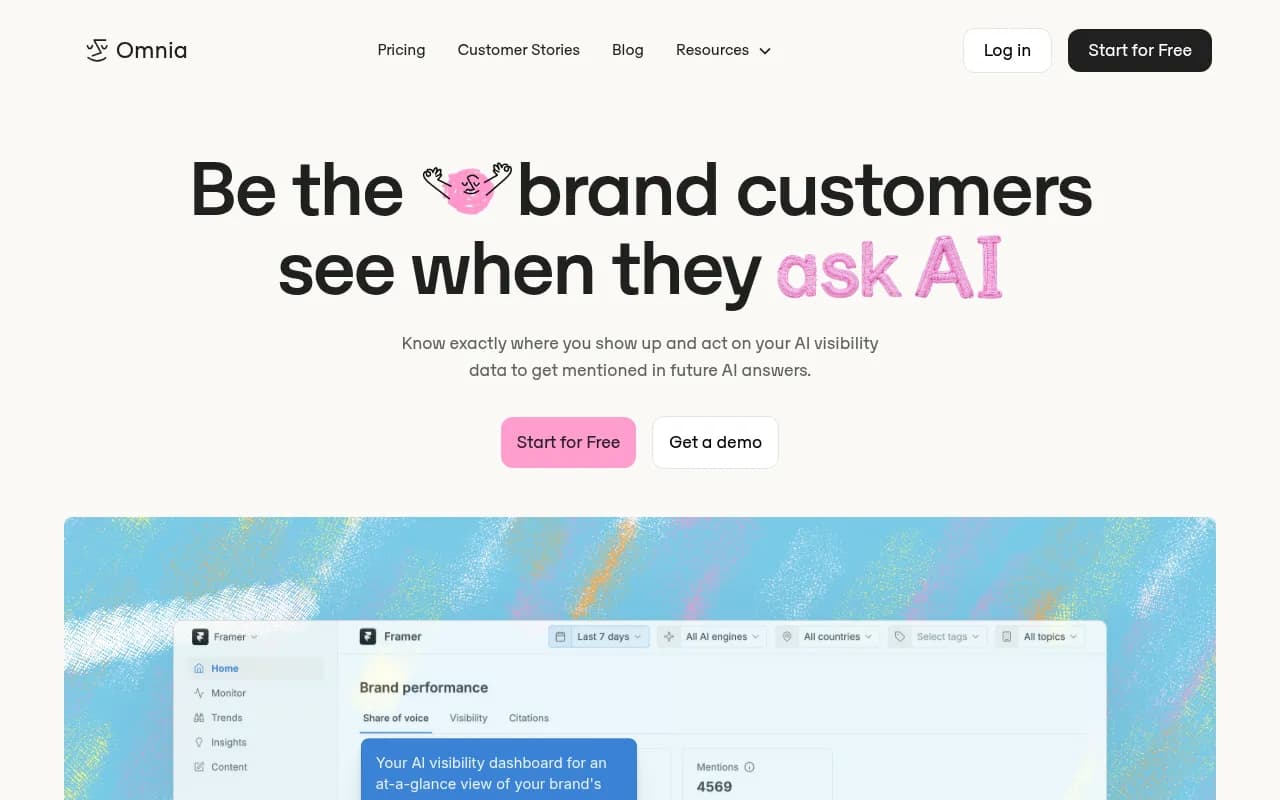
| Omnia | Share of voice analytics and a clear operating rhythm | You need to report visibility and track competitors |
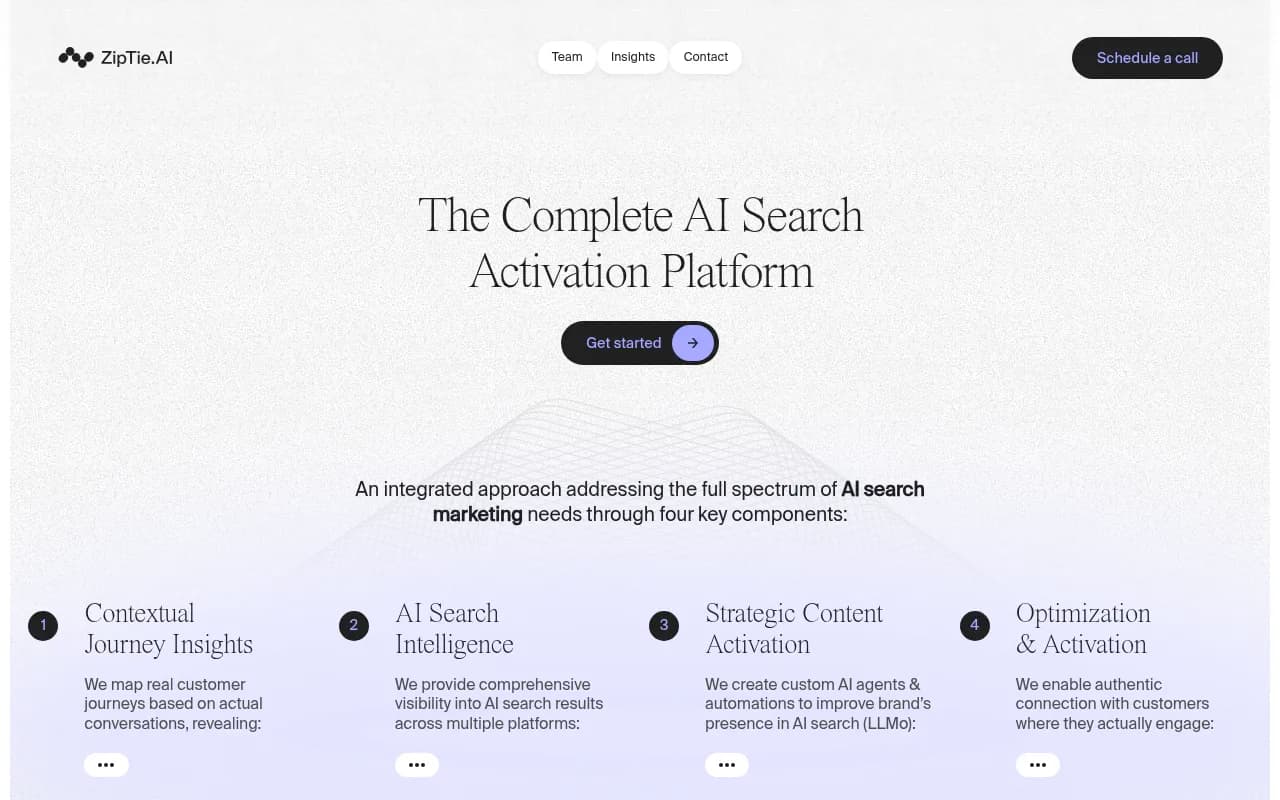
| ZipTie | Deep analysis of AI search visibility | You want to dig into why you are or are not cited |
| Peec AI | Multi-language tracking | You track many markets |
| Otterly.AI | Affordable monitoring | You only need a baseline on a tight budget |
| Wellows | Free ChatGPT visibility check that generates prompts from your site | You want a quick starting point |


On Promptwatch specifically, the useful part for this playbook is that its content gap analysis maps your pages against the prompts AI answers, and the Action Board turns that into a prioritized to-do list. Published pages are then tracked for crawls, citations and AI traffic, so you see whether the fix worked. If you are comparing options more broadly, the GEO software directory is a decent place to shortlist.
A 30-day plan
- Week 1: Lock your prompt set. Fix crawler access and Bing indexing. Audit brand facts.
- Week 2: Rewrite the five product and landing pages tied to your highest-value prompts. Add answer-first intros, schema and an FAQ.
- Week 3: Build your third-party target list from cited sources. Send three to five specific, data-backed pitches. Publish one comparison page.
- Week 4: Re-run the same prompts. Compare mentions and citations separately. Pick the next ten prompts and repeat.
If citations on the first ten prompts rise, roll the same approach to the next ten. If they do not, look at the bucket table from step 1 again. The failure is almost always in one of two places: the page was not retrievable, or nobody outside your site is saying anything about you.
What to expect
Progress is gradual and uneven. Technical fixes can show within days. Content rewrites tend to show over a few weeks. Third-party citations are slowest and usually produce the biggest jump. Keep the prompt set fixed, keep the loop weekly, and you will know within a quarter whether the work is moving your share of voice.