
Key takeaways
- Don't compare 350 tools. Pick the job you need done first (measure, diagnose, or fix), and most of the list drops out in two minutes.
- Sampling method matters more than dashboards. Ask whether data comes from real AI interfaces or APIs, how many prompts you get, and whether you can segment by prompt type.
- Monitoring is the cheap part of the category. The expensive question is whether a finding can travel from the dashboard to a published, measured change on your site.
- Shortlist two or three tools that represent different operating models, then trial them on the same prompt set for 7 to 14 days.
- Check pricing on the vendor's own page. Prices in this category move often, and most ranked lists are written by vendors.
Why a shortlisting method beats another ranked list
Most "best GEO tools" articles are published by a vendor that ranks itself first. Some say so openly. The Publive guide, to its credit, states that it is presented first because Publive publishes it. Others don't. I'm not saying the lists are useless, but they answer a question you haven't asked yet: which tool is best in general. Nobody buys in general.
The category also got crowded fast. Between pure monitors, content writers with a tracking tab, SEO suites that bolted on AI features, and agentic tools that publish for you, there are 350+ products that all say "AI visibility" on the homepage. You can't demo them all. You shouldn't try.
So here is a method that takes about 15 minutes and gets you to a shortlist of three. It has five steps, each about three minutes.
Step 1: Pick the job (3 minutes)
Every GEO tool does at least one of these jobs. Fewer do all of them.
- Measure. Are we mentioned or cited in ChatGPT, Gemini, Perplexity, AI Overviews and others? What is our share of voice and sentiment?
- Diagnose. Why are we missing? Which pages get cited instead, which sources does the AI trust, can AI crawlers even read our site?
- Fix. Create or refresh content, close the gap, publish it, and check whether it worked.
- Convert. Track the traffic and revenue AI search sends, and what happens after the click.
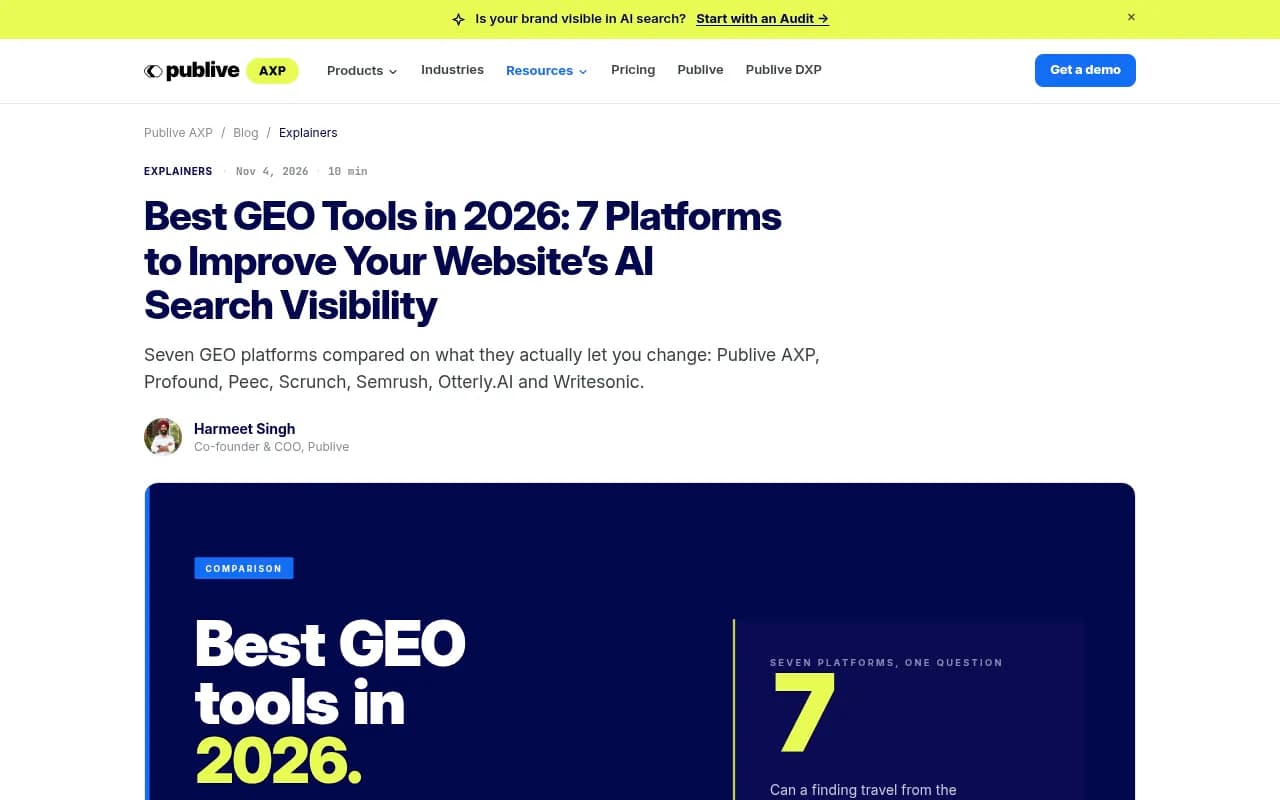
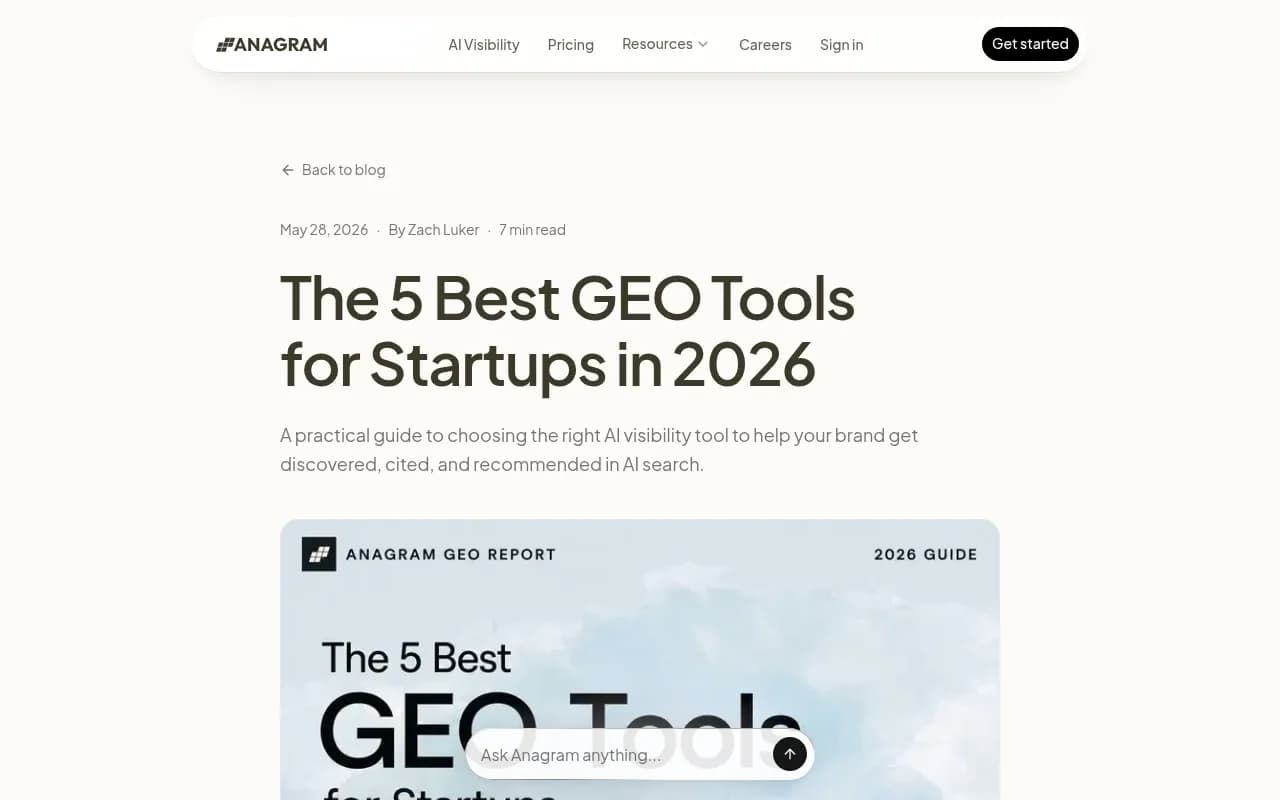
Anagram's startup guide makes a similar split between monitoring, optimization and conversion, and notes that no single tool wins all three on a startup budget. That is a fair point for tiny teams. For anyone with a content team and a real stake in AI search, the more useful question is the one the Publive guide asks: can a finding travel from the dashboard to an approved change on the live site?
Write down which of the four jobs you need in the next 90 days. Be honest. If your team has no capacity to write and publish, a dashboard alone will produce a report nobody acts on.
Step 2: Map your constraints (3 minutes)
Five quick answers remove about two thirds of the market.
| Question | If yes | If no |
|---|---|---|
| Do we sell in more than one country or language? | Need per-country and per-language monitors | Single-market tools are fine |
| Do we have local or multi-location needs? | Need city or coordinate-level targeting | Skip this criterion |
| Do we sell products in ChatGPT shopping or Alexa results? | Need shopping visibility | Skip |
| Are we an agency? | Need unlimited projects, client reports, pitch reports | Brand plans are cheaper |
| Do we have a security review? | Need ISO 27001, SSO, audit logs | Lighter tools are fine |
Also fix a budget ceiling now. The only pricing figures in the research I reviewed come from Anagram's own blog post: Otterly.ai from $29 a month and Anagram from $99, with Profound described as enterprise-priced. That is one vendor's view, so treat it as a rough shape of the market: cheap monitors at the bottom, custom-quoted enterprise platforms at the top, and a wide middle where pricing depends on prompts, responses and seats.
Step 3: Sort the 350 into five buckets (3 minutes)
This is where the catalog stops being overwhelming. Almost every tool fits one of five operating models. Here are examples from the directory, not a ranking.
| Bucket | What it does | Examples from the directory | Pick it when |
|---|---|---|---|
| Budget monitors | Track mentions and citations on a few engines | Otterly.AI, Peec AI, Airefs, BrandAxis, Radix AI | You need a baseline cheaply |
| Deep analytics platforms | Rich dashboards, competitor and source analysis | Profound, Scrunch, AthenaHQ, Gauge | You have an analyst to read the data |
| SEO suites with AI add-ons | AI tracking next to rank tracking | Semrush One, Ahrefs Brand Radar, SE Ranking, seoClarity | You already live in one suite |
| Content-first tools | Write and optimize pages, some tracking | AirOps, Writesonic, Frase, Averi AI | Content output is your bottleneck |
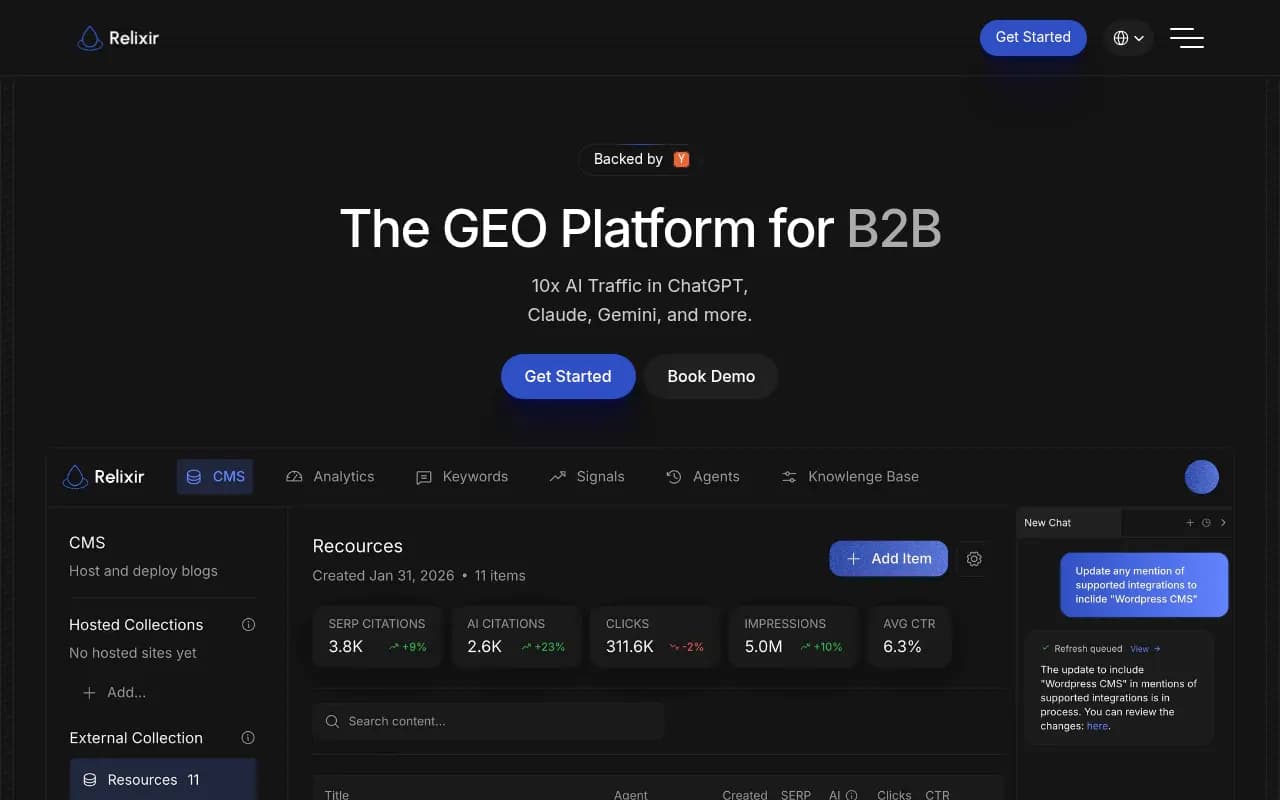
| End-to-end and agentic platforms | Monitor, trace, create, publish, measure | Promptwatch, Relixir, Whitebox, Nuwtonic | You want fixes shipped, not just reported |
A few niches deserve their own flag. Local and review-heavy businesses should look at Reputation.com or BrightLocal. Ecommerce teams should look at Azoma, Yotpo Discover or ShopOS. Enterprise buyers with a procurement process will see Bluefish, Evertune, BrightEdge AI Catalyst and Adobe LLM Optimizer on most shortlists. Developer-tool companies have an unusual need, which is tracking how coding agents recommend their SDKs.
The tools you find through these buckets still need vetting, which is steps four and five.




Step 4: Run the five-question vendor test (3 minutes per vendor, done in parallel)
These are the questions that actually separate tools. A feature checklist won't.
1. Where does the data come from?
There is a real difference between calling a model's API and capturing what a user sees in the live interface. Answers, citations and shopping results can differ between the two. Ask which interfaces are monitored, in which countries, and how personalization is controlled. Tools that track the real UI of ChatGPT, Google AI Overviews, AI Mode, Gemini, Perplexity and Copilot give you something closer to what your customers see.
2. How many prompts, and how do you segment them?
Promptwatch Data shows why a single prompt tells you almost nothing. In its analysis of unique domains per ChatGPT response (Sep 28 to Oct 4, 2026), 47.6% of responses cited 10 or more domains and 66.1% cited at least eight. But brand-specific prompts behaved differently: only 21.3% cited 10 or more, and the most common count was five domains. Organic prompts hit 52.5% at 10 or more.
The buyer implication is simple. Pick a tool that measures across many prompts, shows which competitors are cited next to you, and lets you split organic, brand-specific and comparison prompts. If a tool blends those into one score, the score will mislead you.
3. Does it keep up when the engines change?
AI search behavior moves in steps. Promptwatch's ChatGPT query fanout data shows average fanouts per response falling from 2.15 in early December to about 1.84 by early March, with average query length dropping from about 117 characters to the high 80s. Later, ChatGPT started using the site: operator at scale on August 8, 2026, jumping from roughly 0.4% to about 17% of fanout queries overnight. And reddit.com's share of ChatGPT citations fell from about 4% to 0.5% on August 14, 2026.
Ask each vendor how quickly it adapted to those changes, and whether it captures fanout queries at all. A tool that can't see the searches the AI runs is guessing about why you were or weren't cited.
4. Can it see your own site?
A citation gap has two possible causes: the AI can't read your page, or your page isn't good enough. Only tools with AI crawler logs can tell these apart. Look for IP-verified crawler data (so spoofed bots are filtered), crawl-to-citation tracking per page, and AI-referred visitor analytics. Most monitoring tools have none of this. Without it you will fix content that was never the problem.
5. What happens after the finding?
This is the Publive test, and it is the most important one. Ask the vendor to show a live example of a gap going from detection to a published page and then to a measured result. Watch for three things: whether the platform writes the content or just briefs it, whether it publishes to your CMS (WordPress, Webflow, Framer, or through an API), and whether it re-measures the page afterward.
A scoring sheet you can copy
Weight each row 1 to 3 for your situation, then score each shortlisted vendor 0 to 2. It takes two minutes per tool.
| Criterion | Weight (1-3) | Vendor A | Vendor B | Vendor C |
|---|---|---|---|---|
| Real-UI data on the engines your buyers use | ||||
| Prompt volume, prompt types, segmentation | ||||
| Fanout and citation source visibility | ||||
| AI crawler logs and AI traffic attribution | ||||
| Content creation and CMS publishing | ||||
| Competitor and sentiment depth | ||||
| Markets, languages, local targeting | ||||
| Reporting, API, MCP, integrations | ||||
| Security and procurement fit | ||||
| Price per tracked response |
Price per tracked response is worth the effort. Plan names hide the real unit, which is how many answers you get to collect. A cheap plan with 3,000 responses a month can cost more per useful data point than a mid-priced one with 18,000.
Step 5: Choose operating models, not look-alikes (3 minutes)
Here is where I'd disagree with some buyer's guides that tell you to trial five or six tools. More trials rarely help. Jam's guide puts it well: choose a shortlist that represents meaningfully different operating models, and stop adding candidates once they no longer resolve a real uncertainty.
So take three picks like this:
- One tool from the bucket that matches your job (step 1).
- One from an adjacent bucket that would change your answer if it were better. For example, a monitor-only candidate against an end-to-end candidate.
- One incumbent check: whatever your existing SEO suite offers, so you can price what you'd lose by switching.
If you want a second source to cross-check your list, directories like the GEO software directory at bestgeosoftware.com and AI rank tracking directory at ai-rank-tools.com group the market by capability.
Where the end-to-end bucket fits
If your job is "fix" rather than "measure," the end-to-end bucket is the one to look hard at. Promptwatch is the example I'd put in it. It monitors the real interfaces of ChatGPT, Google AI Overviews, AI Mode, Gemini, Perplexity, Copilot, Meta AI and Alexa, traces which of your pages and third-party pages get cited, then acts on the gaps with an Action Board and a Content Agent that writes and publishes to WordPress, Webflow or Framer. IP-verified crawler logs and visitor analytics measure whether the published page was read, cited and clicked.

That loop is what the Publive question is really asking about. Promptwatch's side-by-side GEO platform comparison lays out the capability matrix against Profound, Scrunch, Otterly.AI, Peec AI, AthenaHQ and others, and there are head-to-head pages such as Promptwatch vs Profound and Promptwatch vs Peec. It is a vendor page, so read it the way you'd read any vendor page, then verify against your own prompts.
On cost: Essential is $95 a month, Professional $245, Business $579, and agency plans run $199 to $799 (Kick-off, Growth, Scale). The Content Agent, faster-than-daily tracking, local coordinate targeting, Fact Check, Shopping and Ads Radar start at Business. Confirm everything at promptwatch.com/pricing, since plans change. There is a 7-day free trial on monthly billing, which suits the trial step below. A free AI visibility report gives a no-login baseline.
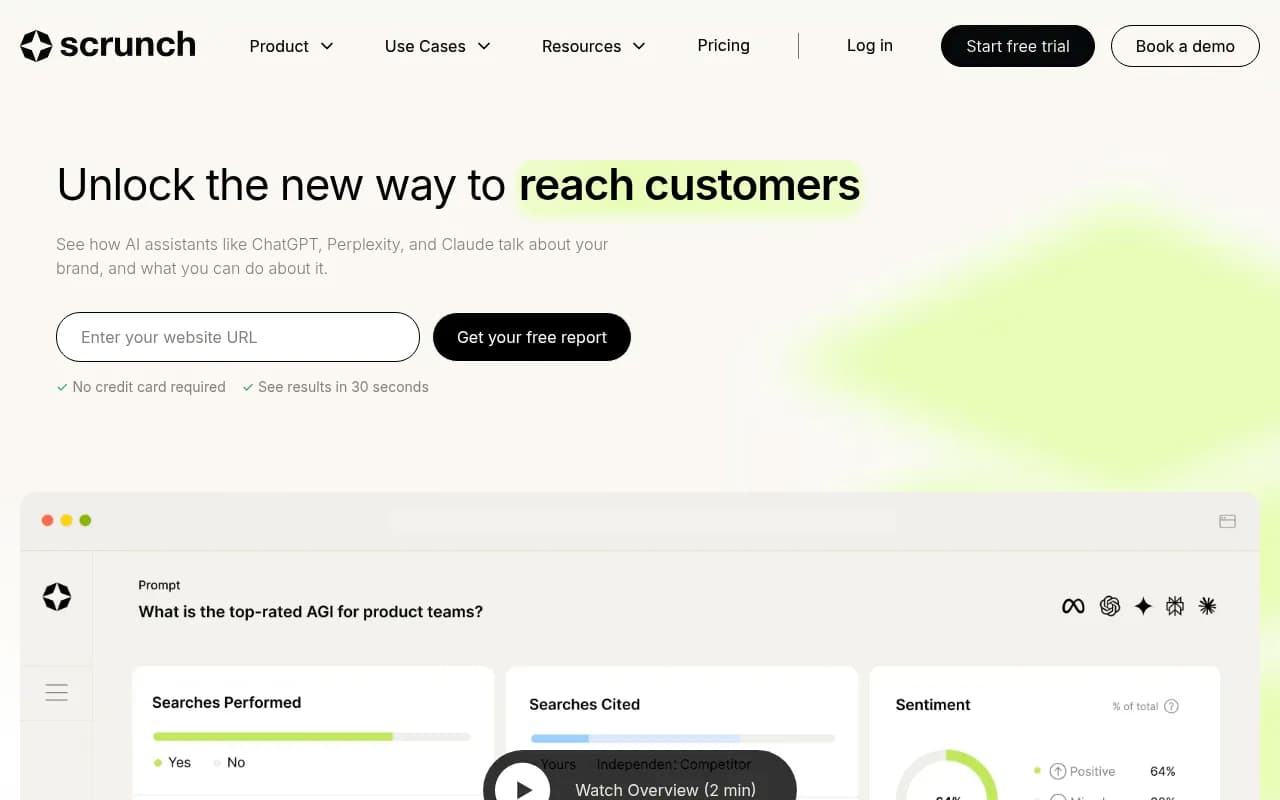
Other tools in or near this bucket worth a look when you run step 3 are below.
Shortlist cheat sheet by team type
| Team | What matters most | Start your shortlist from |
|---|---|---|
| Solo founder or startup | Price, fast setup | Otterly.AI, Peec AI, Airefs, MaxAEO, Anagram |
| In-house SEO team | Prompt data, crawler logs, Search Console overlay | Promptwatch, Profound, Scrunch, AthenaHQ |
| Content-heavy team | Briefs, writing, publishing | Promptwatch, AirOps, Frase, Writesonic |
| Agency | Unlimited projects, client PDFs, pitch reports | Promptwatch agency plans, Rankability, OpenLens, Cairrot |
| Enterprise | Security, SSO, support, scale | Profound, Bluefish, Evertune, BrightEdge, Adobe LLM Optimizer |
| Ecommerce | Shopping carousels, product feeds | Promptwatch, Azoma, Yotpo Discover, ShopOS |
| Already on an SEO suite | Consolidation | Semrush One, Ahrefs Brand Radar, SE Ranking, seoClarity |
For agency teams specifically, 1001 SEO Media is an SEO and GEO agency, so if you'd rather hire the work than run a platform, that's a legitimate third option. Agencies still need a platform for measurement, which is why the bucket logic above applies either way.
The trial plan: 7 to 14 days, same prompts everywhere
Picking from demos is how teams end up with an expensive dashboard they open twice. Run a short, fair trial instead.
- Build one prompt set. Use 30 to 50 prompts: a mix of organic category questions, brand-specific questions and competitor comparisons. Include the languages and countries you actually sell in.
- Load it into every trial. Identical prompts make the outputs comparable. If a tool limits prompts, use the same top 10.
- Compare three outputs. Does each tool find the same cited sources? Do mention rates roughly agree? Where they disagree, ask the vendor why.
- Test the fix path. Take one real gap and push it through each tool. How long from detection to a draft you'd actually publish?
- Check the crawler story. If a tool offers logs, connect them. See whether AI bots hit your key pages and where they fail.
- Price it at scale. Multiply by the prompts and markets you'll really track in 6 months.
Perplexity is a handy control in your trial. Promptwatch's older average sources per response report (September 2025, so older than the other figures here) found Perplexity cites almost exactly 10 sources per answer every day, which makes it a stable test bench, while Copilot's average swung from under 2 to nearly 17 within weeks. That is a good reason to judge Copilot on monthly trends, not weekly snapshots, and to distrust any tool that reports daily Copilot wins as news.
Red flags that should end a trial early
- One blended "AI visibility score" with no way to see how it's calculated or split by prompt type.
- API-only data presented as what users see, with no mention of the live interfaces.
- No answer when you ask what changed after a major model update.
- A guarantee of rankings or citations. No platform can promise this, because retrieval stays with the AI system.
- Pricing that hides response limits or charges per seat for a team that needs many viewers.
- Content generation with no grounding in your citation data, so it writes generic articles.
What I'd actually do
If I had 15 minutes and a mid-sized marketing team, I'd skip the ranked lists entirely. I'd decide that I need measure, diagnose and fix, filter the directory to the end-to-end bucket plus one analytics-first rival and one budget monitor, run the same 40 prompts through all three on a 7-day trial, and pick whichever one got a gap into a published, tracked page fastest. For a solo founder with no content capacity, I'd start with a budget monitor and revisit in a quarter.
For further reading on categories adjacent to this one, agenticseotools.com lists tools that act rather than just report, and the Promptwatch Data hub has current research on how AI engines cite sources.
FAQ
How many GEO tools should I trial?
Three. Choose ones that represent different operating models (a monitor, an analytics platform, an end-to-end tool) and stop adding candidates when they no longer answer a real question.
How long should a trial run?
Seven to fourteen days is enough if every tool gets the same prompt set. Longer trials mostly test your patience, not the tool.
Do I need a GEO tool if I already use Semrush or Ahrefs?
Maybe not at first. SEO suites with AI add-ons are fine for a baseline. The gap shows up when you need real-interface data, crawler logs, AI traffic attribution or content publishing tied to citations.
Is monitoring enough?
It is enough for a baseline and for reporting. It isn't enough if the goal is growth, because a score doesn't tell you what to change.
Can any tool guarantee citations in ChatGPT or Gemini?
No. Be wary of anyone who says otherwise. Tools can show gaps, fix content and measure the result, but the AI system decides what to retrieve.
How do I compare prices fairly?
Divide the monthly price by tracked responses, then check what's gated: crawler logs, content agents, state or city tracking, and extra markets often sit on higher plans. Always confirm on the vendor's pricing page.