Key takeaways
- AEO audits are fundamentally different from SEO audits -- they measure citation frequency across AI engines, not keyword rankings
- Technical access for AI crawlers is the first thing to check; blocked crawlers mean zero citations regardless of content quality
- Content structure matters more than keyword density: answer-first formatting, short paragraphs, and tight heading-to-section alignment all improve extractability
- E-E-A-T signals (author credentials, citations, entity clarity) directly influence whether AI models trust your content enough to cite it
- Schema markup, particularly FAQ and HowTo schemas, gives AI engines structured hooks to pull from
- Measurement requires tracking citations across multiple AI platforms simultaneously -- single-platform checks give a misleading picture
If your buyers are finding competitors through ChatGPT and Perplexity but not finding you, you have an AEO problem. And the frustrating part is that traditional SEO audits won't catch it. You can rank on page one of Google and still be completely invisible in AI-generated answers.
That gap is what this checklist addresses. An AEO (Answer Engine Optimization) audit looks at whether AI systems can find your content, extract useful answers from it, and cite you as a source. It's a different set of questions than "do I rank for this keyword?" -- and in 2026, it's becoming just as important.
This guide walks through 10 concrete steps. Each one is actionable, not theoretical. Work through them in order, because the early steps (technical access, crawlability) are prerequisites for everything else.
Step 1: Check AI crawler access
Before anything else, verify that AI crawlers can actually reach your site. This sounds basic, but it's surprisingly common for sites to block major AI crawlers either intentionally or by accident through overly aggressive robots.txt rules.
Open your robots.txt file and look for rules that block GPTBot (OpenAI), ClaudeBot (Anthropic), PerplexityBot, Google-Extended, or other AI-specific user agents. If you see Disallow: / for any of these, those AI engines literally cannot read your content.
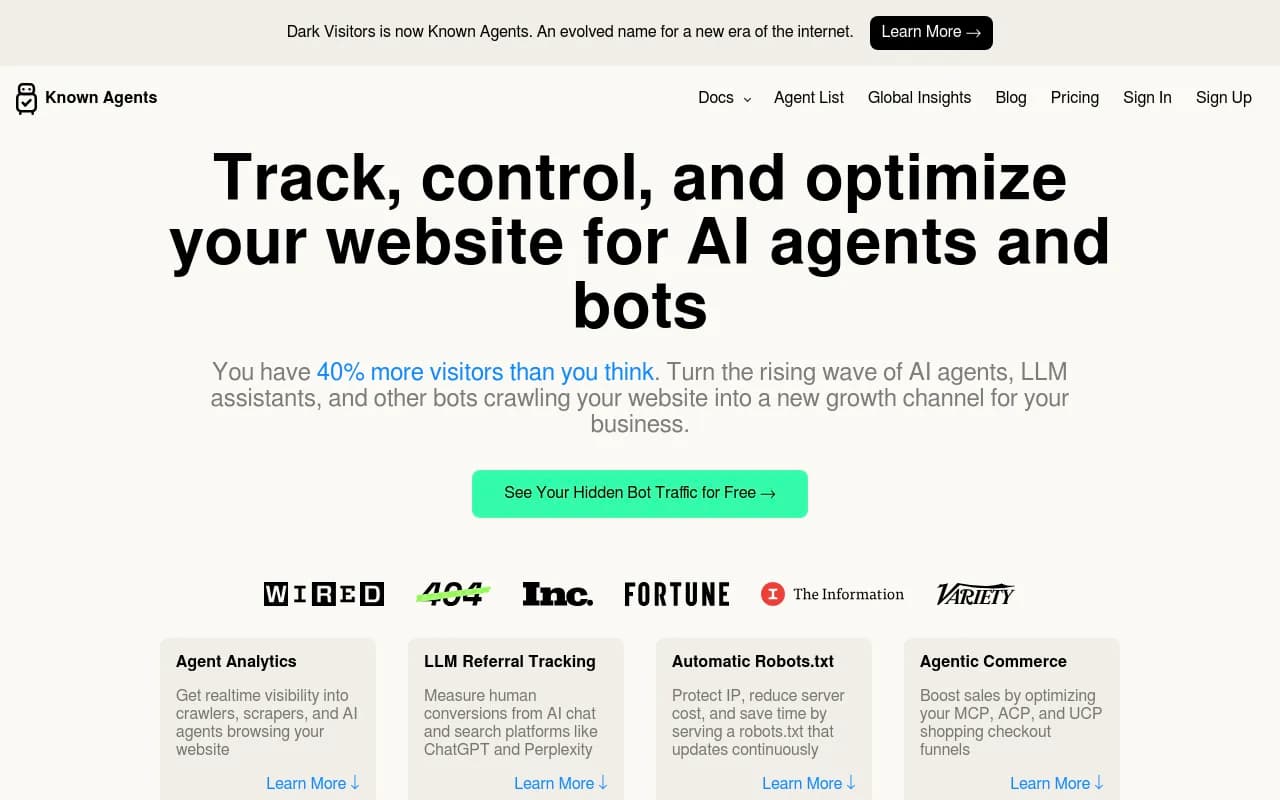
Also check your server response codes. A crawler that hits repeated 429 (rate limit) or 503 errors will deprioritize your site. Tools like DarkVisitors can show you which AI agents are visiting and what they're encountering.
Beyond robots.txt, check whether your JavaScript-heavy pages are rendering correctly for crawlers. Many AI systems don't execute JavaScript the same way browsers do. If your content lives inside client-side rendered components, AI crawlers may see a blank page.
Step 2: Audit your AI crawler logs
Once you've confirmed access, look at what AI crawlers are actually doing on your site. Which pages are they visiting? How often? Are they hitting errors?
This is where most teams go dark -- they assume crawlers are working fine because they haven't explicitly blocked them. But crawler logs tell a different story. You might find that AI crawlers are visiting your homepage repeatedly but never touching your product pages or blog. Or that they're encountering 404s on pages you've moved.
Promptwatch has a dedicated AI Crawler Logs feature that shows real-time logs of AI crawlers hitting your site -- which pages they read, what errors they encounter, and how often they return. It's one of the few platforms that surfaces this data directly.

If you don't have a platform with crawler log analysis, you can pull this from your server logs manually by filtering for known AI crawler user agent strings.
Step 3: Evaluate content structure for extractability
This is where most AEO audits find the most problems. AI engines extract answers by parsing your content structure. Content that buries the answer after three paragraphs of context, or uses vague headings that don't match the section content, gets skipped.
Go through your key pages and ask:
- Does the answer to the implied question appear in the first 1-2 sentences of each section?
- Do headings match what the section actually covers (not clever wordplay)?
- Are paragraphs short enough to be extracted as standalone answers (2-4 sentences is ideal)?
- Are sentences direct and specific, not hedged with "it depends" without follow-through?
Long introductions are a particular problem. If your article starts with three paragraphs about the history of the topic before getting to the actual answer, AI systems may extract the preamble instead of the substance -- or skip the page entirely.
The research from the LinkedIn AEO checklist puts it plainly: "Long introductions and loosely defined sections reduce extractability by forcing AI systems to infer intent."
Step 4: Assess answer-first formatting patterns
Related to structure but worth its own step: check whether your content uses answer-first patterns consistently. This means leading with the direct answer, then providing supporting detail -- the opposite of how academic writing works.
For example, instead of:
"There are many factors that influence how AI engines select sources. These include technical accessibility, content structure, authority signals, and more. In this section, we'll explore each of these..."
Write:
"AI engines select sources based on four main factors: technical accessibility, content structure, authority signals, and schema markup. Here's how each one works..."
This pattern -- direct answer, then elaboration -- is what AI systems are optimized to extract. It's also what FAQ schema is built around, which connects to step 6.
Go through your top 20 pages by organic traffic and score each one: does it lead with the answer, or does it make the reader (and the AI) dig for it?
Step 5: Check E-E-A-T and authority signals
AI models don't just look at content structure -- they evaluate whether the source is trustworthy. Google's E-E-A-T framework (Experience, Expertise, Authoritativeness, Trustworthiness) applies here, but so do signals that go beyond Google.
Check for:
- Named authors with real credentials and bios (not "Staff Writer")
- Author pages that link to external profiles (LinkedIn, published work, speaking engagements)
- Citations and references within the content itself -- does your article link to primary sources?
- Entity clarity -- is it obvious who wrote this, what company it's from, and what they're known for?
- About page and contact information that establish the organization as real and accountable
One thing that's easy to overlook: AI models are trained on the broader web, including Reddit, YouTube, and third-party review sites. If your brand is discussed positively in those contexts, it reinforces your authority signals. If it's absent or discussed negatively, that affects how AI models perceive you.
Step 6: Validate schema markup
Schema markup gives AI engines structured data hooks to pull from. For AEO specifically, the most valuable schema types are:
- FAQ schema (question-and-answer pairs that AI can extract directly)
- HowTo schema (step-by-step processes)
- Article schema with author and datePublished properties
- Organization schema with name, URL, and sameAs properties pointing to social profiles
Run your key pages through Google's Rich Results Test and a JSON-LD validator. Check that your schema is valid, that it matches the visible content on the page (Google penalizes mismatches), and that it covers the pages most likely to be cited.
A common gap: teams add FAQ schema to their homepage but not to their blog posts or product pages, which are often the pages AI engines actually want to cite.
Step 7: Audit content freshness and accuracy
AI models are trained on data up to a cutoff, but retrieval-augmented systems like Perplexity and Google AI Overviews pull from live web content. For these systems, freshness matters.
Go through your key pages and check:
- When was this page last updated? Is the date accurate and visible?
- Does the content reference outdated statistics, deprecated tools, or old pricing?
- Are there claims that have been superseded by newer research or product changes?
Stale content doesn't just fail the accuracy test -- it signals to AI engines that the page may not be a reliable current source. Adding a "last updated" date and periodically refreshing statistics is a low-effort way to improve this.
Also look for thin content: pages under 300 words that don't provide a complete answer to any question. These rarely get cited and can dilute your overall domain authority in AI systems.
Step 8: Run citation checks across multiple AI platforms
This is the core measurement step. You need to know whether your content is actually being cited, and by which AI engines.
The process manually: take your top 20-30 target queries and run them through ChatGPT, Perplexity, Google AI Overviews, Claude, and Gemini. Note whether your brand or specific pages appear in the responses. Track this in a spreadsheet.
The problem with doing this manually is scale and consistency. You can't run hundreds of queries across 10 AI platforms every week. That's where dedicated AEO tracking tools become necessary.
Here's a quick comparison of tools that support citation tracking:
| Tool | AI platforms covered | Citation tracking | Content gap analysis | Crawler logs |
|---|---|---|---|---|
| Promptwatch | 10+ (ChatGPT, Claude, Perplexity, Gemini, Grok, etc.) | Yes | Yes | Yes |
| Otterly.AI | 5-6 | Yes | No | No |
| Peec AI | 4-5 | Yes | No | No |
| AthenaHQ | 8+ | Yes | No | No |
| Profound | 6+ | Yes | Limited | No |
| SE Ranking | 4+ | Yes | No | No |



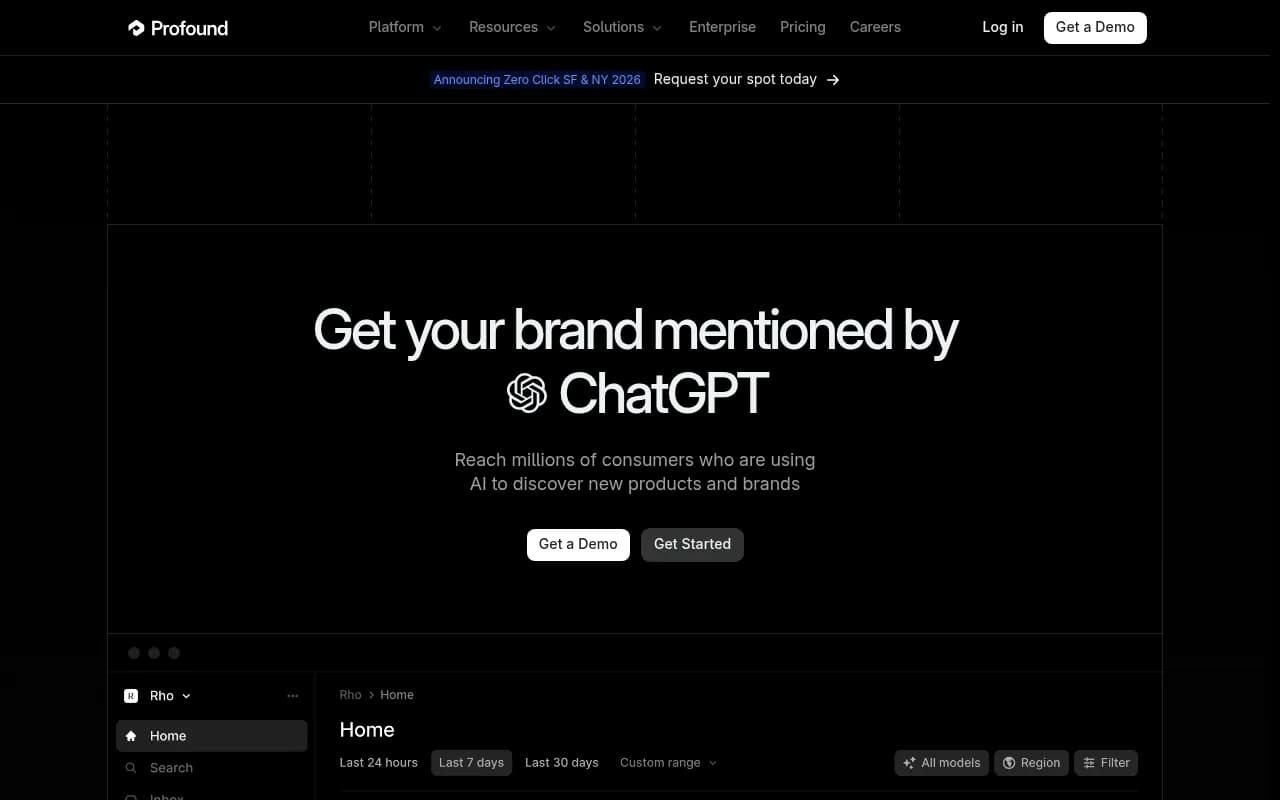
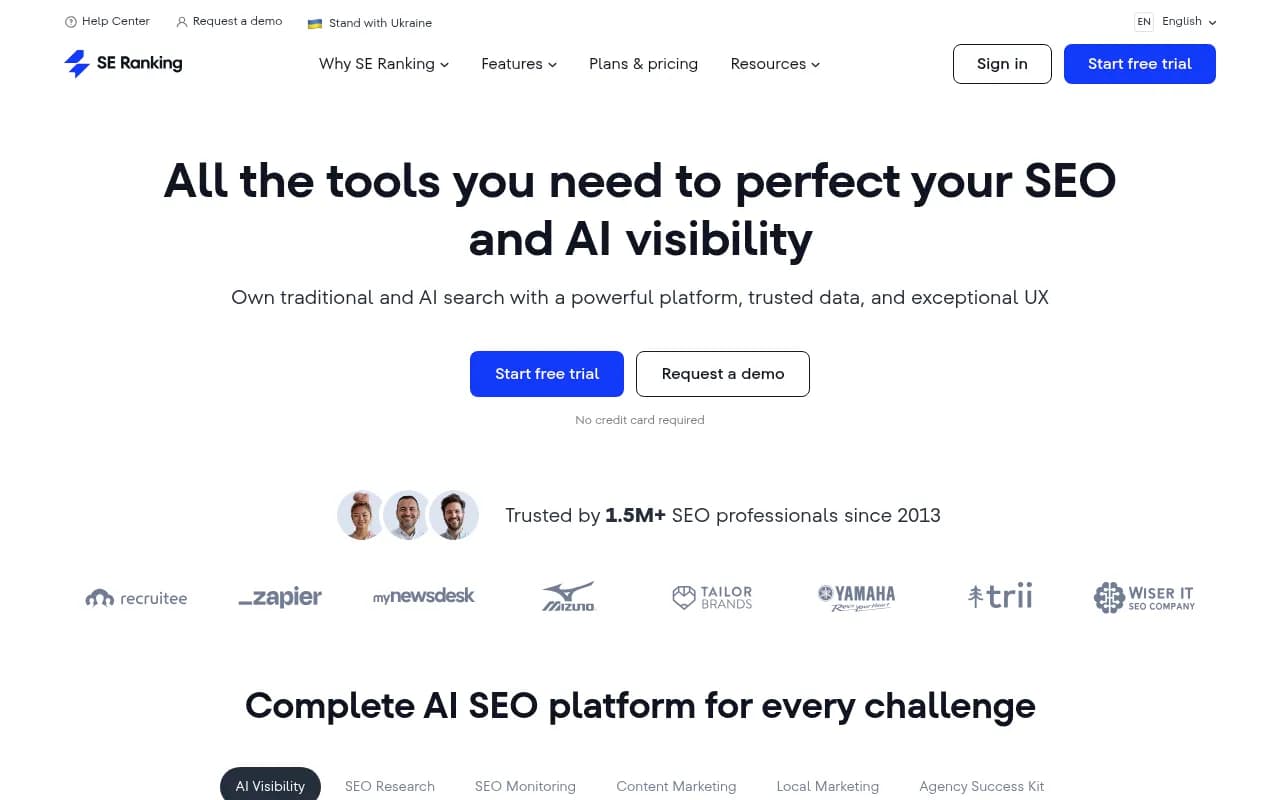
The key thing to look for in any tool: does it track citations across multiple AI platforms simultaneously, or just one? Single-platform tracking gives you a partial picture. Different AI engines cite different sources, and a brand that's visible in Perplexity but invisible in ChatGPT has a real gap.
Step 9: Identify content gaps with competitor comparison
Knowing you're not being cited is useful. Knowing exactly which prompts your competitors are being cited for -- but you're not -- is actionable.
This is the answer gap analysis step. The goal is to find the specific questions and topics where AI engines are recommending competitors instead of you. Those are your highest-priority content opportunities.
To do this manually: identify 3-5 direct competitors, run their brand names through AI engines alongside your target queries, and note where they appear and you don't. Look for patterns -- are they consistently cited for a topic you haven't covered? Do they have content formats (comparison pages, FAQs, how-to guides) that you're missing?
Promptwatch's Answer Gap Analysis automates this by showing exactly which prompts competitors rank for that you don't, along with the specific content your site is missing. It's the difference between knowing you have a gap and knowing what to build to close it.
Step 10: Set up ongoing tracking and close the loop
An AEO audit is a snapshot. What you need is a system that tells you whether things are improving.
Set up tracking for:
- Citation frequency per AI platform (weekly or bi-weekly)
- Which specific pages are being cited and for which queries
- Traffic from AI referrals (Perplexity, ChatGPT, etc. show up in your analytics as referral sources)
- Changes in competitor citation patterns
The traffic attribution piece is often overlooked. AI-referred traffic shows up differently depending on the platform -- some pass referral data, others don't. Setting up UTM parameters for content you're actively promoting, and checking your server logs for AI referral patterns, gives you a more complete picture.
The goal is a closed loop: find gaps, create content that addresses them, watch citation frequency improve, and connect that to actual traffic and revenue. Without the measurement step, you're optimizing blind.
Putting it all together
Here's the full checklist in one place:
| Step | What to check | Priority |
|---|---|---|
| 1. AI crawler access | robots.txt, user agent rules, server errors | Critical |
| 2. Crawler logs | Which pages AI visits, error rates, crawl frequency | High |
| 3. Content structure | Answer placement, heading clarity, paragraph length | High |
| 4. Answer-first formatting | Direct answers before elaboration | High |
| 5. E-E-A-T signals | Author credentials, citations, entity clarity | Medium |
| 6. Schema markup | FAQ, HowTo, Article, Organization schemas | Medium |
| 7. Content freshness | Last updated dates, stale stats, thin content | Medium |
| 8. Citation tracking | Visibility across 5+ AI platforms | Critical |
| 9. Content gap analysis | Competitor citations you're missing | High |
| 10. Ongoing tracking | Weekly citation monitoring, traffic attribution | Critical |
The first time through, steps 1, 3, and 8 tend to surface the most problems. Fix crawler access issues immediately -- they block everything else. Then work on content structure, which is usually the biggest lever for improving citation rates. Use citation tracking to measure whether your changes are working.
One honest note: this audit takes real time to do properly. Steps 8 and 9 in particular are hard to do at scale without tooling. If you're managing more than one site or running audits for clients, a platform that automates citation tracking and gap analysis will save you significant time and give you data you simply can't collect manually.
The shift to AI search isn't slowing down. Getting your AEO audit done now -- and building a system to track it ongoing -- puts you ahead of the teams that are still waiting to see how this plays out.