Key takeaways
- Google AI Overviews appear in roughly 68% of local business searches in 2026, and they often replace the traditional local pack entirely for many query types.
- Visibility is highly location-specific: your business might appear in AI Overviews for searches in Chicago but be completely absent in Denver, even if you have a location there.
- Manual checking (searching from each city) is a starting point, but it doesn't scale. Multi-location brands need a systematic audit workflow.
- The core signals that drive AI Overview citations are Google Business Profile completeness, review volume and recency, NAP consistency, and location-specific website content.
- Dedicated AI visibility tools can automate location-by-location tracking across Google AI Overviews and other AI engines simultaneously.
Why multi-location visibility in AI Overviews is a different problem
Most local SEO advice is written for single-location businesses. Optimize your Google Business Profile, get reviews, build some local citations. Done.
For a brand with 20, 50, or 200 locations, that advice is still correct -- but it misses the operational complexity entirely. When Google AI Overviews appear for a query like "best HVAC company in [city]," the answer is generated fresh for that specific location context. Your Dallas location's strong review profile doesn't help your Phoenix location get cited. Each market is evaluated independently.
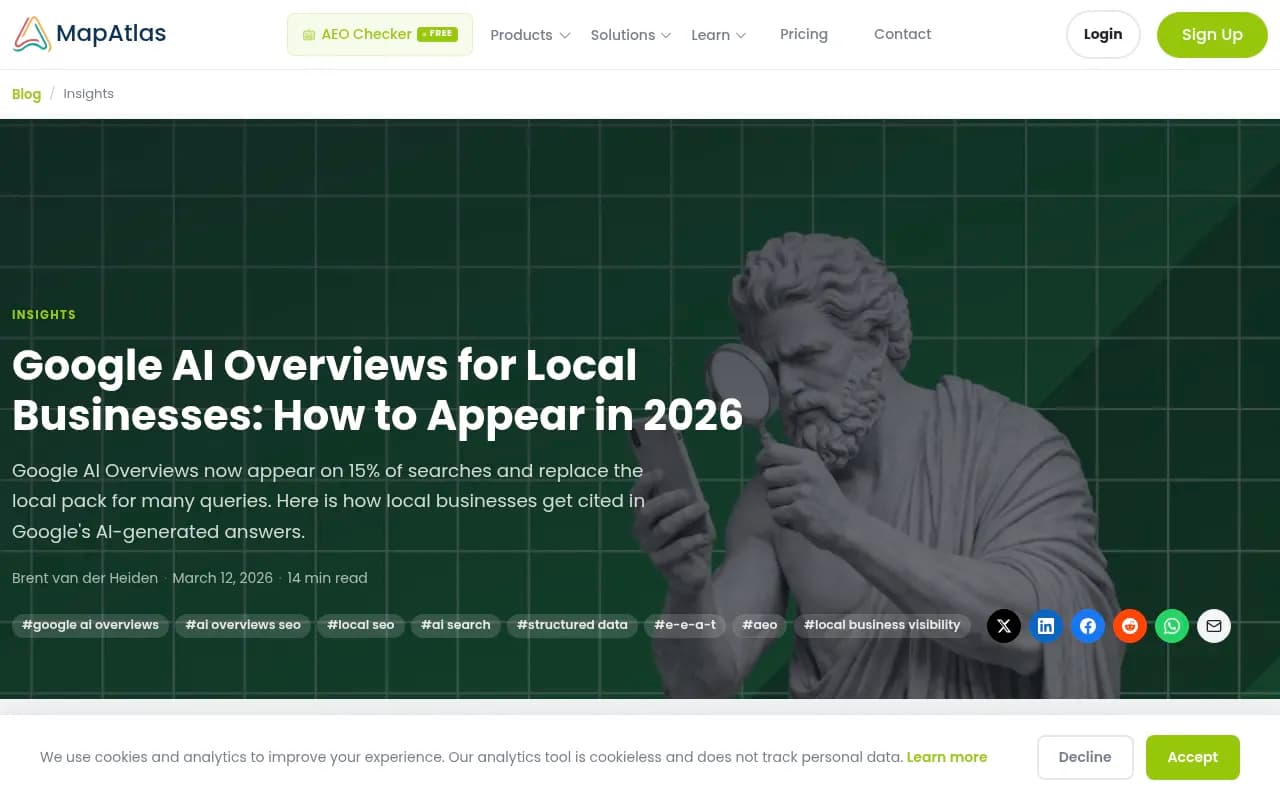
According to a Reddit thread in r/localseo, AI Overviews now appear in about 68% of local business searches. That's a lot of queries where the traditional map pack is either compressed or replaced by a synthesized AI answer with two or three cited businesses. If your location isn't one of those citations, you're invisible for that query -- even if you rank organically in position one.
The problem compounds across a portfolio. A franchise with 40 locations might be well-cited in 15 markets, invisible in 20, and actively losing ground to competitors in 5. Without a location-by-location audit, you have no idea which category each market falls into.
How Google AI Overviews work for local queries
Before auditing, it helps to understand what Google is actually doing when it generates a local AI Overview.
The traditional local pack pulled from Google Business Profile data and proximity signals. AI Overviews do that too, but they also synthesize information from your website, third-party review sites, local news coverage, and other web sources. Google's AI is essentially asking: "What does the web collectively say about the best option for this query in this location?"
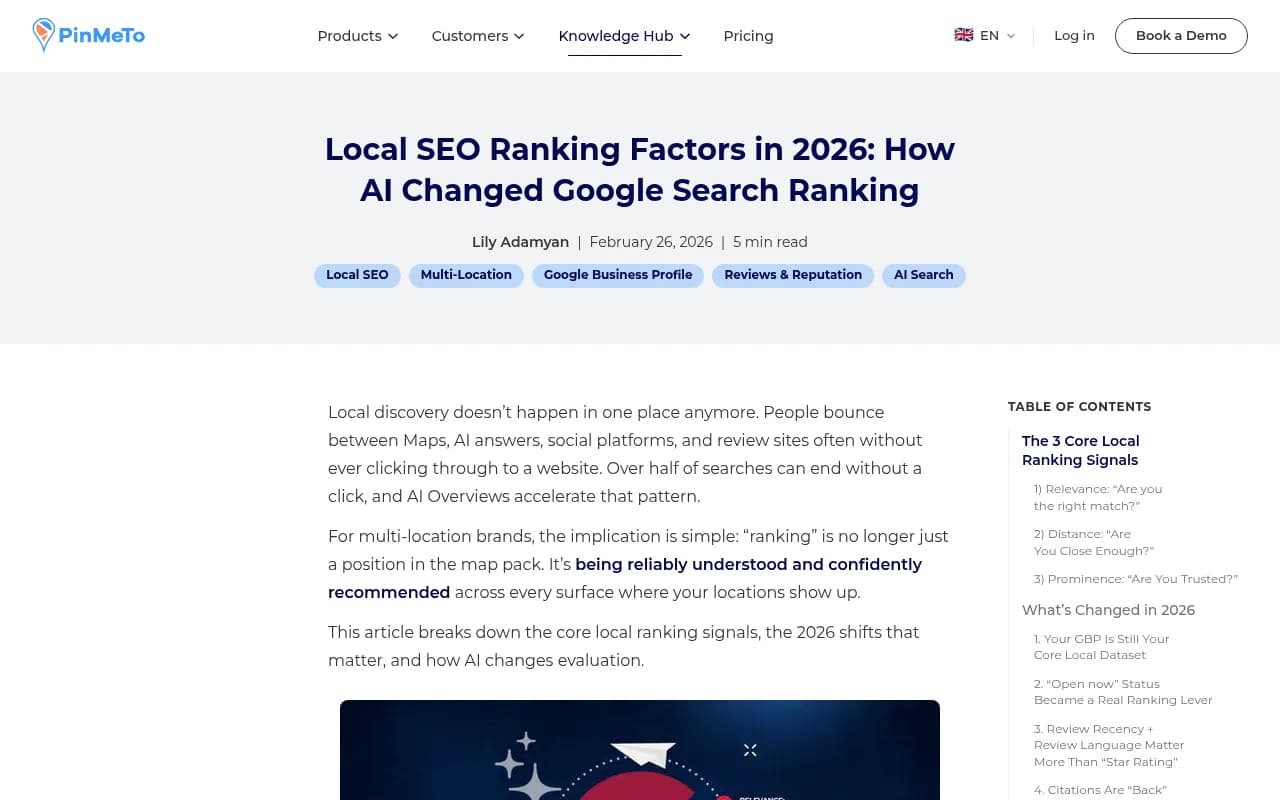
The three core ranking signals haven't changed -- relevance, distance, and prominence -- but how they're evaluated has. According to PinMeTo's 2026 local ranking factors analysis, "ranking" is no longer just a position in the map pack. It's being reliably understood and confidently recommended across every surface where your locations show up.
Relevance now means your GBP categories, services, and website content all clearly signal what you do and for whom. Distance is still tied to the searcher's location, but errors in your address data or duplicate listings can cause Google's AI to misread proximity entirely. Prominence has always been about trust signals, but in 2026 Google is evaluating review volume, recency, and response rate the same way it evaluates content quality -- as a signal of whether a business is actively maintained and trustworthy.
One thing worth knowing: AI Overviews behave differently in the actual Google search interface than they do through the API. The user-facing answers, citations, and recommendations can differ from what you'd see querying Google programmatically. That matters when you're trying to audit what real users actually see.
Step 1: Build your prompt set by location
The first step in any multi-location AI visibility audit is creating a structured list of prompts -- the actual queries you want to appear for -- mapped to each location.
For a plumbing company with locations in Austin, Denver, and Nashville, your prompt set might look like:
- "best plumber in [city]"
- "emergency plumber near me [city]"
- "plumbing company [city] reviews"
- "who should I call for a burst pipe in [city]"
- "affordable plumbing [city]"
The last two examples matter more than people expect. AI Overviews are increasingly triggered by conversational and intent-driven queries, not just keyword-style searches. Building a prompt set that reflects how real customers actually ask questions -- not just how SEOs write title tags -- gives you a more accurate picture of your actual visibility.
For each location, aim for 8-12 prompts covering your core services, your brand name, and competitor comparison queries. Yes, that adds up fast across 40 locations. That's exactly why manual checking doesn't scale.
Step 2: Check your current visibility manually (for smaller portfolios)
If you have fewer than five locations, manual checking is a reasonable starting point. Here's how to do it properly.
Search Google from the target city's location, or use a VPN or Google's location parameter to simulate searches from that area. For each prompt, note:
- Does an AI Overview appear at all?
- Is your business cited in the AI Overview?
- If cited, is it a direct link to your website, your GBP listing, or a third-party source?
- Which competitors are cited instead of you?
Google Search Console can help here too. Filter your queries by location and look for prompts that are generating impressions but low clicks -- that pattern often indicates an AI Overview is appearing and absorbing the click that would have gone to you.
The limitation of manual checking is consistency. AI Overview responses vary by session, by exact prompt wording, and over time as Google updates its models. A single check gives you a snapshot, not a trend.
Step 3: Scale with AI visibility tracking tools
For brands with more than a handful of locations, you need tooling that can run prompts at scale, across locations, and track results over time.
Promptwatch supports multi-location tracking with customizable personas and location parameters, so you can monitor how AI Overviews respond to the same prompt from different cities. It tracks Google AI Overviews alongside other AI engines (ChatGPT, Perplexity, Gemini, etc.), which matters because customers don't exclusively use Google -- and your visibility profile often differs significantly across platforms.

Beyond tracking, the more useful question is: why is a specific location not being cited? That requires looking at what sources Google is actually pulling from in those AI Overviews -- which pages, which review sites, which third-party domains. Promptwatch's citation analysis shows exactly which sources are being referenced, so you can see whether a competitor is winning because of a stronger GBP, better reviews on a specific platform, or content on their website that yours lacks.
A few other tools worth knowing about for this workflow:
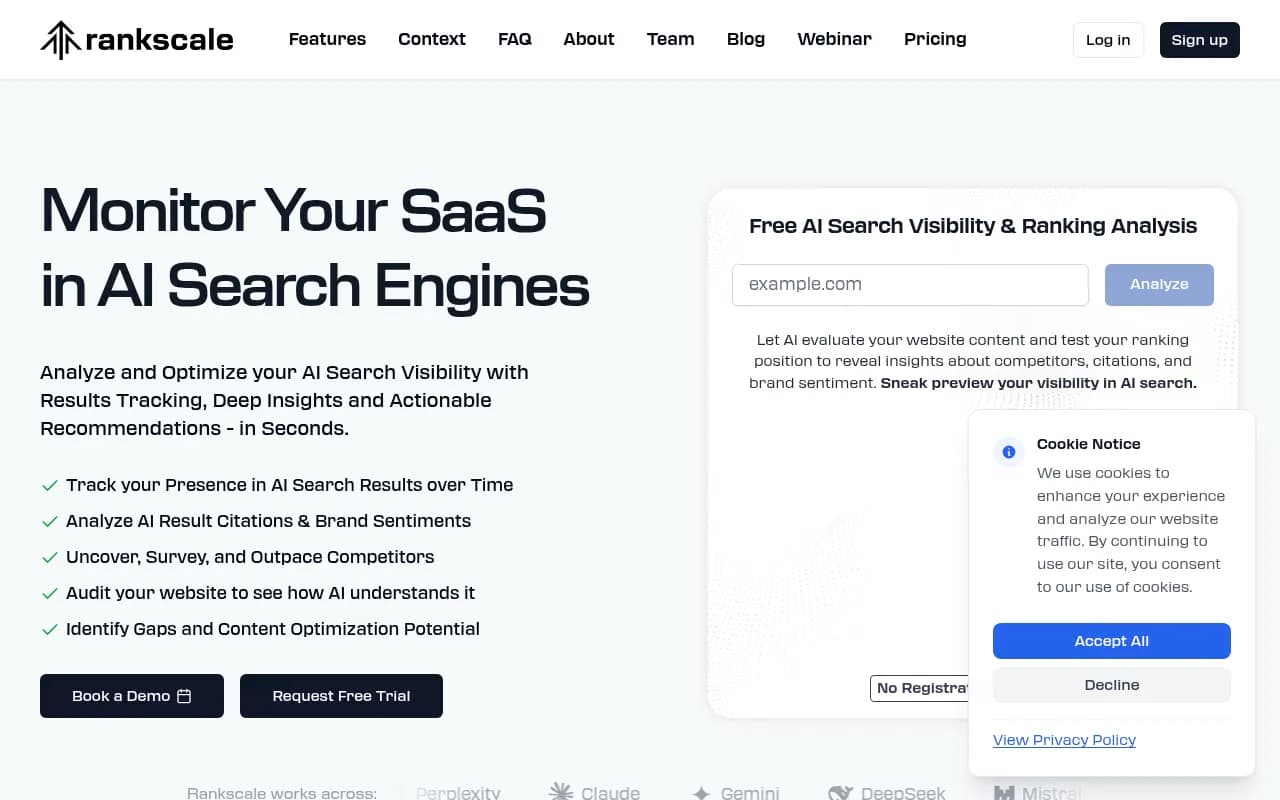
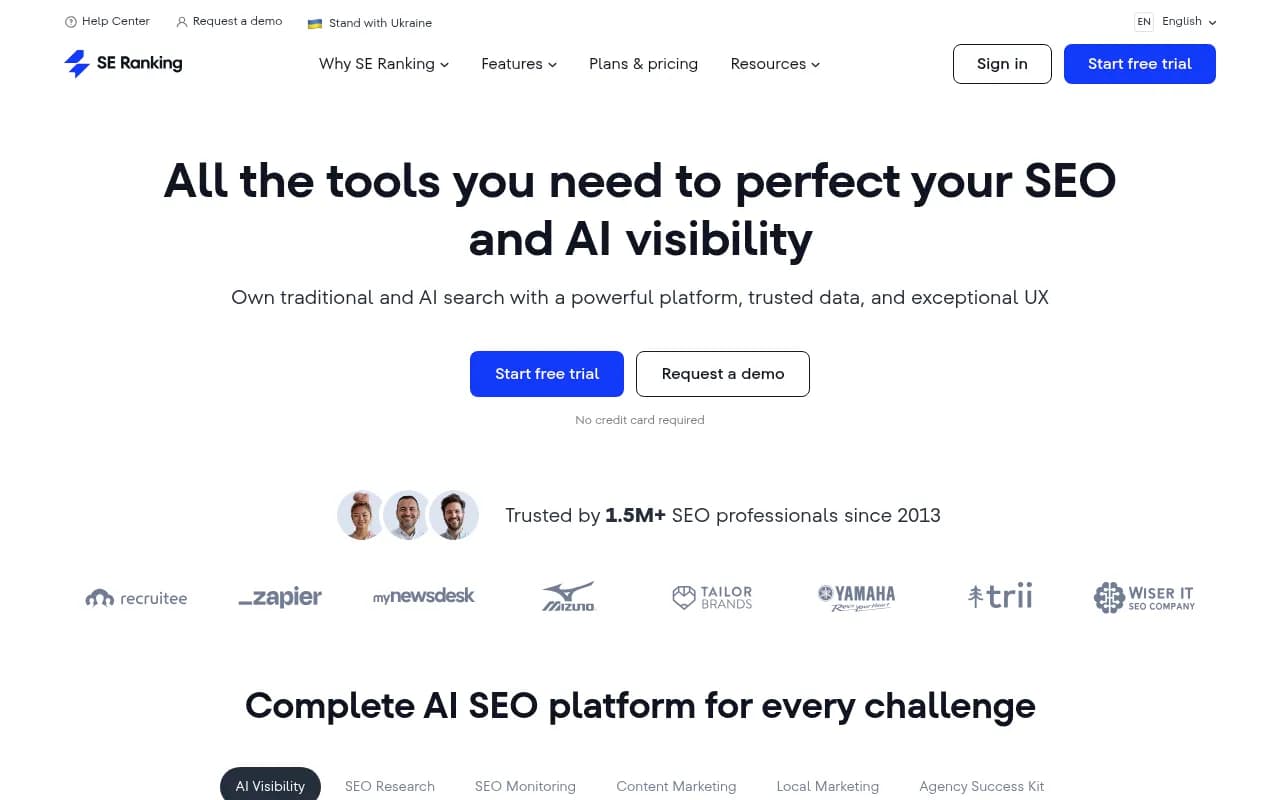
Here's a quick comparison of how these tools handle multi-location AI visibility tracking:
| Tool | Location-specific tracking | Google AI Overviews | Multi-engine | Content gap analysis |
|---|---|---|---|---|
| Promptwatch | Yes (city/state level) | Yes | Yes (10 engines) | Yes |
| SE Ranking | Limited | Yes | Partial | No |
| Rankscale | Yes | Yes | Yes | No |
| Nightwatch | Yes | Yes | Partial | No |
Step 4: Audit each location's foundational signals
Once you know which locations are underperforming in AI Overviews, the audit work is about finding why. There are four areas to check for each location.
Google Business Profile completeness
This is still the most powerful lever for local AI visibility. Google's AI pulls directly from GBP data, and incomplete or inconsistent profiles create gaps in what the AI can confidently say about your business.
For each location, check:
- Primary and secondary categories (are they accurate and specific?)
- Services list (is every service you offer explicitly listed?)
- Attributes (hours, accessibility, payment methods, etc.)
- Photos (recent, location-specific, not stock images)
- Q&A section (are common questions answered?)
- Posts (when was the last update?)
For multi-location brands, category governance is a real operational challenge. Someone needs to own the decision about which categories each location uses, and that decision needs to be enforced consistently. A franchise where individual owners control their own GBP listings will often have significant category drift across the portfolio.
Review volume, recency, and response rate
Google's AI evaluates reviews the same way it evaluates content: volume matters, but so does freshness and engagement. A location with 200 reviews from 2022 and nothing since is a weaker signal than a location with 80 reviews spread across the last 12 months.
Response rate is increasingly important. According to Scorpion's 2026 local search analysis, Google factors review volume, recency, and response rate as part of its AI evaluation of local businesses. A location where the owner responds to reviews -- including negative ones -- signals an actively managed business.
For each underperforming location, check:
- Total review count vs. your top-performing locations
- Average review age (when was the last review?)
- Response rate (what percentage of reviews have a response?)
- Review sentiment (are there recurring complaints that might be suppressing recommendations?)
NAP consistency and duplicate listings
NAP (name, address, phone number) consistency matters more in the AI era than it did before. When Google's AI synthesizes information about your business from multiple sources, inconsistent NAP data creates conflicting signals that reduce confidence in the recommendation.
For each location, check your GBP address against your website, your Yelp listing, your Apple Maps listing, and any industry-specific directories relevant to your category. Even small differences -- "St." vs. "Street," suite numbers formatted differently -- can create confusion.
Duplicate listings are a separate problem. If a location has multiple GBP listings (common after acquisitions, rebrands, or staff turnover), Google's AI may split signals between them or simply avoid recommending either.
Location-specific website content
This is where many multi-location brands have the biggest gap. A website with a single "Locations" page listing 40 addresses is not giving Google's AI much to work with. Each location needs its own page with content that specifically addresses what that location does, who it serves, and what makes it the right choice for someone in that city.
Location pages that actually help AI visibility typically include:
- The city and surrounding neighborhoods served (not just the address)
- Services available at that specific location (not just a copy-paste of the national services page)
- Local staff or team information
- Location-specific reviews or testimonials
- Local schema markup (LocalBusiness, with accurate address, hours, and service area)
The content doesn't need to be long. It needs to be specific and accurate. Generic location pages that are clearly templated with the city name swapped in are not useful to Google's AI -- and in some cases may actively hurt you if they look like thin content.
Step 5: Track changes over time
The audit is a starting point. The ongoing work is tracking whether your changes are actually improving visibility.
This means running your prompt set on a regular cadence -- weekly for priority markets, monthly for the rest -- and recording whether your locations are being cited. Over time, you should see a correlation between the fixes you make (new reviews, updated GBP, improved location pages) and improved citation rates.
A few things to track per location:
- Citation rate: what percentage of relevant prompts result in your location being cited?
- Citation source: is Google citing your GBP, your website, or a third-party source?
- Competitor citation rate: who is being cited instead of you, and why?
- Trend: is visibility improving, stable, or declining after changes?
For brands running this at scale, Promptwatch's page-level tracking shows exactly which pages are being cited, how often, and by which AI models. That makes it possible to see whether a new location page you published is actually getting picked up -- and how long it takes from publication to citation.
Common patterns in multi-location AI visibility gaps
After auditing dozens of multi-location brands, a few patterns show up repeatedly.
One strong location carrying the brand is common. In a portfolio of 20 locations, often two or three have strong reviews, complete GBPs, and good website content -- and they get cited regularly. The other 17 are essentially invisible. The fix isn't to rebuild everything from scratch; it's to identify what the strong locations have that the weak ones don't, and replicate it systematically.
Acquired locations are often the worst performers. When a brand acquires another business, the GBP listings, website content, and review profiles often don't get updated for months. Google's AI may still be citing the old business name or linking to a defunct website.
Seasonal businesses have visibility gaps during off-seasons. If a location stops getting reviews and stops updating its GBP in winter, its AI visibility can drop significantly by spring -- right when customers start searching again.
Service-line gaps are location-specific. A location that offers a service but doesn't list it on their GBP or website won't appear in AI Overviews for that service, even if the location is well-established. This is especially common for businesses that expand their service offerings over time without updating their digital presence.
A practical workflow for ongoing multi-location AI visibility
Putting this together into a repeatable process:
- Build a prompt set for each location (8-12 prompts per market, covering core services and conversational queries)
- Run a baseline audit to establish current citation rates by location
- Prioritize locations by revenue potential and current visibility gap
- For each priority location, audit GBP completeness, review health, NAP consistency, and website content
- Fix the gaps in order of likely impact (GBP and reviews first, website content second)
- Track citation rates weekly for priority markets
- Review the full portfolio monthly and reprioritize based on results
The workflow isn't complicated. The challenge is doing it consistently across a large portfolio -- which is why tooling matters. Manual checking and spreadsheet tracking works for five locations. At 50 locations, you need automation.
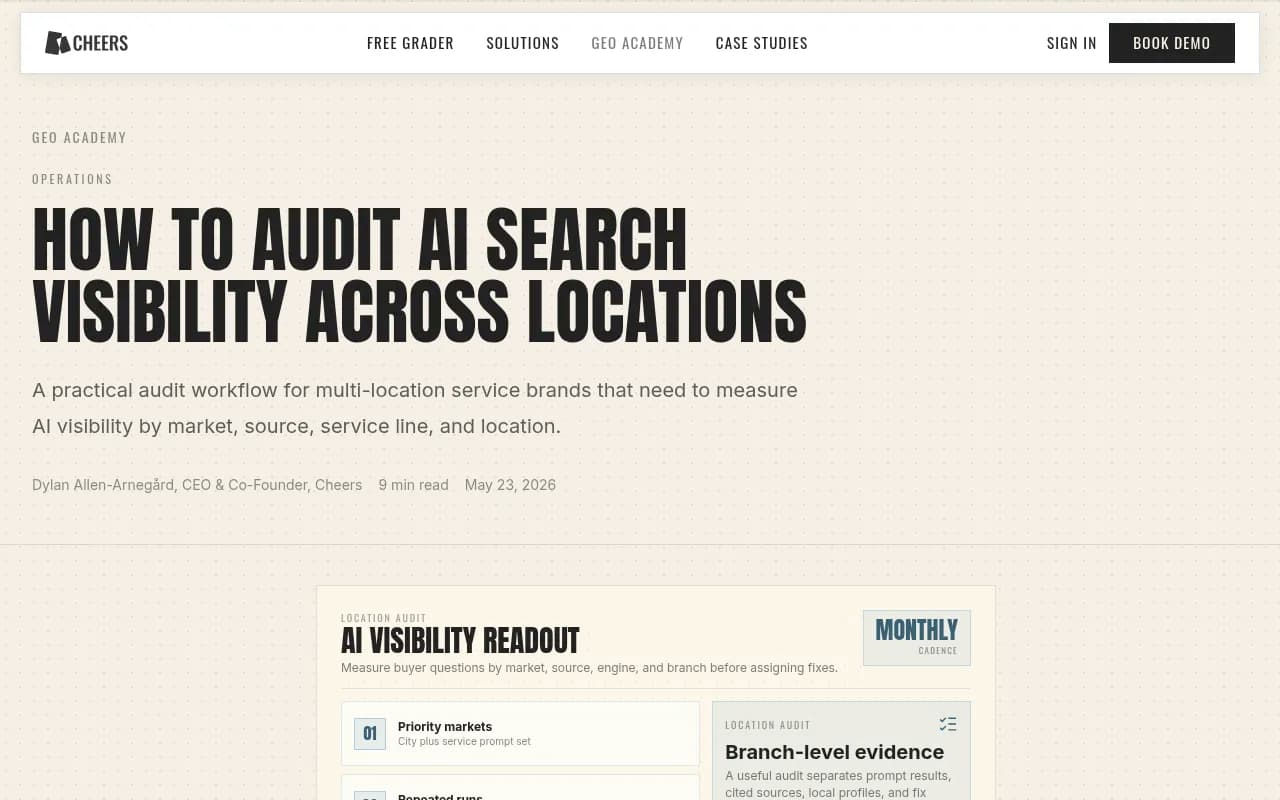
Tools like Promptwatch handle the prompt-running and citation tracking automatically, so your team can focus on the fix work rather than the data collection. The audit workflow from Cheers (linked in the research above) is also worth reading if you're running this for a home-services or franchise brand specifically -- their framework for categorizing fix owners (page, profile, review, citation) is a useful way to assign accountability across a large team.
The bottom line
Google AI Overviews have changed what "local visibility" means. Ranking in the map pack is no longer enough if an AI Overview appears above it and doesn't cite you. For multi-location brands, the problem is multiplied: each city is evaluated independently, and a strong presence in one market doesn't carry over to another.
The good news is that the signals Google uses to decide who to cite are the same signals that have always mattered for local SEO -- accurate GBP data, strong reviews, consistent NAP, and relevant website content. The difference is that gaps in any of these signals now have a more direct and visible consequence: you simply don't appear in the AI answer.
Start with an audit. Find out which locations are being cited and which aren't. Then fix the gaps systematically, starting with the highest-revenue markets. Track the results. That's the whole job.