Key takeaways
- The majority of enterprise-focused GEO platforms hide pricing behind sales calls, while mid-market tools tend to publish clear tiers
- Hidden pricing usually signals either high per-seat costs, usage-based billing that's hard to predict, or a sales-led model that adds friction to evaluation
- Transparent pricing lets you self-qualify, run trials, and compare total cost of ownership without wasting time on demos
- The gap between "monitoring only" and "monitoring + optimization" tools is often reflected in price, but not always in a way that's obvious upfront
- Before signing any contract, you need to understand prompt limits, seat counts, model coverage, and overage fees -- not just the headline number
Pricing opacity is a real problem in the GEO space right now. The category is young, vendors are still figuring out what to charge, and a lot of them have landed on "let's just make people talk to sales" as a default. That's fine for enterprise software with complex implementation needs. It's less fine when you're a marketing team trying to figure out if a $249/month tool is worth it before you book a 45-minute discovery call.
This report goes through the major GEO and AI search visibility platforms, documents what they actually publish about pricing, and explains what the gaps mean for buyers. It's not a ranking of which tool is best -- it's a transparency audit.
Why pricing transparency matters more in GEO than in traditional SEO
Traditional SEO tools -- Semrush, Ahrefs, Moz -- have been around long enough that their pricing is well-known, heavily compared, and publicly available. You can go to their websites right now and know exactly what you're getting for $99/month vs $449/month.
GEO platforms are different. Most launched in 2023 or 2024. Many are still in early pricing discovery mode. And because the underlying cost structure (running prompts against multiple LLMs at scale) is genuinely expensive, vendors are cautious about committing to public numbers that might not hold.
The result: a lot of "request a demo" buttons where pricing pages should be.
This matters for a few concrete reasons:
- You can't compare tools without knowing what they cost. A tool that tracks 10 AI models sounds better than one that tracks 5, but if it costs 4x more, that's a different conversation.
- Hidden pricing creates information asymmetry. The vendor knows their costs; you don't. That's not a great starting position for a negotiation.
- Prompt limits and model coverage are the real pricing variables. Two tools might both say "$299/month" but one gives you 50 prompts across 3 models and the other gives you 300 prompts across 10. The headline number means nothing without the details.
- Overage fees can turn a predictable budget line into a surprise invoice. Some platforms charge per-prompt beyond your plan limit. Others throttle you. A few don't mention it at all until you hit the wall.
The pricing transparency spectrum
It helps to think about GEO platform pricing in three tiers of transparency.
Tier 1: Fully transparent (published pricing, no sales call required)
These tools publish their pricing pages openly, with specific prompt limits, model coverage, seat counts, and feature breakdowns per tier. You can sign up, start a trial, and upgrade without talking to anyone.
Promptwatch is one of the clearest examples here. Three published tiers: Essential at $99/month (1 site, 50 prompts, 5 articles), Professional at $249/month (2 sites, 150 prompts, 15 articles, crawler logs), and Business at $579/month (5 sites, 350 prompts, 30 articles). Agency and enterprise pricing is custom, which is standard. The key thing is that for the vast majority of buyers -- marketing teams, SEO teams, smaller agencies -- you can evaluate the product without a sales conversation.

Otterly.AI also publishes pricing openly, which is part of why it's often recommended as an entry-level option. The trade-off is that it's monitoring-only -- you get visibility data but no content generation or gap analysis to act on it.

Peec AI similarly publishes tiers, with a focus on multi-language tracking. Good for international brands that need to monitor AI responses across different regions and languages.

Tier 2: Partial transparency (some pricing visible, key details missing)
This is the most common category. The vendor shows a pricing page, but critical variables are missing -- prompt limits aren't specified, model coverage is vague, or the published tiers are clearly just lead-gen anchors with the real product behind "contact us."
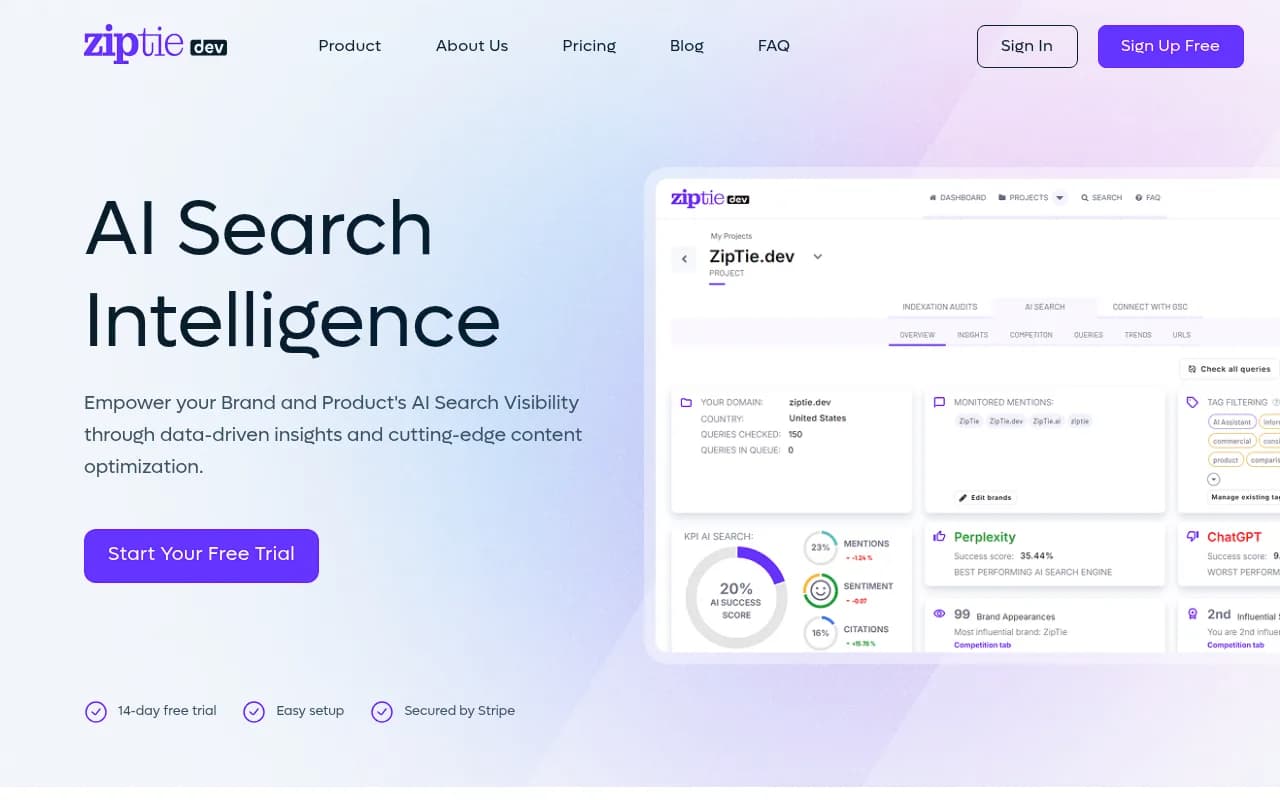
Profound falls here. The ZipTie.dev comparison notes a $499/month minimum with no free trial. That's a meaningful data point, but the full scope of what you get at that price requires a conversation. For Fortune 500 teams with procurement processes, that's fine. For everyone else, it's a barrier.

AthenaHQ shows some pricing information but the feature breakdown per tier isn't detailed enough to evaluate without a demo. It's monitoring-focused, which limits the use case anyway, but the pricing opacity makes comparison harder.

SE Ranking has a published pricing page for its core SEO platform, but the AI visibility features are an add-on with separate pricing that isn't always clearly broken out. Worth checking directly if you're evaluating it as a GEO tool.
Tier 3: Opaque (contact sales, no public pricing)
These tools require you to book a demo before you learn anything about cost. This is standard for enterprise software, and some of these tools genuinely are enterprise-only. But it's worth knowing upfront so you don't spend time evaluating a tool that's going to come back with a $3,000/month quote.
BrightEdge is the clearest example. It's an enterprise SEO platform with AI visibility features, and pricing is entirely sales-led. If you're a mid-sized company, you're probably not the target customer.
Bluefish is explicitly positioned for Fortune 500 brands. No public pricing, enterprise-only positioning.
Search Party operates as an agency model with custom pricing. The value proposition is different from a self-serve SaaS tool, so the pricing model makes sense, but it means you can't compare it on a cost-per-feature basis.
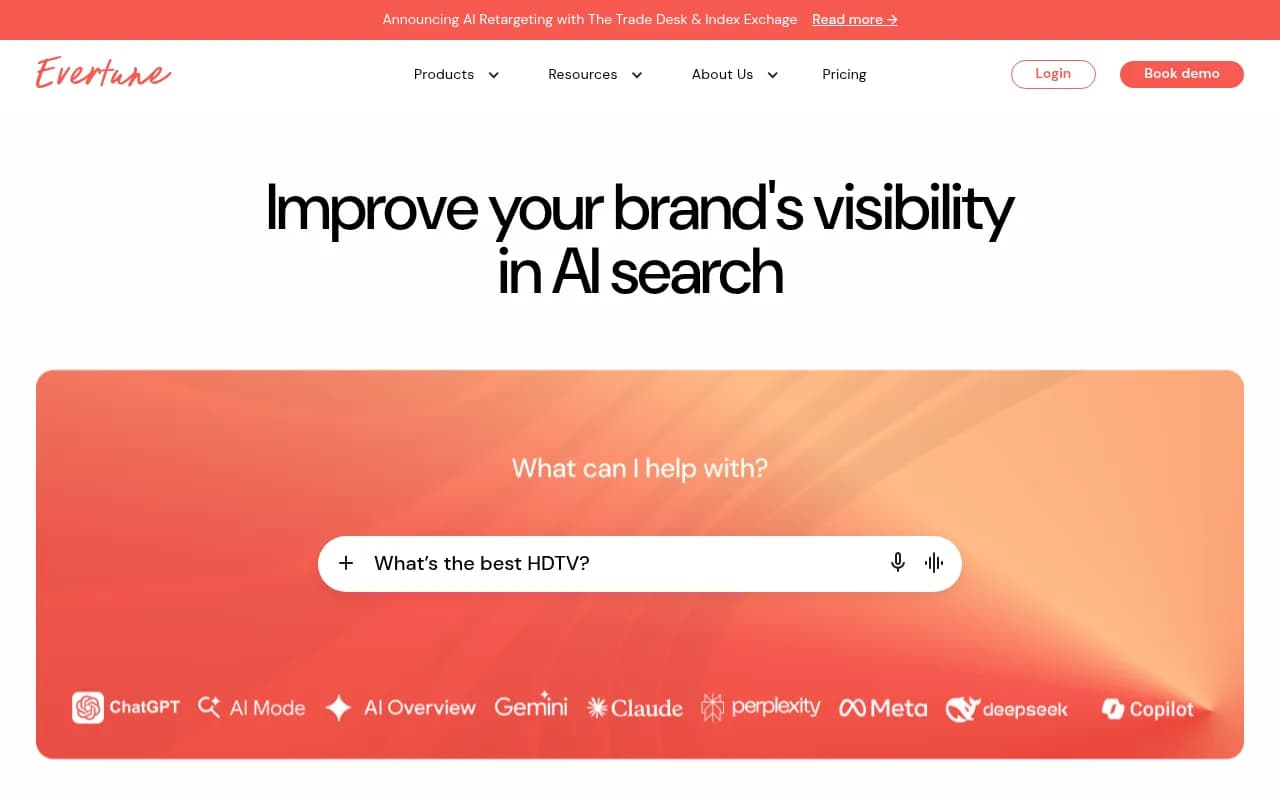
Evertune is another enterprise-focused platform targeting Fortune 500 brands with no published pricing.
What the pricing actually covers: the variables that matter
Once you get past the headline number, there are five variables that determine whether a GEO platform is actually affordable for your use case.
Prompt limits
This is the most important variable and the one most often buried in the fine print. A "prompt" in GEO platforms typically means one query run against one AI model. If you're tracking 50 keywords across 10 AI models, that's 500 prompts per run. If you run weekly, that's 2,000 prompts per month.
Many entry-level plans cap at 50-100 prompts per month. That sounds like a lot until you do the math on model coverage and query frequency.
Model coverage
Not all platforms monitor the same AI engines. Some focus on ChatGPT and Perplexity. Others add Google AI Overviews, Claude, Gemini, Grok, DeepSeek, and Copilot. More models means more prompts consumed per query, which means you hit your limit faster.
Platforms that monitor 10+ models (like Promptwatch, which covers OpenAI/ChatGPT, Perplexity, Google AI Overviews, Google AI Mode, Claude, Gemini, Meta/Llama, DeepSeek, Grok, Mistral, and Copilot) will burn through prompt budgets faster than single-model trackers. That's not a criticism -- broader coverage is genuinely more valuable -- but it means you need to account for it when comparing plans.
Seat counts and user access
Some platforms charge per seat, others include unlimited users. This matters a lot for agencies managing multiple clients or enterprise teams with multiple stakeholders who need dashboard access.
Content generation limits
Tools that include AI content generation (articles, listicles, comparisons) typically cap this separately from prompt tracking. Promptwatch's Essential plan includes 5 articles/month; Professional includes 15. If content production is a core part of your workflow, this cap is as important as the prompt limit.
Overage fees
This is the one that catches people off guard. Some platforms charge per-prompt beyond your plan limit. Others pause your tracking until the next billing cycle. A few let you run over and bill at the end of the month. None of these are inherently bad, but you need to know which model you're on before you commit.
A practical comparison of published pricing
Here's what's actually visible from public pricing pages as of April 2026. Note that pricing changes frequently in this category -- verify directly before making a decision.
| Platform | Entry price | Prompt limit (entry) | Model coverage | Content generation | Free trial |
|---|---|---|---|---|---|
| Promptwatch | $99/mo | 50 prompts | 10+ models | Yes (5 articles) | Yes |
| Otterly.AI | Published | Limited | Moderate | No | Yes |
| Peec AI | Published | Limited | Multi-language | No | Yes |
| SE Ranking | Published (add-on) | Varies | Moderate | No | Yes |
| Profound | $499/mo min | Not published | Enterprise | No | No |
| AthenaHQ | Partial | Not published | 8+ models | No | Varies |
| BrightEdge | Contact sales | N/A | Enterprise | No | No |
| Bluefish | Contact sales | N/A | Enterprise | No | No |
| Search Party | Contact sales | N/A | Custom | No | No |
| Evertune | Contact sales | N/A | Enterprise | No | No |
The monitoring-only vs. optimization gap -- and how it affects pricing
One thing that's easy to miss when comparing prices: a lot of GEO platforms are monitoring-only dashboards. They show you data. They don't help you do anything with it.
This matters for pricing because a $200/month monitoring tool and a $200/month optimization platform are not the same product. The monitoring tool shows you that competitors are getting cited for prompts you're missing. The optimization platform shows you the same thing, then helps you create the content to close the gap, and tracks whether it worked.
Most platforms stop at monitoring. Otterly.AI, Peec AI, AthenaHQ, and many of the newer entrants are primarily tracking tools. That's not a knock -- tracking is valuable -- but it means you're paying separately for the "what do I do about this" part.
Platforms that include content generation and gap analysis (Promptwatch's Answer Gap Analysis and built-in AI writing agent, for example) bundle the full workflow into one price. Whether that's better value depends on whether you'd actually use the content generation features.
The ZipTie.dev comparison makes this point well: most tools leave you "staring at charts" without a clear next action. The pricing question isn't just "what does it cost?" but "what does it cost to get from data to results?"
Red flags to watch for when evaluating GEO platform pricing
A few patterns that should prompt more questions before you sign:
"Unlimited prompts" claims. Some platforms advertise unlimited prompts, but the fine print reveals rate limits, model restrictions, or fair-use policies that effectively cap usage. Ask specifically: what happens if I run 10,000 prompts in a month?
Vague model coverage. "Tracks major AI engines" is not a spec. Ask for a list. ChatGPT and Perplexity are table stakes. Google AI Overviews, Claude, Gemini, Grok, DeepSeek, and Copilot are the differentiators.
No mention of crawler logs. AI crawler logs (which show you when ChatGPT, Claude, Perplexity, and others are actually crawling your site) are a meaningful feature that most platforms don't offer. If a platform doesn't mention this at all, it probably doesn't have it.
Annual-only billing at entry level. Some platforms require annual commitment even at their lowest tier. That's a meaningful risk for a category where the tools are still maturing. Monthly billing at entry level is a reasonable expectation.
No traffic attribution. Knowing you're cited in AI responses is useful. Knowing that those citations are driving actual traffic and revenue is the thing that justifies the spend. Platforms that don't offer any traffic attribution (via code snippet, GSC integration, or server log analysis) make it hard to close the ROI loop.
How to approach a GEO platform evaluation without getting burned
If you're actively evaluating tools right now, here's a practical approach:
Start with the tools that have transparent pricing and free trials. You can get real data on your brand's AI visibility without committing to anything. Promptwatch, Otterly.AI, and Peec AI all let you start without a sales call.
Before talking to any enterprise vendor, build a requirements list that includes: number of prompts needed per month, AI models you need to track, number of sites, whether you need content generation, and whether traffic attribution matters to you. This lets you evaluate "contact sales" vendors on your terms rather than theirs.
Ask every vendor the same five questions: What's the prompt limit? What happens when I exceed it? Which specific AI models do you track? Do you offer crawler logs? How do you attribute AI traffic to revenue? The answers will tell you more than any demo.
For agencies, pay close attention to multi-site pricing and white-label options. The per-site cost at scale is often where the real expense lives, and some platforms have much better agency economics than others.
The bottom line on GEO pricing in 2026
The GEO platform market is still sorting itself out, and pricing reflects that. You have a cluster of well-priced, transparent mid-market tools that are genuinely useful for most marketing teams. You have a set of enterprise platforms that are opaque by design and priced for procurement cycles. And you have a lot of monitoring-only tools that are cheap but incomplete.
The most important thing to understand is that price alone doesn't tell you whether a tool is worth it. A $99/month tool that shows you exactly which content to create and tracks whether it's working is better value than a $499/month dashboard that leaves you with a spreadsheet of data and no clear next step.
Transparency in pricing is a proxy for transparency in the product. Tools that are clear about what they cost tend to be clearer about what they do. That's not a universal rule, but it's a useful heuristic when you're evaluating a category where the marketing language is often indistinguishable between tools.
The GEO platforms that will earn long-term customers are the ones that make it easy to understand the cost, easy to start, and easy to see results. The ones hiding behind "contact sales" for $200/month products are making an unnecessary bet that friction works in their favor.