Key takeaways
- Google AI Overviews appear on roughly 50% of all searches in 2026, making visibility in them a real business concern, not just an SEO curiosity.
- You can manually check your brand's presence in AI Overviews, but manual checks are inconsistent and don't scale -- dedicated monitoring tools are more reliable.
- Google Search Console now surfaces some AI Overview data, but it's limited and requires careful interpretation.
- Most brands that are invisible in AI Overviews have fixable problems: thin content, missing E-E-A-T signals, or pages that AI crawlers can't access.
- Tracking visibility is only step one. The brands winning in AI search are the ones creating content specifically designed to be cited.
Why this question matters more than it did a year ago
A year ago, "does my brand show up in AI Overviews?" was a curiosity question. Now it's a revenue question.
Google AI Overviews have expanded dramatically. They appear on roughly half of all Google searches, and for many informational and comparison queries, the AI Overview is the first thing a user reads. If your brand isn't cited there, you're effectively invisible for that query -- even if you rank on page one of the traditional results below it.
The click dynamics have shifted too. When an AI Overview answers the question directly, a meaningful portion of users never scroll down to the blue links. That means traditional rank tracking tells you less than it used to. You can be ranking #2 organically and still be losing traffic to a competitor whose content the AI cites.
So: how do you actually find out if your brand is showing up? And if you're not, how do you diagnose why?
That's what this guide covers.
Step 1: Manual spot-checking (the quick and dirty method)
The simplest starting point is just searching Google yourself. Open an incognito window (to avoid personalization), search for queries where you'd expect your brand to appear, and look for the AI Overview box at the top.
Some queries to try:
- Your brand name + category ("Acme Software project management")
- Generic category queries where you want to be recommended ("best project management tools for remote teams")
- Problem-based queries your customers ask ("how to manage remote team tasks")
- Comparison queries ("Acme Software vs competitors")
When an AI Overview appears, look for:
- Is your brand mentioned by name?
- Is your website listed as a source (the small citation links)?
- Are competitors mentioned but not you?
The limitation here is obvious: AI Overviews don't appear on every search, they vary by location and user, and manually checking dozens of queries is tedious. But it gives you a quick read on whether you have any presence at all.
Step 2: Check Google Search Console for AI Overview data
Google Search Console added AI Overview performance data, and it's worth checking even though it has real limitations.
In Search Console, go to the Performance report and look for the "Search type" filter. You can filter for "AI Overviews" specifically to see:
- Which queries triggered an AI Overview where your site was cited
- Impressions and clicks from those citations
- Which pages are being cited
This is genuinely useful data. If you're getting AI Overview impressions but low clicks, your citation is appearing but users aren't clicking through -- which tells you something about how your brand is being presented in the summary.
The catch: Search Console only shows you queries where you're already cited. It won't show you the queries where competitors are cited and you're not. That gap -- the queries where you're invisible -- is where the real opportunity lives.
Step 3: Use a dedicated AI visibility monitoring tool
Manual checks and Search Console give you a partial picture. For anything systematic, you need a tool that actually queries AI systems at scale and tracks citation patterns over time.
Several tools in this space are worth knowing about.
Promptwatch is one of the more complete options here. It monitors AI Overviews alongside other AI search engines (ChatGPT, Perplexity, Claude, Gemini, and more), tracks which of your pages are being cited, and -- importantly -- shows you the queries where competitors are cited but you aren't. That last part is what most monitoring tools skip.

For teams that want simpler, more focused options:
Thruuu is built specifically for content teams tracking AI Overview presence. It's lighter than a full GEO platform and works well if Google is your primary concern.
SE Ranking has added an AI visibility toolkit to its existing SEO suite, which makes it a reasonable choice if you're already using it for rank tracking and don't want another tool.
Rankscale focuses on AI search ranking and visibility across models, with a clean interface for tracking citation frequency over time.

Otterly.AI is a more affordable entry point for smaller teams that want basic AI Overview monitoring without enterprise pricing.
The core thing any of these tools should do: run your target queries against AI systems on a regular schedule and tell you whether your brand appears, which pages are cited, and how that changes over time.
Step 4: Diagnose why you're not showing up
If you've confirmed your brand is missing from AI Overviews for queries where you'd expect to appear, the next step is figuring out why. There are a few common culprits.
Your content isn't accessible to AI crawlers
Google's AI systems need to be able to crawl and read your pages. Check your robots.txt and meta robots tags to make sure you're not accidentally blocking Googlebot or related crawlers. Also check for JavaScript rendering issues -- if your content is only visible after client-side rendering, AI crawlers may not be reading it.
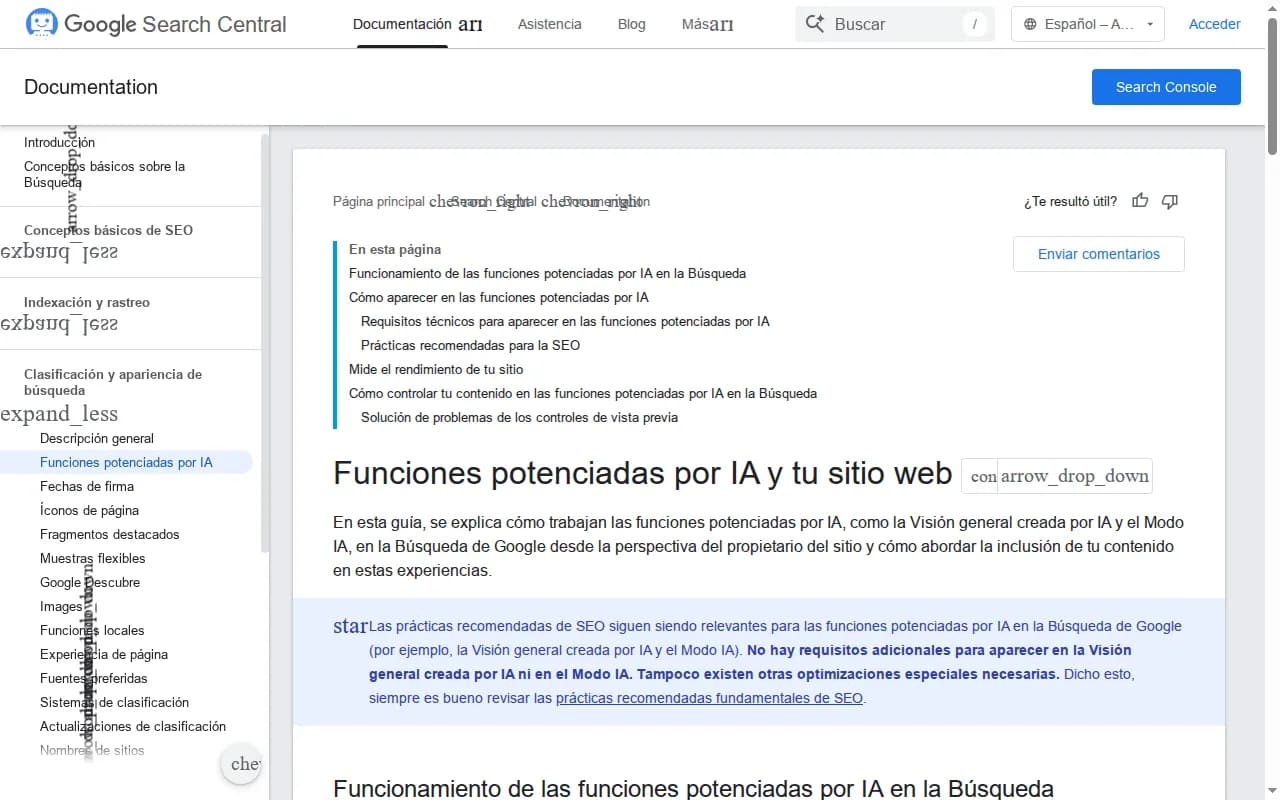
Google's Search Central documentation on AI features is worth reading here. It covers the technical requirements for appearing in AI features, including AI Overviews.
Your content doesn't directly answer the question
AI Overviews favor content that clearly and directly answers the question being asked. If your page talks around a topic without giving a concrete answer, it's less likely to be cited. The format matters too -- structured content with clear headings, short paragraphs, and direct answers tends to perform better than long-form prose that buries the answer.
Ask yourself: if someone asked this question out loud, does my page answer it in the first 200 words?
You're missing E-E-A-T signals
Google's AI systems weight Experience, Expertise, Authoritativeness, and Trustworthiness heavily when deciding what to cite. For many queries, this means:
- Author bylines with credentials
- Citations and references to primary sources
- About pages that establish who you are and why you're qualified
- External sites linking to you as an authoritative source
- Reviews and third-party mentions
A page with strong E-E-A-T signals on a topic is far more likely to be cited than an anonymous page with similar information.
You're targeting the wrong query types
AI Overviews appear most often on informational queries -- "how to", "what is", "best X for Y" -- and less often on navigational or transactional queries. If your content strategy is heavily focused on bottom-of-funnel, purchase-intent pages, you may simply not be targeting the query types where AI Overviews appear.
This doesn't mean abandoning conversion-focused content. It means adding informational content that answers the questions your customers ask before they're ready to buy.
Competitors have more comprehensive coverage
Sometimes the issue isn't that your content is bad -- it's that a competitor's content is more thorough. AI systems tend to cite sources that cover a topic more completely. If a competitor has a 2,000-word guide that answers 10 related questions and you have a 400-word overview, the competitor is more likely to be cited.
Step 5: Build a monitoring cadence
Visibility in AI Overviews isn't static. Google updates its AI systems regularly, and citation patterns shift. A page that's being cited today might drop out next month. A competitor might gain ground on a query you've been winning.
Monthly audits are a reasonable minimum for most brands. For competitive categories, weekly monitoring makes more sense.
What to track:
- Which queries trigger AI Overviews for your category
- Whether your brand is cited in those overviews
- Which specific pages are being cited
- Which competitors appear alongside you (or instead of you)
- How your citation rate changes over time
A comparison of the main approaches:
| Method | What it shows | What it misses | Best for |
|---|---|---|---|
| Manual Google search | Quick spot-check of specific queries | Inconsistent, doesn't scale, no history | Initial diagnosis |
| Google Search Console | Queries where you're already cited, click data | Queries where competitors are cited but you're not | Understanding existing citations |
| Dedicated AI monitoring tool | Systematic tracking across many queries, competitor gaps, trend data | Varies by tool -- some lack content gap analysis | Ongoing monitoring and optimization |
Step 6: Fix the gaps, don't just track them
This is where most brands stall. They set up monitoring, see that they're invisible for certain queries, and then... don't do much about it. Tracking your visibility is only useful if it leads to action.
The fix for most AI Overview gaps is content. Specifically:
- Creating pages that directly answer the questions where you're invisible
- Improving existing pages to be more comprehensive and better structured
- Building E-E-A-T signals on pages that are already indexed but not being cited
Tools like Promptwatch go beyond tracking to help with this -- the Answer Gap Analysis feature shows exactly which queries competitors are visible for but you're not, and the built-in writing tools help you create content designed to get cited. That's a different proposition than a monitoring dashboard that just shows you data.
For content creation specifically, a few tools worth considering:
Surfer SEO helps optimize content structure and coverage for search visibility, which translates to AI Overview eligibility.
Clearscope focuses on content optimization and topic coverage -- useful for making sure your pages comprehensively cover the questions AI systems are looking for.
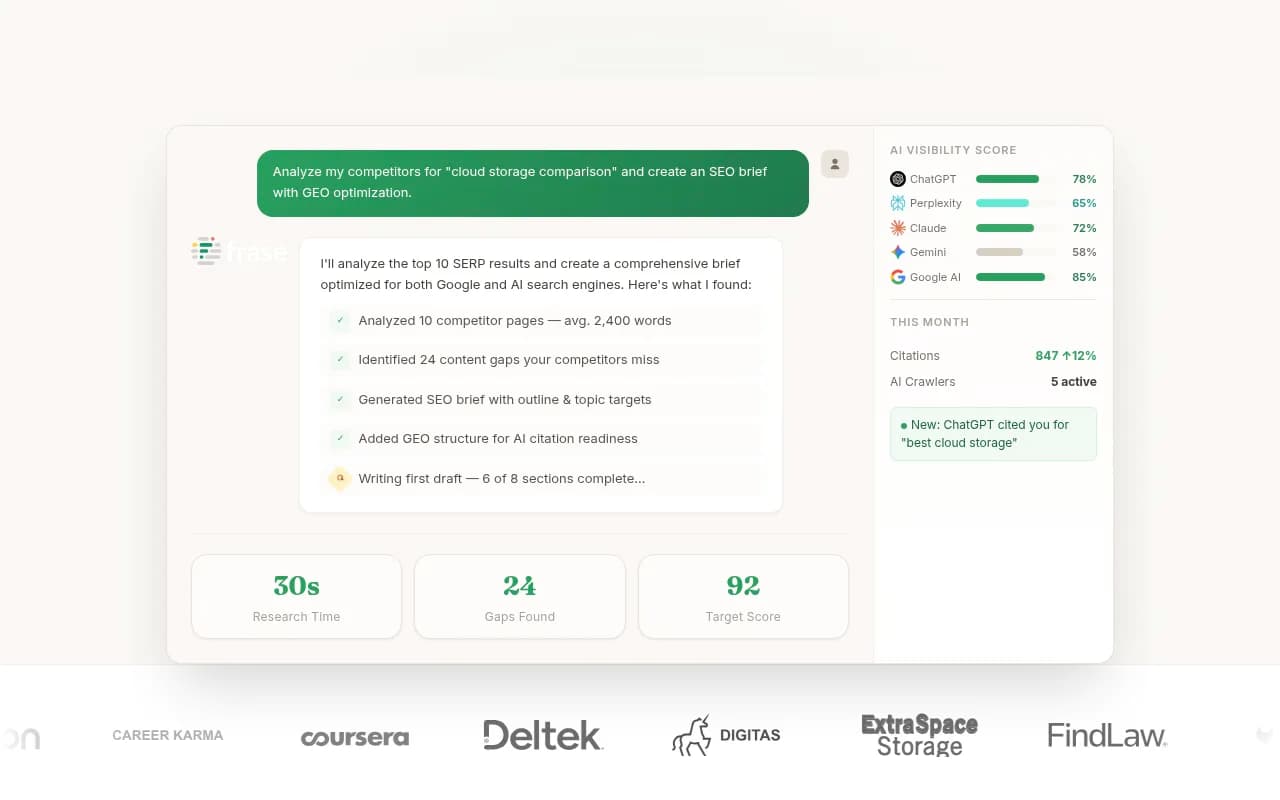
Frase combines research, content briefs, and optimization in one workflow, which speeds up the process of creating AI-ready content.
What Google actually says about appearing in AI features
Google's official guidance on AI features (published on Search Central) is worth reading directly. The short version:
- There's no special submission process or separate optimization for AI Overviews
- The same principles that help you rank in traditional search -- helpful content, good technical SEO, strong E-E-A-T -- apply to AI features
- You can opt out of AI features using the
nosnippetmeta tag, but this also removes you from featured snippets - Google uses the same crawling and indexing infrastructure for AI features as for regular search
That last point is important. You don't need to do something entirely different to appear in AI Overviews. You need to do the same things that make content rank well -- just with more attention to directness, structure, and authority signals.
A practical checklist for your diagnosis
Run through this before concluding your brand "can't" appear in AI Overviews:
- Searched target queries in incognito and checked for AI Overview presence
- Checked Search Console for AI Overview performance data
- Confirmed Googlebot can crawl your key pages (no robots.txt blocks, no rendering issues)
- Verified your content directly answers the questions being asked
- Checked that author credentials and E-E-A-T signals are present on key pages
- Identified which queries competitors are cited for that you're not
- Set up a monitoring tool to track citation rates over time
- Created or updated content to address the gaps found
The brands that show up consistently in AI Overviews aren't doing anything magical. They're publishing clear, authoritative, well-structured content on topics their customers care about, and they're tracking what's working so they can do more of it.
Start with the diagnosis. Then fix what you find.