Key takeaways
- Buying committees now research vendors in ChatGPT, Perplexity and Google AI Overviews before they ever hit your ABM ads or land on a gated page. Your account list can be perfect and still miss the shortlist.
- Pick a GEO tool that ties AI visibility to pages, traffic and pipeline. A tool that only reports mention counts won't help an ABM team.
- For B2B software, ChatGPT leans on product pages, landing pages, docs and review sites. Your own site is the main citation source, according to Promptwatch Data.
- Reddit has nearly vanished from ChatGPT citations, while LinkedIn is its top social source. That changes where ABM content should live.
- A GEO tool does not replace 6sense, Demandbase or RollWorks. It covers the research phase those platforms cannot see.
Why ABM teams need a GEO tool at all
ABM platforms are good at deciding which accounts matter and getting messages in front of them. They are weaker at one question that now sits in the middle of most B2B deals: what does an AI assistant say when someone at a target account asks for the best vendors in your category?
That answer gets built from a pile of sources you do not fully control. A VP of IT types "best contract lifecycle management software for mid-market" into ChatGPT, gets a list of five vendors, and walks into your first sales call with a shortlist already formed. Your intent data may show nothing, because the research happened inside a chat window.
The HG Insights 2026 ABM guide makes a related point: ABM platforms have grown from campaign coordination into full intelligence systems, and data quality drives results. GEO data is one more signal layer, and honestly the one most stacks are missing.
What the ABM stack covers, and what it doesn't
The usual ABM stack, such as 6sense, Demandbase, RollWorks, ZoomInfo Marketing or Terminus, handles account selection, intent scoring, advertising and sales alerts. Demandbase's own buyer guide notes that organizations spend anywhere from $35,000 to over $1 million a year on these platforms. That is a lot of money pointed at accounts that may already have decided who to talk to.
What the stack usually cannot tell you:
- Which prompts your buyers ask AI assistants, and whether you appear
- Which of your pages AI engines cite, and which competitor pages they cite instead
- Whether AI crawlers can even read your site
- How much traffic and pipeline comes from AI referrals
Those are the jobs of a GEO tool.
What to look for in a GEO tool for ABM
Most GEO tools started as prompt trackers. For an ABM team, mention counts alone are not very useful. You need to go from "we are missing" to "here is what to publish, for which account segment, and did it work." Here is the checklist I would use.
Prompts that match buying-committee questions
You want to track category prompts ("best X for Y"), comparison prompts ("X vs Y"), and brand prompts ("is X good for enterprise"). Tag them by persona and segment so you can see whether the CFO-flavored questions look different from the IT-flavored ones. Prompt volume and difficulty scores help you decide which to attack first.
Citation and source data
Visibility without source data is a dead end. You need to see which URLs get cited, from which domains, and which content types win. B2B software buyers see a particular mix of sources. In Promptwatch's software citation data for Sep 28 to Oct 4, 2026, GitHub, Microsoft's docs and G2 led ChatGPT citations, and docs and help centers earned the largest source-type share at 2.64%. Vendor sites earned 2.01%. G2, Gartner, Capterra and Software Advice together earned 1.57%, more than any single vendor.
AI crawler logs and traffic attribution
If GPTBot or ClaudeBot hits a 403 on your pricing page, no amount of content work will fix your visibility. Crawler logs are the unglamorous feature that catches this. Attribution matters too: ABM is judged on pipeline, so you want AI-referred sessions and conversions in the same place as the visibility data.
A way to act on the data
The gap between insight and execution is where most teams stall. Look for gap analysis, content briefs, and ideally content generation and publishing to your CMS. Otherwise you export a CSV and it dies in a shared drive.
Reporting your sales team will read
ABM lives on shared account views between marketing and sales. Scheduled PDFs, Slack briefings and a decent API or MCP connection let you pipe GEO data into the places reps already look.
The best GEO tools for ABM teams in 2026
Promptwatch
Promptwatch is the one I would start with for an ABM team, mostly because it covers the full loop rather than the first step. It tracks the real interfaces of ChatGPT, Google AI Overviews, AI Mode, Gemini, Perplexity, Copilot, Meta AI and others, with prompt volumes, difficulty scores and personas, so you can build monitors around the questions a buying committee actually asks.
Where it separates from pure trackers is what happens next. IP-verified AI crawler logs show whether bots can read your pricing, docs and comparison pages. Visitor analytics attribute AI traffic and conversions. The Answer Gap analysis shows which prompts competitors win and you do not, and the Content Agent can plan, write and publish content to WordPress, Webflow or Framer, then track whether those pages get crawled, cited and clicked. Agent Chat and the MCP server let you query your data from Slack or Claude, which is handy when a sales leader asks "why are we missing from ChatGPT for healthcare accounts?"
Pricing starts with a free Explore plan (ChatGPT only), then $95/mo for Essential, $245/mo for Professional and $579/mo for Business, which includes the automated Content Agent and local and state/city tracking. Agencies running ABM for clients should look at the Kick-off, Growth and Scale plans. Confirm current numbers at promptwatch.com/pricing.

Profound
Profound is a strong enterprise monitoring platform with polished reporting. It tends to appeal to large brands with budget for a monitoring-first tool. The tradeoff is price, and less emphasis on closing the loop with content execution and crawler-level diagnostics.

Scrunch
Scrunch focuses on AI visibility monitoring and brand-level analysis. It is a reasonable pick if your main need is tracking how AI describes your brand across engines.
AthenaHQ
AthenaHQ tracks visibility across a range of AI search engines and suits teams that want monitoring with some optimization guidance.

Peec AI and Otterly.AI
Both are lighter, cheaper trackers. For a small B2B team that just needs to know whether it shows up for 30 to 50 prompts, they work. They will not tell you about crawler errors or AI-driven traffic.


Semrush One and Ahrefs Brand Radar
If your team already lives in Semrush or Ahrefs, the AI modules are convenient. You get decent coverage inside a familiar interface, though the AI-specific depth is shallower than dedicated platforms.

Enterprise SEO suites
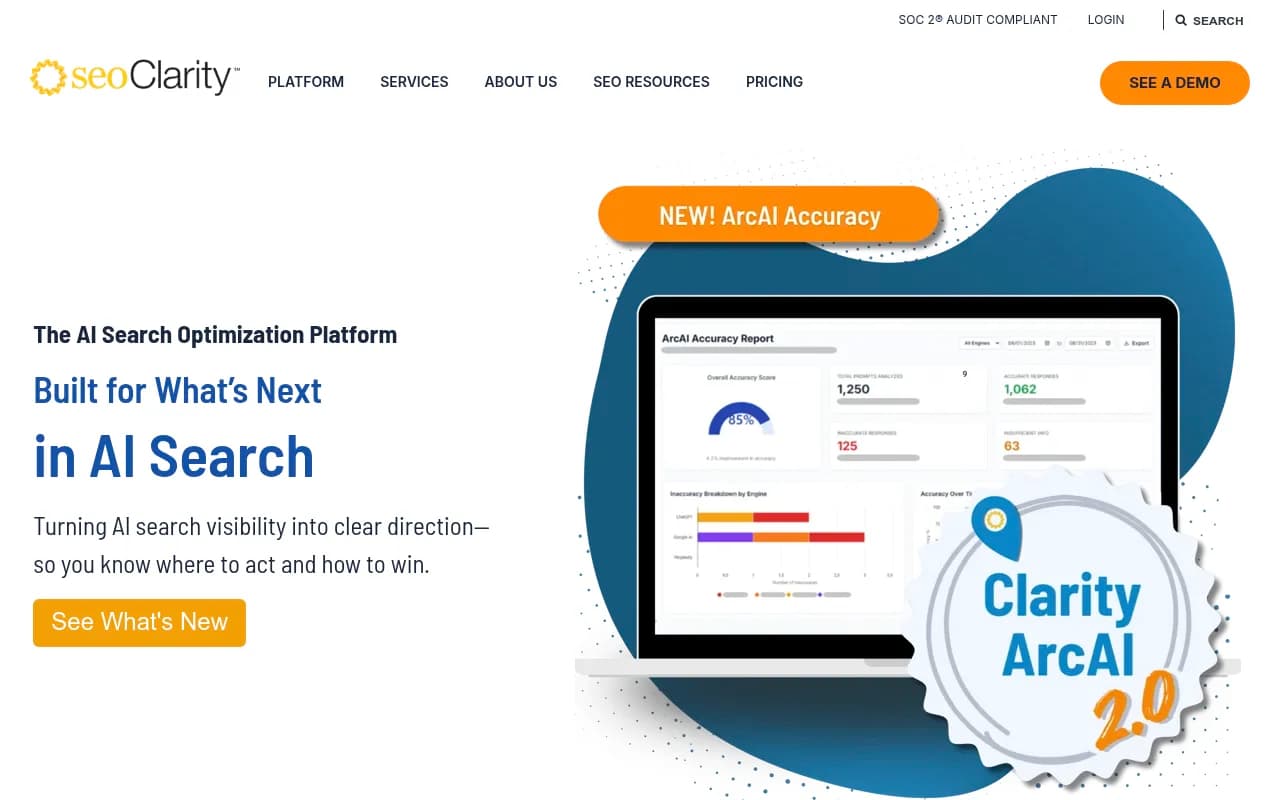
BrightEdge, Botify and seoClarity have added AI visibility features. They make sense if you already run one for classic SEO and want a single vendor.
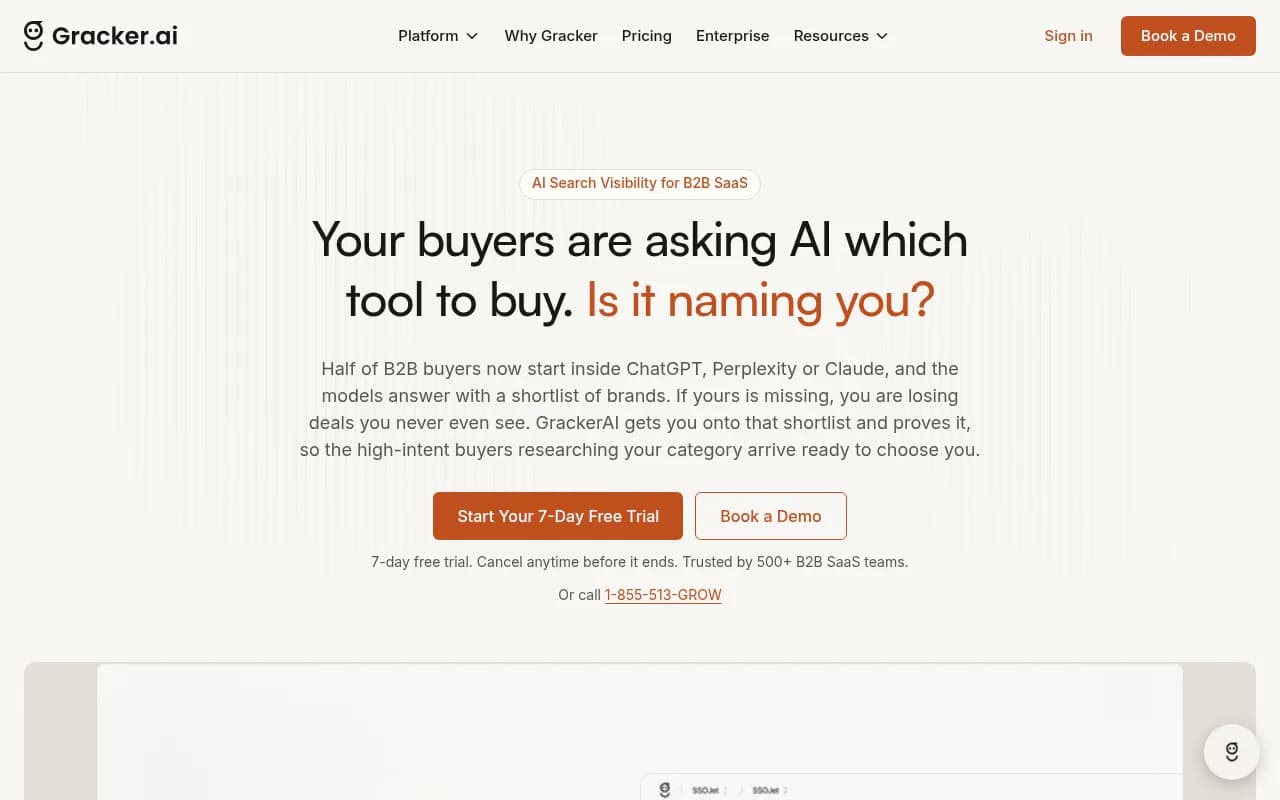
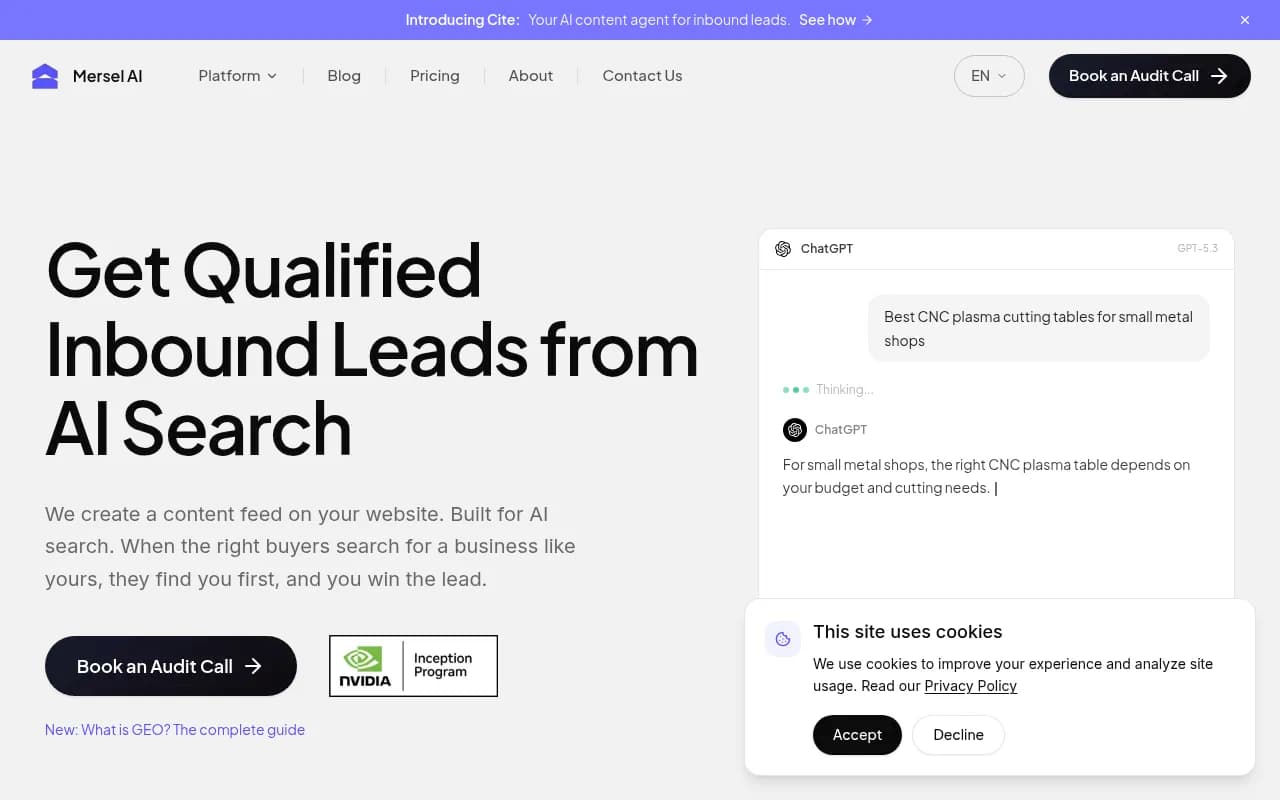
GrackerAI and Mersel AI
Both position themselves around B2B SaaS, which is worth a look if you want a narrower, vertical-flavored tool.
Comparison table
| Tool | Tracks real AI interfaces | Crawler logs | AI traffic attribution | Content creation and publishing | Best for |
|---|---|---|---|---|---|
| Promptwatch | Yes | Yes (IP-verified) | Yes | Yes (Content Agent, CMS publishing) | ABM teams that want to act on gaps |
| Profound | Yes | Limited | Limited | Limited | Large enterprises, monitoring-first |
| Scrunch | Yes | No | No | No | Brand-level monitoring |
| AthenaHQ | Yes | No | Limited | Some guidance | Mid-size teams |
| Peec AI / Otterly.AI | Yes | No | No | No | Small teams on a budget |
| Semrush One / Ahrefs Brand Radar | Partly | No | No | No | Teams already in those suites |
| BrightEdge / Botify / seoClarity | Partly | Site crawl focus | Varies | Varies | Existing enterprise SEO customers |
Feature depth changes fast in this category, so treat the table as a starting point and run a trial before committing.
How to run GEO alongside ABM
Here is a workflow that works without rebuilding your stack.
1. Build prompt monitors by segment
Take your top three ICP segments and write 15 to 25 prompts for each. Mix category prompts, comparison prompts and "alternatives to [competitor]" prompts. Tag them by persona. Country or city targeting matters if you sell regionally.
2. Fix crawler access before anything else
Check robots.txt, CDN rules and bot protections. A shocking number of B2B sites block AI crawlers by accident. Free checks like Promptwatch's Agentic Readiness Check and AI Crawler URL Inspector take minutes.
3. Prioritize the content types AI actually cites
In Promptwatch's ChatGPT content-type data for Sep 28 to Oct 4, 2026, product pages were 22.4% of citations, landing pages 16.8%, and listicles 13.6%. For commercial prompts like "best CRM for small businesses", product pages hit 26.0%, landing pages 20.6%, listicles 15.0% and comparisons 7.9%, nearly 70% together. Many ABM teams pour effort into gated assets and ABM-only microsites. Those rarely get cited. Make sure the public product, solution and comparison pages are strong, crawlable and specific to each segment.
4. Keep review profiles current
G2 and Capterra pages feed AI answers about software. Keep them complete. This is cheap and often ignored.
5. Choose social channels by engine
The social picture changed this year. Per Promptwatch's social citation data for Sep 28 to Oct 4, 2026, ChatGPT got just 0.46% of citations from social platforms, with Reddit down from 5.19% to 0.09% and LinkedIn its top social source at 0.3%. Perplexity cited LinkedIn at 0.86%. Google AI Overviews drew 12.2% from social, with YouTube at 4.28%. The Reddit drop lines up with the August 14 collapse in ChatGPT's Reddit citations. For B2B that means: do not lean on Reddit for ChatGPT, publish thought leadership on LinkedIn for Perplexity, and invest in YouTube for AI Overviews.
6. Respect content half-life
Promptwatch's content half-life data shows news loses half its cited pages in about five weeks, while landing pages and docs hold for months. Evergreen solution pages and documentation are better investments for ABM than a stream of news-style posts.
7. Feed results back to sales
Share a monthly view: where you appear for each segment's prompts, which competitors beat you, and what AI traffic converted. Account executives love knowing what a prospect likely heard before the call.
Where GEO fits with attribution and ABM platforms
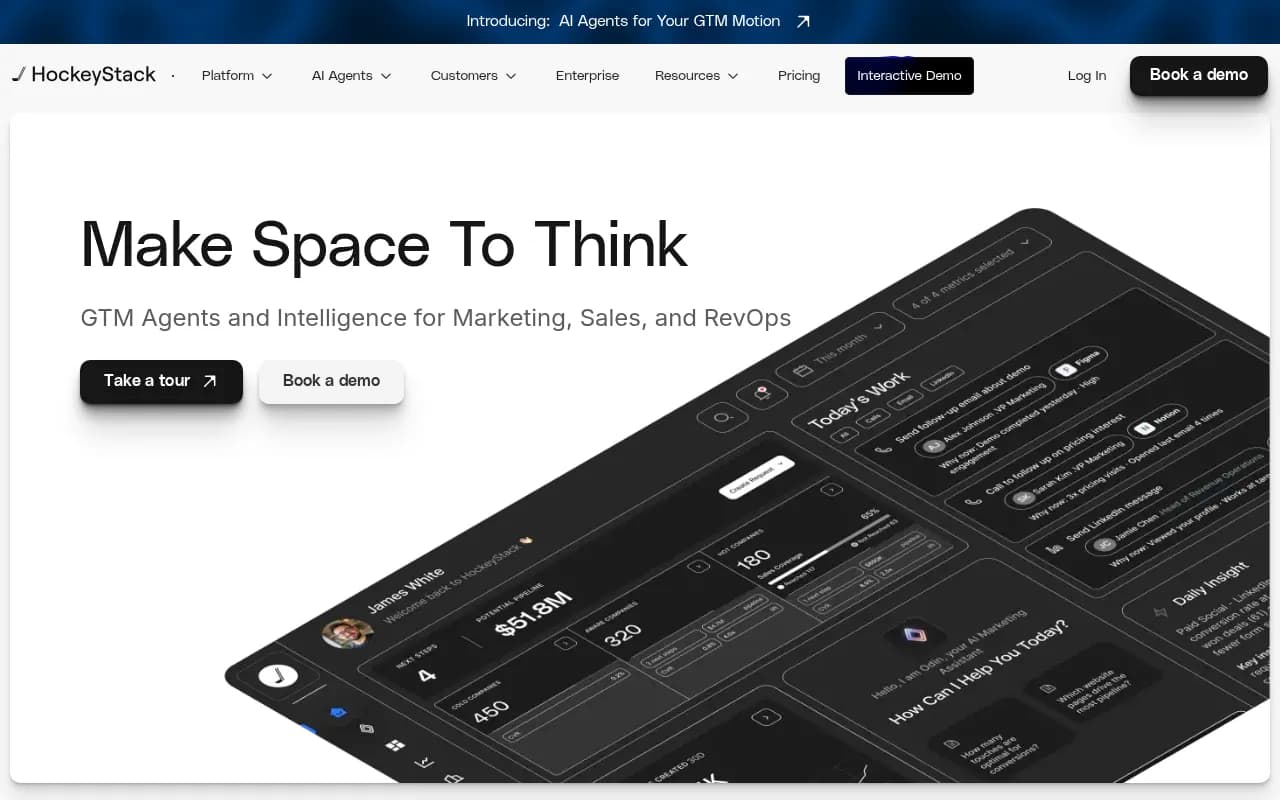
GEO tools do not replace intent platforms. Use 6sense or Demandbase to decide who to pursue, and a GEO tool to shape what those accounts find when they research on their own. If you want pipeline proof, pair GEO traffic data with a B2B attribution tool such as HockeyStack or Dreamdata.
For writing support on account-specific messaging, Copy.ai has sales-oriented templates, though it has no visibility data to ground the content.
To browse more options, the GEO software directory at bestgeosoftware.com lists many tools beyond the ones above.
Picking by team type
- Lean demand-gen team (1 to 3 people): start with Promptwatch Essential or a lighter tracker like Peec AI, and fix crawler access first.
- Mid-market B2B marketing team: Promptwatch Professional or Business for the content workflow, crawler logs and attribution.
- Enterprise with an existing SEO suite: evaluate your suite's AI module alongside a dedicated platform, and compare the depth honestly.
- Agency running ABM for clients: look at multi-project plans with white-label reporting and client access.
Common mistakes
- Tracking only brand prompts. You will look great and learn nothing. Category and comparison prompts decide shortlists.
- Reading a visibility score without checking sources. Low mentions with no self-citations point to a content or crawlability problem, not a reputation one.
- Gating everything. AI engines cannot cite what they cannot read.
- Skipping the baseline. Take a snapshot before you start, or you will not be able to show impact in a quarterly review.
Final thoughts
ABM got more precise at choosing targets, but the research phase moved somewhere it cannot see. A GEO tool fills that gap. For most ABM teams, I would pick the platform that links prompts to crawler data, citations, traffic and content execution, because that is the chain you will be asked to defend in a pipeline review. Start with a free baseline scan, pick 20 prompts per segment, fix any crawler blocks, and publish segment-specific product and comparison pages. Then measure again in 30 days.