Key takeaways
- Banks should buy on evidence capture, security posture, exports and execution, not on how many AI engines a dashboard lists.
- Promptwatch, Profound, Scrunch, AthenaHQ, BrightEdge and Bluefish are the names that come up most for enterprise finance teams. They solve different problems: measurement, governance, enterprise SEO suites, or fixing the gaps.
- In Promptwatch's ChatGPT data (Sep 28 to Oct 4, 2026), product and landing pages earn about 39% of citations. For a bank, that points at account, card, loan and rate pages as the main citation surface. That is my inference, not a finance-specific finding.
- Vendor pricing in third-party roundups is often stale. Confirm every number on the vendor's own pricing page before it goes into a procurement document.
- Run a 30-day pilot on one product line, in one market, with compliance in the room from day one.
Why financial services need a different buying checklist
Most AI visibility tool reviews are written for SaaS marketers. A bank has different problems.
First, the content is regulated. If ChatGPT says your savings account pays a rate you stopped offering two years ago, that is more than a branding issue. Someone in compliance will want to know where the claim came from. Second, the buying committee is bigger. Security, legal, procurement and brand all get a vote. Third, the work is multi-market. A European bank may need Dutch, German and English answers tracked separately, by country.
So the checklist I would use looks like this:
- Real interface data. Do answers come from the actual ChatGPT, AI Overviews and Gemini interfaces, or only from APIs? User-facing answers and citations can differ from API output.
- Claim-level monitoring. Can you see the individual statements AI makes about your rates, fees and eligibility, and flag the wrong ones?
- Security and procurement readiness. ISO/IEC 27001, GDPR, SSO, audit logs, role-based access.
- Crawler visibility. Can you tell whether AI bots can read your product pages at all? Banks often have aggressive bot protection that blocks them by accident.
- Execution. When a competitor shows up and you do not, what does the tool let you do about it?
- Exports and APIs. Your BI team will want the data in their own warehouse.
I did not verify finance-specific compliance features like SOC 2 reports or regulatory-claim monitoring for every vendor below. Treat any such feature as something to confirm in a security review, not something to assume.
What AI search actually cites for money questions
Promptwatch has no finance-specific report, so be careful here. The closest first-party data is general.
Promptwatch Data on ChatGPT citation share by content type (Sep 28 to Oct 4, 2026) shows product pages as the most cited type at 22.4%, and landing pages at 16.8%. Listicles get 13.6%, how-tos 8.7%, documentation 7.5%, and reviews 1.7%. For commercial prompts like "best savings account for…", product pages rise to 26.0% and landing pages to 20.6%.
For branded prompts, the kind where someone asks about your bank by name, product pages hit 23.3% and landing pages 22.8%, and reviews rise to 5.6%, more than three times their overall share.
My reading for banks: complete, crawlable product pages with rates, fees and eligibility are the main thing AI cites. Comparison pages and how-tos matter. Reviews on trusted third-party sites matter for branded queries. That is inference, not a measured finance result.
There is also a regulated-vertical analogue. In Promptwatch's healthcare citation report (Sep 9 to Oct 8, 2026), NIH got 5.46% of citations, the FDA 1.76% and the NHS 1.1%, and government and public health sites led. Finance is not healthcare, but I would expect regulators and primary sources like the CFPB, SEC and FCA to carry similar weight. Again, that is a guess worth testing in your own tracking, not a statistic.
One more data point: news-style pages lose half their ChatGPT citations in about five weeks, while landing pages and docs last for months, per Promptwatch's content half-life report. Evergreen product content is the safer investment.
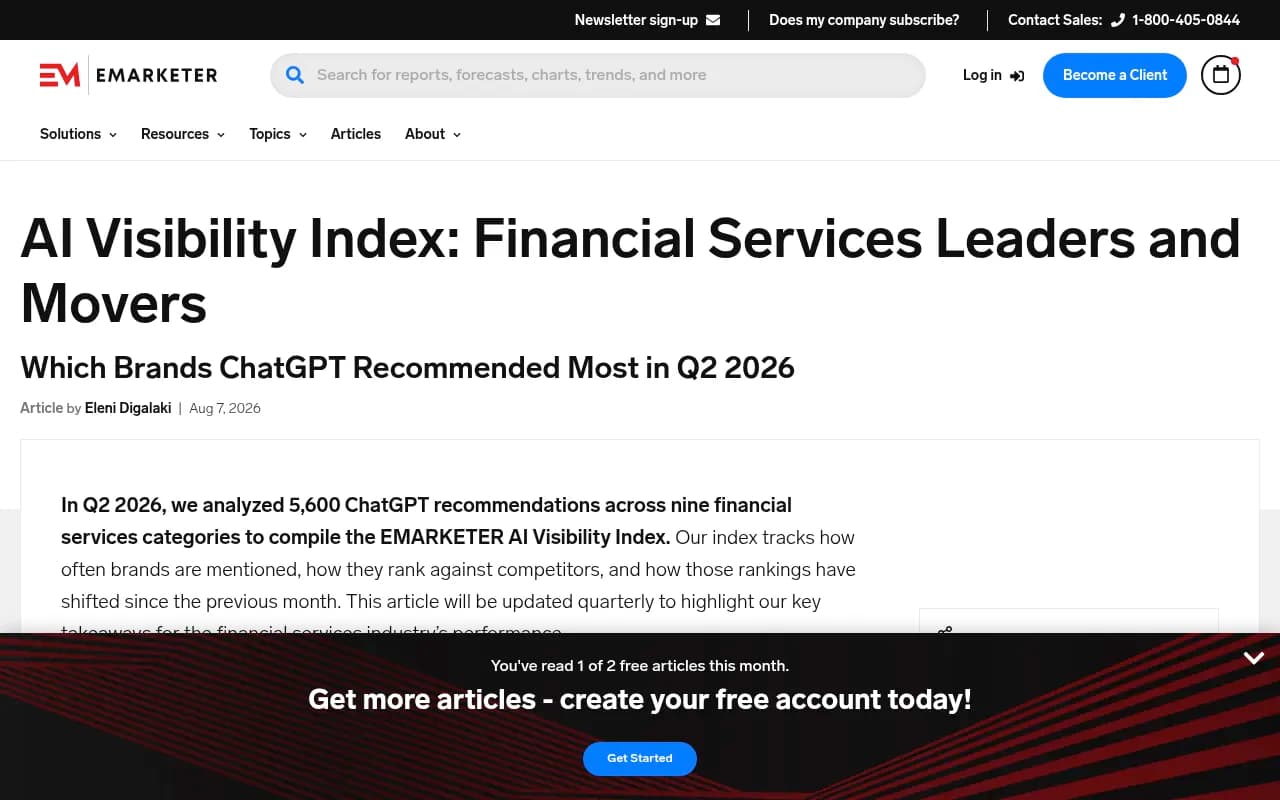
Outside our own data, eMarketer's AI Visibility Index reported Capital One as the most frequently recommended financial services brand in ChatGPT recommendations in Q2 2026. I only saw the snippet, so treat it as a directional benchmark.
The shortlist at a glance
| Platform | Strongest at | Execution (fixing gaps) | Crawler logs | Best for |
|---|---|---|---|---|
| Promptwatch | End-to-end loop: monitor, trace, act, measure | Yes: Content Agent, Action Board, CMS publishing | Yes, IP-verified | Banks that want to fix visibility, not just report it |
| Profound | Analytics depth and exports | Limited | Not a focus | Large banks with dedicated analyst teams |
| Scrunch | Website-level agent controls and governance | Partial | Agent-focused | Teams prioritizing formal governance |
| AthenaHQ | Claim and discrepancy monitoring | Partial | No | Wealth brands testing broad model coverage |
| BrightEdge | Enterprise SEO suite integration | Via SEO workflows | No | Banks already standardized on BrightEdge |
| Bluefish | Fortune 500 brand visibility | Varies | Unverified | Very large global brands |
This table is a summary of positioning, not a substitute for a demo. Where I wrote a gap, it reflects what the vendors publicly emphasize, and you should verify it.
Promptwatch
Promptwatch is the platform 1001 SEO Media uses for its own AI visibility work, and I would put it first on a bank's shortlist for one reason: it closes the loop. Most tools in this category report a score and stop. Promptwatch shows where you are invisible, then helps you fix it and checks whether the fix worked.

The parts that matter for a bank:
- Real-interface tracking across ChatGPT, Google AI Overviews, Google AI Mode, Gemini, Perplexity, Copilot, Meta AI and more, by country and language. A monitor's market is fixed once created, so a Dutch-language retail banking monitor never mixes with a UK one.
- Brand Narrative pulls out the individual claims AI makes about you, like "high fees" or "weak mobile app", grouped under themes such as Pricing and Support. Fact Check lets you mark a claim inaccurate and finds which pages on your site state it, so you know where AI is learning the wrong thing. Fact Check is on Business, Agency Scale and Enterprise.
- IP-verified AI crawler logs show whether GPTBot, ClaudeBot, PerplexityBot and others can actually read your product pages, and where they hit errors. For banks behind strict WAFs, this is often the first real finding. See AI crawler logs.
- Local GEO/SEO targeting at exact coordinates on Business and up, which helps branch-network banks with "bank near me" queries.
- Security basics: ISO/IEC 27001 certified, GDPR compliant, EU-based data handling, an audit log on Business and above, SSO and a white-label portal on Enterprise.
- Execution: the Action Board prioritizes work, the Content Agent (Business and Enterprise) writes and publishes to WordPress, Webflow or Framer with a review inbox, so compliance can approve before anything goes live.
It is used by 1,840+ brands and agencies, including Rabobank, ABN AMRO, Bitvavo, Moonfare and Independer, and is rated 4.7/5 on G2. Pricing runs from Essential at $95/month to Business at $579/month, with Enterprise tailored. Business is the first plan with the Content Agent, faster-than-daily tracking, state and city tracking, Fact Check and the audit log. Confirm current numbers at promptwatch.com/pricing.
Honest limitation: Promptwatch has no finance-specific benchmark report, and a regulated team will still need its own legal review process on anything the Content Agent drafts. For head-to-head detail, see Promptwatch vs Profound and the 2026 platform comparison. You can start with a free AI visibility report or the 7-day trial, or book a demo.
Profound
Profound is the usual answer when a large bank wants deep analytics. Business.com's editors describe it as one of the most comprehensive AI visibility solutions for enterprises across sectors including banking, with multiple languages and locations. SearchEye's roundup calls it the stronger enterprise analytics choice, with real-user demand data, broad analytics and enterprise exports.

The trade-offs, per the same roundup: enterprise configurations can get expensive, and the strongest features assume dedicated analyst capacity. Reported pricing was Starter at $99/month, Growth at $399/month and custom Enterprise, but those figures come from a vendor-authored listicle and the packaging has reportedly changed, so verify on Profound's site. Compared with Promptwatch, it leans toward reporting rather than agentic execution. Detail on the Promptwatch vs Profound page.
Scrunch
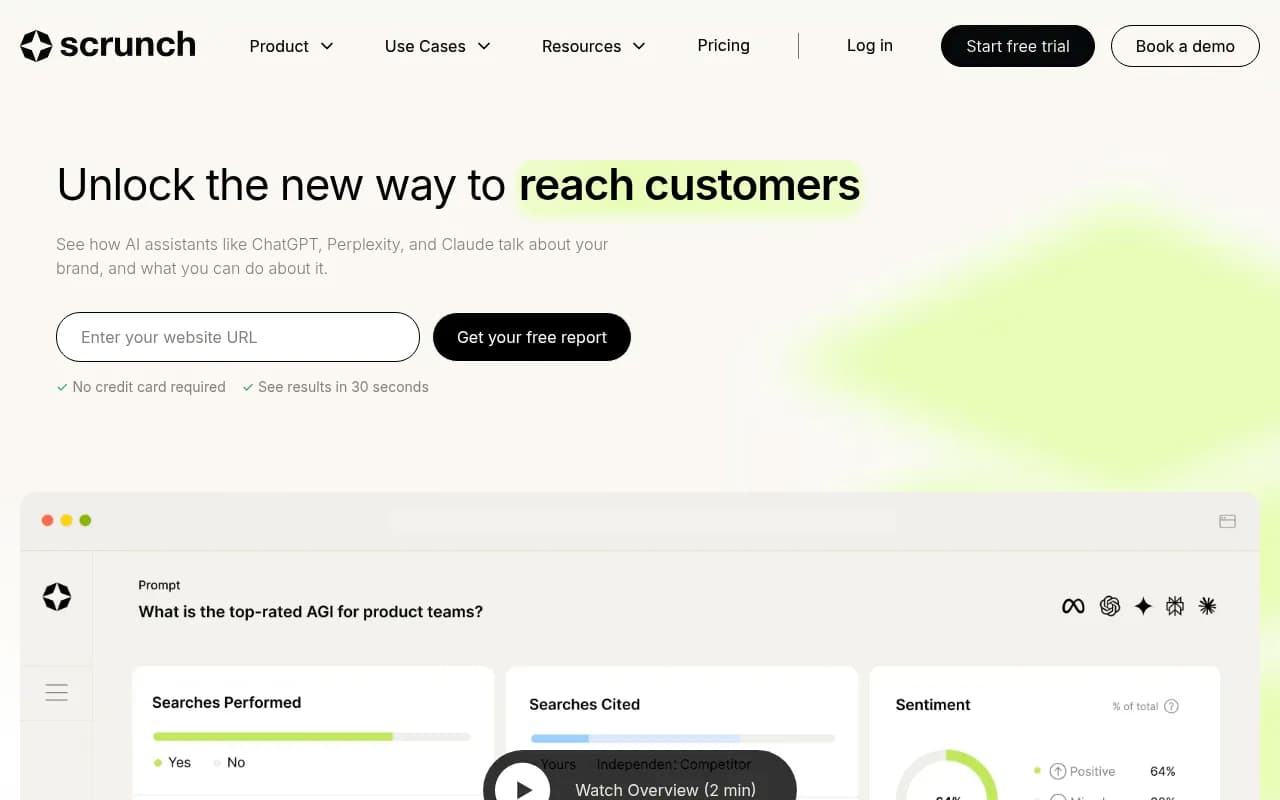
Scrunch gets recommended for banks that care about how AI agents experience the website itself, plus formal governance. SearchEye positions it as better for teams prioritizing website-level agent controls. If your security team wants a say in what AI agents can and cannot see, that is a real selling point.
The catalog also lists a separate Scrunch entry, so check which product you are being quoted.
AthenaHQ
AthenaHQ's pitch is brand integrity: claim and discrepancy monitoring, plus broad model coverage. That maps well to wealth managers worried about wrong statements. SearchEye notes a free Essential tier and a reported $295/month Starter, with advanced controls reserved for Enterprise, and few independent reviews.

BrightEdge
If your SEO team already lives in BrightEdge, its AI products are the low-friction option. Wellows' comparison says BrightEdge has excellent enterprise integration but minimal AI visibility depth, which fits what I would expect from a suite adding AI on top. Check the dedicated AI product as well.
Bluefish and other enterprise options
Bluefish targets Fortune 500 brand visibility, so it will make sense mostly for global banking groups.
Some other names show up in enterprise evaluations and are worth a look if you have specific needs:
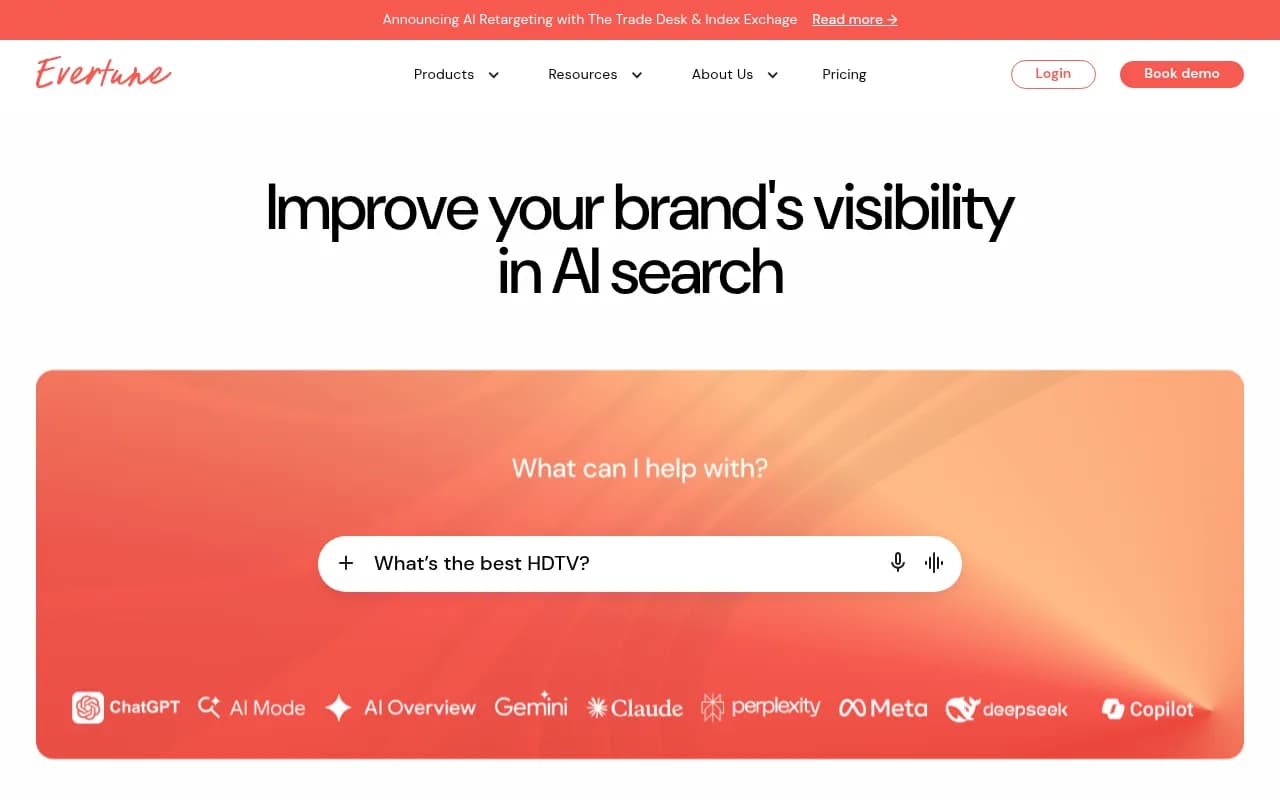
- Evertune, an enterprise GEO platform for Fortune 500 brands.
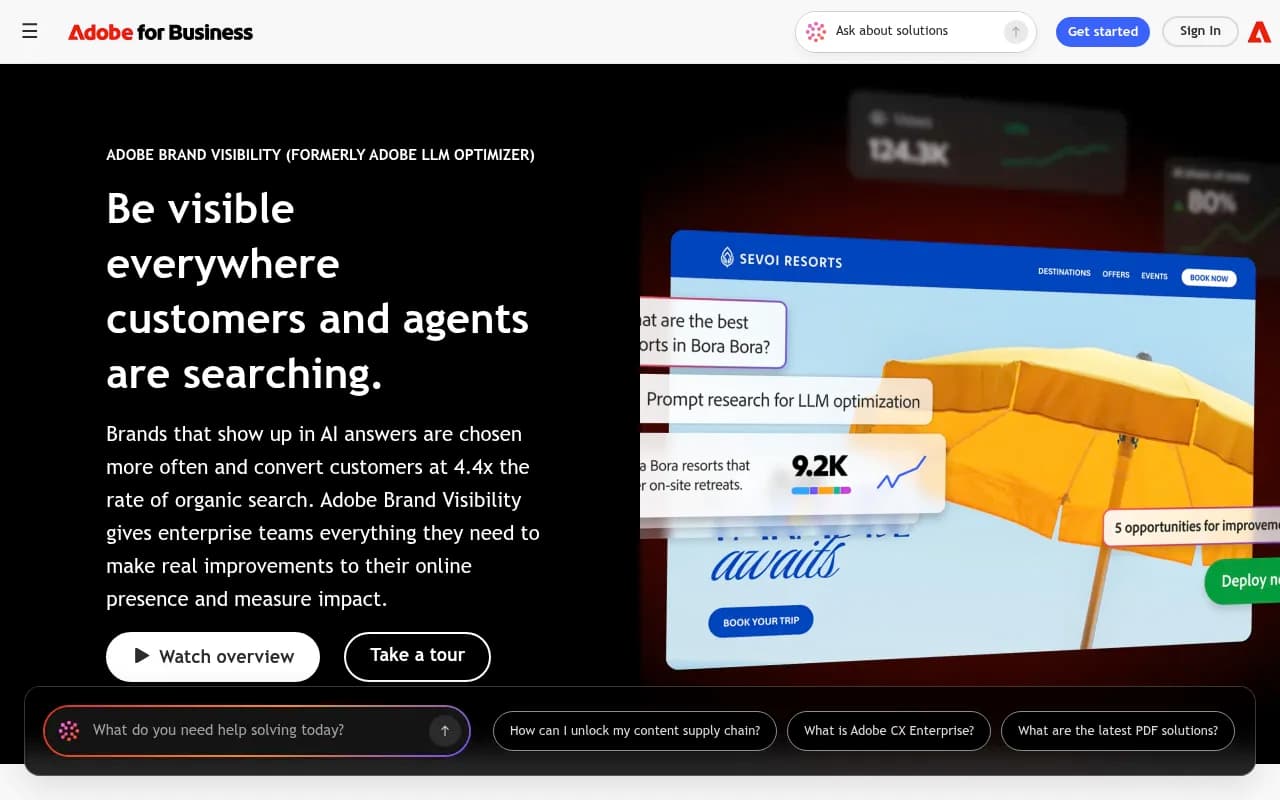
- Adobe Brand Visibility, which suits teams already inside Adobe Experience Cloud.
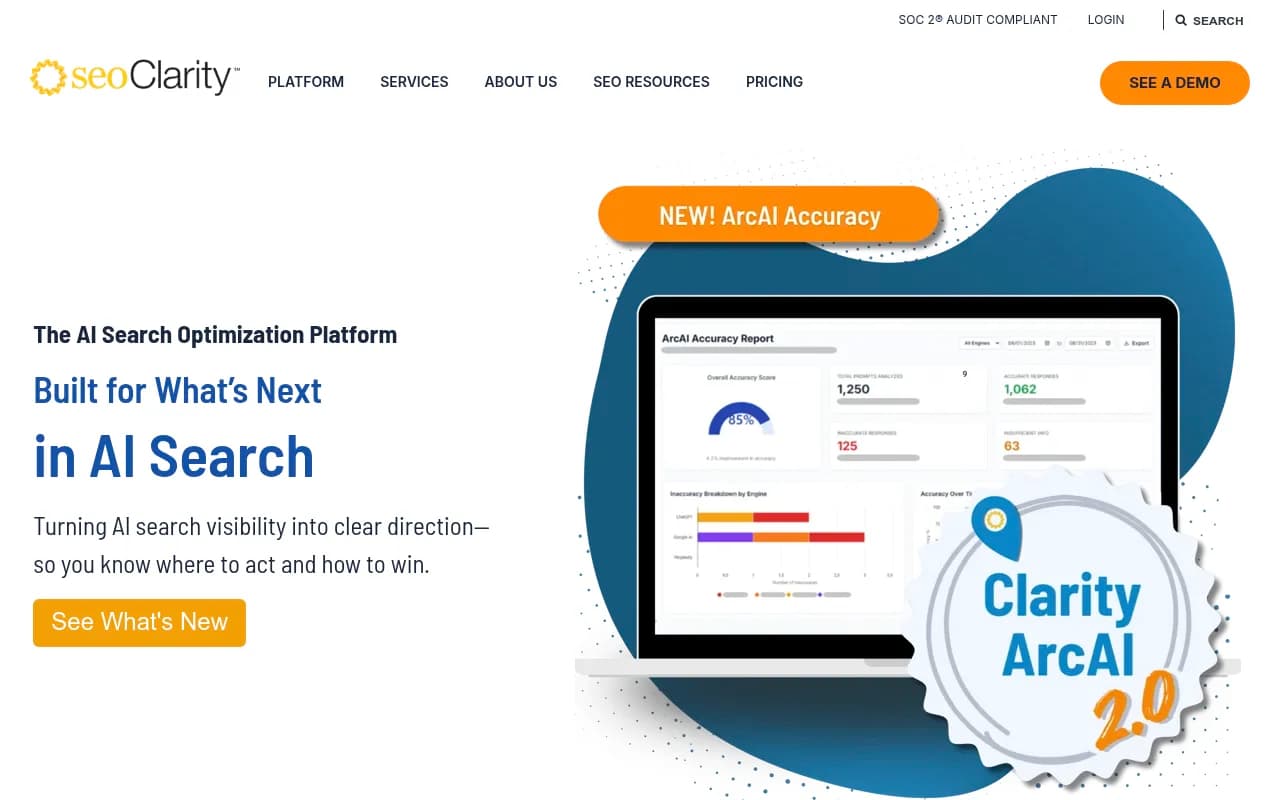
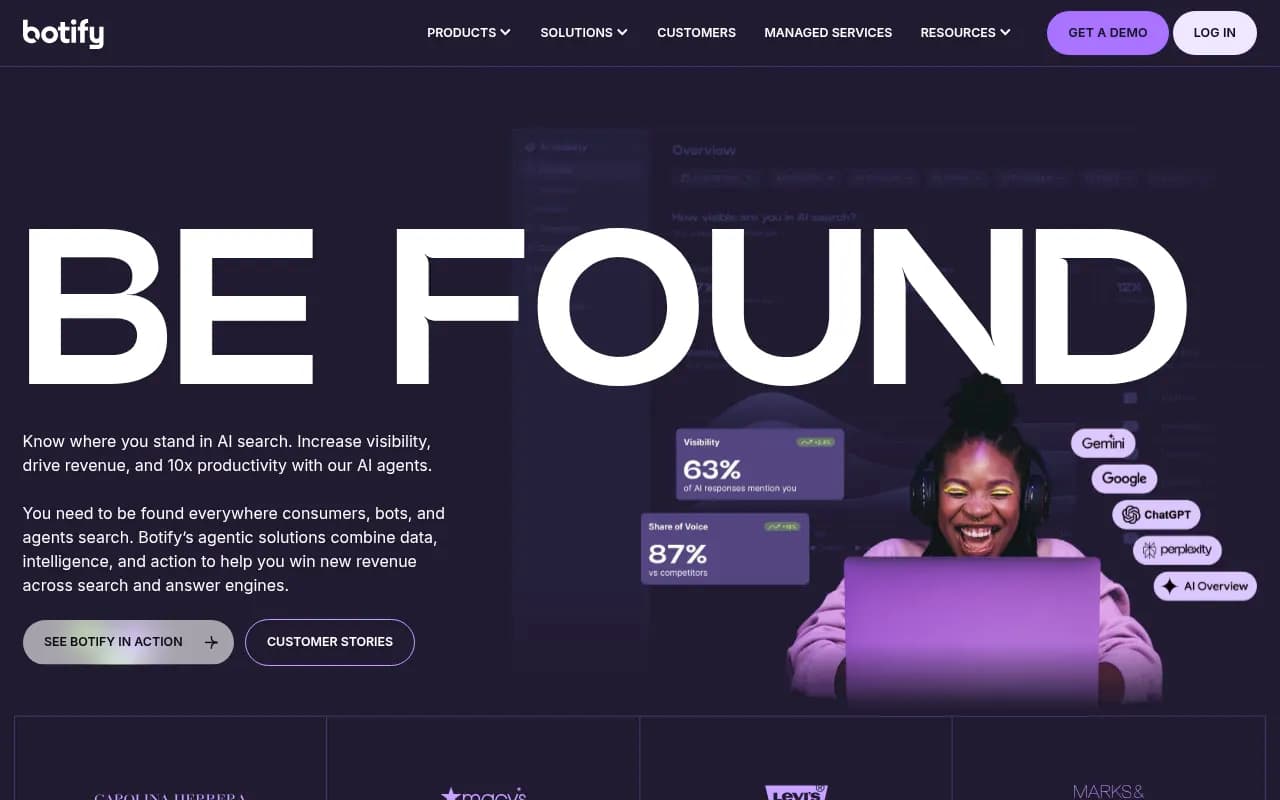
- seoClarity and Botify for enterprise SEO suites with AI tracking.
- Wellows, which markets sentiment and financial-topic categorization (loans, banking, credit).
- Rankfender, which Mentionova describes as focused on fintech and finance brands.
For wider browsing, the GEO software directory covers many more tools than I can fairly review here.
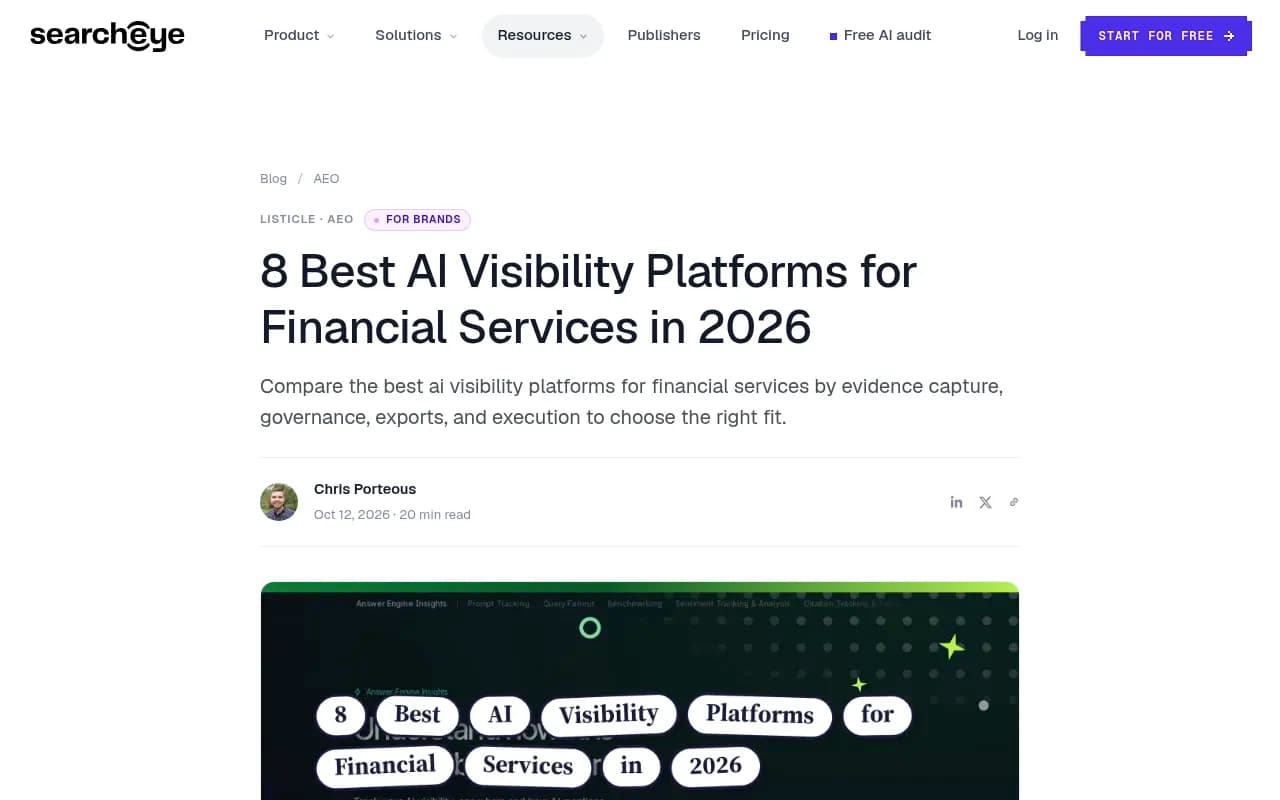
A caution on that screenshot's source: SearchEye is itself a vendor and ranks itself first, so read its comparison as one input, not a neutral verdict.
How to run a pilot that compliance will sign off on
Do not start with a 500-prompt rollout. Do this instead.
Pick one product line and one market
Mortgages in one country is a good start. Build 40 to 60 prompts from how customers actually ask: "best fixed-rate mortgage for first-time buyers", "is [your bank] good for savings", and competitor comparisons. Use personas, such as first-time buyer, retiree and small business owner, because answers shift by persona.
Capture evidence, not just scores
Every response, every cited source, every claim about your rates. A visibility score is nice for the board deck. A screenshot-quality record of what ChatGPT said on a given date is what compliance and legal actually need.
Check crawler access first
Before writing anything new, find out whether AI bots can read your product pages. Cookie walls, JavaScript-heavy rate calculators and WAF rules often block them. The free Agentic Readiness Check gives a quick first read.
Fix wrong claims at the source
When AI states an outdated rate or fee, trace it to the page it learned from. Often it is an old PDF or a third-party comparison site. Update the source, then watch whether the answer changes over the following weeks.
Set an approval workflow
If you use any AI-assisted content, route drafts through compliance before publishing. Tools with a review inbox make that easier than ones that push straight to your CMS.
Measure what reaches the site
AI-referred traffic and conversions are the metric your CFO will care about. Note that ChatGPT stopped sending a referrer on October 8, 2026, so tagging with utm_source=chatgpt.com matters for attribution.
Questions to ask in every vendor demo
- Are answers collected from real user interfaces or APIs, and in which countries and languages?
- Can you show claim-level monitoring for rates and fees, not just brand mentions?
- What security certifications do you hold, and can we see the reports?
- Do you support SSO, role-based access and an audit log of changes?
- Can you verify AI crawler visits against operator IP ranges?
- What are the export and API limits? Can we pull a quarter of data in one request?
- What happens to our data if we cancel?
- Who writes content, and who approves it?
Which one should you choose?
If your goal is to understand and fix how AI talks about your products, with a path from data to published pages, start with Promptwatch. If you have a large analyst team and mostly need deep reporting and warehouse exports, put Profound in the bake-off. If governance over agent access to your site is the headline requirement, evaluate Scrunch. If you are already a BrightEdge shop, test its AI module before adding a vendor.
Whatever you choose, run the same 50 prompts through two finalists for 30 days. The differences in data quality show up quickly, and so do the differences in what each tool lets you do next.
For teams that want help running this, an agency can take on setup, reporting and content. 1001 SEO Media does GEO work for brands and uses Promptwatch for it; contact [email protected].
For the broader catalog of tools, browse the AI rank tracking directory and Promptwatch Data for ongoing citation research.