Key takeaways
- Most AI visibility tools answer "was my brand mentioned?" Demand gen teams need to answer "did it create pipeline?" That requires traffic attribution, crawler data and a path to action.
- Commercial prompts send most citations to product and landing pages (about 69% of commercial citations go to just four page types, per Promptwatch Data, Sep 28 to Oct 4, 2026), so your money pages matter more than your blog.
- A single prompt tells you almost nothing. ChatGPT cites 10 or more domains in 47.6% of responses, so measure position and sentiment across many prompts.
- Pair a visibility platform with your CRM and attribution stack (HubSpot, Dreamdata, HockeyStack) rather than expecting one tool to do everything.
- Pricing and integration details change fast. Verify on vendor pages before you buy.
Why demand gen teams need a different tool than SEO teams
An SEO team wants to know where a page ranks. A demand gen team wants to know whether a channel produces qualified pipeline at an acceptable cost. Those are different questions, and most AI visibility tools were built to answer the first one.
The scale is not small. Demand Local's July 2026 roundup cites ChatGPT at 900 million weekly users in February 2026, Gemini at 750 million monthly users, and Google AI Overviews reaching more than 2.5 billion people monthly. Buyers are shortlisting vendors inside those answers before they ever fill in a form.
That matters because forms are already a weak spot. Perspective AI's demand gen guide quotes a 4.3% average B2B SaaS lead form conversion rate and says 84% of teams call MQL-to-SQL conversion their hardest problem. Those are widely cited benchmarks rather than numbers I verified, but they match what most demand gen leads tell me: the top of the funnel is increasingly invisible. If a buyer arrives at your site already convinced by a ChatGPT answer, your attribution model needs to see that.
What to demand from an AI visibility tool
Before comparing vendors, decide what a demand gen team actually needs. I use five tests.
1. Does it measure traffic and conversions, not just mentions?
Mention counts are a vanity metric on their own. You want AI-referred sessions, landing pages, and conversions by source (ChatGPT, Perplexity, Gemini, Claude, Copilot). Look for a tracking script, a Google Tag Manager template or a GA4 integration. Demand Local makes the same point: GSC and GA4 connections are what let you correlate AI visibility with revenue.
2. Does it show why you are or are not cited?
If a competitor is named and you are not, you need a diagnosis. Is it crawlability, missing content, weak third-party coverage? AI crawler logs and site audits answer that. Most monitoring-only tools do not.
3. Does it track the right prompts, not just brand prompts?
Brand-specific prompts are the easy ones. Promptwatch Data shows that brand prompts cite fewer domains (only 21.3% cite 10 or more), while organic and competitor comparison prompts are crowded (52.5% and 49.1%). Pipeline is won on the crowded ones: "best CRM for mid-market SaaS," "X vs Y," "alternatives to Z." Check the unique domains per response report for the numbers.
4. Does it close the loop into content?
The tools that matter connect visibility data to content creation and competitive intelligence, not just alerts. A dashboard that tells you what is broken and then leaves you to guess the fix is a reporting tool, not a growth tool.
5. Does it plug into your stack?
CRM, Looker Studio or BI, Slack, an API or MCP server. If the data cannot leave the tool, it will not reach the pipeline report your CFO reads.
What actually gets cited, and why it matters for pipeline
Promptwatch Data's content type report (Sep 28 to Oct 4, 2026) is useful for demand gen planning because it splits citations by prompt intent.
| Prompt type | Top cited formats | Share |
|---|---|---|
| Commercial ("best CRM for small businesses") | Product pages | 26.0% |
| Commercial | Landing pages | 20.6% |
| Commercial | Listicles | 15.0% |
| Commercial | Comparisons | 7.9% |
| Branded | Product pages | 23.3% |
| Branded | Landing pages | 22.8% |
| Branded | Reviews | 5.6% |
| Informational | How-tos | 10.7% |
The takeaway: the pages demand gen already owns (product pages, landing pages, comparison pages) are what AI engines cite when buyers ask commercial questions. Reviews also punch above their weight on branded prompts, at more than three times their share across all prompts. So review collection on trusted sites is a demand gen task, not just a reputation one.
Two more data points shape how you budget effort:
- Social is nearly irrelevant in ChatGPT now. Promptwatch's social citation data shows social platforms at 0.46% of ChatGPT citations, while Google AI Overviews draws 12.2% from social (YouTube 4.28%, Facebook 2.38%, Reddit 2.15%). Reddit alone fell sharply in ChatGPT after August 14, 2026, as covered in the Reddit citations report. If your plan was "seed Reddit for ChatGPT," revisit it.
- Freshness decays unevenly. In the content half-life study, news lost half its cited pages within about 36 days, while landing pages and docs stayed cited longest. Evergreen commercial pages are the better investment.
The shortlist
Promptwatch
Promptwatch is the one I would start with for a demand gen team, because it is built around the revenue question rather than the mention question. It tracks real ChatGPT, Google AI Overviews, AI Mode, Gemini, Perplexity, Copilot and other interfaces by country and language, then goes further than most trackers: IP-verified AI crawler logs show what bots read and where they hit errors, and visitor analytics attribute AI-referred traffic and conversions to your site. Search Console and Bing data sit next to AI data per page, so you can ask which pages rank in Google but never get cited.
The action side matters for lean teams. The Action Board gives a prioritized GEO to-do list, content gap analysis maps your pages against the prompts AI answers, and the Content Agent (Business and Enterprise) plans, writes and publishes to WordPress, Webflow or Framer. Published pages then get tracked through crawls, citations and AI traffic. Crisp reported 2x higher conversion rates from AI traffic versus traditional channels, and TreeHouse (Pararius) grew AI search to about 25% of organic conversions. It is rated 4.7/5 on G2 and is ISO/IEC 27001 certified, which helps with security reviews.
Pricing starts free (Explore, ChatGPT only, 10 prompts), with Essential at $95/mo and Professional at $245/mo, and Business at $579/mo for the Content Agent. Confirm at promptwatch.com/pricing.

Profound
Profound is a well-funded option with strong AI search data and a no-code agent layer, popular with large marketing teams and agencies that need to tie AI search work back to pipeline. Expect enterprise-style pricing. If you want to compare it against a broader field, the directory at bestgeosoftware.com is a good place to browse.

Otterly.AI and Peec AI
Both are straightforward prompt trackers at friendly prices. They are fine for a team starting out and wanting to see whether it is mentioned at all. For demand gen, the gap is attribution: you will likely need to build the traffic and conversion side yourself in GA4.


AthenaHQ and Scrunch
Monitoring-focused platforms with decent multi-engine coverage. Worth a demo if you already have content and attribution handled elsewhere.
Semrush and Ahrefs Brand Radar
If your team already lives in one of these suites, adding AI tracking is the lowest-friction move. The trade-off is that prompt sets tend to be fixed and shallower, and you will not get crawler logs or AI traffic attribution of the kind a dedicated platform provides.

Smaller and newer options
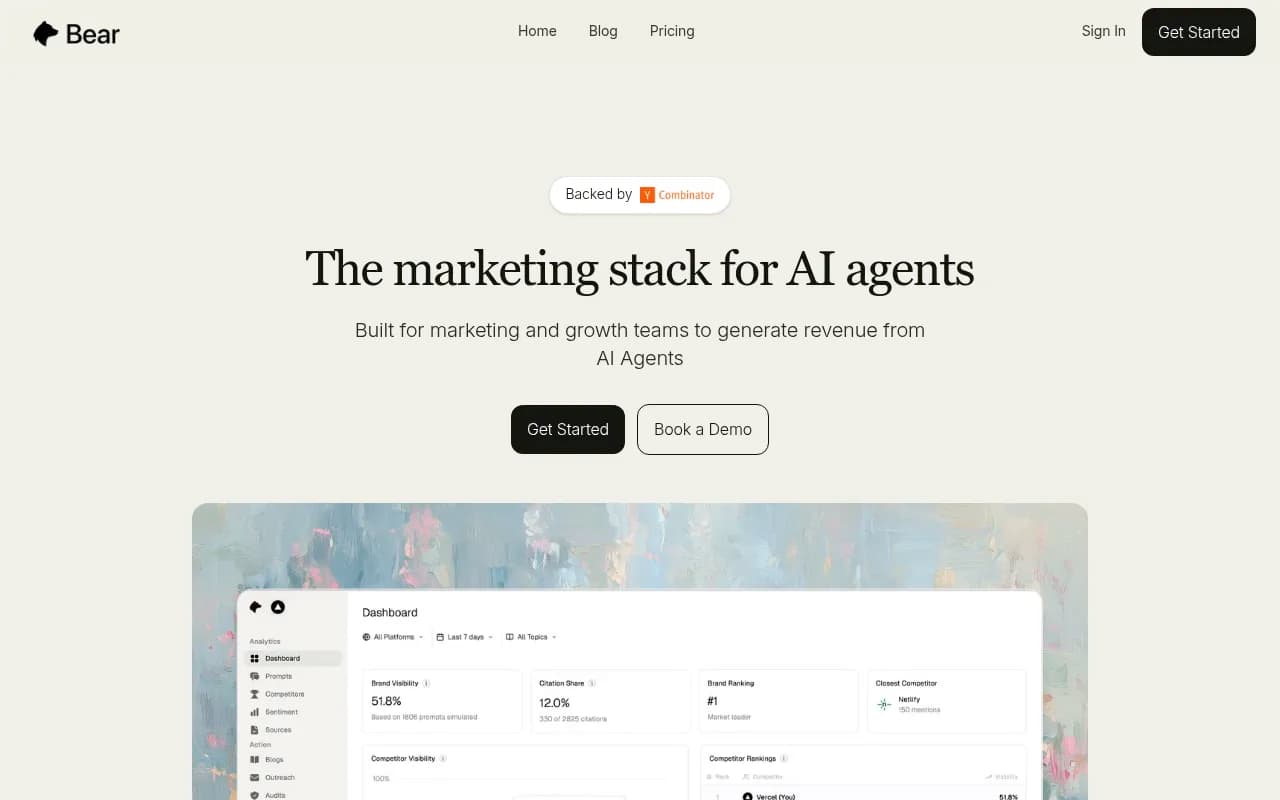
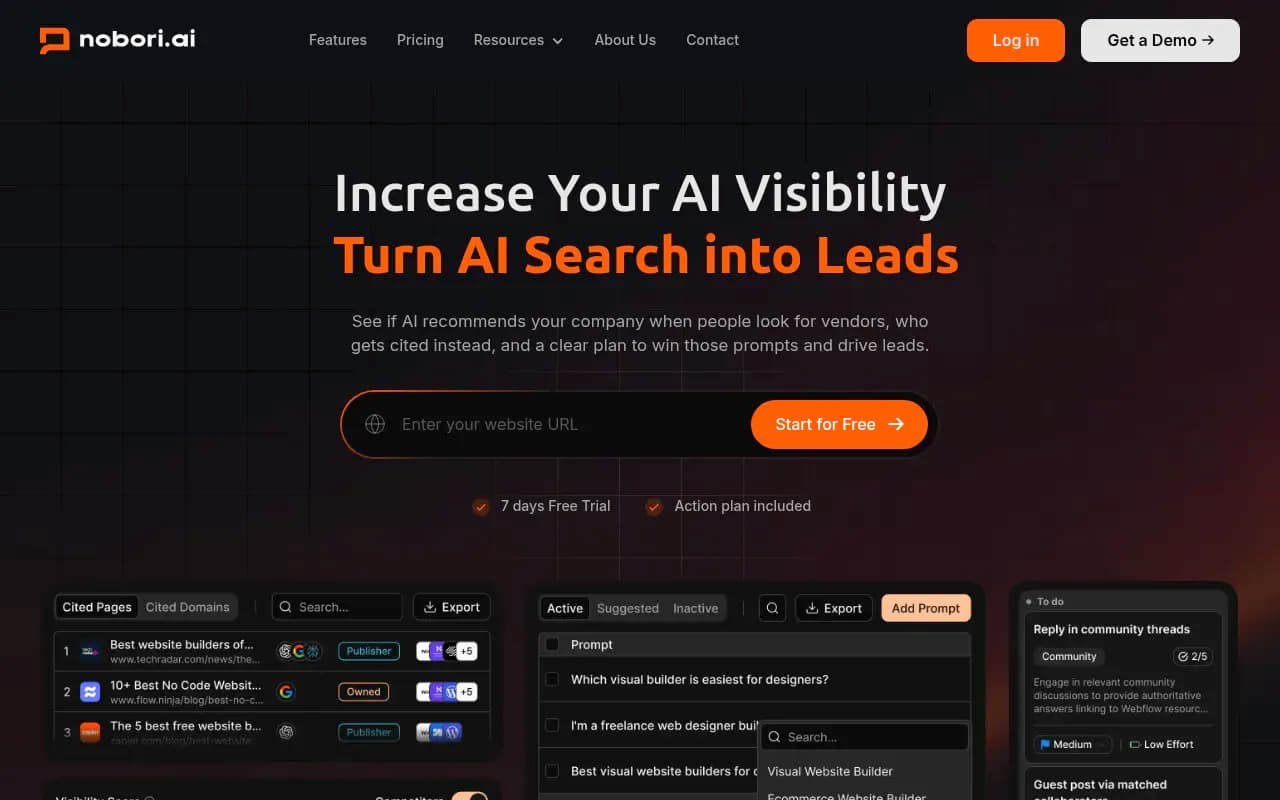
The directory has a long tail of newer tools aimed at pipeline: Bear AI ("track and convert AI search traffic into revenue"), Nobori.ai (focused on revenue-driving prompts), AIVO and GrackerAI (B2B SaaS analytics). I have not tested these, so treat them as shortlist candidates and ask for a trial.
Comparison table
| Tool | Mention tracking | AI traffic attribution | Crawler logs | Content action layer | Best for |
|---|---|---|---|---|---|
| Promptwatch | Yes, real UI data | Yes (visitor analytics) | Yes, IP-verified | Content Agent, Action Board | Demand gen teams wanting tracking plus fixes |
| Profound | Yes | Limited detail in our research | Not confirmed | Agent layer | Large teams, agencies |
| Otterly.AI | Yes | No | No | No | Entry-level monitoring |
| Peec AI | Yes | No | No | No | Multi-language monitoring |
| AthenaHQ | Yes | Not confirmed | No | Some | Mid-size brands |
| Semrush / Ahrefs | Yes (fixed prompt sets) | Via existing suite | No | Existing SEO tools | Teams already on the suite |
I did not find current vendor pricing or CRM integration details for most of these in my research, so the "not confirmed" cells are honest gaps. Check each vendor before you commit.
Connect AI visibility to pipeline: a practical setup
A tool alone does not give you a pipeline number. Here is the wiring I would do.
Step 1: Capture AI-referred sessions
Install the visitor analytics script of your visibility platform, and add a GA4 channel group for AI referrers (chatgpt.com, perplexity.ai, gemini.google.com, claude.ai, copilot.microsoft.com). Keep the definitions in one place so reports match.
Step 2: Pass source data into your CRM
Capture the referrer or a hidden form field on high-intent pages, and map it into HubSpot or Salesforce. Plenty of AI-driven buyers show up as "direct" otherwise. Add a self-reported "How did you hear about us?" field with an AI option, since that picks up the answers tracking misses.
Step 3: Feed an attribution tool
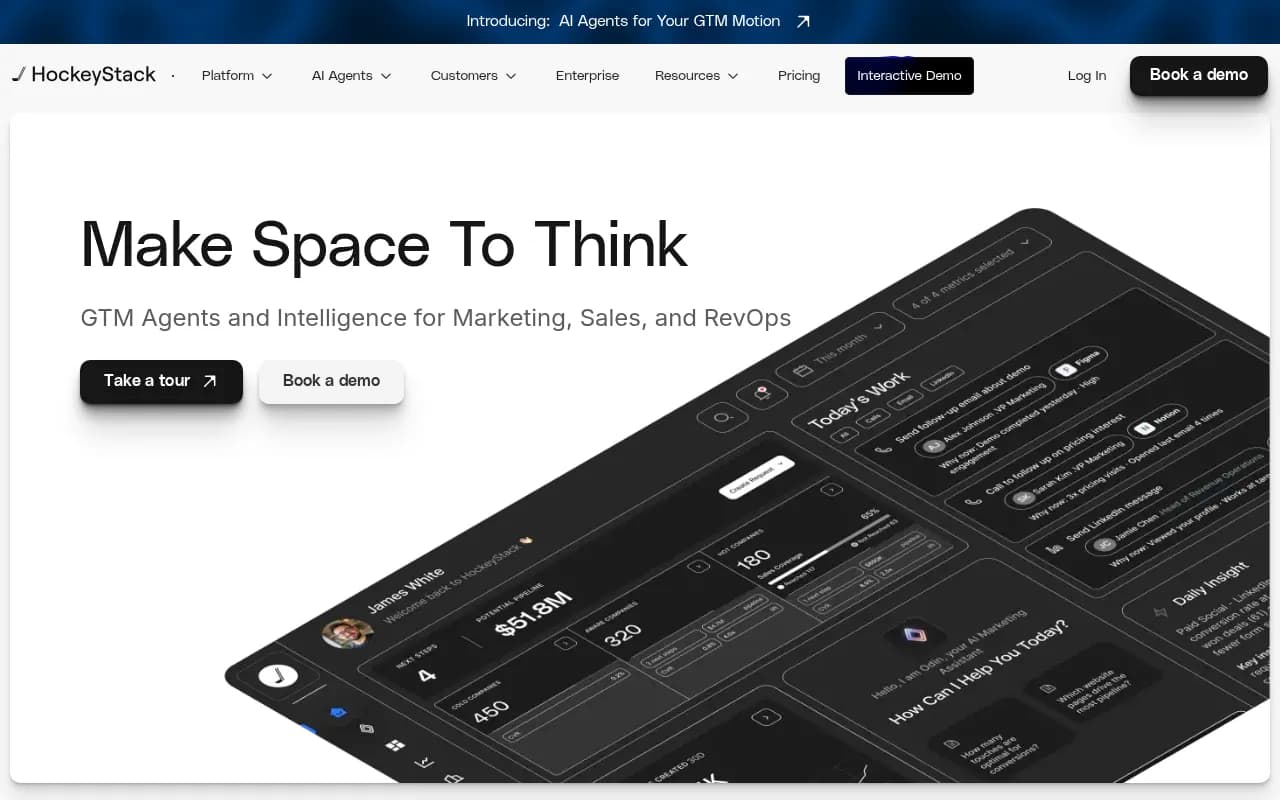
B2B attribution platforms such as Dreamdata and HockeyStack can stitch the AI-referred touch into the full account journey. Perspective AI's guide names both for tracking what worked after the fact.
Step 4: Build a prompt set that mirrors your funnel
Split monitors into three groups: category prompts ("best X for Y"), comparison prompts ("X vs Y", "alternatives to Y"), and brand prompts. Weight your reporting toward the first two. Because a single prompt is noisy, report on share of voice and position across 50 or more prompts, not one-off screenshots.
Step 5: Fix crawler access before writing anything
If AI bots are blocked or hitting errors on your pricing and product pages, no amount of content will help. Check robots.txt, CDN rules and JavaScript rendering first. The AI crawler traffic report gives benchmarks for what normal crawl volume looks like.
Step 6: Report weekly, decide monthly
AI answers shift daily. Give leadership a monthly view of visibility score, AI-referred sessions, AI-sourced opportunities and pipeline, and use the weekly data only to decide what to fix.
What the Perspective AI and agency roundups get right and wrong
Perspective AI's list is a useful reminder that demand gen has four jobs: understand buyer intent, infer signals, orchestrate ABM plays and attribute pipeline. AI visibility is a fifth input to that stack, not a replacement for intent data from 6sense or Demandbase. Where I disagree: treating intent platforms and AI visibility as competitors. They answer different questions. Intent tools say which accounts are researching. Visibility tools say what AI tells those accounts when they ask.
If you would rather hand the work off, agencies that specialize in AI search for B2B SaaS exist and are worth a call. A team like 1001 SEO Media combines technical SEO, content and GEO work, and uses Promptwatch for AI visibility measurement.
How to choose
- Small team, tight budget, just testing: start with a free or low-cost tracker and a GA4 channel group.
- Demand gen team that must prove pipeline: pick a platform with traffic attribution and crawler data, such as Promptwatch, and wire it to your CRM.
- Already on Semrush or Ahrefs: try their add-on first, then upgrade if you outgrow the fixed prompt sets.
- Enterprise with security reviews: check certifications (ISO/IEC 27001, GDPR), SSO and audit logs.
For wider browsing, the AI rank tracking directory lists dozens of trackers by feature.
Bottom line
A mention is not a lead. Pick the tool that tells you which prompts are costing you deals, shows what AI crawlers see on your product pages, and counts the sessions and conversions that follow. Then fix your commercial pages first, because that is where AI engines look when buyers ask who to buy from.