Key takeaways
- Most AI search tools in 2026 are monitoring dashboards — they show you where you're invisible but don't help you fix it.
- Content marketers need tools that cover the full loop: finding content gaps, generating optimized content, and tracking results in AI search engines.
- The best stack combines an AI visibility platform (for gap analysis and tracking) with a content optimization tool (for on-page signals) and a writing assistant (for production speed).
- Traditional SEO tools like Semrush and Surfer SEO still matter, but they weren't built for AI search — you'll need dedicated GEO tooling alongside them.
- A handful of platforms now cover all three phases in one place, which is worth prioritizing if your team is small.
The rules changed. Not gradually — pretty abruptly. In 2024, a significant chunk of informational queries started getting answered directly by ChatGPT, Perplexity, Google AI Overviews, and similar engines. By 2026, that's just the baseline. If your content isn't being cited by these models, you're losing visibility to competitors who figured this out earlier.
The problem for content marketers is that the tooling landscape hasn't fully caught up. There are dozens of platforms claiming to help you "rank in AI search," but most of them only show you a dashboard of where you're not appearing. That's useful for about five minutes. What you actually need is to know why you're not appearing, what content would fix it, and whether the content you publish actually moves the needle.
This guide covers the tools that genuinely help content marketers do all three.
What "ranking" means in AI search now
Before diving into tools, it's worth being clear about what we're optimizing for. In traditional SEO, ranking means appearing on page one of Google for a target keyword. In AI search, the equivalent is getting cited — having an AI model reference your page, quote your content, or recommend your brand in a response.
The signals that drive citations are different from traditional ranking signals. AI models pull from sources they've crawled and trust. They favor content that directly answers specific questions, uses clear structure, covers topics comprehensively, and comes from domains that appear frequently across their training and retrieval data.
This means content marketers need to think about:
- Which prompts and questions their audience is asking AI models
- Which competitors are getting cited for those prompts
- What content gaps exist on their own site
- How to write content that AI models actually want to reference
The tools below are organized around these needs.
Tools for finding content gaps and prompt intelligence
This is where most content marketers should start. Before writing a single word, you need to know which prompts your competitors are visible for that you're not.
Promptwatch
Promptwatch is the most complete platform for this. Its Answer Gap Analysis shows you the specific prompts where competitors appear in AI responses but you don't — not just categories, but the actual questions. You can see prompt volume estimates and difficulty scores, so you can prioritize the gaps that are worth closing first.

What separates it from most tools in this space is that it doesn't stop at the gap analysis. Once you know what's missing, the built-in AI writing agent generates articles grounded in citation data from 880M+ analyzed citations. The content is engineered to get cited — not generic SEO filler. And then you can track whether those articles actually improve your visibility scores over time.
For content marketers specifically, the query fan-out feature is genuinely useful: it shows how a single prompt branches into sub-queries, which helps you plan content clusters rather than one-off articles.
Profound
Profound takes a similar approach to tracking AI visibility across multiple models and gives you solid competitive benchmarking data. It's a strong monitoring tool, though it leans more toward brand tracking than content gap analysis.

AthenaHQ
AthenaHQ covers visibility tracking across eight-plus AI engines and has a clean interface for monitoring brand mentions. Like Profound, it's primarily a monitoring platform — useful for understanding where you stand, less useful for figuring out what to do about it.

Tools for content creation and optimization
Once you know what to write, you need tools that help you write it well — and in a way that AI models will actually want to cite.
Surfer SEO
Surfer SEO remains one of the best tools for on-page content optimization. It analyzes top-ranking pages for a keyword and gives you a content score based on how well your draft matches the signals those pages share. In 2026, it's added more AI-aware features, but its core strength is still traditional on-page SEO.
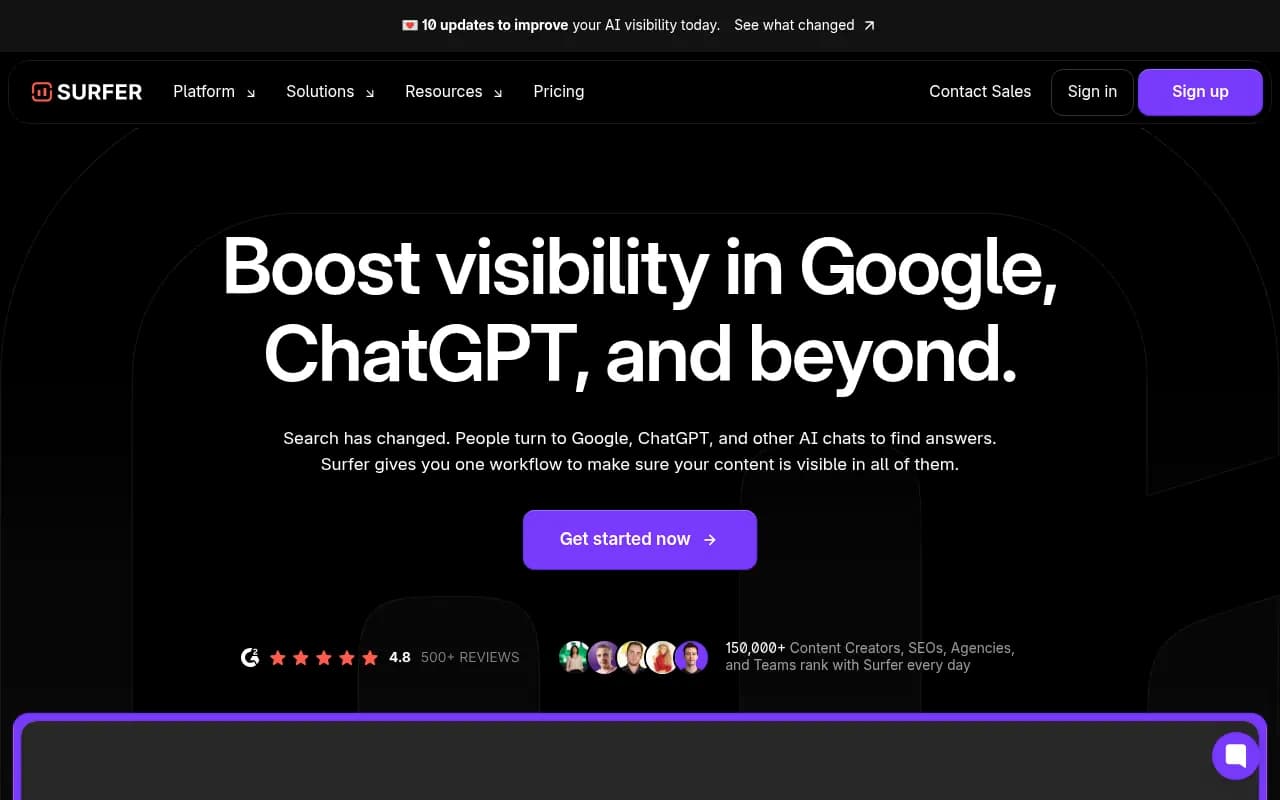
It's worth using Surfer alongside a dedicated AI visibility platform rather than instead of one. Google AI Overviews still pulls heavily from traditional search results, so optimizing for Google rankings and optimizing for AI citations aren't entirely separate tasks.
Clearscope
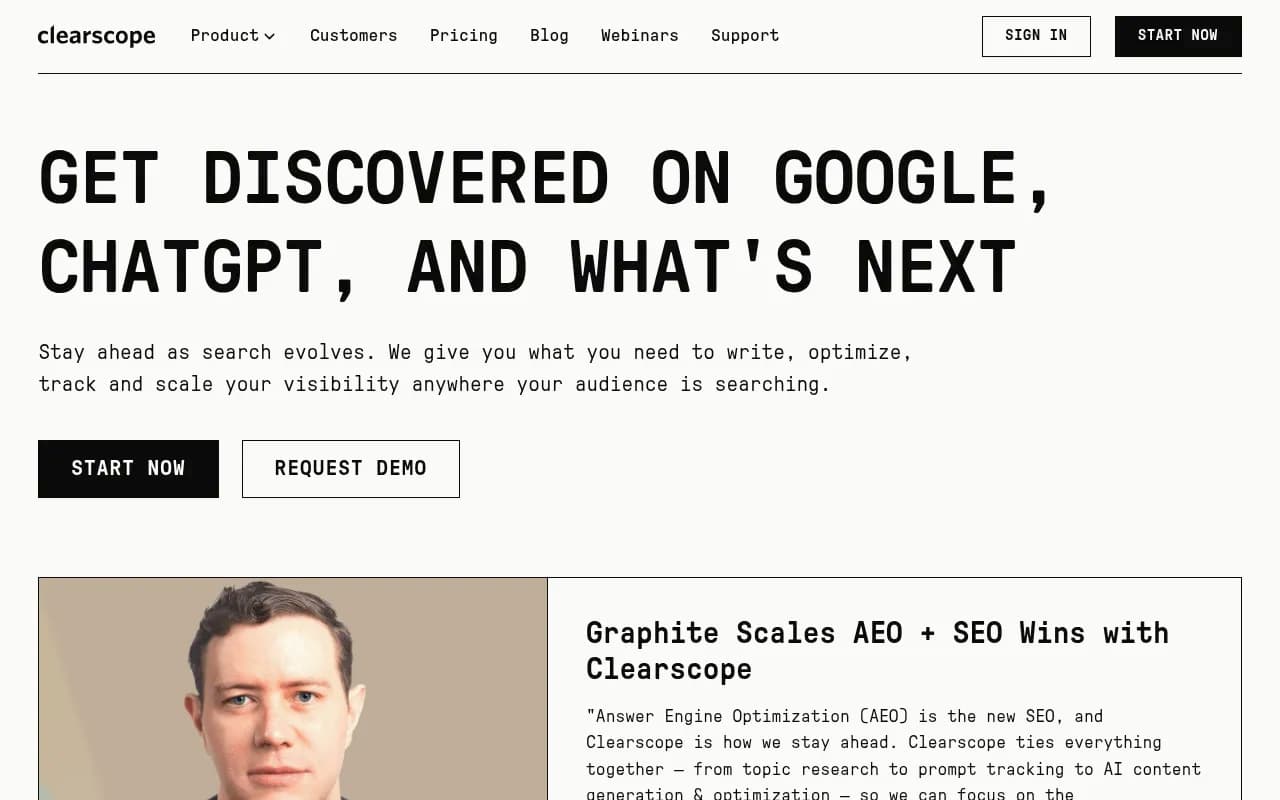
Clearscope does something similar to Surfer — it grades your content against a keyword target and suggests related terms to include. It's cleaner and arguably easier to use for writers who aren't deep into SEO, and it integrates well with Google Docs and WordPress.
Jasper
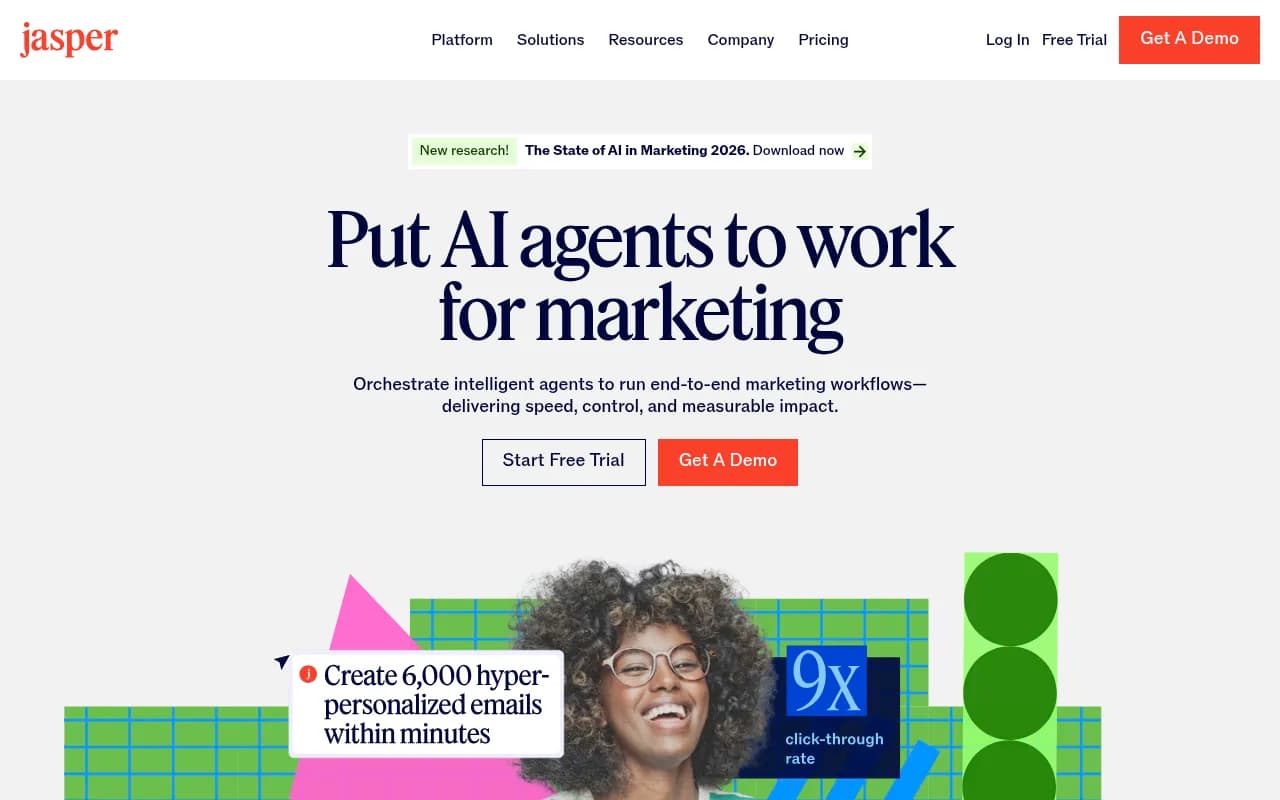
Jasper is built for marketing teams that need to produce a lot of content without sacrificing brand consistency. It has strong brand voice controls, which matters when you're publishing at scale across multiple topics. The quality of output is solid for first drafts, though it still needs human editing for anything that requires genuine expertise or nuance.
ContentShake AI
ContentShake AI from Semrush combines keyword research with content generation in a single workflow. You pick a topic, it pulls in keyword data, and generates an article optimized for search. It's a practical option if you're already in the Semrush ecosystem.
MarketMuse
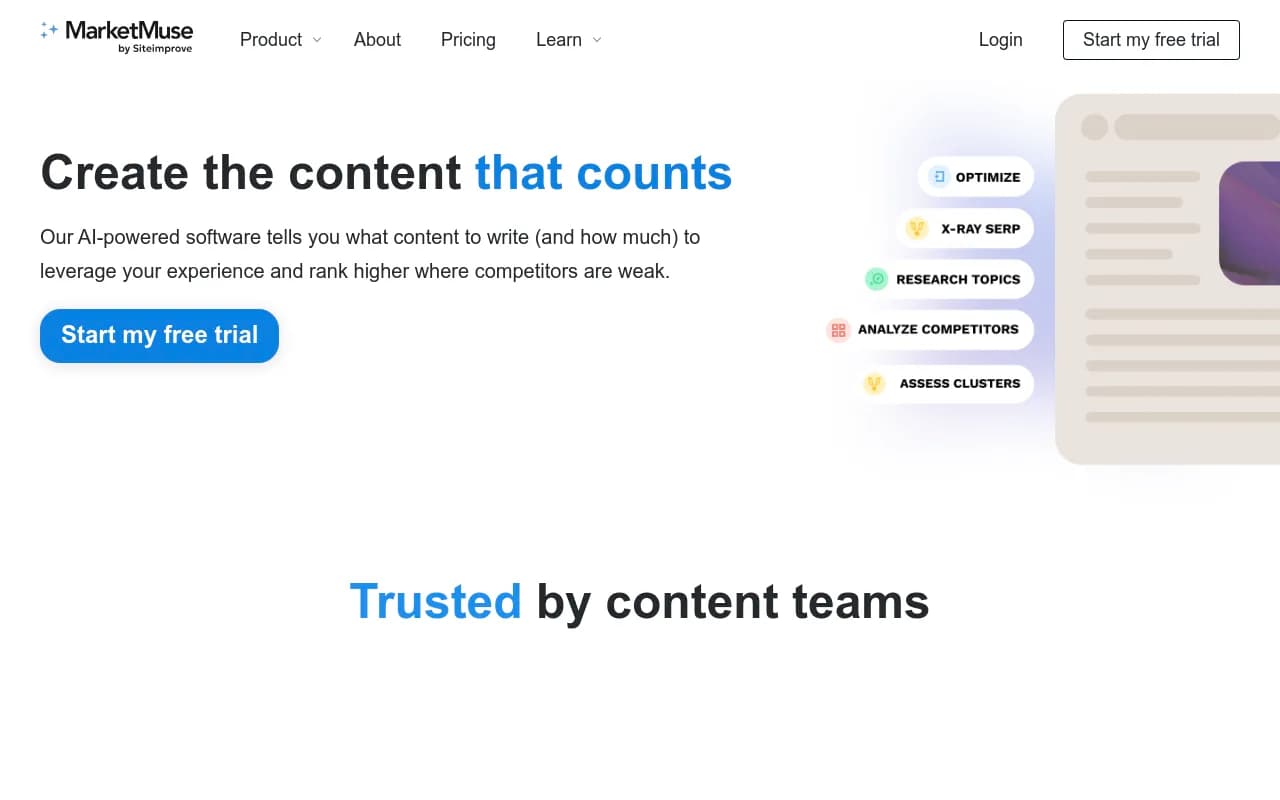
MarketMuse goes deeper on content planning than most tools. It builds topic models that show you how comprehensively your site covers a subject area, which is useful for identifying not just individual content gaps but structural weaknesses in your content strategy.
Tools for tracking AI visibility and citations
Publishing content is only useful if you can measure whether it's working. These tools help you track citations, monitor which AI models are referencing your pages, and connect visibility to actual traffic.
Semrush
Semrush's AI Visibility Toolkit has become a legitimate option for tracking AI search presence alongside traditional SEO metrics. The advantage is having everything in one platform. The limitation is that Semrush uses fixed prompt sets rather than custom prompts, which means you're tracking the prompts Semrush chose rather than the ones your actual customers are using.
SE Ranking
SE Ranking has added AI visibility tracking to its already solid SEO suite. It's a good mid-market option — more affordable than enterprise platforms, with enough depth for most marketing teams.
Otterly.AI
Otterly.AI is one of the more accessible entry points for AI visibility monitoring. It covers the major AI models and gives you a clear view of mention frequency and sentiment. It's a monitoring tool rather than an optimization platform, but the price point makes it worth considering for smaller teams or as a starting point.

Peec AI
Peec AI is worth noting for teams with international audiences — it handles multi-language AI visibility tracking better than most tools in this category.

Tools for understanding how AI crawlers see your site
This is an underrated part of the content marketing workflow. If AI crawlers can't access your pages, or if they're encountering errors when they do, your content will never get cited regardless of how good it is.
Most tools don't cover this at all. Promptwatch's AI Crawler Logs show you in real time which AI crawlers (ChatGPT, Claude, Perplexity, etc.) are hitting your site, which pages they're reading, and what errors they encounter. That kind of visibility into the indexing layer is genuinely hard to get elsewhere.
DarkVisitors is a useful companion tool here — it tracks AI agents and bots visiting your site and helps you understand the crawl patterns of different models.
How to think about your content marketing stack in 2026
The tools above cover different parts of the workflow. Here's how they fit together:
| Phase | What you need | Tools to consider |
|---|---|---|
| Gap analysis | Find prompts competitors rank for that you don't | Promptwatch, Profound, AthenaHQ |
| Content planning | Prioritize topics, build content clusters | Promptwatch, MarketMuse, Topical Map AI |
| Content creation | Write optimized drafts at scale | Jasper, ContentShake AI, Promptwatch AI writer |
| On-page optimization | Score and improve drafts for search signals | Surfer SEO, Clearscope, NeuronWriter |
| AI visibility tracking | Monitor citations across ChatGPT, Perplexity, etc. | Promptwatch, Semrush, SE Ranking, Otterly.AI |
| Crawler health | Ensure AI bots can access your content | Promptwatch Crawler Logs, DarkVisitors |
| Traffic attribution | Connect AI visibility to actual revenue | Promptwatch (GSC integration, server logs) |
The honest reality is that most teams don't need every tool in this table. If you're starting from scratch, a platform that covers gap analysis, content generation, and tracking in one place is more practical than assembling a six-tool stack.
What most tools get wrong
The majority of AI search tools launched in the last two years are monitoring dashboards. They show you a score, a chart of how your brand mentions trend over time, and maybe a list of competitors. That's fine as far as it goes, but it leaves you with a question: now what?
Content marketers don't need more dashboards. They need to know which articles to write, what those articles should cover, and whether publishing them actually improved their visibility. The gap between "here's your score" and "here's what to do about it" is where most tools fall short.
The tools worth prioritizing in 2026 are the ones that close that gap — that connect the data to an action and the action to a measurable result.
A note on traditional SEO tools
Surfer SEO, Semrush, Ahrefs, and similar tools still matter. Google AI Overviews pulls heavily from pages that rank well in traditional search, so there's real overlap between traditional SEO and AI visibility. If you're already using these tools effectively, don't abandon them.
But they weren't designed for AI search. They don't show you which prompts users are asking ChatGPT or Perplexity, they don't track citations across AI models, and they don't help you understand why an AI model is citing a competitor instead of you. You need dedicated GEO tooling for that.
The best content marketing stacks in 2026 run both in parallel.
Bottom line
Content marketing in AI search isn't fundamentally different from content marketing in traditional search — you still need to understand what your audience is asking, create content that answers it well, and measure whether it's working. The difference is the distribution channel and the signals that drive visibility.
The tools that will actually move the needle for content marketers are the ones that help with all three phases: finding the gaps, creating content that AI models want to cite, and tracking whether it's working. Most tools in this space only do one of those things. A few do all three. Start with those.