Key takeaways
- Prompt counts are not comparable across vendors. Some bill per prompt, some per response, some per credit, and some per check. Normalize to cost per prompt, per model, per day before you compare.
- Entry plans run from about $29 a month (Otterly Lite) to $295 (AthenaHQ Starter), but the low end usually means 15 to 20 prompts and a three-engine cap.
- A tracker that only shows you a mention score leaves the work to you. If you need to fix gaps, look for content, crawler and traffic data in the same product.
- Check whether data comes from real chatbot interfaces or APIs, and whether Google AI Mode is on your plan.
- Prices in this guide come from vendor pages and third-party roundups. Several are vendor-written or dated, so confirm on each pricing page before buying.
What prompt tracking actually is
A prompt tracker takes a list of questions your buyers might ask, runs them against ChatGPT, Gemini, Perplexity, Google AI Overviews and similar engines on a schedule, and records whether your brand appears, where, and with what sources. Do it daily and you get a trend line instead of a one-off screenshot.
That sounds simple. The buying decision is not, because every vendor counts differently. One prices by prompt. Another sells credits that drain faster when you add an engine. A third bills per check. The same $95 buys very different amounts of coverage depending on which unit you are paying in.
One more wrinkle: a prompt is not what the engine actually searches. Promptwatch Data on ChatGPT query fanouts shows ChatGPT rewriting a prompt into shorter keyword-style searches. The average was about 2.15 fanout queries per response in early December 2025 and eased to roughly 1.84 by early March 2026, while average query length fell from about 117 characters to the high 80s. So a good tracker shows you the fanout queries behind each response, not just the prompt you typed.
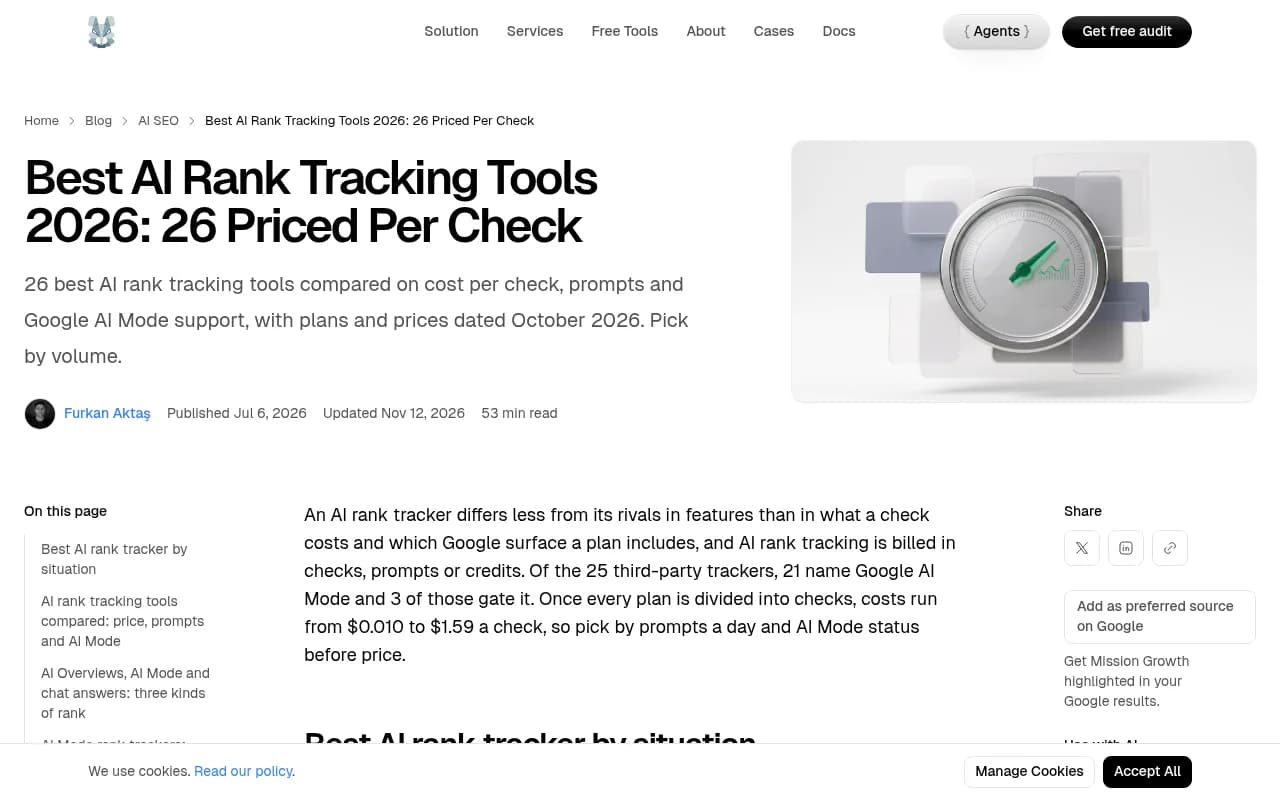
Mission Growth's roundup divides every plan into checks, and the spread is wild: from $0.010 to $1.59 per check. That is the right way to look at this market.
How the 14 tools compare
Prices below are entry-plan list prices as reported by the sources named in this guide and the vendors' own pages. Treat them as a starting point. Pricing in this category changes often, and a couple of the sources are vendor-authored.
| Tool | Entry price | Prompts on entry plan | Models on entry plan | Frequency |
|---|---|---|---|---|
| Promptwatch | $95/mo (Essential) | 50 | All supported models | Daily, faster on Business |
| Peec AI | $95/mo | 50 | 3 chosen from a wider list | Daily |
| Profound | Reported from $99/mo, enterprise tiers custom | 50 | Around 9 | Daily |
| Otterly.AI | $29/mo | 15 to 20 | 4 included, others as add-ons | Daily |
| Rankscale | $20/mo credits plan, Pro $99 | Credit-based | 17+ | Hourly to monthly |
| Ahrefs Brand Radar | $199/mo add-on | 2,500 checks | 6 indexes | Daily to monthly |
| MentionBird | $79/mo | 100 | Starts with ChatGPT and Gemini | Daily |
| Orchly | $49/mo | 25 | 3 included | Daily |
| LLM Pulse | EUR 49/mo | 50 | 5 | Weekly or daily |
| Nightwatch | EUR 79/mo (yearly) | 50 (1,500 answers) | 6 platforms incl. AI Mode | Daily |
| ZipTie | About $42.75/mo for 50 prompts on 3 engines | Pay per check | Up to 7 | Per check |
| AthenaHQ | $295/mo | 3,600 credits | 8+ | Credit-based |
| Scrunch | From $250/mo | 125 | Multiple | Daily |
| Bluefish | Custom quote | Custom | 5 to 6 | Not disclosed |
Two caveats on that table. MentionBird's own listicle (it ranks itself first) shows 8 platforms in its summary table but describes the Starter plan as ChatGPT and Gemini, so ask what you actually get at each tier. And Peec's table figure of 11 platforms is the catalog, not what Starter includes: Starter caps you at three models.
The 14 tools, with an opinion on each
1. Promptwatch
Promptwatch is the one on this list that does not stop at the score. It tracks ChatGPT, Gemini, Claude, Perplexity, Google AI Overviews, AI Mode, Copilot, Meta AI and others from the real user interfaces, then connects the result to IP-verified AI crawler logs, citation data, visitor analytics and a Content Agent that writes and publishes pages against your gaps. Its prompt tracking includes volumes, difficulty and query fan-outs, which speaks directly to the prompt-versus-query problem above.
Essential is $95 a month for 50 prompts and 6,000 responses, Professional is $245 for 150 prompts, and Business is $579 for 350 prompts with faster-than-daily runs and the Content Agent. Every plan includes all models and unlimited seats. Agencies get Kick-off at $199, Growth at $399 and Scale at $799. Confirm at promptwatch.com/pricing.
It is overkill if you only want a weekly mention count. If you want to close the loop, see how it stacks up in the 2026 GEO platform comparison or try the free AI visibility report first.

2. Peec AI
Peec is clean, fast to set up and strong on competitor benchmarking. Starter is $95 for 50 prompts, three models, one project and daily tracking. Pro is $245 for 150 prompts and two projects, and Advanced is $495 for 350 prompts, five projects, multi-country tracking and Looker Studio. Mission Growth puts it at about $0.021 per check, which is genuinely competitive. The catch is the three-model cap on entry, and that it is a tracker, not a fixer. Head-to-head: Promptwatch vs Peec.

3. Profound
Profound has deep monitoring and enterprise polish. Reported entry pricing starts around $99 for 50 prompts, but the Google AI Mode and wider engine coverage that enterprises want sit on custom plans. It runs higher in price than most of this list and does not do agentic execution. See Promptwatch vs Profound.

4. Otterly.AI
The cheapest credible starting point. Lite is $29 a month for around 15 to 20 prompts, Standard is $189 for 100 prompts and Premium is $489 for 400. Gemini, AI Mode and Claude may need paid add-ons depending on the plan, and extra prompt packs cost $99 and are not available on Lite. Fine for a pilot. You will outgrow it.

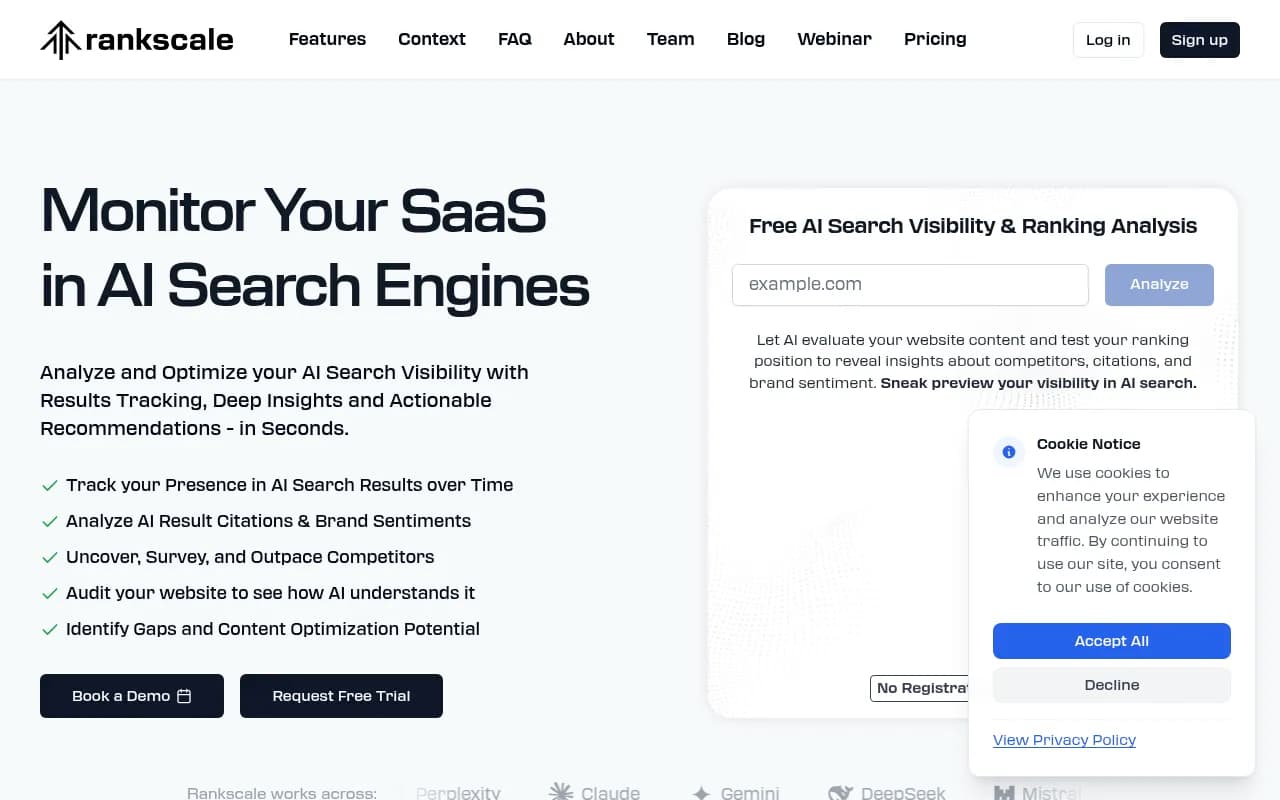
5. Rankscale
Credit-based and flexible: hourly, daily, weekly or monthly runs across 17 or more engines. The flexibility is the trap, because credits drain differently per engine and frequency. Mission Growth lists Pro at $99 for 4,800 answers, about $0.021 per answer. Run the math for your own prompt set before committing.
6. Ahrefs Brand Radar
If you already live in Ahrefs, Brand Radar is the lowest-friction option, and it also lets you search how AI platforms describe a brand across its own prompt index rather than only your list. Pricing is per check, roughly $0.010 to $0.020 depending on package. It is an SEO suite bolting on AI tracking, so expect less AI-specific depth and no crawler logs.

7. MentionBird
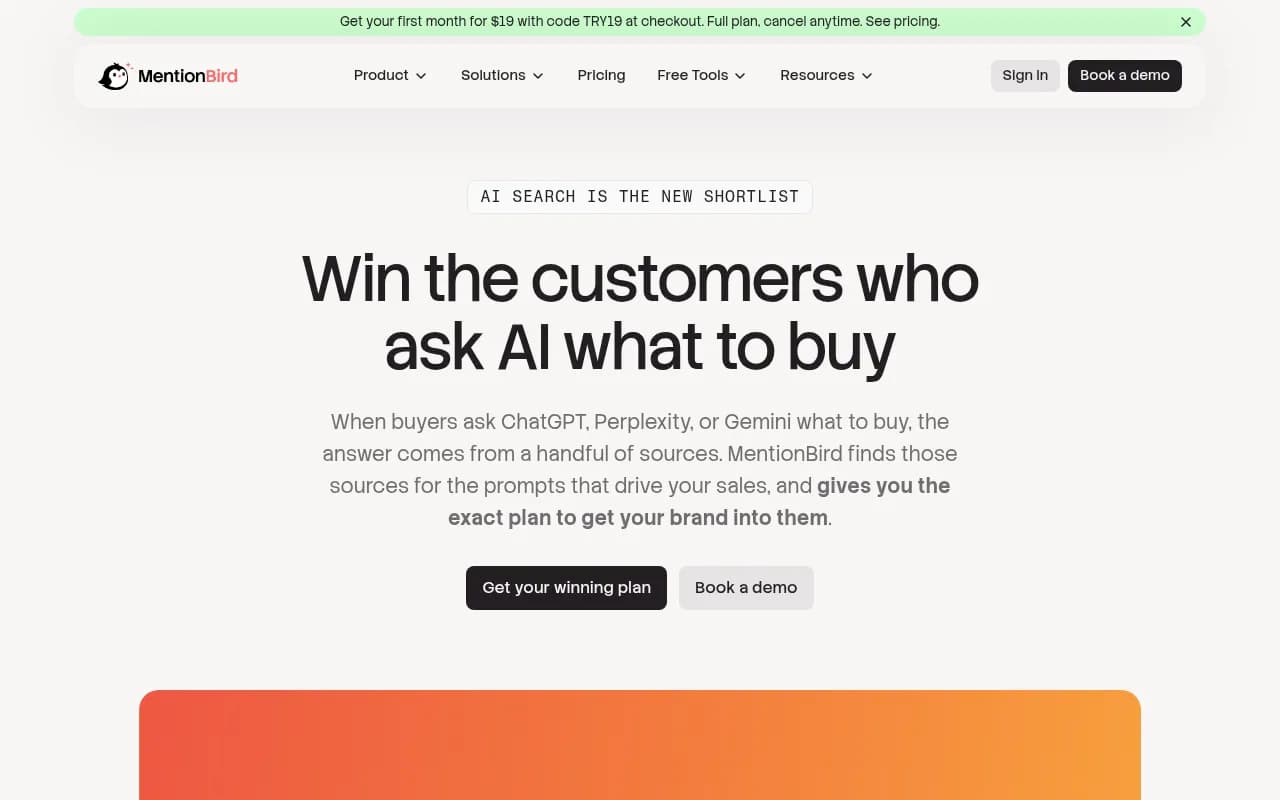
Starter is $79 for 100 prompts, and the vendor pitches daily tracking with ten included seats for agencies. The prompt count is generous for the price. Verify the engine list per tier, as noted above.
8. Orchly
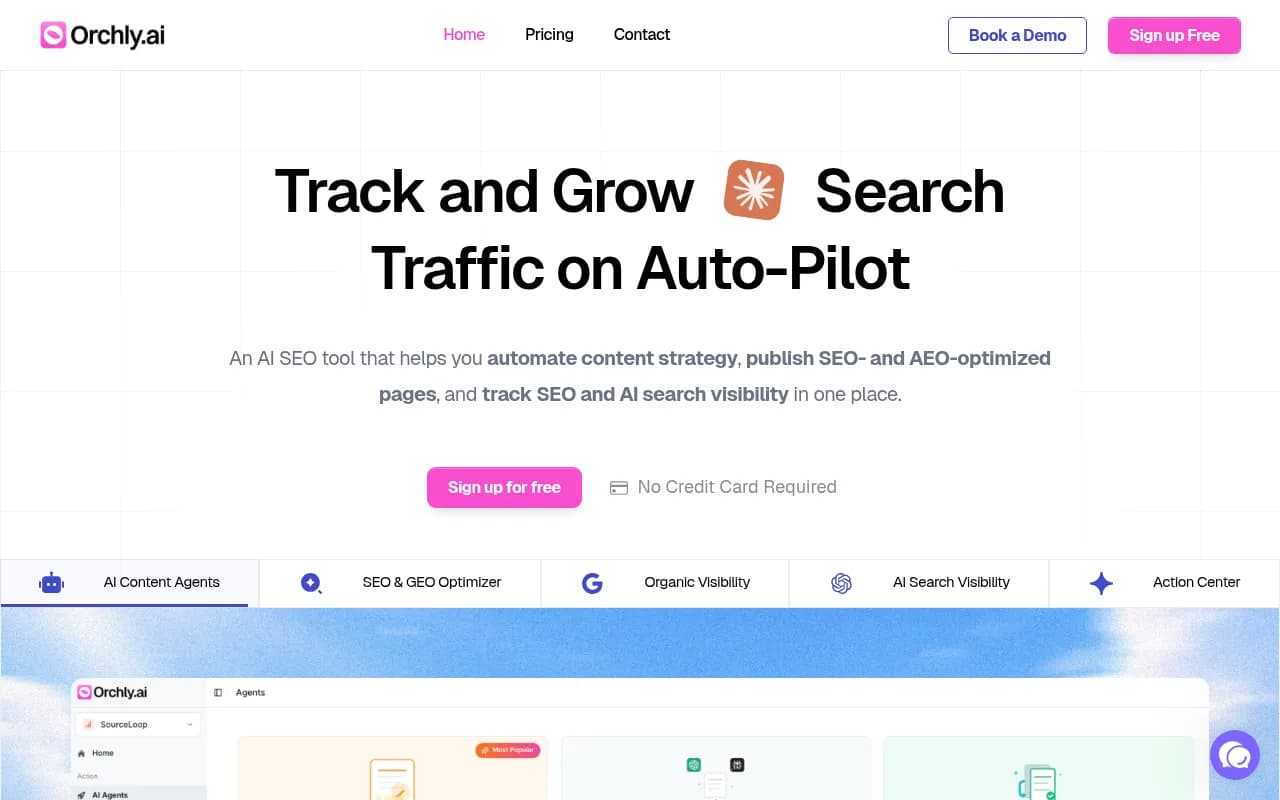
Essential is $49 for 25 prompts across ChatGPT, Google AI Overviews and Perplexity. Pro is $125 for 100 prompts and three websites. A small-team option with a narrow engine set.
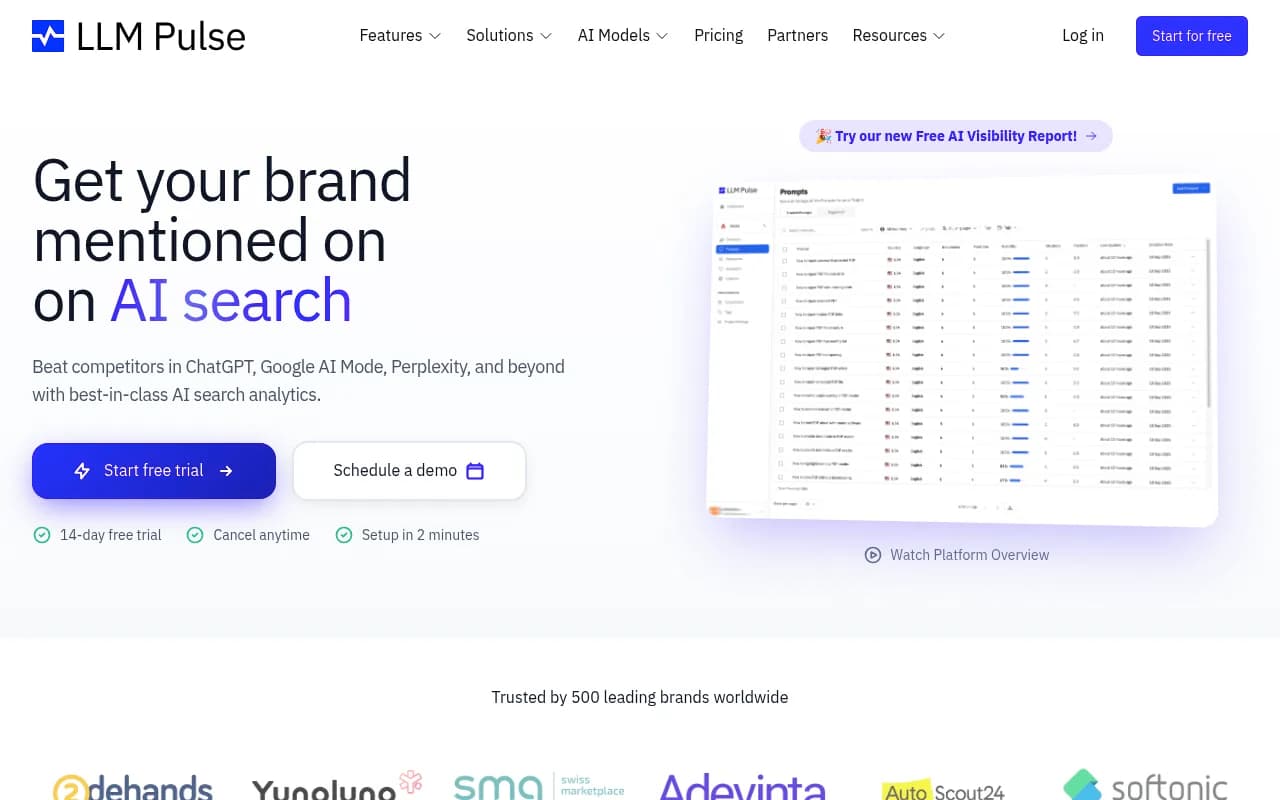
9. LLM Pulse
EUR 49 a month for 50 prompts across 5 models, with Google AI Mode on every plan. Mission Growth puts it at EUR 0.045 per answer. A good pick when AI Mode matters and your budget is tight.
10. Nightwatch
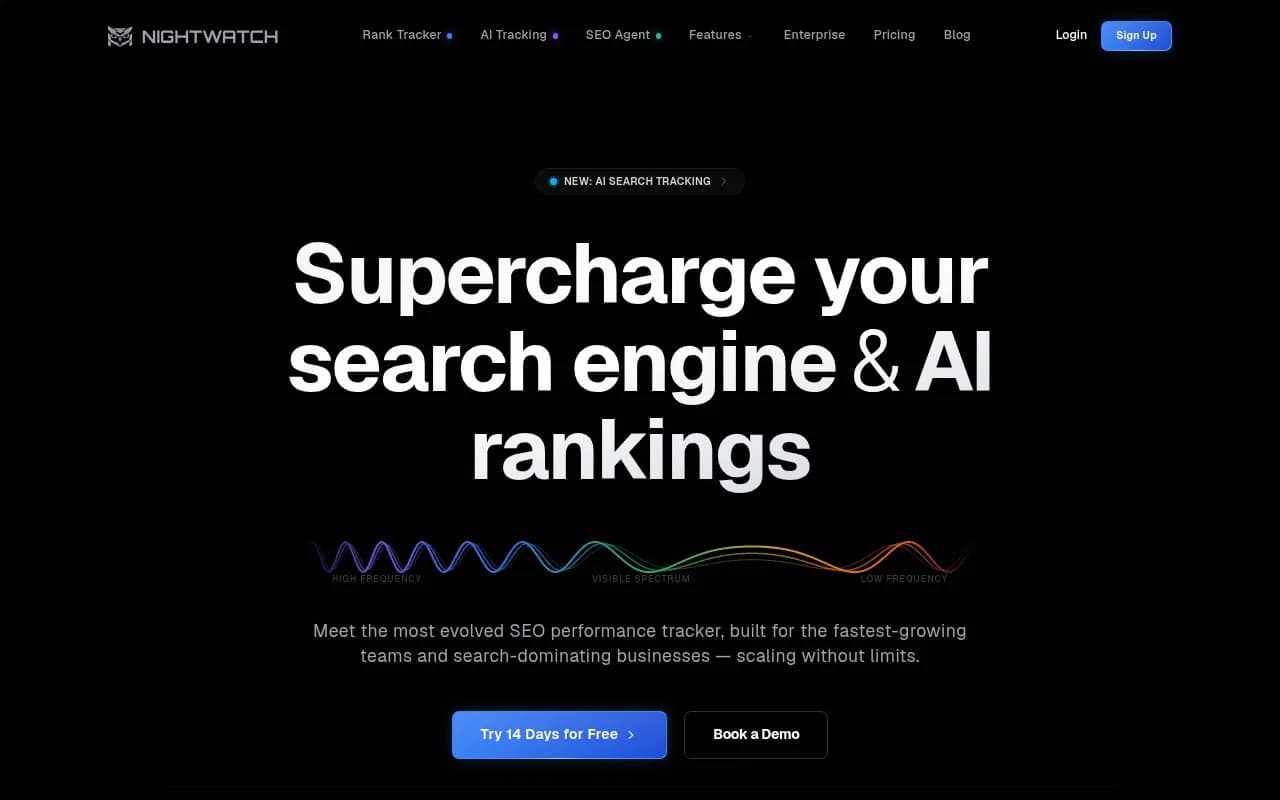
Best if you want classic rank tracking and AI tracking on one invoice. Starter is EUR 79 yearly for 50 prompts and 1,500 answers, AI Mode on every plan, unlimited seats. About EUR 0.053 per answer.
11. ZipTie
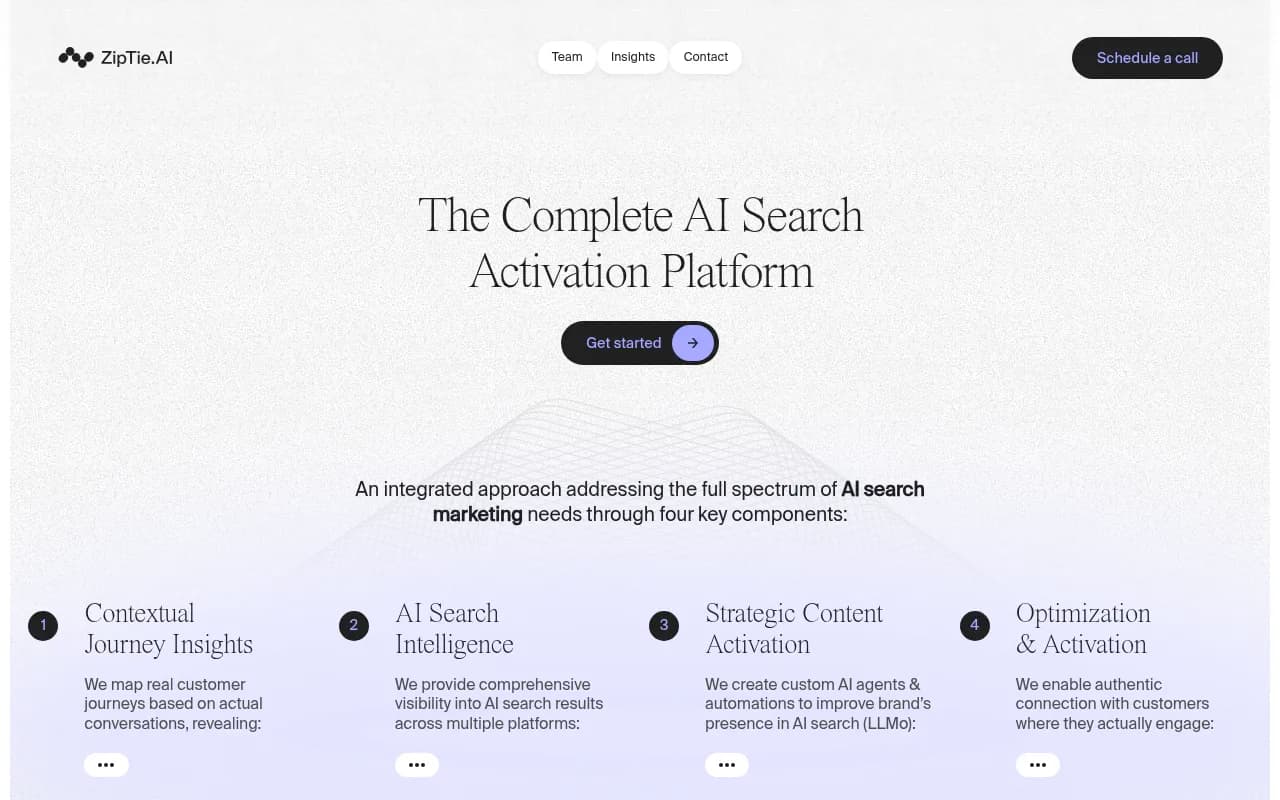
Pay-per-check pricing at $0.01 per prompt, engine and check, dropping to about $0.0087 across all seven engines. Transparent, and good for people who hate guessing what a credit is worth.
12. AthenaHQ
Starter is $295 for 3,600 credits, which Mission Growth calculates at about $0.082 per response. That is the priciest unit cost in this set. You are paying for the analysis layer, so decide whether you will actually use it.

13. Scrunch
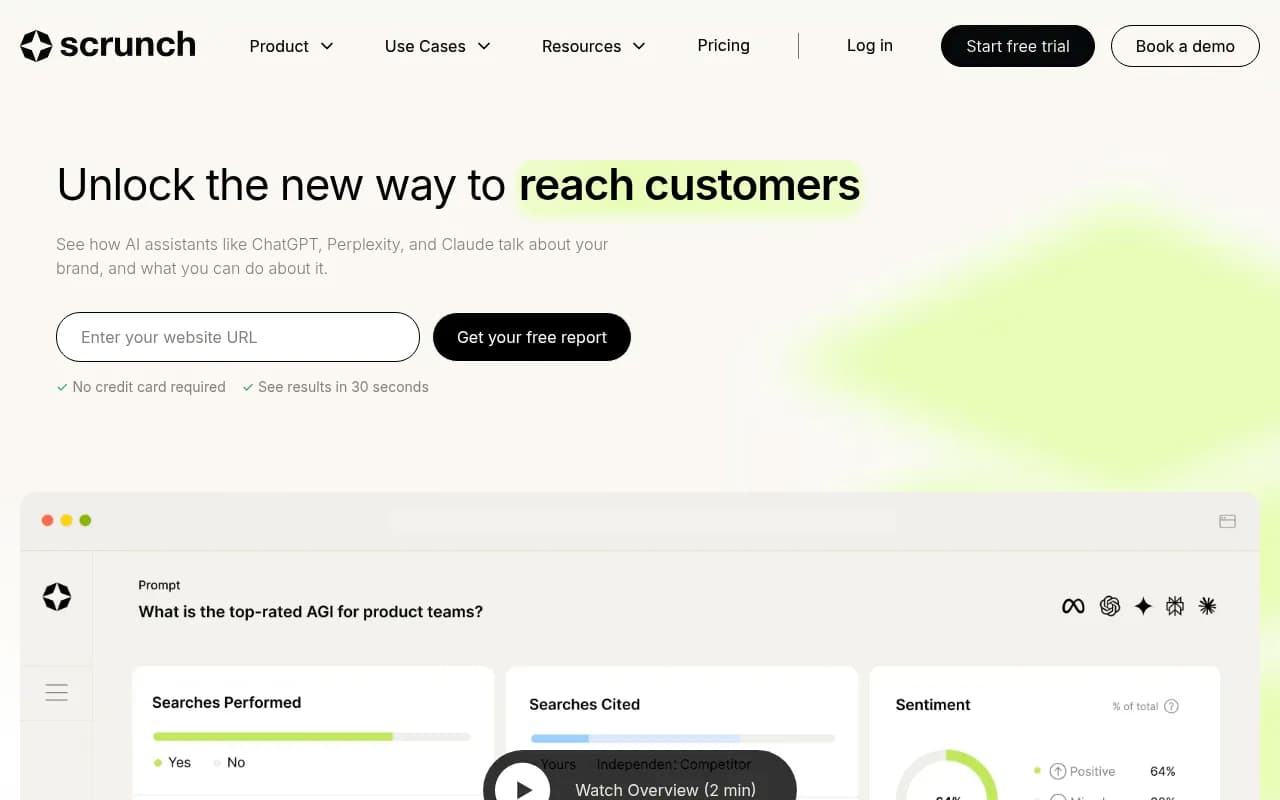
Core starts around $250 for 125 prompts and 5,000 responses, about $0.050 per response, with AI Mode on the enterprise tier only. Strong monitoring, higher price, no Reddit tracking or Shopping. See Promptwatch vs Scrunch.
14. Bluefish
Custom quote, enterprise focus, 5 to 6 engines that are not clearly documented publicly. Only worth a call if you are a large brand with procurement requirements.
Normalizing price so you can compare
Here is the formula I would use: monthly price divided by (prompts x engines x 30 days). A $95 plan with 50 prompts on 3 engines run daily is 4,500 checks, or about $0.021 each. Nightwatch's EUR 79 for 1,500 answers is EUR 0.053. Same ballpark of spend, very different unit cost.
A few things throw the math off:
- Weekly tracking is cheaper per prompt and noisier. AI answers vary run to run, so one weekly sample is thin.
- Credits shift when you add engines. A plan that looks like 100 prompts becomes 33 with three engines.
- Add-ons for Gemini, AI Mode or Claude can double the effective price on a low-cost plan.
- Per-check billing is honest but gets expensive if you scale prompts quickly.
What to check before you buy
Real interface or API data
User-facing answers and citations can differ from API outputs. Promptwatch Data on sources per response shows how different the engines are: ChatGPT cites about 5 sources per web-search answer, while Google AI Overviews and Perplexity sit near 10, and Copilot swung from under 2 to nearly 17 within weeks. If your tool queries an API instead of the interface, you may be measuring a different product than your buyers use. Ask vendors directly.
Google AI Mode
Mission Growth found that of 25 third-party trackers, 21 name AI Mode and 3 of those gate it behind enterprise plans. If AI Mode is a priority, check the plan, not the feature page.
What the tool does after the score
A tracker tells you that you were absent. It does not tell you why. Look for citation data, crawler logs (did the bot even read the page?), and traffic attribution. Otherwise you will still need three other tools to act on the number.
Prompt discovery
Most people guess their prompt list. Tools with prompt volumes and difficulty, or suggestions from Search Console, give you a better starting set than your own brainstorm.
Which one for which situation
| Situation | Pick | Why |
|---|---|---|
| Testing before committing | Otterly Lite or Geoptie free tracker | Cheapest way to see a real answer |
| 50 prompts, daily, one brand | Peec AI Starter or Promptwatch Essential | Same list price, different depth after tracking |
| Want tracking plus fixes | Promptwatch Business | Content Agent, crawler logs, traffic data |
| Already on Ahrefs | Brand Radar | No new vendor |
| AI Mode on every plan | LLM Pulse or Nightwatch | AI Mode included from entry |
| Pay only for what you run | ZipTie | Per-check billing |
| Agency with many clients | Promptwatch agency plans or Rankability | Unlimited projects |
| Enterprise procurement | Profound, Scrunch or Bluefish | Custom contracts |
For wider browsing, the GEO software directory and the AI rank tracking directory list many more options than fit here.
How to build your first prompt set
Start with 30 to 50 prompts, not 500. Split them by intent: branded ("is X any good"), competitor comparison ("X vs Y"), and category discovery ("best tool for Z"). Discovery prompts are where you win or lose new customers, so weight them heavily.
Write them the way a buyer would speak, and run a few under different personas if your tool allows it. Keep the set stable for at least a month. Changing prompts every week wrecks your trend line, and the whole point of tracking is the trend.
Then review monthly. Cut prompts that never surface anyone, add the ones your customers actually ask support, and look at which sources get cited rather than only whether you were named.
Common mistakes
- Buying on prompt count alone and ignoring the engine cap.
- Tracking weekly and reading daily-sized conclusions out of it.
- Trusting one vendor's listicle, including the ones ranking the vendor first. Verify prices on the pricing page.
- Treating visibility as the goal. Traffic and conversions from AI are what pay for the subscription.
- Ignoring crawler access. If AI bots cannot read your pages, no amount of tracking fixes that.
Bottom line
If you just need a number on a dashboard, the cheap tools are fine and Peec, LLM Pulse and Otterly are sensible. If you need to act on that number, the question changes from which tracker is cheapest to which platform gets you from "we are invisible" to "this page now gets cited." That is where Promptwatch's start-at-$95 plan, with a 7-day free trial, earns the comparison. Whatever you pick, do the cost-per-check math first and check the prices on the vendor's page the day you buy.