Key takeaways
- Both AthenaHQ and Profound are solid AI visibility monitoring tools, but neither has built a full optimization loop that takes you from gap identification to content creation to measurable results.
- Profound has broader AI engine coverage (9 engines including Meta AI and DeepSeek) and has raised $155M in funding. AthenaHQ covers 8 engines and holds a 4.9 rating on G2.
- AthenaHQ leans into content workflows and execution features. Profound leans into data depth and proprietary research.
- Both tools are primarily monitoring-focused. If you need to actually fix your AI visibility gaps, not just see them, you'll want a platform built around the full optimization cycle.
- For teams that need to move from insight to action, Promptwatch is worth evaluating alongside both.
Why this comparison matters right now
McKinsey projects that $750 billion in US revenue will flow through AI-powered search by 2028. At the same time, Gartner predicts organic search traffic will drop by 50% or more in the next two years. Those two numbers together explain why every marketing team is suddenly scrambling to understand their AI visibility.
AthenaHQ and Profound are the two names that keep coming up in this space. Both are purpose-built for Answer Engine Optimization (AEO). Both have real customers, real funding, and real feature sets. But they're not the same product, and the differences matter depending on what your team actually needs.
This guide breaks down what each platform does well, where each falls short, and how to decide which one (if either) is worth your budget.
What each platform actually does
Profound
Profound positions itself as the data-first AI visibility platform. It tracks your brand's presence across 9 AI engines, including ChatGPT, Perplexity, Google AI Overviews, Google AI Mode, Gemini, Meta AI, DeepSeek, Claude, and Copilot. That's the broadest coverage in the category right now.

The platform's core strengths are:
- Prompt volume data and difficulty scoring, so you can prioritize which queries are worth chasing
- Agent analytics that show how AI crawlers interact with your site
- Shopping tracking for ChatGPT product recommendations
- A content creation layer called "Agents" that generates content based on visibility gaps
- Proprietary research through the Profound Index
Pricing isn't publicly listed. Profound is enterprise-oriented and requires a demo to get numbers. Based on third-party comparisons, it's positioned at the higher end of the market.
One consistent complaint from users: translating the data into concrete next steps isn't always obvious. The platform surfaces a lot of information, but the path from "here's your visibility score" to "here's what to publish next" requires more manual work than the marketing suggests.
AthenaHQ
AthenaHQ covers 8 AI engines, including Google AI Mode, and holds a 4.9 rating on G2. Its customers include SoFi, ZoomInfo, and Wix. The platform emphasizes content workflows and execution alongside monitoring.
AthenaHQ's core strengths:
- AI citation pattern analysis across 8 engines
- Content workflow tools designed to help teams act on visibility data
- A published State of AI Search 2026 report with original research
- Strong customer satisfaction scores
The platform's positioning is interesting: it explicitly frames itself as an execution tool, not just a tracker. Whether the execution features live up to that framing depends on your team's workflow. Some users on Reddit note that AthenaHQ is "more focused on tracking and analysis" in practice, with content workflows that still require significant human effort to operationalize.
Pricing for AthenaHQ is also not publicly listed and requires a demo.
Head-to-head comparison
| Feature | AthenaHQ | Profound |
|---|---|---|
| AI engines covered | 8 (incl. Google AI Mode) | 9 (incl. Meta AI, DeepSeek) |
| G2 rating | 4.9 | Not publicly listed |
| Funding | Not disclosed | $155M |
| Prompt volume data | Limited | Yes |
| Content generation | Yes (workflow-based) | Yes (Agents) |
| Agent/crawler analytics | Limited | Yes |
| ChatGPT Shopping tracking | Not confirmed | Yes |
| Reddit/YouTube insights | Not confirmed | Not confirmed |
| Public pricing | No (demo required) | No (demo required) |
| Best for | Mid-market teams wanting execution tools | Enterprise teams wanting data depth |
Where both platforms fall short
Here's the honest assessment: both AthenaHQ and Profound are strong monitoring tools that have added some content features. Neither has fully solved the problem of closing the loop between visibility data and measurable business outcomes.
The core issue is that most AI visibility platforms were built to answer "where do you appear?" They're getting better at answering "why don't you appear?" But very few have built a workflow that takes you from gap identification to content creation to tracking whether that content actually improved your citations.
Profound's users specifically call out difficulty translating insights into action. AthenaHQ's users note that the content workflows still require significant manual effort. Both platforms require a demo to get pricing, which makes it hard to evaluate ROI before committing.
If you're a large enterprise with a dedicated AEO team and budget for a premium tool, either platform can work. If you're a mid-market brand or agency that needs to show results quickly without a six-figure contract, the value proposition gets murkier.
The monitoring-only trap
This is worth naming directly. A lot of teams buy an AI visibility tool, get a dashboard full of visibility scores and citation counts, and then... don't know what to do next. The data is interesting. The problem is that interesting data doesn't move the needle.
The platforms that are genuinely useful in 2026 are the ones that help you answer three questions in sequence:
- Which prompts are your competitors winning that you're not?
- What content do you need to create to close those gaps?
- Did the content you created actually improve your citations?
Profound gets closer to answering all three than most competitors, particularly with its Agents feature and prompt volume data. AthenaHQ's content workflows are a step in the right direction. But neither platform has made this cycle seamless.
Promptwatch is worth looking at if this full loop matters to you. It's built specifically around Answer Gap Analysis (showing you which prompts competitors rank for that you don't), Content Agents that generate articles grounded in real citation data, and page-level tracking that connects published content to citation improvements. It's the only platform in a recent 12-tool comparison to be rated a "Leader" across all evaluation categories.

Which one should you choose?
Choose Profound if:
- You need the broadest AI engine coverage, including Meta AI and DeepSeek
- Data depth and proprietary research matter more than workflow simplicity
- You have an enterprise budget and a dedicated team to interpret the data
- ChatGPT Shopping tracking is relevant to your business
Choose AthenaHQ if:
- You want strong G2 social proof and a platform with high customer satisfaction scores
- Google AI Mode coverage is a priority
- You prefer a platform that frames itself around execution, not just monitoring
- Your team is mid-market and wants content workflow tools built in
Consider alternatives if:
- You need transparent pricing before committing to a demo
- You want a platform that closes the full loop from gap identification to content creation to citation tracking
- You need Reddit and YouTube insights to understand what's influencing AI recommendations
- You're an agency managing multiple clients and need multi-site tracking at a reasonable price point
Some other tools worth knowing about in this space:
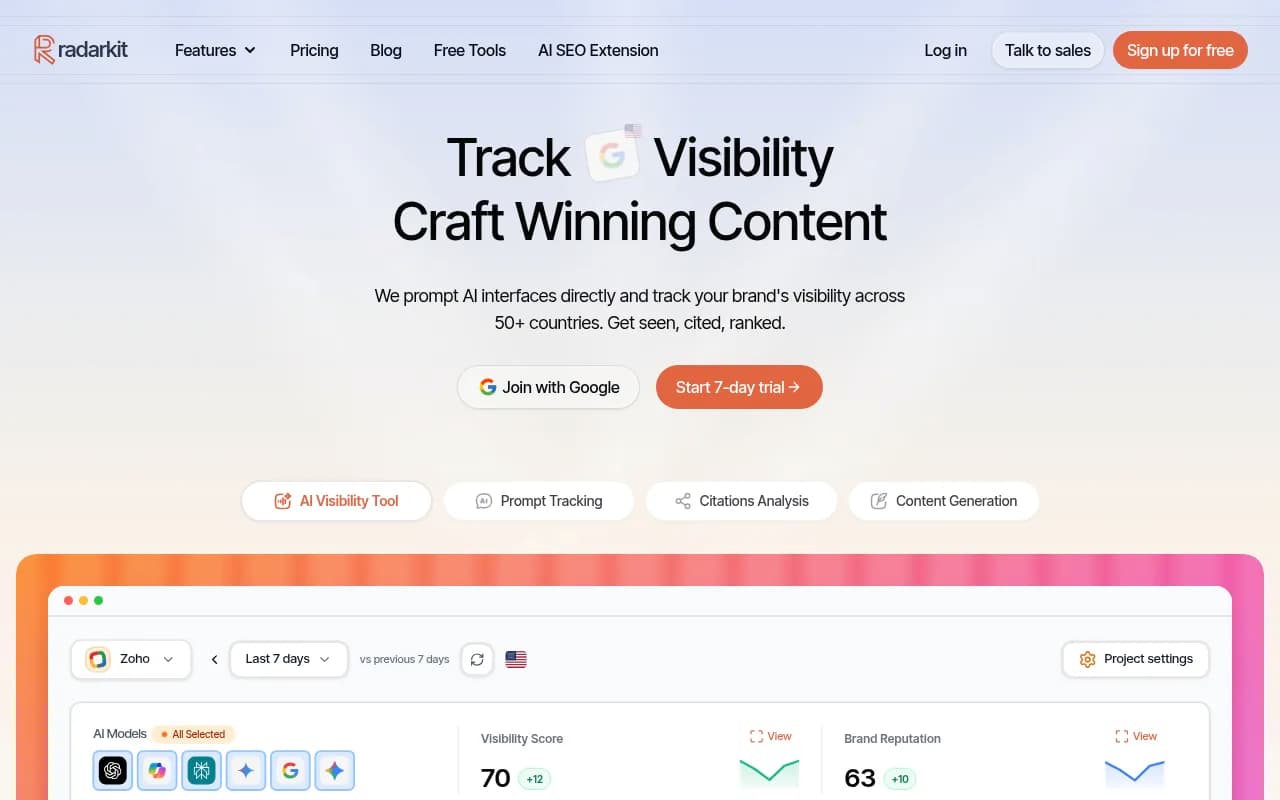
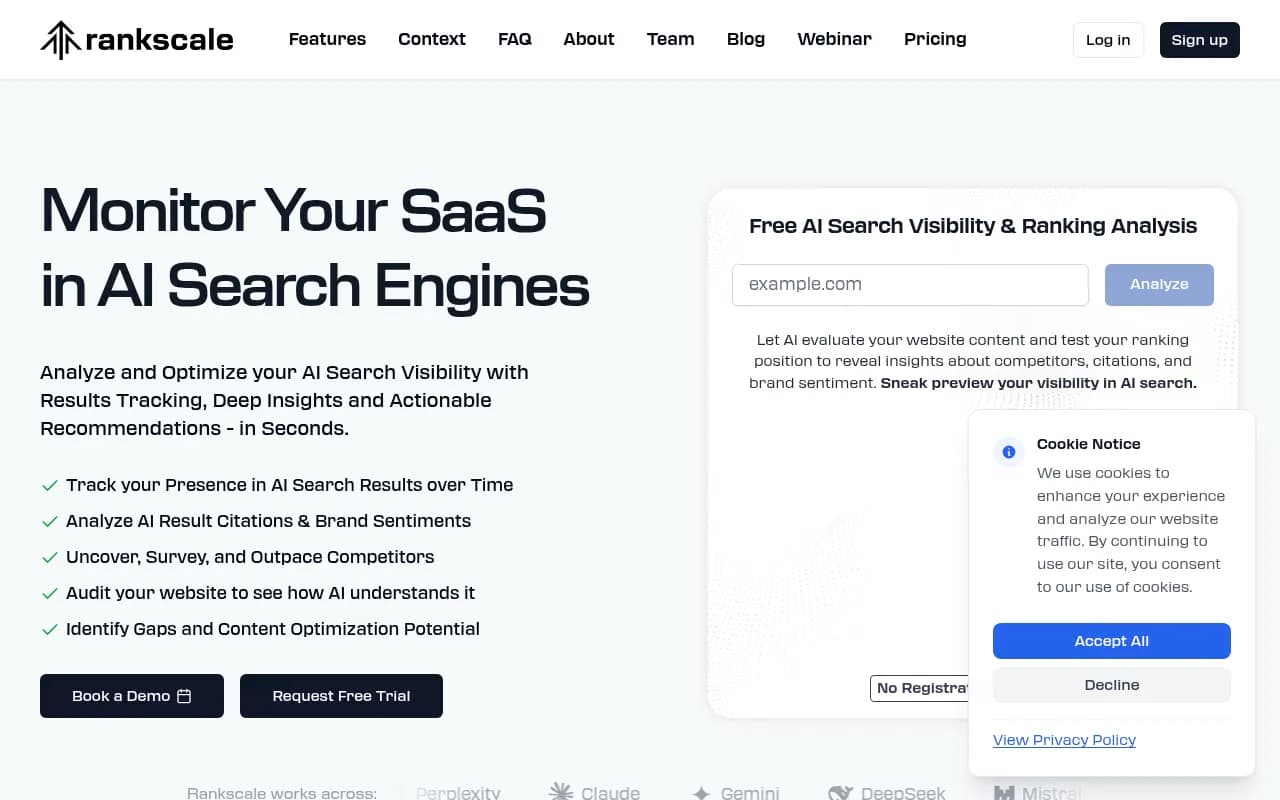
What the broader market looks like
The AI visibility space has exploded in 2026. There are now more than a dozen platforms competing for this budget, ranging from lightweight trackers to full optimization suites. Here's a quick orientation:
| Platform | Positioning | Pricing model |
|---|---|---|
| Profound | Enterprise data depth | Custom (demo required) |
| AthenaHQ | Execution + monitoring | Custom (demo required) |
| Promptwatch | Full optimization loop | $99-$579/mo (public pricing) |
| Otterly.AI | Budget monitoring | Low-cost, self-serve |
| Peec.ai | Multi-language tracking | Mid-market |
| Search Party | Agency-focused | Custom |
The market is splitting into two camps: monitoring-only tools (which are getting commoditized quickly) and optimization platforms (which are harder to build but more defensible). Profound and AthenaHQ are both trying to be in the second camp, with varying degrees of success.
The pricing problem
Neither AthenaHQ nor Profound publishes pricing. Both require a demo. That's a meaningful friction point for teams that want to evaluate ROI before getting on a sales call.
One comparison from Nick Lafferty's blog notes that Profound offers unlimited prompts versus credit limits on some competitors, and a 5-minute SLA versus 2-hour response times. Those are real operational differences if you're running a high-volume monitoring operation.
But for most mid-market teams, the question isn't which platform has the better SLA. It's whether the platform will help them show up in AI search results for the prompts their customers are actually using. That's a harder question to answer from a demo alone.
If transparent pricing matters to your evaluation process, Promptwatch's public pricing ($99/mo for Essential, $249/mo for Professional, $579/mo for Business) makes it easier to model ROI before committing.
Final take
AthenaHQ and Profound are both legitimate tools. AthenaHQ has the better customer satisfaction scores and a cleaner execution story. Profound has the broader coverage and deeper data. If you're choosing between the two, the decision comes down to whether you prioritize social proof and workflow simplicity (AthenaHQ) or data breadth and enterprise infrastructure (Profound).
But it's worth asking whether either platform is actually the right tool for what you need. If your goal is to improve your AI visibility, not just measure it, the monitoring-first architecture that both platforms share has real limits. The teams winning in AI search right now are the ones that can identify gaps, create content to fill them, and track whether that content is working. That cycle requires more than a dashboard.
Evaluate both platforms. Get the demos. But also look at what the full optimization loop looks like before you sign a contract.