Key takeaways
- AthenaHQ's self-serve plan starts at $295/month with no free trial, making it one of the highest entry points in the GEO/AEO category
- Billing runs on a credit pool model where different AI engines consume credits at different rates, which makes monthly costs genuinely hard to predict
- At $399/month, you're still capped at 3 content articles per month, meaning you'll need separate tools to actually fix the gaps AthenaHQ surfaces
- Several alternatives start under $100/month, include free trials, and cover more AI engines out of the box
- If you need monitoring AND content optimization in one platform, the pricing math shifts significantly in favor of tools that do both
What AthenaHQ actually costs
Let's start with the number that stops most buyers: $295/month. That's the floor for AthenaHQ's self-serve tier, and there's no free trial to evaluate the platform before that first invoice lands.
The platform itself is genuinely capable. It covers eight AI engines, uses dynamic crawling rather than static API calls, and has a customer list that includes SoFi, Coinbase, Twilio, and PagerDuty. For enterprise teams with a real budget and a mandate to own AI search visibility, it's a credible option.
But the pricing structure has some quirks worth understanding before you commit.

The credit pool problem
AthenaHQ doesn't charge per seat or per prompt in a straightforward way. Billing runs on a monthly credit pool, where one credit equals one analyzed AI response. The catch is that different engines consume different amounts of credits per query. So if you're tracking the same prompts across all eight engines, your credit burn rate varies depending on which engines you're running.
This isn't a dealbreaker, but it does mean your monthly cost isn't fully predictable until you've run a few cycles and understood your usage pattern. For teams that need to forecast marketing spend cleanly, that's a friction point.
What you get at the $399 tier
One data point from a detailed comparison on getmint.ai stands out: even at $399/month, AthenaHQ caps you at 3 content articles per month. That's a meaningful limitation if your goal isn't just to monitor where you're invisible but to actually fix it. Three articles won't move the needle on a content gap problem, which means you're effectively paying for a monitoring dashboard and then paying again for a separate content tool.
This is the core tension with AthenaHQ's pricing: the platform is strong on detection and weak on remediation, and the price doesn't reflect that gap.
What you're paying for (and what you're not)
To be fair to AthenaHQ, here's what the platform does well:
- Eight AI engines tracked on a single self-serve tier (ChatGPT, Claude, Gemini, Perplexity, Google AI Mode, and others)
- Dynamic AI crawling, which means it's capturing how models actually respond in user interfaces rather than just querying APIs
- Blindspot detection that surfaces prompts where competitors appear and you don't
- A reasonably clean dashboard for enterprise reporting
What's missing or limited at the standard tiers:
- No free trial (unusual for a SaaS product at this price point)
- Very limited content generation (3 articles/month at $399)
- No Reddit or YouTube citation tracking
- No AI crawler logs showing which pages AI bots are actually visiting on your site
- No traffic attribution connecting AI visibility to actual revenue
If you're a large enterprise that just needs a monitoring layer and has a separate content team, AthenaHQ's feature set might justify the price. If you're a marketing team that needs to both find gaps and fill them, you're looking at a two-tool stack that adds up fast.
How AthenaHQ compares to the alternatives
The table below covers the most common AthenaHQ alternatives, using published pricing as of mid-2026.
| Tool | Starting price | Free trial | AI engines | Content generation | Crawler logs |
|---|---|---|---|---|---|
| AthenaHQ | $295/mo | No | 8 | 3 articles/mo ($399 tier) | No |
| Promptwatch | $99/mo | Yes | 10+ | Yes (5–30 articles/mo) | Yes (Professional+) |
| Profound | $99/mo | Yes | 10 (Growth+) | Limited | No |
| Peec AI | €89/mo | Yes | 3+ (add-ons available) | No | No |
| Otterly AI | $29/mo | Yes | 4 (add-ons) | No | No |
| Scrunch | $100/mo | Yes | Multiple | Limited | Yes |
| Radarkit | $29/mo | Yes | Multiple | No | No |
| Writesonic GEO | $199/mo | Yes | Multiple | Yes | No |
A few things jump out from this table. First, the $295 floor is genuinely high compared to the field. Profound starts at $99 and covers 10 engines at higher tiers. Otterly AI starts at $29. Even platforms with strong feature sets like Scrunch and Peec AI come in well below AthenaHQ's entry price.
Second, content generation is rare across the category. Most tools are monitoring dashboards. AthenaHQ has some generation capability, but it's capped in a way that limits its usefulness. Promptwatch and Writesonic GEO are the main exceptions that combine tracking with meaningful content output.
The alternatives worth considering
For teams that need monitoring AND content in one place
Promptwatch is the most complete option here. It tracks 10+ AI models (ChatGPT, Claude, Gemini, Perplexity, Grok, DeepSeek, Copilot, Meta AI, Google AI Overviews, and Google AI Mode), generates content based on real prompt data and answer gap analysis, and includes AI crawler logs that show which pages AI bots are actually visiting. The Essential plan starts at $99/month with 5 articles included. Professional ($249/month) bumps that to 15 articles and adds crawler logs and state/city tracking.

The key difference from AthenaHQ is that Promptwatch is built around a complete loop: find the gaps, generate content to fill them, track whether that content gets cited. AthenaHQ surfaces the gaps but leaves the fixing to you.
For enterprise teams with deep pockets

Profound starts at $99/month but scales to a full enterprise tier covering 10 AI engines with compliance features and historical data. It's a monitoring-first platform like AthenaHQ, so you'll still need a separate content workflow, but the coverage is genuinely deep and the pricing is more transparent.
For budget-conscious teams

Otterly AI at $29/month is the clearest answer for solo SEOs or small teams that just want to start tracking AI visibility without a major budget commitment. It covers ChatGPT, Google AI Overviews, Perplexity, and Microsoft Copilot on all tiers, with Gemini and AI Mode available as add-ons. No content generation, no crawler logs, but a solid starting point.

Peec AI at €89/month adds multilingual and multi-region tracking, which matters if you're running campaigns across markets. It's monitoring-only but covers international use cases that some competitors miss.
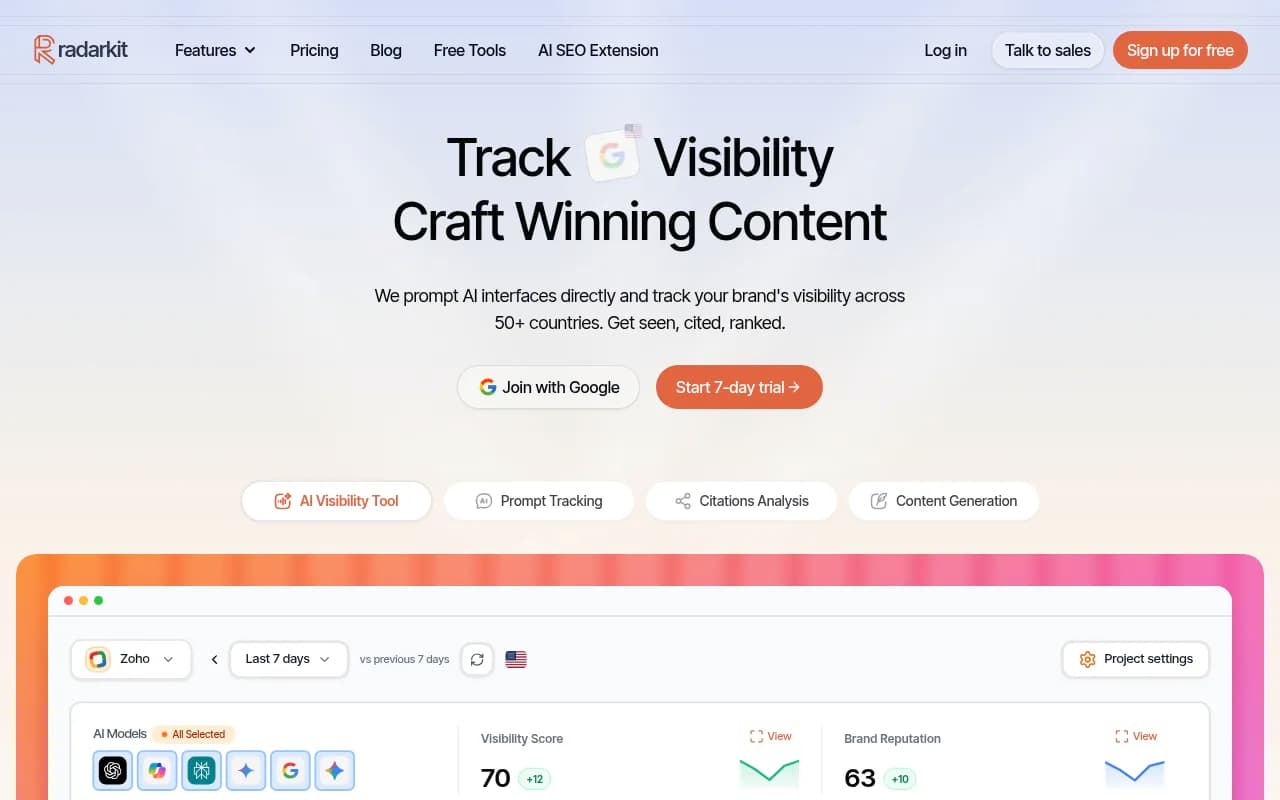
Radarkit at $29/month is worth mentioning for agencies and SMBs that want real LLM prompting (not API-based), multi-location proxy tracking, and competitor share-of-voice without the enterprise price tag.
For content teams that want execution alongside tracking
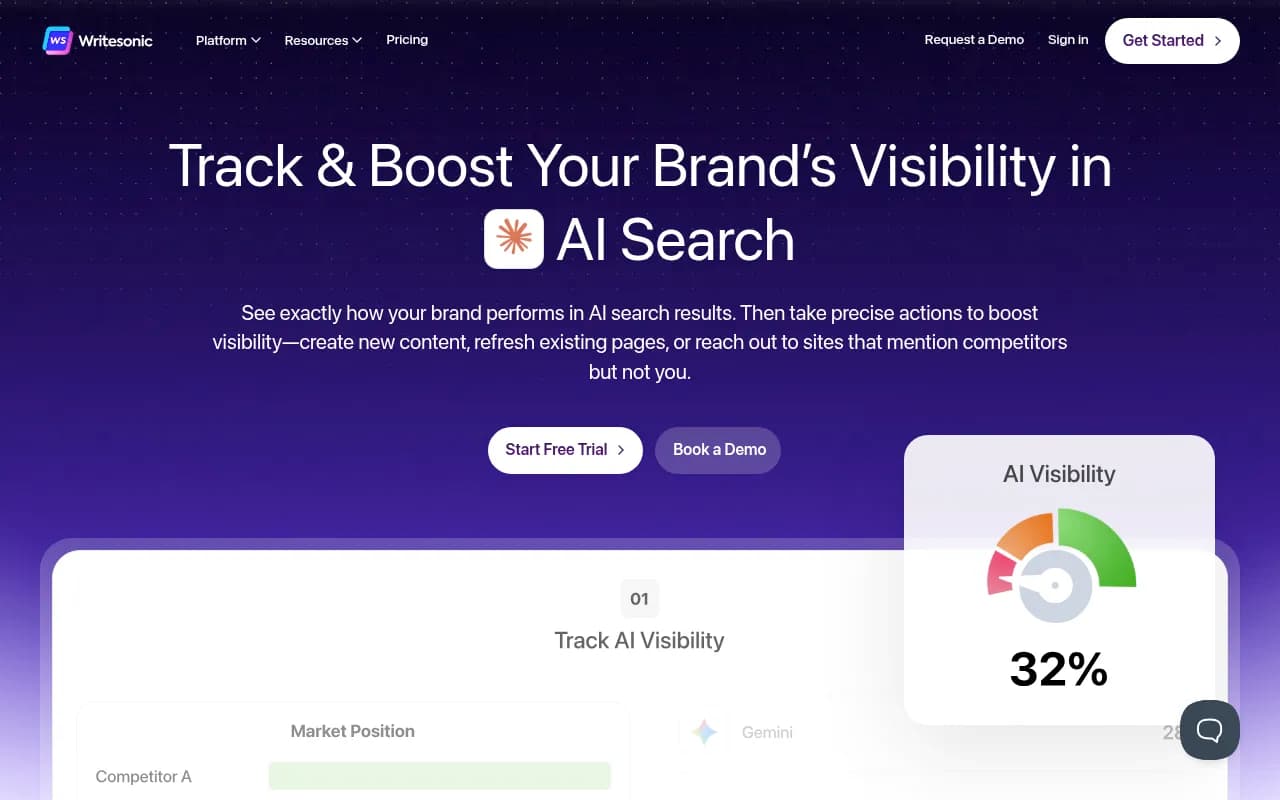
Writesonic GEO at $199/month combines brand presence tracking with content generation and SEO audits. It integrates with GA4 and Ahrefs, which is useful if you're already running a traditional SEO stack alongside your AI visibility work.
Scrunch is worth a look for technical SEO teams that want AI crawler tracking alongside visibility monitoring. It's one of the few tools outside of Promptwatch that surfaces what AI bots are doing on your site.
The credit model vs. flat pricing: which is better?
This is worth a direct answer because it affects how you budget.
AthenaHQ's credit pool model means your monthly cost can vary based on how many engines you're querying and how often. If you run 50 prompts across 8 engines daily, you'll burn through credits faster than if you're running 20 prompts across 3 engines weekly. The platform's pricing page doesn't make it easy to calculate this upfront.
Most alternatives use flat monthly pricing: you pay a fixed amount, you get a fixed number of prompts and engines, and you know your bill before it arrives. For marketing teams that report to finance, flat pricing is almost always preferable.
The one scenario where credit models make sense is if your usage is highly variable, like an agency that spins up intensive tracking for a client for 6 weeks and then scales back. But even then, most agencies find flat pricing easier to pass through to clients.
Who should still consider AthenaHQ
It's worth being honest here. AthenaHQ isn't a bad product. It's a monitoring-focused platform with real enterprise credibility, a strong customer list, and eight engines covered on the self-serve tier.
The buyers who get the most value from it tend to be:
- Enterprise marketing or SEO teams with a $300+ monthly budget already allocated to AI visibility
- Organizations where the content team is separate and well-resourced, so the 3-article cap isn't a constraint
- Teams that specifically need the enterprise compliance and historical data features
- Companies already using AthenaHQ's customer-adjacent tools and wanting a single vendor relationship
If that's you, the pricing is defensible. If you're a growth-stage company, an agency managing multiple clients, or a team that needs both visibility data and content output, the alternatives above will almost certainly give you more for less.
The bottom line on AthenaHQ pricing
$295/month with no free trial is a high ask in a category where several strong competitors start under $100 and offer free trials. The credit-based billing adds forecasting friction. And the content generation cap at higher tiers means you're paying for detection without much help on remediation.
That's not a fatal flaw if you have the budget and a separate content workflow. But for most teams evaluating AthenaHQ in 2026, the honest comparison is: Promptwatch covers more engines, includes content generation, adds crawler logs, and starts at $99 with a free trial. Profound covers comparable monitoring depth and starts at $99. Otterly AI covers the basics at $29.
The question isn't whether AthenaHQ is good. It's whether it's worth the premium when the alternatives have closed most of the gap.