Key takeaways
- These four platforms are not interchangeable. Conductor is built around cross-team workflow and AEO governance, BrightEdge around executive reporting and on-site automation, seoClarity around data scale and flexibility, and Botify around crawling, logs and indexation on huge sites.
- Pricing is mostly opaque. Conductor, BrightEdge and Botify publish no price. seoClarity lists tiers from $2,500 a month, according to a competitor's comparison page, so confirm it on the vendor's site.
- AI search tracking claims conflict between sources. Conductor's own ranking says it has the broadest native coverage and that BrightEdge and seoClarity mostly track AI Overviews. Another vendor's page says BrightEdge names ChatGPT and Perplexity too. Ask each vendor for a live demo on your own prompts.
- Most enterprise stacks in 2026 pair one suite with a dedicated AI visibility tool, because citation tracking, crawler data and prompt-level analysis are still thin in traditional suites.
Why this comparison is harder than it looks
Every "best enterprise SEO platform" list I found while researching this was written by someone with a stake in the ranking. Conductor's list ranks Conductor first. Indexable's list, which covers 14 platforms, recommends Indexable. seoClarity hosts its own comparison pages against BrightEdge and Conductor. None of that makes the information useless, but it means you should treat any single ranking as a sales document.
So this guide does something different. It sorts out what each tool is actually built for, flags where the claims conflict, and gives you a way to decide based on your own team rather than a leaderboard.
The four platforms at a glance
| Platform | Built for | Standout strength | Main limitation | Pricing |
|---|---|---|---|---|
| Conductor | Content and SEO collaboration across teams and regions | Workflow, AEO tracking, clean UI | Technical SEO is weaker than Botify | Not published |
| BrightEdge | Fortune 500 teams needing executive reporting | DataCube, StoryBuilder, automation | Steep learning curve, older interface | Not published |
| seoClarity | Data-heavy teams wanting one platform | Large keyword database, Clarity AI, integrations | Breadth can go underused | From $2,500/month listed |
| Botify | Sites with a million or more URLs | Log file analysis, JS rendering, crawl and indexation | Weak on content and competitive research | Not published |
One third-party page puts annual contracts at roughly $150K to $500K+ for BrightEdge, $75K to $250K for Conductor, $100K to $300K for seoClarity and $100K to $400K for Botify. Those ranges come from a single source and are not vendor-confirmed. Use them to calibrate your budget conversation, not as quotes.
Conductor
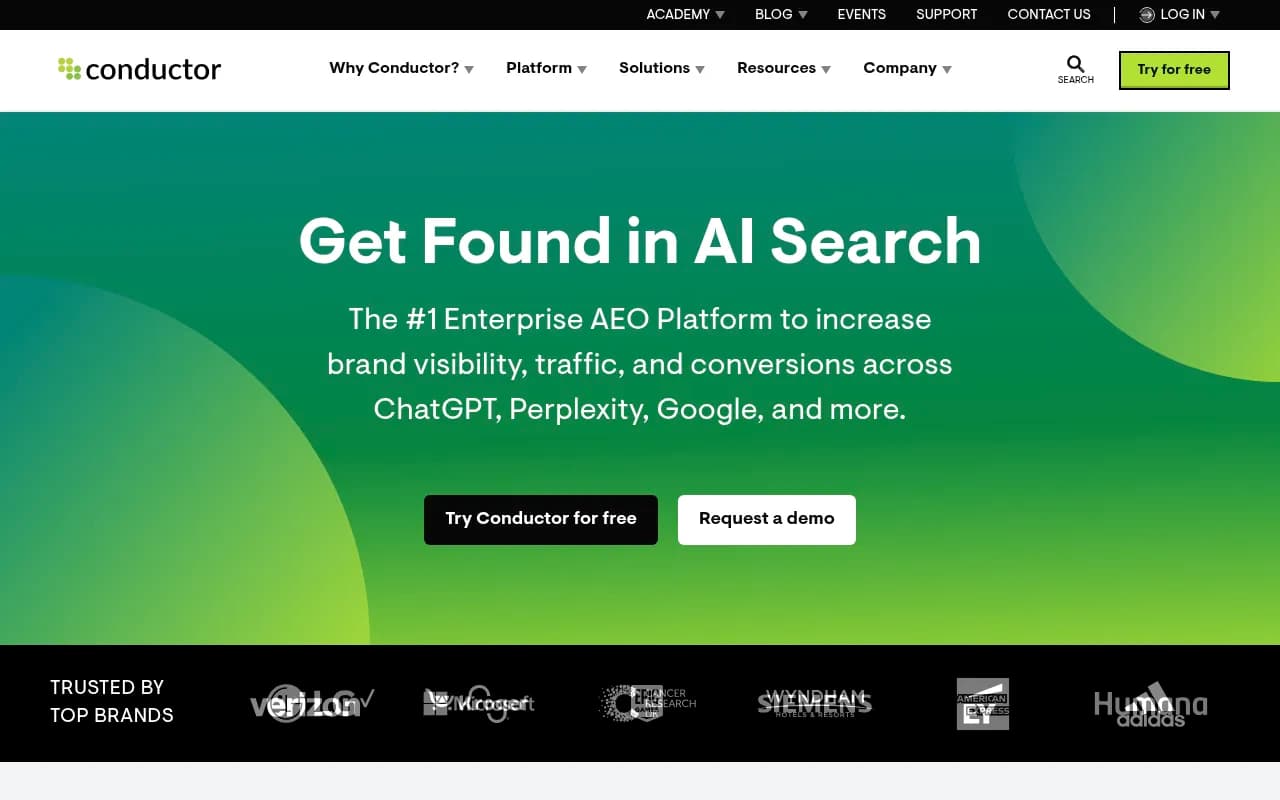
Conductor is the one I would shortlist first for a large marketing org where the real problem is coordination. It is built for distributed teams that need to move from opportunity discovery to content briefs to measurement without stitching together five tools. Its integrations lean toward where work happens: Trello, Jira and Asana, plus the Google analytics properties.
On AI search, Conductor claims the most complete native tracking of the four. Its own research says it covers brand citations, share of voice and sentiment across ChatGPT, Perplexity, Gemini, Google AI Mode and Microsoft Copilot. Another source lists its engines as ChatGPT, Gemini, Copilot and Claude. The lists differ, so ask which engines are tracked through real interfaces and which through APIs, and in which countries.
The tradeoffs are on the technical side. Teams with huge, messy sites will still want a crawler and log analyzer next to it.
BrightEdge
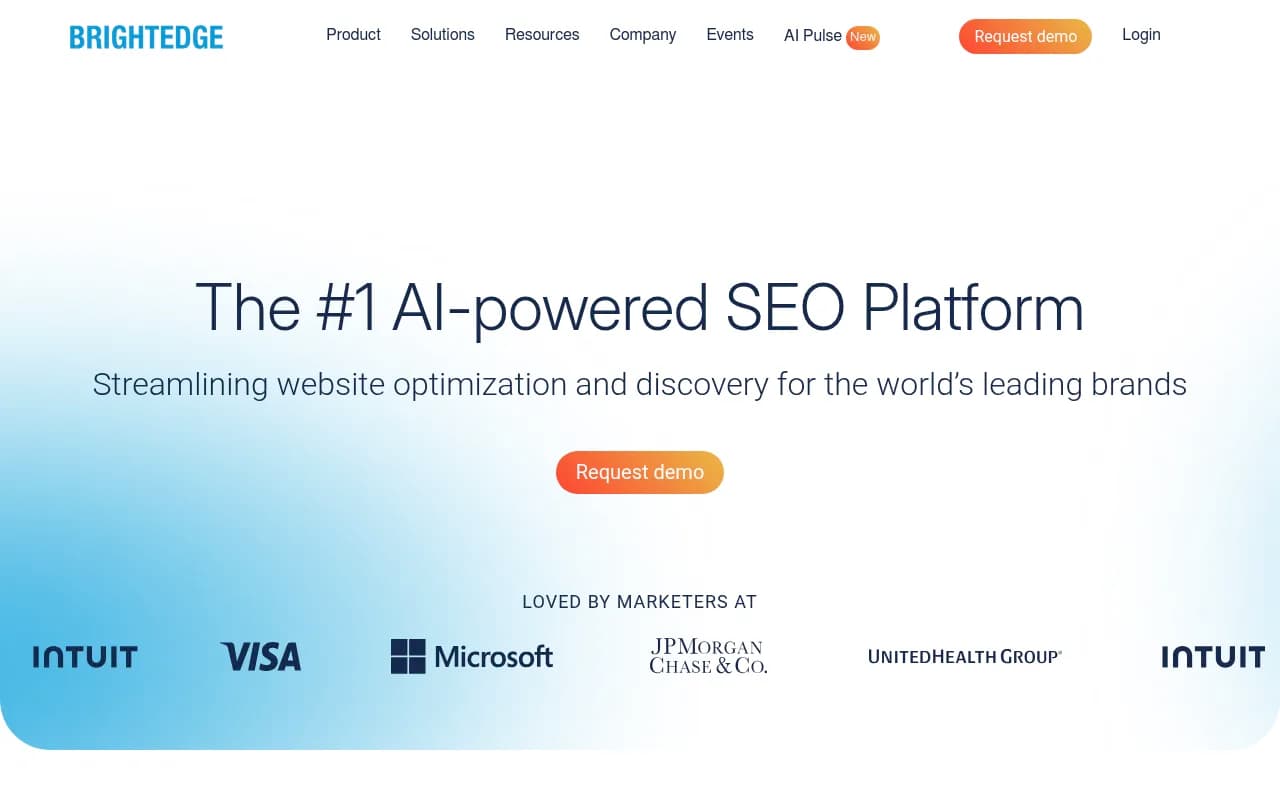
BrightEdge is the long-standing choice for C-suite reporting. DataCube gives you competitive visibility across a very large keyword set, and StoryBuilder lets non-SEO stakeholders read organic performance without a translator. Its integrations lean toward the marketing stack: Adobe, Salesforce Marketing Cloud, Domo, and CMS connectors for WordPress, Drupal and Sitecore.
Its AI story is split across products. Autopilot handles automated on-site optimizations, and BrightEdge Copilot recommends tasks. There is also a separate AI-focused product line.
The contradiction I mentioned earlier lives here. One review says BrightEdge has no native AEO tracking, another says it names Google, AI Overviews, ChatGPT and Perplexity. Both are dated around the same period. My read: coverage has been changing quickly, so the old claims are probably stale in one direction or the other. Get the current engine list in writing.
Best for in-house teams at large brands with dedicated analysts, existing data infrastructure, and a CMO who wants dashboards. Not ideal if your team is small or you want a light interface.
seoClarity
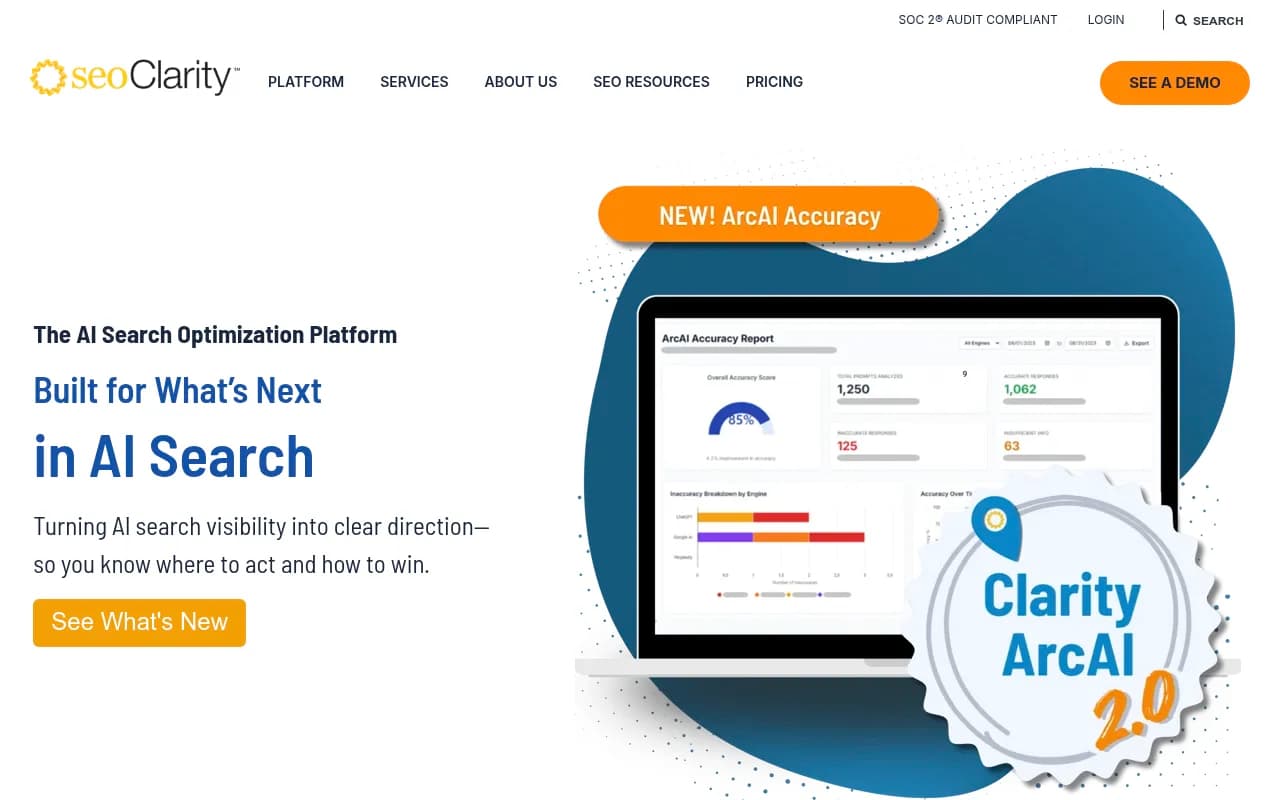
seoClarity is the data-infrastructure platform of the group. It connects to BigQuery, Tableau, Looker, Snowflake, Redshift and S3, exposes a GraphQL API, supports Okta, Ping and Microsoft SSO, and pulls in backlink data from Majestic, Moz and Ahrefs. If your analysts want to pipe SEO data into your own warehouse, this is the friendliest of the four.
It is also the only one here with published entry pricing, at $2,500, $3,200 and $4,500 a month on the vendor's pricing page as cited by a competitor. It describes itself as SOC 2 audit compliant, and ClarityAutomate is its tool for deploying changes and running tests. Clarity AI surfaces suggestions across technical, content and competitive work.
On AI search, seoClarity advertises AI Overviews tracking, and the full engine list is not published. Its catalog listing mentions AI search visibility tracking more broadly. Verify before you rely on it for ChatGPT or Perplexity reporting.
A common complaint on forums is that feature breadth goes underused. That is a buying problem as much as a product problem: if nobody owns adoption, you pay for modules nobody opens.
Botify
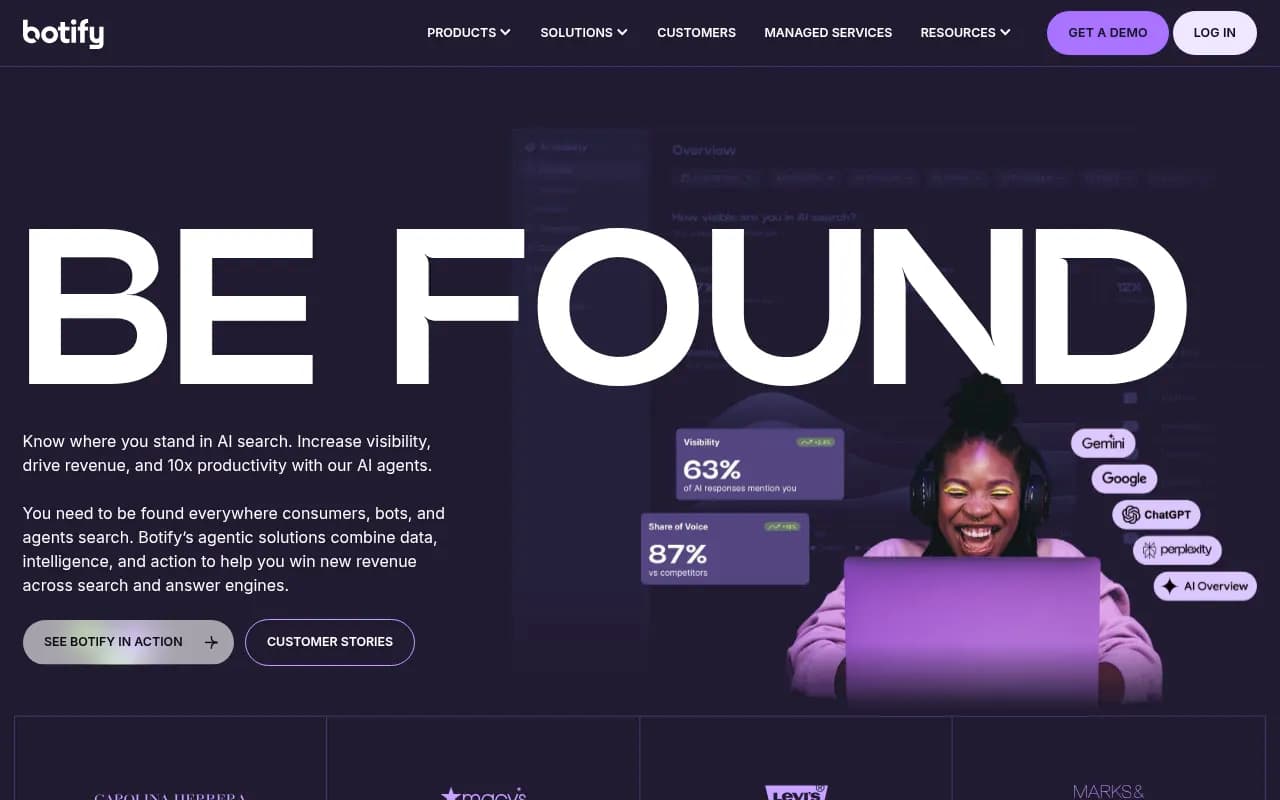
Botify is the specialist. It focuses on the chain from crawling to rendering to indexing to revenue, and it is designed for sites where crawl budget is a make-or-break issue, such as large e-commerce stores and publishers. The Log File Analyzer is the headline feature, and it ingests logs from Akamai, Cloudflare, Fastly, AWS and more.
That matters more in 2026 than it did two years ago, because logs now tell you how AI crawlers behave on your site, not just Googlebot. Promptwatch Data's AI crawler traffic report found that OpenAI accounted for 79.8% of IP-verified AI crawler requests in the week of Aug 31 to Sep 6, 2026, down from 94.8% in mid-June. The report's practical advice is to compare your own logs against that mix. If a provider is large in the market but near zero in your logs, you may be blocked from it. Botify is a natural place to run that comparison, though I could not verify which AI bots it reports on by name.
Botify Activation can automate some SEO changes, such as sitemaps and redirects. The weak spots are content and competitive research, and its AI engine coverage is not published as a list. Sources rate its AI tracking as partial.
AI search capabilities compared
| Capability | Conductor | BrightEdge | seoClarity | Botify |
|---|---|---|---|---|
| AI Overviews tracking | Yes | Yes | Yes | Not clear |
| ChatGPT / Perplexity citation tracking | Claimed, native | Claimed by some sources | Not published | Not published |
| AI bot log analysis | Not a focus | Not a focus | Not a focus | Yes, via Log File Analyzer |
| Automated execution | AgentStack agents | Autopilot | ClarityAutomate | Activation |
| Sentiment and share of voice | Claimed | Limited | Limited | No |
Treat this as a starting point for demo questions, not a verdict. The sources conflict and the vendors update fast.
What the suites still miss in AI search
Here is where I have opinions. Suites are strong on governance, reporting and keyword data. They are weaker on the things that decide AI visibility, and the data shows why those things matter.
- Citation slots differ by engine. According to Promptwatch Data's average sources per response report, ChatGPT cites about 5 sources per answer when it searches, while Google AI Overviews and Perplexity cite about 10. Copilot swung from under 2 to nearly 17 within a few weeks. A tool that blends those into one number hides the problem.
- The mix of sources is moving. Promptwatch's social media citation data shows ChatGPT drew 0.46% of its citations from social platforms from Sep 28 to Oct 4, 2026, while Google AI Overviews drew 12.2%. A single "AI visibility" score would miss that split entirely.
- Content type matters. Product pages were the most cited type in ChatGPT at 22.4% of citations in that same week.
Those are prompt-level, engine-level questions. Dedicated platforms are built for them. Promptwatch is the one we use at 1001 SEO Media for this layer: it tracks the real interfaces of ChatGPT, AI Overviews, Perplexity and others, logs AI crawler visits, ties AI traffic to your site, and has a Content Agent that writes and publishes against the gaps it finds.

Other enterprise-minded options in the catalog include Profound and Adobe Brand Visibility.

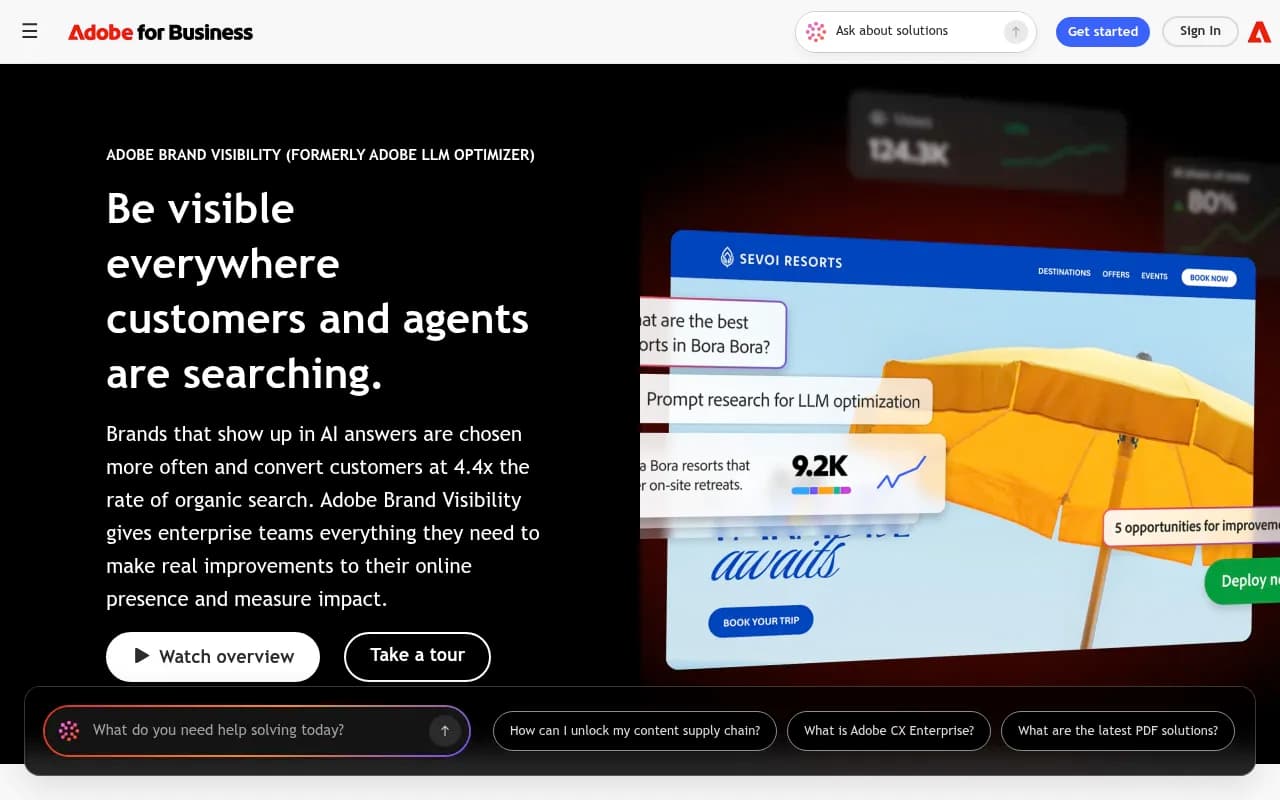
For a wider list of options, the GEO software directory at bestgeosoftware.com is a good place to browse.
Which one should you choose?
Start with your biggest bottleneck, not with features.
| If your main problem is... | Shortlist | Why |
|---|---|---|
| Aligning many teams and regions around SEO and AEO work | Conductor | Workflow-first, cross-team collaboration |
| Proving organic value to executives | BrightEdge | Reporting, StoryBuilder, marketing-stack integrations |
| Piping SEO data into your own warehouse, with a published price | seoClarity | BI integrations, GraphQL API, entry pricing listed |
| Crawl budget and indexation on 1M+ URL sites | Botify | Logs, rendering, crawl-to-revenue analysis |
| Knowing why you are or are not cited in ChatGPT | Add a dedicated AI visibility tool | Per-engine, per-prompt data |
Some realistic pairings:
- Large content organization: Conductor plus a dedicated AI visibility platform.
- Giant e-commerce or publisher site: Botify for crawl and logs, plus a lighter content tool.
- Analytics-heavy team: seoClarity, with your own BI on top.
- Executive-driven program: BrightEdge, with an AI visibility layer if reporting needs engine-level detail.
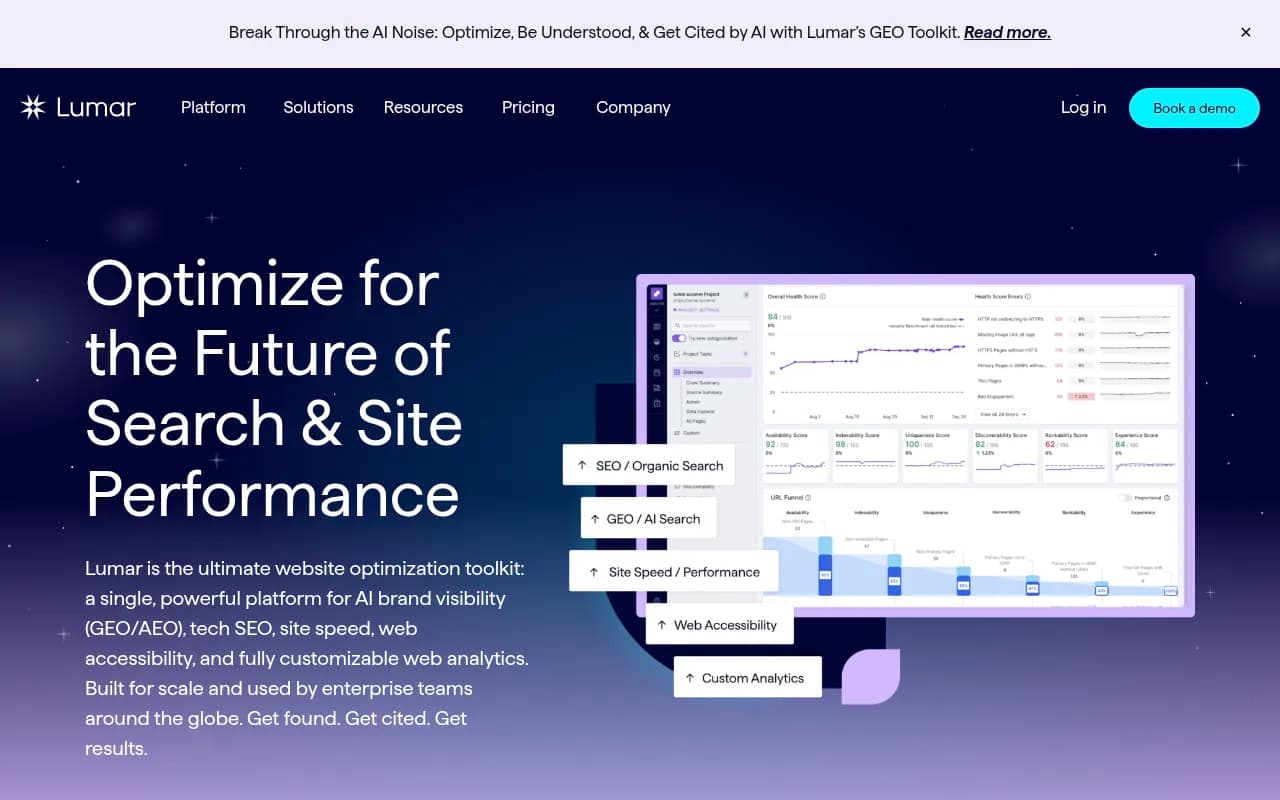
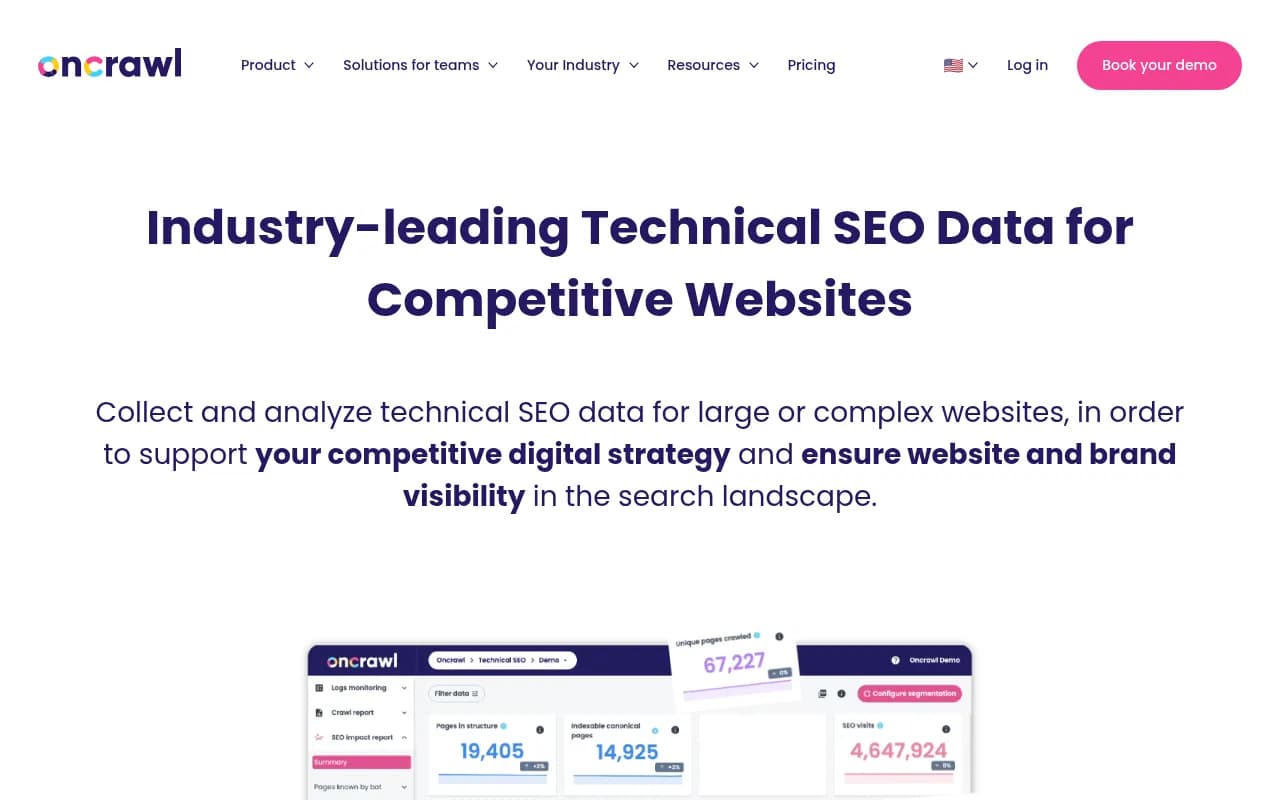
If technical crawling is the only gap, cheaper crawlers exist too. Oncrawl and Lumar are options worth a look.
How to run the evaluation
- Write down five prompts your buyers actually ask, then ask each vendor to show you live results for them in ChatGPT, AI Overviews and Perplexity. Slides do not count.
- Ask which engines are tracked via real user interfaces versus APIs. Answers can differ.
- Ask what the contract includes: seats, API quotas, crawl limits, log retention, exports. Quotes at this level vary widely.
- Check SSO, SCIM and audit logging with your security team early. It is the step that kills deals late.
- Ask about execution: what does the platform change on your site, and who approves it?
- Pilot on one business unit for a quarter before rolling out.
A caution on the review sites. A Reddit thread comparing all four dates back several years and the products have changed a lot since. Gartner Peer Insights has a current enterprise SEO category and is a better source for recent user feedback.
The bottom line
No single platform here wins everywhere. Conductor is the strongest bet for workflow and AEO coordination, BrightEdge for executive reporting, seoClarity for data flexibility and clearer pricing, and Botify for the large, technically complicated site. For AI visibility specifically, plan on one suite plus a dedicated tracker, and make every vendor prove its AI claims on your own prompts before you sign. For broader tool discovery, surferstack.com lists reviews and alternatives across the category.