Key takeaways
- AirOps is a capable content workflow platform, but teams consistently hit walls around pricing, a steep learning curve, and the lack of true AI search visibility tracking
- For teams that need to know if their brand is actually being cited in ChatGPT or Perplexity, tools like Promptwatch and Profound go much further than AirOps's "Answer Engine" diagnostic
- Jasper and Copy.ai are the strongest picks for pure content production velocity, especially if you need brand voice controls or GTM workflow automation
- n8n and Zapier are better fits if your real problem is connecting tools, not generating content
- Surfer SEO and Clearscope solve a narrower problem -- on-page optimization -- but they solve it very well
- The right choice depends on whether your bottleneck is content creation, AI visibility tracking, or workflow automation. These are different problems and most tools only solve one well
AirOps raised $40 million in Series B funding from Greylock in late 2025. And yet, "AirOps alternatives" keeps showing up in search queries. That tells you something.
The platform is genuinely useful for content operations teams, but it has a specific set of frustrations. The pricing jumps between tiers are steep. The task-based billing model gets expensive fast at scale. The learning curve is real -- one G2 reviewer noted spending an entire day configuring a three-step workflow. And critically, AirOps doesn't actually tell you whether your brand is being cited in ChatGPT or Perplexity today. Its "Answer Engine" tool evaluates content readiness for AI search, not actual brand presence.
In 2026, when AI-generated answers influence a large share of queries, that distinction matters.
This guide covers seven alternatives across different use cases: AI visibility and GEO, content production, on-page optimization, and workflow automation. They're not all direct substitutes for each other -- that's the point.
Quick comparison
| Tool | Best for | Starting price | Free plan/trial | Key edge over AirOps |
|---|---|---|---|---|
| Promptwatch | AI search visibility + GEO | $99/mo | Free trial | Tracks actual brand citations across 10 AI models, plus content gap analysis and AI content generation |
| Jasper | Content velocity + brand safety | $59/mo (annual) | 7-day trial | Multi-channel content with brand voice controls |
| Copy.ai | GTM workflow automation | $49/mo | Free plan | Sales + marketing automation beyond just content |
| Surfer SEO | On-page SEO optimization | $79/mo | No | Content editor grounded in NLP and competitor analysis |
| Clearscope | Content grading + readability | $189/mo | Demo only | Premium content scoring with team collaboration |
| n8n | Self-hosted workflow automation | Free (self-hosted) / $24/mo cloud | Free community edition | Full control, execution-based billing, open source |
| Zapier | Adding AI to existing automations | $19.99/mo (annual) | Free plan (100 tasks/mo) | 8,000+ integrations with native AI steps |
1. Promptwatch -- best for AI search visibility and GEO
If the reason you're leaving AirOps is that you want to know whether your brand actually shows up in AI answers -- not just whether your content is theoretically optimized for them -- Promptwatch is the most complete option available right now.
AirOps's Answer Engine diagnostic tells you if your content could rank in AI search. Promptwatch tells you if it does, which pages are being cited, how often, and by which models. That's a fundamentally different and more useful data point.
Promptwatch monitors 10 AI models including ChatGPT, Perplexity, Google AI Overviews, Claude, Gemini, Grok, DeepSeek, and Copilot. It tracks more than 4.5 billion citations and prompts, and its data has been cited in the Wall Street Journal and Axios. The platform is used by 1,480+ brands and agencies including Booking.com and Center Parcs.
What separates it from monitoring-only tools is the action loop. It doesn't just show you where you're invisible -- it shows you which prompts competitors rank for that you don't (Answer Gap Analysis), then helps you create content to close those gaps with AI Content Agents that generate articles, listicles, and briefs grounded in real citation data. Then it tracks whether the new content actually gets cited.
For teams that care about GEO specifically, the crawler logs are a standout feature: real-time data on when AI crawlers like ChatGPT and Perplexity hit your site, which pages they read, and when a page moves from crawled to cited. Most competitors don't have this at all.
Pricing starts at $99/month for one site and 50 prompts. The Professional plan at $249/month adds crawler logs, city/state tracking, and 15 AI-generated articles per month.

2. Jasper -- best for content production velocity
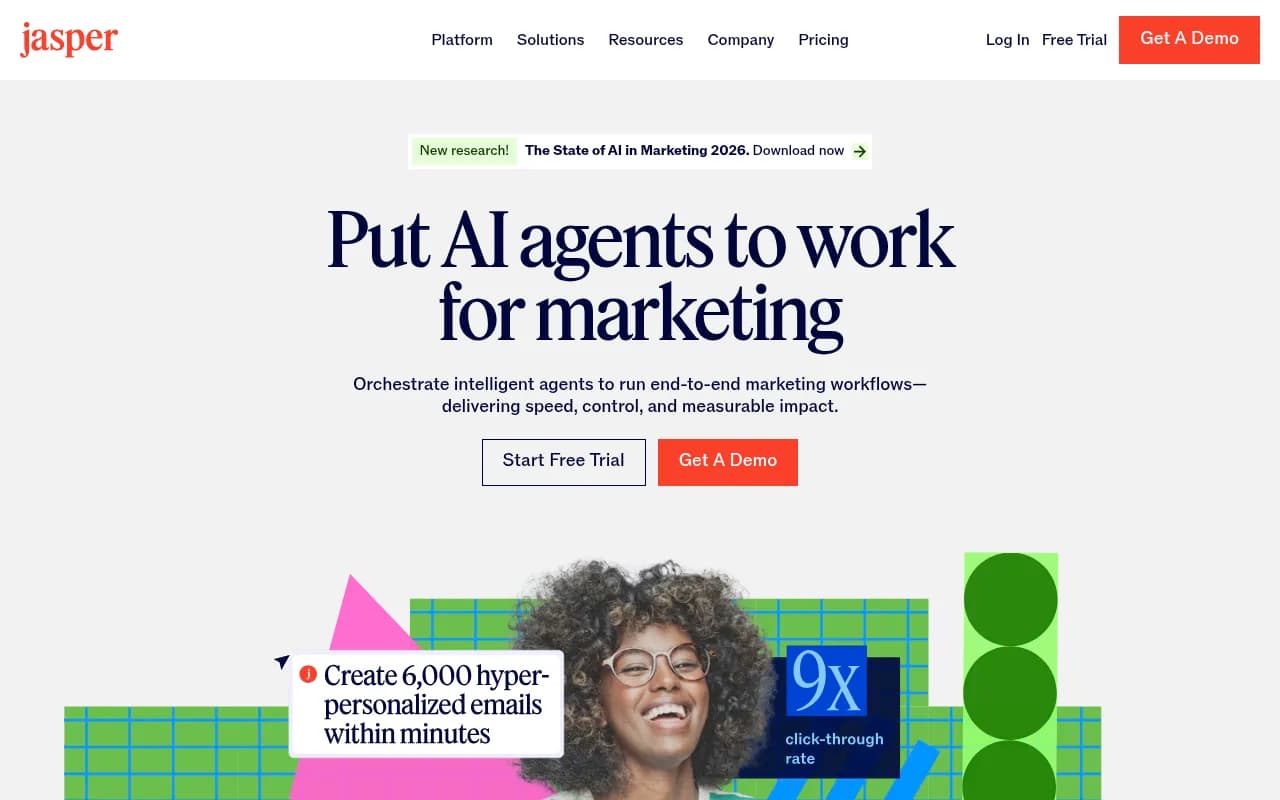
Jasper is the most mature AI writing platform in this list, and it shows. The brand voice controls are genuinely good -- you can train it on your existing content and it stays consistent across blog posts, ads, email sequences, and social copy without constant prompting.
Where AirOps is primarily a workflow builder that happens to produce content, Jasper is primarily a content platform that happens to have workflow features. If your team's bottleneck is writing speed rather than process automation, that distinction matters.
The marketing campaign workflows are particularly useful: you can go from a brief to a full set of assets (long-form article, email, LinkedIn post, ad variations) without rebuilding the context each time. For agencies or in-house teams running multiple campaigns simultaneously, this saves real hours.
The 7-day free trial is enough time to run a genuine test. Starting at $59/month billed annually, it's also more accessible than AirOps's higher tiers.
3. Copy.ai -- best for GTM workflow automation
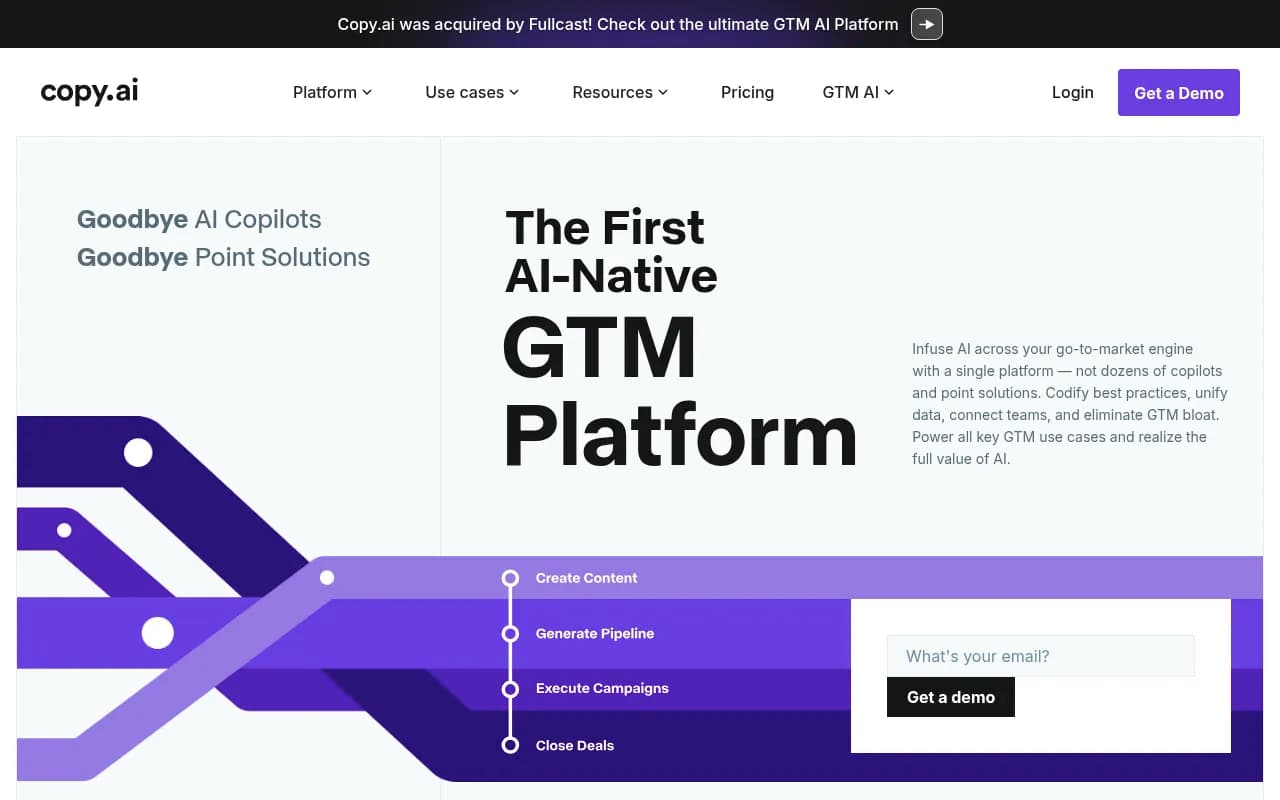
Copy.ai has moved well beyond its origins as a copywriting tool. The current product is closer to a GTM automation platform -- it connects sales and marketing workflows, not just content generation.
If your team needs to automate things like prospect research, outreach sequences, content repurposing pipelines, or campaign briefs that pull in live data, Copy.ai handles this more naturally than AirOps. The workflow builder is less technical and the free plan is genuinely usable for smaller teams.
The trade-off is depth. Copy.ai's content quality is solid but not as controllable as Jasper's brand voice system. For teams where the workflow automation matters more than editorial precision, that's an acceptable trade.
4. Surfer SEO -- best for on-page content optimization
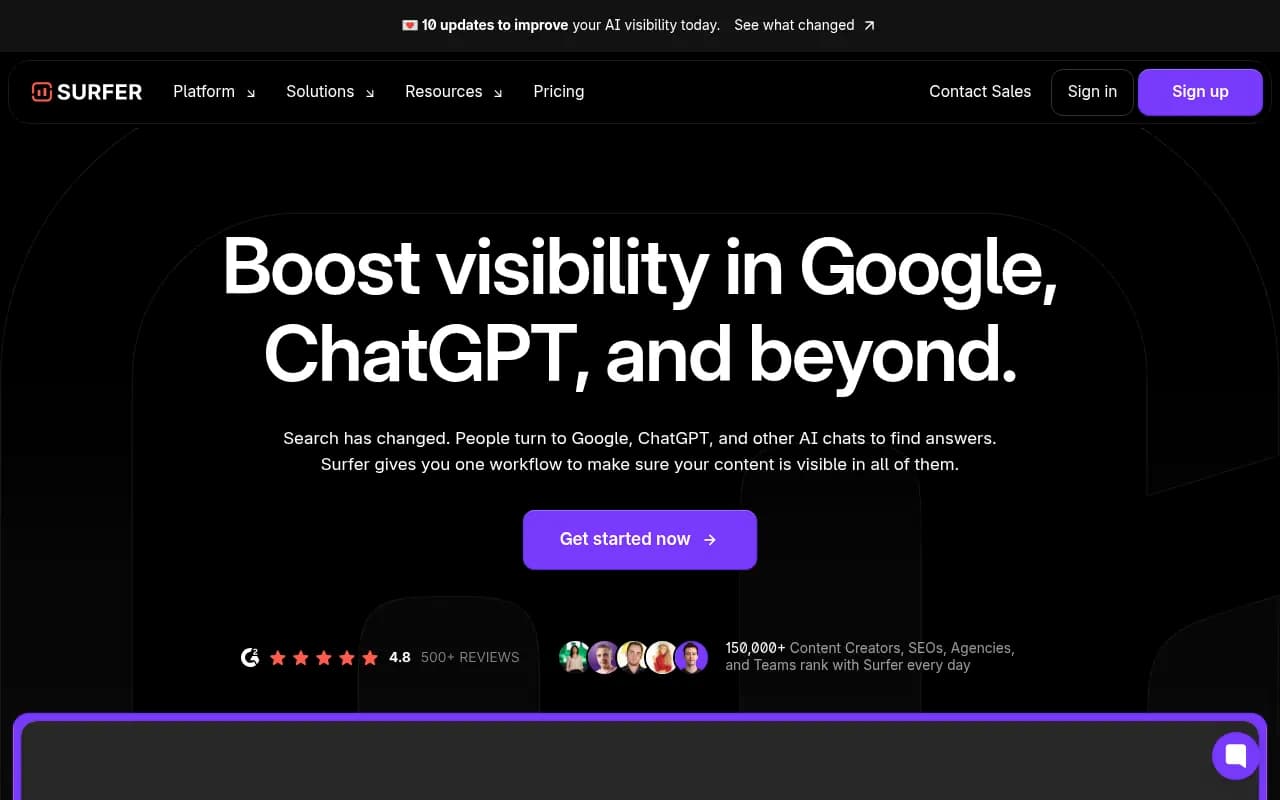
Surfer solves a narrower problem than AirOps, but it solves it well. The Content Editor analyzes top-ranking pages for your target keyword and translates that into practical recommendations: document structure, NLP entities, keyword density, internal linking opportunities.
It's not an AI search visibility tool and it doesn't pretend to be. What it does is help you write content that performs in traditional Google search, with enough NLP grounding that it tends to do reasonably well in AI Overviews too.
The Content Score is the feature teams actually use daily. It gives writers a clear target and makes editorial review faster because you're not arguing about subjective quality -- you're checking against a data-backed benchmark.
At $79/month, it's positioned as a professional tool rather than an entry-level one. The lack of a free plan is a real friction point for teams that want to test before committing.
5. Clearscope -- best for content quality and team collaboration
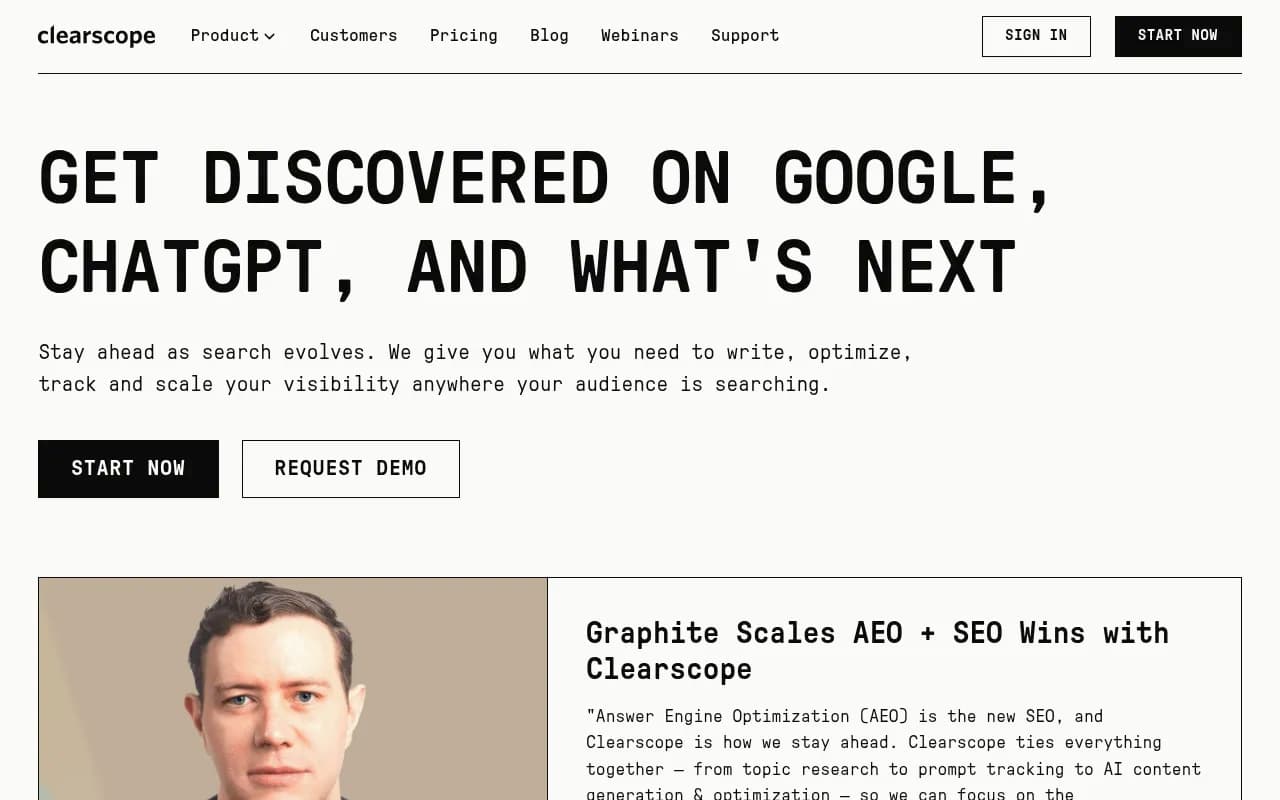
Clearscope is the premium option in the content optimization category. At $189/month, it's more expensive than Surfer, and the feature set is more focused rather than broader -- you're paying for quality of signal, not quantity of features.
The content grading system is more nuanced than most competitors. It accounts for readability, topic coverage, and competitive benchmarking in a way that's genuinely useful for editorial teams rather than just SEO specialists. The collaboration features are also better than Surfer's for teams where multiple people touch a piece of content before it publishes.
The main limitation is that Clearscope, like Surfer, is a traditional SEO optimization tool. It doesn't track AI search visibility, generate content autonomously, or connect to workflow automation. If you need those things, it should be part of a stack rather than a standalone replacement for AirOps.
6. n8n -- best for technical teams that want full control
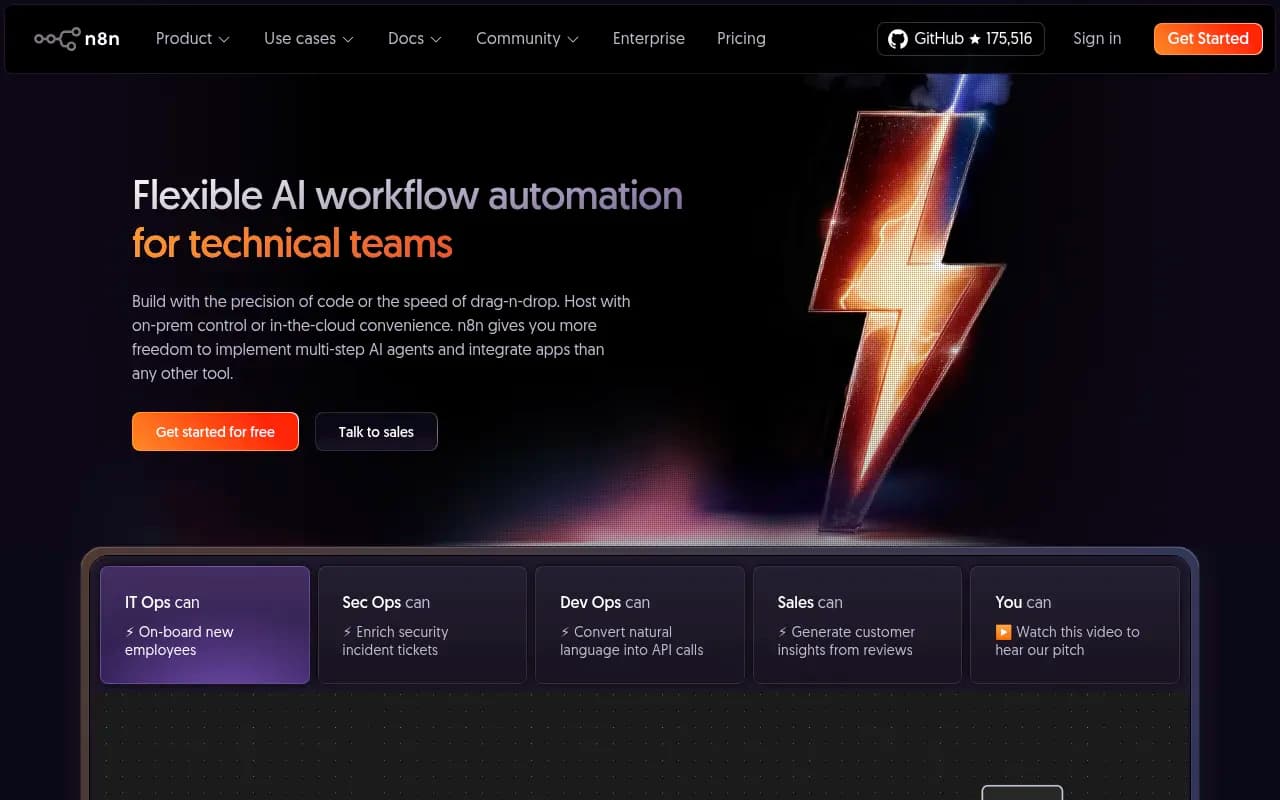
n8n is the right choice if your frustration with AirOps is primarily about cost at scale and the desire for full control over your data and infrastructure. It's open source, self-hostable, and uses execution-based billing that stays cheap even at high volume -- the opposite of AirOps's task-based model.
The workflow builder is visual and reasonably approachable, but n8n is genuinely a technical tool. Non-technical marketers will struggle with it. For engineering-led teams or agencies with developers on staff, though, it's extremely flexible: you can build custom AI agents, connect to any API, write JavaScript or Python nodes, and run everything on your own servers.
The AI workflow capabilities have improved significantly in 2026. Native LLM nodes, vector store integrations, and agent orchestration are all available without plugins. If you're building something custom -- a content pipeline that pulls from multiple sources, transforms data, and publishes to multiple destinations -- n8n can handle it in ways that AirOps simply can't.
The free self-hosted version is a real free tier, not a crippled demo.
7. Zapier -- best for adding AI to existing automations
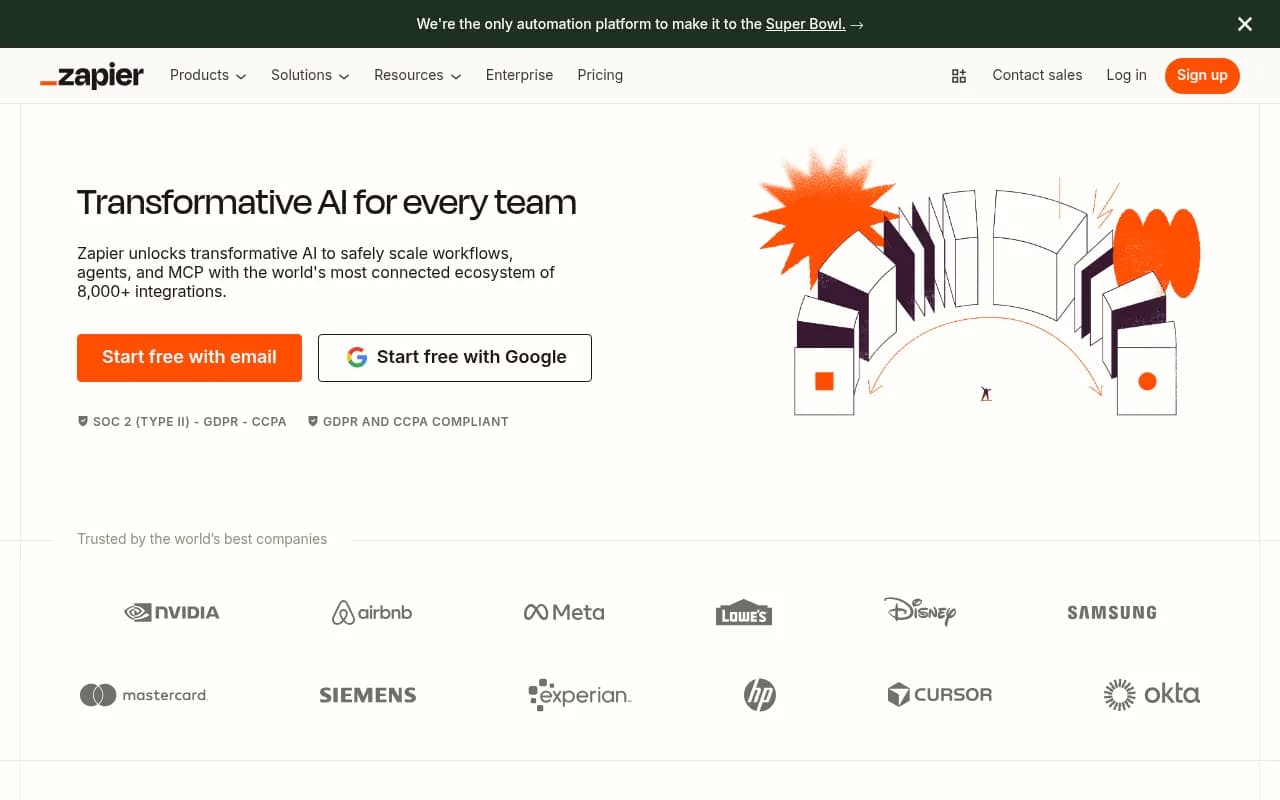
Zapier makes the most sense for teams that already live in its ecosystem. If you have 20 Zaps running and you want to add AI steps to existing automations -- summarize an email, generate a draft, classify a support ticket -- Zapier's native AI features let you do that without rebuilding anything.
The 8,000+ integrations are the real value proposition. No other tool in this list connects to as many apps out of the box. For teams that need AI to work within their existing stack rather than replacing it, that breadth is hard to beat.
The limitations are real though. Zapier's AI features are more "AI steps in a workflow" than "AI-native workflow builder." For complex content operations or anything requiring sophisticated agent behavior, n8n or a dedicated content platform will serve you better. And the task-based pricing can get expensive if you're running high-volume automations -- worth modeling before committing.
How to choose
The honest answer is that most teams looking for an AirOps alternative are actually looking for two or three different things, and no single tool covers all of them.
If your primary concern is AI search visibility -- knowing whether your brand appears in ChatGPT, Perplexity, or Google AI Overviews, and doing something about it when it doesn't -- Promptwatch is the most complete option. It's the only tool in this list that combines monitoring, gap analysis, and content generation in a single platform.
If your concern is content production speed and brand consistency, Jasper is the strongest standalone choice. Copy.ai is better if the workflow automation side matters as much as the content itself.
If you need on-page SEO optimization for traditional search, Surfer SEO and Clearscope are both solid. Clearscope is better for larger editorial teams; Surfer is better for individual writers and smaller operations.
If the real problem is workflow automation and tool connectivity, n8n (for technical teams) or Zapier (for teams already in that ecosystem) will serve you better than any content-first platform.
AirOps tried to be a single platform for all of these things. The alternatives on this list are more focused -- and for most teams, that focus is actually the point.