Key takeaways
- Qwairy covers the basics of AI search visibility monitoring, but teams hitting growth walls are finding it too limited for serious GEO work
- The biggest complaints center on shallow prompt data, no content generation, and limited actionability beyond the dashboard
- The alternatives below range from budget-friendly trackers to full-stack GEO platforms, depending on how deep you need to go
- If you want to move beyond monitoring and actually fix your AI visibility gaps, a platform with content generation and crawler analytics is worth the upgrade
Why people are leaving Qwairy
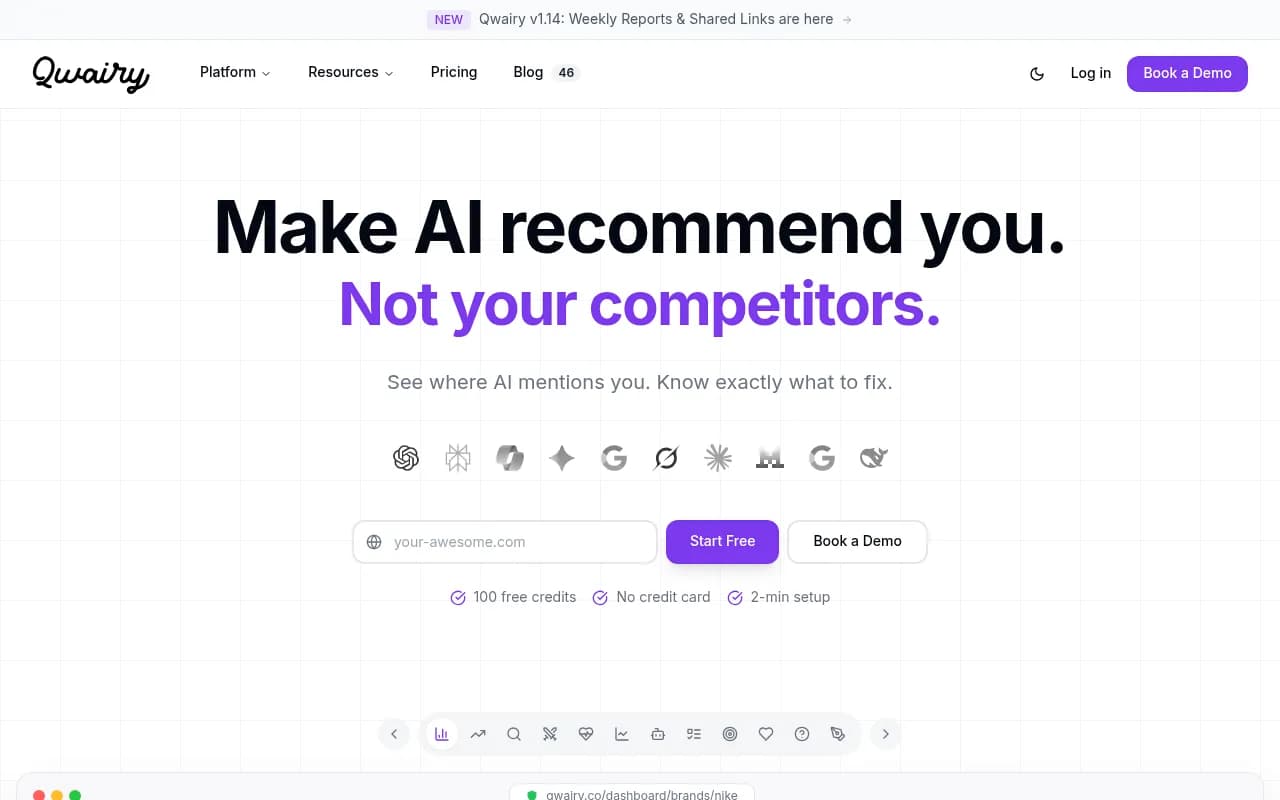
Qwairy isn't a bad tool. For teams just waking up to the fact that ChatGPT, Perplexity, and Google AI Overviews are now a real traffic channel, it offers a reasonable starting point. You can track brand mentions across a handful of AI models, get a basic visibility score, and see how competitors are appearing in AI-generated answers.
The problem is what happens next.
Once you've looked at the dashboard for a few weeks, the natural question is: "OK, so what do I do about it?" And that's where Qwairy tends to go quiet. It shows you the gap. It doesn't help you close it.
Teams that are serious about Generative Engine Optimization (GEO) in 2026 are running into a few specific walls:
- Prompt coverage is thin. You can only track a limited set of prompts, and there's no way to discover which prompts you're missing -- the ones competitors are winning but you're not even tracking.
- No content tools. There's no way to generate a brief, draft an article, or get recommendations on what to publish to improve your scores.
- No crawler data. You can't see whether AI crawlers are actually visiting your pages, which pages they're reading, or whether a page has moved from "crawled" to "cited."
- Limited model coverage. As AI search has expanded to include Google AI Mode, Grok, DeepSeek, and Meta AI alongside the usual suspects, tools with narrow model coverage are leaving real blind spots.
None of this is fatal if you're a small team doing light monitoring. But if AI search is becoming a meaningful part of your acquisition strategy -- and for most B2B and e-commerce brands in 2026, it is -- you'll outgrow Qwairy faster than you'd expect.
What the market looks like now
The AI visibility tool space has exploded. There are now dozens of platforms claiming to track your brand across LLMs, and the quality varies wildly. Broadly, they fall into three buckets:
- Pure monitoring tools: Show you where you appear (or don't) in AI answers. Good for awareness, limited for action.
- Monitoring plus content tools: Track visibility and help you create content to improve it. Much more useful for teams that want to move the needle.
- Enterprise/full-stack platforms: Deep analytics, crawler logs, multi-region tracking, API access, and content generation. Built for agencies and larger marketing teams.
The right fit depends on your team size, budget, and how seriously you're treating AI search as a channel.
Here's a quick comparison of the main alternatives:
| Tool | Monitoring | Content generation | Crawler logs | Prompt discovery | Price range |
|---|---|---|---|---|---|
| Promptwatch | Yes | Yes (AI Content Agents) | Yes | Yes (Answer Gap Analysis) | $99-$579/mo |
| Profound | Yes | No | No | Limited | Higher |
| AthenaHQ | Yes | No | No | No | Mid |
| Otterly.AI | Yes | No | No | No | Low |
| Peec AI | Yes | No | No | No | Low |
| Rankscale | Yes | No | No | Limited | Low-mid |
| SE Ranking | Yes | Limited | No | No | Mid |
| Scrunch AI | Yes | No | No | No | Mid |
The best Qwairy alternatives in 2026
Promptwatch -- best for teams that want to actually fix their AI visibility
Most tools in this space are dashboards. Promptwatch is the one that's built around doing something with the data.
The core difference is the action loop: find gaps, create content, track results. The Answer Gap Analysis shows you exactly which prompts competitors are appearing for that you're not -- not just a vague "you're missing some prompts" warning, but the specific questions and topics where AI models want an answer and can't find one on your site. From there, Content Agents generate articles, listicles, and comparisons grounded in real prompt data and citation analysis. Then page-level tracking shows whether those new pages are actually getting crawled and cited.
It also has AI crawler logs, which almost no competitor offers. You can see ChatGPT, Claude, and Perplexity's crawlers hitting your pages in real time, which pages they're reading, and whether they're returning. That's genuinely useful for diagnosing why a page isn't getting cited even when the content looks right.
Covers 10+ AI models including Google AI Mode, Grok, DeepSeek, and Meta AI. Pricing starts at $99/month.

Profound -- best for enterprise teams with budget
Profound has a strong feature set and is well-regarded for enterprise use cases. The data quality is solid and the reporting is detailed. The tradeoff is price -- it's one of the more expensive options in the market -- and it doesn't have Reddit tracking, ChatGPT Shopping monitoring, or content generation. If you're a large brand that needs deep monitoring and has a separate content team, it's worth evaluating. If you need an all-in-one solution, it's harder to justify.

AthenaHQ -- best for straightforward brand monitoring
AthenaHQ tracks your brand across 8+ AI search engines and gives you clean, readable reports. It's a solid monitoring tool and the UI is genuinely pleasant to use. The limitation is the same as most competitors: it stops at monitoring. There's no content gap analysis, no generation tools, and no crawler data. Good for teams that just need to know where they stand and aren't yet ready to invest in optimization.

Otterly.AI -- best for budget-conscious teams starting out
If you're just getting started with AI visibility tracking and don't want to spend much, Otterly.AI is one of the more affordable options. It covers the basics: brand mention tracking across major LLMs, share of voice comparisons, and basic reporting. Don't expect crawler logs, content tools, or deep prompt analytics -- but for a team dipping their toes in, it's a reasonable entry point.

Peec AI -- best for multi-language tracking on a budget
Peec AI's standout feature is multi-language support, which matters if you're tracking AI visibility across different markets. It's a monitoring-focused tool without content generation, but the language coverage is broader than most competitors at this price point. Worth considering if your audience is international and you need visibility data in languages beyond English.

SE Ranking -- best for teams that want AI visibility inside a broader SEO platform
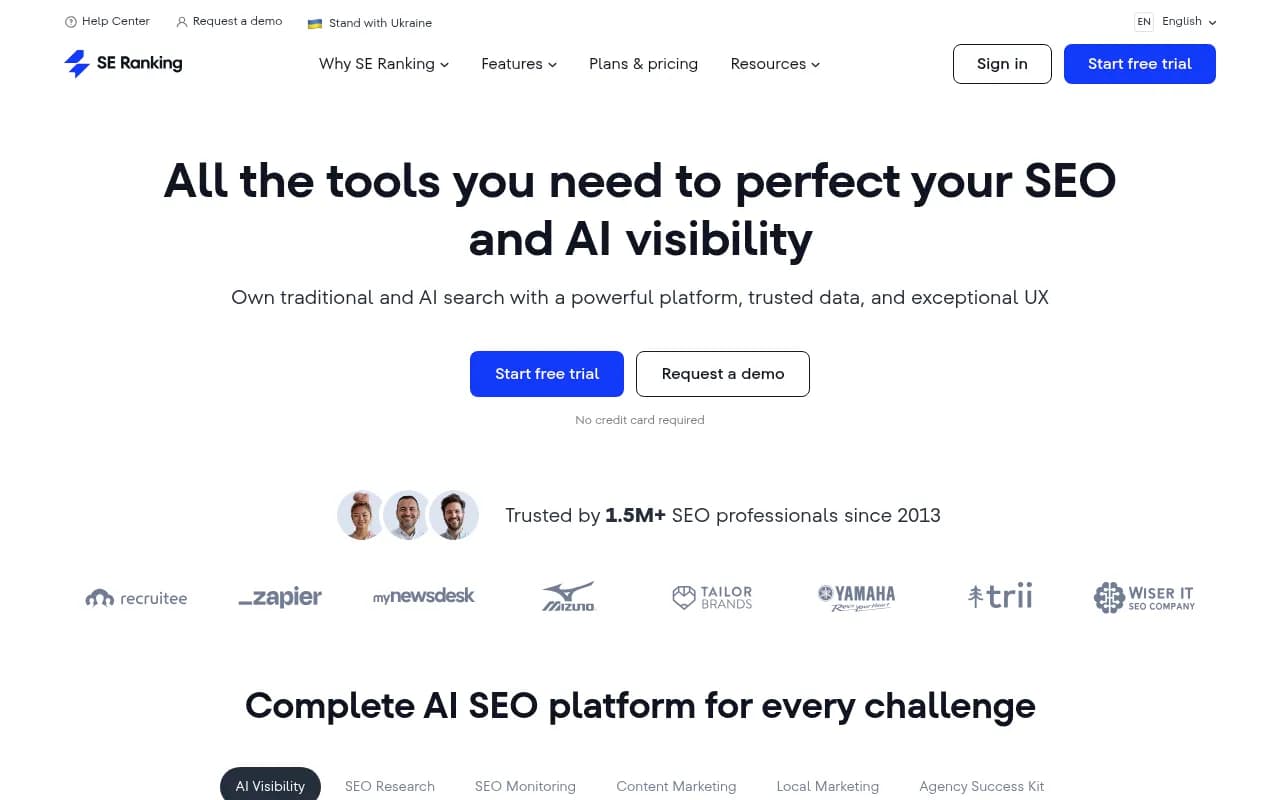
SE Ranking is primarily an SEO platform, but it has added an AI visibility toolkit that covers the main LLMs. If your team is already using SE Ranking for keyword tracking and site audits, adding AI visibility monitoring without switching tools is a practical choice. The AI features aren't as deep as dedicated GEO platforms, but the integration with traditional SEO data is useful.
Scrunch AI -- best for agencies managing multiple brands
Scrunch AI is designed with agency workflows in mind. Multi-client management, white-label reporting, and brand comparison features make it practical for agencies tracking AI visibility across a portfolio of clients. It's monitoring-focused rather than optimization-focused, but the agency-oriented UX is a genuine differentiator.
Rankscale -- best for teams that want simple, affordable tracking
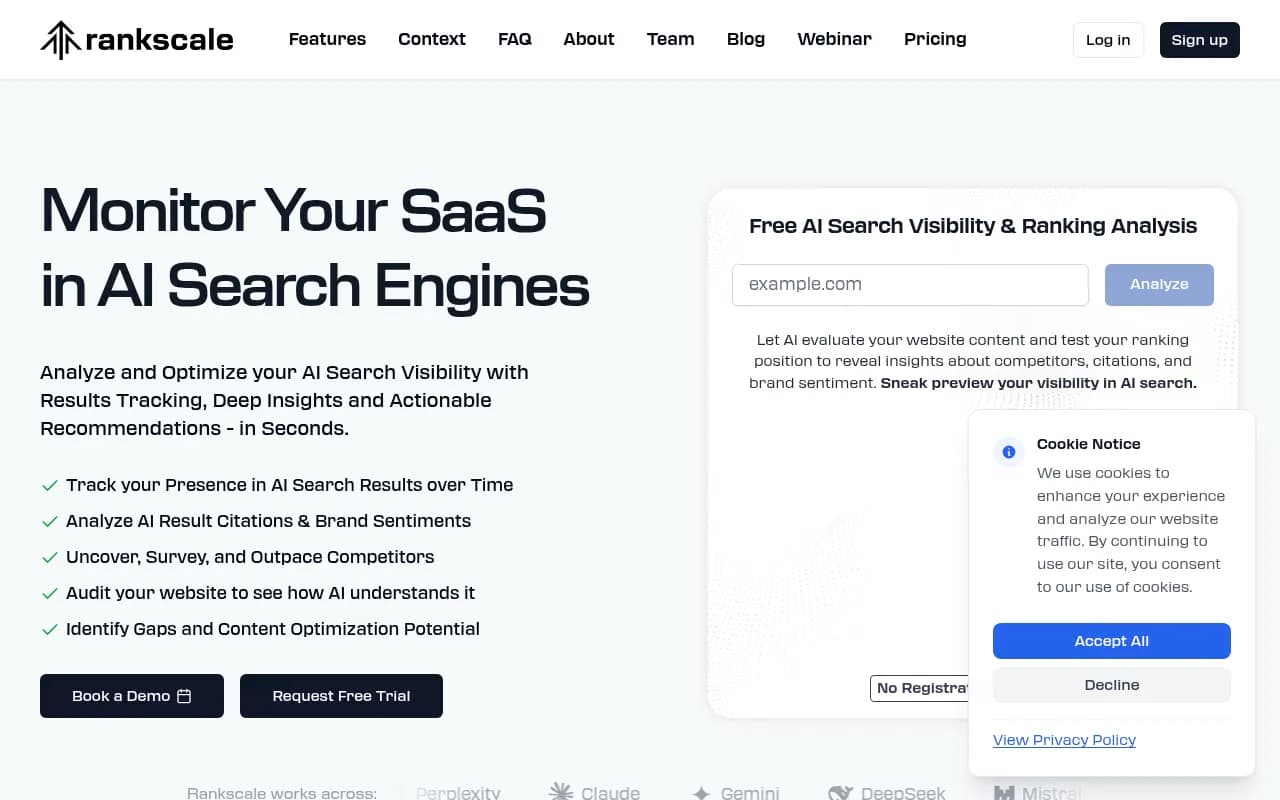
Rankscale keeps things simple: track your AI search rankings, see how you compare to competitors, get alerts when things change. No content tools, no crawler logs, but the core tracking is reliable and the pricing is accessible. Good for smaller teams that need visibility data without the complexity of a full GEO platform.
How to choose the right replacement
The honest answer is that it depends on what you were actually missing in Qwairy.
If the main frustration was cost, Otterly.AI or Rankscale will cover the basics for less. If the frustration was shallow data and limited model coverage, AthenaHQ or Profound will give you more depth. If the frustration was that you could see the problem but had no way to fix it -- that's the most common complaint -- then you need a platform with content generation built in, not just better monitoring.
A few questions worth asking before you commit to anything:
- Do you need to generate content to improve your scores, or just track them?
- How many AI models do you actually need to monitor? (Google AI Mode and Grok are increasingly important)
- Do you need to see which pages AI crawlers are visiting, or is brand-level visibility enough?
- Are you managing one site or multiple?
- Do you need multi-language or multi-region tracking?
The answers will narrow the field quickly. Most teams switching away from Qwairy in 2026 are doing so because they've realized monitoring alone isn't a strategy -- it's just awareness. The tools that are gaining traction are the ones that close the loop between "here's where you're invisible" and "here's what to publish to fix it."
The broader context: why AI search visibility matters more now
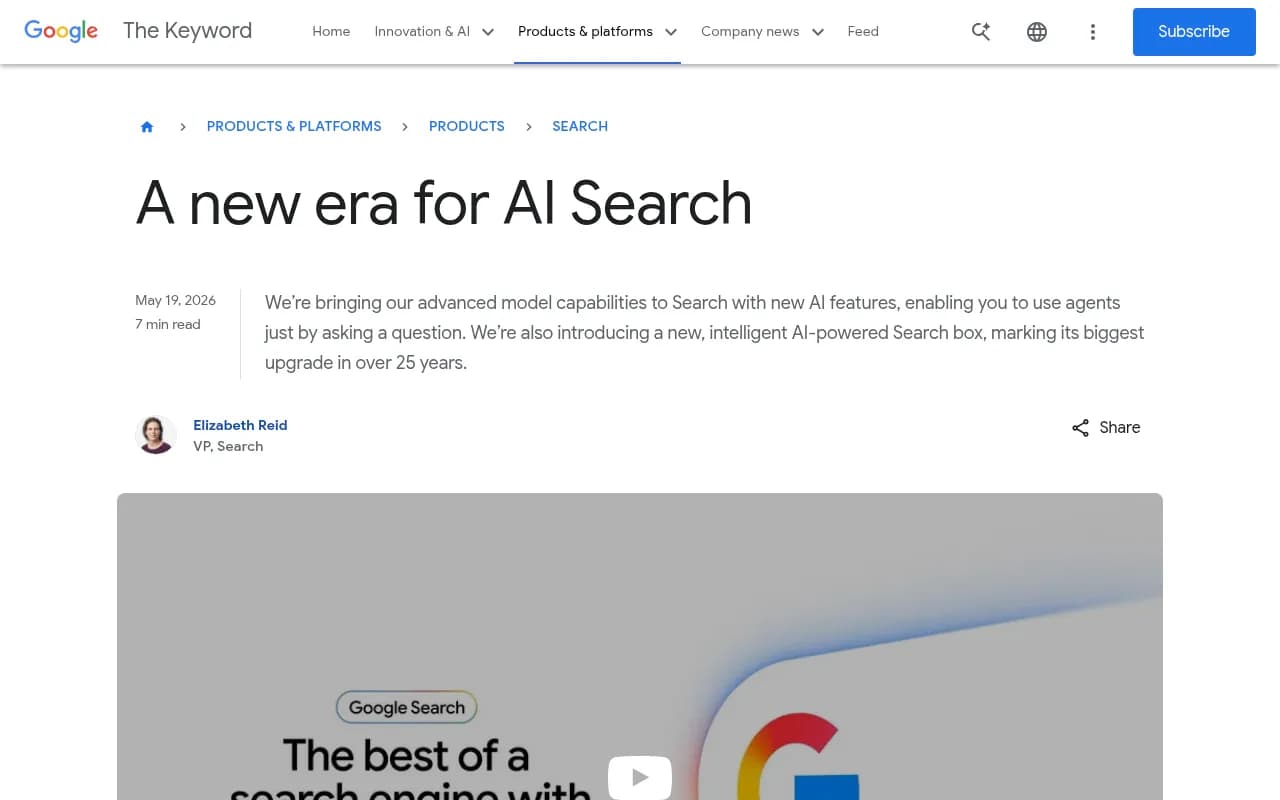
Google's I/O 2026 announcements made it clear that AI-powered search isn't a feature -- it's the direction the entire search experience is heading. AI Mode, AI Overviews, and agentic search behaviors are now core to how Google surfaces information. Meanwhile, ChatGPT's search features have continued to grow, and Perplexity has established itself as a legitimate research tool for a meaningful slice of users.
The brands that show up in AI-generated answers are getting a disproportionate share of trust and traffic. The brands that don't are effectively invisible to a growing segment of their audience -- and most of them don't even know it yet.
That's the real reason teams are upgrading their AI visibility tooling in 2026. Qwairy was fine when this was a curiosity. It's less fine when it's a channel that's actually driving decisions.
Bottom line
Qwairy works as a starting point. If you've been using it for a few months and feel like you're going in circles -- seeing the same gaps week after week with no clear path to improving them -- that's the signal to move on.
The tools above cover a range of needs and budgets. For teams that want to go beyond monitoring and actually improve their AI search visibility, Promptwatch is the most complete option in the market right now. For teams that just need better monitoring than Qwairy at a similar price, Otterly.AI, Peec AI, or Rankscale are solid choices.
The main thing to avoid is switching to a different monitoring-only tool and expecting different results. The data will look different. The problem -- not knowing what to do with it -- will be exactly the same.