Key takeaways
- Qwairy is a legitimate GEO platform with good educational content, but marketers are hitting real walls around depth of data, content generation, and actionability
- The most common complaint: it shows you where you're invisible but doesn't help you fix it
- Missing features like AI crawler logs, Reddit/YouTube tracking, ChatGPT Shopping monitoring, and traffic attribution are pushing teams toward more complete platforms
- Several strong alternatives exist depending on your budget and team size, from lightweight trackers to full-stack GEO platforms
- If you need the full loop (find gaps, create content, track results), the gap between Qwairy and the leading platforms is significant
Qwairy isn't a bad product. That's worth saying upfront, because this guide isn't a takedown piece. Their blog has some genuinely useful GEO content, and their ROI framework for AI search is one of the more honest treatments of the topic I've seen from a vendor.
But "not bad" and "good enough for 2026" are two different things. And right now, a meaningful number of marketers are quietly moving on. Some are frustrated. Some just outgrew it. Some signed up expecting one thing and got another.
Here's what's actually driving those decisions.
The core problem: monitoring without action
The GEO tool market in 2026 has a split personality. On one side, you have monitoring dashboards that tell you how visible your brand is across ChatGPT, Perplexity, Gemini, and the rest. On the other side, you have platforms that take that data and help you do something with it.
Qwairy sits firmly in the first camp.
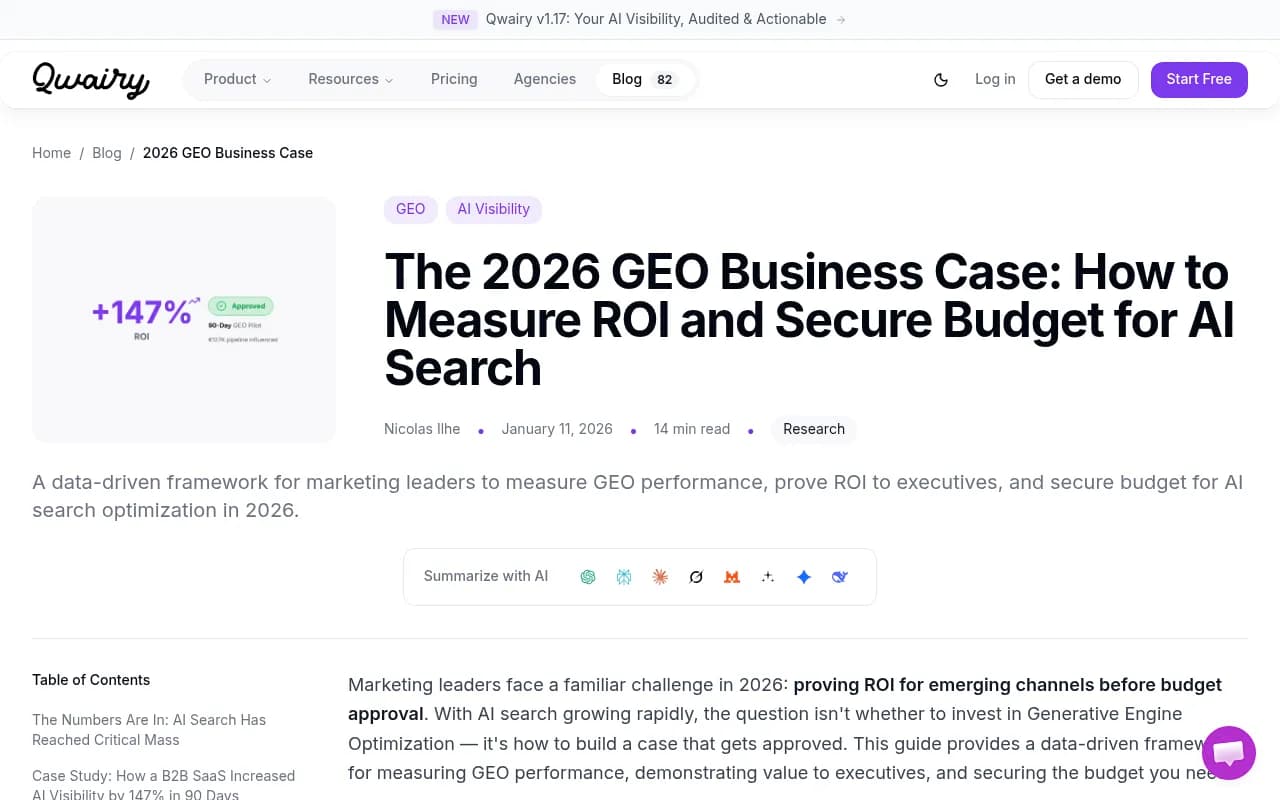
Their content is solid. Their tracking interface is clean. But when you ask "okay, I'm invisible for these 40 prompts -- what do I do now?", the answer from the platform is essentially: figure it out yourself.
That's the gap. And in 2026, with AI search eating into traditional organic traffic faster than most teams anticipated, "figure it out yourself" isn't a workflow. It's a stall.
The specific reasons marketers are leaving
1. No content generation or gap-to-brief pipeline
This is the biggest one. Most marketers who leave Qwairy mention some version of the same frustration: they can see what's missing, but the platform doesn't help them create the content to fill those gaps.
A proper GEO workflow looks like this: identify the prompts where competitors are cited and you're not, understand what content would close that gap, generate or brief that content, publish it, and track whether AI models start citing it. Qwairy handles the first step reasonably well. The rest is on you.
For small teams, that's a dealbreaker. You don't have a dedicated GEO strategist who can translate "you're missing coverage on [topic]" into a published article in two weeks. You need the platform to do more of that work.
2. Missing AI crawler logs
This one matters more than people realize until they need it. AI crawler logs show you which pages on your site AI engines are actually reading, how often they return, what errors they're hitting, and when a page moves from "crawled" to "cited."
Without this, you're flying blind on the technical side. You might be publishing great content that AI models never crawl. You might have indexing errors that are silently killing your visibility. You'd never know.
Qwairy doesn't offer this. Several competitors do, and once you've used it, going back feels like navigating without a map.
3. No Reddit or YouTube tracking
This is underappreciated. A huge portion of what AI models cite isn't brand websites -- it's Reddit threads, YouTube videos, forum discussions, and third-party listicles. If you're only tracking your own domain's visibility, you're missing a significant chunk of the picture.
Qwairy focuses on owned content. That's fine as far as it goes, but it means you can't see which Reddit posts are driving recommendations about your category, which YouTube videos are influencing AI answers, or which third-party sites are getting cited instead of you. That's offsite visibility, and it's increasingly where the real GEO leverage is.
4. No ChatGPT Shopping or entity tracking
ChatGPT's shopping recommendations are a separate surface from its conversational answers. If you sell physical products, this matters enormously. Qwairy doesn't track when your brand appears (or doesn't appear) in shopping carousels, product recommendations, or entity mentions.
For e-commerce and D2C brands especially, this is a hard stop.
5. Prompt data is thin
Good GEO work requires knowing which prompts are worth targeting. Not just "are we visible for X" but "how many people are actually asking X, how hard is it to rank for, and what sub-queries does it branch into?"
Qwairy's prompt intelligence is limited. You get visibility scores, but you don't get volume estimates, difficulty scores, or query fan-outs that help you prioritize. That means you're making strategic decisions without the data to back them up.
6. Traffic attribution is absent
Proving GEO ROI to a CMO or CFO requires connecting AI visibility to actual revenue. Which AI-driven visits converted? Which content is generating pipeline? Without attribution, GEO is a vanity metric.
Qwairy's ROI framework blog post (linked above) actually acknowledges this challenge honestly -- but the platform itself doesn't solve it. You're left building your own attribution model in a spreadsheet.
What the data says about the broader market
Supermetrics published a 2026 marketing data report that surveyed 435 marketers. The finding that stuck with me: 80% feel intense pressure to adopt AI, but only 6% have successfully embedded it into their daily workflows. The culprit they identified was a "duct tape" data foundation -- systems that generate data but don't connect it to action.
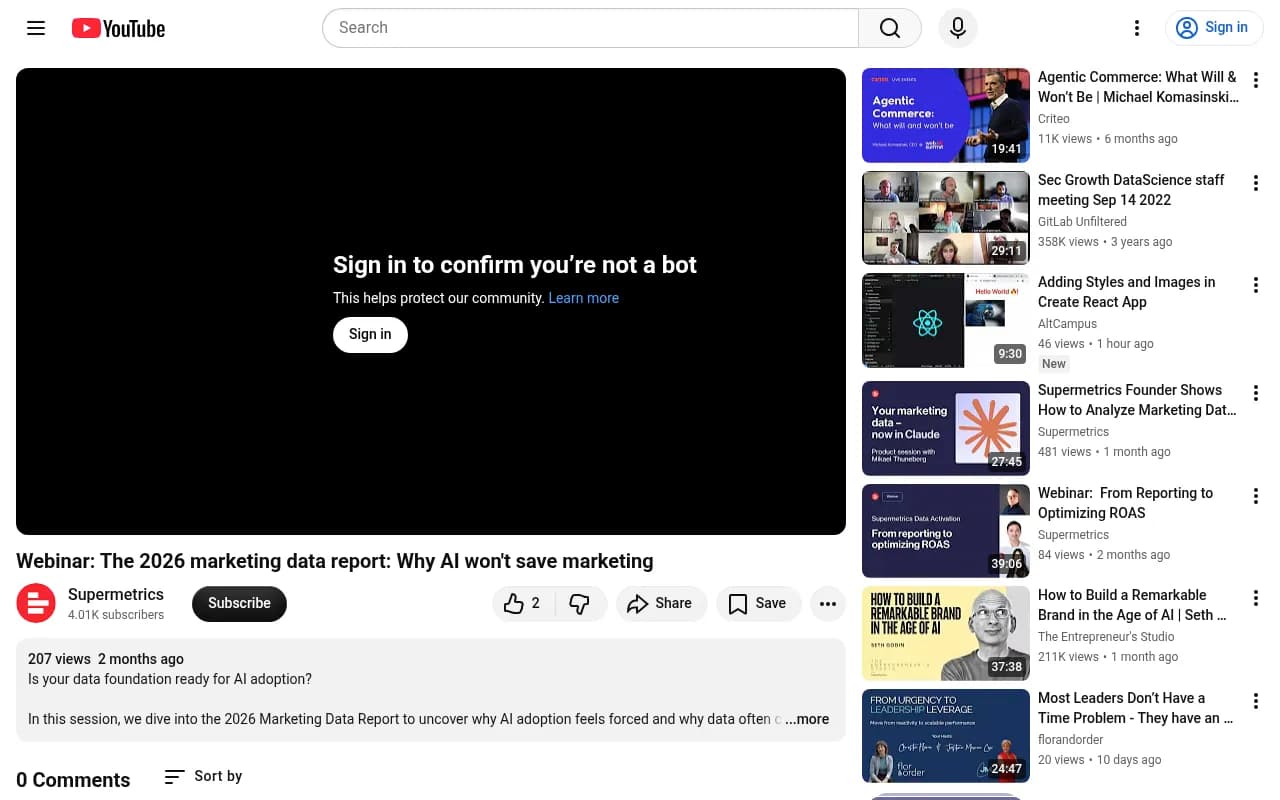
That's exactly the problem with monitoring-only GEO tools. They add another dashboard to the stack without changing what your team actually does on Monday morning.
What marketers are switching to
The tools people are landing on after Qwairy fall into a few categories depending on what they need most.
For teams that want the full GEO loop
Promptwatch is the most complete option in this category. It covers the entire workflow: Answer Gap Analysis shows exactly which prompts competitors are visible for and you're not, Content Agents generate articles and briefs grounded in real prompt data, and page-level tracking shows when new content starts getting cited. It also includes AI crawler logs, Reddit and YouTube tracking, ChatGPT Shopping monitoring, and traffic attribution. If you need one platform to replace a patchwork of tools, this is the one most teams are landing on.

For teams that want deep monitoring without the content tools
Profound has a strong feature set for visibility tracking across AI models. It's more expensive than Qwairy but more thorough on the data side. Good for larger marketing teams with dedicated content resources who just need better signal.

AthenaHQ is another solid monitoring option. Clean interface, tracks across 8+ AI search engines, and handles multi-model comparison well. Still monitoring-focused, so the same "now what?" problem applies, but the data quality is good.

For smaller teams or tighter budgets
Otterly.AI is affordable and gets the basics right. If you're a small team that just needs to know whether you're appearing in AI answers and roughly how often, it's a reasonable starting point. Don't expect deep analytics or content tools.

Peec AI is worth a look if you're operating in multiple languages or regions. Multi-language tracking is genuinely good, and the pricing is accessible.

For agencies managing multiple clients
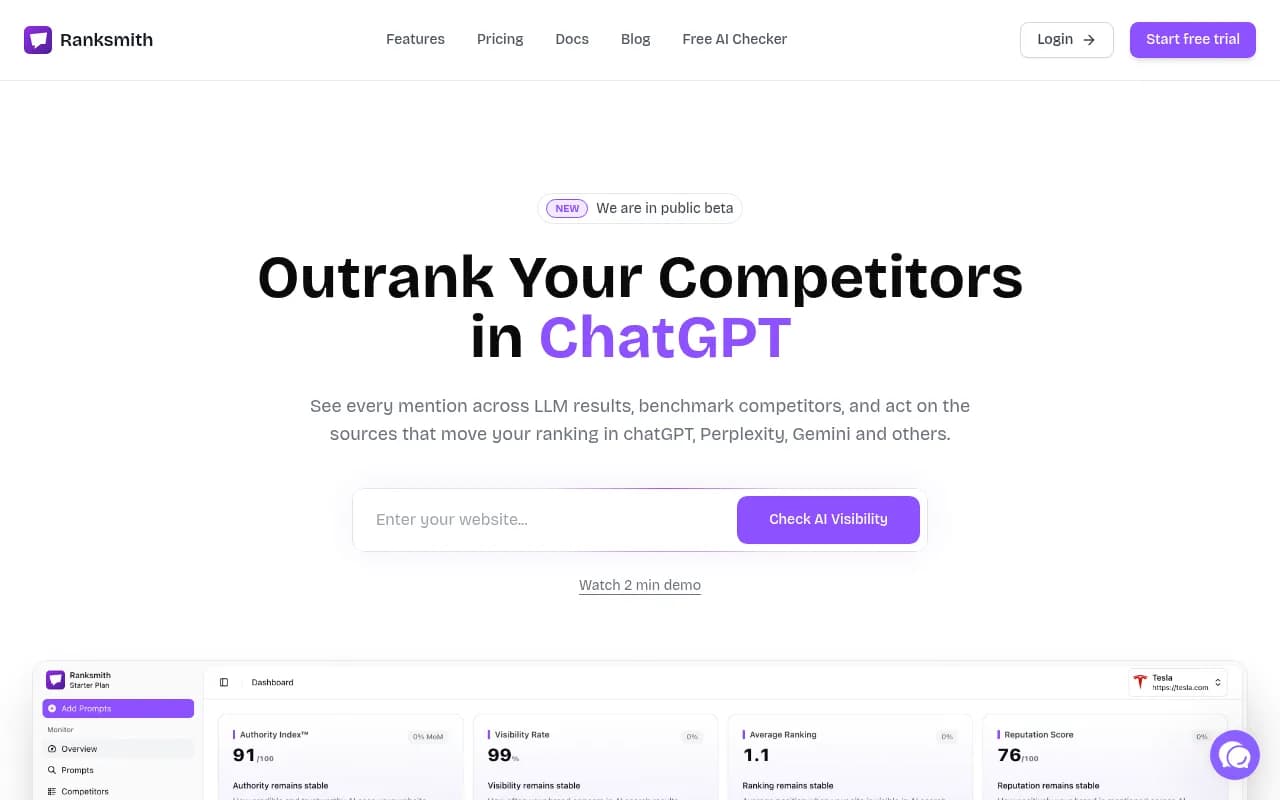
Ranksmith gives actionable AI visibility insights in a format that works for client reporting. Not the deepest platform, but the output is clean and the workflow suits agency teams.
Scrunch AI is another agency-friendly option with solid share-of-voice tracking across AI models.
How the main alternatives compare
| Platform | Content generation | Crawler logs | Reddit/YouTube tracking | ChatGPT Shopping | Traffic attribution | Starting price |
|---|---|---|---|---|---|---|
| Promptwatch | Yes | Yes | Yes | Yes | Yes | $99/mo |
| Profound | No | No | No | No | No | Higher |
| AthenaHQ | No | No | No | No | No | Mid-range |
| Qwairy | No | No | No | No | No | Varies |
| Otterly.AI | No | No | No | No | No | Low |
| Peec AI | No | No | No | No | No | Low |
| Ranksmith | No | No | No | No | No | Mid-range |
The pattern is pretty clear. Most platforms in this space are monitoring dashboards. The meaningful differentiator in 2026 is whether the platform helps you act on what it finds.
Is Qwairy worth keeping at all?
Honestly, it depends on your situation.
If you're early in your GEO journey and just want to understand the basics of AI visibility before committing to a more expensive platform, Qwairy is a reasonable place to start. Their educational content is good, and the interface won't overwhelm a team that's new to this.
If you're past the "learning about GEO" phase and into the "we need to actually improve our AI visibility" phase, you'll hit the ceiling quickly. The monitoring data is there, but the tools to act on it aren't.
The teams leaving Qwairy in 2026 are mostly in that second group. They've done the awareness phase. They know AI search matters. They've seen the data. Now they need a platform that helps them move the needle, not just measure it.
A note on the broader shift
There's a real tension in the GEO tool market right now. Monitoring is easy to build and easy to demo. You show a dashboard with visibility scores, a competitor heatmap, some prompt tracking -- it looks impressive in a sales call.
Actually helping a marketing team improve their AI visibility is much harder. It requires prompt intelligence, content generation grounded in real data, crawler log analysis, attribution modeling, and ongoing optimization. That's a different product category, and most tools haven't built it yet.
The marketers leaving Qwairy aren't leaving because the product is broken. They're leaving because they've realized monitoring alone doesn't move the needle. And in 2026, with AI search growing fast and traditional organic traffic declining, standing still is the same as falling behind.
If you're evaluating alternatives, the question to ask every vendor is simple: after I see where I'm invisible, what does your platform actually do to help me fix it? The answer will tell you everything.