Key takeaways
- AthenaHQ tracks brand visibility across 8+ AI search engines including ChatGPT, Perplexity, Claude, and Gemini, with a focus on citations, share of voice, and sentiment framing
- Its standout features are Shopify/GA4 revenue attribution and autonomous content agents, which push it beyond pure monitoring into ROI territory
- Credit-based pricing ($295/mo entry point) and enterprise-gating on core features make it expensive for smaller teams and agencies running multiple clients
- The platform is monitoring-strong but content-generation-light compared to end-to-end GEO platforms
- Best fit: mid-market e-commerce brands and enterprise marketing teams that need to connect AI citations to revenue
The GEO tool market in 2026 is crowded. Every week there's a new platform promising to show you where you appear in ChatGPT or Perplexity. Most of them are dashboards. They show you data, then leave you to figure out what to do with it.
AthenaHQ sits somewhere between a pure monitoring tool and a full optimization platform. It does more than most trackers, but it also costs more -- and some of the most useful features are locked behind enterprise tiers. Whether that tradeoff works for you depends a lot on what you're actually trying to accomplish.
This review covers what AthenaHQ genuinely does well, where it falls short, and who should (and shouldn't) be paying for it in 2026.

What AthenaHQ actually is
AthenaHQ is a generative engine optimization (GEO) platform built to track and improve how brands appear inside AI-generated answers. It monitors responses from ChatGPT, Claude, Perplexity, Gemini, and several other models, then surfaces data on citation frequency, share of voice, and how your brand is being framed in those responses.
The framing piece is more interesting than it sounds. Most visibility tools just count mentions. AthenaHQ also tells you whether those mentions are positive, neutral, or negative -- and how competitors are being positioned relative to you. If ChatGPT is consistently recommending a rival over you in a particular product category, you'll see that.
On top of monitoring, AthenaHQ has a content gap layer. It uses generative AI to identify topics and questions where competitors are getting cited but you're not, then helps teams create or update content to close those gaps.
The revenue attribution angle is where AthenaHQ gets genuinely interesting. It integrates with Shopify and GA4 to connect AI citations to actual conversions. That's a real differentiator -- most GEO tools stop at "you were mentioned X times." AthenaHQ tries to answer "and here's what that drove in revenue."
Core features worth knowing
AI visibility monitoring
AthenaHQ tracks your brand across 8+ AI engines. The dashboard shows citation frequency, which models mention you most, and how your visibility changes over time. You can filter by prompt category, competitor, or model.
The competitive benchmarking is solid. You get a clear view of where rivals are winning AI visibility and which prompts they're dominating that you're not. This is useful for prioritizing where to focus content efforts.
Sentiment and brand framing
This is one of AthenaHQ's more distinctive capabilities. Beyond counting mentions, it analyzes how AI models are describing your brand -- the language, the context, the positioning. If an AI is consistently describing a competitor as "the industry standard" while describing you as "an alternative," that's worth knowing and acting on.
Content gap analysis and agents
AthenaHQ uses what it calls autonomous agents to surface content gaps and, in some cases, generate content briefs or drafts. The idea is to close the loop between "you're invisible for these prompts" and "here's what to create."
In practice, the content generation capabilities are more limited than the monitoring side. The agents help identify gaps and generate briefs, but the actual content quality and depth varies. Teams will likely still need their own writers or a separate content tool to execute well.
Revenue attribution via GA4 and Shopify
This is the feature that separates AthenaHQ from most monitoring-only tools. By connecting to GA4 or Shopify, it can track when AI-referred traffic converts -- giving marketing teams a way to show CFOs that AI visibility isn't just a vanity metric.
For e-commerce brands in particular, this is a meaningful capability. If you're running Shopify and want to understand whether your GEO efforts are actually driving sales, AthenaHQ is one of the few tools that attempts to answer that question directly.
AI crawler tracking
AthenaHQ also tracks when AI bots visit your site -- which pages they crawl, how often, and whether those crawls lead to citations. This is useful for diagnosing why certain pages aren't being cited despite ranking well in traditional search.
What AthenaHQ misses (or under-delivers on)
Credit-based pricing creates friction
AthenaHQ uses a credit system where certain actions -- running prompts, generating content, pulling reports -- consume credits. This is a common model in AI tools, but it creates anxiety for teams that want to run exploratory analyses or test new prompt sets without watching a meter tick down.
At $295/mo for the entry tier, you're already paying more than most monitoring tools. When you add credit constraints on top, the value equation gets harder to justify for smaller teams.
Enterprise gating on core features
Several of the most compelling features -- deeper competitive analysis, advanced attribution, higher prompt volumes -- are locked behind enterprise pricing. The Profound review of AthenaHQ noted that "its sentiment and competitive analysis capabilities are enterprise-gated," which means mid-market teams may find themselves hitting walls.
This isn't unusual in enterprise software, but it's worth knowing before you sign up expecting full access.
Content generation depth
The autonomous agents are a nice concept, but AthenaHQ's content generation isn't as deep as platforms built specifically around the create-and-optimize loop. The gap analysis is solid; the actual content output is more of a starting point than a finished asset. Teams serious about content-driven GEO will likely need to pair AthenaHQ with a dedicated content tool.
No Reddit or YouTube tracking
AI models cite Reddit threads, YouTube videos, and third-party review sites constantly. AthenaHQ doesn't surface these offsite citation sources, which means you're missing a significant part of the picture. If a Reddit thread is driving ChatGPT to recommend a competitor, AthenaHQ won't flag it.
Prompt volume and difficulty data
AthenaHQ doesn't provide granular prompt volume estimates or difficulty scores. This makes it harder to prioritize which gaps to close first -- you can see that you're invisible for a prompt, but not whether that prompt gets asked by 100 people a month or 100,000.
Pricing breakdown
AthenaHQ's pricing isn't fully transparent on their public site, but based on available information:
| Plan | Price | Key limits |
|---|---|---|
| Starter | ~$295/mo | Limited prompts, credit-based actions |
| Professional | Custom | More prompts, deeper analytics |
| Enterprise | Custom | Full feature access, advanced attribution |
The credit model means the effective cost can be higher than the base price suggests, especially for agencies running multiple clients or teams that want to run frequent prompt sweeps.
How AthenaHQ compares to alternatives
Here's how AthenaHQ stacks up against other GEO and AI visibility tools in 2026:
| Tool | Monitoring | Content generation | Revenue attribution | Crawler logs | Reddit/YouTube tracking | Pricing |
|---|---|---|---|---|---|---|
| AthenaHQ | Strong | Basic agents | Yes (GA4/Shopify) | Yes | No | $295/mo+ |
| Promptwatch | Strong | Full content agents | Yes | Yes | Yes | $99/mo+ |
| Profound | Strong | Limited | No | No | No | $199/mo+ |
| Otterly.AI | Basic | No | No | No | No | $49/mo+ |
| Peec AI | Basic | No | No | No | No | $79/mo+ |



AthenaHQ is genuinely stronger than basic monitoring tools like Otterly.AI or Peec AI. The revenue attribution and crawler tracking put it in a different tier. But compared to platforms built around a full optimization loop -- find gaps, create content, track results -- it still leans more toward the monitoring side.
Promptwatch covers a similar surface area but adds prompt volume/difficulty scoring, Reddit and YouTube citation tracking, and deeper content generation grounded in real prompt data. It also starts at $99/mo, which makes the price comparison uncomfortable for AthenaHQ.

Who should actually use AthenaHQ
Good fit
E-commerce brands on Shopify that want to connect AI citations to revenue are probably AthenaHQ's best use case. The GA4 and Shopify integrations are real differentiators, and if proving ROI to stakeholders is your main challenge, that capability is worth paying for.
Enterprise marketing teams with dedicated GEO budgets will also find value here, particularly if they need sentiment analysis and competitive framing data at scale. The platform is built for teams, not solo operators.
Brands that are already visible in AI search and want to protect and improve that position -- rather than build it from scratch -- will get more out of AthenaHQ than brands starting from zero.
Not a great fit
Agencies managing multiple clients will find the credit model and per-site pricing painful. The economics don't scale well.
Small to mid-size teams with limited budgets will likely find better value elsewhere. At $295/mo with credit constraints, you're paying enterprise-tier prices for a tool that gates its best features at higher tiers.
Teams that need to create a lot of content as part of their GEO strategy will hit the limits of AthenaHQ's agents quickly. The platform is better at telling you what to create than helping you create it.
Brands that rely heavily on offsite citations (Reddit, YouTube, review sites) won't get the full picture from AthenaHQ's monitoring.
Alternatives worth considering
If AthenaHQ's pricing or feature gaps are a concern, here are some alternatives depending on your situation:
For full-stack GEO (monitoring + content + attribution), Promptwatch covers the most ground at a lower entry price, with prompt volume data, Reddit/YouTube tracking, and content agents built around real citation data.
For enterprise teams that want deep monitoring without content generation, Profound is a strong alternative with solid competitive intelligence features.
For agencies that need multi-client monitoring at scale without breaking the budget, tools like Peec AI or Otterly.AI are lighter but more affordable starting points.
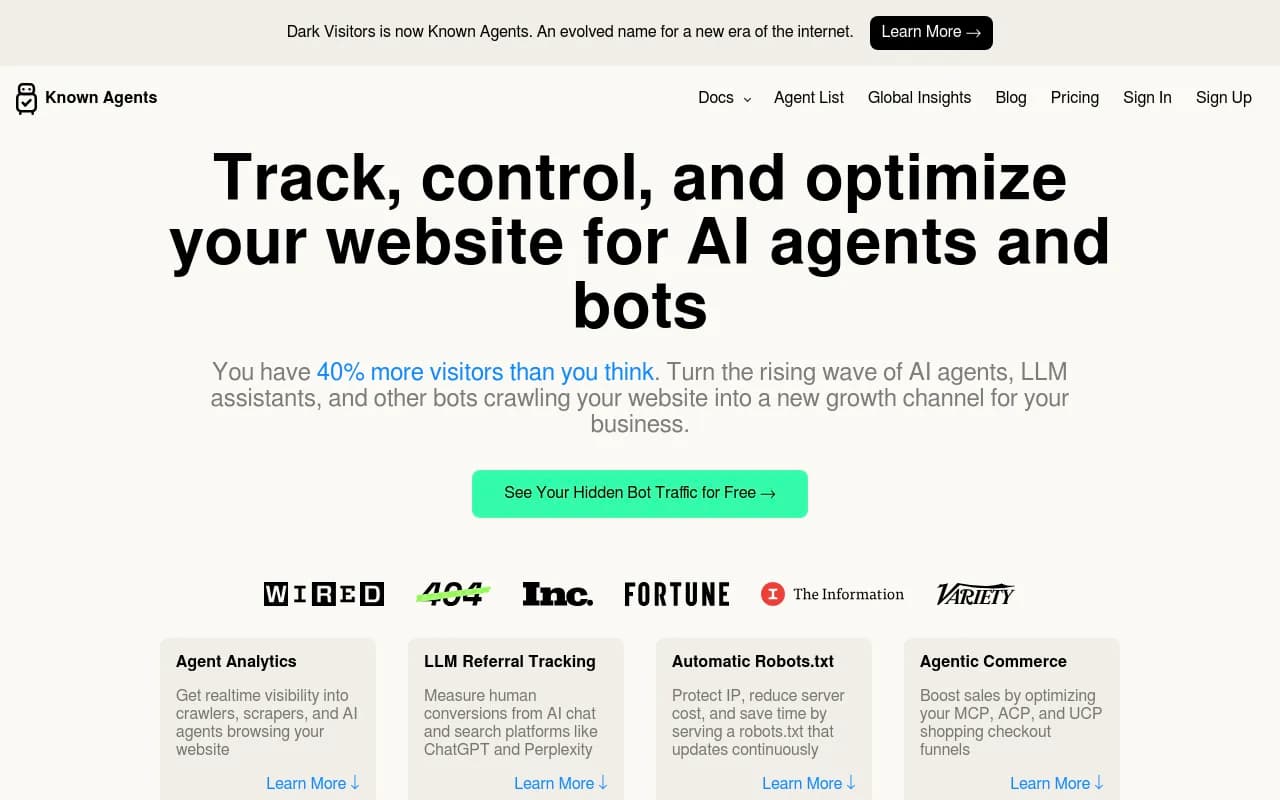
For teams that want to track AI crawler behavior specifically, DarkVisitors is worth looking at as a complement to any monitoring platform.
The honest verdict
AthenaHQ is a serious tool. The revenue attribution via Shopify and GA4 is genuinely useful and not something most competitors offer. The sentiment and framing analysis goes deeper than basic mention counting. The crawler tracking is a real capability.
But the credit-based pricing model creates friction, the enterprise gating limits what mid-market teams can actually access, and the content generation side doesn't match the monitoring side in depth. For a tool at this price point, you'd expect the full optimization loop to be tighter.
If you're an e-commerce brand or enterprise team with a real GEO budget and a specific need to connect AI citations to revenue, AthenaHQ is worth evaluating seriously. If you're a smaller team or agency looking for the best combination of monitoring, content creation, and value, the comparison table above gives you a clearer picture of where to look.