Key takeaways
- AEO (Answer Engine Optimization) tools help you track and improve how your brand appears in AI search engines like ChatGPT, Perplexity, Claude, and Google AI Overviews.
- Most tools on this list are monitoring-only -- they show you where you're invisible but don't help you do anything about it.
- The best AEO tools combine visibility tracking, content gap analysis, and content generation in a single workflow.
- Pricing ranges from free tiers to $500+/month for enterprise plans -- the right choice depends on how many sites, prompts, and AI models you need to cover.
- If you're serious about AI search, you need a tool that closes the loop: find gaps, create content, track results.
What is AEO and why does it matter in 2026?
Answer Engine Optimization (AEO) is the practice of making your brand, content, and website more likely to be cited, recommended, or referenced by AI search engines. Think ChatGPT, Perplexity, Claude, Gemini, Google AI Overviews, and a dozen others.
Traditional SEO got you ranked on a results page. AEO gets you cited in an AI-generated answer. These are different games. When someone asks ChatGPT "what's the best project management tool for remote teams?", the AI doesn't show ten blue links -- it names two or three tools and explains why. If your brand isn't one of them, you don't exist for that query.
That shift is why AEO tools have exploded in 2026. A year ago, most marketers were still treating AI search as a curiosity. Now it's a real traffic and revenue channel, and the brands that figured out how to optimize for it early are pulling ahead fast.
The problem is that the tool landscape is messy. There are now dozens of platforms claiming to help with AI visibility, and most of them are doing roughly the same thing: running your brand name through a handful of AI models and showing you a dashboard. That's useful, but it's not enough.
This guide ranks the 10 best AEO tools in 2026 based on three criteria: feature depth (what can you actually do with it?), accuracy (how reliable is the data?), and price (is it worth what they charge?).
How we evaluated these tools
Before getting into the list, here's what we looked at:
- AI model coverage: Does it track ChatGPT, Perplexity, Claude, Gemini, Google AI Overviews, and others -- or just one or two?
- Prompt tracking: Can you monitor specific questions and topics, not just brand mentions?
- Content gap analysis: Does it show you what you're missing, not just where you rank?
- Content generation: Can it help you create content that's more likely to get cited?
- Traffic attribution: Can you connect AI visibility to actual website traffic and revenue?
- Accuracy: Are the visibility scores and citation data reliable?
- Price-to-value: Is the pricing fair given what you get?
With that framework in mind, here are the 10 best AEO tools in 2026.
1. Promptwatch -- best overall AEO platform
Promptwatch is the most complete AEO platform available right now. It's the only tool on this list that covers the full cycle: find gaps, create content, track results.
Most AEO tools stop at monitoring. Promptwatch goes further. Its Answer Gap Analysis shows you exactly which prompts your competitors are visible for but you aren't -- not as a vague "opportunity score" but as specific questions and topics your content doesn't address. Then the built-in AI writing agent generates articles, listicles, and comparisons grounded in real citation data (over 880 million citations analyzed). The content isn't generic SEO filler; it's built to get cited by AI models.
On the tracking side, Promptwatch monitors 10 AI models including ChatGPT, Perplexity, Claude, Gemini, Google AI Overviews, DeepSeek, Grok, and Copilot. Page-level tracking shows which specific pages are being cited, how often, and by which model. And the traffic attribution layer (via a code snippet, Google Search Console integration, or server log analysis) connects AI visibility to actual revenue -- something almost no competitor offers.
A few features that stand out: AI crawler logs that show you in real time which AI bots are hitting your site and what errors they're encountering; Reddit and YouTube insights that surface discussions influencing AI recommendations; ChatGPT Shopping tracking; and query fan-outs that show how one prompt branches into sub-queries.
It's used by 6,700+ brands and agencies including Booking.com and Center Parcs. The data has been cited in the Wall Street Journal and Axios.
Pricing starts at $99/month (Essential: 1 site, 50 prompts, 5 articles), $249/month (Professional: 2 sites, 150 prompts, 15 articles, crawler logs), and $579/month (Business: 5 sites, 350 prompts, 30 articles). Free trial available.

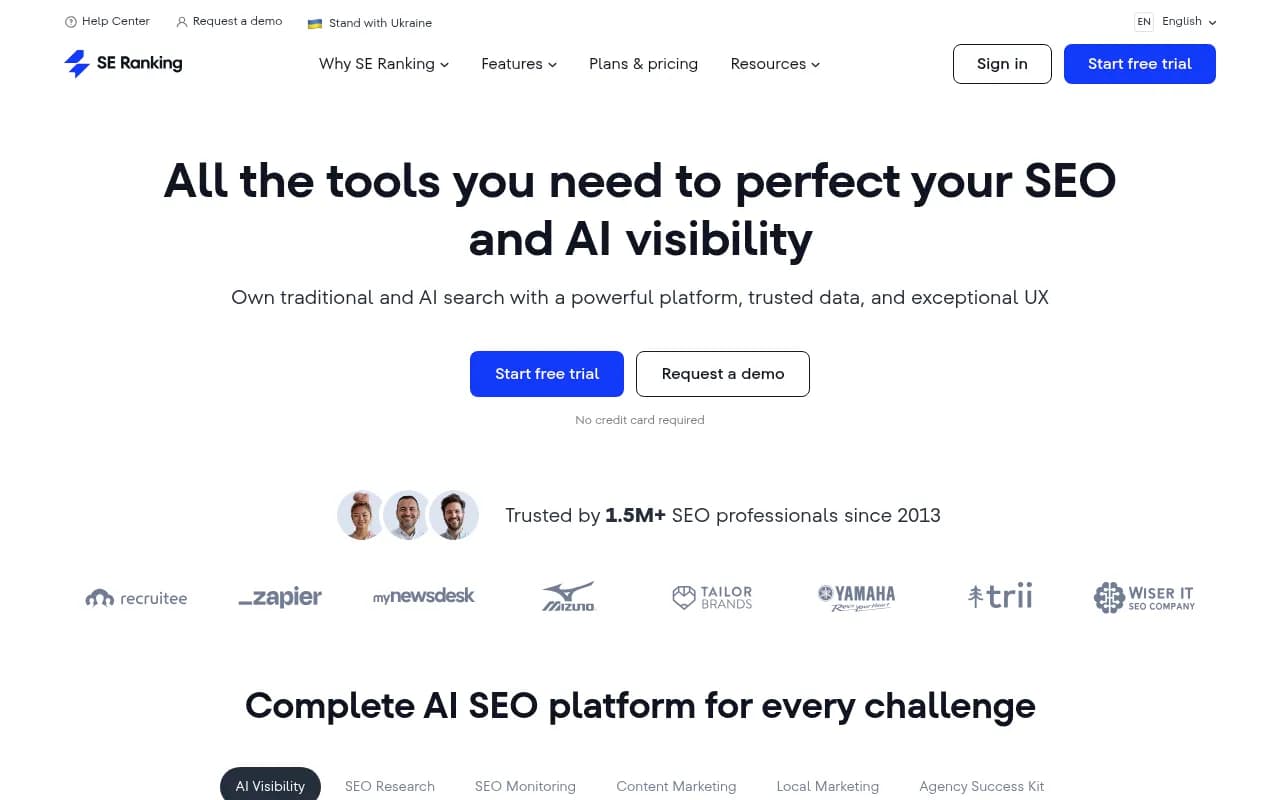
2. SE Ranking -- best for teams that want SEO and AEO in one place
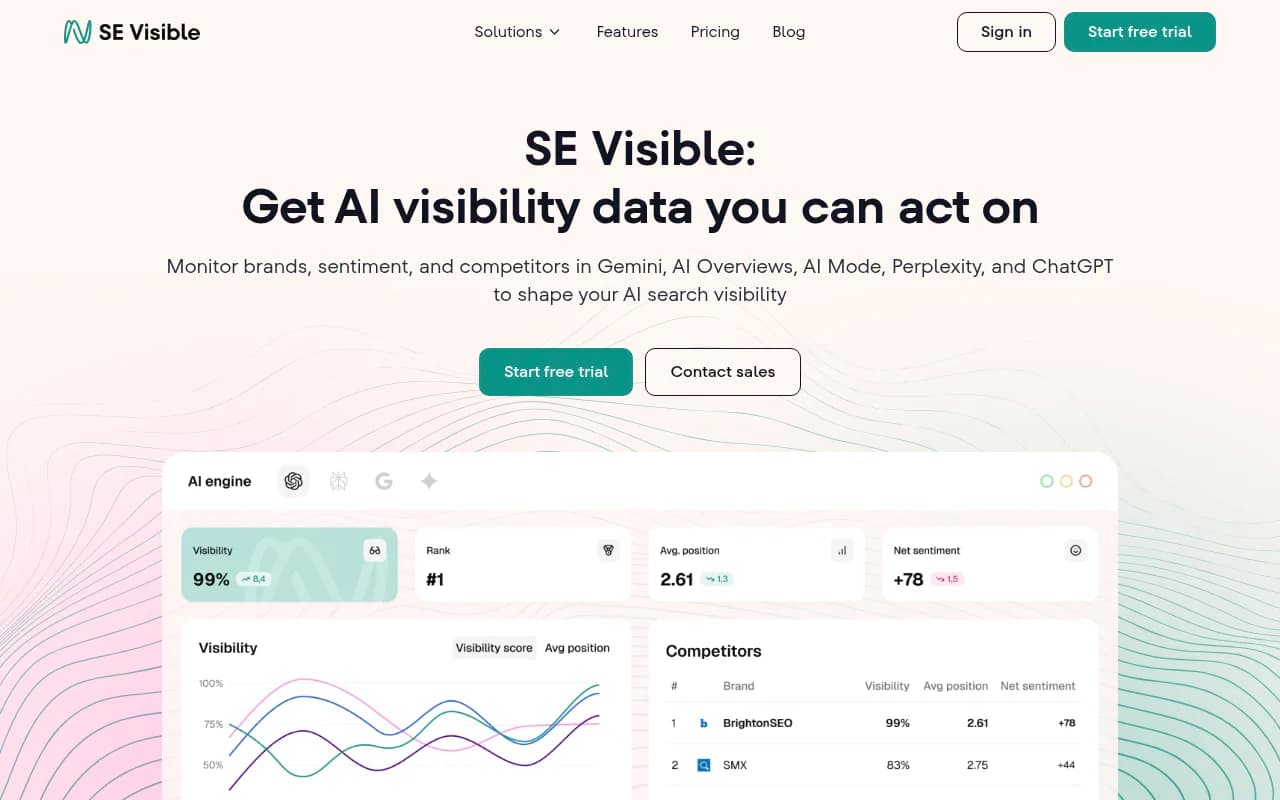
SE Ranking has been a solid all-in-one SEO platform for years, and in 2026 it added meaningful AI visibility tracking through its SE Visible module. If your team is already using SE Ranking for traditional SEO and wants to layer in AI search monitoring without switching tools, it's a natural fit.
The AI visibility features cover ChatGPT, Perplexity, and Google AI Overviews. You can track brand mentions, monitor specific prompts, and see how your visibility changes over time. The content optimization tools are Surfer-style -- real-time scoring against top-ranking pages -- which helps with both traditional SEO and AI citation potential.
Where it falls short: no content gap analysis that shows you what competitors are visible for, no AI content generation built in, and no traffic attribution from AI search. It's a strong monitoring tool, but it doesn't help you act on what you find.
Pricing starts at $52/month with a 10-day free trial.
You can also check out SE Visible, SE Ranking's dedicated AI visibility module, separately:
3. Profound -- best for GEO specialists who want deep citation data
Profound is purpose-built for tracking brand visibility across AI engines, and it does that job well. It monitors citations across 15+ AI models, tracks sentiment in AI responses, and gives you citation accuracy scoring -- useful for understanding not just whether you're mentioned but how accurately you're described.
The platform is popular with GEO specialists and agencies that need detailed AI visibility reporting. The data quality is generally good, and the interface is clean.
The limitation is that Profound is a monitoring platform. It shows you what's happening but doesn't help you change it. No content gap analysis, no AI writing tools, no traffic attribution. For teams that want to understand their AI visibility and then take that data elsewhere to act on it, Profound works well. For teams that want an end-to-end workflow, it's only half the picture.
Pricing starts around $99/month.

4. Otterly.AI -- best budget option for small teams
Otterly.AI is one of the more affordable AEO monitoring tools, and for small teams or solo marketers who just want to start tracking AI visibility without a big budget, it's a reasonable starting point.
It covers the main AI models, lets you track brand mentions and specific prompts, and provides basic visibility scores. The interface is straightforward and doesn't require much onboarding.
The trade-off is depth. Otterly.AI doesn't have crawler logs, content gap analysis, AI writing tools, or traffic attribution. It's a lightweight monitoring dashboard -- useful for awareness, not for optimization. If you outgrow it quickly, that's probably a sign you need something more capable.

5. AthenaHQ -- best for tracking across 8+ AI engines
AthenaHQ focuses on breadth of AI model coverage. It tracks visibility across 8+ AI search engines and gives you a clear picture of where your brand appears (and doesn't appear) across the AI search landscape.
The platform is monitoring-focused, with solid reporting and a clean interface. It's a good choice for brands that need to understand their AI visibility across a wide range of models and want reliable data to share with stakeholders.
Like most monitoring tools, it doesn't help you act on what you find. No content generation, no gap analysis, no traffic attribution. But if comprehensive monitoring across many models is your primary need, AthenaHQ delivers.

6. Peec AI -- best for multi-language and multi-region tracking
Peec AI is one of the few AEO tools with strong multi-language support, which makes it the right choice for brands operating in multiple markets. You can monitor AI visibility in different languages and regions, which is genuinely useful for international teams.
The core functionality covers prompt tracking, brand mention monitoring, and visibility scoring across major AI models. The multi-language capability is where it differentiates from most competitors.
It's a monitoring tool, so the same limitations apply: no content gap analysis, no AI writing, no traffic attribution. But for international brands that need localized AI visibility data, Peec AI fills a gap that most other tools ignore.

7. Semrush -- best for teams already deep in the Semrush ecosystem
Semrush has added AI visibility tracking to its platform, which makes sense given how central it is to most marketing teams' SEO workflows. If you're already paying for Semrush and want basic AI search monitoring without adding another tool, the built-in features are worth exploring.
The AI tracking uses fixed prompts, which limits flexibility -- you can't easily customize the questions you're monitoring. And there's no AI traffic attribution. But the integration with Semrush's existing keyword research, backlink analysis, and content tools is genuinely useful if you're running a full SEO operation.
For teams that want dedicated AEO capabilities, Semrush isn't the right primary tool. For teams that want to add a layer of AI visibility monitoring to an existing Semrush workflow, it's convenient.
Pricing starts at $139/month.
8. Ahrefs Brand Radar -- best for brands already on Ahrefs
Similar story to Semrush: Ahrefs added Brand Radar as an AI visibility monitoring feature for existing subscribers. It tracks brand mentions in AI responses and gives you a basic picture of your AI search presence.
The fixed prompt structure is a limitation -- you're monitoring a predefined set of queries rather than the specific questions your customers are actually asking. And there's no AI traffic attribution, no content gap analysis, no content generation.
But if you're already paying for Ahrefs and want to dip your toes into AI visibility monitoring without a new subscription, Brand Radar is a reasonable starting point.
9. Rankscale -- best for tracking AI search rankings specifically
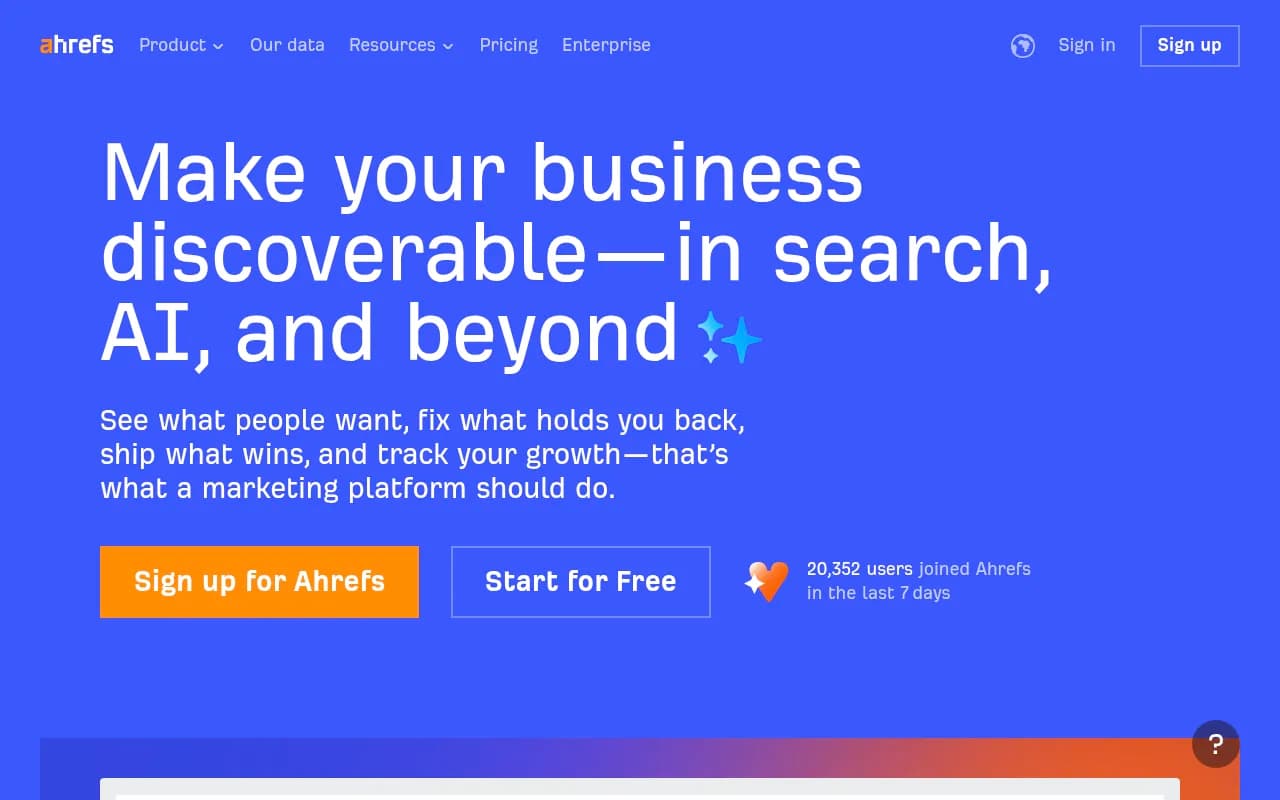
Rankscale focuses specifically on AI search ranking -- how your brand and content rank when AI models respond to queries in your category. It's a more targeted tool than the broad monitoring platforms, and for teams that want to understand ranking dynamics in AI search specifically, it's worth a look.
The platform tracks visibility scores, monitors ranking changes over time, and gives you a clear view of competitive positioning in AI search. It's cleaner and more focused than some of the all-in-one tools.
The limitation is scope: it's a ranking tracker, not a full AEO platform. No content creation, no gap analysis, no traffic attribution.
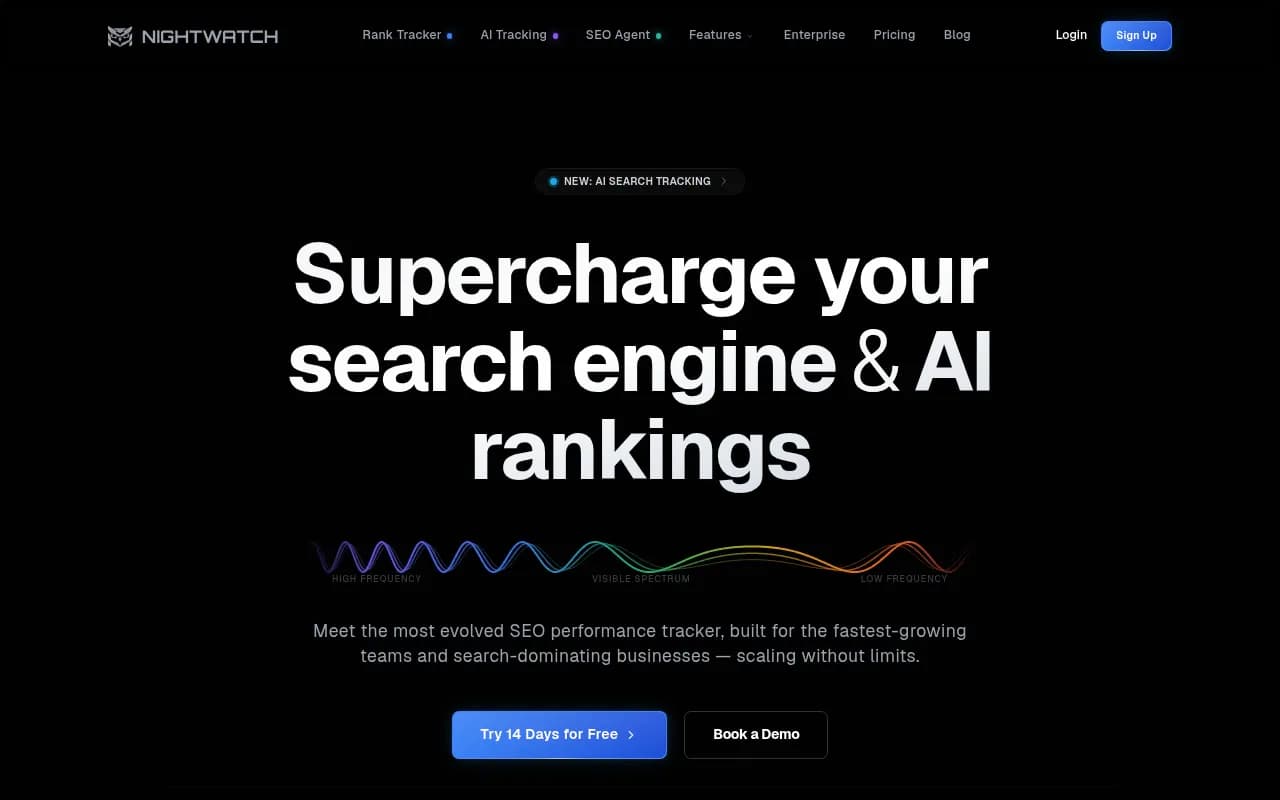
10. Nightwatch -- best for combining traditional rank tracking with AI monitoring
Nightwatch has been a strong rank tracking tool for traditional SEO, and it's added AI search monitoring features that make it worth considering for teams that want to track both Google rankings and AI visibility in one place.
The AI tracking covers citation monitoring and visibility scoring across major AI models. The traditional SEO features -- daily rank updates, 100,000+ location targeting, white-label reporting -- remain strong.
For agencies and teams that need to report on both traditional SEO and AI search performance, Nightwatch is a practical choice. It's not the deepest AEO tool on this list, but the combination of capabilities is useful.
Feature comparison table
Here's how the 10 tools stack up across the criteria that matter most:
| Tool | AI models tracked | Prompt tracking | Content gap analysis | AI content generation | Traffic attribution | Crawler logs | Starting price |
|---|---|---|---|---|---|---|---|
| Promptwatch | 10+ | Yes | Yes | Yes | Yes | Yes | $99/mo |
| SE Ranking | 3 | Yes | No | No | No | No | $52/mo |
| Profound | 15+ | Yes | No | No | No | No | ~$99/mo |
| Otterly.AI | Several | Yes | No | No | No | No | Low |
| AthenaHQ | 8+ | Yes | No | No | No | No | Custom |
| Peec AI | Several | Yes | No | No | No | No | Custom |
| Semrush | Several | Limited | No | No | No | No | $139/mo |
| Ahrefs Brand Radar | Several | Limited | No | No | No | No | Included |
| Rankscale | Several | Yes | No | No | No | No | Custom |
| Nightwatch | Several | Yes | No | No | No | No | Custom |
The pattern is clear: most tools cover monitoring reasonably well. The gap is in everything that comes after -- figuring out what to do about what you find.
How to choose the right AEO tool for your needs
The right tool depends on what stage you're at and what you're trying to accomplish.
If you're just starting out and want to understand your current AI visibility before committing to a full platform, Otterly.AI or Peec AI give you a low-cost entry point. You'll quickly learn which AI models mention your brand and for which queries.
If you're running an agency and need to report AI visibility to clients across multiple sites and markets, Promptwatch's Professional or Business plan is the most complete option. The white-label reporting, multi-site tracking, and Looker Studio integration are built for agency workflows.
If you're already on Semrush or Ahrefs and just want to add a layer of AI monitoring without a new tool, the built-in features are fine for basic awareness. Just know you'll hit their limits quickly if you want to actually optimize.
If you're serious about AEO as a growth channel -- not just monitoring but actually improving your AI visibility over time -- you need a tool that closes the loop. That means content gap analysis to find what you're missing, content generation to fill those gaps, and traffic attribution to prove the ROI. Promptwatch is the only tool on this list that does all three.
If you operate in multiple languages or regions, Peec AI's localization capabilities are worth the trade-off in feature depth.
The monitoring trap: why most AEO tools aren't enough
There's a pattern worth naming directly. Most AEO tools are dashboards. They show you a number -- your "AI visibility score" -- and let you watch it go up or down. That's useful for awareness, but it doesn't move the needle.
The brands winning in AI search in 2026 aren't just monitoring. They're running a continuous cycle: identify the prompts where competitors are visible and they're not, create content that addresses those gaps, and track whether that content actually gets cited. Then repeat.
That cycle requires more than a monitoring dashboard. It requires knowing which specific content is missing from your site, having a way to create that content efficiently, and being able to attribute the results to actual traffic and revenue.
Most tools on this list cover step three (tracking results) reasonably well. A few cover step one partially (identifying gaps). Almost none cover step two (creating content). That's the gap in the market, and it's why the distinction between monitoring tools and optimization platforms matters.
Final thoughts
AEO is real, it's growing, and the brands that build systematic processes around it now will have a meaningful advantage over those that treat it as an afterthought. The tools to do that exist -- the question is whether you're using them to watch or to act.
For most teams, the honest recommendation is: start with a monitoring tool to understand your baseline, then upgrade to a platform that helps you optimize once you've seen enough data to know where the opportunities are. The gap between "we track our AI visibility" and "we systematically improve our AI visibility" is where the real competitive advantage lives.