Key takeaways
- Promptwatch is the most complete option -- it tracks 10+ AI models, generates content grounded in citation data, logs AI crawler activity, and connects visibility to actual revenue. Best for teams that want to act on data, not just collect it.
- AthenaHQ is a strong enterprise pick with solid monitoring across 8+ LLMs and a clean workflow for GEO teams, though it stops short of content generation.
- Otterly.AI is the budget-friendly entry point -- $29/mo gets you basic monitoring and brand coverage tracking. Fine for getting started, not for serious optimization.
- Profound is the other full-stack contender at the enterprise end, with prompt volume data and AI agents, but pricing is opaque and starts high.
- Evertune is for Fortune 500 budgets only -- $3,000+/mo, but it adds AI retargeting and user intent data that no other tool in this list has.
- LLMrefs is a solid mid-range tracker with good keyword-level granularity and a lower price point than most.
- Peec.ai works well for multi-language teams in European markets.
- Search Party is not actually a GEO tool -- it's a real estate brokerage platform. Skip it if you're looking for AI visibility software.
LLMBear has a compelling pitch: optimize your content structure for LLMs, test across multiple models, and beat competitors in AI search. The problem is that it's still on a waitlist with unconfirmed pricing around $199/mo. There's no live product to evaluate, no case studies, no reviews. If you need to start improving your AI search visibility now, you can't wait for a pre-launch tool to ship.
That's the main reason people look for LLMBear alternatives. But there are other factors too. Some teams want a platform that goes beyond content structuring -- they want to see exactly which prompts they're missing, which pages AI crawlers are reading, and whether their visibility improvements are actually driving traffic. Others just want something affordable to monitor a handful of prompts without committing to a complex platform.
The GEO and AI visibility space has gotten crowded fast. Here's an honest breakdown of the best options available right now.
The alternatives
Promptwatch

Promptwatch is the most complete AI search visibility platform available in 2026. Where LLMBear promises content structuring and multi-model testing, Promptwatch delivers all of that plus a full optimization loop: find the gaps, create content to fill them, then track whether it worked.
The Answer Gap Analysis is the feature that sets it apart from most competitors. It shows you exactly which prompts your competitors rank for in AI responses but you don't -- not just that you're missing, but what specific content your site needs to get cited. That's genuinely useful in a way that a visibility score alone isn't.
The built-in content agent then generates articles, listicles, and comparison pages grounded in real citation data from 880M+ citations analyzed. This isn't generic AI writing -- it's content built around what AI models actually cite. Once you publish, page-level tracking shows which specific pages are getting cited, by which models, and how often. The Looker Studio integration and GSC connection let you tie that back to actual traffic and revenue.
A few other things worth knowing: Promptwatch logs AI crawler activity in real time (which pages ChatGPT, Claude, Perplexity, and others are reading, how often, and what errors they hit), tracks Reddit and YouTube sources that influence AI recommendations, and monitors ChatGPT Shopping carousels. Most competitors don't touch any of those.
Pricing starts at $99/mo for the Essential plan (1 site, 50 prompts, 5 articles). Professional is $249/mo (2 sites, 150 prompts, 15 articles, crawler logs). Business is $579/mo. There's a 7-day free trial and an explore plan that tracks 10 prompts with ChatGPT for free.
Compared to LLMBear's unconfirmed $199/mo, Promptwatch's Essential plan is actually cheaper and you get a live, proven product with 8,200+ brands using it.
Best for: Marketing and SEO teams that want to move beyond monitoring and actually improve their AI search visibility. Also strong for agencies managing multiple clients.
AthenaHQ

AthenaHQ is a serious GEO platform backed by Y Combinator and used by brands like Coinbase, SoFi, and PagerDuty. It covers 8+ LLMs with cross-platform visibility tracking, citation source analysis, and automated content optimization recommendations.
The platform is built around a "command center" model -- one place to manage your entire AI search optimization workflow. For AEO/GEO managers at larger organizations, that unified view is genuinely valuable. The executive dashboard gives CMOs the ROI tracking and strategic oversight they need without having to dig into the weeds.
Where AthenaHQ falls short compared to Promptwatch: it doesn't generate content. It gives you recommendations, but you still have to write the content yourself or use another tool. There's also no AI crawler log feature, no Reddit/YouTube tracking, and no ChatGPT Shopping monitoring. It's a strong monitoring and analysis platform that stops before the "fix it" step.
Pricing starts at $295/mo for self-serve or $95/mo on annual billing. Enterprise is custom. No free trial, which is a real friction point when you're evaluating multiple tools.
Best for: Enterprise marketing teams and GEO specialists who want a polished monitoring workflow and don't mind handling content creation separately.
Semrush
Semrush is now an Adobe company, which tells you something about where it's positioned -- it's a broad digital marketing platform, not an AI visibility specialist. The AI Visibility Toolkit is a $99/mo add-on to the main Semrush One subscription (from $165.17/mo on annual billing), so you're looking at $264+/mo before you get to AI search features.
What you get for that: brand monitoring across AI search engines, visibility scoring, and some content optimization guidance. The tracking uses fixed prompts rather than letting you define your own, which limits how useful it is for niche industries or specific use cases. There's no AI traffic attribution, no crawler logs, and no content generation tied to citation data.
The honest case for Semrush is that if you're already a heavy Semrush user for traditional SEO, adding the AI Visibility Toolkit is a low-friction way to get some AI search data without switching platforms. If you're starting fresh and AI visibility is your primary goal, it's not the most efficient path.
Best for: Existing Semrush customers who want basic AI visibility data alongside their traditional SEO workflow.
Otterly.AI

Otterly.AI is the most accessible entry point in this list. At $29/mo for 15 prompts, it's genuinely affordable for small teams or individuals who just want to start tracking brand mentions in AI search engines without a big commitment.
The platform covers ChatGPT, Perplexity, and Google AI Overviews with brand coverage tracking, competitor benchmarking, and basic GEO audit features. The UI is clean and the setup is fast. For what it does, it works.
The limitations are real though. No AI crawler logs. No content generation. No traffic attribution. No Reddit or YouTube tracking. No ChatGPT Shopping. The Standard plan at $189/mo for 100 prompts starts to feel expensive relative to what you get when you compare it to Promptwatch's Professional plan at $249/mo, which includes all those missing features.
Otterly.AI is a monitoring tool. It shows you where you stand. It doesn't help you change where you stand.
Best for: Small businesses or solo marketers who want basic AI visibility monitoring on a tight budget and don't need optimization capabilities yet.
Peec AI

Peec AI is a clean, focused AI search analytics platform that tracks visibility, position, and sentiment across ChatGPT, Perplexity, and Gemini. Its strongest differentiator is multi-language and multi-country support, which makes it particularly useful for European marketing teams tracking AI visibility across different markets.
The platform covers the core metrics well -- visibility share, brand position in AI responses, sentiment analysis -- and the interface is straightforward. It's used by 2,000+ marketing teams and has a reasonable starting price of €89/mo.
What it doesn't do: content generation, crawler logs, traffic attribution, Reddit/YouTube tracking. Like Otterly.AI, it's a monitoring platform. The "smart suggestions" feature gives you some direction on what to improve, but the actual work of improving it is on you.
Best for: Marketing teams in European markets who need multi-language AI visibility tracking and want a clean, no-frills monitoring tool.
Profound

Profound is the enterprise-grade competitor to Promptwatch. It's used by MongoDB, Ramp, and Zapier, and it covers the full stack: answer engine insights, AI crawler analytics (they call it Agent Analytics), prompt volume data, and automated content creation via AI agents.
The prompt volume feature is particularly strong -- seeing what millions of people actually ask AI engines, with volume estimates, helps you prioritize which topics to target. The content agents can generate AEO-optimized FAQs and other content formats grounded in that data.
The catch is pricing. Profound doesn't publish rates, but estimates put it at $1,000-$3,000+/month. There's no free trial and no self-serve option -- you have to book a demo to get started. For a startup or mid-market company, that's a real barrier. For an enterprise with a dedicated AEO team and budget to match, it's a credible option.
Compared to Promptwatch, Profound is roughly comparable in capability but significantly more expensive and less accessible. Promptwatch also has Reddit/YouTube tracking and ChatGPT Shopping monitoring that Profound doesn't appear to offer.
Best for: Enterprise brands with dedicated AEO teams and budgets in the $1,000-$3,000+/month range.
LLMrefs
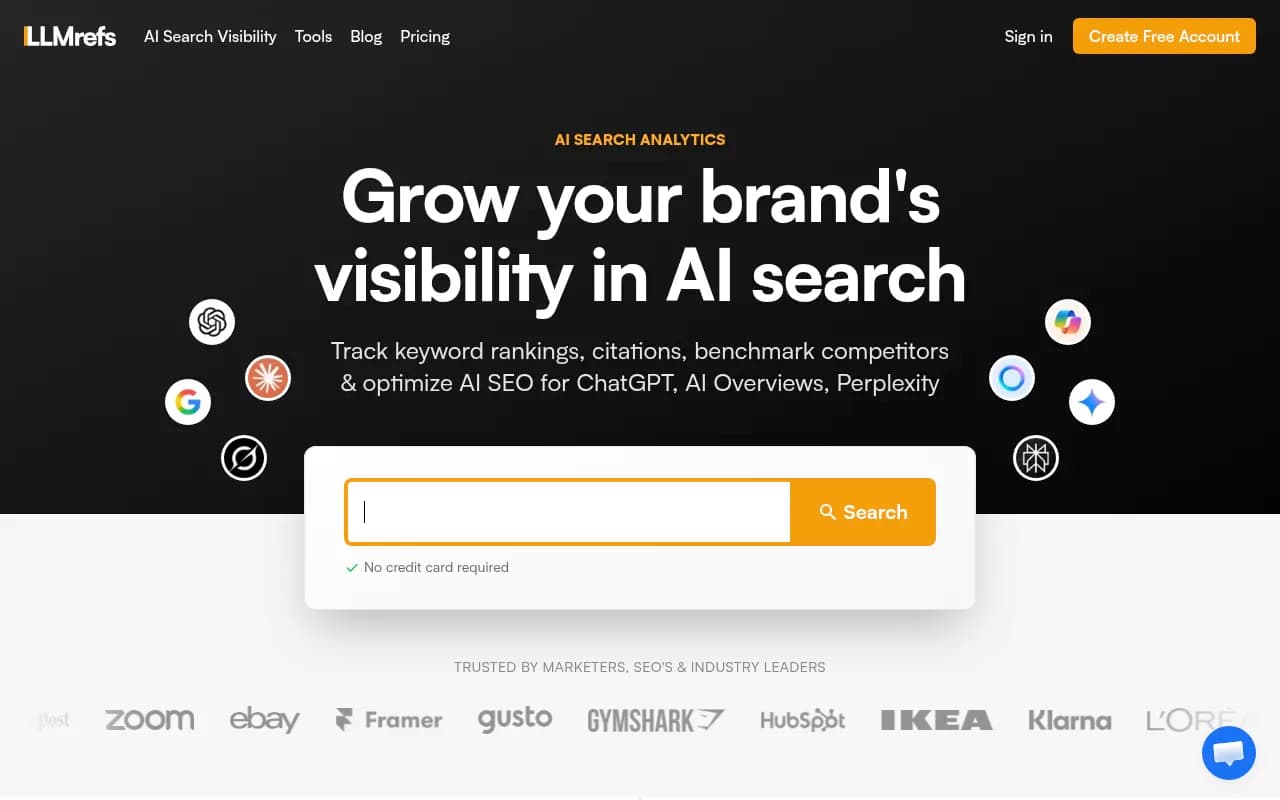
LLMrefs is a solid mid-range option that tracks keyword rankings, citations, and brand visibility across ChatGPT, Google AI Overviews, Perplexity, Claude, Gemini, Grok, Copilot, and Meta AI. It automatically generates prompt variations from real conversations, which is a nice touch -- most tools make you define all your prompts manually.
The keyword-level granularity is good. You can see how specific terms perform across different AI models, benchmark against competitors, and track citation sources. The user list includes eBay, HubSpot, Gymshark, and IKEA, which suggests it scales reasonably well.
Starting at $79/mo, it's priced between Otterly.AI's budget tier and the mid-range options. The main gap is on the optimization side -- like most tools in this space, it's stronger at showing you the data than helping you act on it.
Best for: SEO teams and agencies that want keyword-level AI visibility tracking with good model coverage at a mid-range price.
Evertune
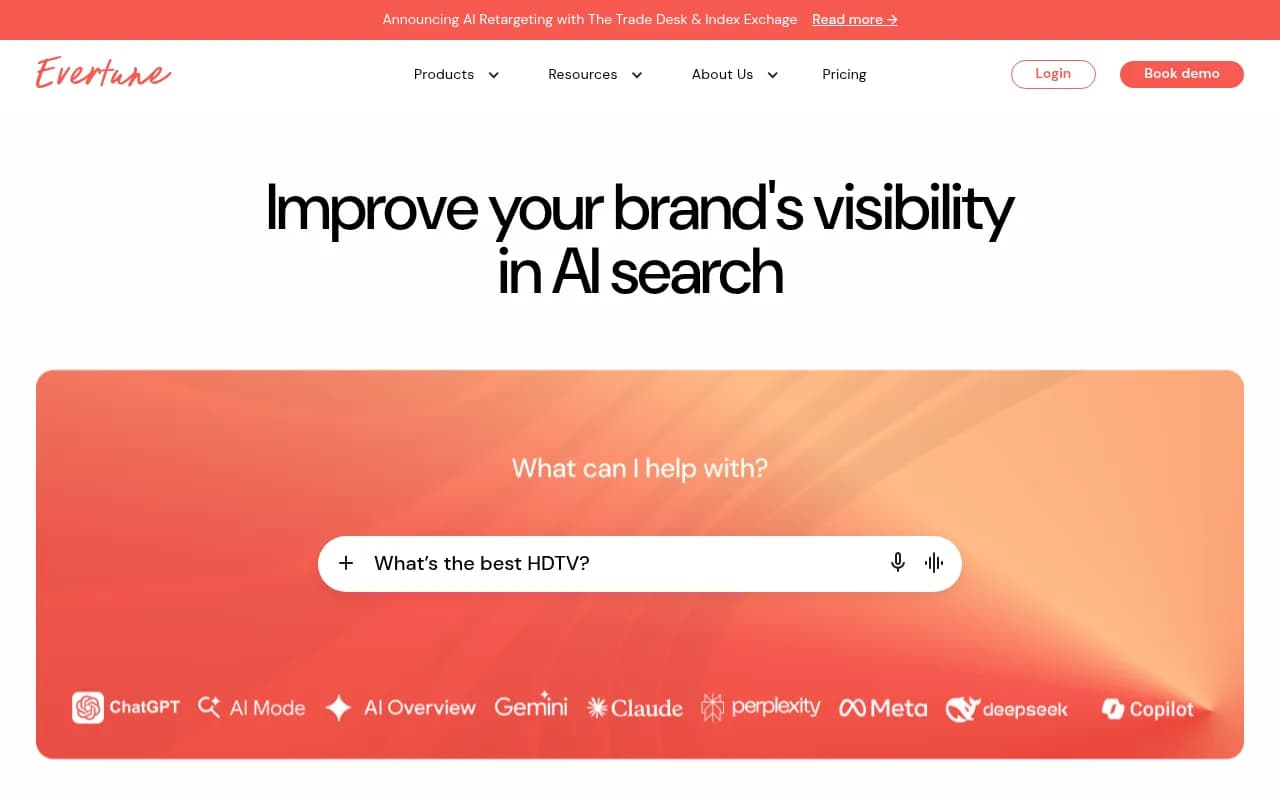
Evertune is in a different category from everything else on this list. At $3,000+/mo with annual contracts, it's built for Fortune 500 brands and large agencies. What justifies that price point is a capability no other tool here has: AI retargeting.
The idea is that Evertune doesn't just track and optimize your AI search presence -- it also helps you advertise to buyers who showed intent in AI conversations. That closes a loop that pure GEO tools can't close. The user intent data comes from tracking real AI search behavior from 25M users, which gives the prompt volume data a different quality than tools that estimate from smaller samples.
For most companies reading this page, $3,000/mo is not a realistic option. But if you're a large brand with serious AI search budget and you want to connect GEO to paid media, Evertune is worth a look.
Best for: Fortune 500 brands and large agencies that want to combine AI visibility optimization with AI-targeted advertising.
A note on Search Party
Search Party is not an AI search visibility tool. Based on the current live website, it's a contract intelligence platform for residential real estate brokerages -- it reads contracts, flags compliance issues, and helps with agent retention. It has nothing to do with GEO or LLM optimization. If you found it in a list of LLMBear alternatives somewhere, that list was wrong.
Which tool should you pick?
The honest summary:
If you want a live, proven platform that covers the full cycle from gap analysis to content creation to traffic attribution, Promptwatch is the strongest option at every price point it operates in. The $99/mo Essential plan alone does more than most monitoring-only tools at twice the price.
If you're at an enterprise with a big budget and a dedicated AEO team, Profound or Evertune are worth evaluating -- Profound for the content agents and prompt volume data, Evertune if you want to connect AI visibility to paid media.
If you just want basic monitoring without a big commitment, Otterly.AI at $29/mo or LLMrefs at $79/mo are reasonable starting points. Just go in knowing they'll show you the problem without helping you solve it.
AthenaHQ is a good fit for enterprise teams that want a polished GEO workflow and are happy to handle content creation separately. Peec AI is the right call for multi-language European use cases.
As for LLMBear itself -- keep an eye on it, but don't wait. The waitlist has no confirmed launch date, the pricing is unconfirmed, and there's no track record to evaluate. The tools above are live today.