Key Takeaways
- RedTrack is the best value alternative—server-side tracking, CAPI integrations, and crawler logs starting at $48/mo vs Hyros' $379/mo minimum
- Triple Whale wins for ecommerce brands wanting unified analytics plus AI agents that actually take action on your data
- Cometly delivers faster, sharper conversion data to ad platforms and costs less than Hyros for brands under $500k monthly revenue
- Northbeam combines multi-touch attribution with media mix modeling for brands that need both granular and aggregate views
- Wicked Reports is the only platform that separates new customer acquisition from repeat purchases and trains Meta's algorithm accordingly
Hyros built its reputation on AI-powered attribution that catches conversions standard pixels miss. It's a solid choice for SaaS, ecommerce, and call-based businesses running complex funnels. But the $379/mo starting price, steep learning curve, and annual contracts push many teams to look elsewhere.
The good news: several platforms now match or beat Hyros on accuracy while offering better pricing, faster setup, or features Hyros doesn't have. Some focus on ecommerce-specific workflows. Others add AI agents that optimize budgets automatically. A few include capabilities like Reddit tracking or AI search visibility that Hyros ignores entirely.
Here's what you actually need to know about each alternative.
RedTrack
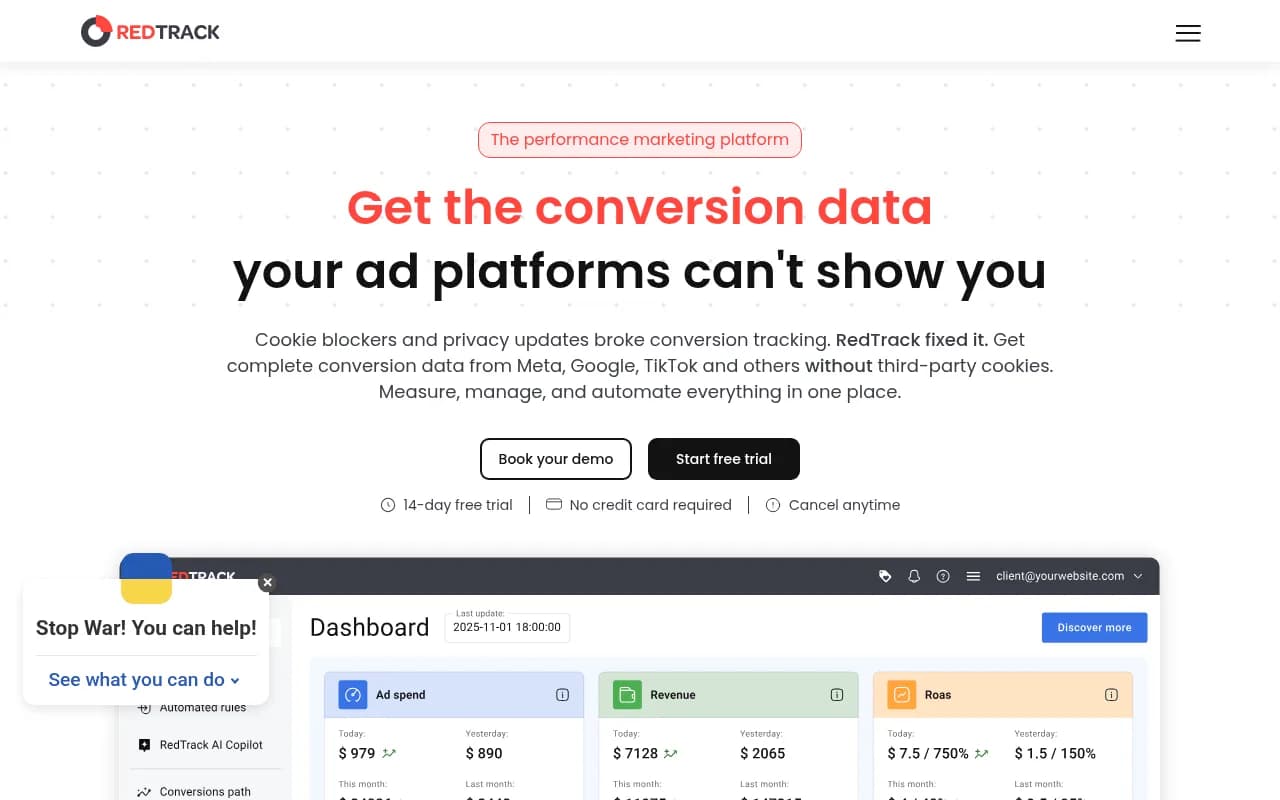
RedTrack solves the same core problem as Hyros—iOS14 and ad blockers breaking conversion tracking—but does it for a fraction of the cost. Starting at $48/mo (billed annually), it captures 100% of conversions using server-side tracking and first-party cookies, then sends enriched data back to Meta, Google, TikTok, and 20+ ad networks via CAPI.
What sets RedTrack apart: AI crawler logs. You see exactly when ChatGPT, Claude, Perplexity, and other AI models crawl your site, which pages they read, and errors they encounter. Hyros doesn't track this at all. If you're running content marketing or SEO alongside paid ads, this visibility matters.
The platform integrates with 200+ tools—ad networks, affiliate platforms, ecommerce systems, call trackers, CRMs. Setup takes minutes with their tag manager. The centralized Ads Manager lets you pause campaigns, adjust budgets, and set automation rules across multiple networks from one dashboard. Cost updates sync every 5 minutes.
RedTrack's attribution is solid: multi-touch models, custom conversion windows, and full customer journey tracking. The reporting is cleaner than Hyros—less overwhelming, easier to parse. You can export everything to Looker Studio or pull it via API.
Where RedTrack wins: Price (Launch plan is $48/mo vs Hyros' $379/mo), AI crawler visibility, faster setup, cleaner UI, no annual lock-in.
Where it falls short: Hyros has more advanced AI features for predicting customer lifetime value. RedTrack's LTV tracking exists but isn't as sophisticated.
Best for: Performance marketers, affiliate marketers, and agencies managing multiple clients who want accurate attribution without Hyros' price tag.
Triple Whale
Triple Whale is an end-to-end ecommerce intelligence platform used by 50,000+ brands. It's not just attribution—it's unified analytics, AI agents, creative analysis, and automation in one place. Think of it as the operating system for your ecommerce business.
The attribution piece combines multi-touch attribution (MTA), media mix modeling (MMM), and incrementality testing. You get accurate revenue attribution across Meta, Google, TikTok, email, organic, and partnerships. The platform tracks 60+ integrations including Shopify, Klaviyo, Google Analytics, and every major ad network.
What makes Triple Whale different: Moby AI agents. These aren't chatbots that answer questions. They're agents that analyze your data, surface insights, and take action. One agent might notice a product's ROAS dropped 30% this week and automatically pause underperforming ad sets. Another might identify your best-performing creative angles and generate new ad copy variations.
The creative intelligence tools analyze which hooks, formats, and messaging drive conversions. You see exactly which creative elements work and why. Sonar Send (their email/SMS tool) delivers 10x ROI on the subscription cost by itself—automated flows that adapt based on customer behavior.
Triple Whale's dashboard is gorgeous. Real-time metrics, customizable views, and instant drill-downs into any channel or campaign. The mobile app is legitimately useful—you can monitor performance and make budget decisions from your phone.
Where Triple Whale wins: Unified view of everything (not just ads), AI agents that take action, creative analysis, better UX than Hyros, strong mobile app.
Where it falls short: Starts at $549/mo (more expensive than Hyros for small brands). The feature set is overwhelming if you only need attribution.
Best for: DTC ecommerce brands doing $1M+ annual revenue who want one platform for analytics, attribution, creative testing, and automation.
Cometly
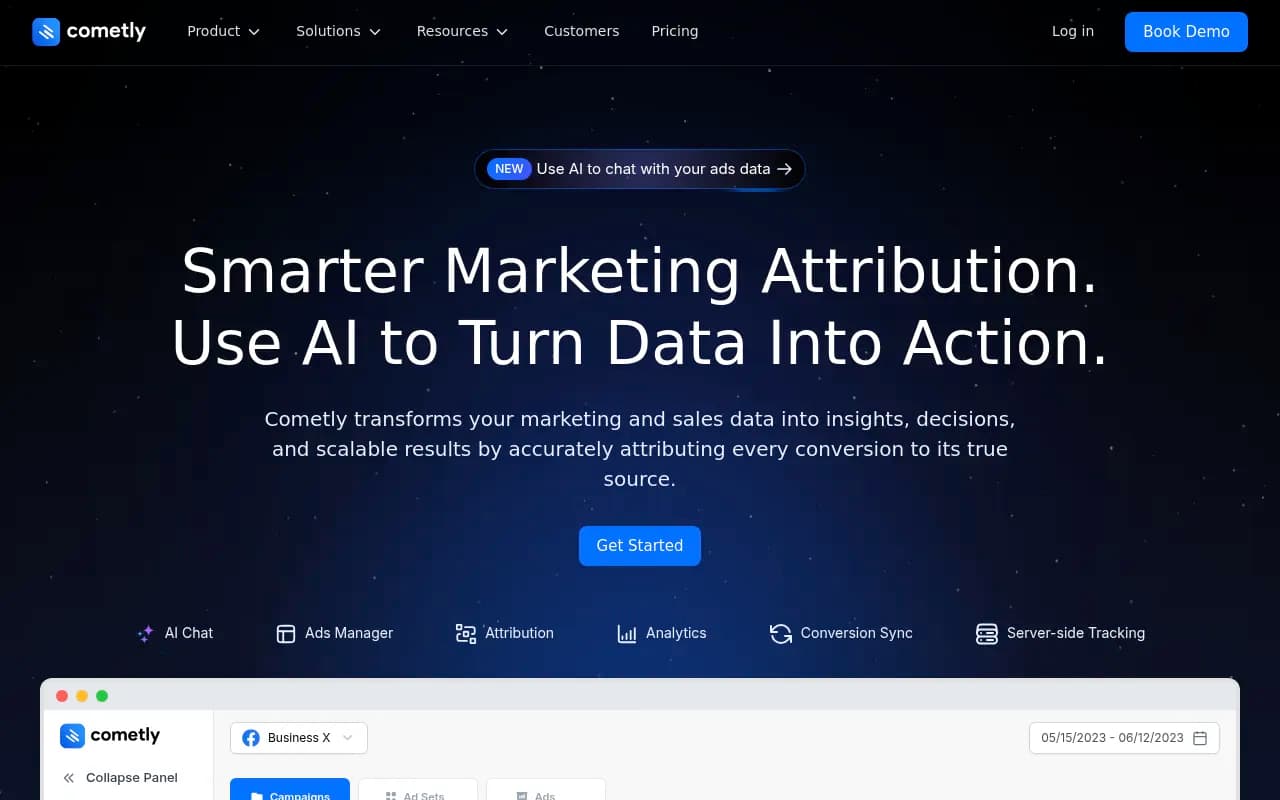
Cometly is an AI-powered attribution platform that prioritizes signal quality. Compared to Hyros, it delivers sharper conversion data to ad platforms, and it delivers it faster. Buyers consistently report better match rates and quicker optimization when feeding Cometly data back to Meta and Google.
The platform tracks revenue attribution in real-time across all your marketing channels. Setup is straightforward—install the pixel, connect your ad accounts and payment processors, and you're tracking within minutes. The attribution models are flexible: first-click, last-click, linear, time-decay, or custom.
Cometly's standout feature: AI visibility optimization. It tracks how your brand appears in AI search engines like ChatGPT, Perplexity, and Claude as its own channel. You see exactly how traffic from AI platforms converts into leads and customers. Hyros doesn't track this at all.
The reporting is clean and actionable. You can drill down to individual ads, keywords, or campaigns and see the full customer journey from first touch to purchase. The platform calculates accurate ROAS and profit metrics by factoring in COGS, shipping, and other costs.
Pricing scales with tracked revenue: $199/mo for brands tracking up to $50k monthly revenue, up to $999/mo for $500k revenue. That's cheaper than Hyros for most small-to-mid-size brands. You get a 14-day free trial to test it.
Where Cometly wins: Faster, sharper data to ad platforms, AI search visibility tracking, better pricing for brands under $500k revenue, easier setup.
Where it falls short: Fewer integrations than Hyros (no call tracking, no print tracking). Less sophisticated for high-ticket products with 6+ month sales cycles.
Best for: Ecommerce and SaaS brands spending $50k-$500k/month on ads who want accurate attribution without Hyros' complexity or cost.
Northbeam
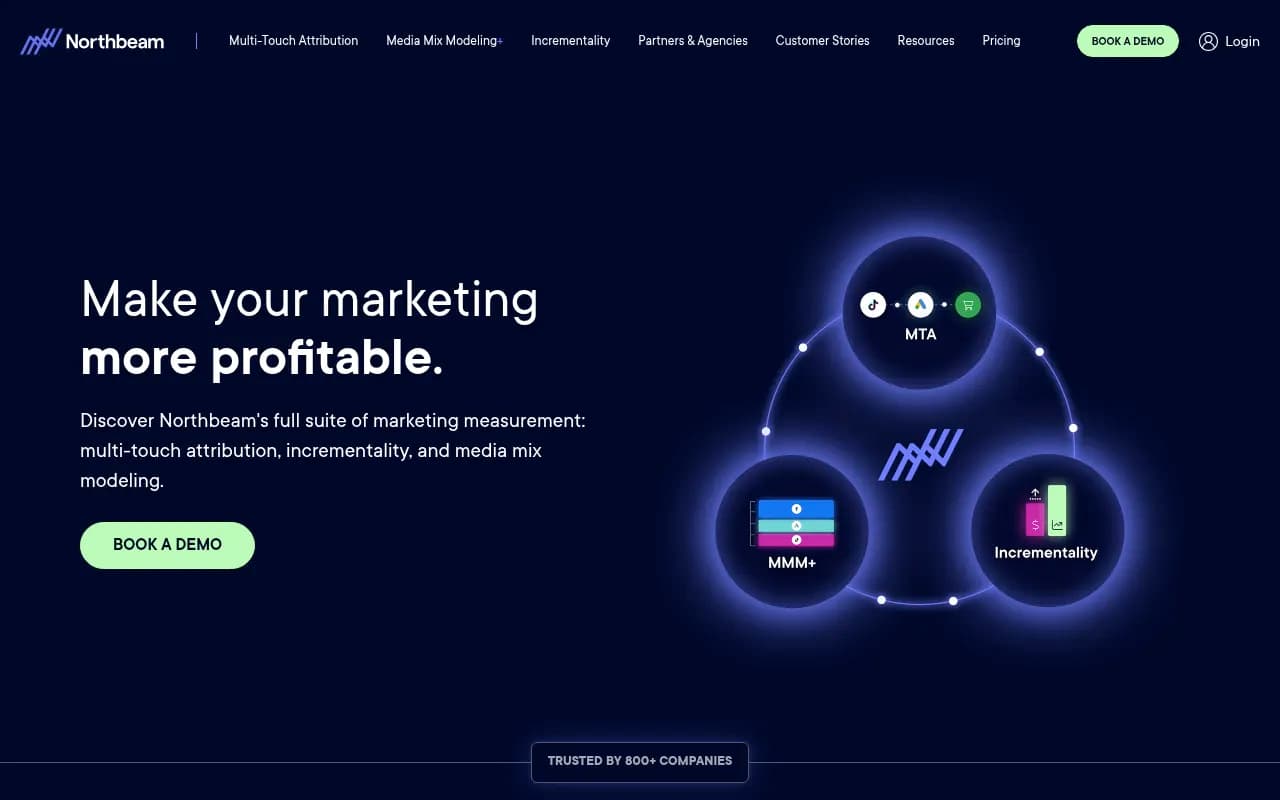
Northbeam combines multi-touch attribution (MTA) and media mix modeling (MMM) in one platform. That's rare. Most tools do one or the other. Northbeam does both, plus incrementality testing.
The MTA side tracks individual customer journeys with infinite lookback windows. You see every touchpoint from first ad impression to final purchase, even if the journey spans months. The MMM side aggregates data to show how different channels interact and contribute to overall revenue—useful for understanding brand-building channels like podcasts or influencer marketing that don't have direct attribution.
Northbeam is used by 800+ companies tracking over $10B in ad spend. It's built for DTC brands and agencies managing serious budgets. The platform attributes revenue to top-of-funnel ads that other tools miss, helping you scale profitably instead of just retargeting existing customers.
The UI is polished. Dashboards are customizable, reports are exportable, and the data syncs in real-time. You can feed Northbeam's conversion data back to ad platforms via CAPI to improve targeting.
Pricing is custom but starts around $400/mo for brands spending under $100k/month. Professional tier runs $1,000-$2,500/mo. Enterprise pricing (for $500k+/month spend) requires a quote. Annual contracts are standard.
Where Northbeam wins: Combines MTA and MMM (Hyros only does MTA), infinite lookback windows, strong for brand-building channels, polished UI.
Where it falls short: More expensive than Hyros for small brands. Requires annual contract. No call tracking or AI search visibility.
Best for: DTC brands and agencies spending $200k+/month who need both granular attribution and aggregate modeling to understand the full marketing mix.
SegMetrics

SegMetrics answers the question Hyros often can't: which campaigns drive revenue over time, not just immediate conversions? It connects data from ads, email, CRM, and payment systems to show you the true lifetime ROI of every campaign.
The platform tracks customer journeys across months or years. You see which ads brought in contacts that eventually became high-LTV customers 6 or 12 months later. This is critical for businesses with long sales cycles—courses, coaching, SaaS, high-ticket services.
SegMetrics integrates with major ad platforms (Meta, Google, TikTok), email tools (Klaviyo, ActiveCampaign, ConvertKit), CRMs (HubSpot, Salesforce), and payment processors (Stripe, PayPal, Shopify). It automatically tags contacts with source attribution and tracks every purchase, upsell, and renewal.
The reporting focuses on lifetime value. You can segment by cohort, compare campaigns by 3-month or 12-month ROI, and identify which traffic sources bring the best long-term customers. The platform also tracks AI Search (AEO) as its own channel—so you see how traffic from ChatGPT and other AI platforms converts.
Pricing: $95/mo (Essentials) to $295/mo (Professional). 14-day free trial. That's cheaper than Hyros and more focused on lifetime attribution.
Where SegMetrics wins: Lifetime ROI tracking (not just immediate conversions), better for long sales cycles, AI search tracking, integrates with course platforms and membership sites.
Where it falls short: Less real-time than Hyros. The UI feels dated compared to newer tools. Fewer ad platform integrations.
Best for: Digital marketers, course creators, coaches, and SaaS companies with multi-month sales cycles who need to track lifetime customer value.
AnyTrack
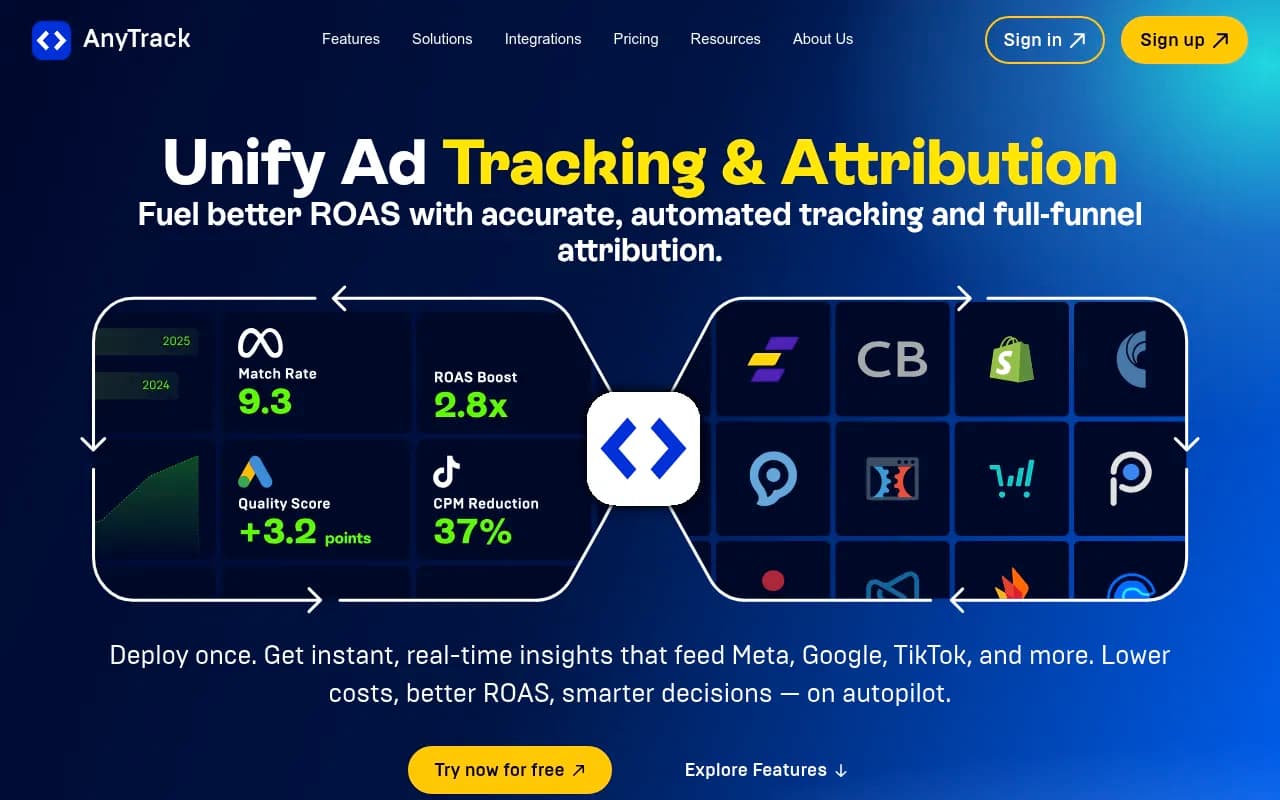
AnyTrack is a no-code conversion tracking platform that automatically feeds enriched first-party data to Meta, Google, TikTok, and other ad platforms via their Conversion APIs. It's built for ecommerce, affiliate, and lead-gen funnels.
Setup is genuinely easy. Install the AnyTrack pixel (or use Google Tag Manager), connect your ad accounts, and the platform starts capturing every customer touchpoint. It tracks clicks, form submissions, purchases, and custom events across your entire funnel.
The platform improves match rates by sending server-side data that includes email, phone, and other identifiers ad platforms use for attribution. This helps Meta and Google's algorithms optimize faster and more accurately. AnyTrack also syncs data to Google Analytics 4, so your GA4 reports finally match your ad platform data.
AnyTrack integrates with 100+ platforms: Shopify, WooCommerce, ClickFunnels, Stripe, PayPal, affiliate networks, and every major ad platform. The reporting dashboard shows real-time ROAS, CPA, and profit metrics. You can drill down to individual campaigns, ad sets, or keywords.
Pricing: $100/mo (Starter: 100k sessions, 1 site), $150/mo (Personal: 500k sessions, 3 sites), $300/mo (Advance: 3M sessions, 10 sites). 14-day free trial. That's cheaper than Hyros for most use cases.
Where AnyTrack wins: No-code setup, better match rates via CAPI, syncs with GA4, affiliate network integrations, cheaper than Hyros.
Where it falls short: Less sophisticated attribution models than Hyros. No call tracking. The UI is functional but not beautiful.
Best for: Affiliate marketers, lead-gen agencies, and ecommerce brands who want accurate conversion tracking and CAPI integration without technical complexity.
Wicked Reports
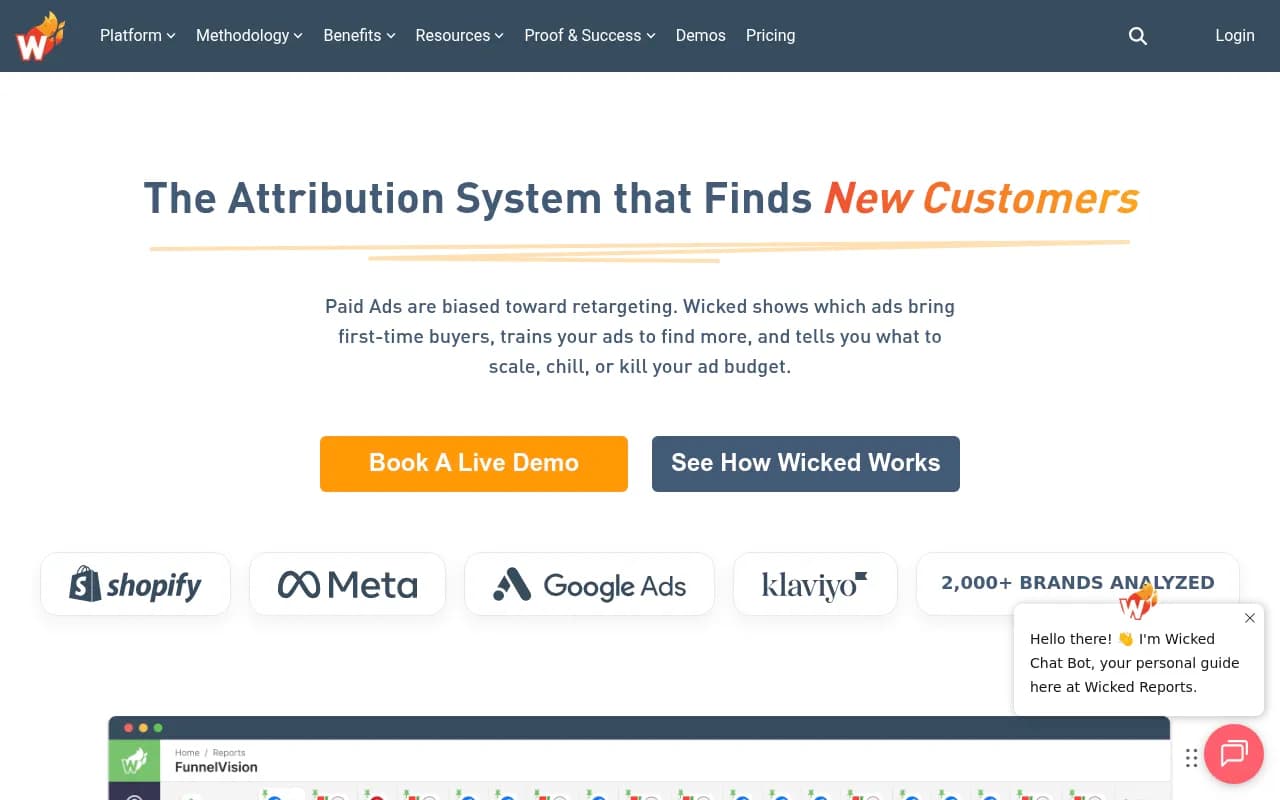
Wicked Reports is the only attribution platform that separates new customer acquisition from repeat purchases and trains Meta's algorithm accordingly. This is huge. Most tools (including Hyros) lump all conversions together, so ad platforms optimize for whoever converts—often repeat buyers who were going to purchase anyway.
Wicked sends Advanced Signal events to Meta: New Purchase, Repeat Purchase, and product-level data. This teaches Meta's algorithm to find first-time customers instead of recycling existing ones. Brands using this feature report 40-60% drops in new customer acquisition cost (nCAC).
The platform also delivers 5 Forces AI—weekly Scale / Chill / Kill budget recommendations based on five data inputs: new customer volume, repeat customer volume, ROAS, profit margin, and trend direction. You get specific actions: "Scale this campaign 20%", "Chill this ad set", "Kill this keyword". No guessing.
Wicked Reports tracks every order and lead to its source, down to order ID and CRM ID. It integrates with Shopify, WooCommerce, Klaviyo, and major ad platforms. The attribution is first-party and accurate—no data modeling or guesswork.
Pricing is custom based on revenue and CRM contact list size. Monthly plans available, annual pre-pay saves up to 2 months. You need a demo to get a quote.
Where Wicked Reports wins: Only platform that separates new vs repeat customers, Advanced Signal training for Meta, 5 Forces AI budget recommendations, strong for ecommerce.
Where it falls short: Custom pricing (no transparency), requires demo, fewer integrations than Hyros, no call tracking.
Best for: Ecommerce brands and agencies that want to lower new customer acquisition cost and stop wasting budget on retargeting.
AdBeacon

AdBeacon is an ecommerce attribution and ad optimization platform built for agencies and brands managing $50k+ monthly ad spend. It uses first-party data to track customer journeys, optimize campaigns in real-time, and scale profitably across Meta, Google, TikTok, and more.
The platform replaces unreliable pixel data with server-side tracking. You get accurate attribution even when iOS blocks tracking or users have ad blockers enabled. AdBeacon integrates with Shopify, WooCommerce, BigCommerce, and all major ad platforms.
What makes AdBeacon different: real-time optimization. The platform monitors campaign performance every few minutes and can automatically pause underperforming ads, shift budget to winners, or alert you to anomalies. You set the rules, AdBeacon executes them.
The attribution models are flexible: first-click, last-click, linear, time-decay, or custom. You can track ROAS, profit (factoring in COGS), and customer lifetime value. The reporting is clean and exportable.
AdBeacon's pricing is tiered by ad spend: $99/mo for $50k-$100k monthly spend, scaling up from there. Agency plans require 5 store accounts minimum. 30-day free trial available. That's competitive with Hyros for mid-size brands.
Where AdBeacon wins: Real-time optimization and automation, accurate first-party tracking, good for agencies managing multiple clients, 30-day trial.
Where it falls short: Ecommerce-only (no SaaS or lead-gen focus). Fewer integrations than Hyros. The UI is functional but not as polished as Triple Whale.
Best for: Ecommerce agencies and brands spending $50k+/month who want accurate attribution plus automated optimization.
How to choose the right Hyros alternative
Start with your budget and business model. If you're spending under $100k/month on ads, RedTrack ($48/mo) or Cometly ($199/mo) deliver accurate attribution without Hyros' $379/mo minimum. If you're an ecommerce brand doing $1M+ annual revenue and want unified analytics plus AI agents, Triple Whale ($549/mo) is worth the investment.
For long sales cycles (courses, coaching, SaaS), SegMetrics tracks lifetime ROI better than Hyros. For brands that want to separate new customer acquisition from repeat purchases, Wicked Reports is the only platform that trains Meta's algorithm accordingly.
If you need both granular attribution and aggregate modeling, Northbeam combines MTA and MMM. If you're managing multiple clients or want automated optimization, AdBeacon handles real-time campaign adjustments.
And if you care about how your brand appears in AI search engines like ChatGPT and Perplexity—a channel Hyros completely ignores—Cometly and SegMetrics both track AI search as its own channel. For deeper AI visibility tracking and optimization, tools like Promptwatch specialize in monitoring and improving how your brand ranks in AI-generated responses.

The right choice depends on what you actually need. Hyros is powerful but expensive and complex. Most teams don't need all its features. Pick the tool that solves your specific problem—accurate attribution, better pricing, easier setup, or capabilities Hyros doesn't offer—and you'll get better results for less money.