RedTrack Review 2026
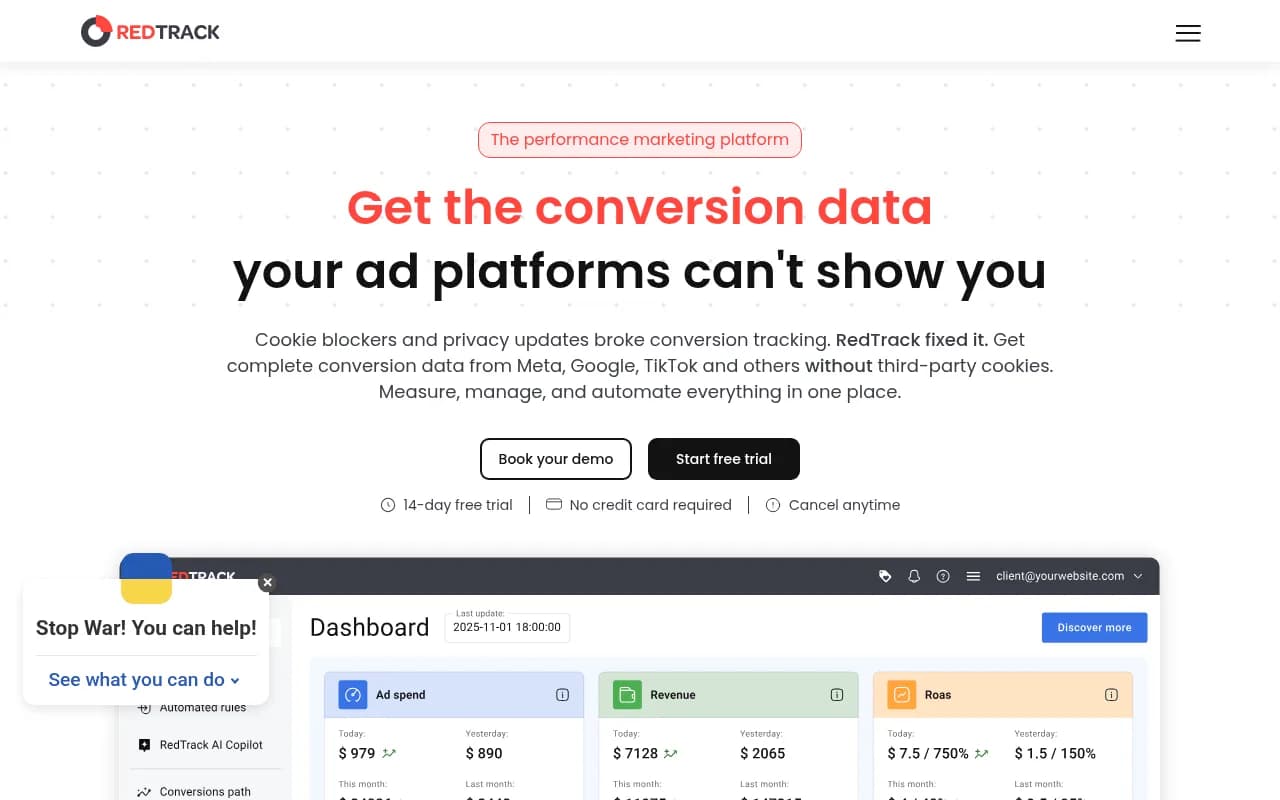
RedTrack is a performance marketing analytics platform that solves the iOS14 and ad blocker problem. It captures 100% of conversions using server-side tracking and first-party cookies, then sends enriched data back to Meta, Google, TikTok, and 20+ ad networks via CAPI to improve targeting. Used by 1
Key Takeaways
- RedTrack solves the iOS14 and ad blocker tracking gap by combining server-side tracking, first-party cookies, and script-based methods to capture 100% of conversions that Meta and Google pixels miss
- Lacks content generation, AI crawler logs, and traffic attribution capabilities that Promptwatch offers for AI search visibility -- RedTrack is purely focused on paid ad tracking, not organic AI visibility
- Best for performance marketers, media buyers, and ecommerce brands running $10k-$100k+/month in paid ads across Meta, Google, TikTok, and affiliate networks
- Pricing starts at $48/month (Launch plan, billed annually) with higher tiers at $199/month and custom enterprise pricing

RedTrack is a performance marketing analytics platform built to solve the tracking crisis that hit advertisers after iOS14, GDPR, and the rise of ad blockers. When Apple's App Tracking Transparency update broke Meta's pixel tracking in 2021, most advertisers lost 30-50% of their conversion visibility overnight. RedTrack's answer: bypass browser-based tracking entirely with server-to-server tracking and first-party cookies that ad blockers can't touch. The platform is used by 1,053 media buying teams who tracked over 1 billion conversions and $621.2M in revenue in 2025.
The company is a Meta Business Partner (badged status) and integrates with 200+ ad networks, affiliate platforms, and ecommerce systems. Its core value proposition is simple: see every conversion your ad platforms miss, then send that data back to Meta, Google, TikTok, and others via Conversion API (CAPI) so their algorithms can optimize better. This isn't just a reporting tool -- it's a closed-loop system that improves ad performance by feeding platforms the conversion signals they're blind to.
Who uses RedTrack
RedTrack targets three main personas. First, performance marketers and media buyers running paid campaigns across multiple channels (Meta, Google Ads, TikTok, Snapchat, Taboola, native ad networks). These are teams spending $10k-$100k+ per month who need accurate ROAS data down to the ad level. Second, affiliate marketers building complex funnels with redirect tracking, split testing, and offer rotation. Third, ecommerce brands (especially Shopify and WooCommerce stores) that need to reconcile ad platform reporting with actual revenue in their store backend.
The platform fits teams of 2-20 people at agencies, in-house marketing teams at DTC brands, and solo media buyers managing multiple client accounts. It's particularly strong for industries where tracking accuracy directly impacts profitability: dropshipping, lead generation, SaaS, info products, and high-ticket ecommerce. If you're spending less than $5k/month on ads, RedTrack is probably overkill -- the native dashboards in Meta and Google will suffice. If you're spending $50k+/month and making budget decisions based on incomplete data, RedTrack pays for itself quickly.
Server-side tracking and first-party cookies
RedTrack's core technical advantage is its hybrid tracking stack. It uses three methods simultaneously: first-party cookies (stored on your own domain, not blocked by Safari or Firefox), server-to-server postbacks (direct API calls from your server to RedTrack's servers), and a Universal Tracking Script that collects event data without relying on third-party cookies. This combination captures conversions that browser-based pixels miss -- users who delete cookies, block JavaScript, or browse in private mode.
The server-side tracking works by assigning a unique visitor ID on the server level, not in the browser. When a user clicks your ad, RedTrack's redirect or direct tracking link logs the click on its servers. When the user converts (purchase, lead form, signup), your website or ecommerce platform sends a server-to-server postback to RedTrack with the conversion details. No browser involvement, no cookies required. This method is GDPR-compliant because the data stays on your own infrastructure and RedTrack's servers -- it's first-party data, not shared with third parties.
For ecommerce, RedTrack integrates directly with Shopify, WooCommerce, PrestaShop, and other platforms via webhooks. When an order is placed, the platform sends order details (revenue, product SKU, customer ID) to RedTrack in real time. RedTrack matches the order to the original ad click and attributes the conversion. This gives you 100% revenue matching -- every dollar in your store backend is tied to a specific campaign, ad set, and creative.
Conversion API integrations
RedTrack's CAPI integrations are pre-built for Meta (Facebook/Instagram), Google Ads, TikTok, Snapchat, and Bing. The platform sends enriched conversion events back to these ad networks via their server-side APIs, bypassing the limitations of browser pixels. This improves Event Match Quality (EMQ) on Meta -- the metric that measures how well your conversion data matches Meta's user profiles. Higher EMQ means better attribution and more accurate targeting.
RedTrack clients report significant performance improvements after enabling CAPI. One case study showed a 35% lower cost per purchase and 22% higher ROAS after switching from pixel-only tracking to RedTrack's hybrid tracking + CAPI setup. Another client boosted their Meta EMQ from 55% to 82%, which lowered their CPA by 28%. The reason: RedTrack sends more data points per conversion (email, phone, IP address, user agent, event timestamp) than a browser pixel can capture, giving Meta's algorithm more signals to work with.
The CAPI setup is straightforward. You connect your Meta Ads account via OAuth, map your conversion events (purchase, add to cart, lead), and RedTrack automatically sends events to Meta's Conversions API in real time. You can see the event delivery status in RedTrack's dashboard -- how many events were sent, how many were accepted, and any errors. This transparency is rare in tracking tools; most platforms send CAPI events in a black box with no visibility into delivery rates.
Multi-touch attribution models
RedTrack supports six attribution models: first-click, last-click, linear, time decay, position-based, and data-driven. Most advertisers default to last-click attribution (credit the final touchpoint before conversion), but this undervalues top-of-funnel campaigns that introduce users to your brand. RedTrack's multi-touch models distribute conversion credit across all touchpoints in the customer journey.
For example, a user might see your Meta ad (first touch), click a Google search ad three days later (middle touch), then convert via a retargeting ad (last touch). Last-click attribution gives 100% credit to the retargeting ad. Linear attribution splits credit equally (33% each). Position-based gives 40% to first touch, 40% to last touch, and 20% to middle touches. RedTrack lets you compare these models side-by-side to see which campaigns are driving awareness vs. conversions.
The customer journey reports show every click, impression, and conversion event for individual users. You can see the exact sequence of ads a user interacted with before converting, the time between touches, and the device/browser used at each step. This is useful for understanding cross-device behavior (user sees ad on mobile, converts on desktop) and identifying drop-off points in your funnel.
Campaign management and automation
RedTrack includes a centralized Ads Manager that pulls data from Meta, Google, TikTok, and other networks into one dashboard. You can view campaign performance, edit budgets, pause ads, and create new campaigns without switching between platforms. The interface overlays RedTrack's conversion data on top of the native ad platform metrics, so you see both the platform's reported conversions and RedTrack's server-side conversions side-by-side.
The automation rules are where RedTrack saves time. You can set conditions like "pause any ad set that spends $500 without a conversion" or "increase budget by 20% for campaigns with ROAS above 3x." These rules run every 5-30 minutes (depending on your plan) and execute automatically. This prevents runaway spend on underperforming campaigns and scales winners faster than manual optimization.
RedTrack also offers a Chrome extension that overlays its tracking data directly in Meta Ads Manager and Google Ads. You see RedTrack's conversion counts, revenue, and ROAS metrics inline with the native platform data, without leaving the ad manager interface. This is a small but powerful feature -- it eliminates the need to toggle between tabs and makes optimization decisions faster.
Affiliate and funnel tracking
For affiliate marketers, RedTrack supports redirect tracking with custom tracking links. You create a campaign in RedTrack, generate a tracking URL, and use that URL in your ad. When a user clicks, RedTrack logs the click (with parameters like ad ID, placement, keyword) and redirects the user to your landing page or offer. You can split test multiple landing pages, rotate offers based on GEO or device, and track conversions at each step of the funnel.
RedTrack integrates with 50+ affiliate networks (MaxBounty, ClickBank, CJ Affiliate, ShareASale, etc.) via postback URLs. When a conversion happens on the affiliate network, it sends a postback to RedTrack with the conversion details. RedTrack matches the conversion to the original click and attributes it to the correct campaign. This gives you accurate ROI data for affiliate campaigns, which is notoriously difficult to track because conversions happen on third-party networks.
The funnel tracking feature lets you map out multi-step conversion paths (landing page -> pre-lander -> offer page -> thank you page) and see drop-off rates at each step. You can A/B test different funnel variations and see which path converts best. This is standard for affiliate trackers like Voluum or Binom, but RedTrack combines it with ecommerce and CAPI features that those tools lack.
Reporting and data export
RedTrack's reporting interface supports 20+ tracking parameters (campaign, ad set, ad, keyword, placement, device, GEO, etc.) and 30+ calculated metrics (clicks, conversions, revenue, cost, profit, ROI, ROAS, CPA, etc.). You can group and nest reports up to five dimensions deep -- for example, group by campaign, then ad set, then ad, then device, then GEO. This granularity is useful for finding pockets of profitability (e.g., "iPhone users in California converting at 5x ROAS on this specific ad").
You can add campaign notes directly in the dashboard, which is helpful for team collaboration. If you pause a campaign, you can leave a note explaining why ("CPA too high, creative fatigue"). Other team members see the note when they review the campaign. This prevents duplicate work and keeps everyone aligned.
RedTrack integrates with Google Looker Studio (formerly Data Studio) for custom reporting. You can pull RedTrack data into Looker Studio and combine it with data from Google Analytics, your CRM, or other sources. The platform also has a REST API for developers who want to build custom integrations or export data to a data warehouse.
Integrations and ecosystem
RedTrack integrates with 200+ platforms across ad networks (Meta, Google, TikTok, Snapchat, Taboola, Outbrain, Bing, Twitter, Pinterest, Reddit, Quora, etc.), ecommerce platforms (Shopify, WooCommerce, PrestaShop, Magento, BigCommerce, etc.), affiliate networks (MaxBounty, ClickBank, CJ, ShareASale, etc.), and tools like Zapier, Slack, and Telegram for notifications. The integrations are pre-built with OAuth or API key authentication, so setup takes 5-10 minutes per platform.
The platform also integrates with call tracking tools (CallRail, Invoca) and CRMs (HubSpot, Salesforce) for lead-based businesses. If you're tracking phone call conversions, RedTrack can pull call data from your call tracker and attribute calls to specific campaigns. For SaaS or high-ticket products with long sales cycles, you can send lead data to your CRM and track which campaigns generate the highest-value customers.
RedTrack does not have a mobile app, but the web interface is mobile-responsive. You can check campaign performance and make quick optimizations from your phone, though the full feature set is best used on desktop.
Pricing and plans
RedTrack has three main pricing tiers. The Launch plan costs $48/month (billed annually) and includes 10,000 active contacts, 100,000 events per month, and basic integrations. The Growth plan costs $199/month (billed annually) and includes 50,000 active contacts, 500,000 events, and advanced features like automation rules and multi-user access. The Scale plan is custom-priced for enterprise teams with higher volume needs.
There's also a free product called RedTrack Relay, which gives unlimited access to the Conversion API feature without the full tracking platform. Relay is designed for advertisers who just want to improve their Meta or Google CAPI setup without switching to a new tracker. It's a smart freemium play -- users can test the CAPI benefits risk-free, then upgrade to the full platform if they want attribution and reporting.
RedTrack offers a 14-day free trial with no credit card required. The trial includes full access to all features, so you can test the platform with real campaigns before committing. Compared to competitors like Voluum ($69-$499/month) or Hyros ($99-$500+/month), RedTrack is competitively priced, especially for teams that need both affiliate tracking and ecommerce attribution.
Strengths
Server-side tracking that actually works. RedTrack's hybrid tracking stack (first-party cookies + server-to-server postbacks + Universal Tracking Script) captures conversions that browser pixels miss. Clients report 20-40% more conversions tracked compared to pixel-only setups. This is the platform's core differentiator.
Pre-built CAPI integrations with performance impact. The Meta, Google, TikTok, and Snapchat CAPI integrations are turnkey and deliver measurable results. Case studies show 22-35% ROAS improvements after enabling CAPI, which is significant for high-spend accounts.
Centralized dashboard for multi-channel campaigns. Managing Meta, Google, TikTok, and affiliate campaigns in one interface saves hours per week. The Chrome extension that overlays RedTrack data in native ad managers is a nice touch.
Automation rules prevent wasted spend. The ability to auto-pause underperformers or scale winners based on custom conditions is table stakes for modern tracking tools, and RedTrack executes it well.
200+ integrations cover most use cases. Whether you're running ecommerce, affiliate, lead gen, or SaaS campaigns, RedTrack likely integrates with your stack.
Limitations
Steep learning curve for beginners. RedTrack is powerful but not intuitive. The interface has a lot of menus, settings, and configuration options. If you're new to tracking tools, expect a few days of setup and learning before you're comfortable. The onboarding documentation is thorough, but there's no hand-holding.
No built-in fraud detection. Unlike Voluum or ClickMagick, RedTrack doesn't have native click fraud detection or bot filtering. You'll need to integrate a third-party fraud tool (like ClickCease or Fraudlogix) if this is a concern.
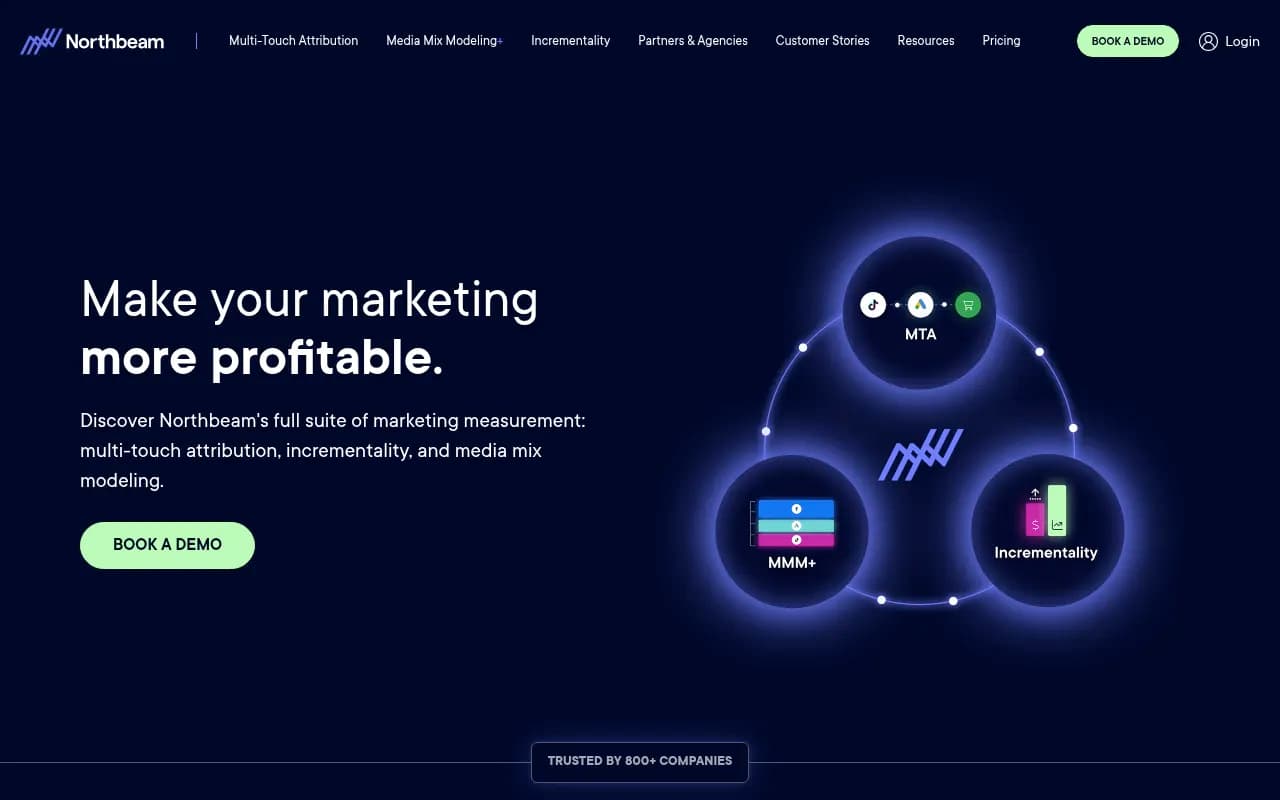
Reporting UI feels dated. The dashboard is functional but not modern. Competitors like Hyros and Northbeam have sleeker, more visual interfaces. RedTrack's UI is dense with data tables and dropdowns, which some users find overwhelming.
Bottom Line
RedTrack is the best choice for performance marketers and media buyers who need accurate conversion tracking across Meta, Google, TikTok, and affiliate networks -- especially if you're dealing with iOS14 tracking loss or ad blocker issues. The server-side tracking and CAPI integrations deliver real performance improvements (20-35% ROAS gains are common), and the centralized dashboard simplifies multi-channel management. It's not the easiest tool to learn, but for teams spending $10k+/month on ads, the ROI is clear. If you're running ecommerce or affiliate campaigns and your current tracking setup is missing conversions, RedTrack is worth the 14-day trial.
Tags:
Frequently asked questions
What is RedTrack and what does it do?
How much does RedTrack cost?
Who should use RedTrack?
How does RedTrack solve the iOS14 tracking problem?
Does RedTrack offer a free trial?
What ad platforms does RedTrack integrate with?
Is RedTrack completely free to use?
Similar and alternative tools to RedTrack