Summary
- Only 62% of content that ranks on Google gets cited by ChatGPT -- 38% of your top rankings are invisible to AI search engines
- AI models prioritize different signals than Google: structured data, clear answers, authoritative citations, and conversational language matter more than backlinks
- Traditional SEO tactics (keyword density, meta tags, backlinks) don't directly influence AI citations -- you need a separate optimization strategy
- Tools like Promptwatch can show you exactly where you're invisible to AI even when you rank well on Google, then help you create content that gets cited
- The gap is widening: local businesses see calls dropping despite stable 3-pack rankings as AI-powered results replace traditional listings

The 62% overlap problem
You check your rank tracker. Position 1 for your target keyword. Traffic looks solid. Your SEO team is happy.
Then someone asks ChatGPT the exact question your article answers. Your brand doesn't appear. Not in the response. Not in the sources. Nowhere.
This isn't rare. Research from Chatoptic analyzing thousands of queries found only 62% overlap between what ranks on Google and what gets cited by ChatGPT. That's a 38% invisibility rate for content that dominates traditional search.
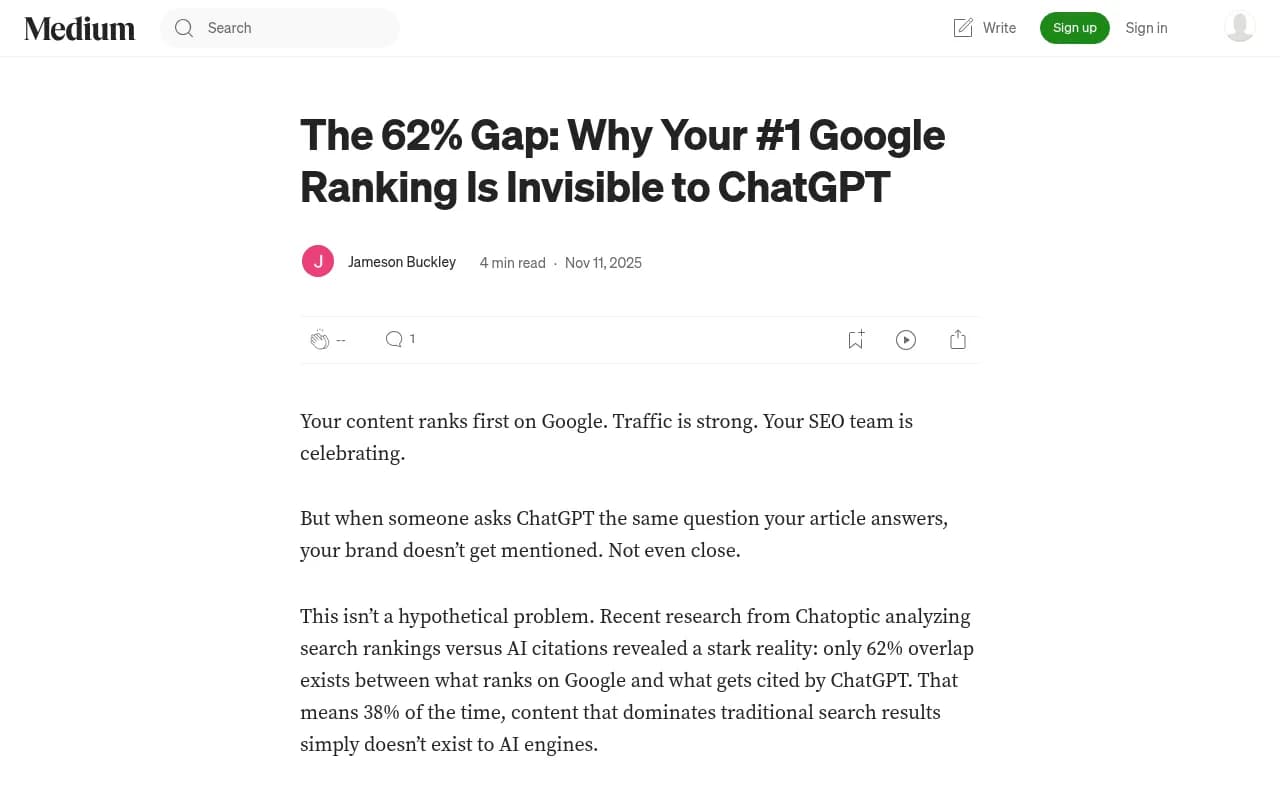
The gap exists because Google and AI models evaluate content using fundamentally different criteria. Google's algorithm weighs backlinks, domain authority, user engagement signals, and hundreds of other ranking factors accumulated over 25 years. ChatGPT, Claude, Perplexity, and other AI models prioritize answer quality, citation worthiness, structured information, and conversational relevance.
Your #1 Google ranking proves you won the traditional SEO game. But AI search is a different game with different rules.
Why AI models ignore your Google-optimized content
AI language models don't crawl the web the same way Google does. They're trained on snapshots of the internet, then updated periodically. When they generate responses, they're not ranking pages -- they're synthesizing information from their training data and real-time retrieval systems.
Here's what matters to AI models that traditional SEO often misses:
Clear, direct answers to questions. Google can rank a 3,000-word guide that eventually answers a question buried in paragraph 12. AI models need the answer upfront, clearly stated, in language that can be extracted and cited. If your content meanders or buries the lead, AI skips it.
Structured information. Lists, tables, step-by-step instructions, and clearly labeled sections help AI models parse and cite your content. A wall of prose -- even well-written prose -- is harder for AI to extract and attribute.
Citation-worthy statements. AI models cite sources when they make specific claims. Vague statements like "many experts believe" or "studies show" don't get cited. Concrete data points, named research, and specific examples do.
Authority signals AI can verify. Backlinks matter to Google. AI models care more about whether your content demonstrates expertise through specificity, references to primary sources, and alignment with authoritative information in their training data.
Conversational language. People prompt AI engines differently than they search Google. "Best CRM for small business" is a Google query. "I run a 5-person marketing agency and need a CRM that integrates with HubSpot and costs under $50/month -- what should I use?" is how someone prompts ChatGPT. If your content only targets the keyword, it misses the conversational context.
Traditional SEO tactics -- keyword density, meta descriptions, internal linking structures, backlink profiles -- have minimal direct impact on AI citations. You can have all of those dialed in and still be invisible to ChatGPT.
The local search visibility crisis
The gap isn't just affecting blog content. Local businesses are seeing it in their bottom line.
Data from Sterling Sky analyzing 179 Google Business Profiles shows click-to-call rates dropping sharply for law firms -- even when their traditional 3-pack rankings hold steady. The reason: AI-powered local packs are replacing traditional map results.
These AI-generated local listings behave differently:
- They show only 2 businesses instead of 3
- Call buttons often disappear, replaced by AI-generated summaries
- The businesses shown in AI packs frequently don't match the traditional 3-pack
- When paid ads appear, organic listings lose direct call and website buttons
Your rank tracker still shows position 2 in the local pack. But the actual result users see is an AI summary with no call button and a different set of businesses. Your ranking is technically intact. Your visibility is gone.
What AI models actually look for
If traditional SEO signals don't drive AI citations, what does?
AI models prioritize content that:
Answers questions explicitly. Use question-based headings. State the answer in the first sentence of each section. Don't make the AI model (or the reader) hunt for it.
Includes comparison tables. When you're comparing tools, approaches, or options, put it in a markdown table. AI models love structured data they can extract and cite.
| Feature | Traditional SEO | AI Search Optimization |
|---|---|---|
| Primary signal | Backlinks, domain authority | Answer quality, citation worthiness |
| Content structure | Keyword-optimized paragraphs | Clear answers, structured data |
| User intent | Search queries | Conversational prompts |
| Measurement | Rankings, traffic | Citations, mentions |
Cites primary sources. Link to research papers, official documentation, and authoritative datasets. AI models are more likely to cite content that itself cites credible sources.
Uses clear attribution. When you reference data, name the source explicitly. "According to a 2025 study by Chatoptic analyzing 10,000 queries..." is better than "Recent research shows..."
Matches conversational intent. Write for how people actually ask questions, not just the keyword they type into Google. Answer follow-up questions. Address objections. Provide context.
Demonstrates expertise through specificity. Generic advice gets ignored. Specific examples, concrete numbers, and detailed explanations signal expertise to AI models.
How to audit your AI visibility gap
You can't fix what you can't measure. Start by identifying where you rank on Google but disappear in AI search.
Manual spot-checking works for small sites: take your top 10 ranking keywords, prompt ChatGPT and Perplexity with those queries, and see if your brand appears in the response or sources. Document the gap.
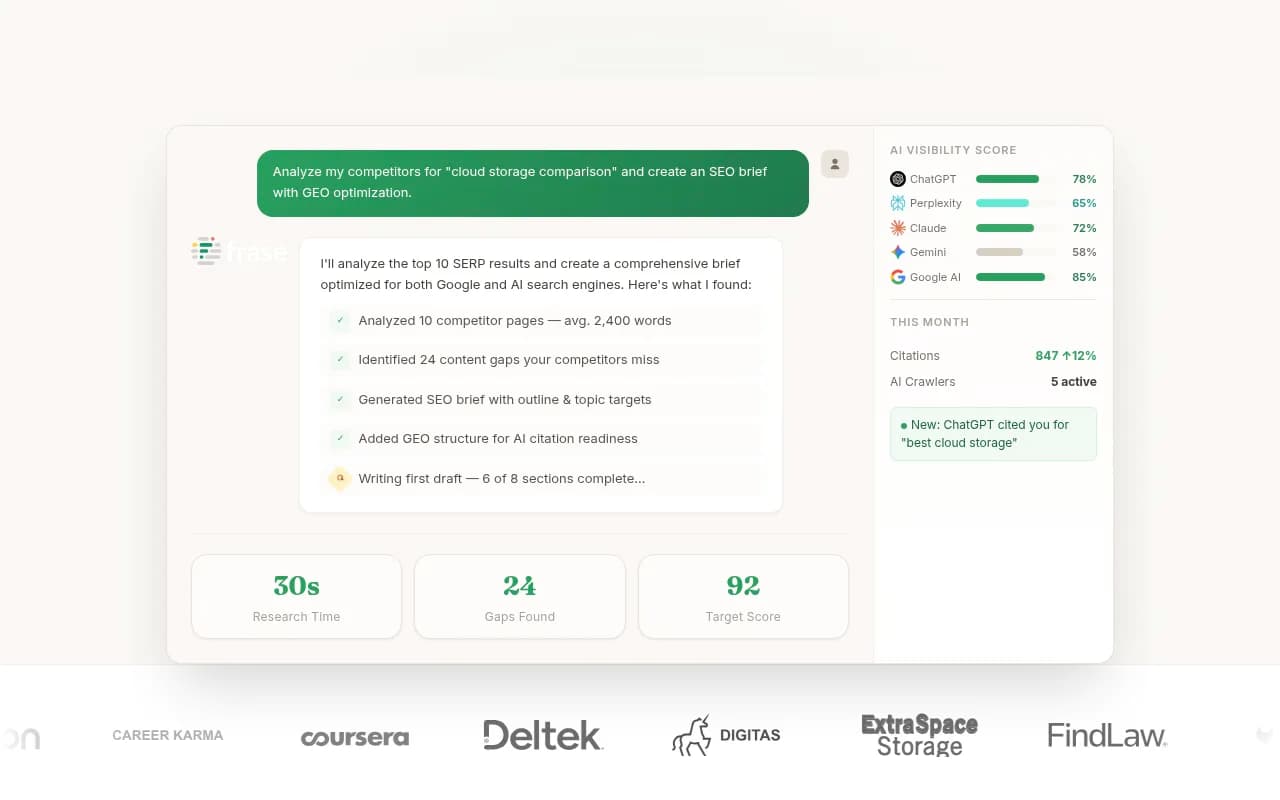
For larger sites or ongoing monitoring, you need tools that track both. Promptwatch shows you exactly which prompts competitors are visible for but you're not, then helps you create content that gets cited. It tracks 10 AI models (ChatGPT, Perplexity, Claude, Gemini, Google AI Overviews, and more) and compares your AI visibility to your Google rankings.
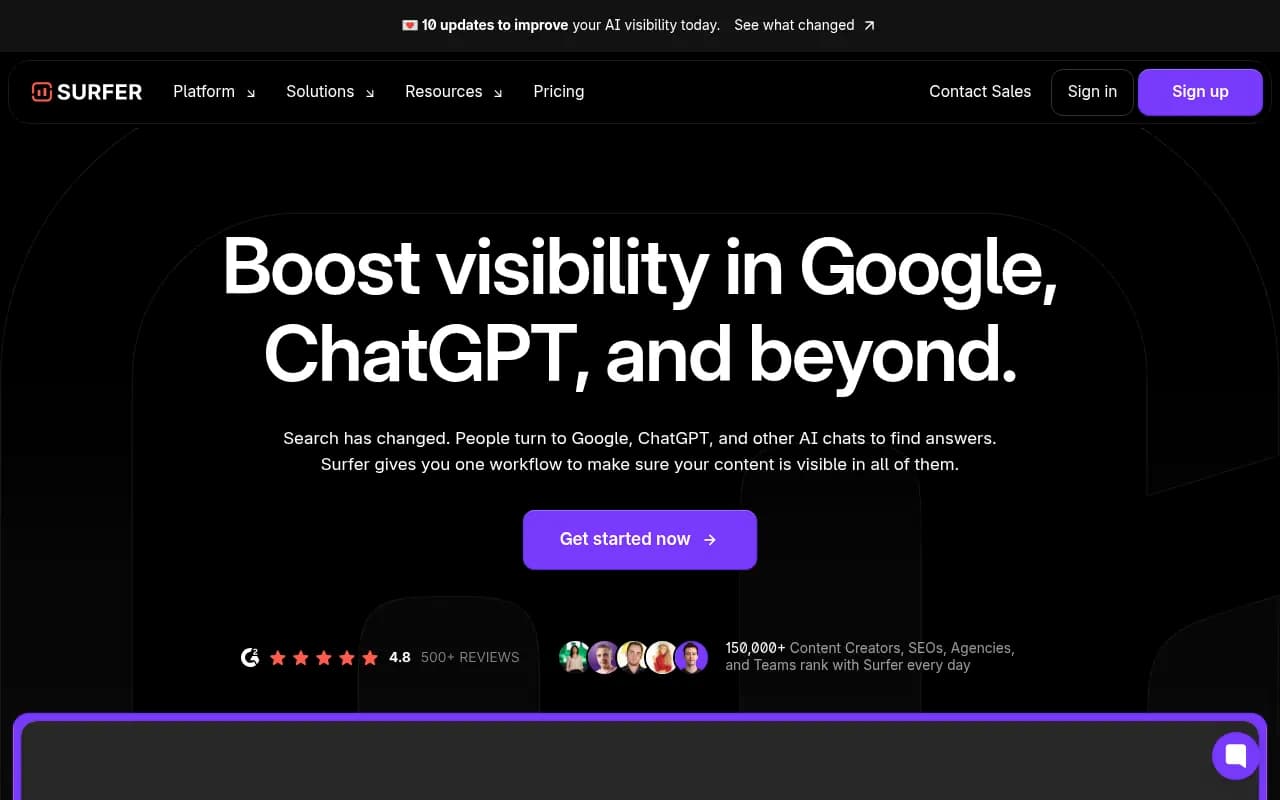
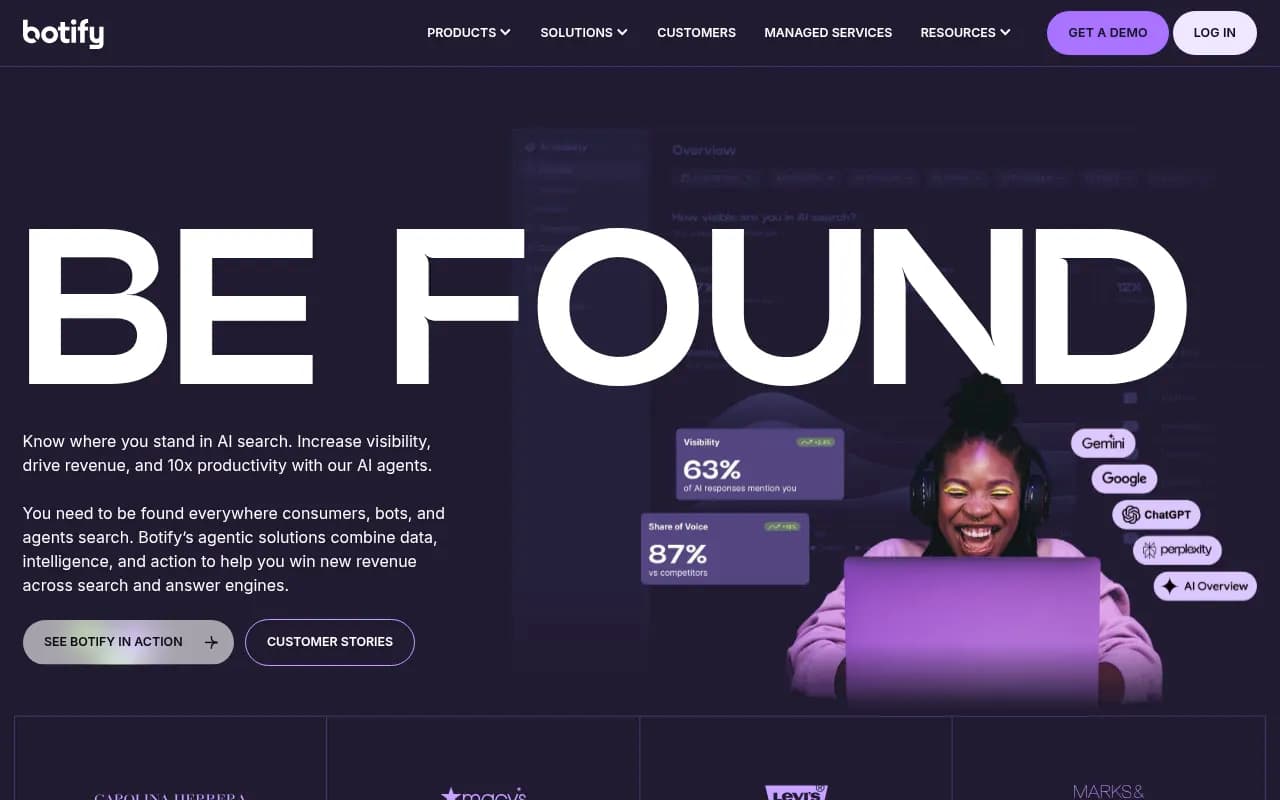
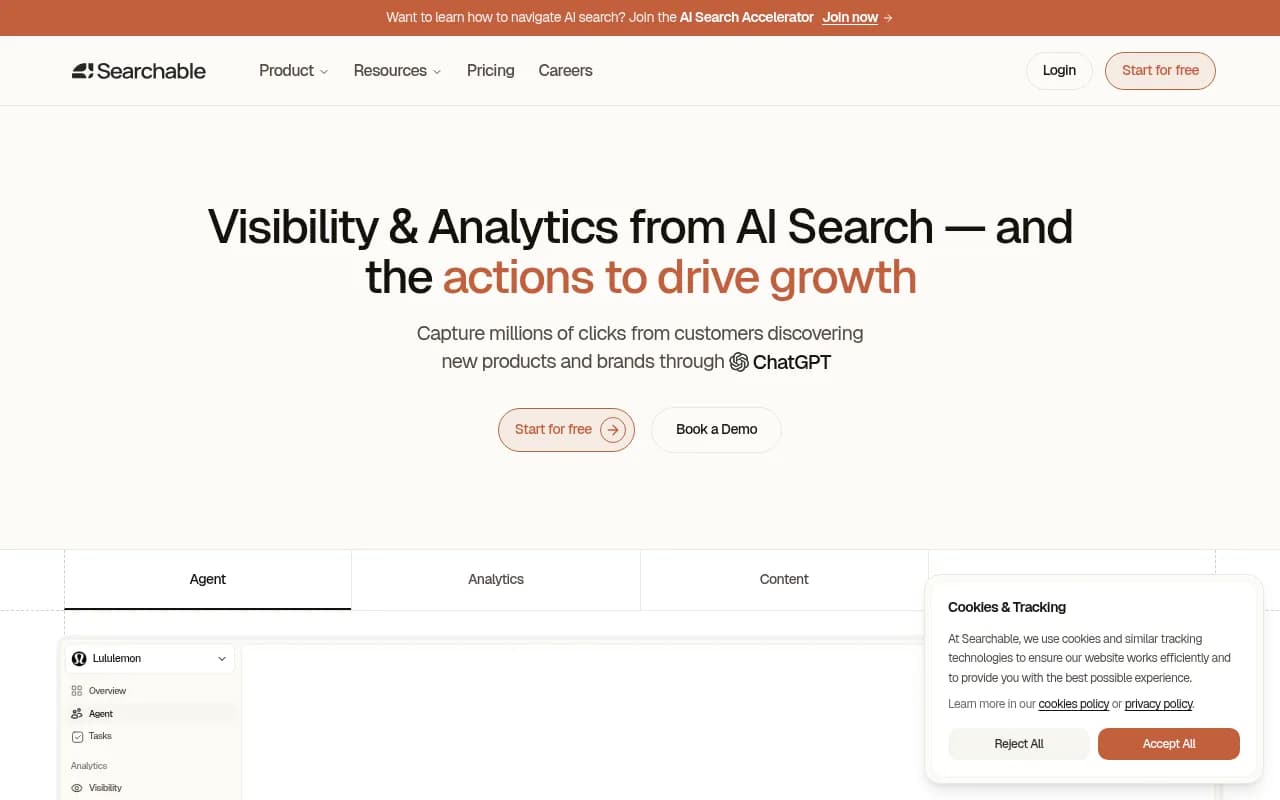
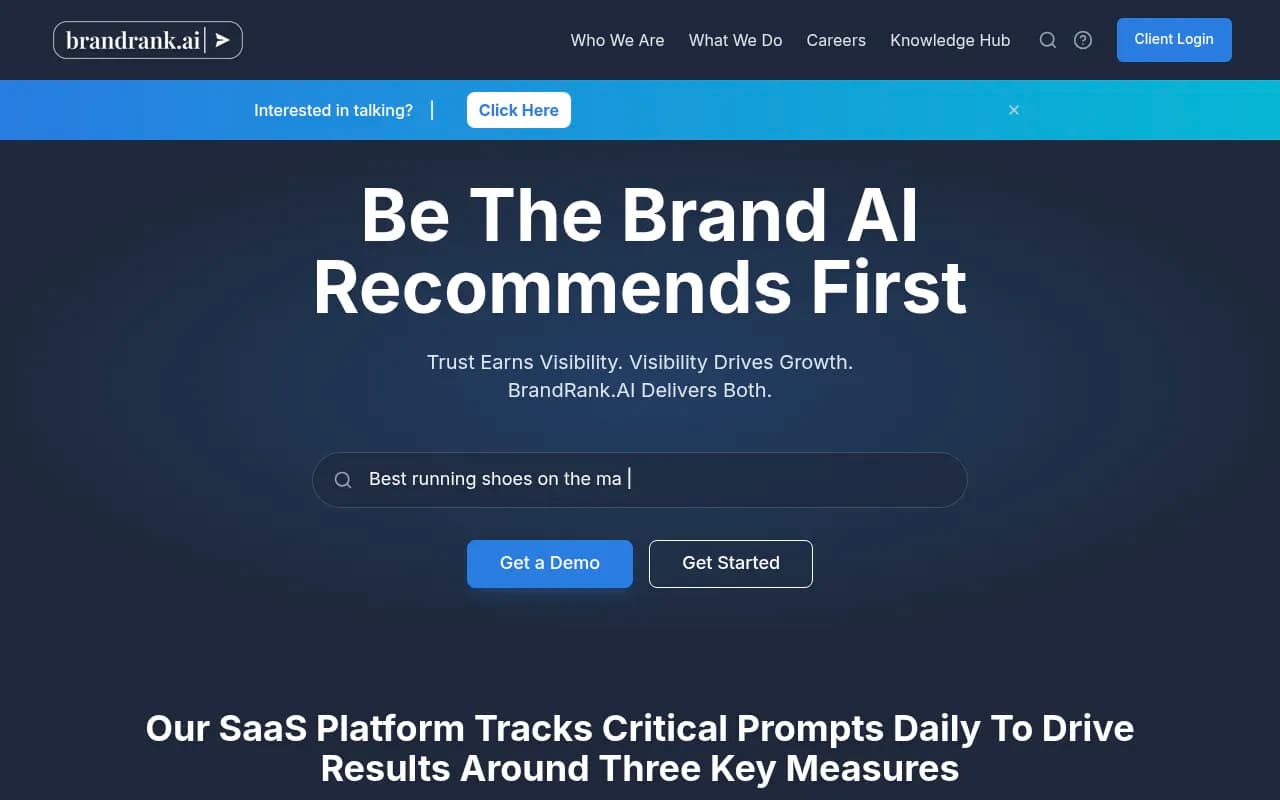
Other platforms that monitor AI citations:



The key metric: citation rate vs. ranking position. If you rank in the top 3 on Google for a query but get cited 0% of the time by AI models, that's a high-priority gap to fix.
Content fixes that actually work
Once you've identified the gap, here's how to close it:
Restructure existing content for AI extraction. Add a summary section at the top with 3-5 key takeaways in bullet points. Use question-based H2 headings. Put answers in the first sentence of each section. Add comparison tables where you're currently using paragraphs to compare options.
Create FAQ sections that match conversational prompts. Look at how people actually prompt AI models -- longer, more specific, more contextual than Google searches. Write FAQ sections that answer those conversational queries directly.
Add structured data markup. Schema.org markup helps AI models understand your content structure. Use FAQ schema, HowTo schema, and Article schema where appropriate.
Cite authoritative sources explicitly. Link to research papers, official documentation, and primary data sources. Name them in the text, not just in a generic "sources" section at the bottom.
Optimize for featured snippets. Content that wins Google's featured snippet is more likely to get cited by AI models. The overlap isn't 100%, but it's significant.
Create content specifically for AI search. Don't just retrofit old content. Identify prompts where you're invisible, then create new articles designed from the ground up for AI citation. Tools like Promptwatch show you the content gaps and can generate articles optimized for AI visibility.

The crawler log advantage
Here's something most people miss: AI models crawl your website differently than Google does.
ChatGPT, Claude, and Perplexity all send their own crawlers (GPTBot, ClaudeBot, PerplexityBot) to index content. If these crawlers can't access your pages, or if they encounter errors, your content won't appear in AI responses -- even if it ranks #1 on Google.
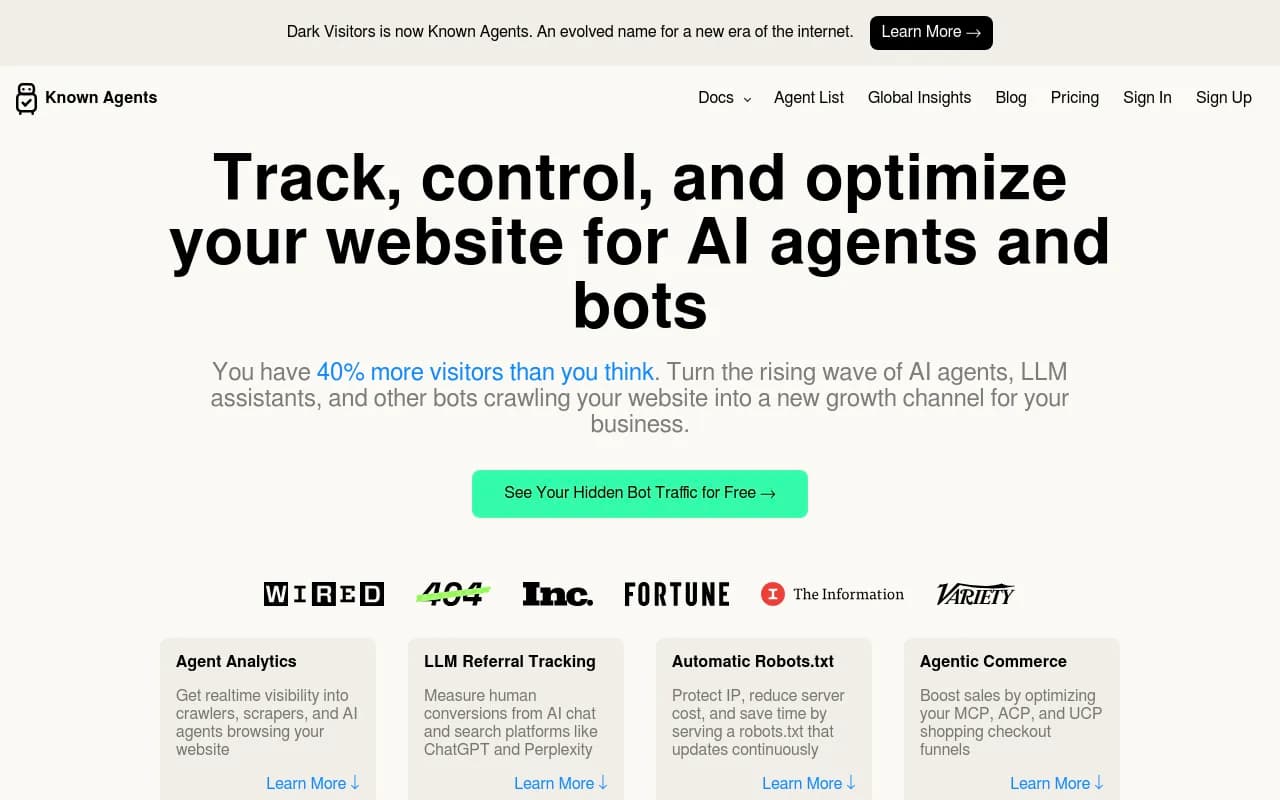
Most sites have no visibility into AI crawler behavior. Promptwatch includes real-time AI crawler logs showing which pages AI models are reading, how often they return, and any errors they encounter. If ChatGPT is getting 404s on your key pages or your robots.txt is blocking AI crawlers, you'll see it immediately.
This is table stakes for AI visibility. You can't rank in AI search if AI models can't crawl your content.
Reddit and YouTube: the citation sources you're ignoring
AI models cite Reddit threads and YouTube videos constantly. If you're only optimizing your own website, you're missing a huge chunk of potential visibility.
When someone asks ChatGPT for product recommendations, it frequently cites Reddit discussions where real users share experiences. When someone asks for a tutorial, it cites YouTube videos.
The fix:
- Monitor Reddit discussions in your niche and participate authentically (not spam)
- Create YouTube tutorials and how-to videos that answer common questions in your space
- Track which Reddit threads and YouTube videos AI models cite for your target prompts, then create better versions
Promptwatch surfaces Reddit threads and YouTube videos that influence AI recommendations in your category. Most competitors ignore this channel entirely.
Measuring what actually matters
Google Analytics shows you traffic from google.com. It doesn't show you traffic from ChatGPT, Claude, or Perplexity.
AI search traffic is growing fast, but most analytics setups can't track it. You need:
- Referrer tracking that captures AI search engines
- Citation tracking that shows when AI models mention your brand (even without a link)
- Prompt volume estimates so you know which queries are worth optimizing for
Traditional rank trackers show your Google position. AI visibility platforms show your citation rate, source appearances, and prompt coverage.
The action loop: find gaps, create content, track results
The platforms that actually help you close the visibility gap do three things:
-
Show you exactly where you're invisible. Not just "your AI visibility score is 42%" but "here are the 50 specific prompts your competitors appear in but you don't, and here's the content you're missing."
-
Help you create content that gets cited. Generate articles, comparisons, and listicles grounded in real citation data, prompt volumes, and competitor analysis. Not generic SEO filler -- content engineered for AI models.
-
Track the results. See your visibility scores improve as AI models start citing your new content. Connect visibility to actual traffic and revenue.
Most AI visibility tools stop at step one. They show you the problem but leave you stuck. Promptwatch is built around the full action loop -- find gaps, generate content, track results.
What to do right now
-
Audit your top 10 Google rankings. For each one, prompt ChatGPT and Perplexity with that query. Does your brand appear? If not, you've found your gap.
-
Check your AI crawler logs. Are ChatGPT, Claude, and Perplexity actually crawling your site? Are they encountering errors? Most sites have no idea.
-
Restructure one high-value article. Pick your best-performing Google article and rewrite it for AI citation: add a summary section, use question-based headings, put answers first, add a comparison table.
-
Set up ongoing monitoring. You can't optimize what you don't measure. Track your AI visibility alongside your Google rankings.
-
Create new content for AI search. Identify prompts where you're invisible, then create content specifically designed to get cited. Don't just retrofit old SEO content.
The gap between Google rankings and AI citations is real, measurable, and growing. Your #1 Google ranking is worth less every month if AI models never mention your brand. The good news: you can fix it. The bad news: your competitors are already starting to.