Key takeaways
- Peec.ai does AI visibility monitoring well, but many teams find they're paying for a dashboard that shows problems without helping fix them
- The most common reasons for switching: cost pressure, lack of content optimization features, and limited prompt intelligence
- Cheaper alternatives like Otterly.AI and Rankscale start at $29/month and cover the basics for smaller teams
- Teams that want to actually improve their AI visibility (not just track it) tend to move up to platforms with content generation and gap analysis built in
- The right replacement depends heavily on whether you need monitoring only, or the full loop from gap identification to content creation to traffic attribution
There's a pattern playing out across marketing teams right now. A company signs up for an AI visibility tool, spends a few months watching dashboards, and then asks: "OK, we can see we're invisible in ChatGPT. Now what?"
For a lot of Peec.ai users, that question doesn't have a good answer inside the platform. Peec.ai tracks how your brand appears across AI engines like ChatGPT, Perplexity, Claude, and Gemini. It's genuinely useful for that. But when the data shows you're losing to a competitor in AI search results, Peec.ai mostly just... shows you that.
That gap between "we can see the problem" and "we can fix the problem" is what's driving a lot of teams to look elsewhere in 2026.

Why teams are leaving Peec.ai
The monitoring-only ceiling
Peec.ai sits in a category of tools that are strong at measurement but light on action. You get brand mention tracking, citation counts, share of voice across LLMs, and prompt monitoring. That's a reasonable feature set for a first-generation AI visibility tool.
The problem is that most marketing teams have moved past the "is this a real thing?" phase of AI search. They already know AI search is real. Gartner has flagged that over 40% of AI initiatives get canceled before delivering value, often because teams can't connect the tool to actual outcomes. That's exactly the trap monitoring-only dashboards create: you have data, but no clear path from data to results.
When a team realizes their Peec.ai subscription is essentially a reporting layer with no optimization capabilities attached, the cost-benefit math starts to look shaky.
Price sensitivity in 2026
AI tool budgets have tightened. The initial wave of "let's try everything" spending has given way to harder questions about ROI. Teams are consolidating their stacks and cutting tools that don't have a clear line to revenue.
Peec.ai's pricing sits in a mid-tier range that's hard to justify if you're only using it for monthly reporting. When alternatives exist at $29/month that cover basic monitoring, or at similar price points with content generation included, the case for staying gets weaker.
Missing features that matter
Several capabilities that teams now expect are absent or underdeveloped in Peec.ai:
- No AI crawler logs (you can't see which AI bots are visiting your site or which pages they're reading)
- No content gap analysis (you can't see which prompts competitors rank for that you don't)
- No built-in content generation to act on what you find
- Limited prompt intelligence (no volume estimates, difficulty scores, or query fan-outs)
- No Reddit or YouTube source tracking (both heavily influence what AI models recommend)
These aren't niche features. For a team that wants to actually move their AI visibility score, they're table stakes.
The tools teams are moving to
The replacements fall into two broad camps: cheaper monitoring tools for teams that just need the basics, and more capable platforms for teams that want to close the loop between visibility data and content action.
Cheaper monitoring alternatives
Otterly.AI is probably the most common landing spot for teams that want to spend less without giving up core monitoring. It starts at $29/month, covers ChatGPT, Google AI Overviews, Perplexity, and Copilot (with Gemini and AI Mode as add-ons), and does prompt-based monitoring with daily checks. It's not trying to be more than a tracker, but it's a clean, affordable one.

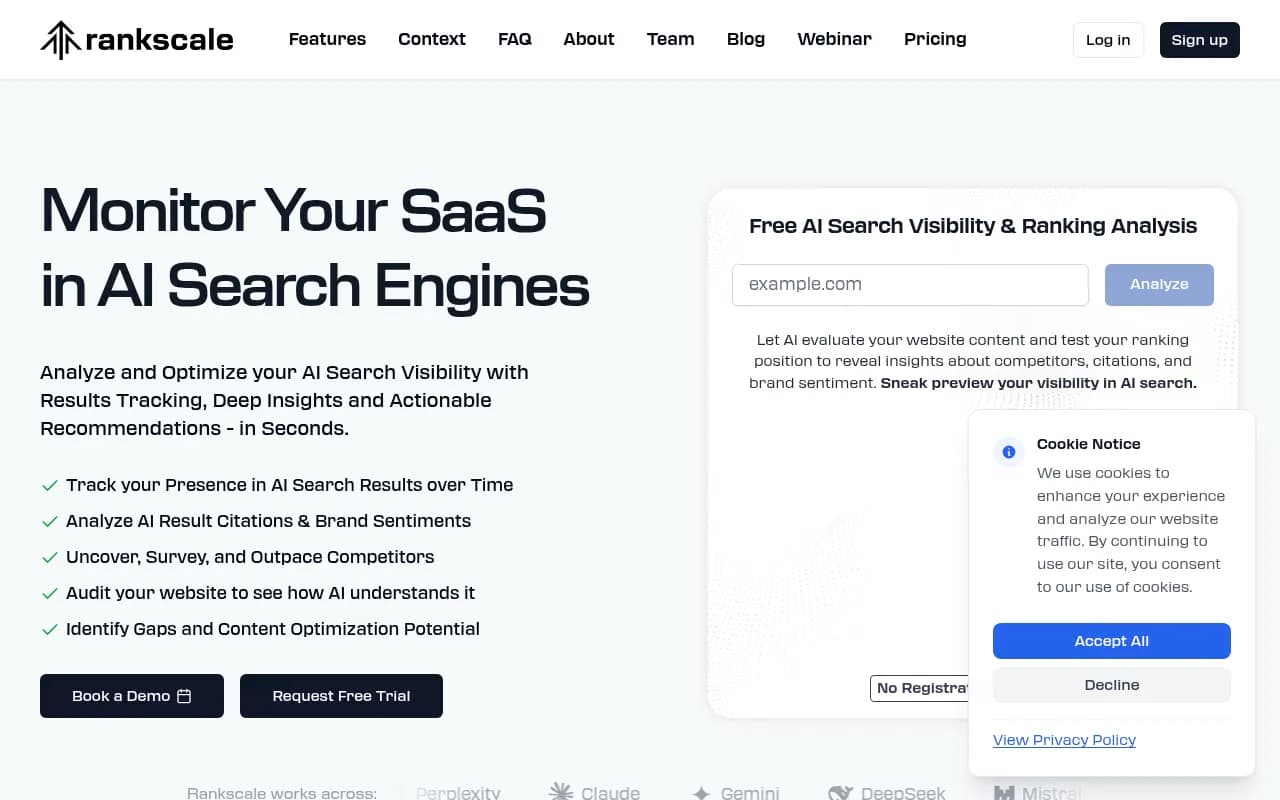
Rankscale also starts at $29/month and focuses on competitive AI visibility benchmarking. If your main use case is understanding how you stack up against specific competitors across LLMs, it's worth a look.
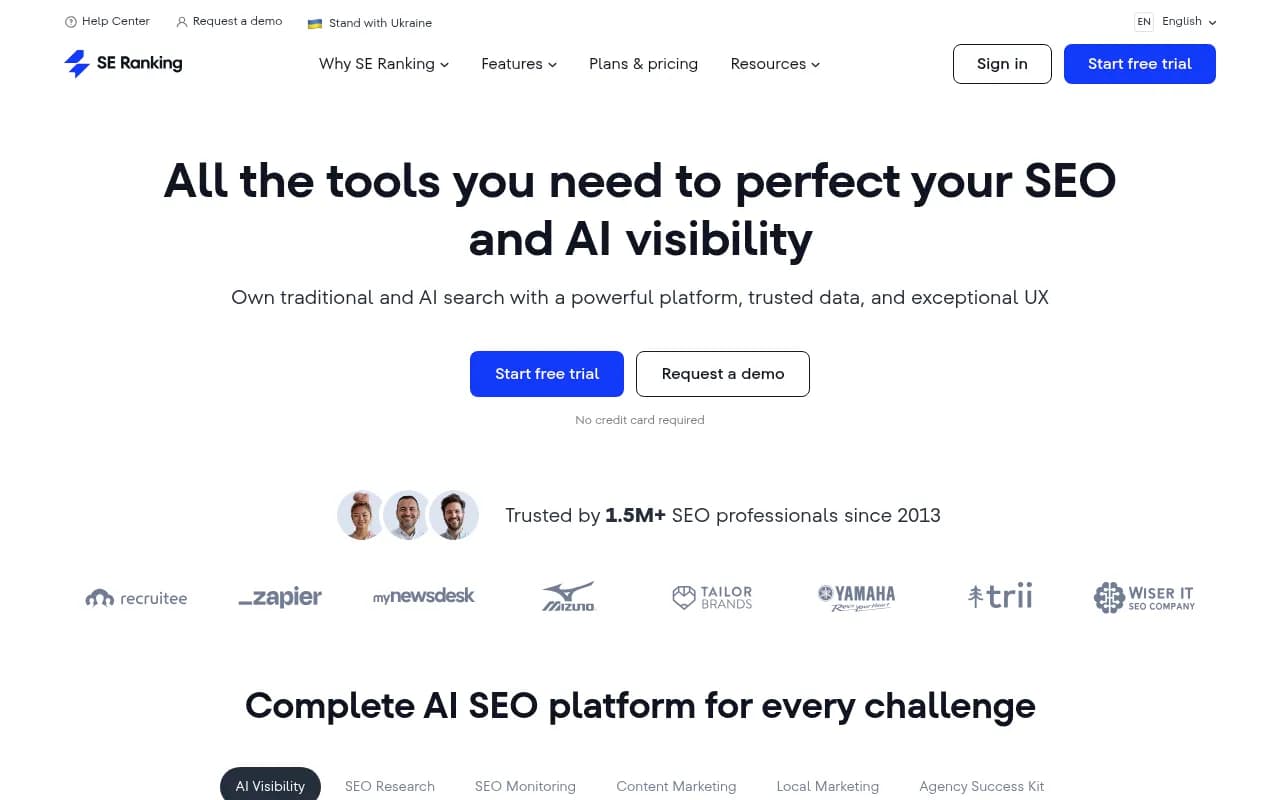
SE Ranking's AI visibility module is worth considering if your team is already paying for an SEO suite. Rather than adding another standalone tool, you get AI visibility tracking folded into a platform you're already using. The AI features aren't as deep as dedicated tools, but the consolidation argument is real.
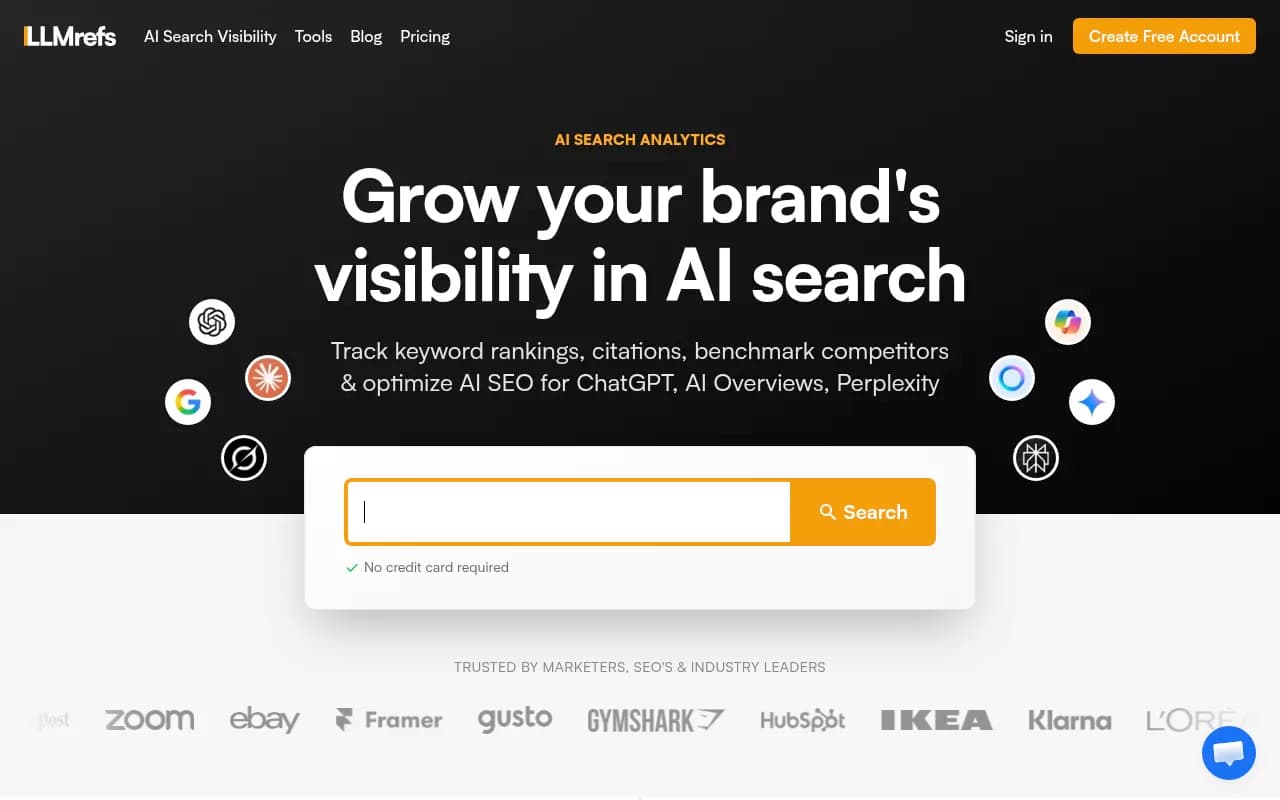
LLMrefs takes a keyword-first approach to GEO tracking and produces a single visibility/citation score across ChatGPT, Gemini, Perplexity, Claude, Grok, Copilot, and DeepSeek. It starts at $79/month for the Pro plan and is a reasonable middle ground between the cheapest options and the more expensive platforms.
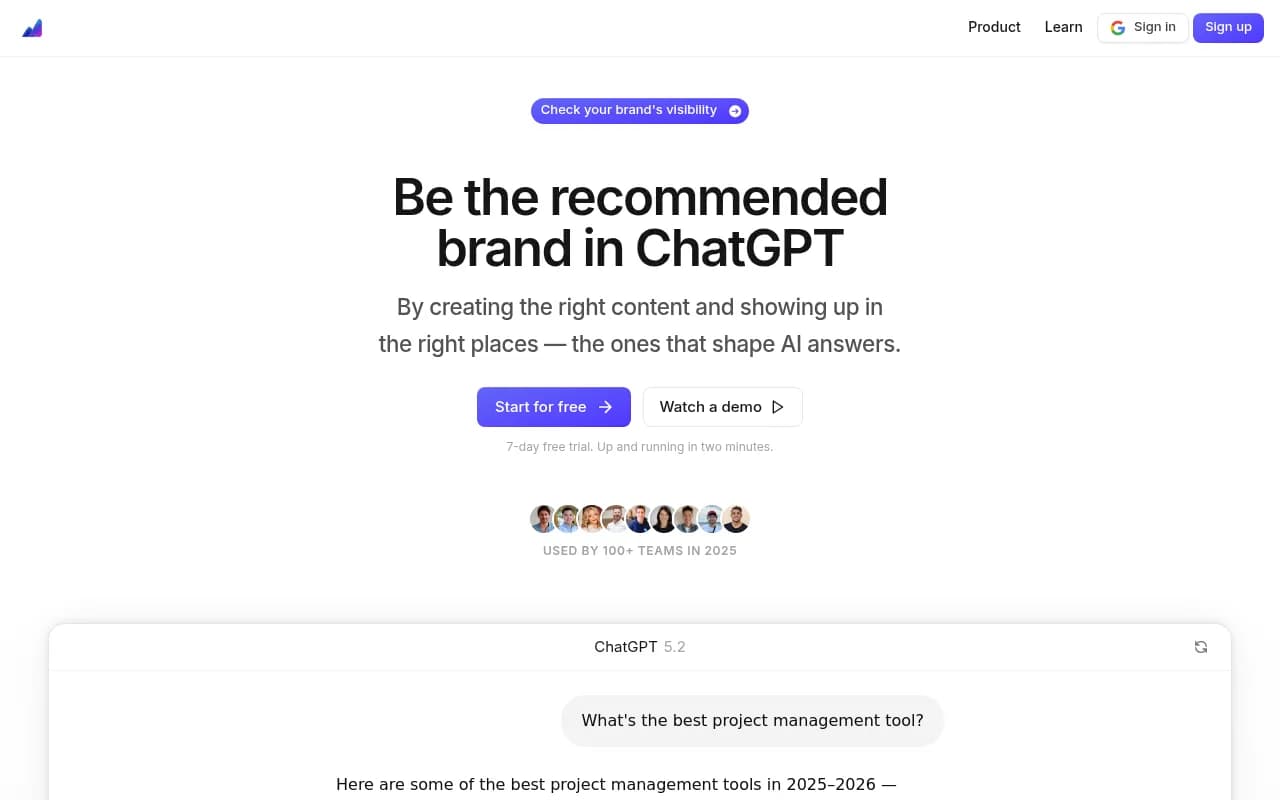
Airefs is worth mentioning for very budget-conscious teams. It's one of the more affordable AI search visibility trackers available, covering the core citation and mention tracking use cases without a lot of extras.
Comparison: Peec.ai vs. the cheaper alternatives
| Tool | Starting price | AI engines covered | Content generation | Crawler logs | Prompt intelligence |
|---|---|---|---|---|---|
| Peec.ai | Mid-tier | ChatGPT, Perplexity, Claude, Gemini | No | No | Basic |
| Otterly.AI | $29/mo | ChatGPT, AI Overviews, Perplexity, Copilot | No | No | Basic |
| Rankscale | $29/mo | Multiple | No | No | Limited |
| LLMrefs | $79/mo | 8+ engines | No | No | Keyword-level |
| SE Ranking | Bundled | Multiple | No | No | Basic |
| Airefs | Low | Core engines | No | No | Minimal |
The honest read on this table: if you're moving from Peec.ai to save money, you're trading down on coverage and depth. These tools are cheaper because they do less. That's fine if monitoring is genuinely all you need, but it's worth being clear-eyed about the tradeoff.
Teams that want more, not less
Some teams leaving Peec.ai aren't looking for a cheaper version of the same thing. They're looking for a platform that actually helps them improve their AI visibility, not just measure it.
That's a different category of tool entirely.
The core problem with monitoring-only platforms is that they stop at step one. They show you where you're invisible. They don't help you figure out what content to create, how to create it, or whether the content you publish is actually getting cited by AI models afterward.
Promptwatch is the platform that comes up most often in this context. It's built around what it calls an action loop: find the gaps (Answer Gap Analysis shows which prompts competitors rank for that you don't), create content to fill them (a built-in AI writing agent generates articles grounded in citation data), and then track whether your visibility actually improves. Page-level tracking shows which pages are being cited, by which models, and how often. Traffic attribution connects that back to actual revenue.

That's a meaningfully different proposition than a monitoring dashboard. The data set behind it is also substantial: over 880 million citations analyzed, which means the content recommendations aren't generic SEO filler but are grounded in what AI models actually cite.
For teams that have already been through the monitoring phase and want to move to optimization, this is the more logical destination than a cheaper version of Peec.ai.
AthenaHQ is another option in the "more capable" tier, with a focus on sentiment-led brand control and monitoring across 8+ AI engines. It's stronger on the monitoring side than on content optimization, but it covers more ground than Peec.ai.

Profound sits at the higher end of the market with predictive AI search insights and forecasting capabilities. It's better suited to enterprise teams with dedicated SEO resources than to mid-market marketing teams trying to get started.

Scrunch AI covers enterprise-wide AI monitoring with broad engine coverage and governance features. Again, more of an enterprise play.
Comparison: monitoring-only vs. optimization platforms
| Platform | Monitoring | Content gap analysis | Content generation | Crawler logs | Traffic attribution | Best for |
|---|---|---|---|---|---|---|
| Peec.ai | Yes | No | No | No | No | Basic brand tracking |
| Otterly.AI | Yes | No | No | No | No | Budget monitoring |
| AthenaHQ | Yes | Limited | No | No | No | Sentiment tracking |
| Profound | Yes | Partial | No | No | Limited | Enterprise monitoring |
| Promptwatch | Yes | Yes | Yes | Yes | Yes | Full optimization loop |
How to decide which direction to go
The right move depends on what you actually need from an AI visibility tool right now.
If you're running a small brand or agency and your main goal is to have a simple dashboard showing whether you appear in AI answers, the $29/month options like Otterly.AI or Rankscale are probably sufficient. You'll lose some depth, but you'll save money and the core monitoring function is there.
If you're at a mid-market company where AI search is becoming a real acquisition channel, the monitoring-only approach is going to feel limiting within a few months. You'll see the data showing you're invisible for high-value prompts, and you'll have no systematic way to fix it. In that case, moving to a platform with content gap analysis and generation built in makes more sense, even if it costs more than Peec.ai.
If you're an agency managing multiple clients, the economics shift again. You need multi-site support, white-label reporting, and enough prompt coverage to track each client's competitive landscape meaningfully. Platforms like Promptwatch with agency/enterprise tiers are worth evaluating seriously.
One thing worth flagging: the AI visibility tool market is still young and moving fast. Several of the cheaper tools listed here have limited track records and may not be around in 18 months. That's not a reason to avoid them, but it's a reason to avoid over-investing in integrations or workflows built around them.
The bottom line
Peec.ai is a legitimate AI visibility tracker. If it's working for your team and the price is fine, there's no urgent reason to switch. But if you're hitting the ceiling of what monitoring alone can tell you, or if the cost is hard to justify against what you're getting, 2026 has more options than ever.
The cheaper alternatives cover the basics at lower price points. The more capable platforms close the loop between visibility data and content action. Which one makes sense depends on whether you're still in the "understand the problem" phase or the "fix the problem" phase of your AI search strategy.
Most teams that have been tracking AI visibility for more than six months are ready for the second phase. The tools that help you get there are worth the investment.