Key takeaways
- Searchable covers basic AI brand monitoring but lacks the depth growing teams need in 2026
- The 7 biggest gaps: no content gap analysis, no built-in content generation, no crawler logs, no Reddit/YouTube tracking, no ChatGPT Shopping monitoring, limited prompt intelligence, and weak traffic attribution
- Several platforms fill specific gaps well -- and one fills all of them
- AI search now accounts for over 50% of all queries according to practitioners working with B2B SaaS companies, so the cost of a monitoring-only tool is rising fast
There's a version of 2024 where Searchable made a lot of sense. AI search was new, teams were still figuring out what "GEO" even meant, and just knowing whether ChatGPT mentioned your brand felt like enough.
That version of the world is gone.
In 2026, AI search isn't a curiosity -- it's a primary discovery channel. Liam Dunne, who works with B2B SaaS companies on AI search strategy, put it plainly in a recent video: traditional SEO metrics are misleading now, and the companies winning have adapted to show up inside AI conversations, not just Google results. That shift changes what you need from a visibility platform.
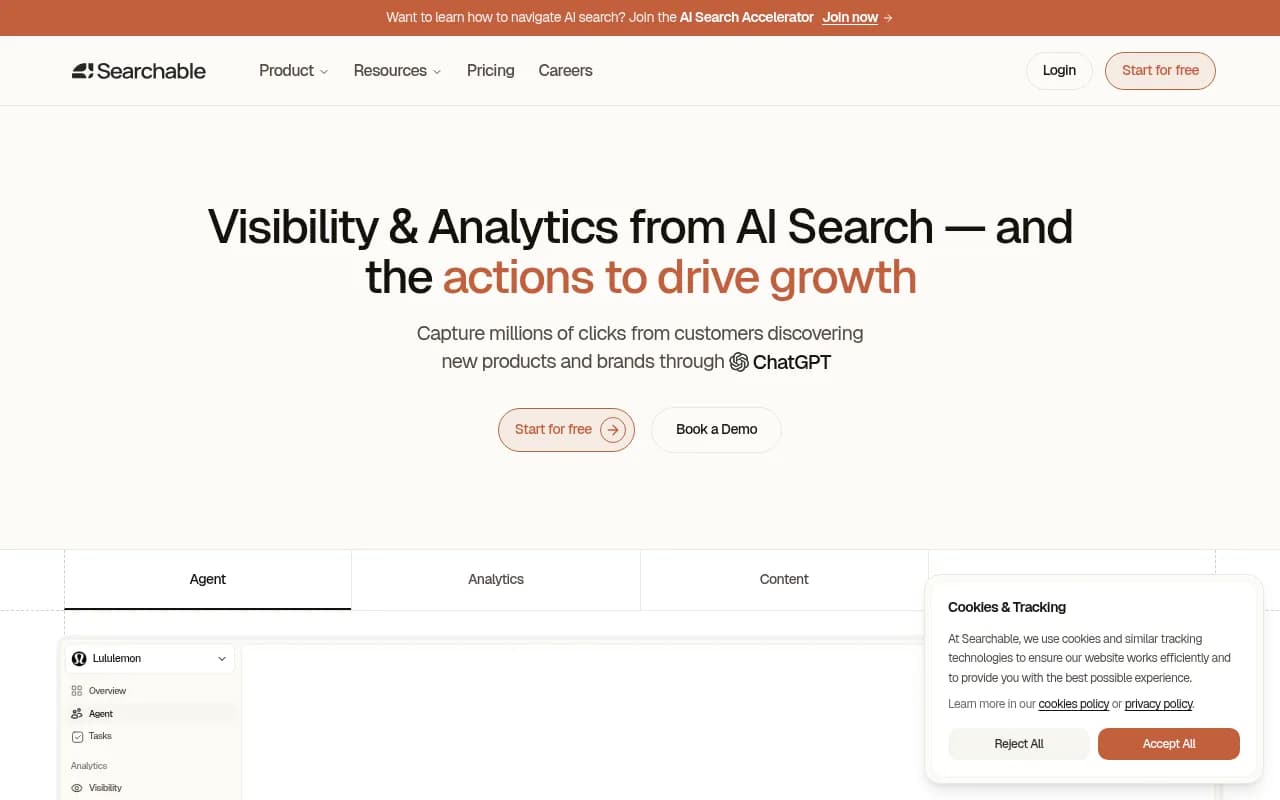
Searchable is a legitimate tool. It's not a scam or a bad product. But if your team is growing, running campaigns across multiple markets, or trying to actually move the needle on AI visibility rather than just watch it, you're going to hit walls. Seven of them, specifically.
Let's go through each one.
1. No content gap analysis
This is the biggest one. Searchable shows you where you're visible -- but it doesn't show you where you're not visible and why.
Content gap analysis means identifying the specific prompts your competitors are being cited for that you're not. It's the difference between knowing "our AI visibility score is 34%" and knowing "ChatGPT recommends our competitor for 'best project management tool for remote teams' but has no content from us to cite for that query."
Without this, you're essentially flying blind on what to fix. You can see the problem (low visibility) but not the cause (missing content on specific topics).
Promptwatch calls this Answer Gap Analysis, and it's the foundation of their whole approach. You see the exact prompts where competitors outrank you, which gives you a prioritized to-do list rather than a vague sense that you need "more content."

2. No built-in content generation
Even if you identify content gaps manually, Searchable doesn't help you close them. You're on your own to brief a writer, fire up a separate AI tool, and hope the output actually gets cited by LLMs.
That's a meaningful workflow gap. The best platforms in 2026 don't just find gaps -- they help you fill them with content that's specifically engineered to get cited. That means grounding the writing in real citation data (what sources do AI models actually reference?), prompt volumes, and competitor analysis.
Promptwatch has a built-in AI writing agent that generates articles, listicles, and comparisons based on 880M+ citations analyzed. It's not generic AI filler -- the output is designed around what AI models want to cite, not just what ranks on Google.
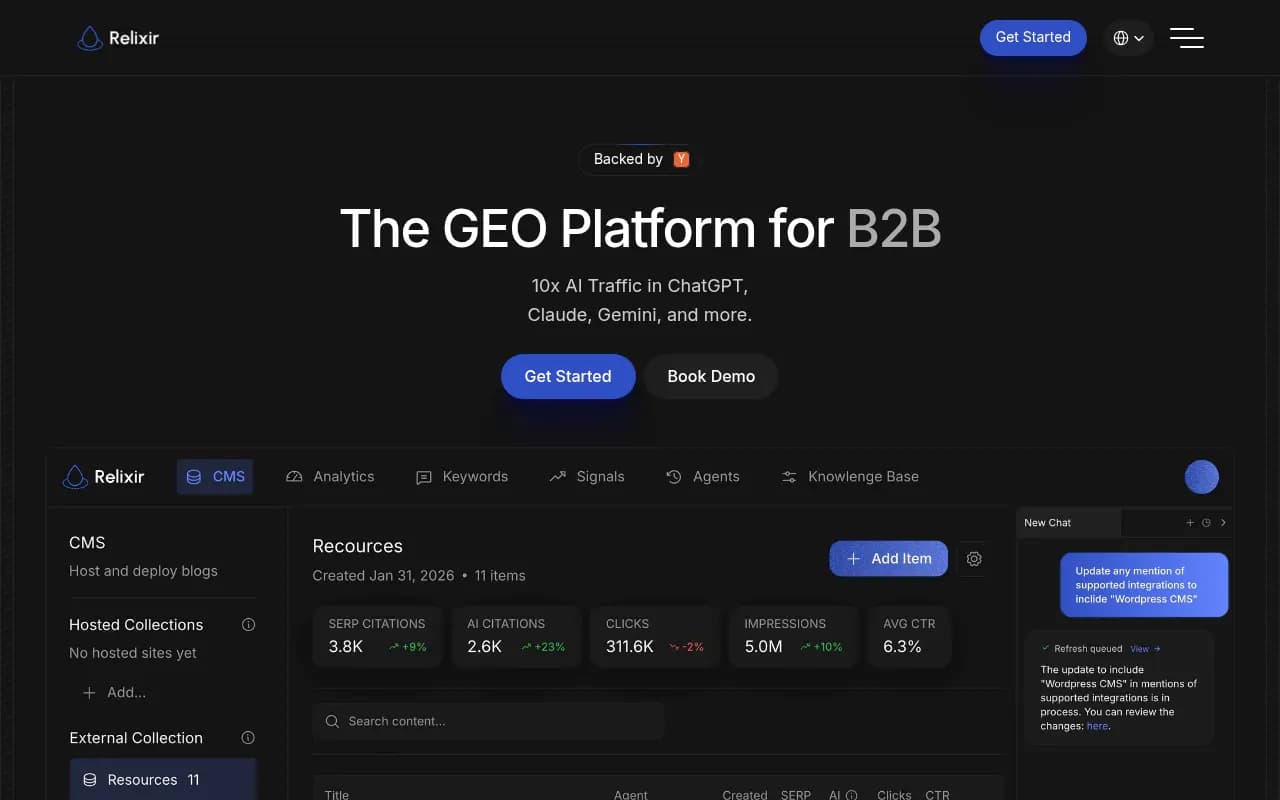
Relixir takes a similar approach with its AI-native CMS, worth considering if content production at scale is your primary bottleneck.
3. No AI crawler logs
This one is underappreciated, and most teams don't realize they need it until something breaks.
AI crawler logs show you which pages ChatGPT, Claude, Perplexity, and other AI engines are actually visiting on your site -- how often, which pages they read, and what errors they encounter. If an AI crawler hits a 404 on your most important product page, you'd never know without this data.
Searchable doesn't surface this. Neither do most competitors, honestly. It's a gap that matters more as AI crawlers become more aggressive and selective about what they index.
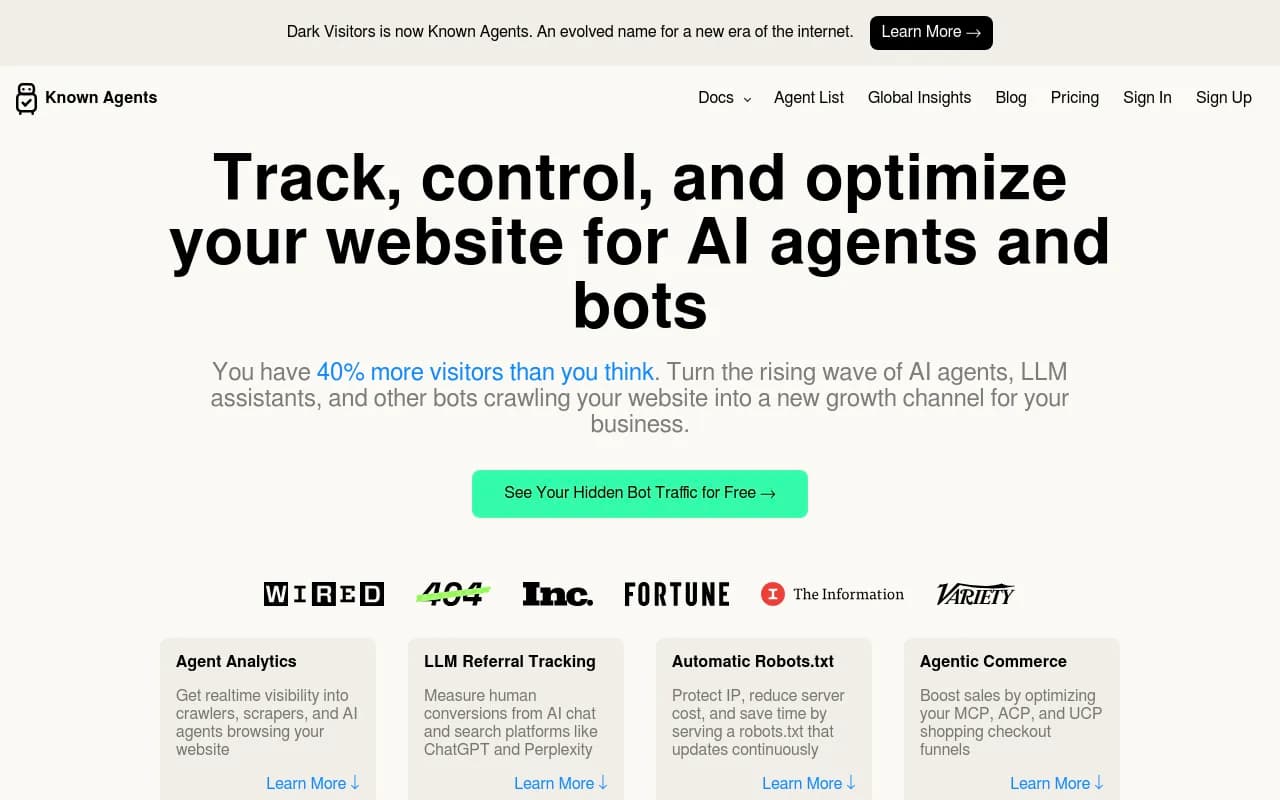
Promptwatch includes real-time crawler logs as part of its Professional plan and above. DarkVisitors is also worth knowing about -- it specializes specifically in tracking AI agents and bots hitting your site.
4. No Reddit and YouTube tracking
Here's something that surprises a lot of marketers: AI models don't just cite brand websites. They cite Reddit threads, YouTube videos, forum discussions, and community content heavily. When someone asks ChatGPT "what's the best tool for X," the answer is often shaped by what people are saying on Reddit, not just what companies publish on their own sites.
Searchable ignores this channel entirely. If a Reddit thread is tanking your AI recommendations -- or if there's a YouTube video praising your competitor that's influencing Perplexity's answers -- you'd have no visibility into it.
Promptwatch surfaces Reddit discussions and YouTube content that directly influence AI recommendations. This is a channel most platforms skip, which makes it a real differentiator for teams doing competitive intelligence.
5. No ChatGPT Shopping tracking
ChatGPT's shopping and product recommendation features have grown significantly. For e-commerce brands and any company selling physical or digital products, showing up in ChatGPT's product carousels is now a meaningful revenue channel.
Searchable doesn't track this. If you're in retail, consumer goods, or any category where ChatGPT is actively making product recommendations, you're missing a whole dimension of your AI visibility picture.
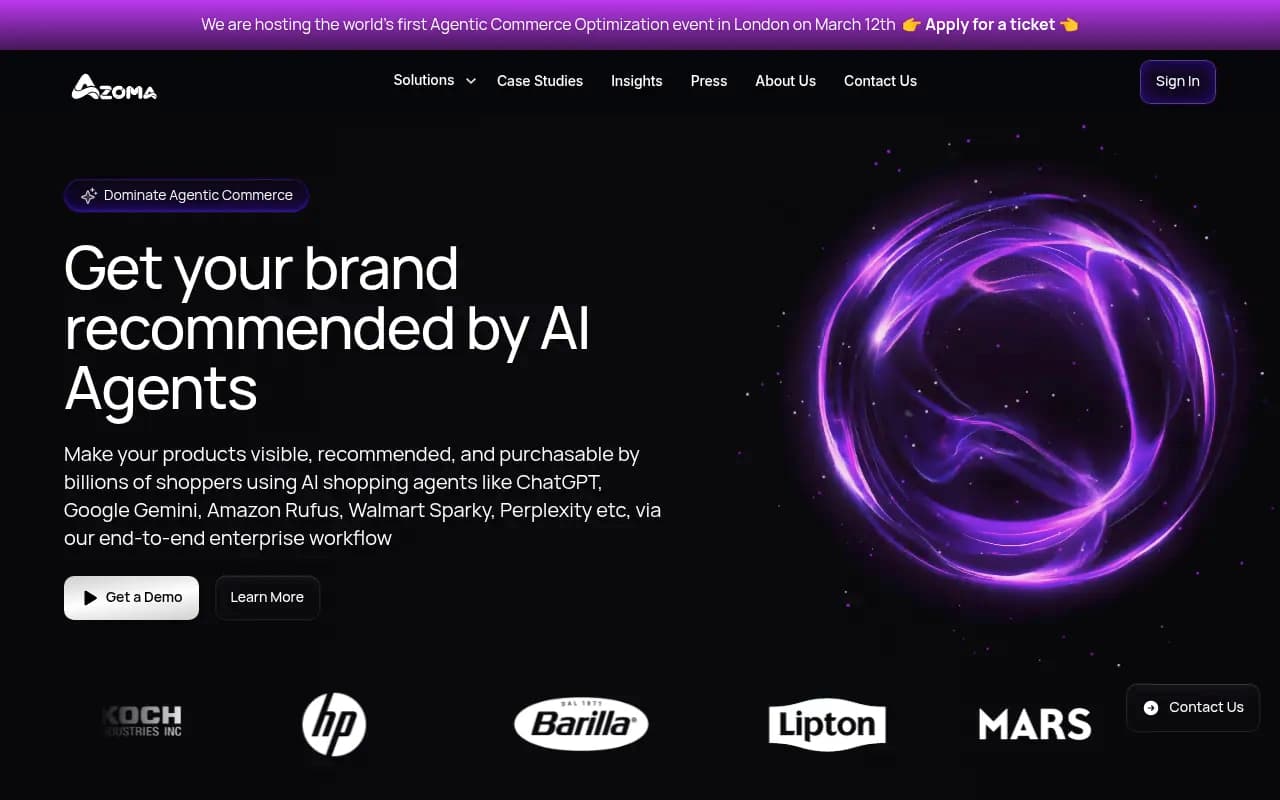
Azoma is purpose-built for this -- it focuses on AI shopping optimization across ChatGPT, Amazon Rufus, and similar surfaces. Worth a look if this is your primary use case.
Promptwatch also tracks ChatGPT Shopping appearances as part of its broader monitoring suite.
6. Weak prompt intelligence
Not all prompts are equal. Some queries are asked thousands of times a day; others are niche and low-volume. Some are easy to win visibility for; others are dominated by entrenched competitors. Without knowing which is which, you end up spending resources chasing prompts that either don't matter or can't be won.
Searchable's prompt data is relatively thin. You can track prompts, but you don't get volume estimates, difficulty scores, or query fan-outs (the sub-queries that branch off from a main prompt).
Promptwatch gives you all three. Volume estimates tell you whether a prompt is worth targeting. Difficulty scores tell you whether you can realistically win it. Query fan-outs show you how one prompt branches into related searches, which is useful for content planning.

Profound also does solid work on prompt intelligence and is worth comparing if you're evaluating enterprise-tier options.
7. No traffic attribution
This is where monitoring-only tools really show their limits. You can watch your AI visibility score go up, but if you can't connect that to actual website traffic and revenue, you can't justify the investment or prove ROI to stakeholders.
Searchable doesn't close this loop. There's no way to see whether your improved AI visibility is actually driving clicks, leads, or conversions.
Promptwatch handles this through three methods: a code snippet, Google Search Console integration, or server log analysis. Each approach lets you connect AI citations to actual traffic, so you can see which pages are being cited, how often, and whether those citations are translating into visits.
For growing teams, this matters a lot. Marketing budgets are under scrutiny, and "our AI visibility score improved" is a much weaker argument than "AI search drove 12% of our organic traffic last quarter."
How the platforms compare
Here's a quick breakdown of how Searchable stacks up against the main alternatives on these seven dimensions:
| Feature | Searchable | Promptwatch | Profound | AthenaHQ | Otterly.AI |
|---|---|---|---|---|---|
| Content gap analysis | No | Yes | Partial | No | No |
| Built-in content generation | No | Yes | No | No | No |
| AI crawler logs | No | Yes | No | No | No |
| Reddit/YouTube tracking | No | Yes | No | No | No |
| ChatGPT Shopping tracking | No | Yes | No | No | No |
| Prompt volume + difficulty | Limited | Yes | Yes | Limited | No |
| Traffic attribution | No | Yes | Partial | No | No |
The pattern is clear: most tools in this space are monitoring dashboards. They show you data. Promptwatch is the one that consistently goes further -- find the gap, create the content, track the result.
Which tool should you actually use?
It depends on where you are and what you need.
If you're a solo marketer or small team just getting started with AI visibility, Searchable or Otterly.AI might be enough for now. They're simpler and cheaper, and if you're still figuring out which prompts matter for your business, a basic monitor is fine.

If you're a growing team that needs to actually move the needle -- identify gaps, create content, prove ROI -- you need a platform that does more than monitor. Promptwatch is the most complete option at a price point that's accessible to marketing teams (starting at $99/month for the Essential plan, $249/month for Professional with crawler logs and multi-location tracking).

AthenaHQ is worth considering if you want strong monitoring across 8+ AI engines and don't need content generation. It's a cleaner interface than some alternatives, though it still stops at step one of the optimization loop.
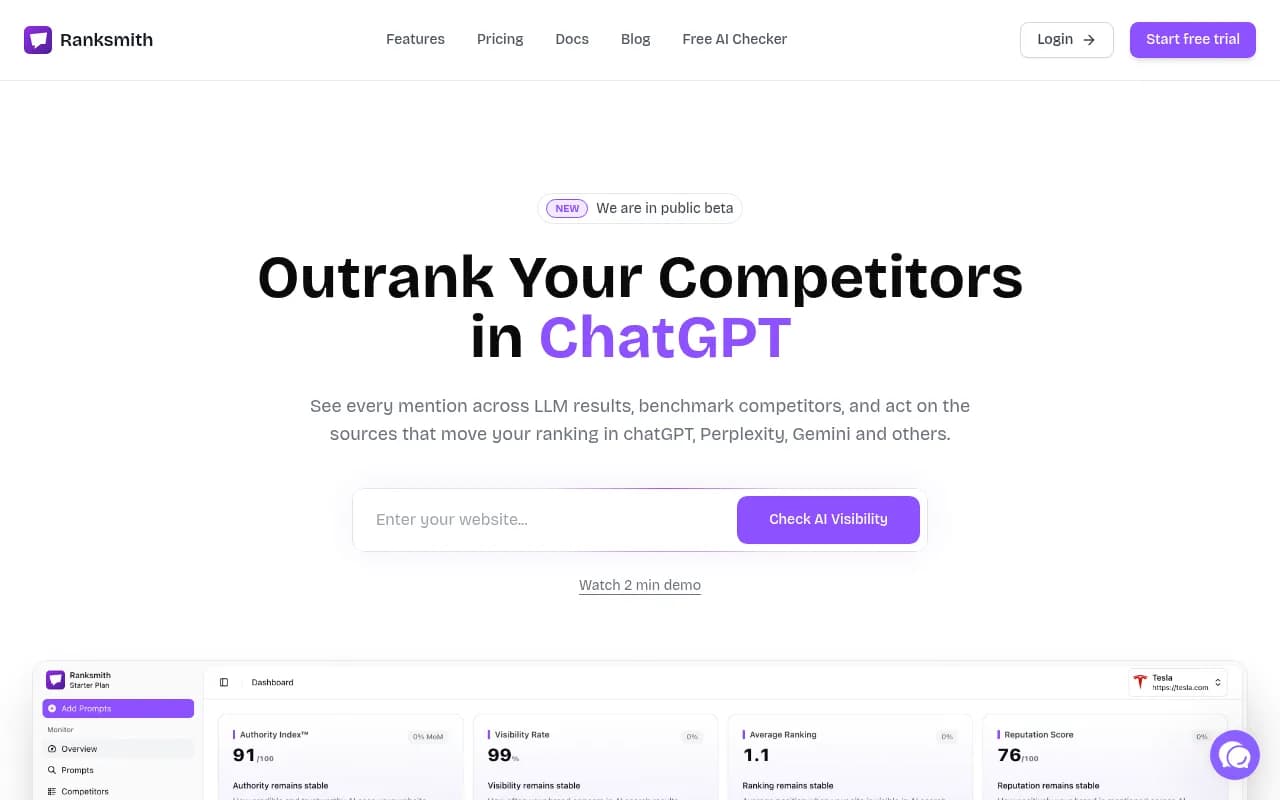
Ranksmith is a good middle-ground option for teams that want actionable insights without the full platform complexity.
The real cost of a monitoring-only tool
Here's the thing about Searchable and tools like it: the cost isn't the subscription fee. The cost is the opportunity you're not capturing.
AI search is growing fast. Liam Dunne's work with B2B SaaS companies suggests traditional SEO metrics are increasingly misleading because so much discovery now happens inside AI conversations before anyone clicks anything. If your team is watching that shift happen without the tools to respond to it, you're falling behind.
A monitoring tool tells you the score. An optimization platform helps you change it. For teams that are serious about AI visibility in 2026, that distinction matters more than it ever has.
The good news: you don't have to guess which platform fits. Most of the tools mentioned here offer free trials. Start with the gaps that hurt most -- whether that's content, attribution, or crawler visibility -- and pick the tool that solves those first.