Key takeaways
- Profound and Searchable are solid tools, but agencies consistently hit walls around multi-client workspace management, white-label reporting, and pricing that doesn't punish growth
- The best alternatives in 2026 go beyond monitoring -- the tools that actually move the needle help you find content gaps, generate optimized content, and track results across clients
- Coverage breadth matters: your clients' customers use ChatGPT, Perplexity, Gemini, Claude, and Google AI Overviews -- a tool that only monitors two or three of these is leaving you blind
- Pricing structures vary wildly; some tools charge per prompt (which gets expensive fast), others per seat or per brand -- know your model before committing
- For agencies that want a single platform covering monitoring, content creation, and traffic attribution across all clients, Promptwatch is the most complete option available right now
Running AI visibility for a handful of clients sounds manageable until you're actually doing it. You've got different brands, different competitive sets, different target audiences, and clients who want to see their numbers in a clean report without you manually stitching together screenshots every Friday.
Profound and Searchable both built real products. Profound in particular has serious backing (a $35M Series B led by Sequoia) and genuine depth for enterprise use cases. But "enterprise depth" and "agency scale" aren't the same thing. Agencies need workspaces that don't require a PhD to configure, pricing that doesn't double every time you add a client, and -- critically -- tools that help you actually do something with the data, not just stare at it.
This guide covers the best alternatives for agencies in 2026, with honest takes on where each tool fits and where it falls short.
What agencies actually need from an AI visibility tool
Before getting into specific tools, it's worth being clear about what "agency-ready" actually means in this context. A lot of platforms market themselves to agencies but are really just single-brand tools with a slightly higher prompt limit.
Here's what separates genuinely agency-capable tools from the rest:
- Multi-brand workspaces: You need to manage 5, 10, or 20 clients without logging in and out of separate accounts or manually switching contexts
- White-label or branded reporting: Clients don't want to see your tool's logo on their monthly report
- Prompt coverage that scales: If you're tracking 50 prompts per client and you have 10 clients, you need 500 prompts -- many tools cap out well before that
- Content gap analysis: Knowing a client is invisible for a prompt is step one. Knowing why and what to create is what clients actually pay for
- Traffic attribution: Connecting AI visibility to actual website visits and conversions is increasingly what clients ask for
- Coverage across models: ChatGPT, Perplexity, Gemini, Claude, Google AI Overviews -- if a tool only covers two of these, you're flying blind for a big chunk of your clients' audiences
With those criteria in mind, here's how the main alternatives stack up.
The best alternatives to Profound and Searchable for agencies
Promptwatch -- best for agencies that want monitoring and optimization
Most AI visibility tools show you a dashboard and leave you to figure out what to do next. Promptwatch is built differently: it's designed around a loop of finding gaps, creating content to fill them, and tracking whether it worked.
For agencies, this matters because clients don't pay for dashboards -- they pay for results. Being able to show a client "here's where you were invisible, here's the content we created, here's how your visibility score moved" is a completely different conversation than "here's a chart of your mention rate."
The Answer Gap Analysis is particularly useful at agency scale: it shows you exactly which prompts competitors are getting cited for that your client isn't, down to the specific topics and angles. The built-in AI writing agent then generates content grounded in citation data from 880M+ analyzed citations -- not generic SEO filler, but content engineered to get picked up by AI models.
Coverage is broad: 10 models including ChatGPT, Perplexity, Google AI Overviews, Claude, Gemini, Grok, DeepSeek, Copilot, Meta AI, and Mistral. The AI Crawler Logs feature (available from the Professional plan) is something most competitors don't offer at all -- it shows you which AI crawlers are hitting your clients' sites, which pages they're reading, and what errors they're encountering.
Pricing starts at $99/month for a single site, $249/month for the Professional plan (2 sites, 150 prompts, crawler logs), and $579/month for Business (5 sites, 350 prompts). Agency and enterprise pricing is available on request, which is where multi-client workspaces become more practical.

Profound -- strong for enterprise, harder to justify for growing agencies
Profound is genuinely impressive if you're managing a handful of large enterprise clients with big budgets. The prompt volume data is real, the citation tracking is detailed, and the Agent Analytics feature (which analyzes server logs to detect AI crawlers) is one of the more technically sophisticated things in this category.
The friction for agencies is mostly structural. Profound is priced and positioned for enterprise buyers, which means the cost-per-client math gets uncomfortable quickly when you're managing 10+ brands. The agency mode exists, but the platform's depth can work against you when you're trying to onboard a new client quickly or build a simple monthly report.
If you're a large agency with a few high-value enterprise clients who have the budget to match, Profound is worth a serious look. For agencies with a broader, more varied client base, the alternatives below are often a better fit.

Peec AI -- good entry point, limited ceiling
Peec AI is one of the more accessible options in this space. At around €89/month, it's genuinely affordable, and the prompt-level analytics are solid for teams that want to understand which queries are driving AI visibility.
The limitation is depth. Peec is primarily a monitoring tool -- it shows you what's happening but doesn't help you change it. For agencies that are still figuring out their AI visibility offering and want something low-risk to start with, it works. For agencies that need to show clients a clear path from "invisible" to "cited," you'll hit the ceiling quickly.

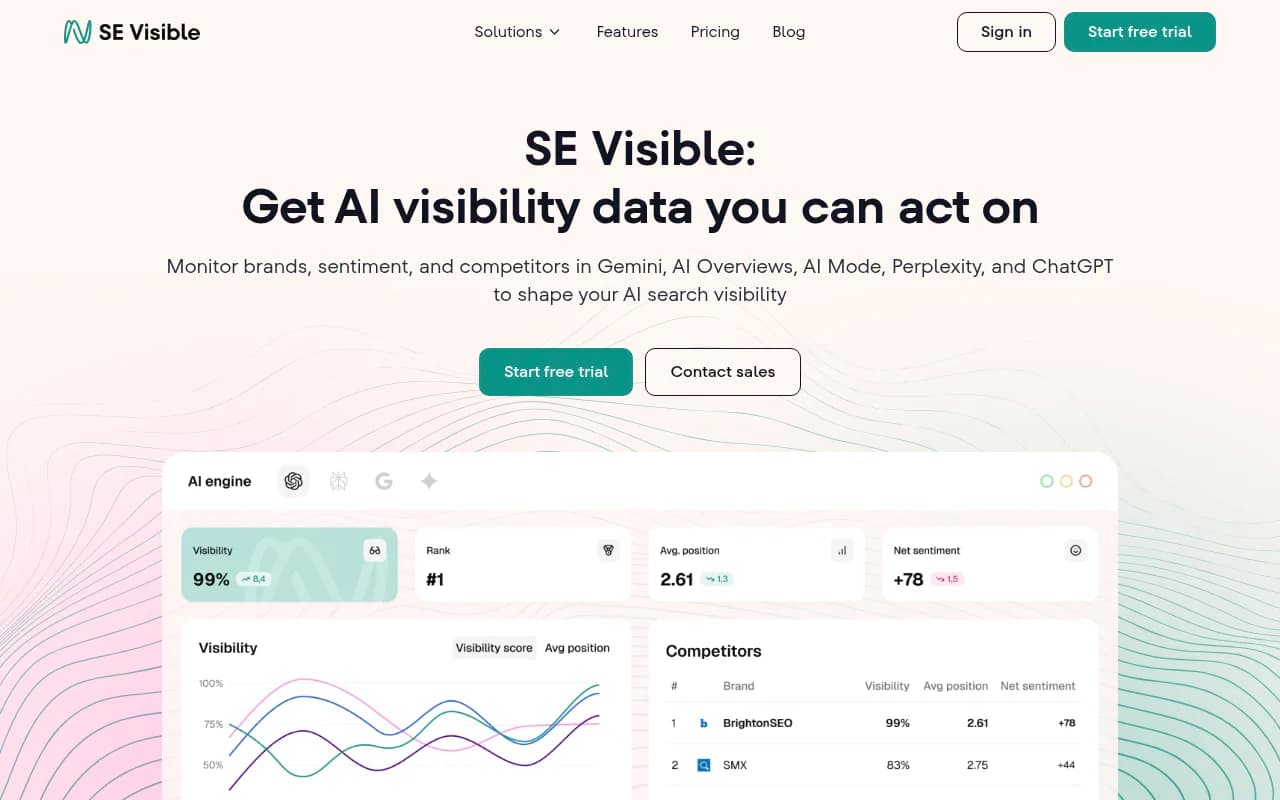
SE Visible -- solid for SEO agencies transitioning to GEO
SE Visible (from SE Ranking) makes a lot of sense if your agency already lives inside the SE Ranking ecosystem. The integration between traditional SEO data and AI visibility tracking is genuinely useful -- you can see how a client's organic rankings and AI citations relate to each other, which is a story clients find compelling.
The source detection feature is a differentiator: it shows you which specific pages and domains are being cited in AI responses, which helps you understand where to focus content efforts. White-label reporting is available, which is a practical agency requirement.
The downside is that it's still more monitoring than optimization. You get good data, but the "what do we do about it" question is largely left to you.
AthenaHQ -- enterprise GEO with automation focus
AthenaHQ positions itself as a full GEO platform for enterprises, with AI visibility tracking across 8+ models and some automation capabilities. It's a step up from pure monitoring tools in terms of what it tries to do.
For agencies managing large enterprise clients, AthenaHQ is worth evaluating. The automation features reduce some of the manual work involved in running visibility programs at scale. The gap compared to Promptwatch is primarily in content generation -- AthenaHQ helps you understand what's missing but doesn't generate the content to fill those gaps.

Otterly.AI -- lightweight monitoring for smaller agencies
Otterly is the "easy to get started" option in this category. It's lightweight, relatively affordable, and doesn't require a long onboarding process. For small agencies with a handful of clients who just want to start tracking AI visibility without a major platform commitment, it's a reasonable starting point.
The honest limitation: Otterly is monitoring-only. No crawler logs, no content generation, no traffic attribution. It's a dashboard, not an optimization platform. If a client asks "so what do we do about this?" you're on your own.

Scrunch AI -- technically interesting, niche use case
Scrunch AI takes an interesting technical approach with its "shadow site" concept, which essentially creates an AI-optimized version of your content to improve how AI models read and cite it. For agencies with technically sophisticated clients who are serious about AI crawlability, this is worth exploring.
The trade-off is that it's a fairly specialized tool. It doesn't cover the full monitoring-to-optimization loop, and the agency workflow isn't as developed as some of the other options here.
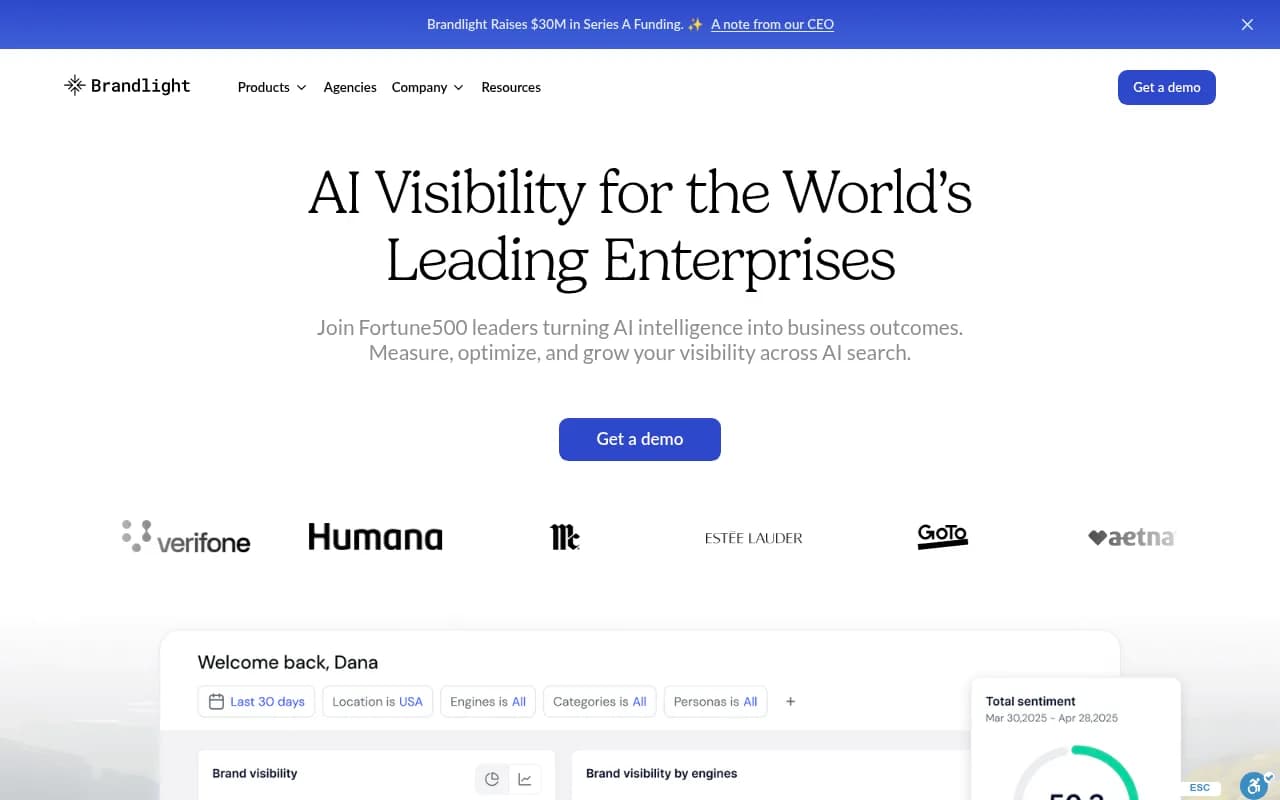
Brandlight -- reputation and governance focus
Brandlight is built more around brand safety and governance than pure visibility optimization. If you have clients in regulated industries or clients where controlling the narrative in AI responses is as important as the frequency of mentions, Brandlight has capabilities that most other tools don't.
For most growth-focused agencies, though, the governance angle is secondary to the core question of "how do we get cited more often for the right prompts."
Advanced Web Ranking -- reporting-heavy agencies
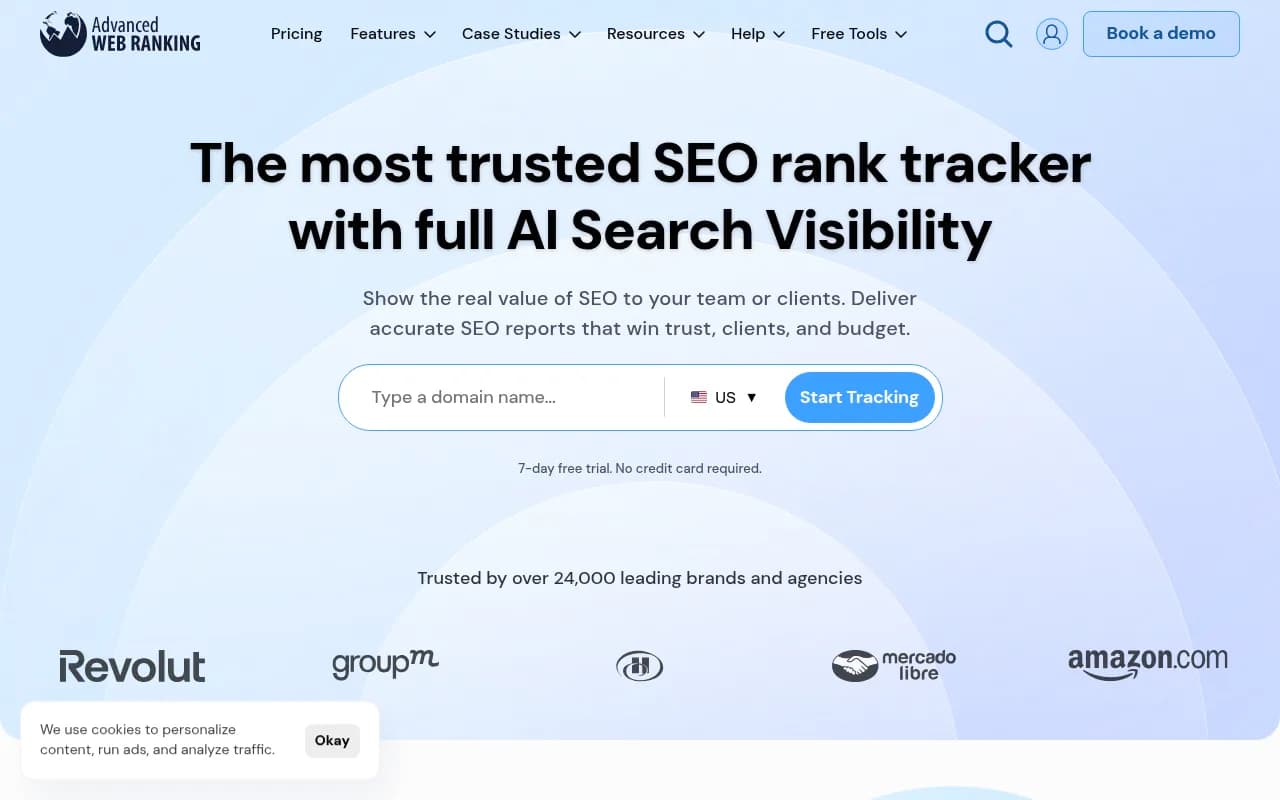
Advanced Web Ranking has been around for 20+ years in the traditional rank tracking space, and its AI visibility features are built on that foundation of reporting scale and white-label flexibility. If you're an agency that lives and dies by client reports and needs to produce clean, branded outputs at volume, AWR's reporting infrastructure is hard to beat.
The limitation is that it's fundamentally a reporting tool. The AI visibility features are solid for tracking, but you won't find content gap analysis or optimization capabilities here.
Feature comparison: how the main options stack up
| Tool | Multi-client workspaces | Content generation | AI crawler logs | Traffic attribution | Models covered | Starting price |
|---|---|---|---|---|---|---|
| Promptwatch | Yes (agency plans) | Yes (built-in AI writer) | Yes (Pro+) | Yes (snippet/GSC/logs) | 10 | $99/mo |
| Profound | Yes (agency mode) | Limited | Yes | Limited | 6+ | Enterprise |
| Peec AI | Limited | No | No | No | 5 | €89/mo |
| SE Visible | Yes | No | No | No | 5+ | Add-on |
| AthenaHQ | Yes | No | No | No | 8+ | Custom |
| Otterly.AI | Limited | No | No | No | 4 | ~$49/mo |
| Scrunch AI | Limited | No | Yes (technical) | No | 4+ | Monthly |
| Brandlight | Yes | No | No | No | 4+ | Tiered |
| Advanced Web Ranking | Yes (white-label) | No | No | No | 3+ | Volume-based |
How to choose the right tool for your agency
The honest answer is that the right tool depends on where your agency is in its AI visibility journey and what your clients actually need.
If you're just starting out and want to add AI visibility as a service without a major platform investment, Peec AI or Otterly.AI let you get moving quickly. You'll outgrow them, but they're low-risk starting points.
If you're an SEO agency already using SE Ranking, SE Visible is the path of least resistance. The data integration with traditional SEO metrics is genuinely useful for client conversations.
If you have enterprise clients with serious budgets and complex requirements, Profound is worth evaluating seriously. The depth is real, even if the pricing is steep.
If you want to build a real AI visibility practice -- one where you can show clients a clear path from invisible to cited, with content creation and traffic attribution to back it up -- Promptwatch is the most complete option available. The combination of Answer Gap Analysis, built-in content generation, crawler logs, and traffic attribution covers the full loop that most tools only cover in part.
The agencies that will win in AI search aren't the ones with the best dashboards. They're the ones that can take a client from "we don't show up in ChatGPT" to "here's the content we built and here's how it moved the needle." That requires a platform that does more than monitor.
A note on pricing models
One thing worth flagging before you commit to any of these tools: the pricing structures vary in ways that can bite you at scale.
Some tools charge per prompt tracked. That sounds fine until you're tracking 50 prompts for 10 clients and suddenly you're at 500 prompts -- and the per-prompt cost has compounded into something uncomfortable.
Others charge per brand or per workspace, which is more predictable for agencies. Promptwatch's tiered model (with agency/enterprise pricing available) is designed with this in mind. Profound's enterprise model is also predictable, but the floor is high.
Before signing up for anything, run the math on your actual client count and prompt volume. A tool that looks cheap for 3 clients can look very different at 15.
The bottom line
Profound and Searchable built real products, and neither deserves to be dismissed. But "built a real product" and "right for your agency" are different questions.
The agencies that will build durable AI visibility practices in 2026 need tools that close the loop: find gaps, create content, track results. Most tools in this category still stop at step one. The ones that go further -- Promptwatch being the clearest example -- are where the real leverage is.
Start with what your clients actually need today, pick the tool that covers that, and make sure the pricing model doesn't punish you for growing.