Key takeaways
- Searchable's advertised pricing rarely reflects what teams pay after 30-90 days of real use
- Prompt limits, seat restrictions, and add-on modules are the main sources of bill shock
- Several alternatives offer comparable or better monitoring at lower total cost
- The biggest gap in Searchable's pricing model is what it doesn't include: content optimization and gap analysis that would justify the spend
- Before renewing, it's worth running a side-by-side comparison against platforms that bundle tracking and action tools together
There's a pattern that keeps showing up in SaaS pricing in 2026. A platform quotes you one number, you sign up, and then three months later you're paying something noticeably different. Sometimes it's because you hit a usage ceiling. Sometimes it's because the feature you actually needed was behind a higher tier. Sometimes it's add-ons that seemed optional until they weren't.
Searchable follows this pattern closely enough that it's worth walking through in detail -- especially for marketing and SEO teams evaluating AI visibility tools, where the category is new enough that most buyers don't know what questions to ask before signing.
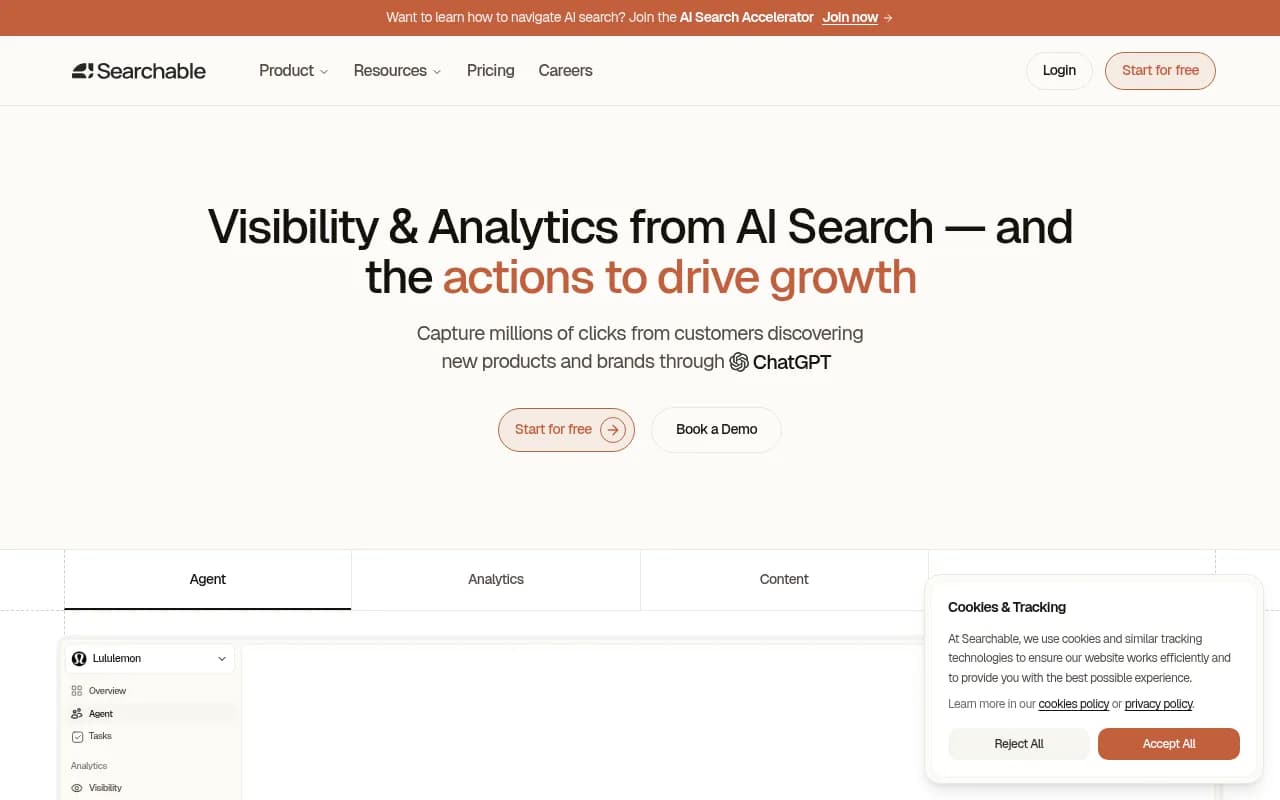
What Searchable actually charges
Searchable positions itself as an AI search visibility platform -- it tracks how your brand appears in responses from ChatGPT, Perplexity, Google AI Overviews, and similar engines. The core pitch is monitoring: see where you're mentioned, where you're not, and how that changes over time.
The published pricing sits in a range that looks competitive at first glance. Entry-level plans are priced to attract SMBs and smaller agencies, while mid-tier plans target marketing teams at growth-stage companies. But the structure has a few quirks that matter once you're inside.
Prompt limits and what happens when you hit them
The most common complaint from Searchable users is prompt limits. Each plan comes with a fixed number of prompts you can monitor per month. For a brand tracking a handful of core queries across two or three AI engines, the entry tier might hold. For anyone running a serious GEO program -- tracking competitor comparisons, category queries, product-specific prompts, regional variations -- the limit gets tight fast.
When you exceed the limit, you're not automatically upgraded. You hit a wall, or you're offered an overage charge. Neither is great. The overage rates aren't always prominently disclosed during the sales process, which is how teams end up with invoices that look nothing like the original quote.
This isn't unique to Searchable. It's the same dynamic that shows up in tools like Apollo (where credit overages can "significantly inflate" the base price, according to Landbase's 2026 breakdown) and ZoomInfo (where per-user seat additions and premium add-ons can double the initial quote). The pattern is consistent enough that it should be a standard question in any SaaS evaluation: what happens when I exceed the limit, and what does it cost?
Seat pricing and team access
Searchable's per-seat model means that adding team members -- a content strategist, a second SEO, an agency client who wants read access -- each triggers an additional line item. For agencies managing multiple brands, this compounds quickly. A five-person team tracking three client accounts can find themselves paying 2-3x the base plan price before they've added a single premium feature.
Some platforms in this space have moved to workspace-level pricing that includes multiple users. Searchable hasn't fully made that shift, which is a meaningful cost disadvantage for teams rather than solo users.
The add-ons that aren't really optional
Certain features that feel like core functionality are gated behind add-on purchases or higher tiers. Depending on which plan you're on, you may find that:
- Multi-region or multi-language tracking requires an upgrade
- Deeper competitor analysis is a separate module
- Historical data access beyond a rolling window costs extra
- API access (for teams that want to pipe data into their own dashboards) is enterprise-only
The LMS pricing world has a useful analogy here. Workademy's 2026 breakdown of LMS costs shows how a platform advertised at $5/user/month routinely lands at $15,000+ in year one once implementation, SSO, analytics, and support are factored in. The mechanism is the same: the base price covers basic functionality, and anything that makes the tool genuinely useful for a real workflow costs more.
What you're not getting, regardless of plan
Here's the part that matters most for teams evaluating Searchable against the broader market: the platform is primarily a monitoring tool. It shows you data. It doesn't help you act on it.
That distinction sounds abstract until you're six months in and you've got a dashboard full of visibility scores and competitor comparisons -- and no clear path to actually improving those numbers. Monitoring tells you that a competitor is getting cited for prompts you're not. It doesn't tell you what content to create, how to structure it, or whether it's likely to get picked up by the AI models you care about.
This is the gap that separates tracking platforms from optimization platforms. Tools like Promptwatch are built around closing that loop -- finding the prompts where you're invisible, generating content engineered to get cited, and then tracking whether it worked.

For teams that just want a monitoring dashboard and have a separate content workflow, Searchable's limitations may be acceptable. For teams that want to actually move their AI visibility numbers, paying for a monitoring-only tool and then separately paying for content tools adds up to more than just buying a platform that does both.
Real cost scenarios by team type
It helps to think through what Searchable actually costs for different types of users, not just what the pricing page says.
| Team type | Base plan | Likely add-ons | Realistic monthly cost |
|---|---|---|---|
| Solo SEO / freelancer | Entry tier | None | Close to advertised |
| 3-person in-house team | Mid tier | Extra seats, multi-region | 1.5-2x advertised |
| Agency (5+ clients) | Mid or upper tier | Multiple seats, API, competitor modules | 2-3x advertised |
| Enterprise marketing team | Upper tier | API, historical data, custom reporting | Negotiated, often opaque |
The solo user scenario is the one where Searchable's pricing is most honest. Once you add seats and features, the gap between the headline price and the actual invoice widens.
How Searchable compares to alternatives
The AI visibility tool market has grown substantially in 2026. There are now more than a dozen platforms competing in this space, and the pricing models vary enough that a direct comparison is worth doing before committing.
| Platform | Starting price | Includes content tools | Crawler logs | Prompt limits |
|---|---|---|---|---|
| Searchable | ~$99/mo | No | No | Yes, strict |
| Promptwatch | $99/mo | Yes (AI writing agent) | Yes (Professional+) | 50-350 prompts |
| Otterly.AI | ~$49/mo | No | No | Yes |
| Peec AI | ~$79/mo | No | No | Yes |
| AthenaHQ | ~$199/mo | No | No | Yes |
| Profound | ~$299/mo | Limited | No | Yes |




The pattern across the monitoring-only platforms is similar: they show you where you stand, but the work of improving that standing is left entirely to you. Promptwatch is the outlier in this comparison because it includes a built-in content generation tool grounded in citation data -- so the path from "I'm invisible for this prompt" to "I published something that should fix that" is inside one platform.
The renewal conversation
One thing that catches teams off guard: annual pricing discounts are common at signup, but renewal terms aren't always as favorable. If you signed up at a discounted rate, check what the renewal price looks like. A 45% year-over-year billing increase isn't unheard of in SaaS (there's a live example of exactly this in a Microsoft 365 billing thread from March 2026), and AI visibility tools are not immune to this pattern.
Before renewing Searchable, it's worth asking:
- Has the prompt limit changed since you signed up?
- Are you using the features you're paying for, or just the monitoring dashboard?
- What would it cost to switch to a platform that includes content optimization?
That last question is often the most clarifying. If you're paying $200/month for monitoring and separately paying a content team or another tool to act on the data, the total spend may already exceed what a full-stack platform would cost.
Alternatives worth evaluating
If Searchable's pricing structure doesn't fit your workflow, a few platforms are worth a serious look.
For teams that want a lower entry price and basic monitoring, Otterly.AI and Peec AI are both cheaper and cover the fundamentals. Neither has content tools, but if you genuinely just need a visibility dashboard, they're honest about what they are.
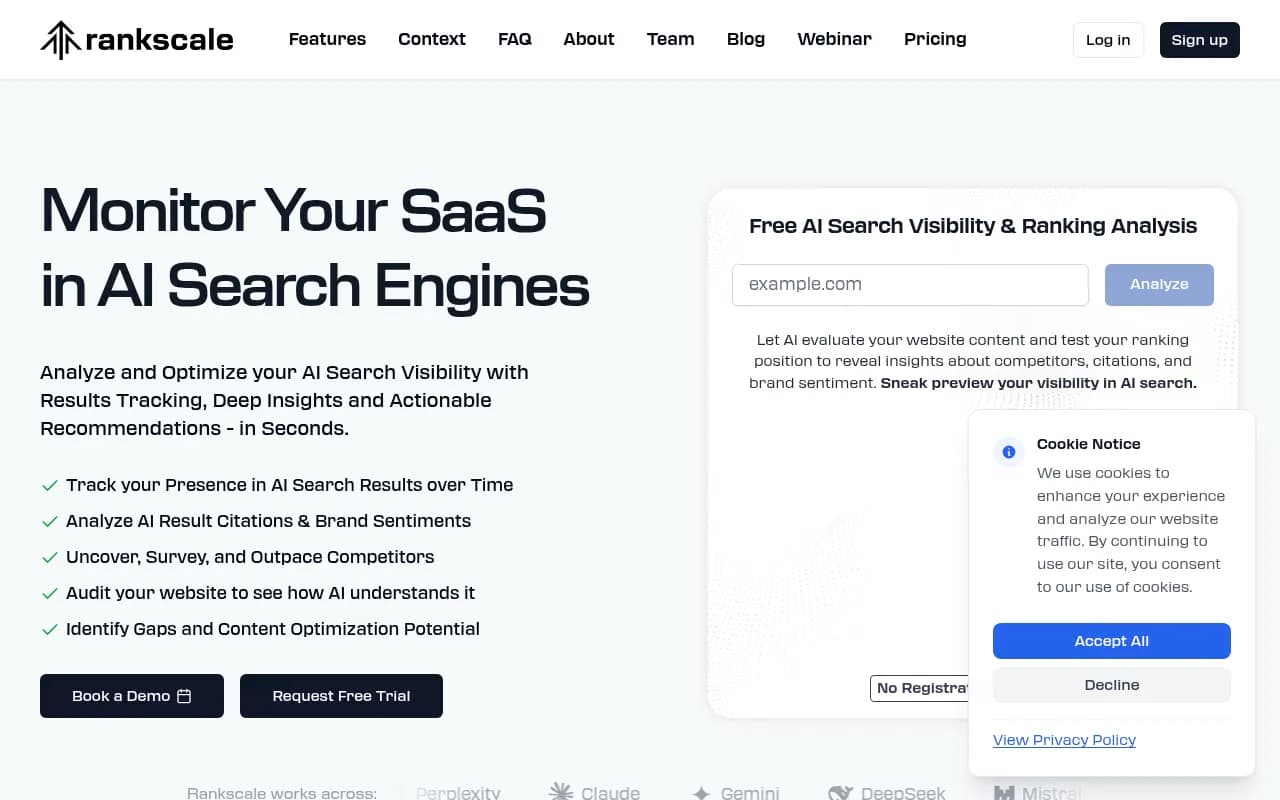
For teams that want to actually move their AI visibility numbers rather than just track them, the calculus is different. Promptwatch's Professional plan at $249/month includes crawler logs, AI content generation, prompt volume scoring, and page-level citation tracking -- features that would require Searchable plus at least one or two additional tools to replicate.
For agencies specifically, the multi-site pricing matters a lot. Searchable's per-seat model can get expensive fast when you're managing five or ten client accounts. Platforms with workspace or agency pricing tiers are worth prioritizing.
What to ask before you sign
If you're evaluating Searchable (or any AI visibility platform), these questions will save you from invoice surprises:
- What happens when I exceed my prompt limit? Is it a hard stop or an overage charge?
- How many seats are included, and what does each additional seat cost?
- Which features are included in the base plan vs. gated behind add-ons?
- What does the renewal price look like after year one?
- Is there an API, and what plan does it require?
- Does the platform help me create content, or only track visibility?
That last question is the one that most buyers skip in 2026, and it's the one that determines whether you're buying a tool or buying a workflow. Monitoring data is only valuable if you can act on it. If the platform you're evaluating doesn't help you close that loop, make sure you've budgeted for whatever else will.
Searchable has real users who find value in it -- the monitoring functionality works, and for some teams the data is genuinely useful. But the gap between the advertised price and the real cost, combined with the absence of optimization tools, means it's worth stress-testing the numbers before you commit.