Key takeaways
- Most AI visibility tools stop at monitoring -- they show you where you're invisible but don't help you fix it
- Promptwatch is the only platform in this comparison that closes the full loop: gap analysis, AI content generation, and traffic attribution in one place
- Gauge is strong for strategic competitive intelligence but lacks content optimization features
- Rankability is primarily an AI SEO content tool, not a dedicated AI search visibility tracker
- Searchable offers solid monitoring basics but trails on depth of competitive data and action features
- If competitive intelligence is your primary goal, you need a tool that goes beyond brand mention counts and shows you why competitors are winning
The AI search landscape has changed faster than most marketing teams expected. A year ago, tracking ChatGPT citations felt like a nice-to-have. Now, with AI-powered search accounting for over 40% of queries and models like Perplexity, Claude, and Google AI Mode becoming primary research tools for buyers, being invisible in AI responses is a real business problem.
The tools trying to solve this problem have multiplied just as fast. Some are genuinely useful. Some are dashboards dressed up as platforms. And a few are actually built to help you do something about the gap between where you are and where your competitors are.
This guide focuses on four tools that come up often in competitive intelligence discussions: Searchable, Promptwatch, Gauge, and Rankability. They're not all the same type of tool -- which is part of what makes comparing them interesting.
What "competitive intelligence" actually means in AI search
Before diving into the tools, it's worth being specific about what competitive intelligence means in this context -- because it's different from traditional SEO competitive analysis.
In traditional SEO, competitive intelligence means: who ranks above me, what keywords are they targeting, what's their backlink profile. You can reverse-engineer most of it from public SERP data.
In AI search, the question is different: which brands does ChatGPT recommend when someone asks about my category? Which sources does Perplexity cite when a buyer is comparing options? What content does Claude pull from when answering questions my customers are asking?
Good AI visibility competitive intelligence answers:
- Which prompts are my competitors appearing for that I'm not?
- What content or sources are driving their citations?
- Which AI models favor them, and why?
- What would I need to create or change to close that gap?
That last question is where most tools fall short. Showing you the gap is step one. Helping you close it is the harder, more valuable problem.
The four tools compared
Searchable
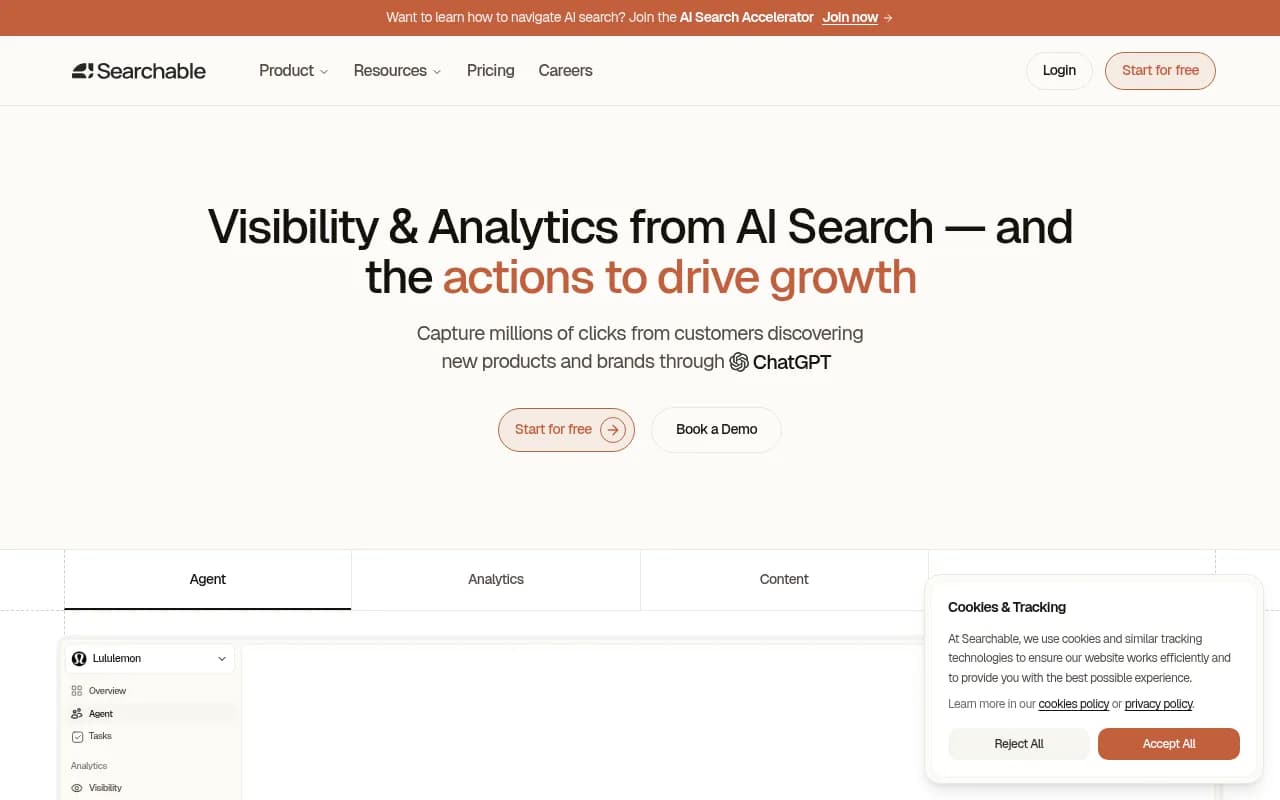
Searchable positions itself as an AI search visibility platform with monitoring and content tools. It covers the basics: tracking brand mentions across major AI models, showing you which prompts your brand appears in, and providing some competitive benchmarking.
Where Searchable works well is for teams that want a relatively clean interface for monitoring a handful of competitors across a defined set of prompts. The reporting is straightforward, and it's not overwhelming to set up.
The limitations show up when you push on depth. Searchable's competitive data tends to be surface-level -- you can see that a competitor is appearing more often, but the "why" is harder to extract. There's limited prompt intelligence (volume estimates, difficulty scoring) and the content optimization side is thin. If your goal is to understand the competitive landscape well enough to actually change your content strategy, you'll hit a ceiling fairly quickly.
It's a reasonable starting point for smaller teams or brands that are just getting into AI visibility monitoring, but it's not built for teams that need to act on what they find.
Gauge
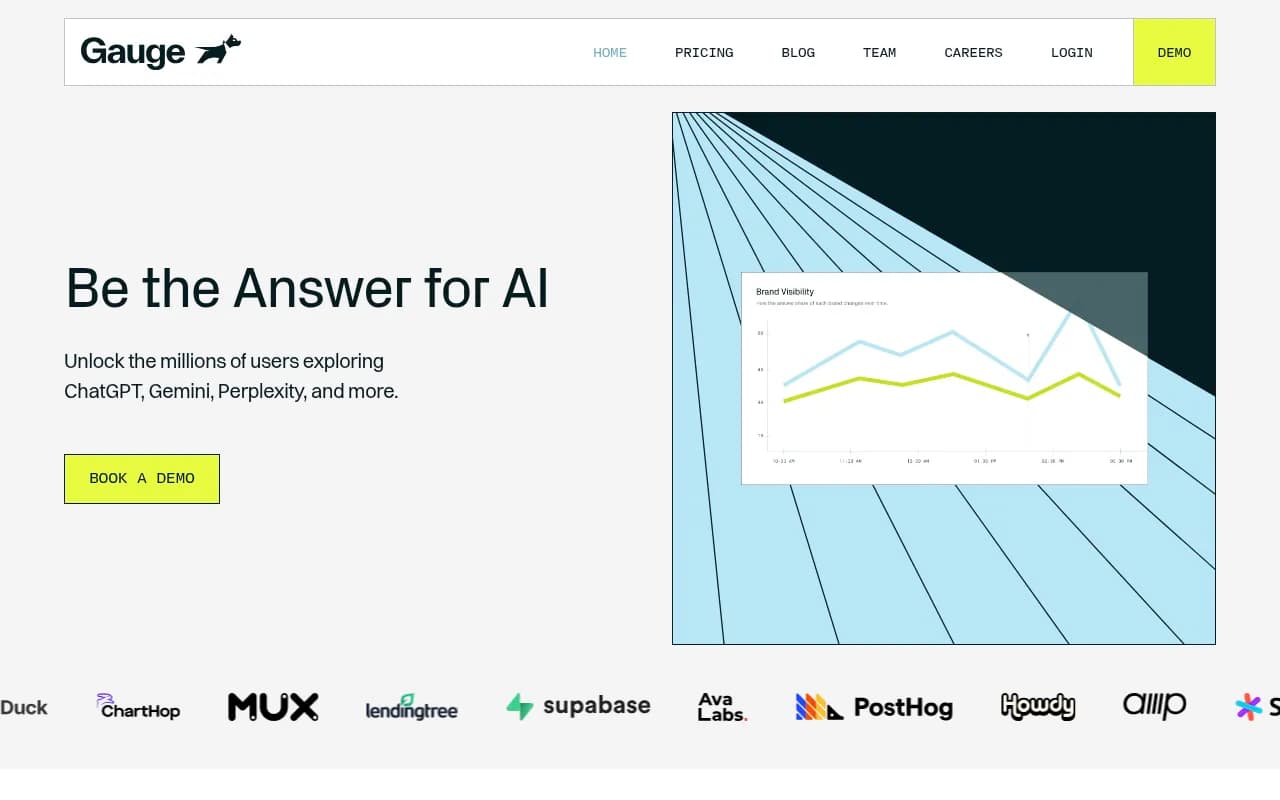
Gauge takes a more explicitly strategic angle. It's built around competitive intelligence for AI visibility -- understanding share of voice across AI models, tracking how competitor positioning shifts over time, and surfacing the prompts where the competitive gap is widest.
The competitive heatmaps are genuinely useful. You can see, at a glance, which models favor which brands for a given category of prompts. That kind of visual comparison is something a lot of monitoring-only tools don't do well.
Gauge also does a decent job on prompt coverage -- you can track a reasonably large set of prompts and see trend data over time rather than just point-in-time snapshots.
The gap is on the action side. Gauge is strong at telling you what's happening competitively. It's weaker at telling you what to do about it. There's no built-in content generation, no answer gap analysis that surfaces specific content you're missing, and no traffic attribution to connect visibility changes to actual revenue. You get good intelligence, but you're on your own to act on it.
For teams with a dedicated content strategist who can take competitive data and translate it into a content plan, Gauge is a solid choice. For teams that need the tool to do more of that work, it falls short.
Rankability
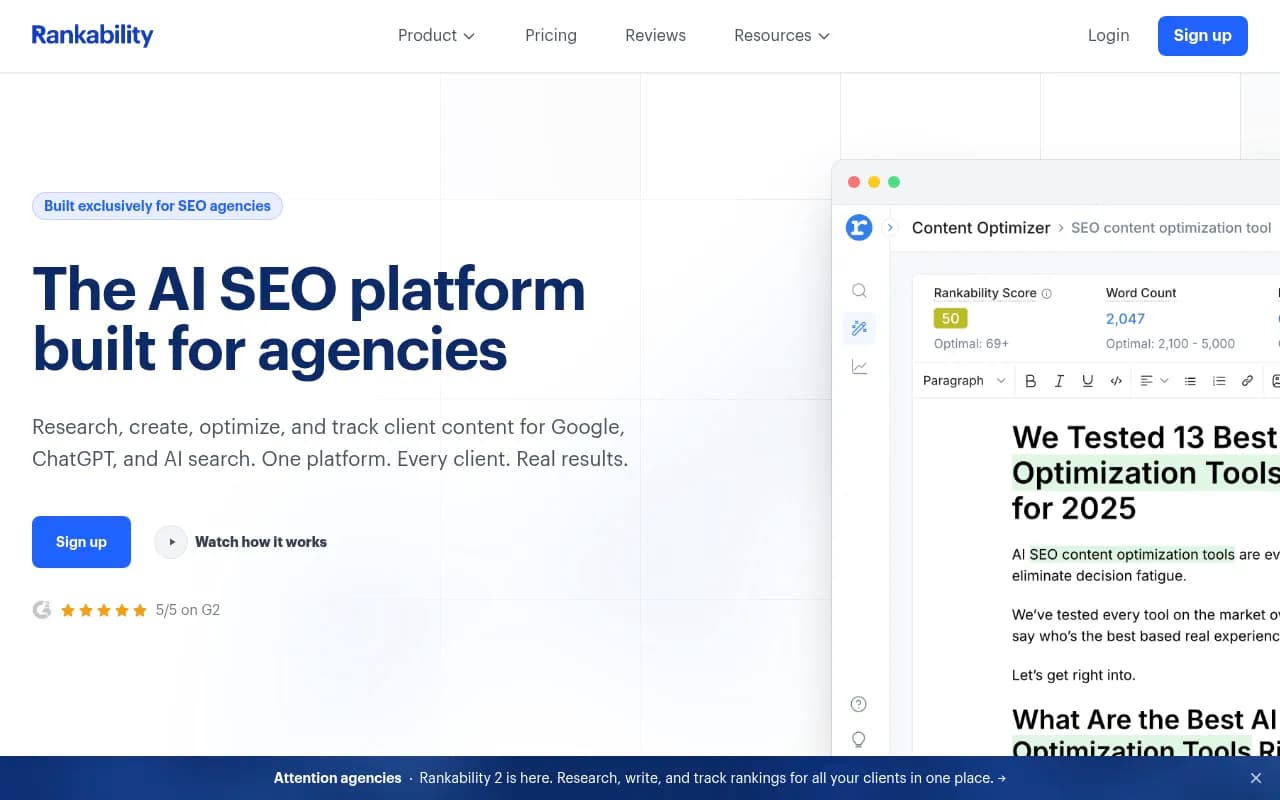
Rankability is worth including in this comparison because it comes up in AI SEO conversations frequently -- but it's important to understand what it actually is. Rankability is primarily a content optimization tool. It helps you write content that ranks well in search (including AI search) by analyzing what top-ranking pages include, scoring your content against those benchmarks, and suggesting improvements.
That's genuinely useful, and Rankability does it well. If you're trying to create content that gets cited by AI models, having a tool that helps you understand what "good" looks like for a given topic is valuable.
But Rankability is not an AI visibility monitoring platform. It doesn't track your brand mentions across ChatGPT or Perplexity. It doesn't show you competitive share of voice in AI responses. It doesn't run prompts against AI models and report back on who's appearing where.
Think of it as a complement to an AI visibility platform, not a replacement. If you're using Gauge or Searchable for monitoring and you need a content optimization layer on top, Rankability fits that role. If you're looking for one tool to handle competitive intelligence in AI search, Rankability isn't it.
Promptwatch
Promptwatch is the tool in this comparison that's built to close the full loop -- from finding competitive gaps to generating content to tracking whether that content actually improved your visibility.

The competitive intelligence capabilities are strong. Answer Gap Analysis shows you the specific prompts your competitors are appearing for that you're not -- not just "you're missing some prompts" but the actual questions, the content gaps behind them, and what you'd need to create to compete. Competitor heatmaps let you compare your AI visibility against multiple competitors across different models (ChatGPT, Perplexity, Claude, Gemini, and seven others), so you can see not just that you're behind but where and with which AI engines.
What separates Promptwatch from the other tools in this comparison is what happens after you find the gap. The built-in AI writing agent generates content grounded in real citation data -- 880M+ citations analyzed -- so the articles and comparisons it produces are engineered to get cited, not just to rank in traditional search. You can go from "here's a prompt your competitor is winning" to "here's a draft article that addresses the gap" without leaving the platform.
The tracking side is equally thorough. Page-level citation tracking shows which specific pages are being cited by which models, how often, and in what context. AI crawler logs show you which AI crawlers are hitting your site and which pages they're reading (or ignoring). And traffic attribution -- via code snippet, GSC integration, or server log analysis -- connects visibility changes to actual traffic and revenue.
Prompt intelligence adds another layer: volume estimates and difficulty scores for each prompt, plus query fan-outs that show how one prompt branches into sub-queries. That's the kind of data that lets you prioritize which gaps to close first rather than guessing.
Pricing runs from $99/month (Essential: 1 site, 50 prompts) to $579/month (Business: 5 sites, 350 prompts, 30 articles/month), with agency and enterprise pricing available. There's a free trial.
Feature comparison
| Feature | Searchable | Gauge | Rankability | Promptwatch |
|---|---|---|---|---|
| Brand mention tracking across LLMs | Yes | Yes | No | Yes |
| Competitive share of voice | Basic | Strong | No | Strong |
| Answer gap / content gap analysis | Limited | Limited | No | Yes |
| Prompt volume & difficulty scoring | No | Partial | No | Yes |
| Built-in AI content generation | No | No | Partial (optimization) | Yes |
| AI crawler logs | No | No | No | Yes |
| Traffic attribution | No | No | No | Yes |
| Reddit & YouTube citation tracking | No | No | No | Yes |
| ChatGPT Shopping tracking | No | No | No | Yes |
| Multi-model coverage | Yes | Yes | No | 10 models |
| Page-level citation tracking | Limited | Limited | No | Yes |
| Free trial | Yes | Yes | Yes | Yes |
| Starting price | ~$99/mo | ~$149/mo | ~$99/mo | $99/mo |
Which tool is right for which situation
The honest answer is that these tools serve different needs, and the right choice depends on what you're actually trying to accomplish.
If you want a simple monitoring dashboard to track brand mentions across AI models without a lot of complexity, Searchable is a reasonable starting point. It won't overwhelm a small team, and it covers the basics.
If competitive intelligence is your primary goal and you have a content team that can act on the data independently, Gauge is worth a look. The competitive heatmaps and share-of-voice tracking are genuinely good, and it's built with that strategic lens in mind.
If you're focused on creating content that performs well in AI search and you already have monitoring covered elsewhere, Rankability's content optimization features are solid. Just don't expect it to replace a visibility monitoring platform.
If you need the full picture -- competitive intelligence, content gap analysis, content generation, crawler logs, traffic attribution, and multi-model tracking -- Promptwatch is the only tool in this comparison that covers all of it. The action loop (find gaps, create content, track results) is what makes it more than a monitoring dashboard.
What most teams get wrong about AI visibility tools
A lot of teams buy an AI visibility tool, look at the dashboard for a few weeks, and then... don't do much with it. The data is interesting, but it doesn't translate into action.
This is partly a tool problem. If your platform shows you that a competitor is appearing in 40% more prompts than you are but doesn't tell you why or what to do about it, the data sits there. You might share it in a meeting. You might add it to a report. But it doesn't change your content strategy.
The tools that actually move the needle are the ones that make the path from "here's the gap" to "here's what to create" as short as possible. That's the real differentiator in 2026 -- not which tool has the most impressive dashboard, but which one helps you close the gap between where you are and where your competitors are in AI search results.
Monitoring is table stakes. The question worth asking when evaluating any AI visibility tool is: what happens after I see the data?
Other tools worth knowing
The four tools above aren't the only options in this space. A few others worth mentioning depending on your specific needs:
For agencies managing multiple clients:

Profound has strong enterprise features and solid tracking depth, though it runs at a higher price point and lacks some of the action-oriented features (no Reddit tracking, no ChatGPT Shopping).
For budget-conscious teams:

Otterly.AI covers monitoring basics at a lower price point. It's monitoring-only -- no content generation, no crawler logs -- but if you just need to track brand mentions across a handful of prompts, it's a reasonable entry point.

Peec AI is worth considering for teams with multi-language or multi-region needs. The monitoring is solid, though it shares the same limitation as most tools in this tier: it shows you the data but leaves the action to you.
For enterprise teams:

AthenaHQ covers 8+ AI search engines and has a clean interface for tracking visibility at scale. Like Gauge, it's strong on monitoring and competitive benchmarking but lighter on the content optimization and generation side.
The bottom line
AI visibility competitive intelligence in 2026 isn't really about which tool has the most data. It's about which tool helps you turn that data into content that gets cited.
Gauge is the strongest pure competitive intelligence tool in this comparison. Searchable is a solid entry point. Rankability is a content optimization tool that complements (but doesn't replace) a visibility platform. And Promptwatch is the only one that covers the full cycle from gap identification to content creation to traffic attribution.
If you're serious about winning in AI search -- not just tracking it -- the tool you want is the one that tells you what to build next.