Key takeaways
- Ceyo AI monitors brand mentions across ChatGPT, Perplexity, Claude, and Gemini, but offers limited ability to act on what it finds.
- In 2026, the shift in AI search means marketers need more than dashboards -- they need content gap analysis, optimization workflows, and traffic attribution.
- Most marketers switching away from Ceyo AI cite the same core frustration: it shows you where you're invisible but doesn't help you fix it.
- Several alternatives now cover the full loop: find gaps, create content, track results.
- The best fit depends on your team size, budget, and whether you need a monitoring tool or a full optimization platform.
There's a moment most marketers hit with AI visibility tools. You've set up your prompts, you're watching the dashboard, and you can see that your competitor shows up in ChatGPT responses and you don't. The data is clear. The problem is obvious.
Then you close the tab and wonder: now what?
That's the wall Ceyo AI users keep running into in 2026. And it's not a knock on Ceyo specifically -- it reflects a broader problem with first-generation AI monitoring tools. They were built to answer "are we visible?" before anyone had figured out how to answer "how do we get more visible?"
The marketing landscape has shifted fast enough that the gap between those two questions now costs real money.
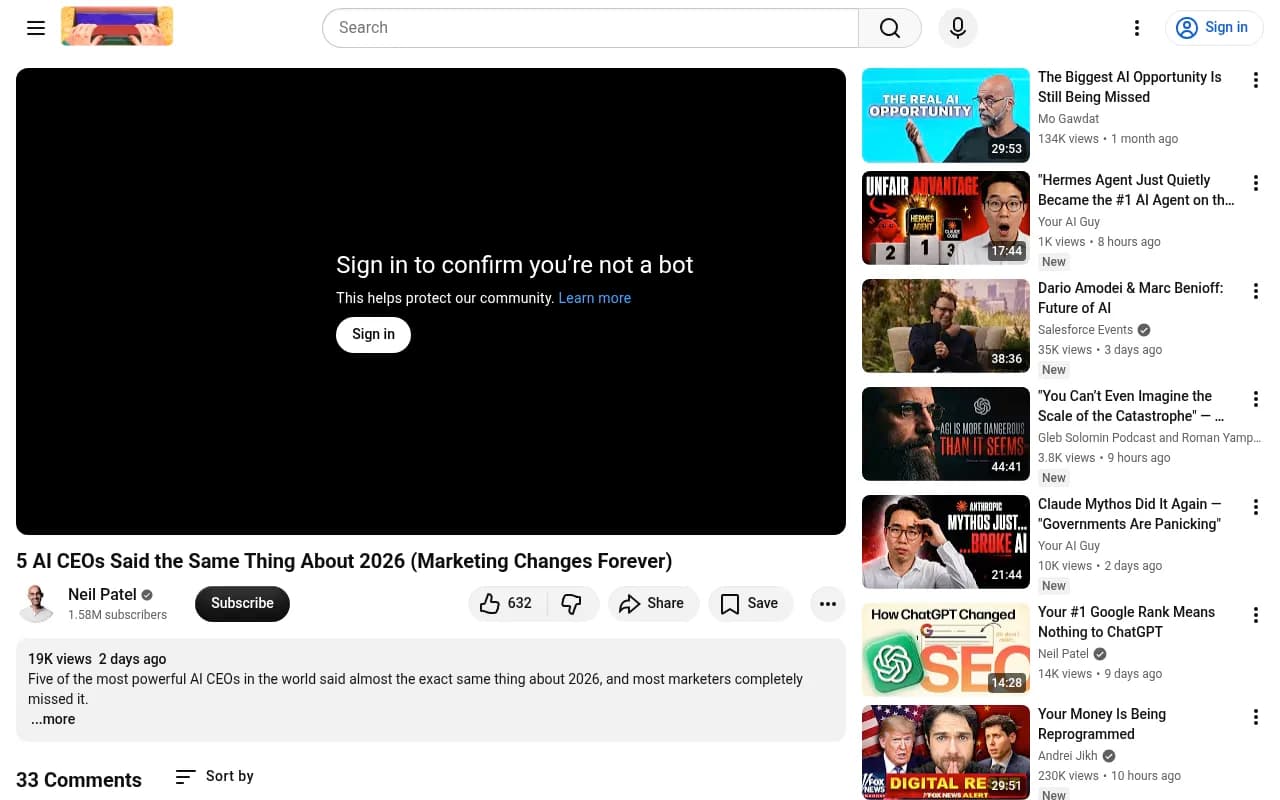
Neil Patel made the point bluntly in a May 2026 video: AI platforms now drive less than 1% of traffic but nearly 10% of B2B revenue. The audience for your content has already changed. AI agents are evaluating your content as a source to cite and recommend -- and most marketers are still optimizing for human clicks.
What Ceyo AI actually does
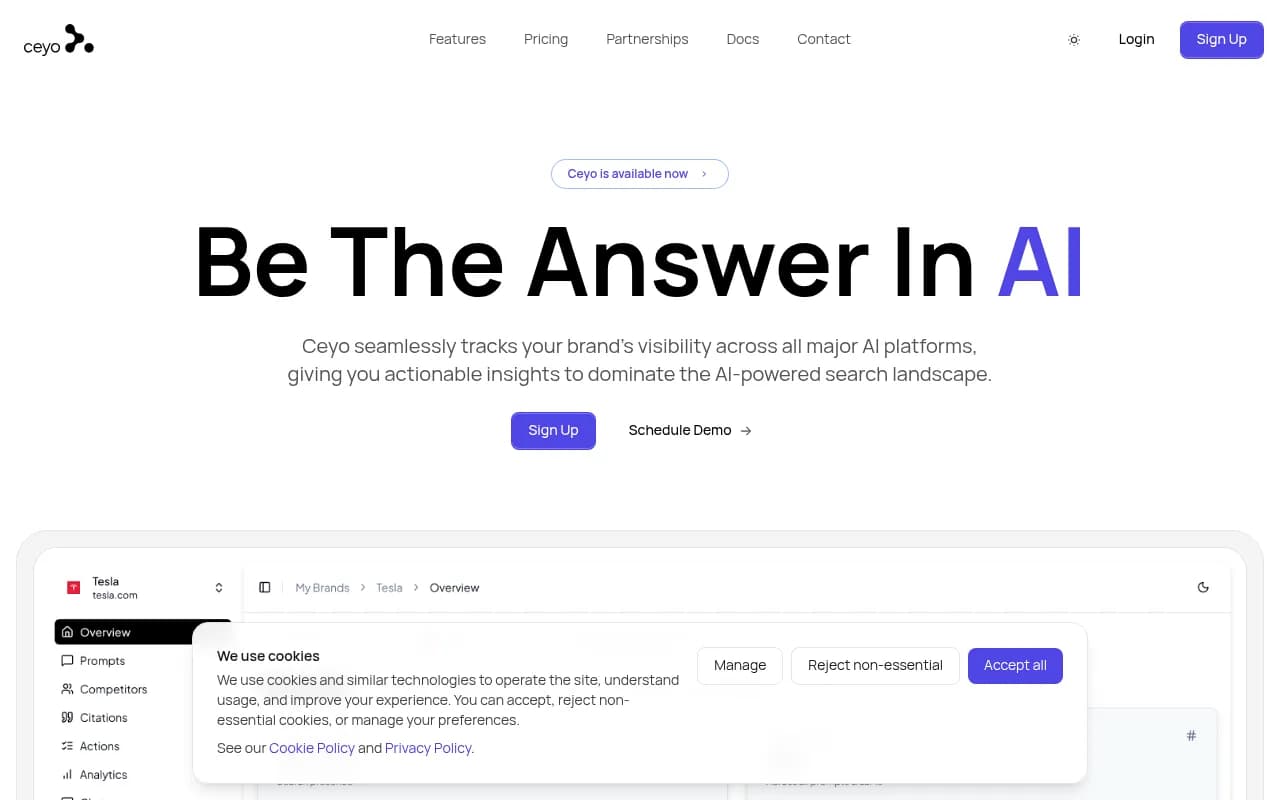
Ceyo AI monitors your brand's visibility across ChatGPT, Perplexity, Claude, and Gemini. You set up a list of prompts, it runs them on a schedule, and you see whether your brand appears in the responses. It's clean, simple, and genuinely useful for getting a baseline read on where you stand.
For teams that have never tracked AI visibility before, Ceyo AI is a reasonable starting point. The interface isn't overwhelming, and the core concept -- "here are the prompts, here's who appears" -- is easy to explain to a CMO who's just starting to ask about GEO.
The problems show up once you've been using it for a few weeks and you want to do something with the data.
There's no content gap analysis that tells you what topics or questions you're missing. There's no built-in way to generate content designed to get cited. There's no crawler log showing you whether AI bots are even reaching your pages. And there's no traffic attribution to connect visibility changes to actual revenue.
You're left with a score and a list of competitor appearances, and the work of figuring out what to do next falls entirely on you.
Why 2026 changed the expectations
The shift isn't just about features. It's about what the job now requires.
A year ago, "we're tracking our AI visibility" was enough to satisfy most stakeholders. Showing up in a Perplexity response felt novel. Monitoring was the whole task.
That's no longer true. According to Jasper's 2026 State of AI in Marketing report, 91% of marketers now actively use AI tools at work -- up from 63% the prior year. The question has moved from "are you using AI?" to "what results are you getting from it?" Monitoring without optimization is starting to look like running Google Analytics but never acting on the data.
The marketers pulling ahead right now aren't the ones with the best dashboards. They're the ones who've built systems: content workflows tied to prompt data, optimization loops that feed new pages into AI training cycles, attribution models that connect AI citations to pipeline.
If your AI visibility tool can't participate in that system, it becomes a reporting layer that nobody acts on.
The specific complaints driving the switch
Talking to marketers who've moved away from Ceyo AI, a few patterns come up repeatedly.
The most common: "I can see I'm not ranking for these prompts, but I don't know why or what to do about it." Ceyo shows presence or absence. It doesn't explain what content is missing, which competitors are getting cited and why, or what changes would move the needle.
The second complaint is about prompt coverage. Ceyo's prompt setup is manual. You add the prompts you think to add. But AI search doesn't work like keyword research -- one query fans out into dozens of sub-queries, and the prompts your customers actually use often aren't the ones you'd guess. Without prompt intelligence that surfaces volume estimates, difficulty scores, and query fan-outs, you're flying partially blind.
Third: no Reddit or YouTube tracking. This matters more than it sounds. A significant share of what AI models cite comes from Reddit discussions, YouTube videos, and forum threads -- not just brand websites. If your tool isn't surfacing those sources, you're missing a real optimization channel.
And fourth: no way to close the loop. If your AI visibility improves, Ceyo can't tell you whether that translated into traffic or revenue. That makes it hard to justify the investment or prioritize which prompts to focus on.
What marketers are switching to
The tools getting the most traction as Ceyo AI replacements in 2026 fall into two categories: broader monitoring platforms with more depth, and full optimization platforms that go from gap analysis to content creation to attribution.
Full optimization platforms
Promptwatch is the most complete option in this category. It covers 10 AI models (ChatGPT, Perplexity, Claude, Gemini, Grok, DeepSeek, Copilot, Meta AI, Mistral, and Google AI Overviews), and the core differentiator is that it doesn't stop at monitoring. The Answer Gap Analysis shows you exactly which prompts competitors appear for that you don't -- and the built-in AI writing agent generates content specifically designed to get cited, grounded in 880M+ citations analyzed. Crawler logs show you which AI bots are hitting your pages and whether they're encountering errors. Traffic attribution connects visibility to actual revenue via a code snippet, GSC integration, or server log analysis.

For teams that want to run the full loop -- find gaps, create content, track results -- Promptwatch is the only platform that handles all three without requiring you to stitch together separate tools.

Profound is another strong option, particularly for enterprise teams. It has solid monitoring depth and good competitive analysis features. The tradeoff is price -- it sits at a higher price point than Promptwatch and doesn't include Reddit tracking or ChatGPT Shopping monitoring.

AthenaHQ covers 8+ AI search engines and has clean competitive benchmarking. It's monitoring-focused, which means it's a step up from Ceyo in terms of depth, but it doesn't have content generation or optimization capabilities built in.
Mid-tier monitoring with more depth

Otterly.AI is one of the most popular monitoring-only alternatives. It's affordable, covers the main AI models, and is easier to set up than most enterprise tools. The limitation is the same as Ceyo -- it's a tracker, not an optimizer. Good for teams that just need better monitoring without the full platform overhead.

Peec AI is worth mentioning for teams with multi-language or multi-region needs. It handles non-English AI visibility tracking better than most tools at its price point.
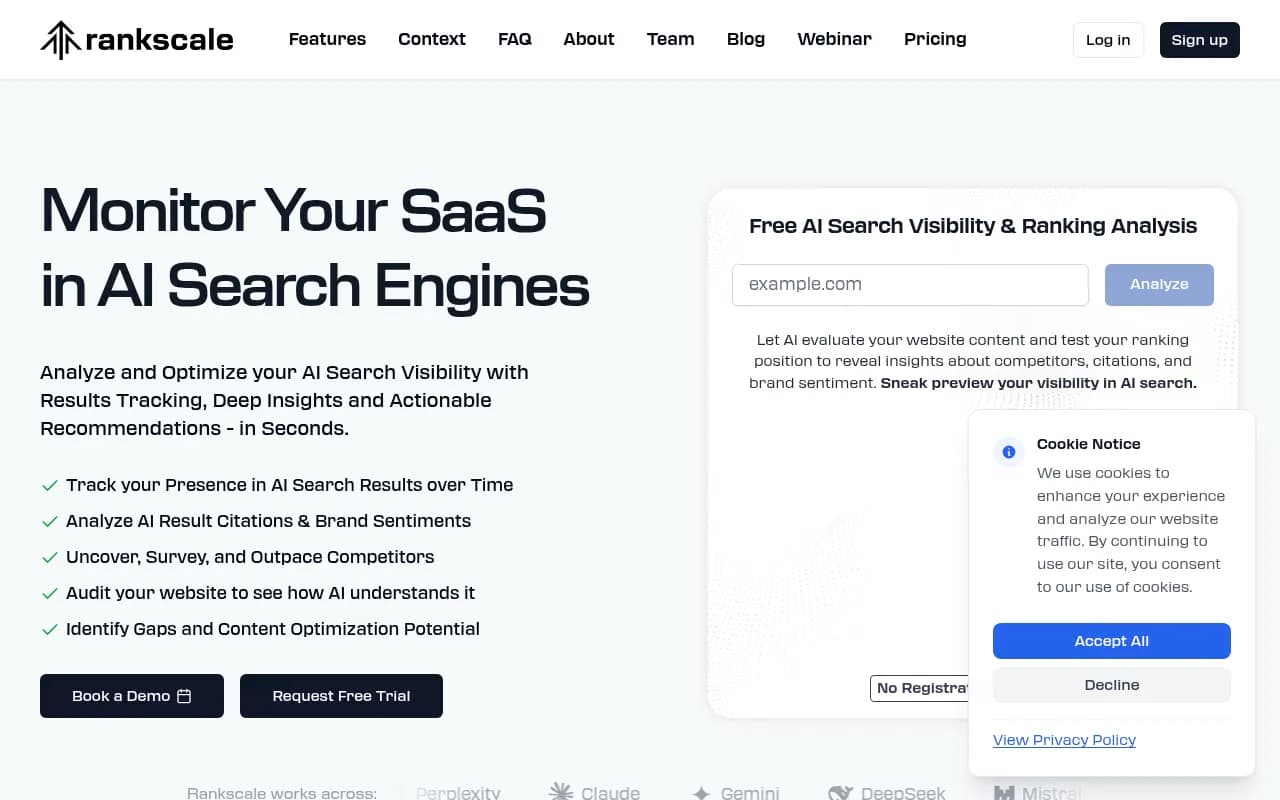
Rankscale focuses on AI search ranking and visibility with a cleaner prompt management interface than Ceyo. It's a reasonable step up if your main frustration is Ceyo's limited prompt coverage.
Scrunch AI has been gaining ground with mid-market brands. It's positioned around share-of-voice in AI search and has decent competitive benchmarking, though like most monitoring tools it stops short of content optimization.
For agencies
Search Party is built with agencies in mind and handles multi-client management better than most tools. It's lighter on prompt intelligence and content gap analysis, but the workflow and reporting structure works well for agency teams managing multiple brands.
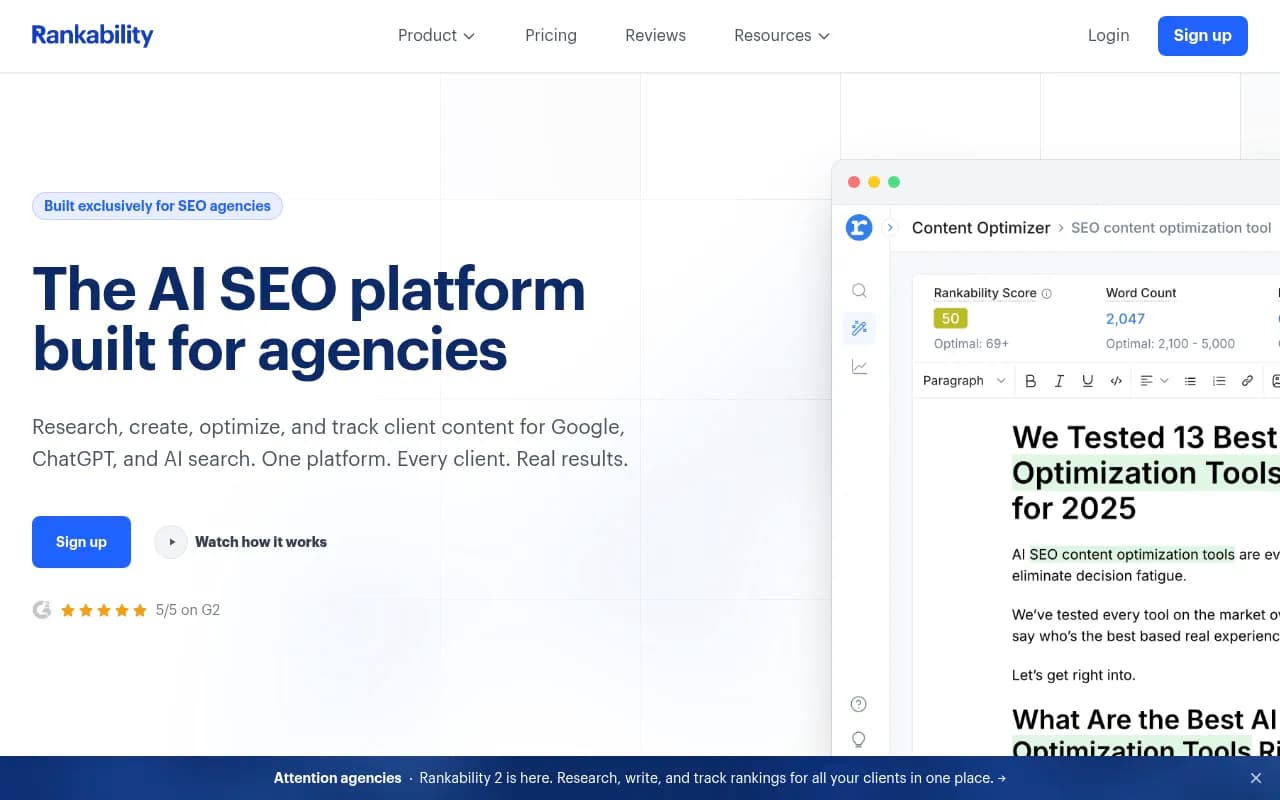
Rankability takes an agency-focused approach to AI visibility analytics with good white-label reporting. Worth evaluating if client reporting is a core requirement.
Feature comparison
| Tool | AI models covered | Content gap analysis | Content generation | Crawler logs | Traffic attribution | Reddit/YouTube tracking | Starting price |
|---|---|---|---|---|---|---|---|
| Ceyo AI | 4 | No | No | No | No | No | Low |
| Promptwatch | 10 | Yes | Yes | Yes | Yes | Yes | $99/mo |
| Profound | Multiple | Partial | No | No | No | No | Higher |
| AthenaHQ | 8+ | No | No | No | No | No | Mid |
| Otterly.AI | Multiple | No | No | No | No | No | Low |
| Peec AI | Multiple | No | No | No | No | No | Low |
| Scrunch AI | Multiple | No | No | No | No | No | Mid |
| Search Party | Multiple | No | No | No | No | No | Custom |
How to choose
The right answer depends on what you're actually trying to accomplish.
If you're a solo marketer or small team that just needs a baseline read on AI visibility and doesn't have the bandwidth to act on optimization insights yet, Otterly.AI or Peec AI are cheaper and simpler than Ceyo without being significantly worse. Lateral moves, but they cost less.
If you're a mid-size marketing team that's moved past "are we visible?" and wants to understand why competitors are getting cited and what content to create, Promptwatch is the clearest fit. The Answer Gap Analysis alone tends to justify the subscription within the first month -- it surfaces specific content your site is missing that AI models want to cite but can't find.
If you're at an enterprise with a dedicated SEO or GEO team, Profound or AthenaHQ give you more depth on the monitoring side, though you'll likely need to pair them with a content workflow tool to actually act on what they surface.
If you're an agency managing multiple clients, Search Party or Rankability handle the operational side better, but neither gives you the content optimization capabilities that clients are increasingly asking for.
One thing worth being honest about: no tool solves the underlying problem of AI visibility without content work. The tools that come closest to solving it are the ones that connect the data to the content creation process. Everything else is a better dashboard.
The bigger picture
The shift Neil Patel described -- from optimizing for human clicks to optimizing to be the source AI agents cite -- is real and it's already happening. AI platforms driving nearly 10% of B2B revenue while accounting for less than 1% of traffic is a signal that the attribution models most teams are using are already undercounting AI's impact.
The marketers who are pulling ahead aren't necessarily the ones with the most sophisticated tools. They're the ones who've accepted that AI visibility is now a production discipline, not just a monitoring exercise. That means content workflows, optimization loops, and attribution -- not just dashboards.
Ceyo AI was a reasonable tool for the monitoring phase. For most teams in 2026, that phase is over.