Key takeaways
- AEO means optimizing your content to be cited, quoted, or summarized by AI answer engines like ChatGPT, Perplexity, Google AI Overviews, and Gemini -- not just ranked in traditional search results.
- It's not a replacement for SEO. Good SEO is still the foundation. AEO builds on top of it by making content more structured, authoritative, and directly answerable.
- The terms AEO and GEO (Generative Engine Optimization) are now largely interchangeable -- both describe the same goal: influencing what AI says about your brand.
- Monitoring your AI visibility is step one, but the real work is closing the gaps: finding where competitors appear and you don't, then creating content that fills those holes.
- Tools like Promptwatch exist specifically to help with this -- tracking visibility across 10+ AI models and helping you act on what you find.
The problem with most AEO explainers
Most articles about Answer Engine Optimization fall into one of two traps. Either they're so abstract ("AI is changing search!") that you finish reading without knowing what to actually do. Or they're so technical that they read like documentation for a crawler you'll never configure yourself.
So let's try something different. Let's define AEO precisely, explain how it relates to what you're already doing, and give you a realistic picture of what it looks like in practice in 2026.
What AEO actually means
Here's the clearest definition I've found, from Contently's 2026 guide: "AEO means optimizing content to be the source an AI engine quotes, summarizes, or links when answering a question."
That's it. Not ranking on page one. Not getting a featured snippet (though that overlaps). Being the source an AI model pulls from when a user asks a question you care about.
When someone types "What's the best project management tool for remote teams?" into ChatGPT or Perplexity, they're not getting ten blue links. They're getting a synthesized answer. That answer was built from somewhere -- from web pages, Reddit threads, YouTube videos, documentation, review sites. AEO is the practice of making sure your content is in that mix, and that it's represented accurately.
The Webflow team put it well in their introduction to AEO:
"When someone asks AI a question, they're not getting a list of links to your content anymore. They're getting a rewritten version of your brand story. And that version may not be the answer you want given."
That rewriting is the uncomfortable part. AI models don't reproduce your copy. They synthesize it, compress it, and sometimes get it wrong. If your content is thin, vague, or poorly structured, the AI's version of your brand story will reflect that.
AEO vs. SEO: what's actually different
This comparison gets muddled a lot, so here's a clean breakdown.
| Dimension | Traditional SEO | AEO |
|---|---|---|
| Goal | Rank in search results | Be cited in AI-generated answers |
| Output | A link users click | A paragraph users read (and trust) |
| Keyword focus | Exact match and semantic keywords | Full questions and conversational queries |
| Success metric | Rankings, organic traffic | Citation frequency, AI visibility score |
| Content format | Optimized pages | Structured, directly answerable content |
| Authority signals | Backlinks, domain authority | Entity clarity, earned media, third-party mentions |
| Tools | Semrush, Ahrefs, Search Console | Promptwatch, Profound, AthenaHQ, Perplexity monitoring |
The key thing to understand: these aren't competing disciplines. SEO is still the foundation. A site that's technically broken, has no backlinks, and publishes thin content won't do well in AEO either. What AEO adds is a layer of intentionality around how content is structured and what questions it directly answers.
As Directive Consulting noted in their 2026 trends piece: "AEO and GEO are basically two names for the same playbook now, aimed at influencing what AI engines say about your brand." The terminology has converged. Whether you call it AEO, GEO (Generative Engine Optimization), or AI SEO, you're describing the same goal.
Why this matters more in 2026 than it did two years ago
The scale shift is real. ChatGPT hit 900 million monthly users by late 2025. Gemini surpassed 650 million. Google Search still has over 4 billion users, but AI-powered surfaces are now a meaningful chunk of how people discover products, services, and information.
More practically: zero-click behavior has accelerated. When Google's AI Overview answers a question at the top of the results page, many users never scroll down. When Perplexity gives a direct answer with three cited sources, most users read the answer and stop. Your content either makes it into that answer or it doesn't.
The brands that understood this early have a head start. But it's not too late -- AI models update their knowledge continuously, and the content landscape is still being shaped. A well-optimized article published today can start appearing in AI citations within weeks.
What AEO looks like in practice
Let's get concrete. Here's what actually changes when you start optimizing for answer engines.
Write to answer questions, not just rank for keywords
Traditional SEO content often optimizes around a keyword phrase and then builds an article around it. AEO flips this slightly: start with the question a user would actually ask, then make sure your content answers it directly and completely.
This means:
- Use question-based headings (H2s and H3s that mirror how people actually ask things)
- Put the direct answer early -- don't bury the lede
- Cover the topic with enough depth that an AI model can extract a complete, accurate answer from your page
Structure your content so AI can parse it
AI models don't read pages the way humans do. They parse structure. Clear headings, short paragraphs, bullet points, and FAQ sections all help. Schema markup (especially FAQ schema and HowTo schema) makes your content more machine-readable. This isn't new advice -- it's what good technical SEO has always recommended -- but it matters more now.
Build entity authority, not just domain authority
AI models think in entities. Your brand needs to be a clearly defined, consistently described entity across the web. That means:
- Consistent brand descriptions across your site, press releases, and third-party mentions
- Wikipedia presence or Wikidata entries if applicable
- Clear "About" and product pages that define what you do without ambiguity
- Earned media and PR coverage that reinforces your positioning
Publish content that fills answer gaps
This is where most brands are leaving visibility on the table. There are questions in your category that AI models are answering -- but citing your competitors, not you. Finding those gaps and creating content that addresses them directly is the highest-leverage AEO activity you can do.
Tools like Promptwatch have a specific feature for this: Answer Gap Analysis, which shows you exactly which prompts competitors rank for in AI results that you don't appear in. That's not a vague insight -- it's a content brief.

Monitor what AI is actually saying about you
You can't optimize what you can't see. The first step for most brands is simply understanding their current AI visibility: which models mention them, for which queries, and how accurately. This is different from traditional rank tracking -- you're not looking at a position number, you're reading what the AI actually says.
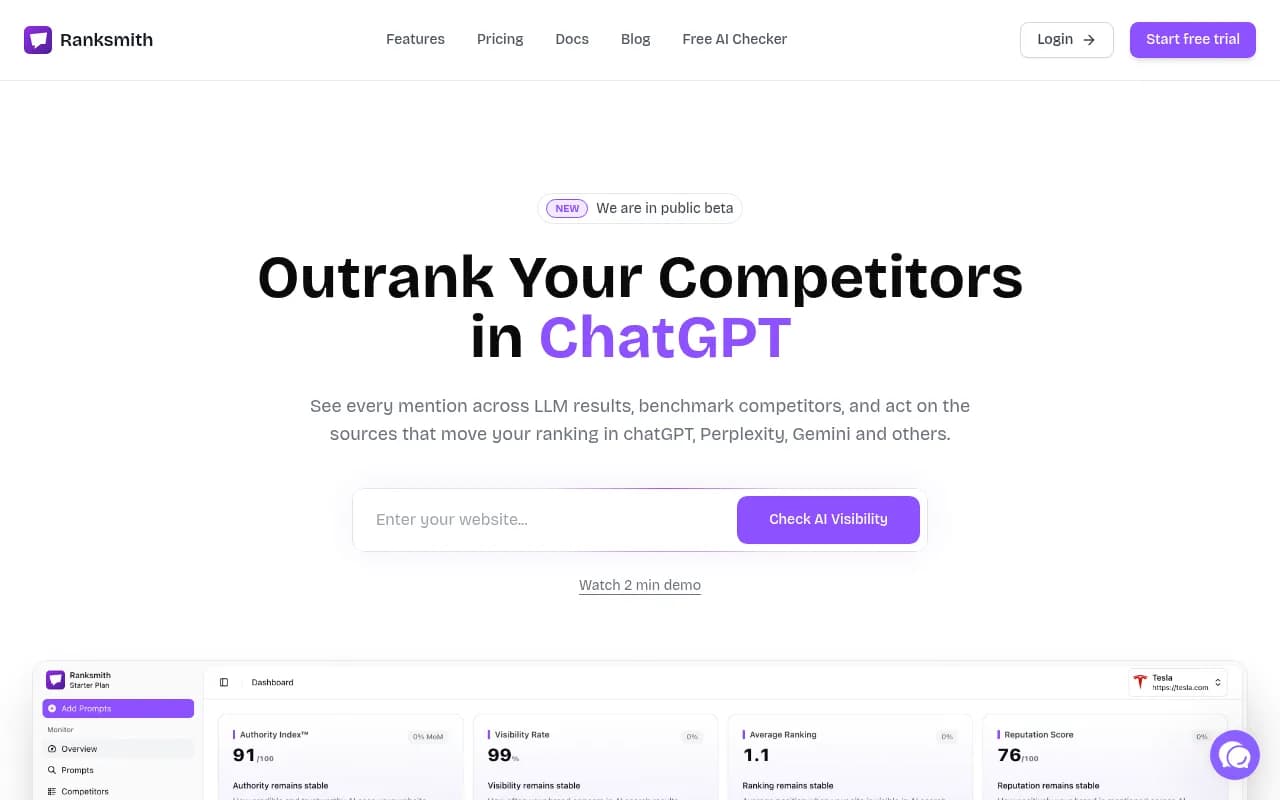
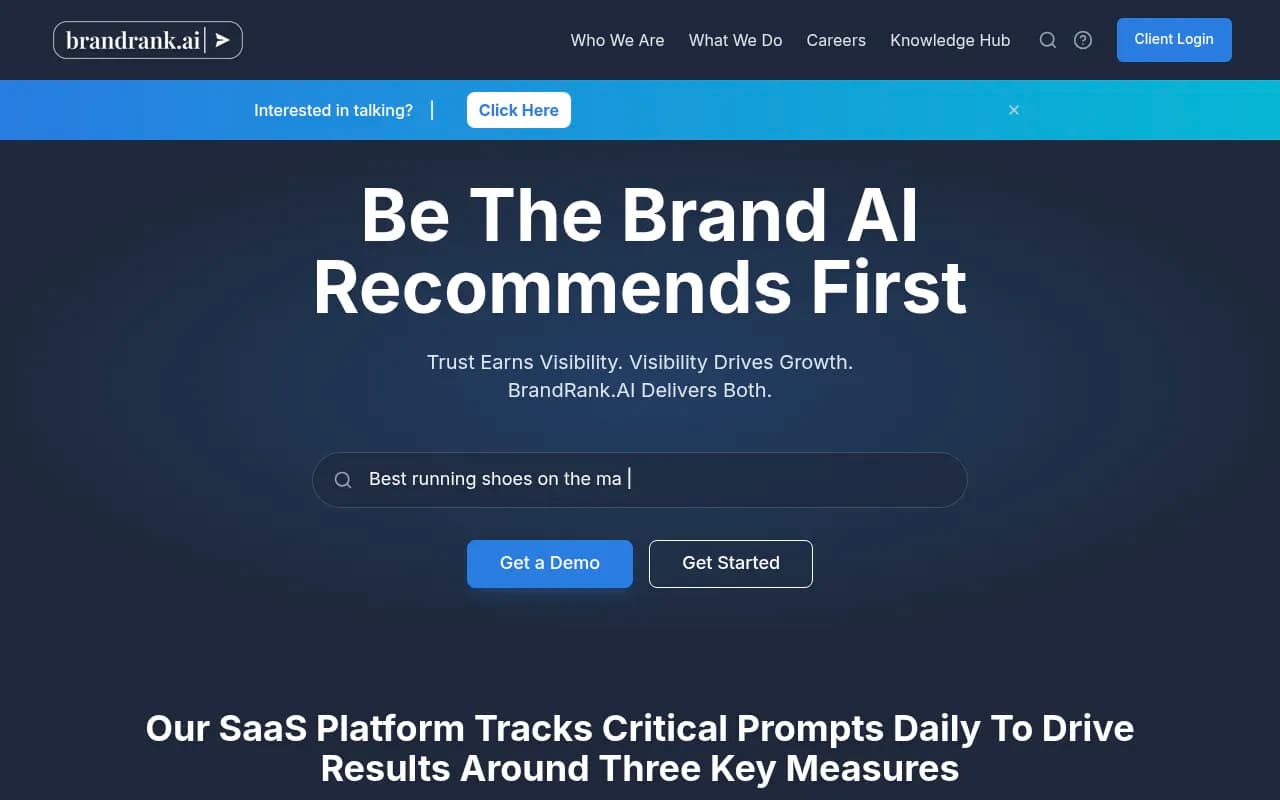
Several tools now handle this monitoring well.




The difference between these tools and a platform like Promptwatch is mostly about what happens after monitoring. Most monitoring tools show you data. Promptwatch is built around helping you act on it -- generating content, tracking improvements, and connecting visibility to actual traffic.
The three things AI models need to cite you
Based on how citation patterns work across ChatGPT, Perplexity, Claude, and Google AI Overviews, there are three things that consistently predict whether a source gets cited.
Relevance: Your content needs to directly answer the question being asked. Not tangentially. Not after three paragraphs of preamble. Directly.
Authority: AI models weight sources they've seen cited elsewhere. This is where traditional SEO signals (backlinks, domain authority, earned media) still matter. A brand that's been covered in industry publications, mentioned in forums, and referenced by other credible sources is more likely to be cited.
Clarity: Vague, hedged, or generic content rarely gets cited. AI models prefer content that makes clear, specific claims. "Our tool reduces onboarding time by 40%" is more citable than "Our tool helps improve your onboarding experience."
AEO for different types of brands
AEO isn't one-size-fits-all. Here's how the priorities shift depending on your situation.
E-commerce and product brands
The priority is appearing in product recommendation queries. When someone asks ChatGPT "What's the best standing desk under $500?", you want your product in that answer. This requires strong product pages, review coverage, and monitoring ChatGPT's shopping features specifically. Tools like Promptwatch track ChatGPT Shopping appearances, which is a channel most brands aren't watching yet.
B2B SaaS
The priority is category queries and comparison queries. "What's the best CRM for small teams?" or "Salesforce vs HubSpot -- which is better for a 20-person company?" These are high-intent questions where AI answers carry real buying influence. Answer gap analysis is especially valuable here.
Local businesses
The priority is local intent queries through voice and AI assistants. "Best Italian restaurant near downtown Denver" or "Who does HVAC repair in Austin?" Google's AI Overviews and voice assistants pull heavily from structured local data, reviews, and Google Business Profiles.
Publishers and media
The priority is being cited as a source, not just appearing in answers. AI models cite authoritative sources when making factual claims. If you publish research, data, or original reporting, optimizing for citability (clear attribution, structured data, canonical URLs) matters a lot.
Common AEO mistakes to avoid
Treating it as a one-time project. AI models update continuously. A citation you earn today can disappear next month if a competitor publishes better content. AEO is an ongoing workflow, not a campaign.
Ignoring Reddit and YouTube. AI models cite user-generated content heavily. Reddit threads and YouTube videos often appear in AI answers alongside (or instead of) brand-owned content. Monitoring what's being said about your brand in these channels -- and participating where appropriate -- is part of the AEO playbook.
Optimizing only for Google. Google AI Overviews matter, but so does Perplexity, ChatGPT, Claude, and Gemini. Each model has different citation patterns. A brand that appears in Google AI Overviews but not in ChatGPT is missing a significant chunk of AI-driven discovery.
Confusing impressions with influence. Being mentioned in an AI answer isn't always good. If ChatGPT describes your product inaccurately or positions you in the wrong category, that's a problem. Monitoring the content of AI mentions, not just their frequency, is important.
How to get started
If you're new to AEO, here's a practical starting sequence:
-
Run a baseline audit. Pick 10-20 questions your target customers would ask, and check how you appear in ChatGPT, Perplexity, and Google AI Overviews. Are you cited? How accurately? This gives you a realistic picture of where you stand.
-
Identify your highest-value queries. Not every question matters equally. Focus on queries with purchase intent or high research intent in your category.
-
Audit your existing content against those queries. Does your site have a page that directly answers each question? Is the answer clear and early in the content? Is the page well-structured?
-
Fill the gaps. Create or update content to address the questions where you're invisible or misrepresented.
-
Set up ongoing monitoring. Manual checks don't scale. Use a tool to track your AI visibility across models over time, so you can see what's working.
For the monitoring and gap analysis steps, Promptwatch is the most complete option available -- it covers 10 AI models, includes crawler logs to see how AI bots interact with your site, and has built-in content generation to act on what you find. But even a simpler tool is better than nothing.
The bottom line
AEO is not a trend that's going to fade. The shift toward AI-mediated search is structural -- it's how people are increasingly choosing to find information, make decisions, and discover products. The brands that show up accurately and consistently in AI answers will have a meaningful advantage over those that don't.
The good news: the fundamentals aren't that different from what good content marketing has always required. Be specific. Be authoritative. Answer real questions clearly. The difference is that now you need to optimize for machines that synthesize and rewrite your content, not just index it. That requires a slightly different mindset and a new set of tools -- but it's not starting from scratch.
Start by understanding where you stand. Then close the gaps, one answer at a time.