Key takeaways
- The SEO/GEO toolstack split is a real problem: most teams are paying for two sets of tools that don't talk to each other.
- A handful of platforms in 2026 now cover both traditional search metrics and AI engine visibility in a single interface.
- The best unified platforms don't just monitor -- they help you act on what you find, whether that's content gaps, AI citation data, or technical crawl issues.
- Monitoring-only tools (even good ones) leave you stuck after the data arrives. Look for platforms that close the loop with content generation or optimization guidance.
- For teams serious about AI visibility, the gap between "we track it" and "we improve it" is where most tools fall short.
There's an uncomfortable reality about most marketing teams right now: they're running two completely separate toolstacks. One for SEO (rank tracking, site audits, keyword research), and a newer one for GEO -- tracking whether ChatGPT, Perplexity, or Claude actually mentions their brand when someone asks a relevant question.
That split made sense in 2024 when GEO was barely a category. It makes much less sense now. AI search isn't a side channel anymore. According to data cited in multiple 2026 roundups, roughly 60% of searches end without a click because AI delivers the answer directly. If your brand isn't in that answer, you're invisible to a growing chunk of your audience -- and no amount of Google ranking will fix it.
The good news: a handful of platforms have caught up. Some started as traditional SEO tools and bolted on AI visibility. Others were built from scratch for the AI search era. A few are genuinely trying to unify both worlds. Below are eight worth knowing about.
How we thought about "unified"
Before the list: what does it actually mean for a tool to serve both SEO and GEO teams? We looked for platforms that do at least three of the following:
- Track traditional search rankings (Google, Bing)
- Monitor brand mentions and citations in AI engines (ChatGPT, Perplexity, Claude, Gemini, etc.)
- Provide content optimization guidance for both Google and AI search
- Include keyword/prompt research with volume or difficulty data
- Offer technical SEO features (crawling, site audits)
- Help you act on gaps, not just observe them
No tool does all six perfectly. But the ones below come closest.
1. Promptwatch -- best for teams that want to act, not just monitor
Promptwatch is the most complete AI visibility platform available right now, and the reason it leads this list is simple: it's the only platform in this category that's genuinely built around doing something with the data.

Most GEO tools show you a dashboard of where you're visible and where you're not. Promptwatch shows you that too -- but then it tells you exactly which prompts competitors are winning that you're missing, generates content designed to close those gaps (grounded in 880M+ analyzed citations), and tracks whether that content actually starts getting cited. That loop -- find gaps, create content, measure results -- is what separates it from the monitoring-only crowd.
For SEO teams specifically, the AI Crawler Logs feature is genuinely useful. You can see which pages ChatGPT, Claude, and Perplexity are actually crawling, how often they return, and where they're hitting errors. That's the kind of technical insight that used to require custom log analysis.
It monitors 10 AI models (ChatGPT, Perplexity, Claude, Gemini, Grok, DeepSeek, Copilot, Meta AI, Google AI Overviews, Google AI Mode), includes prompt volume and difficulty scoring, Reddit and YouTube citation tracking, and ChatGPT Shopping monitoring. Pricing starts at $99/month for the Essential plan.
The one honest caveat: if your team's primary need is traditional Google rank tracking, Promptwatch isn't your core SEO tool. It's built for AI visibility first. But for any team that needs to understand and improve their presence in AI search, it's the most capable option available.
2. Semrush -- best for teams that want everything under one roof
Semrush has been the default all-in-one SEO platform for years, and in 2026 it's made a real push into AI visibility. Their AI Overviews tracking, integrated across 55+ tools, means you can go from keyword research to content optimization to SERP monitoring without leaving the platform.
The strength here is breadth. Keyword Magic Tool, site audits, backlink analysis, content optimization -- it's all there, and the AI features are woven in rather than bolted on as an afterthought. For teams that already live in Semrush, the AI visibility additions reduce the need to add a separate GEO tool.
The limitation is depth on the AI side. Semrush uses fixed prompts for AI monitoring rather than letting you define your own, and there's no AI traffic attribution to connect visibility to actual revenue. It's a strong SEO platform with useful AI features, not a dedicated GEO platform with SEO features.
3. SE Ranking -- best mid-market option for both disciplines
SE Ranking has quietly become one of the more complete mid-market options. Their AI Visibility Toolkit tracks brand mentions across AI engines, and their core SEO suite covers rank tracking, site audits, and keyword research at a price point that's accessible to smaller teams.
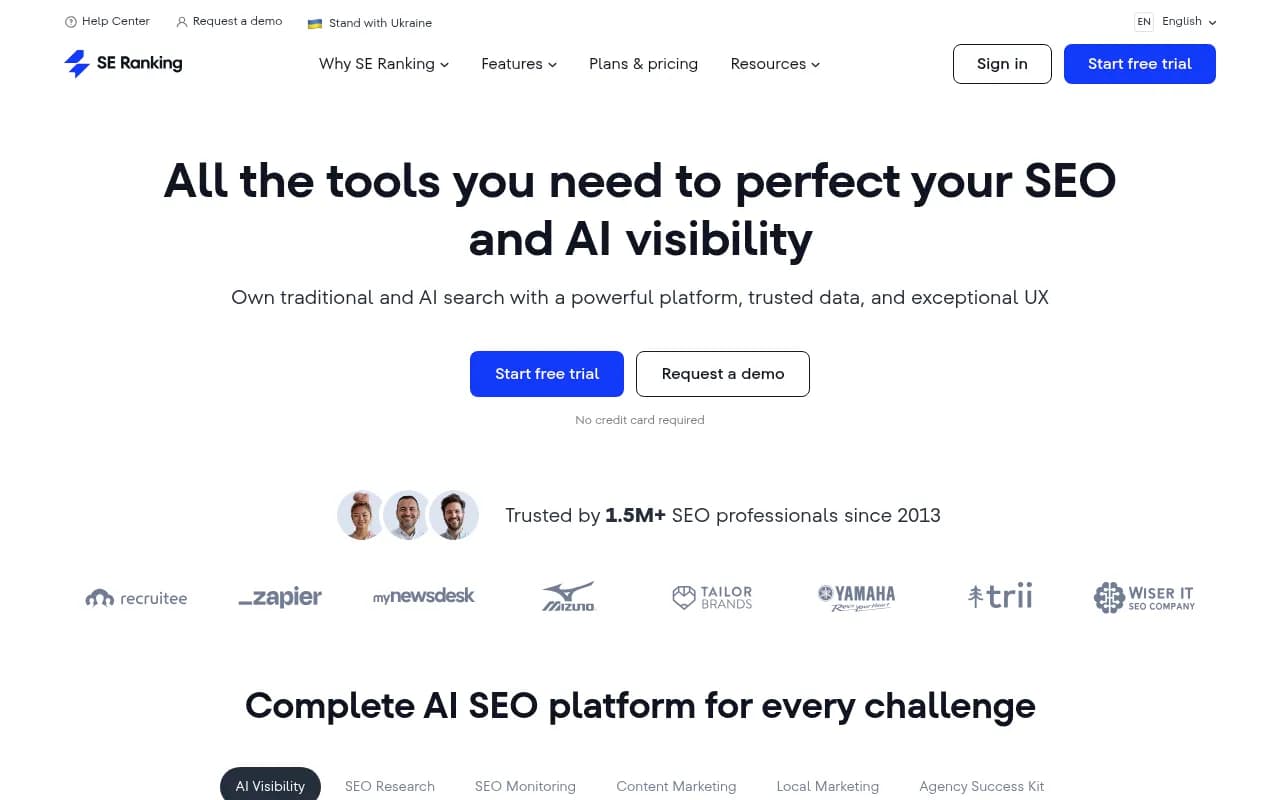
What makes SE Ranking interesting for unified teams is the integration between traditional and AI data. You can see how a keyword performs in Google alongside how your brand appears in AI responses for related prompts -- in the same interface. It's not perfect, but it's more connected than most.
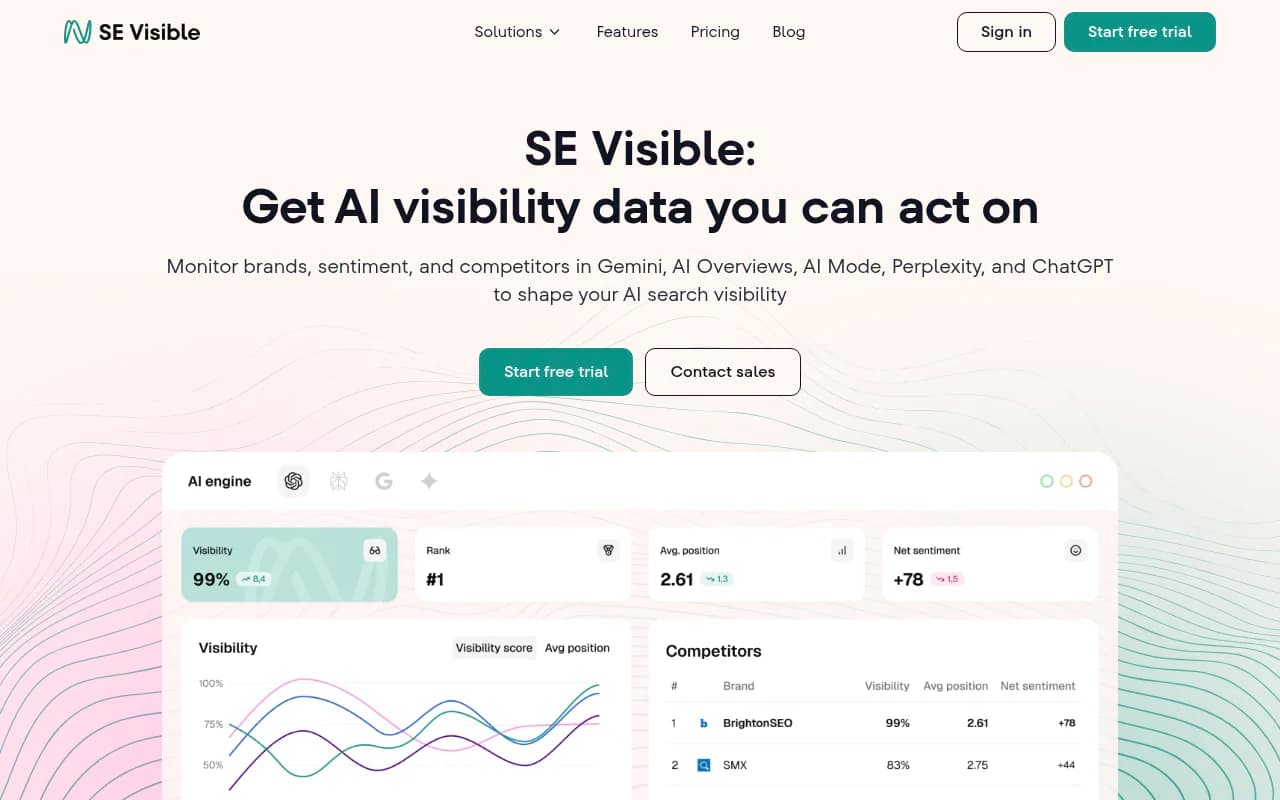
SE Visible, their dedicated AI visibility product, adds another layer for teams that want to go deeper on the GEO side.
4. Ahrefs Brand Radar -- best for teams already in the Ahrefs ecosystem
Ahrefs built its reputation on backlink analysis and keyword research, and those capabilities are still best-in-class. Brand Radar is their answer to AI visibility monitoring -- it tracks how your brand appears in AI-generated responses across major models.
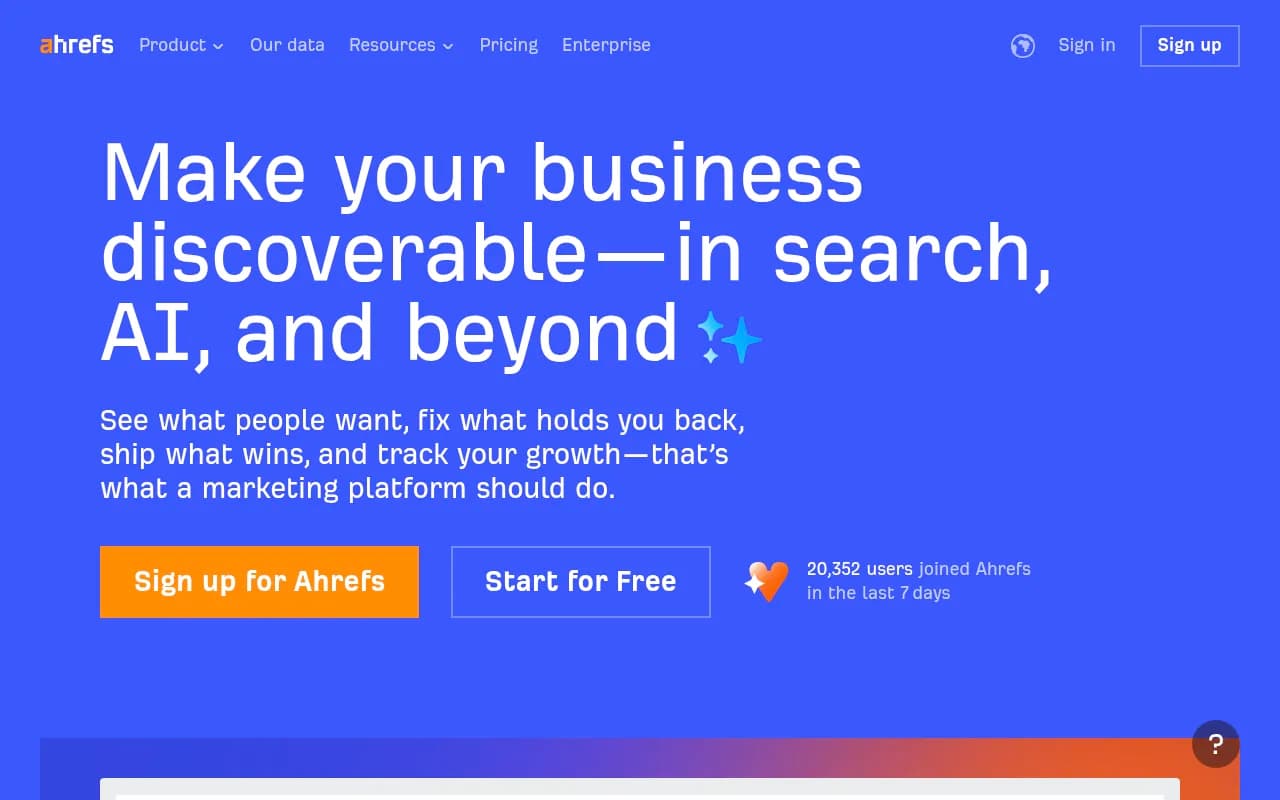
The honest assessment: Brand Radar is a solid monitoring addition for Ahrefs users, but it has fixed prompts (you can't define your own) and no AI traffic attribution. If you're already paying for Ahrefs and want basic AI visibility data without adding another tool, it's a reasonable choice. If AI visibility is a strategic priority, you'll likely want something more flexible alongside it.
5. Rankscale -- best for SEO teams that think in keyword-style metrics
Rankscale is built specifically for SEO teams that want to approach AI search the same way they approach Google: with ranking data, visibility scores, and keyword-style reporting. If your team is comfortable with traditional SEO metrics and wants to apply that mental model to AI search, Rankscale translates well.
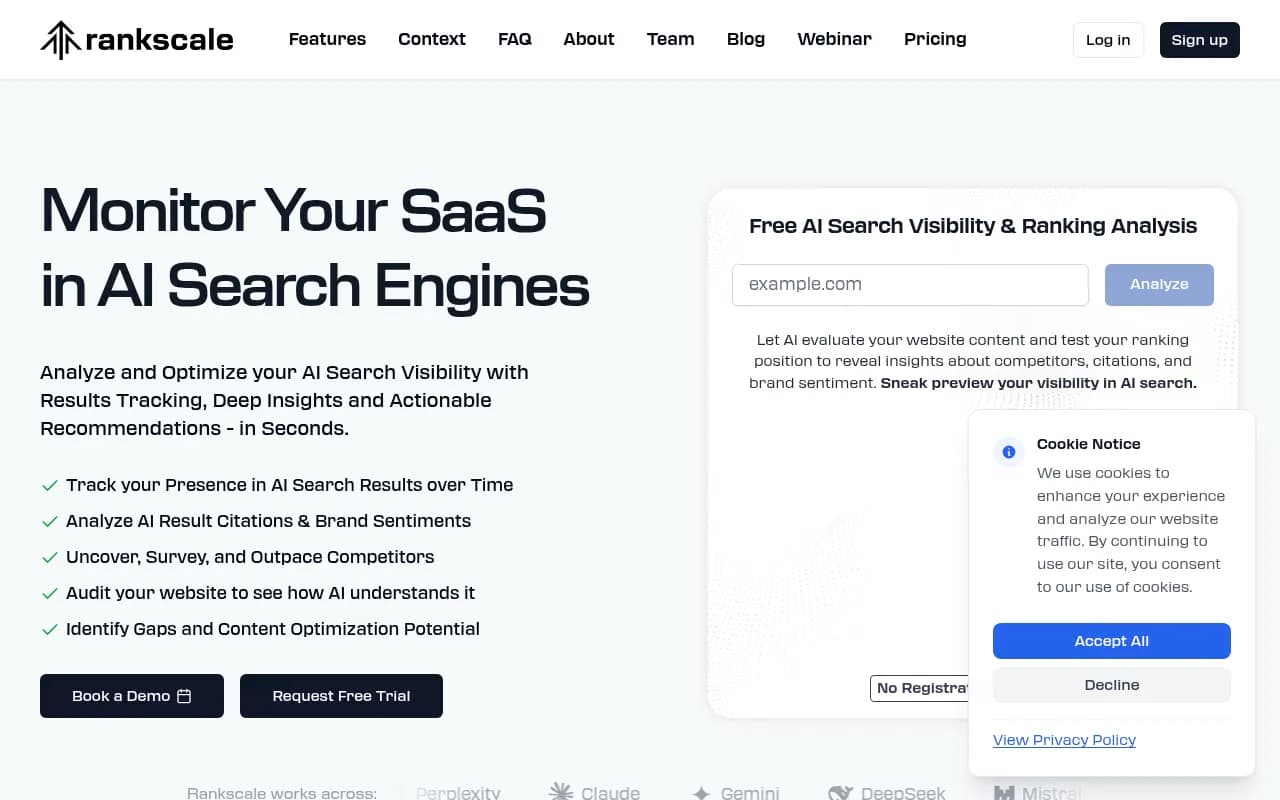
It's particularly useful for teams that need to report AI visibility to stakeholders who understand SEO metrics but aren't familiar with GEO concepts. The familiar framing reduces the education overhead.
6. Frase -- best for content teams bridging SEO and AI optimization
Frase has always been a content-first tool, and in 2026 it's one of the better options for teams that need to optimize content for both Google and AI search engines simultaneously. The workflow -- from keyword research to content brief to published article -- is genuinely fast, and the AI optimization guidance covers both traditional on-page factors and the kind of comprehensive, question-answering content that AI engines tend to cite.
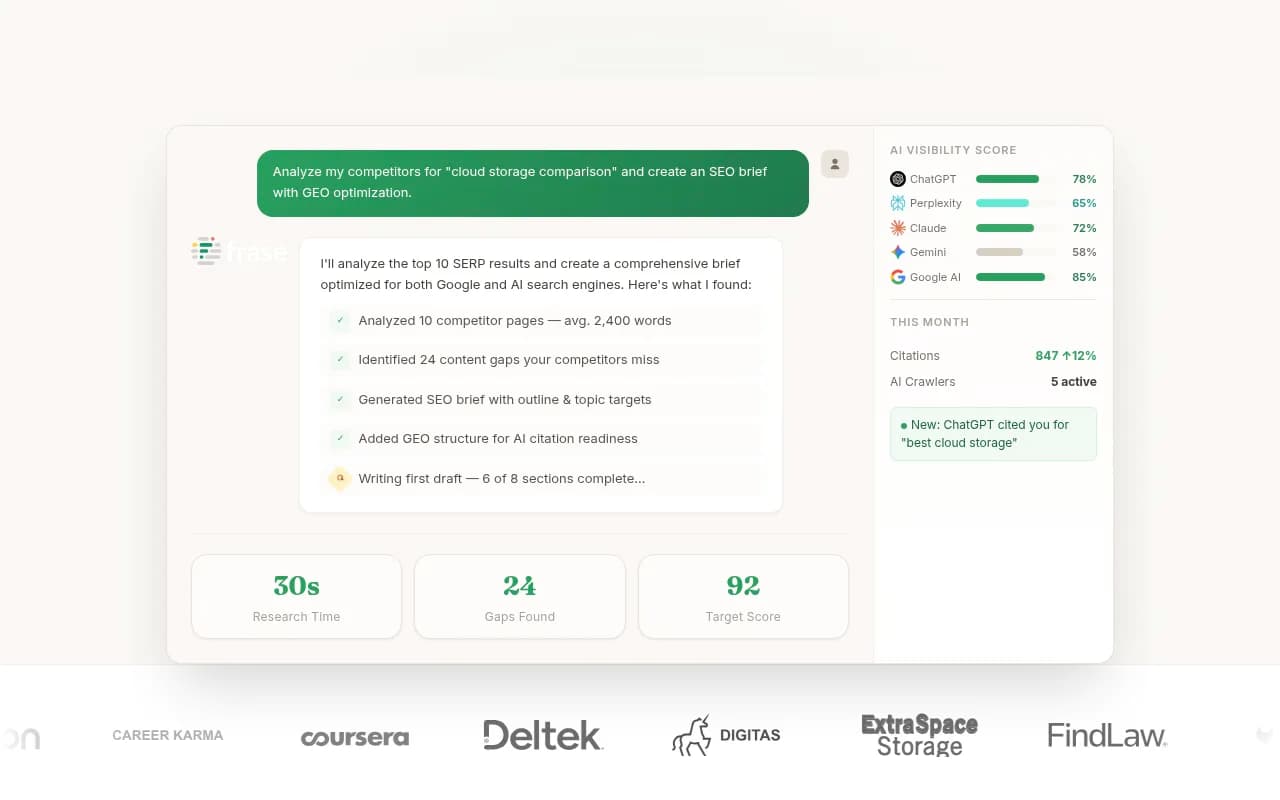
It's not a monitoring platform. You won't get brand visibility dashboards or citation tracking here. But for content teams that need to produce material that performs in both search environments, Frase is one of the more practical tools available.
7. Clearscope -- best for content quality that holds up in AI search
Clearscope's focus is content optimization, and it's very good at it. The semantic analysis and content grading help writers produce thorough, authoritative content -- which happens to be exactly what AI engines prefer to cite.
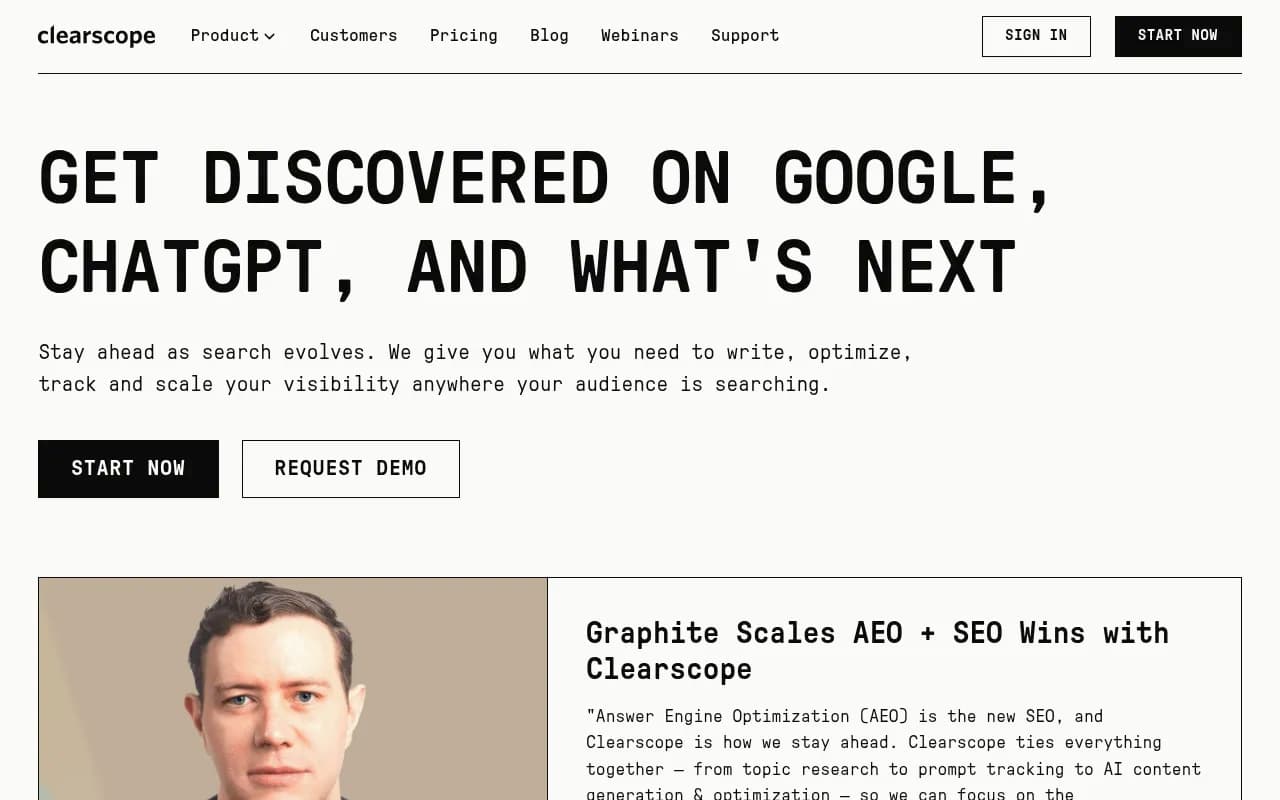
This isn't a GEO monitoring tool. But there's a real argument that the best thing you can do for AI visibility is write genuinely comprehensive content, and Clearscope helps with that. For teams that want to improve their AI citation rate through content quality rather than prompt tracking, it's worth including in the stack.
8. Botify -- best for enterprise teams with complex technical SEO needs
Botify sits at the intersection of technical SEO and AI search visibility in a way that few other enterprise platforms do. Their crawling capabilities are deep, and they've added GEO features that help large sites understand how AI engines are discovering and reading their content.
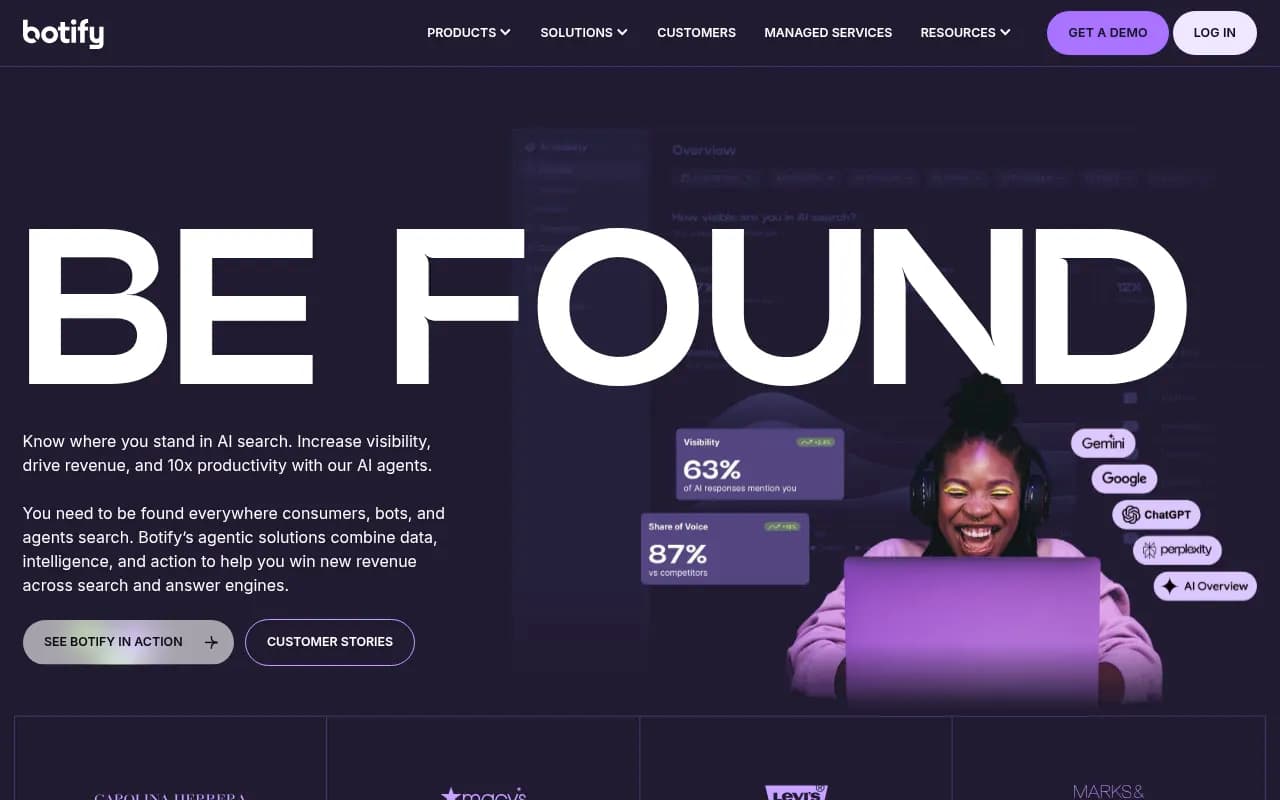
For enterprise teams managing sites with hundreds of thousands of pages, the technical foundation matters as much as the content strategy. Botify addresses that layer -- making sure AI crawlers can actually find and index your content before worrying about whether it gets cited.
How these platforms compare
| Platform | Traditional SEO | AI visibility monitoring | Content optimization | Prompt customization | AI traffic attribution | Best for |
|---|---|---|---|---|---|---|
| Promptwatch | Partial | Yes (10 models) | Yes (AI content generation) | Yes | Yes | GEO-first teams wanting full action loop |
| Semrush | Yes | Partial (fixed prompts) | Yes | No | No | Teams already in Semrush ecosystem |
| SE Ranking | Yes | Yes | Partial | Partial | No | Mid-market unified teams |
| Ahrefs Brand Radar | Yes | Partial (fixed prompts) | No | No | No | Existing Ahrefs users |
| Rankscale | No | Yes | No | Yes | No | SEO teams learning GEO |
| Frase | Partial | No | Yes | N/A | No | Content teams |
| Clearscope | No | No | Yes | N/A | No | Content quality focus |
| Botify | Yes (enterprise) | Partial | No | No | No | Large-scale technical SEO |
The honest reality about unified toolstacks
No single platform does everything perfectly. The tools that are strongest at traditional SEO (Semrush, Ahrefs) have AI visibility features that feel secondary. The tools built from scratch for AI visibility (Promptwatch, Rankscale) don't replace a full SEO suite.
That said, the gap is closing faster than most people expected. A year ago, "unified SEO and GEO" was mostly marketing copy. In 2026, a few platforms are genuinely delivering on it -- particularly for teams willing to accept that their primary tool might be stronger in one area than the other.
The more important question isn't which single tool does everything. It's which combination of tools creates the least overhead while covering the most ground. For most teams, that means one strong SEO platform and one dedicated AI visibility platform that can actually help you act on what it finds.
The monitoring-only GEO tools -- and there are a lot of them -- are a trap. They show you the gap between your visibility and your competitors'. They don't help you close it. Before adding any new tool to your stack, ask what happens after you see the data. If the answer is "you figure it out yourself," that's a dashboard, not a platform.
What to look for when evaluating these tools for your team
A few practical questions worth asking before committing:
Can you define your own prompts? Fixed prompt libraries are limiting. The questions your customers actually ask are specific to your category, and you need to track those.
Does it cover the AI engines your audience uses? ChatGPT and Perplexity get the most attention, but Google AI Overviews drives significant traffic for many categories. Make sure the platform monitors what matters for your specific audience.
What happens after you find a gap? This is the question most vendors don't want to answer directly. Push for specifics: does the platform help you create content, or does it just show you what's missing?
Can you connect visibility to revenue? Citation data is interesting. Citation data tied to traffic and conversions is actionable. Look for platforms that offer traffic attribution, whether through a code snippet, Google Search Console integration, or server log analysis.
Does it handle multiple languages and regions? If your business operates internationally, AI visibility varies significantly by language and country. A platform that only monitors English-language responses in the US will miss a lot.
The teams that figure out unified SEO and GEO toolstacks in 2026 will have a real advantage. The ones still running two disconnected stacks -- or worse, monitoring AI visibility without acting on it -- will keep wondering why their content isn't getting cited.