Key takeaways
- Several GEO and AI visibility platforms -- including Scrunch and Hall AI -- have visibly shifted their product focus toward enterprise customers, leaving SMB users with tools that no longer fit their needs or budgets.
- This "enterprise pivot" is a well-documented pattern in B2B SaaS: SMBs get you traction, enterprises get you scale, and the product roadmap follows the money.
- The pivot creates real problems for smaller teams: pricing jumps, features get locked behind enterprise tiers, and support quality drops for non-enterprise accounts.
- SMBs aren't helpless here. Several GEO platforms have been built specifically for smaller teams and agencies, with pricing and feature sets that reflect that.
- The best long-term solution is picking a platform with a clear, stable positioning -- not one that's still figuring out who its customer is.
There's a pattern that plays out in B2B SaaS so reliably you could set a clock to it. A new tool launches targeting marketers and small teams. Pricing is accessible, the onboarding is smooth, and the product feels built for people who actually do the work. Then, 18 months later, the homepage gets a redesign. The case studies now feature logos you recognize. The pricing page has a new "Enterprise" tier where the price is replaced with "Contact us." And the features that used to be in the base plan are now gated.
This is the enterprise pivot. And in the GEO and AI visibility space, it's happening faster than most people expected.
What's actually happening with Scrunch and Hall AI
Scrunch and Hall AI are two of the more prominent examples of this shift in the GEO space right now.
Scrunch launched as an AI search visibility monitoring tool with a relatively accessible positioning. It tracked how AI models cited brands, surfaced competitor mentions, and gave marketers a dashboard to understand their presence in AI-generated answers. The product worked. But over time, the platform's messaging and feature development started tilting toward larger organizations -- more emphasis on enterprise-grade workflows, less on the kind of self-serve simplicity that made it appealing to smaller teams.

Hall AI followed a similar trajectory. It positioned itself around tracking how AI platforms cite and talk about your brand -- a genuinely useful problem to solve. But as the platform matured, its roadmap started reflecting the demands of bigger customers: more integrations, more reporting layers, more of the compliance and security apparatus that enterprise procurement requires. That's not inherently bad, but it comes at a cost to the users who signed up when the product was simpler.
Neither company has made a dramatic public announcement about abandoning SMBs. That's rarely how it works. The pivot is quieter: a pricing restructure here, a feature migration there, a support response time that used to be hours and is now days. SMB customers don't get fired -- they just gradually stop being the priority.
Why this keeps happening
The economics of SaaS make the enterprise pivot almost inevitable for certain types of companies. This isn't a conspiracy against small businesses -- it's math.
An SMB customer might pay $99 to $299 per month. An enterprise customer might pay $30,000 to $150,000 per year. To replace one enterprise contract, you'd need to acquire and retain somewhere between 8 and 40 SMB customers. And SMB churn is brutal -- small teams change tools constantly, get acquired, run out of budget, or simply forget to cancel.
The OSO research on upmarket expansion puts it plainly: SMBs get you started, but enterprises unlock scale. AWS, Box, HubSpot, Shopify -- every major SaaS company eventually followed the same path. The difference is that some of them built enterprise tiers without gutting the SMB experience. Others let the SMB product atrophy.
In the GEO space specifically, the enterprise pivot is accelerating because enterprise budgets for AI visibility are growing fast. Marketing teams at large companies are now being asked to account for AI search in their reporting, and they're willing to pay for tools that can justify that spend to a CFO. That's a very different buyer than a solo SEO consultant or a five-person agency.
The real cost for SMB customers
When a platform pivots upmarket, the damage to existing SMB users shows up in a few predictable ways.
Pricing restructures are the most obvious. Features that were included in the base plan get moved to higher tiers. New pricing often has a minimum seat count that makes no sense for a two-person team. Annual contracts replace monthly billing. None of this is illegal, but it's disruptive -- especially if you've built workflows around a tool.
Feature development stalls on the things SMBs actually need. Enterprise customers want audit logs, SSO, role-based permissions, and custom SLA agreements. SMB customers want faster prompt tracking, better content recommendations, and integrations with tools like HubSpot or Notion. When the roadmap starts serving enterprise requirements, the SMB wishlist gets deprioritized.
Support quality degrades for non-enterprise accounts. This is the one that frustrates people most. When a platform's support team is stretched across a growing enterprise customer base, the response times and quality for smaller accounts tend to suffer. You're not a named account. You don't have a customer success manager. You're a ticket in a queue.
Why enterprise AI adoption is still messy
Here's the irony: enterprise customers are harder to serve than they look on paper.
A January 2026 episode of "At Work With The Ready" featuring Greg Shove (CEO of Section AI) made the point directly -- enterprise AI adoption is still surprisingly low, and the ROI numbers look grim. Companies keep deploying AI like it's just another piece of software, when the organizational change required is much deeper. Employees often keep AI productivity gains to themselves because they're worried about layoffs. "Head of AI" roles are an uphill battle.

This matters for GEO platforms because enterprise AI visibility programs face the same organizational friction. A large company might have 12 stakeholders who need to sign off on a GEO tool purchase, a procurement process that takes four months, and an IT security review that requires documentation most GEO startups haven't written yet. The deal sizes are bigger, but the sales cycles are brutal and the implementation complexity is real.
Meanwhile, a Salesforce study found that 95% of SMB IT professionals feel confident in their generative AI skills, compared to 81% of enterprise IT professionals. SMBs are often faster to implement, faster to see results, and more willing to experiment. They're not a bad customer -- they're just a different one.
How to spot a platform that's about to pivot
You can usually see the enterprise pivot coming before it fully arrives. A few signals worth watching:
- The homepage starts featuring logos of companies you recognize from Fortune 500 lists
- New case studies focus on "enterprise-scale" results rather than specific, relatable outcomes
- The pricing page adds an "Enterprise" tier with "Contact us" replacing a number
- Blog content shifts toward topics like "AI governance," "compliance," and "enterprise deployment"
- The product changelog starts filling up with SSO, audit logs, and API rate limit increases
- Response times from support get slower, or you get redirected to documentation more often
None of these signals alone is conclusive. But if you're seeing three or four of them at once, the platform is probably mid-pivot.
What SMBs actually need from a GEO platform
Before looking at alternatives, it's worth being specific about what a GEO platform needs to do well for a smaller team or agency.
Prompt tracking is the core. You need to know when and how AI models mention your brand or your clients' brands. This should work across at least the major models -- ChatGPT, Perplexity, Google AI Overviews, Gemini, Claude.
Content gap analysis matters more than most people realize. Knowing you're invisible in AI answers is only useful if you know why and what to do about it. A tool that shows you the gap but leaves you to figure out the fix is only half a solution.
Pricing needs to make sense at small scale. A tool that costs $2,000 per month makes sense for a brand with a $500K marketing budget. It doesn't make sense for an agency billing $8K per month to a client.
Self-serve setup is non-negotiable. SMBs don't have time for a six-week onboarding process. The tool should be usable within a day.
The current GEO landscape for SMBs and agencies
The good news is that the enterprise pivot by some platforms has created real space for tools that are explicitly built for smaller teams. Here's how the current options stack up.
| Platform | Best for | Monitoring | Content tools | Pricing starts at | Enterprise pivot risk |
|---|---|---|---|---|---|
| Promptwatch | SMBs, agencies, mid-market | Yes (10 models) | Yes (Content Agents) | $99/mo | Low -- stable SMB positioning |
| Otterly.AI | SMBs, solo marketers | Yes | No | Low | Low |
| Peec AI | Multi-language SMBs | Yes | No | Low | Low |
| Hall AI | Mid-market, enterprise | Yes | Limited | Mid | High -- pivoting upmarket |
| Scrunch AI | Enterprise | Yes | Limited | High | Already pivoted |
| AthenaHQ | Mid-market | Yes | No | Mid | Medium |
| Profound | Enterprise | Yes | Limited | High | High |
| Bluefish | Enterprise (Fortune 500) | Yes | Limited | Very high | Already enterprise-only |




For SMBs and agencies that want monitoring without content tools, Otterly.AI and Peec AI are solid, affordable options. They don't try to do too much, and their pricing reflects that.
For teams that want to go beyond monitoring -- actually finding content gaps and generating content that improves AI visibility -- Promptwatch is the most complete option at a price point that works below the enterprise tier.

The distinction matters. Most GEO platforms show you data. Promptwatch is built around doing something with it: finding the specific prompts where competitors are visible and you're not, generating content to close those gaps, and then tracking whether that content actually starts getting cited. That loop -- find gaps, create content, track results -- is what separates an optimization platform from a monitoring dashboard.
Alternatives worth watching in 2026
A few other platforms are worth knowing about, depending on your specific situation.
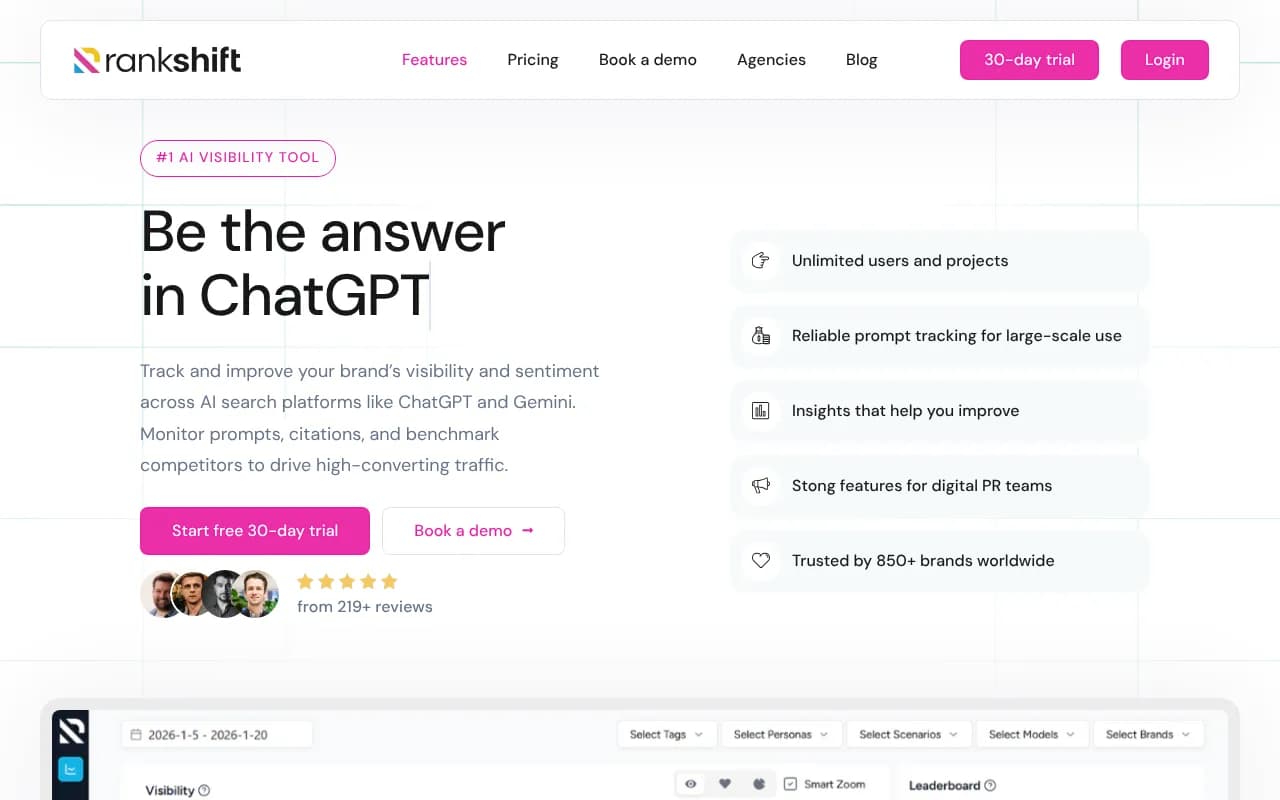
Rankshift is a solid LLM tracking tool for teams that want straightforward GEO and AI visibility monitoring without a lot of complexity.
If you're already on Scrunch and evaluating whether to stay, the honest answer is: it depends on your budget and how enterprise-ready your needs are. If you're a large brand with a dedicated marketing ops team, the platform may still serve you well. If you're an agency managing multiple smaller clients, the pricing and feature set are increasingly misaligned.
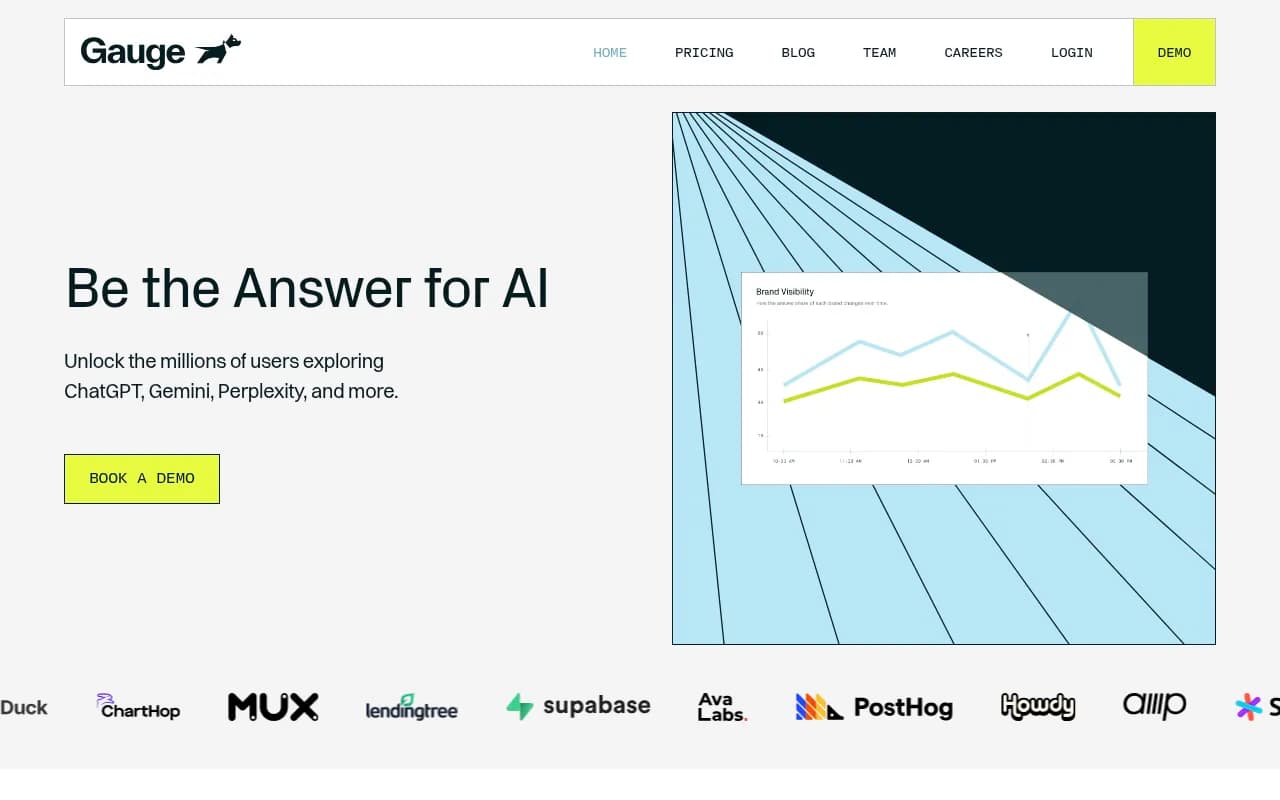
Gauge is worth a look for teams that want competitive intelligence alongside visibility tracking -- it's positioned more strategically than most monitoring-only tools.
What to do if your current GEO platform is mid-pivot
If you're already feeling the effects of an enterprise pivot -- slower support, features disappearing from your tier, pricing that no longer makes sense -- here's a practical approach.
First, audit what you actually use. Most teams use 20-30% of a platform's features regularly. Before switching, get clear on what those features are. That makes it easier to evaluate alternatives without getting distracted by feature lists.
Second, check the roadmap. Some platforms publish public roadmaps. Others will share them on request. If the last 10 roadmap items are all enterprise features, that tells you something about where the product is going.
Third, talk to support before you commit to anything. The quality of a support interaction before you're a customer is usually a reasonable proxy for what you'll get after. Ask a specific, technical question and see how they respond.
Fourth, don't over-index on price. The cheapest option isn't always the right one. A platform that costs $149/month and actually helps you improve AI visibility is worth more than a $49/month tool that just shows you a dashboard.
The broader pattern
The enterprise pivot problem in GEO isn't unique to Scrunch or Hall AI. It's a structural feature of how venture-backed SaaS companies grow. The question for SMBs and agencies isn't whether this will keep happening -- it will -- but how to pick platforms that are either genuinely committed to the SMB market or stable enough that the pivot, if it comes, won't leave you stranded.
The SAS research from mid-2026 makes a useful point: SMBs are embedding AI tools into their workflows faster than many enterprises, and the competitive advantages from doing so are real. The tools that help smaller teams compete in AI search are genuinely valuable. The market will keep producing them -- you just need to pick the ones that aren't already looking past you.