Key takeaways
- Otterly.AI is a solid monitoring tool for tracking brand visibility across AI search engines, but it stops at showing you data -- it doesn't help you act on it.
- Its biggest gap: no AI crawler logs, no content gap analysis, and no built-in content generation to fix the visibility problems it surfaces.
- The platform tracks what AI platforms show in responses but cannot confirm whether AI crawlers have actually visited or indexed your pages.
- Prompt limits on lower tiers are a real constraint for brands with broad topic coverage or multiple products.
- For teams that need to go beyond monitoring and actually improve their AI visibility, Otterly.AI will likely feel incomplete.
Otterly.AI has built a real following in the GEO and AI search visibility space. It's clean, it's relatively affordable, and it covers a decent number of AI engines. If you search for "AI visibility tools" in 2026, it shows up in almost every list.
But most reviews of Otterly.AI are either written by people who tested it for a few days or by sites with affiliate relationships. The honest picture is more complicated. There are limitations that matter -- limitations that will affect whether the tool actually moves the needle for your brand.
This is that review.
What Otterly.AI actually does
Before getting into the gaps, it's worth being clear about what the platform genuinely does well.
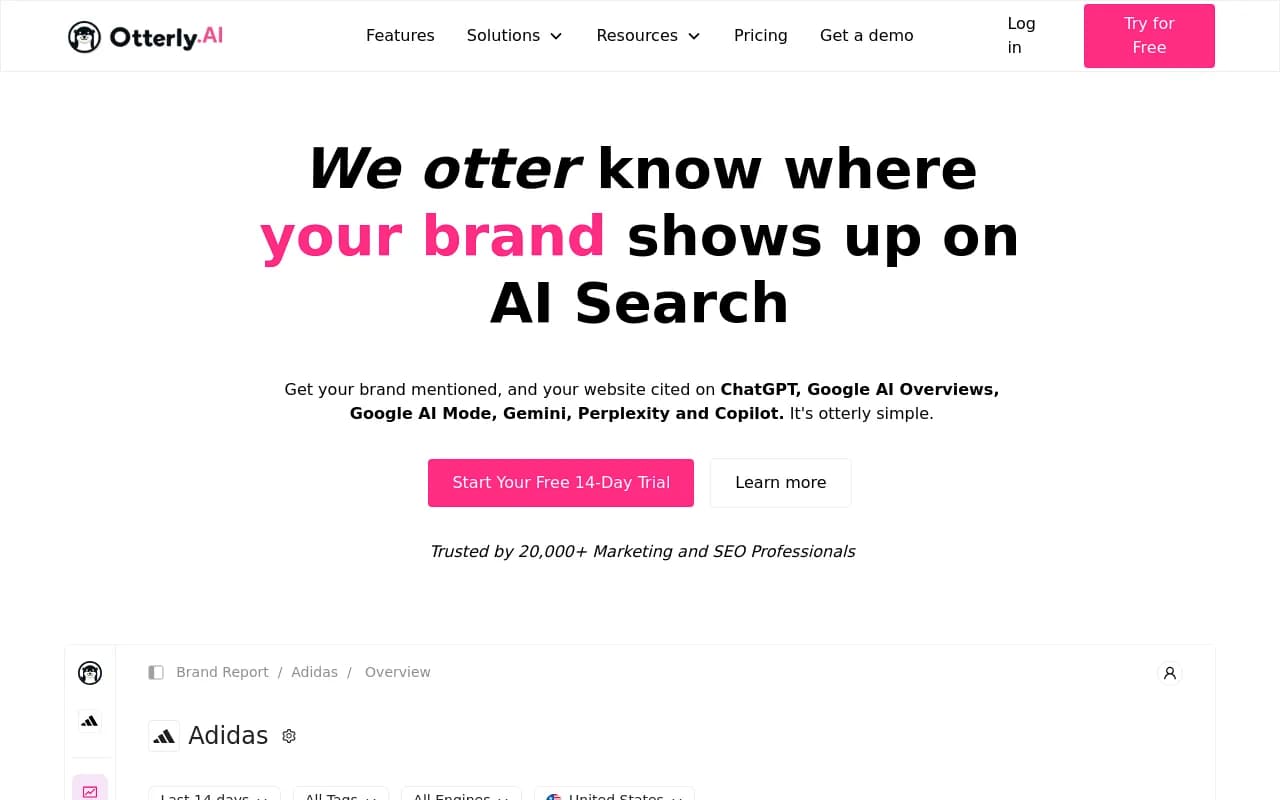
Otterly.AI tracks how your brand appears in AI-generated responses across engines like ChatGPT, Perplexity, Google AI Overviews, Gemini, Claude, and several others. You set up prompts -- questions your target audience might ask -- and the platform runs them on a schedule, captures the responses, and tells you whether your brand was mentioned, cited, or ignored.
The core metrics are brand mention rate (how often you appear), sentiment, share of voice against competitors, and citation tracking. There's also a GEO Audit feature that reviewers frequently highlight as a differentiator -- it gives you a structured view of how your brand is positioned relative to competitors across the AI engines you care about.
For basic monitoring, it works. You get a dashboard, you see trends over time, and you can compare yourself against a handful of competitors. That's genuinely useful, especially for teams that are just starting to think about AI search visibility.
The recent addition of ChatGPT Ads and Shopping tracking (announced in June 2026) and Claude as a dedicated tracked engine are real improvements. The team is clearly shipping features.
The limitations most reviews skip
It monitors but doesn't help you fix anything
This is the big one. Otterly.AI will tell you that your brand appeared in 12% of relevant AI responses last month, and that a competitor appeared in 34%. What it won't do is tell you why the gap exists or what content you need to create to close it.
There's no answer gap analysis. No content brief generation. No way to go from "I'm invisible for this prompt" to "here's what I should publish." The platform surfaces the problem and then leaves you to figure out the solution on your own.
For a lot of teams, that's where the real work is. Knowing you're invisible is step one. Fixing it is steps two through ten. Otterly.AI only does step one.
No AI crawler logs
This is a technical limitation that has real consequences, and it's one that almost nobody writes about.
Otterly.AI tracks what AI platforms show in their responses -- but it cannot tell you whether AI crawlers have actually visited your website, which pages they've read, or whether they've encountered errors that prevent your content from being indexed.
This matters because AI models can only cite content they've crawled. If Perplexity's crawler is hitting your site and getting 404 errors on your most important pages, you'd never know from Otterly.AI's dashboard. You'd just see low visibility scores with no explanation.
Platforms that log actual AI crawler activity (GPTBot, ClaudeBot, PerplexityBot, etc.) give you a completely different level of insight. Without that, you're watching the scoreboard without being able to see what's happening on the field.
Prompt limits create real constraints
Otterly.AI's pricing is structured around prompt counts. Depending on your plan, you get a limited number of prompts you can track. For a small brand with one product and a narrow topic focus, this might be fine. For agencies managing multiple clients, or brands with broad product lines, you'll hit the ceiling quickly.
The issue isn't just the number -- it's that AI search visibility requires tracking a wide range of prompts to get an accurate picture. Users often discover that the prompts they set up initially weren't quite right, and by the time they've refined their prompt strategy, they've burned through a significant portion of their allowance.
Data source: API vs. real user interface
One question that comes up repeatedly in honest reviews: is Otterly.AI querying AI engines through their APIs, or is it simulating real user-facing experiences?
This matters more than it sounds. API outputs from models like ChatGPT can differ meaningfully from what a real user sees in the ChatGPT interface. Shopping recommendations, citation formats, and even which sources get surfaced can vary between the API and the live product. If a platform is only hitting APIs, its data may not reflect what your actual customers are experiencing.
This is a question worth asking directly of any AI visibility tool you're evaluating.
No Reddit or YouTube tracking
Reddit and YouTube have become two of the most influential sources for AI citations. Perplexity, ChatGPT, and Google AI Overviews frequently pull from Reddit threads and YouTube transcripts when constructing answers. If a Reddit thread is calling your competitor the best option in your category, that thread is likely influencing AI responses -- and you'd want to know about it.
Otterly.AI doesn't track either. You get no visibility into which Reddit discussions or YouTube videos are shaping AI answers in your space.
No traffic attribution
Otterly.AI shows you visibility scores. It doesn't connect those scores to actual website traffic or revenue. So you can't answer the question: "Is our AI search visibility actually driving visits or conversions?"
This is a gap that matters as AI search becomes a more significant traffic channel. Marketing teams increasingly need to justify investment in GEO with business outcomes, not just share-of-voice metrics.
Who Otterly.AI works for (and who it doesn't)
To be fair, Otterly.AI is a reasonable fit for some use cases:
- Teams that are brand new to AI visibility monitoring and want a simple, affordable starting point
- Small businesses tracking a handful of prompts in one market
- Marketers who just need to report on brand mention trends to stakeholders
It's a harder fit for:
- Agencies managing multiple clients who need deeper data and content workflows
- Brands in competitive categories where knowing why you're losing visibility is as important as knowing that you're losing it
- Teams that need to connect AI visibility to traffic and revenue
- Anyone who needs to understand how AI crawlers are actually interacting with their site
A comparison of what you get
| Feature | Otterly.AI | What you'd need for full GEO |
|---|---|---|
| Brand mention tracking | Yes | Yes |
| Multi-engine coverage | Yes (10+ engines) | Yes |
| Competitor comparison | Yes | Yes |
| AI crawler logs | No | Yes |
| Content gap analysis | No | Yes |
| Content generation | No | Yes |
| Reddit/YouTube tracking | No | Yes |
| Traffic attribution | No | Yes |
| Prompt volume/difficulty data | No | Yes |
| ChatGPT Shopping tracking | Recently added | Yes |
What a more complete alternative looks like
If you find yourself wanting more than monitoring, Promptwatch is worth looking at. It covers the monitoring side (brand mentions, share of voice, competitor heatmaps across 10+ AI engines) but adds the pieces Otterly.AI is missing: AI crawler logs that show exactly which pages GPTBot and ClaudeBot are visiting, content gap analysis that identifies which prompts competitors rank for but you don't, and content generation tools that produce articles and briefs based on real prompt data.
The distinction matters if you're trying to actually improve your visibility rather than just measure it.

Other tools worth considering depending on your specific needs:
If you're an agency that needs multi-client management and solid reporting, Profound has a strong feature set:

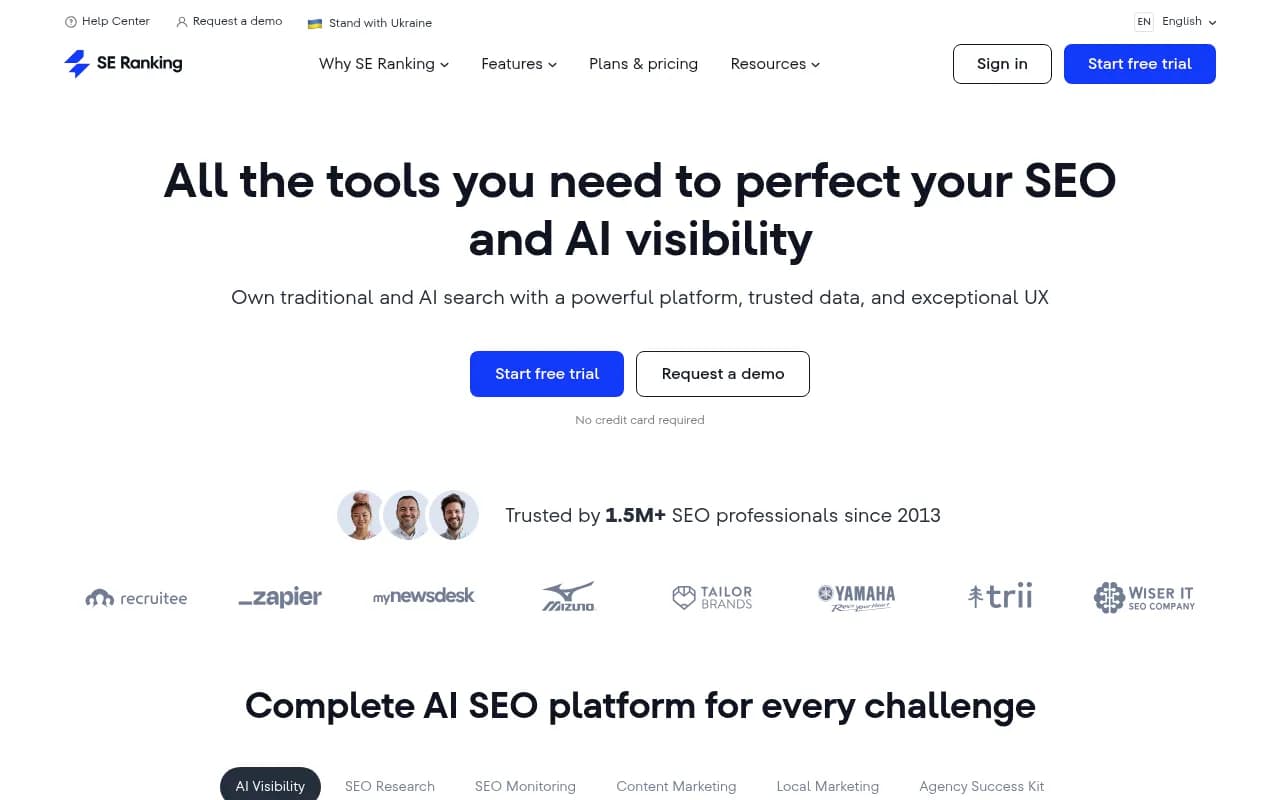
For teams that want AI visibility layered into a broader SEO platform they're already using, SE Ranking has added AI visibility tracking to its existing toolkit:
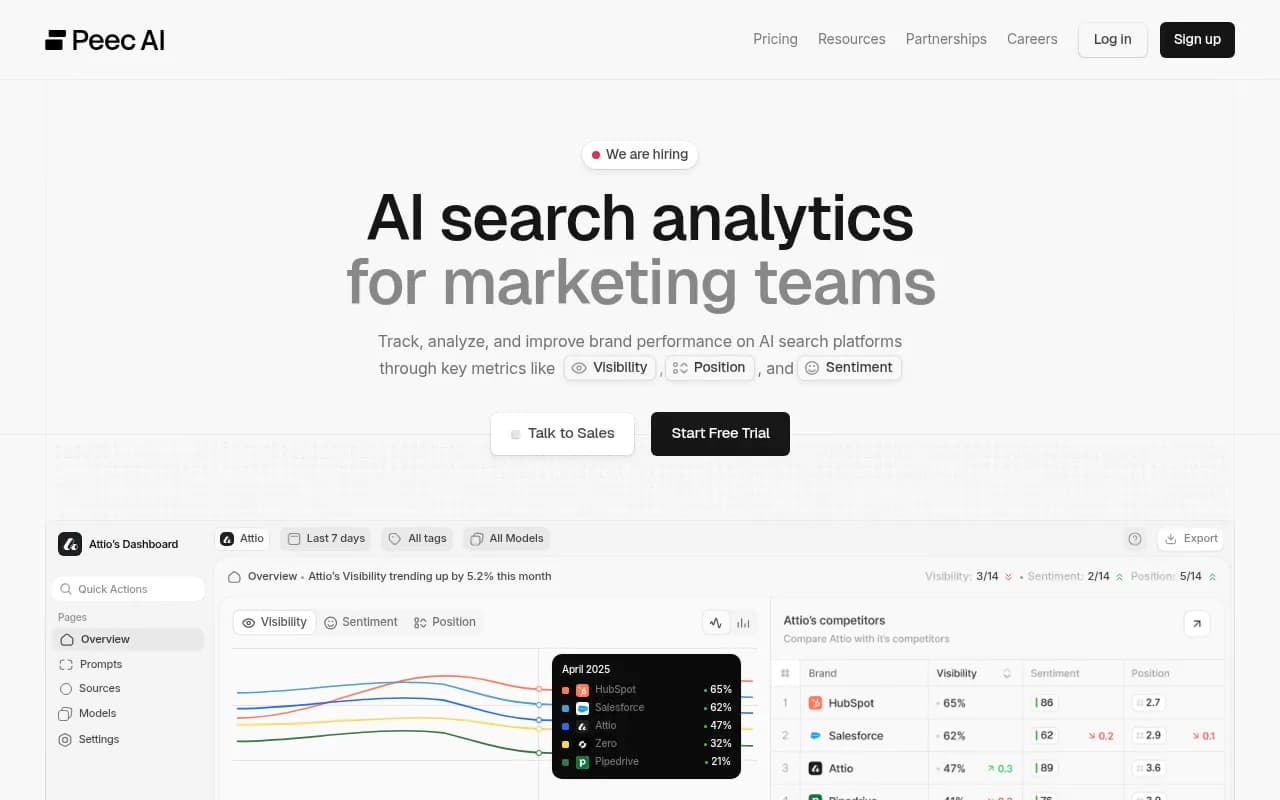
If budget is the primary constraint and you need something lightweight, Peec AI covers the basics at a lower price point:
The "API vs. real interface" problem is industry-wide
It's worth saying clearly: the gap between API data and real user-facing AI responses isn't unique to Otterly.AI. It affects most tools in this space. The platforms that track real user interface behavior -- actually simulating how a person would interact with ChatGPT or Perplexity -- produce more accurate data, but it's more expensive to do at scale.
When evaluating any AI visibility tool, ask specifically: "Are you querying the API or the live product interface?" The answer will tell you a lot about how much to trust the data.
The bottom line
Otterly.AI is a legitimate tool. It's not vaporware, it's not a scam, and for a certain type of user it delivers real value. The team is actively shipping (Claude tracking, ChatGPT Ads, Shopping) and the GEO Audit feature gives you a structured competitive view that's genuinely useful.
But if you're expecting it to tell you what to do about your AI visibility gaps, you'll be disappointed. It's a monitoring dashboard. The work of actually fixing your visibility -- understanding why AI models aren't citing you, what content to create, how your crawlability looks -- happens outside the platform.
For teams that are serious about AI search as a channel, that gap eventually becomes the whole problem. Knowing your score is one thing. Improving it is another.