Key takeaways
- Otterly.AI built genuine credibility in 2025 with solid brand monitoring, a clean interface, and one of the first serious AI search studies covering 100,000 websites.
- Its core limitation was always the same: it shows you what's happening but doesn't help you change it. No content generation, no crawler logs, no answer gap analysis.
- Teams that stuck with Otterly tended to be smaller brands or agencies that needed a lightweight visibility dashboard and weren't ready to invest in a full GEO workflow.
- Teams that switched were typically those who hit the ceiling -- they could see they were invisible in AI answers, but Otterly gave them nowhere to go from there.
- In 2026, Otterly has added Claude tracking and ChatGPT Shopping support, which shows the product is still evolving -- but the monitoring-only model remains its defining constraint.
What Otterly.AI actually is
Otterly.AI is an AI search visibility monitoring tool. You set up prompts, it runs them across AI engines like ChatGPT, Perplexity, and Google AI Overviews, and it tells you whether your brand gets mentioned or cited. That's the core loop.
It launched at a smart time. In 2024 and into 2025, most SEO teams were still figuring out that AI search was a thing they needed to care about. Otterly gave them a dashboard to start tracking, without requiring a huge technical lift or a six-figure contract.
The product earned real recognition: a Gartner Cool Vendor 2025 designation, G2 High Performer status, and strong ratings on OMR Reviews. That's not marketing fluff -- those signals reflect genuine user satisfaction from teams that found the tool useful.

So what went right, and where did things get complicated?
What Otterly got right in 2025
The research was genuinely useful
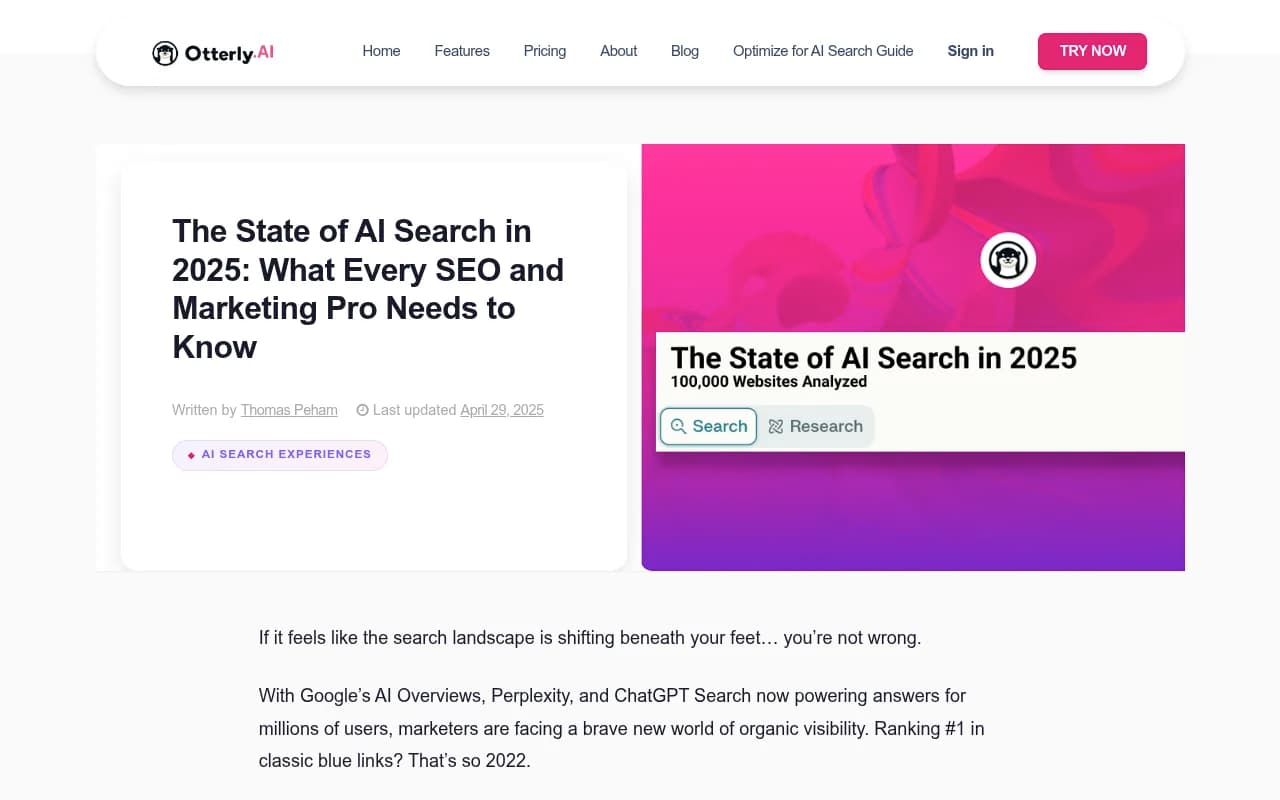
One of Otterly's most underrated contributions was its AI Search Study, which analyzed 100,000 websites across Google AI Overviews, ChatGPT Search, and Perplexity. The findings were specific and actionable in a way that most vendor research isn't.
A few highlights from that study:
- Google AI Overviews triggered on only 33.38% of queries but cited an average of 7.77 links per result -- the highest citation rate of any platform.
- ChatGPT Search heavily favored brand mentions over citations, which is good for awareness but bad for referral traffic.
- Perplexity offered the best balance between mentions and citations, making it the most useful platform for reference-heavy content strategies.
- Commercial intent dominated AI search at 62.7% of prompts, with informational queries at 28.5%.
- User-generated content platforms like Reddit and Quora were outperforming traditional media in AI visibility.
That last point about Reddit is worth sitting with. Most brands weren't thinking about Reddit as an SEO channel in 2024. Otterly's data made a concrete case that they should be -- and that kind of insight is what separates a useful product from a dashboard that just shows you numbers.
The UI stayed approachable
Otterly never tried to be an enterprise platform. The interface was clean, the setup was fast, and you didn't need a dedicated analyst to interpret the results. For marketing teams that were just starting to think about AI visibility, that accessibility mattered.
A lot of early GEO tools were built by technical founders for technical users. Otterly was built for marketers, and that showed.
It moved fast on platform coverage
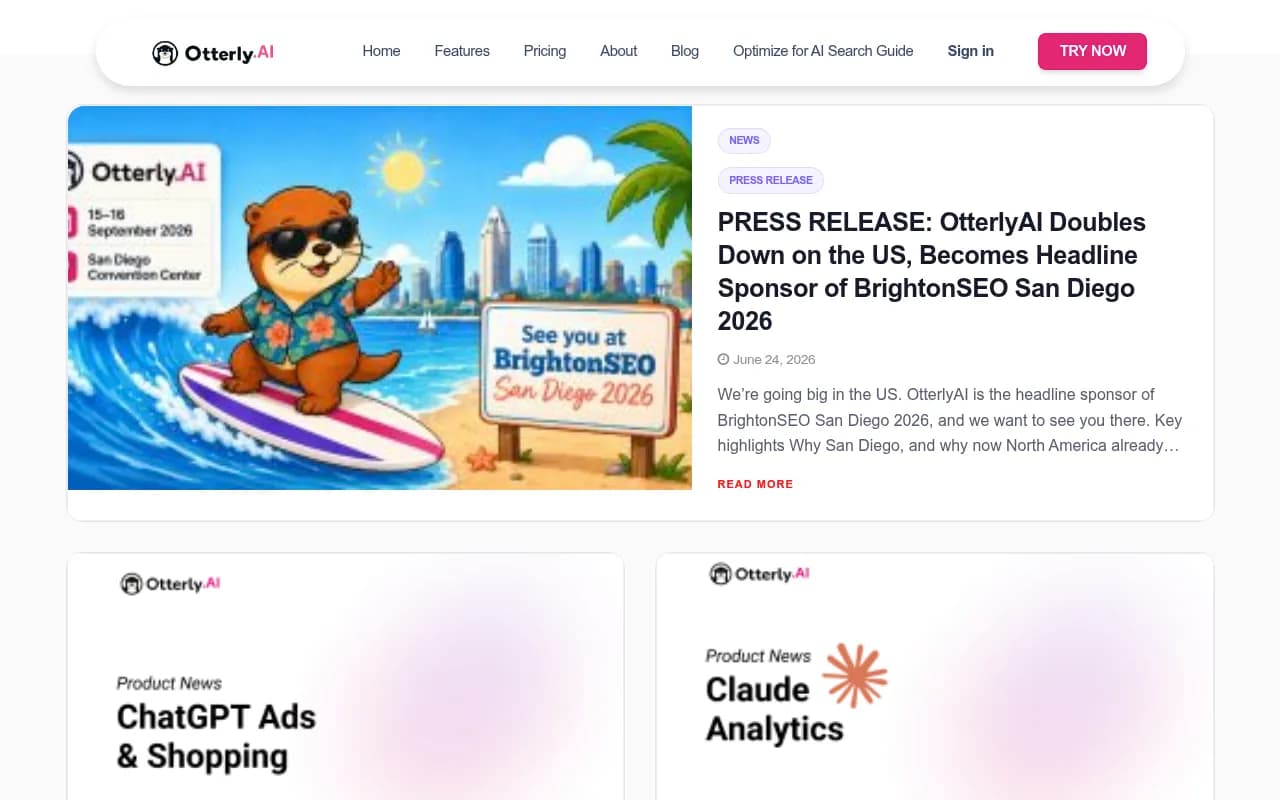
By mid-2026, Otterly had added Claude as a dedicated tracking engine and launched ChatGPT Ads and Shopping tracking -- one of the first platforms to do so. That kind of responsiveness to where AI search is actually going (paid placements, shopping recommendations) shows the team is paying attention.
Where Otterly fell short
Monitoring without a path forward
Here's the honest version of what happens when you use Otterly for a few months: you learn that your brand appears in 12% of relevant AI responses, your top competitor appears in 34%, and three other brands you've never heard of are getting cited constantly. You can see the gap clearly.
Then you close the dashboard and... what?
Otterly doesn't have content generation. It doesn't have answer gap analysis that tells you which specific prompts your competitors are winning that you're not. It doesn't have AI crawler logs showing you which pages AI engines are actually reading on your site. There's no brief builder, no content agent, no workflow that takes you from "I can see I'm invisible" to "here's what I'm going to do about it."
For teams that were just starting to track AI visibility, this wasn't a problem. But for teams that had been tracking for six months and wanted to actually improve their numbers, it became a real ceiling.
No traffic attribution
Knowing your brand is mentioned in AI answers is useful. Knowing whether those mentions are driving actual traffic and revenue is more useful. Otterly's monitoring doesn't connect to website analytics in a way that shows you which AI citations are converting.
This matters more than it might seem. Without attribution, you can't prioritize which prompts to optimize for. You're optimizing for visibility scores, not business outcomes.
Prompt intelligence was limited
Otterly lets you set up prompts to track, but it doesn't tell you much about those prompts themselves. How often are real users asking that question? How competitive is it? What sub-queries branch off from it? Without that context, you're essentially guessing which prompts are worth your time.
Why teams switched (and what they switched to)
The teams that moved away from Otterly weren't unhappy with it exactly. Most of them would describe it as "a good starting point." The switch happened when they realized they needed to do something with the data, not just look at it.
The pattern was consistent: a team would use Otterly to establish a baseline, show leadership that AI visibility was a real problem, and then get asked "okay, so how do we fix it?" At that point, they needed a platform that could answer that question.
What they looked for next
Teams that needed to go deeper on content optimization and gap analysis tended to move toward platforms with built-in content workflows. The key capabilities they were looking for:
- Answer gap analysis: which prompts are competitors winning that we're not?
- Content generation grounded in real prompt data, not just generic SEO briefs
- AI crawler logs showing which pages AI engines are reading and citing
- Traffic attribution connecting AI mentions to actual sessions and revenue
Promptwatch is the platform that comes up most often in this context. It's built around what it calls an "action loop" -- find gaps, create content, track results -- rather than just monitoring. Teams that had hit the ceiling with Otterly found that the shift from "here's your visibility score" to "here's the content you need to create, and here's how to create it" was the thing they were missing.

For teams that wanted to stay in the monitoring space but needed more depth, a few other options came up regularly:
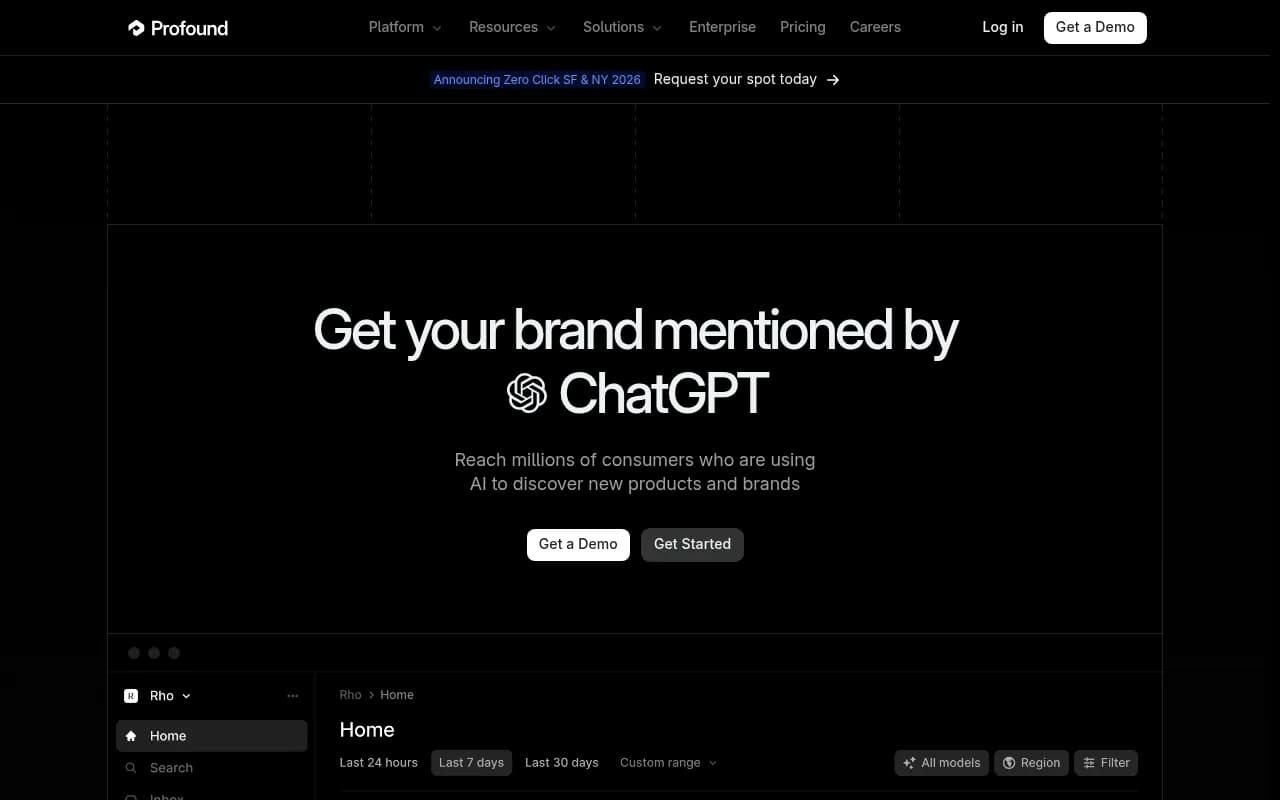
Profound has strong enterprise features and good prompt coverage, though it sits at a higher price point and lacks Reddit tracking.
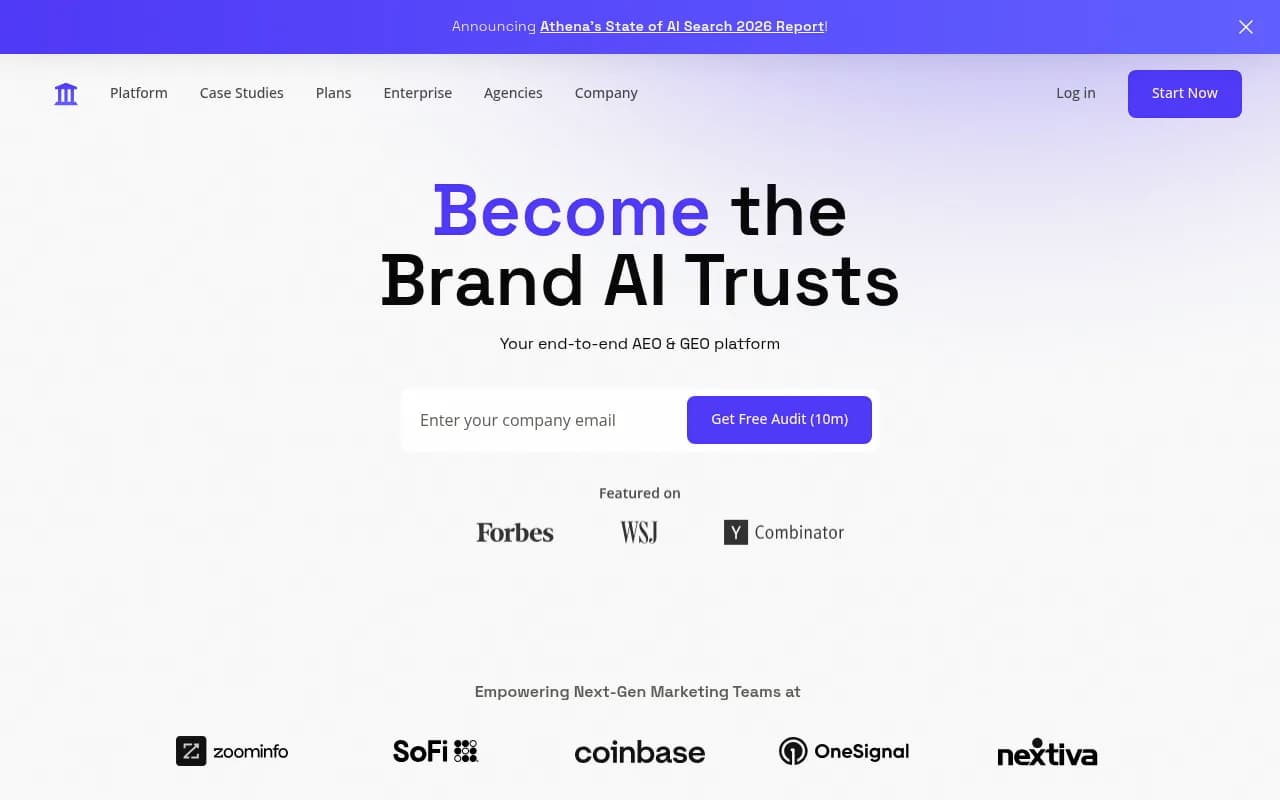
AthenaHQ is monitoring-focused with coverage across 8+ AI engines -- a solid choice if your primary need is breadth of coverage rather than content optimization.

Peec.ai is worth considering for teams with multi-language needs, though like Otterly it stays in the monitoring lane.
How Otterly compares to the main alternatives
| Platform | Content generation | Crawler logs | Answer gap analysis | Traffic attribution | Reddit/YouTube tracking | Starting price |
|---|---|---|---|---|---|---|
| Otterly.AI | No | No | No | No | No | ~$99/mo |
| Promptwatch | Yes | Yes | Yes | Yes | Yes | $99/mo |
| Profound | No | No | Limited | No | No | Higher |
| AthenaHQ | No | No | No | No | No | Mid-range |
| Peec.ai | No | No | No | No | No | Low |
| SE Ranking | Limited | No | No | No | No | Varies |
The table above makes the pattern clear. Most monitoring-only tools -- Otterly included -- stop at showing you data. The platforms that have started adding content workflows are a different category entirely.
Who should still use Otterly
Being honest here: Otterly is a good tool for specific situations.
If you're a small brand or a solo marketer who just wants to know whether your brand is showing up in AI answers, Otterly is probably the right starting point. It's accessible, reasonably priced, and doesn't require you to build a whole GEO workflow to get value from it.
If you're an agency that needs a lightweight dashboard to show clients their AI visibility baseline, Otterly works well for that too. The reports are clean and easy to explain.
Where it stops making sense is when you need to move from tracking to improving. At that point, you're going to end up running two tools anyway -- one for monitoring and one for content -- and it's worth asking whether a single platform that does both would be more efficient.
What 2026 looks like for Otterly
The product is clearly still developing. The Claude tracking launch and ChatGPT Shopping support show a team that's paying attention to where AI search is going. The BrightonSEO San Diego 2026 headline sponsorship suggests they're investing seriously in the US market, where 47% of their customer base already sits.
The question is whether Otterly will stay in the monitoring lane or start building the content and optimization layer that teams are asking for. The monitoring-only model made sense in 2024 when teams were just trying to understand the problem. In 2026, more teams already understand the problem and want to solve it.
That shift in what customers need is the real story of why teams moved on -- not because Otterly failed, but because the market matured faster than the product did.
The bottom line
Otterly.AI did something genuinely valuable in 2025: it made AI search visibility legible for marketing teams that had no idea where to start. The research was real, the UI was approachable, and the platform coverage kept improving.
The limitation was structural. Monitoring tells you where you stand. It doesn't tell you how to move. Teams that needed to act on their visibility data -- not just report on it -- found that Otterly's dashboard was the beginning of a conversation, not the end of one.
If you're just starting to think about AI search visibility, Otterly is a reasonable place to begin. If you've been tracking for a while and you're ready to actually do something about the gaps you're seeing, you'll probably need something with more horsepower.