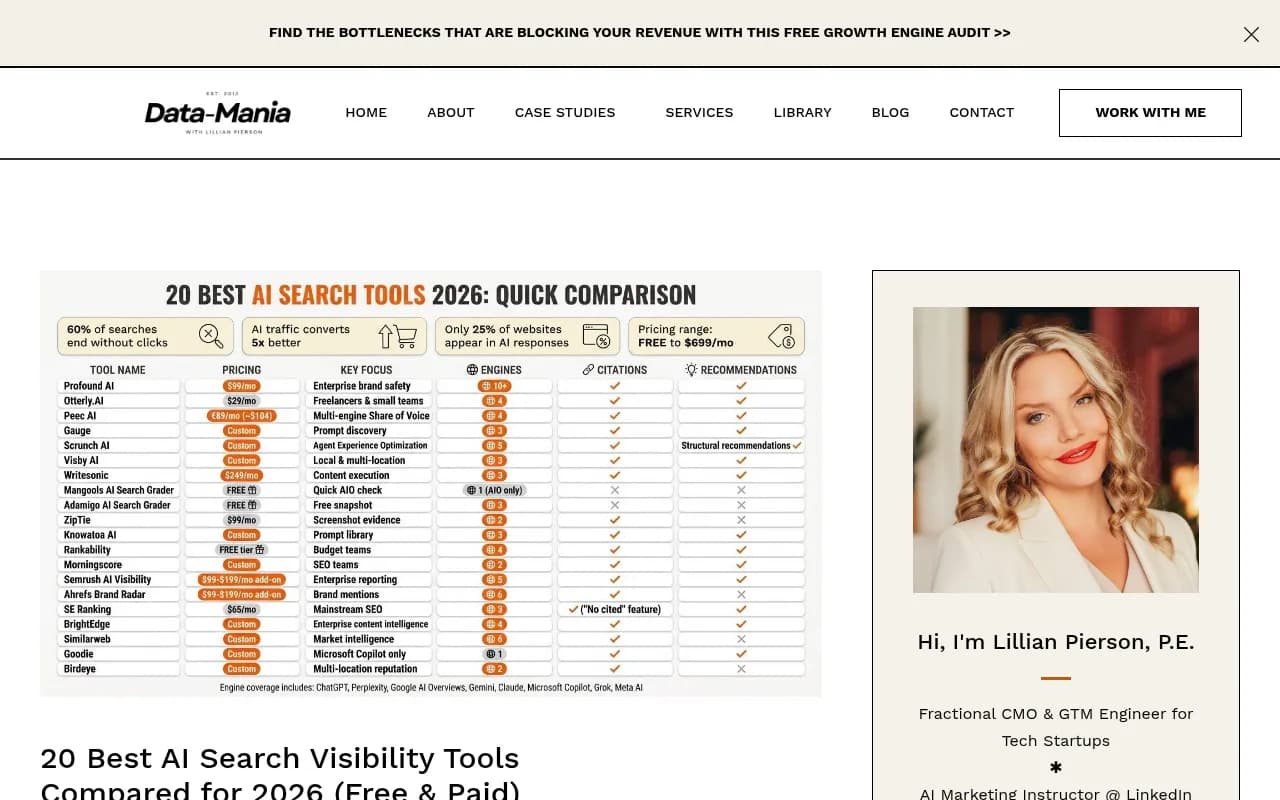
Key takeaways
- Most AI search visibility tools are built for single brands, not agencies managing multiple clients -- multi-site support, white-labeling, and reporting exports matter more than feature count
- The gap between "monitoring" tools and "optimization" tools is where agency value gets created; clients pay for results, not dashboards
- Accuracy degrades at scale if you're relying on tools that use fixed prompt sets or don't support persona/region customization per client
- A tiered stack works better than one tool for everything: a core GEO platform, a content layer, and a reporting layer
- Promptwatch is the only platform in 2026 rated as a "Leader" across all GEO categories, and its agency pricing and multi-site architecture make it the strongest anchor for a client-facing stack
Running AI search visibility for one brand is manageable. You pick a tool, set up your prompts, watch the dashboard, write some content. Fine.
Running it for 20 clients is a completely different problem. You need consistency across accounts, reporting that doesn't take three hours per client, the ability to customize tracking by industry and persona, and -- critically -- tools that actually help you move the needle rather than just show you numbers.
The market is full of monitoring dashboards right now. Most of them will show you a visibility score, maybe a competitor comparison, and then leave you staring at the data wondering what to do next. That's not a workflow. That's a liability when a client asks "so what are we doing about this?"
This guide is specifically for agencies. We'll cover what to look for, which tools are worth building a stack around, and how to structure your setup so it scales without falling apart.
What agencies actually need from AI search tools
Before getting into specific tools, it's worth being clear about what the agency use case demands that individual brand use cases don't.
Multi-site management without per-seat chaos
Most tools price per domain or per user. At five clients that's manageable. At twenty, you're either paying a fortune or constantly juggling logins. You need a platform where adding a new client account doesn't require a procurement conversation.
Customizable tracking per client
A SaaS company and a hotel chain are being asked about in completely different ways. Your prompts, personas, and regions need to be configurable per client -- not locked into a generic template. Tools that use fixed prompt sets (Semrush's AI tracking, Ahrefs Brand Radar) are fine for quick checks but break down when a client operates in a niche or a non-English market.
Reporting that doesn't require manual assembly
White-label reports, Looker Studio integrations, API access -- these aren't nice-to-haves for agencies. They're the difference between a profitable retainer and one that bleeds hours every month.
The ability to actually fix problems, not just find them
This is the big one. Clients don't pay retainers to be told they have a problem. They pay to have the problem solved. A tool that shows you an answer gap is useful. A tool that shows you the gap and then helps you create the content to close it is what justifies a monthly fee.
The agency stack: three layers
The most effective agency setup in 2026 isn't one tool -- it's three layers working together.
Layer 1: Core GEO platform (track + optimize)
This is your anchor. It handles prompt tracking across AI models, competitor visibility comparisons, answer gap analysis, and ideally content generation. You want something that covers the full loop: find the gap, create the content, track the improvement.
Layer 2: Content production
Either built into your core platform or a dedicated tool. The content needs to be grounded in citation data -- not generic SEO filler, but articles and pages engineered to get cited by ChatGPT, Perplexity, Claude, and the others.
Layer 3: Reporting and attribution
Connect visibility to traffic and revenue. Otherwise you're selling a metric clients don't understand yet. GSC integration, traffic attribution, and clean export formats are what make AI visibility legible to a CMO.
The best tools for each layer
Core GEO platforms
Promptwatch is the strongest anchor for an agency stack right now. It's the only platform in a 2026 comparison of 12 GEO tools rated as a "Leader" across all categories -- not just monitoring, but the full optimization loop.

What makes it work for agencies specifically: multi-site architecture, customizable prompts and personas per client, white-label reporting, Looker Studio integration, and an API for custom workflows. The Answer Gap Analysis shows exactly which prompts competitors are visible for that your client isn't -- and the built-in AI writing agent generates content grounded in 880M+ citations analyzed to close those gaps. You're not just showing clients a dashboard; you're showing them a gap and delivering the fix.
The crawler logs are genuinely useful at agency scale too. Real-time logs of AI crawlers (ChatGPT, Claude, Perplexity) hitting your clients' sites -- which pages they're reading, errors they're hitting, how often they return. Most competitors don't have this at all. When a client's visibility drops, you can actually diagnose why instead of guessing.
Pricing runs from $99/mo (Essential, 1 site) to $579/mo (Business, 5 sites), with agency and enterprise pricing available for larger portfolios.
SE Ranking is worth knowing about as a more affordable option, especially for agencies that are just starting to build out AI visibility as a service. Its AI Search Toolkit covers ChatGPT, Google AI Overviews, Google AI Mode, and Perplexity, and it sits inside an all-in-one SEO platform that many agencies already use for traditional ranking work.
The limitation is that SE Ranking is primarily a monitoring tool. It shows you where you stand but doesn't generate content or close the loop on optimization. Good for agencies that have a separate content production workflow and just need the tracking layer.
AthenaHQ covers 8+ AI search engines and has solid multi-LLM tracking. It's more enterprise-oriented and the pricing reflects that. Strong on monitoring, weaker on the content optimization side.

Profound has a clean interface and good brand visibility tracking across AI search engines. Worth considering for agencies with clients who care primarily about brand mention share rather than content-level optimization.

Otterly.AI is one of the more affordable monitoring options and works well for agencies that need basic AI visibility tracking across a handful of clients without a large budget. The trade-off is that it's monitoring-only -- no content generation, no crawler logs, no traffic attribution.

Peec AI is worth a look if you have clients in non-English markets. Multi-language support is genuinely good here, which is rare in this category.

Content production layer
If your core platform doesn't include content generation (or you want to supplement it), a few tools are worth having in the stack.
Surfer SEO remains one of the better on-page optimization tools, and its content editor integrates well with AI-generated drafts. Good for agencies that produce a lot of content and want scoring against what's currently ranking.
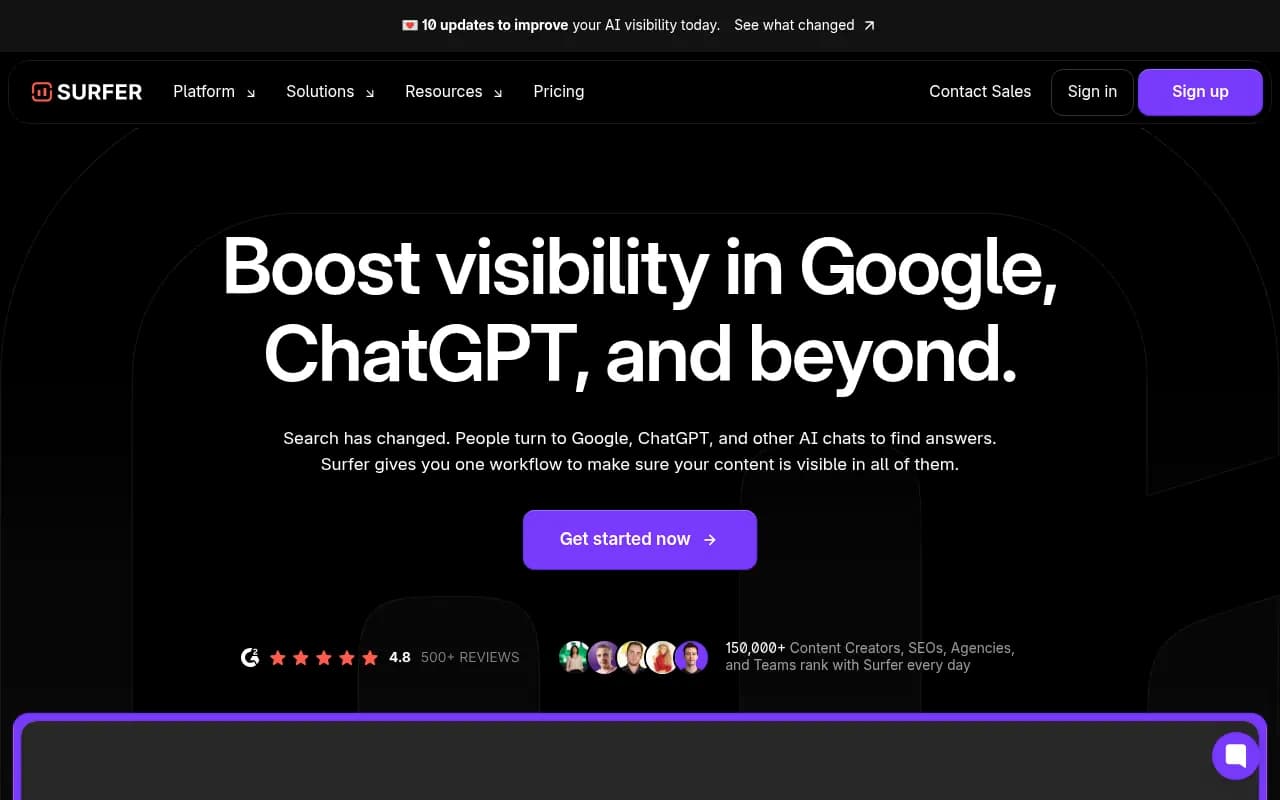
Frase is strong for content briefs and research. If you're briefing writers rather than generating content directly, Frase speeds up the research phase considerably.
Clearscope is the premium option for content optimization -- particularly useful for clients in competitive verticals where content quality matters more than volume.
Reporting and attribution layer
Semrush is still the most complete traditional SEO platform for agencies, and its reporting and white-label features are mature. The AI visibility tracking (via ContentShake and its AI Overviews monitoring) is limited compared to dedicated GEO tools, but if you're already using Semrush for traditional SEO, the AI features are worth turning on.
Ahrefs Brand Radar gives you brand monitoring in AI search results. The limitation is fixed prompts and no AI traffic attribution -- you can see mentions but can't connect them to revenue.
Advanced Web Ranking has 20+ years of SERP accuracy and has added AI search visibility tracking. Good for agencies that need reliable historical data and clean reporting exports.
Tool comparison: agency suitability
| Tool | Multi-site | Content generation | Crawler logs | White-label reporting | AI models covered | Best for |
|---|---|---|---|---|---|---|
| Promptwatch | Yes (agency plans) | Yes (built-in AI writer) | Yes | Yes (Looker Studio + API) | 10+ | Full-service GEO agencies |
| SE Ranking | Yes | No | No | Yes | 5 | Agencies adding AI to existing SEO |
| AthenaHQ | Yes | No | No | Limited | 8+ | Enterprise brand monitoring |
| Profound | Yes | No | No | Limited | 6+ | Brand visibility reporting |
| Otterly.AI | Limited | No | No | No | 4 | Budget monitoring |
| Peec AI | Yes | No | No | No | 5 | Multi-language markets |
| Semrush | Yes | Partial (ContentShake) | No | Yes | Limited | Traditional SEO + light AI |
| Ahrefs Brand Radar | Yes | No | No | No | Limited | Brand mention tracking |
Where most agency stacks break down
The failure mode I see most often: agencies buy a monitoring tool, set up dashboards for clients, and then have nothing to say in the monthly call except "here's your visibility score." That's not a service -- it's a report.
The agencies that are actually growing AI visibility as a revenue line are the ones that can walk into a client meeting and say: "Here are the five prompts your competitors are winning that you're not. Here's the content we're publishing this month to close those gaps. Here's how your visibility score moved last quarter as a result."
That loop -- gap analysis, content creation, result tracking -- is what separates a retainer that gets renewed from one that gets cut. Most tools only handle the first step. Make sure your stack handles all three.
Practical setup for a new agency client
Here's a concrete workflow for onboarding a new client onto an AI visibility service:
-
Baseline audit (week 1): Run a prompt set covering the client's core product/service categories across ChatGPT, Perplexity, Google AI Overviews, and Claude. Establish a visibility score and identify which competitors are appearing.
-
Gap analysis (week 1-2): Use Answer Gap Analysis to find prompts where competitors are visible but the client isn't. Prioritize by prompt volume and difficulty -- go after high-volume, winnable prompts first.
-
Content plan (week 2): Map the top 10-15 gaps to content types (articles, comparison pages, FAQ content). Use citation data to understand what sources AI models are currently pulling from for those prompts -- that tells you what format and angle to write to.
-
Content production (weeks 3-6): Publish content targeting the identified gaps. If you're using Promptwatch's AI writer, the content is grounded in real citation data rather than generic SEO patterns.
-
Tracking and reporting (ongoing): Page-level tracking shows which new pages are being cited, by which models, and how often. Connect to traffic attribution (GSC integration or server logs) to show the client actual visits and conversions from AI search.
-
Monthly review: Show the delta in visibility score, which prompts moved, which pages are now being cited. Identify the next batch of gaps to target.
This is a repeatable process. Once you've run it for one client, you can systematize it across your portfolio.
A note on accuracy at scale
One thing that gets overlooked: AI search responses vary by region, language, device context, and even the specific phrasing of a prompt. A visibility score that doesn't account for these variables is going to mislead you.
For agencies with clients in multiple markets, make sure your core platform supports:
- Region and language customization per client
- Persona-based prompting (how a first-time buyer asks vs. how a procurement manager asks)
- Prompt volume estimates so you know which queries actually matter
Tools that use fixed prompt templates will give you consistent data, but it won't be accurate data for clients in niche verticals or non-English markets. Promptwatch's customizable prompt and persona setup handles this; most budget tools don't.
The bottom line
The agencies winning AI visibility work in 2026 aren't the ones with the most tools -- they're the ones with a clear process and a stack that supports it end to end. Monitoring is table stakes. The value is in the optimization loop: find the gaps, create the content, prove the results.
Build your stack around a platform that handles all three. Add content and reporting tools where your core platform has gaps. And make sure everything you're tracking can be connected to something a client actually cares about -- traffic, leads, or revenue.