
Key takeaways
- Searchable is a solid monitoring and content tool, but its Pro plan ($125/mo, one project, three included engines) puts engine coverage and multi-brand work behind add-ons. Check its current pricing page before you decide.
- If your question is "did AI read our page, cite it, and send anyone?", you need three data layers in one place: prompt tracking, verified crawler logs, and visitor analytics.
- Promptwatch is the most complete option for that loop. Otterly, Scrunch, SE Visible, Rankability and Radarkit cover parts of it, with different depth.
- Crawler logs only help if the bot is verified against published IP ranges. Spoofed user agents will skew your picture.
- Pricing in vendor comparison posts has a self-promotion bias. Verify every number on the vendor's own site.
Why mentions alone are not enough
Most AI visibility dashboards answer one question: was my brand mentioned? That is a fine starting point. It is also where a lot of teams get stuck, because a mention score cannot tell you why a competitor is cited instead of you.
Three different problems hide behind a low number:
- The bot cannot reach your page (a robots.txt, CDN or WAF block).
- The bot reads the page but the content does not answer the prompt.
- The page is cited but nobody clicks, or the click arrives with no referrer and looks like direct traffic.
You can only tell these apart with server-side evidence. One of the comparison posts in our research put it plainly: AI crawler logs and AI-referred visits are closer to proof than mention counts. I agree with that, and it is the filter I use for the rest of this guide.
What Searchable does well, and where teams outgrow it
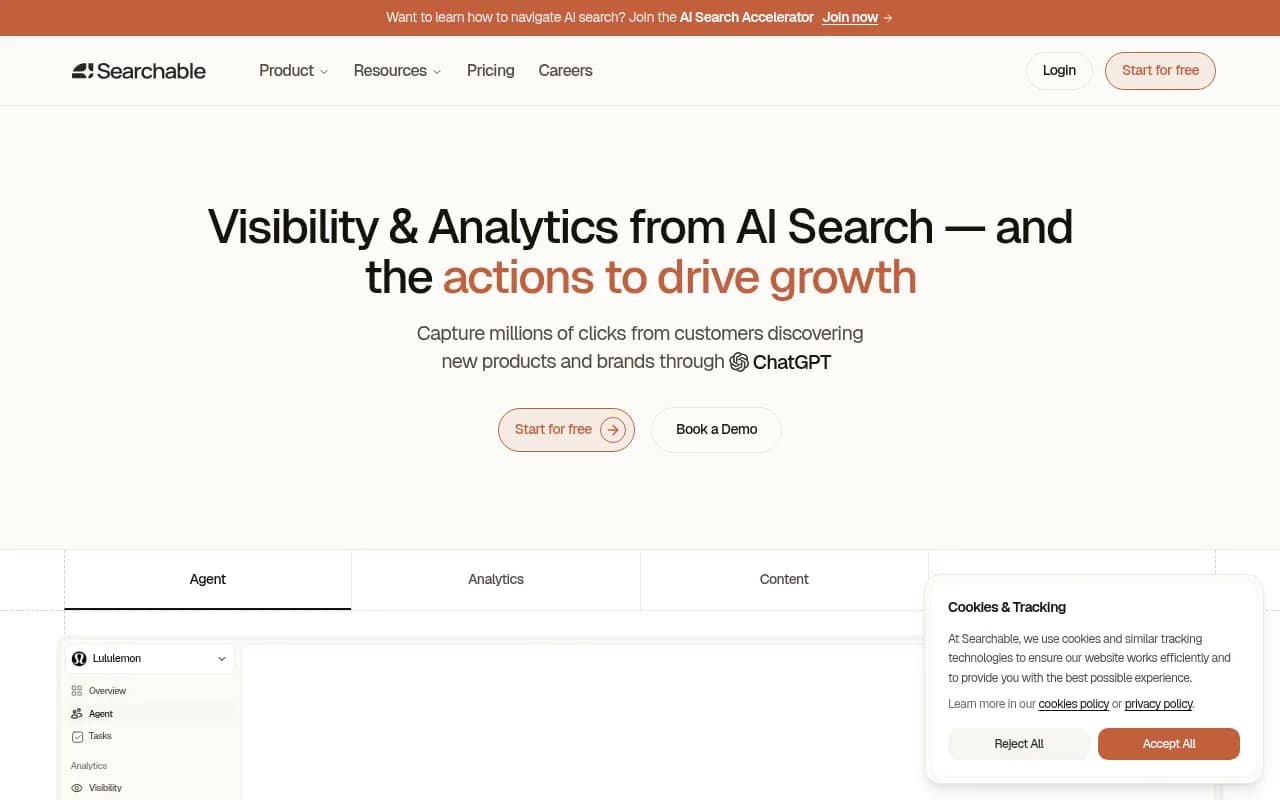
Searchable bundles prompt tracking, articles, technical audits, AI traffic analytics and an agent on one plan, with unlimited seats and a 14-day trial. According to the vendor comparison posts we reviewed, Pro covers ChatGPT, Google AI Overviews and Perplexity across 100 prompts for one project. Claude, Gemini, Google AI Mode and Copilot are paid add-ons, and the Claude Lite and Grok Lite variants answer from training data with no live citations.
Teams usually start looking elsewhere for one of these reasons:
- They need engines beyond the included three without the bill doubling.
- They manage several brands or clients and one project per plan gets expensive.
- They want crawler-level evidence tied to specific pages, not only aggregate AI traffic.
- They want raw exports or warehouse access without an enterprise contract.
Pricing figures here come from vendor-authored posts (Geoptie, SE Ranking and others) published in late 2026. Treat them as directional and confirm on searchable.com.
What to look for in crawler logs and attribution
Before comparing tools, agree on what "good" looks like. Here is the checklist I would use.
Crawler log requirements
- IP verification against each operator's published ranges, so fake user agents are filtered out.
- Separation of training crawlers from answer-time fetchers. A provider total hides which bot does the work.
- Per-page views, with error reasons in plain language.
- A path from crawl to citation, so you can tell an access problem from a content problem.
- Easy setup through your CDN or host (Cloudflare, Vercel, Fastly, raw logs, or a WordPress plugin).
The mix matters. Promptwatch Data's AI crawler traffic report (verified requests, June 8 to September 6, 2026) found OpenAI made up 79.8% of verified AI crawler requests in the week of August 31 to September 6, down from 94.8% in the week of June 8. Its recommended check is simple: compare your own logs against the market mix. If a provider is large in the market but near zero in your logs, you are probably blocked or unreachable for it.
Bots also shift quickly. Promptwatch's data on Meta-WebIndexer shows it growing from roughly 2% to nearly 38% of tracked AI crawler requests between mid-July and August 9, 2026. A tool that only lists the big three bots will miss that.
Attribution requirements
- Referrer-based detection for ChatGPT, Perplexity, Gemini, Claude, Copilot and others.
- Conversion tracking, not just visit counts.
- A fallback for missing referrers. ChatGPT stopped sending one on October 8, 2026, so tools need a utm_source=chatgpt.com setting or similar.
- Page-level joins between citations, crawls and visits.
For a deeper walkthrough of the method, the attributing AI traffic guide in the Promptwatch Academy is a good reference.
Comparison table
| Tool | Prompt tracking | AI crawler logs | AI visitor analytics | Content or fix workflow | Best for |
|---|---|---|---|---|---|
| Promptwatch | Real-UI tracking, many engines | IP-verified, per page, crawl-to-citation path | Yes, with conversions | Content Agent, Action Board, CMS publishing | Teams that want the full loop |
| Otterly.AI | Yes | Page-level audits and crawler logs reported by third-party comparisons | Limited | Audits | Budget-conscious tracking |
| Scrunch | Yes | AI bot traffic reporting | Agent-focused | Agent-readable site delivery | Technical and enterprise teams |
| SE Visible | Yes | Agent Analytics via file upload, webhook, Cloudflare or WordPress plugin | Yes | Light | SE Ranking users |
| Rankability | Yes | Crawler and visitor analytics | Yes | Research-linked workflows | Agencies |
| Radarkit | Yes | Not a focus | AI traffic monitoring | Light | Separating referral traffic from mentions |
| Searchable | Yes | Technical audits and AI traffic analytics | Yes | Articles and agent | One brand, three core engines |
Capabilities for tools other than Promptwatch come from vendor and third-party comparison posts. Verify on each vendor's site, since features change fast.
The alternatives
Promptwatch
Promptwatch is the option I would shortlist first for this specific need, because crawler logs and visitor analytics are core parts of the product rather than an afterthought. A comparison on Omnia's site describes it the same way: it captures real-time LLM crawler logs and prompt volumes so teams can see which pages are being read and why assistants cite competitors.

What that looks like in practice:
- AI crawler logs are IP-verified across GPTBot, OAI-SearchBot, ChatGPT-User, ClaudeBot, PerplexityBot, Meta-WebIndexer and others, with crawl errors explained and a citation rate per page.
- Visitor analytics counts AI-referred visits and conversions from ChatGPT, Perplexity, Gemini, Claude, Copilot and more, installed through a script tag, Google Tag Manager or the WordPress plugin.
- Search Insights overlays Google Search Console and Bing data on AI crawls and citations, so you can ask which pages rank in Google but never get cited by AI.
- Setup works through Cloudflare, AWS CloudFront, Fastly, Vercel, Netlify, Akamai, Google Cloud CDN, a custom HTTP endpoint or the WordPress plugin.
The loop does not stop at reporting. The Action Board prioritizes fixes, and the Content Agent writes and publishes pages to WordPress, Webflow or Framer, then tracks whether each page gets crawled, cited and clicked. TreeHouse (Pararius) used this to fix crawler access and grow AI search to about 25% of organic conversions, per the TreeHouse case study. Crisp reported 2x higher conversion rates from AI traffic than traditional channels (case study).
Pricing, as listed: Essential is $95/mo, Professional $245/mo and Business $579/mo. Crawler logs start on Professional (25M logs), and the automated Content Agent starts on Business. Agencies can use Kick-off ($199), Growth ($399) or Scale ($799), all of which include crawler logs and visitor analytics. Confirm current numbers at promptwatch.com/pricing. There is a 7-day free trial on monthly billing, and a head-to-head page compares it with the rest of the market.
Otterly.AI

Otterly is the cheapest way in, starting around $29/mo according to a SE Ranking comparison. Its pitch is page-level GEO audits and AI crawler logs sitting next to prompt tracking. Some engines (Claude, Google AI Mode, Gemini) are paid add-ons, so price a realistic engine set before committing. It is a good fit if you want evidence of bot access without a big budget, and less so if you need conversion attribution and content execution. See Promptwatch vs Otterly for a direct comparison.
Scrunch
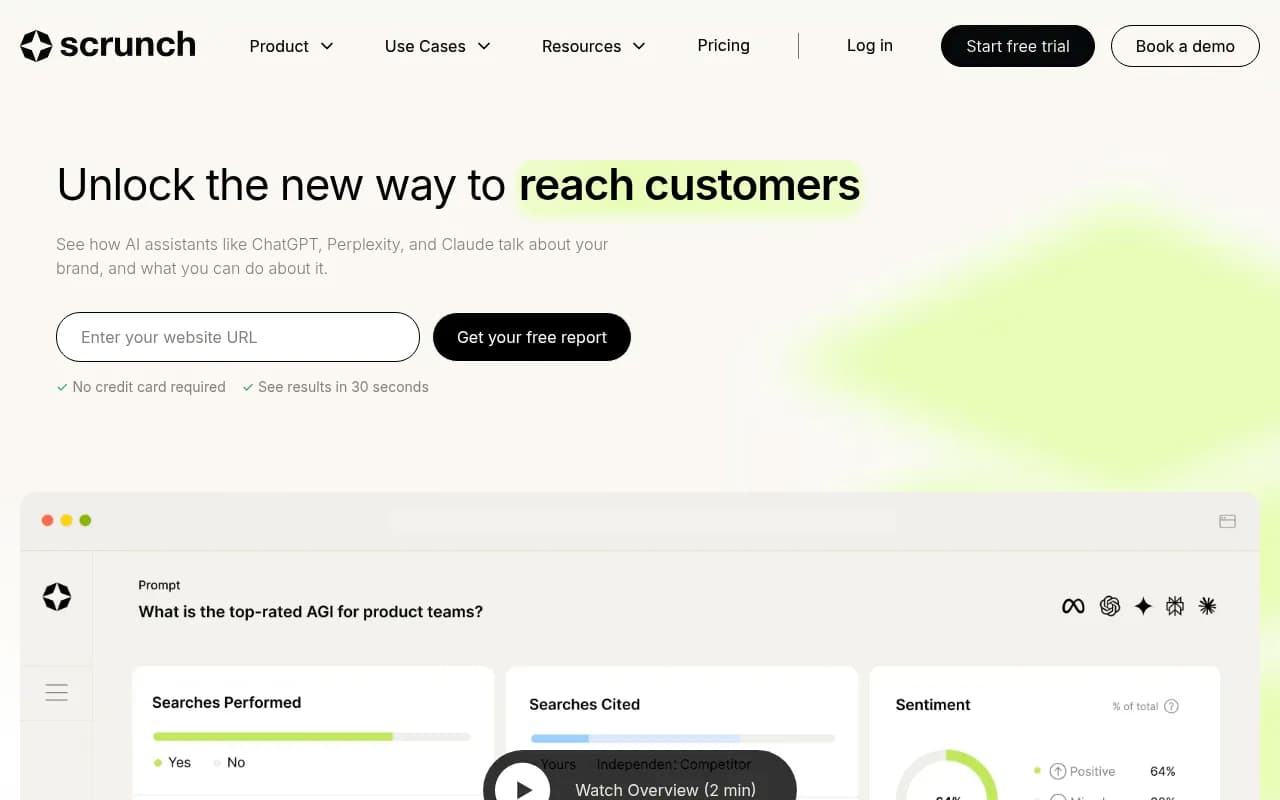
Scrunch leans technical. A Geoptie roundup highlights its AI bot traffic reporting and positions it for enterprise teams that care how agents read their site. If your problem is less "who mentions us" and more "what do agents see when they hit our pages," it deserves a look. Expect enterprise pricing. Compare it via Promptwatch vs Scrunch.
SE Visible
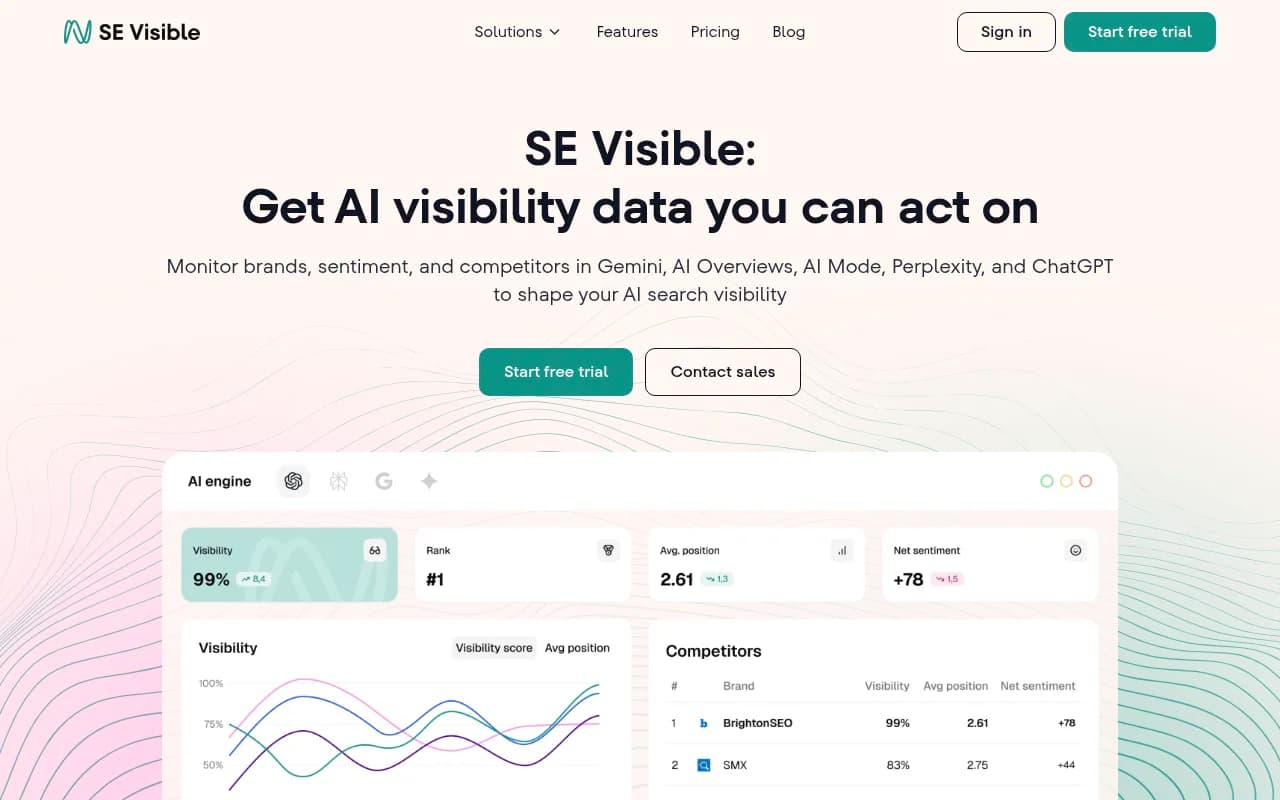
SE Ranking's AI visibility product includes Agent Analytics that ingests server logs through file upload, webhook, Cloudflare or a WordPress plugin. That is a reasonably flexible ingestion story, and it makes sense if your team already works in SE Ranking. Note the source here is SE Ranking's own comparison post, so check the current feature list yourself.
Rankability
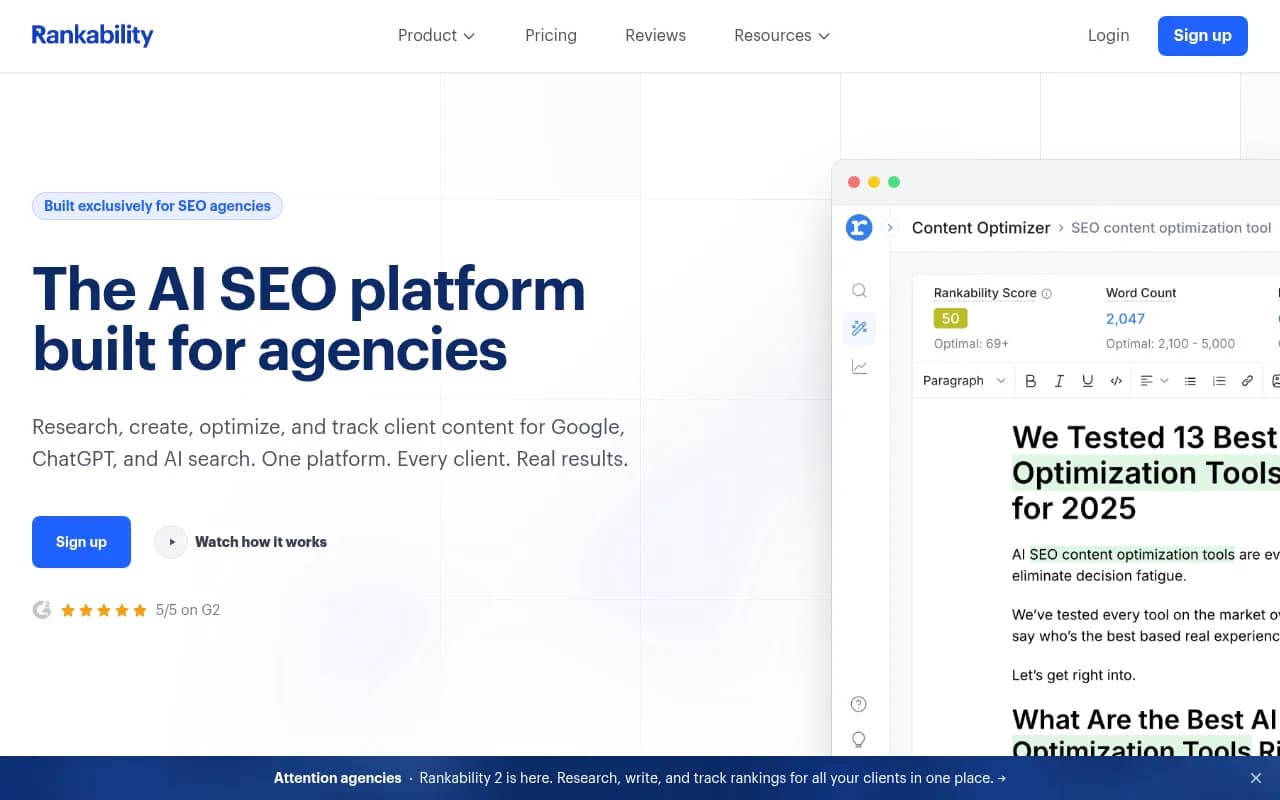
Rankability markets itself to agencies and says it connects AI crawler and visitor analytics to its research workflow. If you run client reporting and want crawler and traffic data in the same place as research, it is worth a trial.
Radarkit
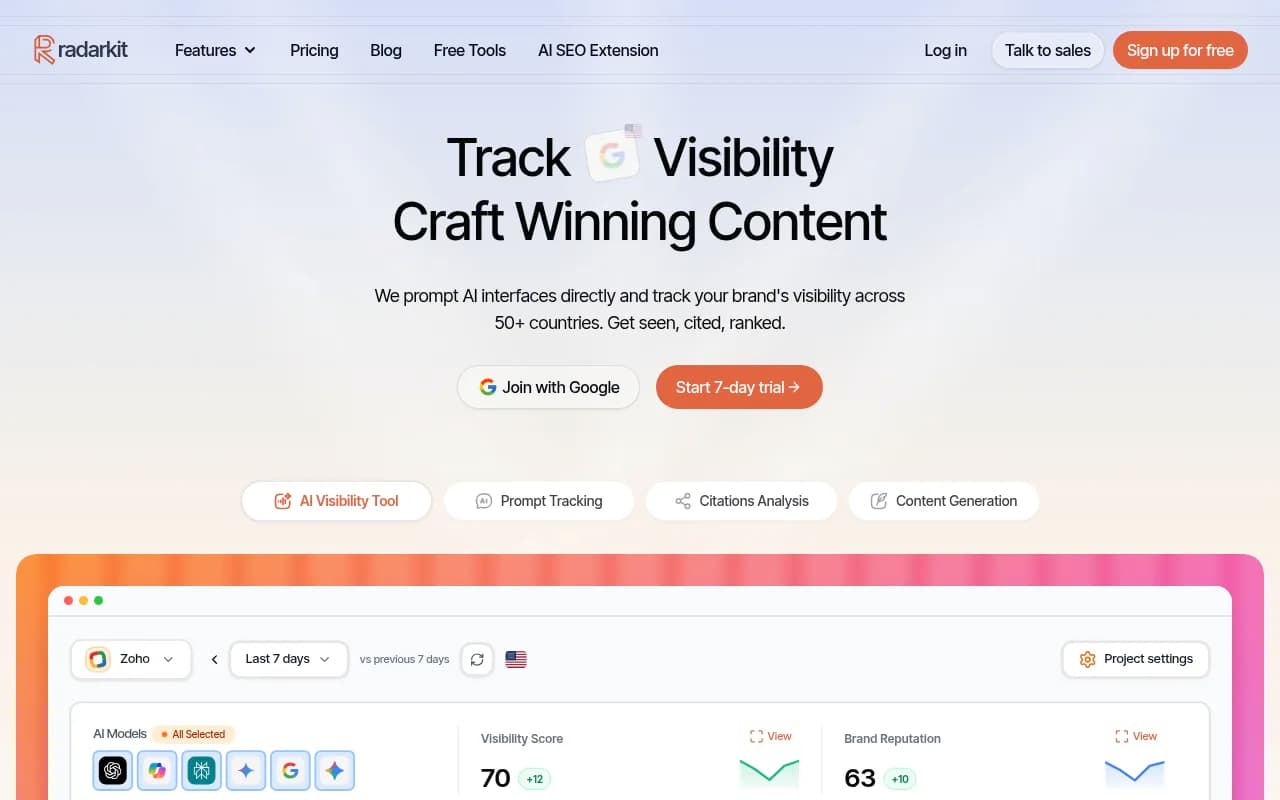
Radarkit focuses on AI traffic monitoring, separating real referral visits from simple brand mentions. It is lighter on crawler detail. A fair choice if attribution is your main pain and you do not need bot-level diagnosis.
DarkVisitors
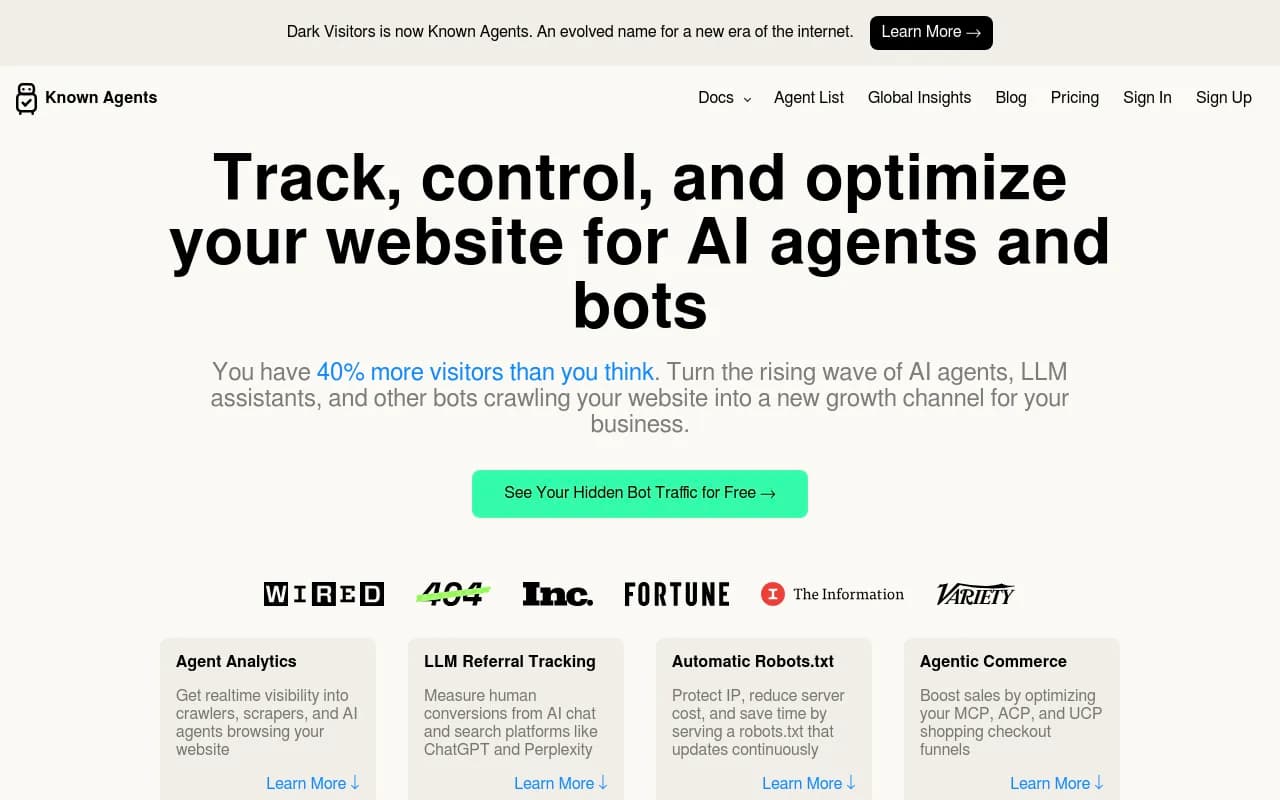
DarkVisitors is a narrower tool for tracking AI agents, bots and LLM referrals hitting your site. It is not a visibility tracker, so pair it with a prompt-tracking tool if you go this route. Useful when you want crawler data only.
Scrunch, Profound and the enterprise tier

Profound is strong on enterprise monitoring, but in our comparison notes it lacks Reddit tracking, ChatGPT Shopping and agentic execution, and sits at a higher price point. See Promptwatch vs Profound if enterprise procurement is your lane.
Which one fits which team
| Your situation | Start with |
|---|---|
| Need prompts, crawler logs, traffic, conversions and content in one loop | Promptwatch |
| Tight budget, want crawler visibility next to prompts | Otterly.AI |
| Large technical site, want to see how agents read pages | Scrunch |
| Already on SE Ranking | SE Visible |
| Agency reporting for several clients | Promptwatch agency plans or Rankability |
| Only need to split AI referrals from mentions | Radarkit |
| Crawler data only, no prompt tracking | DarkVisitors |
For wider browsing, the GEO software directory lists many more options by category.
How to run a switching test in two weeks
Do not migrate on a demo. Run a short test with your own data.
- Pick 20 to 30 prompts you already track, including a few branded and a few competitor comparisons.
- Connect crawler logging through your CDN or WordPress plugin. Wait a few days for volume.
- Install the visitor script and, if ChatGPT matters to you, enable the utm_source fallback.
- Check whether the tool shows which bots hit which pages, with errors.
- Find one page that is cited but gets no clicks, and one that ranks in Google but is never cited. A good tool surfaces both without manual joins.
- Ask what the tool tells you to do next. A dashboard that only reports a score is not enough.
Red flags
- Crawler logs that list user agents but do not verify IPs.
- Per-engine add-ons that push realistic coverage far above the headline price.
- Attribution that counts only visits with a referrer.
- Lite or API-only model answers presented alongside live-citation results without a label.
Fix access first, then content
A pattern worth remembering from the crawler data: check robots.txt, CDN and WAF rules for every provider before you rewrite a single page. Free utilities help here, such as the AI crawler URL inspector and the Agentic Readiness Check. Once access is clear, use content gap analysis to decide what to publish, then measure with visits and conversions.
If you want a human to run the process for you, 1001 SEO Media offers GEO and technical SEO services and uses Promptwatch internally for AI visibility work.
FAQ
Does Searchable track AI crawler activity?
It includes technical audits and AI traffic analytics per its own positioning. Bot-level, IP-verified crawler logs with per-page error detail are where dedicated tools differ, so test that specifically.
Why do crawler logs matter if I already track citations?
Citations tell you the outcome. Logs tell you whether the bot even reached the page. Without both, you cannot separate an access problem from a content problem.
Can I attribute AI traffic without referrers?
Partly. Use a UTM fallback where you control links, and rely on tools that classify known AI referrers. Direct-labeled visits will always be under-counted.
Are the prices in this guide final?
No. They come from vendor comparison posts and vendor pages as of late 2026. Check each pricing page before buying.
Which tool is best overall for this use case?
For teams that want crawler logs, attribution and content execution in one product, Promptwatch. For lighter or cheaper needs, Otterly.AI, SE Visible or Radarkit can cover part of the job.