Key takeaways
- Rankscale was built from the ground up for AI search visibility, while Nightwatch extended its traditional rank tracker with an AI add-on module
- Nightwatch costs $32/month base plus $99/month for the AI tracking module -- meaning AI visibility isn't included by default
- Rankscale is consistently rated as one of the most accurate AI rank tracking tools, with strong evidence trails and broad LLM coverage
- Neither tool offers content generation or gap analysis -- they're monitoring platforms, not optimization platforms
- If you need to act on what you find (not just watch the numbers), you'll need something beyond both of these
Why this comparison matters in 2026
Rank tracking used to be simple. You picked a tool, fed it your keywords, and watched your Google positions move up and down. That was the whole game.
It's not the whole game anymore.
ChatGPT now handles roughly 20% of global search traffic. Perplexity, Gemini, Claude, and Google AI Overviews are all pulling users away from the traditional blue-link results page. And critically, the brands that show up in those AI answers aren't necessarily the ones ranking #1 on Google. AI models have their own citation logic, their own source preferences, and their own way of deciding who gets mentioned.
So when two established rank trackers -- Rankscale and Nightwatch -- both added AI search monitoring to their platforms, it raised a reasonable question: are they actually good at it, or did they just bolt on a feature to stay relevant?
That's what this guide is about.
What Rankscale is
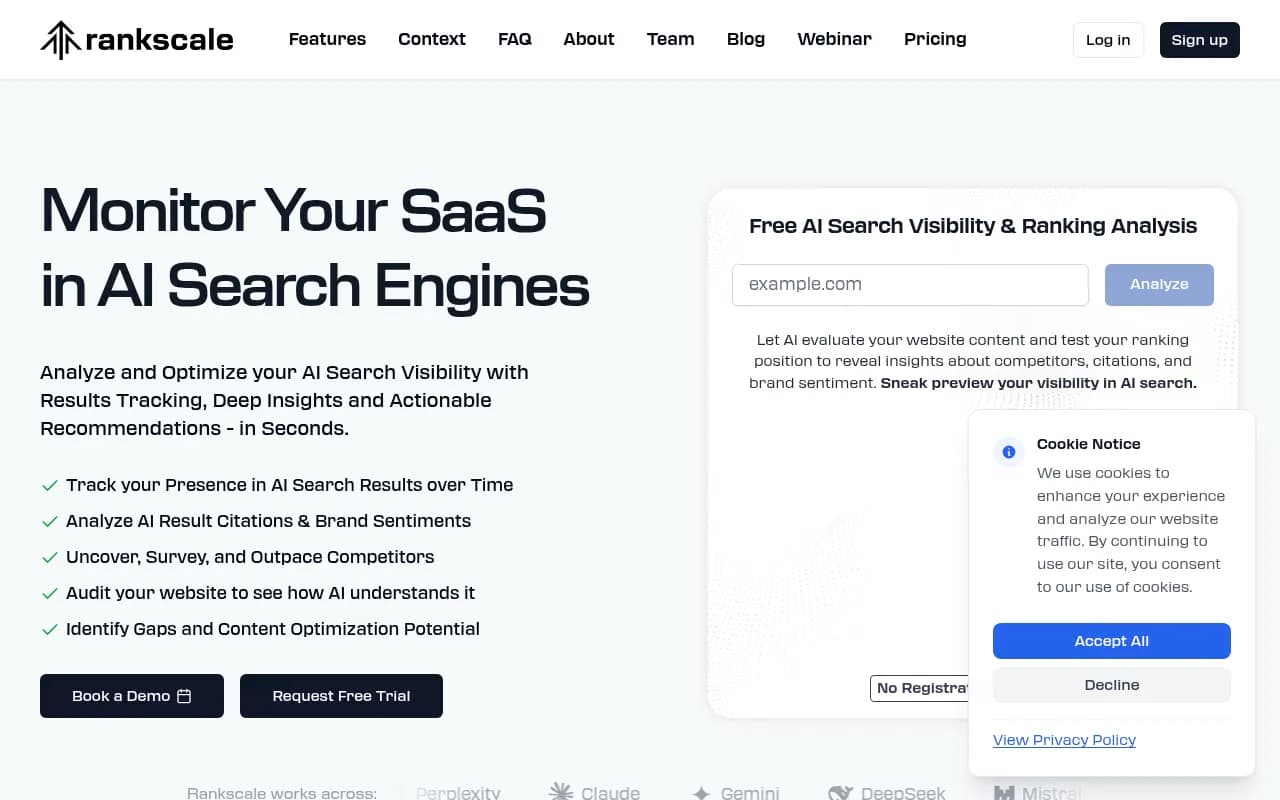
Rankscale is an AI search ranking and visibility platform. Unlike Nightwatch, it didn't start as a traditional SEO rank tracker -- it was built specifically for the AI search era. The core idea is tracking how brands appear inside LLM responses: which prompts trigger mentions, how often the brand is cited, what sentiment surrounds those mentions, and how visibility shifts over time.
Coalition Technologies, in a comparison of AI rank tracking tools, called Rankscale "the best AI rank tracking tool due to its coverage, high accuracy, evidence trails, etc." That's a meaningful endorsement from an agency that tested multiple platforms head-to-head.
What makes Rankscale stand out in testing:
- Evidence trails: it shows you the actual AI response, not just a score, so you can verify what was said
- Broad LLM coverage across ChatGPT, Perplexity, Gemini, Claude, and others
- Accuracy that holds up under scrutiny -- the numbers reflect what AI models are actually saying
The limitation is that Rankscale is primarily a monitoring tool. It tells you where you stand. It doesn't tell you what to write next, or help you create content to close the gaps it finds.
What Nightwatch is
Nightwatch has been around longer and built its reputation as a traditional rank tracker -- accurate, clean interface, good for agencies managing multiple clients. Over the past year or so, it added AI visibility tracking as a separate module.
The AI tracking component covers four models: ChatGPT, Claude, Perplexity, and Google AI Overviews. It sits alongside the traditional SERP tracking, so if you're already a Nightwatch user, you can add AI monitoring without switching platforms.
The catch: the AI module costs $99/month on top of the base plan, which starts at $32/month. So you're looking at $131/month minimum to get both traditional rank tracking and AI visibility. That's not unreasonable, but it's worth knowing upfront -- the AI features aren't bundled in.
From a feature standpoint, Nightwatch's AI tracking is solid for what it is. You get brand mention tracking, share of voice metrics, and visibility trends across the four supported models. It's less specialized than Rankscale for pure AI visibility work, but the advantage is having everything in one place if you're still running traditional SEO alongside your AI search efforts.
Head-to-head comparison
Here's how the two tools stack up across the dimensions that matter most:
| Feature | Rankscale | Nightwatch |
|---|---|---|
| Primary focus | AI search visibility | Traditional rank tracking + AI add-on |
| AI models covered | Multiple (ChatGPT, Perplexity, Gemini, Claude, others) | 4 (ChatGPT, Claude, Perplexity, Google AI Overviews) |
| Evidence trails | Yes -- shows actual AI responses | Limited |
| Traditional SERP tracking | No | Yes -- core feature |
| AI tracking pricing | Included in main plans | $99/month add-on |
| Base price | Varies by plan | $32/month (AI tracking extra) |
| Content generation | No | No |
| Gap analysis | No | No |
| Crawler logs | No | No |
| Best for | Teams focused primarily on AI search | Teams running both traditional SEO and AI monitoring |
The table tells a clear story. If AI search is your primary concern, Rankscale is the more purpose-built option. If you're managing a traditional SEO program and want to layer in AI visibility without switching tools, Nightwatch makes more sense.
Where both tools fall short
Here's the honest part of this comparison: both Rankscale and Nightwatch are monitoring tools. They show you data. They don't help you do much with it.
That's fine if you have a team that can take visibility data and translate it into content strategy. But for most marketing teams, the harder problem isn't knowing that competitors are appearing in AI answers for prompts you're missing -- it's figuring out what to actually do about it.
Neither tool offers:
- Content gap analysis (which prompts are your competitors winning that you're not?)
- AI content generation based on prompt data
- Crawler logs showing how AI bots interact with your site
- Page-level citation tracking (which specific pages are being cited, and by which models?)
- Traffic attribution connecting AI visibility to actual revenue
This is the gap that separates monitoring tools from optimization platforms. If you want to close the loop -- find gaps, create content, track results -- you need something more.
Promptwatch is built around exactly that workflow. It tracks visibility across 10 AI models, identifies which prompts competitors are winning that you're not, and then generates content designed to fill those gaps. The crawler logs show you how AI bots are actually reading your site, and the attribution layer connects visibility improvements to revenue.

That said, if your immediate need is just monitoring -- getting a baseline of where you stand in AI search -- both Rankscale and Nightwatch are legitimate starting points.
Other tools worth considering
The rank tracking and AI visibility space has expanded significantly. A few other tools are worth knowing about depending on your specific needs:
For AI visibility monitoring with a broader feature set:

Otterly.AI covers four AI models and starts at $29/month -- the lowest entry price in the category. Good for smaller teams that want basic monitoring without committing to a larger platform.

Peec AI covers up to 10 models and supports multi-language tracking. Useful if you're operating across multiple markets.
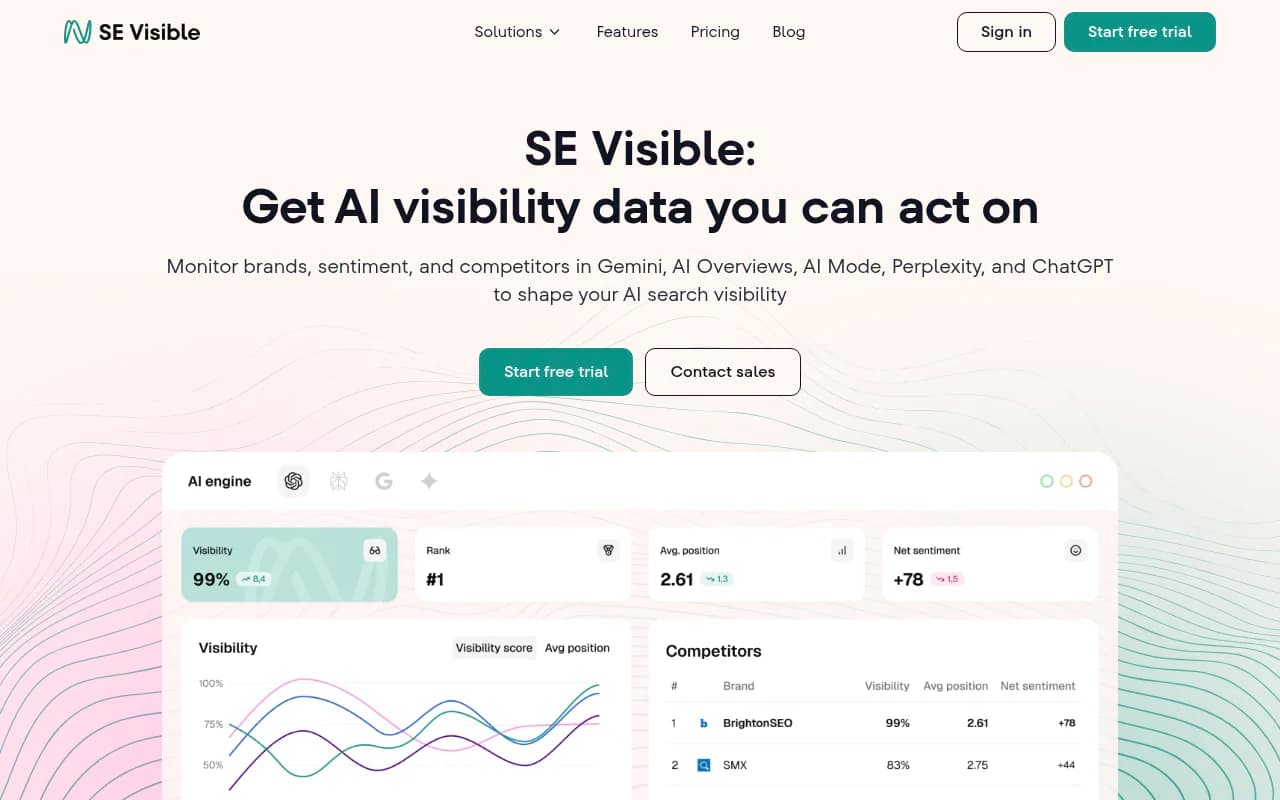
SE Visible (from SE Ranking) covers five models and is strong for multi-brand, multi-country monitoring. Worth a look if you're already in the SE Ranking ecosystem.
For traditional rank tracking that also touches AI:
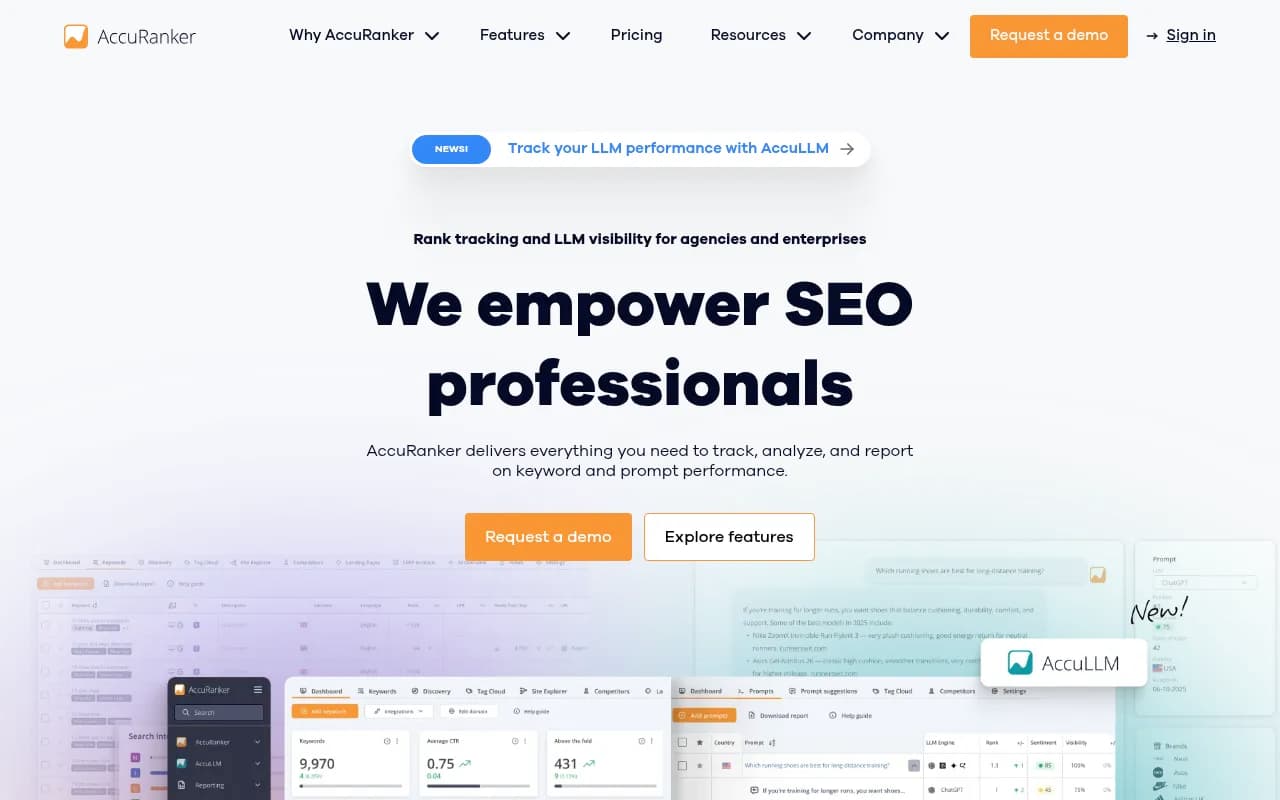
AccuRanker has added AI search monitoring to its core rank tracking product. Similar positioning to Nightwatch -- traditional SEO first, AI visibility layered on.
Semrush's AI Toolkit is bundled with existing Semrush plans, which makes it convenient if you're already paying for the platform. The limitation is that it uses fixed prompts rather than letting you define your own, which reduces its usefulness for targeted AI visibility work.
Ahrefs Brand Radar tracks brand mentions in AI search results. It's a newer addition to the Ahrefs suite, and like Semrush, it uses fixed prompts with no AI traffic attribution.
How to choose between Rankscale and Nightwatch
The decision comes down to two questions:
Are you still running a traditional SEO program?
If yes, Nightwatch is the more practical choice. You get accurate SERP rank tracking (which Nightwatch does well) plus AI visibility monitoring in one dashboard. The $99/month AI add-on is an extra cost, but consolidating tools has its own value.
If your team has largely shifted focus to AI search and you're not actively managing traditional keyword rankings, Rankscale's specialization makes more sense. It was built for this problem, and the evidence trails give you more confidence in the data.
How much do you need to act on the data?
If monitoring is enough -- you just need to know where you stand and report on trends -- either tool works. If you need to actually improve your AI visibility, not just measure it, you'll hit the ceiling of both platforms pretty quickly. That's when it's worth looking at platforms that close the loop between data and content.
The broader picture
The category these tools sit in is still maturing fast. In early 2025, most "AI visibility" tools were little more than scripts that queried ChatGPT and logged the output. By mid-2026, the better platforms are tracking real user-facing responses (not just API outputs), analyzing citation patterns, and connecting visibility data to traffic and revenue.
Rankscale and Nightwatch both sit in a reasonable middle ground -- more rigorous than the early DIY approaches, but not yet at the level of platforms that combine monitoring with optimization.
One thing worth noting from the broader research: the "hybrid stack" is becoming common. Many teams use a traditional rank tracker for SERP monitoring, a dedicated AI visibility tool for LLM tracking, and a separate content tool for optimization. That's not necessarily inefficient -- it reflects the fact that no single tool has nailed all three yet.
The question is how long that fragmentation lasts. Platforms that can genuinely do all three -- track, analyze, and optimize -- will likely consolidate the market over the next 12 to 18 months.
For now, if you're choosing between Rankscale and Nightwatch: Rankscale for AI-first teams, Nightwatch for teams that still need both worlds. And if you're ready to move beyond monitoring, start looking at what it would take to actually close the gap between your AI visibility data and your content output.