Key takeaways
- Qwairy positioned itself as a GEO strategy platform in 2025, with solid prompt tracking and competitive visibility features that appealed to early adopters.
- Its core weakness was the same one that plagued most monitoring-only tools: it showed you the problem but left you to solve it yourself.
- Teams that needed content generation, crawler logs, or traffic attribution consistently found Qwairy's feature set too thin for sustained optimization work.
- Several alternatives -- including Promptwatch, Profound, and Otterly.AI -- emerged as more complete options depending on team size and use case.
- The lesson from 2025 is that AI visibility tools live or die on whether they help you act, not just observe.
What Qwairy actually was
Before getting into the critique, it's worth being clear about what Qwairy set out to do. It launched as a GEO (Generative Engine Optimization) strategy platform, targeting marketing and SEO teams who wanted to understand how their brand appeared in AI-generated answers across models like ChatGPT, Perplexity, and Gemini.
The pitch was reasonable: as AI search engines started eating into traditional Google click-through rates -- Seer Interactive's September 2025 data showed brands losing 40-65% of their ability to drive clicks year-over-year -- there was a genuine and urgent need for tools that could track what was happening in AI responses.
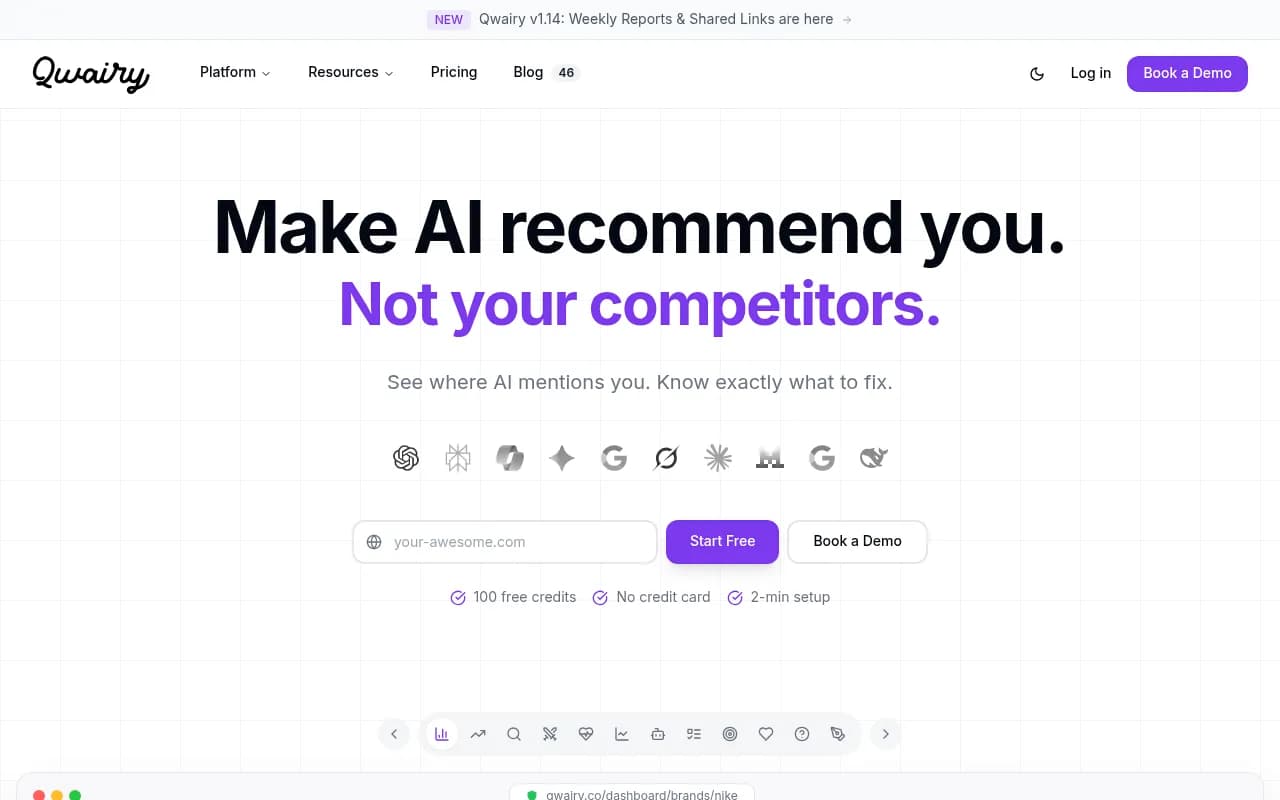
Qwairy filled that gap for a lot of teams. It offered prompt tracking, brand mention monitoring, and some competitive comparison features. For teams that were just waking up to the AI visibility problem in early-to-mid 2025, it was often one of the first tools they tried.
What Qwairy got right
It made GEO feel approachable
One of Qwairy's genuine strengths was onboarding. The interface was clean, the setup was fast, and it didn't require a technical background to get started. For marketing managers who had never thought about AI visibility before, Qwairy was a reasonable first step.
That matters more than it sounds. A lot of enterprise GEO tools in 2025 were built for SEO specialists -- they assumed you already knew what a prompt cluster was, why query fan-outs matter, or how to interpret citation frequency. Qwairy didn't make those assumptions.
Prompt tracking across multiple models
Qwairy tracked brand mentions and citations across several major AI models, which was genuinely useful. Seeing that your brand appeared in Perplexity responses but not in ChatGPT -- or that a competitor was consistently cited in Gemini while you weren't -- gave teams a concrete starting point for conversations about AI strategy.
The competitive heatmap-style views were particularly popular with agency teams who needed to show clients a clear picture of where they stood relative to competitors.
Reasonable pricing for early adopters
Compared to some of the enterprise-tier GEO platforms that launched in 2025, Qwairy's pricing was accessible. That made it a realistic option for smaller marketing teams and agencies that couldn't justify a four-figure monthly spend just to start experimenting with AI visibility.
Where Qwairy fell short
The monitoring wall
This is the core problem, and it's not unique to Qwairy -- it's the defining limitation of an entire category of tools that launched in 2024-2025.
Qwairy could tell you that you were invisible for a set of prompts. It could show you that a competitor was getting cited and you weren't. What it couldn't do was help you fix it. There was no content gap analysis, no content generation, no briefs grounded in real prompt data. You'd look at the dashboard, understand the problem, and then... go figure it out yourself.
For teams that were already stretched thin, that gap was a dealbreaker. The value of knowing you have a problem is limited if the tool doesn't help you solve it.
No crawler log visibility
By mid-2025, more sophisticated teams were asking a question that basic monitoring tools couldn't answer: "Are AI crawlers even visiting my pages, and what are they doing when they get there?"
Qwairy had no answer to this. It couldn't show you which pages ChatGPT's crawler had visited, whether it had encountered errors, or how often it returned. This matters because a page can look fine in your CMS while being completely invisible to AI crawlers due to technical issues -- wrong headers, slow load times, or robots.txt configurations that inadvertently block AI agents.
Fixed prompts, limited flexibility
Several users noted that Qwairy's prompt tracking was somewhat rigid. You could track a set of prompts, but the platform didn't help you discover which prompts you should be tracking in the first place. There was no prompt volume data, no difficulty scoring, and no query fan-out analysis to show how one prompt branches into related sub-queries.
This meant teams were often tracking prompts they'd guessed at, rather than prompts that real users were actually typing into AI search engines.
No traffic attribution
Knowing you're cited in AI responses is useful. Knowing that those citations are driving actual traffic and revenue is what justifies the budget. Qwairy didn't connect visibility data to website traffic or conversions, which made it hard to build a business case for continued investment in GEO.
Reddit and YouTube blind spots
By late 2025, it was well understood that AI models heavily cite Reddit threads, YouTube videos, and third-party review sites -- not just brand-owned content. Qwairy's focus was almost entirely on direct brand mentions, which meant it missed a significant part of the picture. Teams that wanted to understand their full offsite citation footprint had to look elsewhere.
Why teams switched
The pattern was fairly consistent. Teams would start with Qwairy, get value from the initial visibility audit, and then hit a ceiling. They'd know they were invisible for certain prompts, but have no clear path to fixing it. The tool had done its job -- it had shown them the problem -- but it couldn't help them move forward.
The switch usually happened when one of a few things occurred:
- The team needed to produce content specifically engineered for AI visibility, not just general SEO content
- A technical SEO person joined the team and started asking about crawler behavior
- Leadership wanted to see ROI data connecting AI visibility to actual traffic or revenue
- The agency needed to show clients a more complete picture than a citation count
Here's how the main alternatives stacked up against Qwairy for teams making that switch:
| Tool | Monitoring | Content generation | Crawler logs | Traffic attribution | Reddit/YouTube tracking |
|---|---|---|---|---|---|
| Qwairy | Yes | No | No | No | No |
| Promptwatch | Yes | Yes | Yes | Yes | Yes |
| Profound | Yes | Partial | No | No | No |
| Otterly.AI | Yes | No | No | No | No |
| AthenaHQ | Yes | No | No | No | No |
| Peec.ai | Yes | No | No | No | No |
The tools teams moved to
For teams that needed the full picture
Promptwatch was the most common destination for teams that had outgrown monitoring-only tools. The core difference is that Promptwatch is built around an action loop: it finds the gaps (Answer Gap Analysis shows exactly which prompts competitors are visible for but you aren't), helps you create content to fill them (Content Agents generate articles and briefs grounded in real prompt data), and then tracks the results as your visibility improves.

The crawler log feature was a particular draw for technical teams -- being able to see which AI agents were visiting your site, which pages they were reading, and when pages moved from crawl to citation is genuinely different from anything Qwairy offered.
For teams that wanted strong monitoring with a cleaner interface

Profound had a more polished monitoring experience than Qwairy, with better prompt organization and cleaner competitive comparisons. It didn't solve the content generation gap, but for teams whose primary need was visibility reporting rather than optimization, it was a step up.
For budget-conscious teams that just needed basic tracking

Otterly.AI stayed in its lane as an affordable monitoring tool. If a team's only requirement was tracking brand mentions across a handful of AI models without a large budget, it was a reasonable option. Just don't expect it to help you do anything about what you find.
For teams inside existing SEO platforms
Some teams didn't want to add another tool to their stack. Semrush and Ahrefs both added AI visibility features in 2025, though both use fixed prompts and neither offers the depth of a dedicated GEO platform. For teams that were already paying for these platforms and just wanted a basic read on AI visibility, the built-in features were good enough.
For agencies needing competitive intelligence
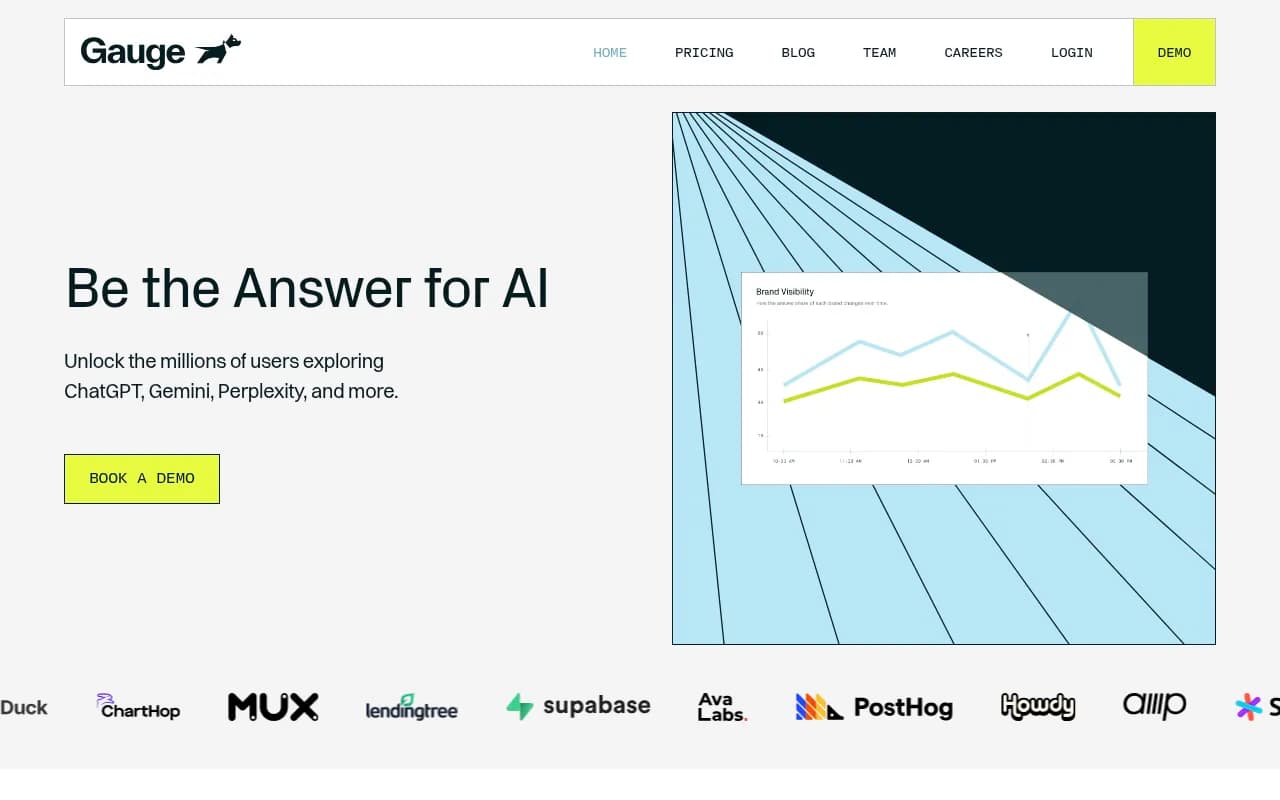
Gauge focused on strategic competitive intelligence for AI visibility, which resonated with agency teams that needed to benchmark clients against competitors across AI models. It was more focused than Qwairy's broader positioning.
The broader lesson from 2025
Qwairy's story is really the story of an entire category of tools that launched in 2024-2025. The GEO space attracted a lot of monitoring dashboards -- tools that could show you a problem but couldn't help you solve it. That was fine as a starting point when the category was new and teams just needed to understand what AI visibility even meant.
By the second half of 2025, that wasn't enough anymore. Teams had moved past the "we should probably pay attention to this" phase and into the "we need to actually improve our AI visibility" phase. The tools that survived and grew were the ones that could support that second phase.
The other thing 2025 made clear is that AI visibility is genuinely technical. It's not just about writing good content -- it's about whether AI crawlers can access your pages, whether your content is structured in a way that AI models can parse and cite, and whether you're publishing in the right places (including offsite). Tools that treated it as purely a content marketing problem missed half the picture.
Should you still consider Qwairy?
Honestly, it depends on where you are in your GEO journey. If you're a small team that has never tracked AI visibility before and just wants to understand the basics, Qwairy can still serve as a starting point. The onboarding is smooth, the interface is accessible, and the initial visibility audit is useful.
But if you're past that point -- if you already know you have an AI visibility problem and you need to fix it -- you'll hit the ceiling quickly. The monitoring-only model has a natural expiration date, and for most teams, that date arrived sometime in 2025.
The tools that are worth investing in now are the ones that close the loop between finding gaps and filling them. That's what separates a useful platform from an expensive dashboard.
Quick comparison: Qwairy vs. the main alternatives
| Capability | Qwairy | Promptwatch | Profound | Otterly.AI | AthenaHQ |
|---|---|---|---|---|---|
| Multi-model monitoring | Yes | Yes (10 models) | Yes | Yes | Yes |
| Prompt volume data | Limited | Yes | Partial | No | No |
| Answer gap analysis | No | Yes | No | No | No |
| Content generation | No | Yes | No | No | No |
| AI crawler logs | No | Yes | No | No | No |
| Traffic attribution | No | Yes | No | No | No |
| Reddit/YouTube tracking | No | Yes | No | No | No |
| ChatGPT Shopping tracking | No | Yes | No | No | No |
| Pricing (entry) | Low | $99/mo | Higher | Low | Mid |
The pattern is clear. Qwairy competes on accessibility and price. Where it falls short is in everything that comes after the initial audit -- the optimization, the content, the technical visibility, and the attribution. For teams that need those things, the alternatives are worth the additional investment.