Key takeaways
- Qwairy launched as a GEO strategy and optimization platform in 2025 and has shipped meaningful improvements through mid-2026, particularly around prompt tracking and reporting.
- The core monitoring features are more reliable now, but content generation and multi-model coverage still lag behind more established platforms.
- Several early bugs -- including prompt refresh issues and inaccurate citation counts -- have been addressed, though not all are fully resolved.
- For teams that need a full action loop (find gaps, create content, track results), Qwairy alone may not be enough.
- If you're evaluating alternatives, it's worth comparing Qwairy against platforms that cover the full optimization cycle, not just monitoring.
The AI visibility space moves fast. Tools that looked promising in early 2025 have either matured into something genuinely useful or quietly stagnated while the market moved on. Qwairy sits somewhere in the middle of that spectrum -- it's come a long way, but there are still real gaps worth knowing about before you commit budget to it.
This guide is a practical look at how Qwairy has changed between its 2025 state and where it stands in mid-2026. What actually got better, what problems persisted longer than they should have, and what's still missing if you're trying to do serious GEO work.
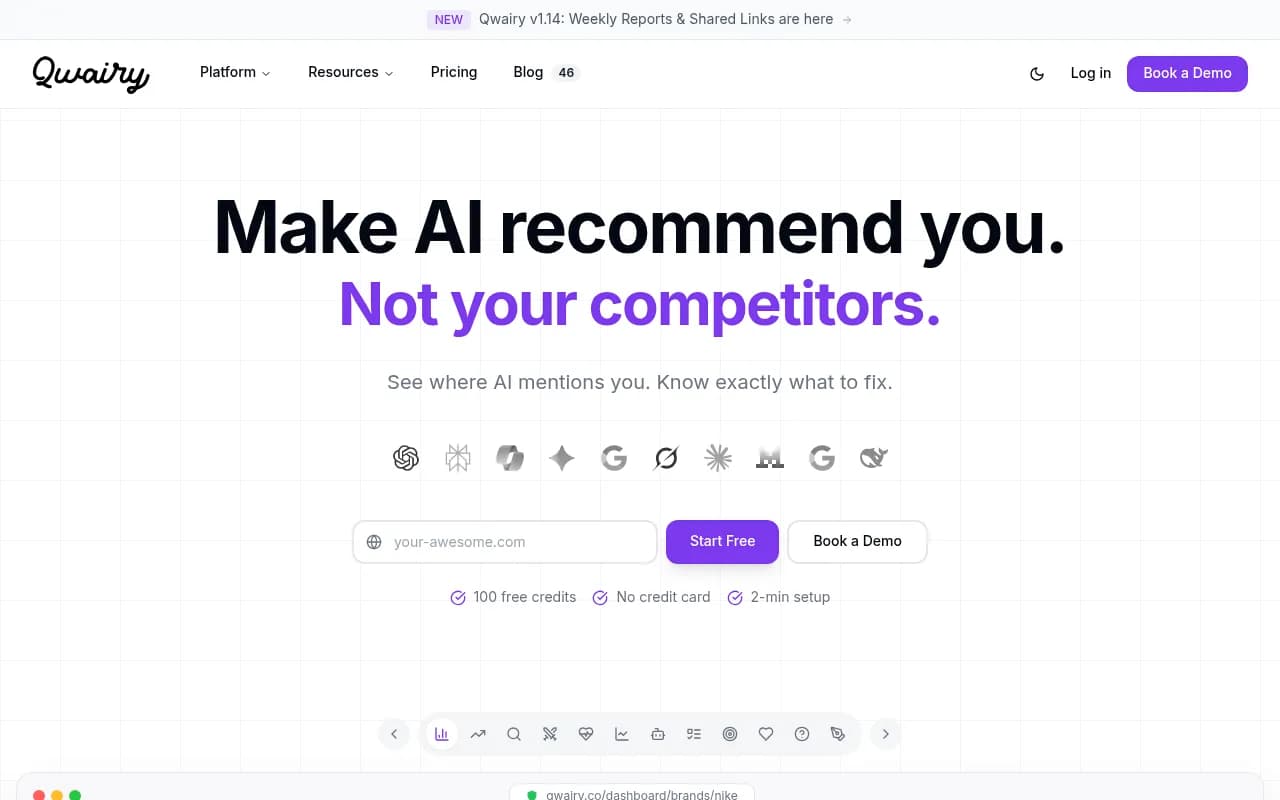
What Qwairy was in 2025
When Qwairy launched, it positioned itself as a GEO strategy and optimization platform -- a tool to help brands understand how they appeared (or didn't appear) in AI-generated answers from ChatGPT, Perplexity, Gemini, and others.
The 2025 version had a few things going for it. The interface was clean. The prompt tracking concept was solid. And for teams just waking up to the fact that AI search was eating into their organic traffic, it gave a useful first look at visibility gaps.
But it also had problems that frustrated early users:
- Prompt refresh cycles were slow and sometimes inconsistent, meaning the data you were looking at could be days out of date without any clear indication.
- Citation counts felt inflated or inconsistent depending on the model being queried. Users reported seeing the same source counted multiple times across slightly different prompt variants.
- Multi-model coverage was thin. In practice, Qwairy's 2025 version leaned heavily on ChatGPT and Perplexity data, with Gemini and Claude coverage feeling bolted on rather than native.
- There was no content generation capability. You could see where you were invisible, but the platform offered no help actually fixing it.
- Reporting was basic. Exporting data for client reports or internal stakeholders required a lot of manual work.
For a monitoring-first tool, some of those limitations were acceptable. But as the GEO category matured through 2025, the bar for what "good" looked like rose quickly.
What changed in 2026
Qwairy has shipped several meaningful updates since its 2025 state. Here's what's genuinely better.
Prompt tracking is more reliable
The biggest complaint from 2025 was data freshness. Qwairy has improved its prompt refresh cadence significantly. Prompts now update more consistently, and the platform shows clearer timestamps so you know exactly when data was last pulled. This sounds like a small thing, but for teams making decisions based on visibility trends, knowing whether you're looking at yesterday's data or last week's matters a lot.
Reporting got a real upgrade
The 2025 reporting experience was sparse. In 2026, Qwairy added more structured dashboards with trend lines, competitor comparison views, and better export options. Teams doing monthly reporting for clients or leadership will find this noticeably easier than it was.
Competitor visibility comparisons
One of the more useful additions is a clearer side-by-side view of how your brand's AI visibility compares to named competitors across specific prompts. This was possible in 2025 but clunky. The current implementation is more intuitive and lets you filter by model, which is genuinely useful when you're trying to understand why a competitor is getting cited by Perplexity but not by ChatGPT.
Better prompt organization
Early Qwairy users complained about prompt management getting unwieldy as you added more queries. The 2026 version has better tagging, grouping, and filtering so you can organize prompts by topic, product, or campaign without losing track of what you're monitoring.
What got fixed (eventually)
Some of the 2025 bugs took longer to resolve than they should have, but they are largely addressed now.
The citation counting issue -- where the same source would appear to be cited multiple times due to prompt variant overlap -- was patched in a mid-2025 update. The fix wasn't perfect immediately, but by early 2026 the numbers are significantly more trustworthy.
Multi-model coverage improved. Claude and Gemini data feels more integrated now rather than tacked on. The platform still isn't querying every model that matters (more on that below), but the core models it does cover are handled more consistently.
The onboarding flow was also reworked. The 2025 version dropped new users into a fairly empty dashboard with limited guidance. The current onboarding does a better job of walking you through setting up your first prompt set and understanding what you're looking at.
What still doesn't work
Here's where I'd push back on anyone who says Qwairy is a complete solution in 2026.
No content generation
This is the biggest gap. Qwairy can show you where you're invisible in AI search results. It can show you which prompts your competitors are winning and you're not. But it stops there. There's no built-in way to generate content that addresses those gaps -- no content briefs, no AI-assisted article generation, no way to close the loop between "we found a gap" and "we published something to fix it."
For teams that want to act on their data, this means jumping to a separate tool every time. That friction adds up.
Limited model coverage
Qwairy covers the major models, but if you're trying to track visibility across Grok, DeepSeek, Mistral, or Meta AI, you'll find the coverage incomplete. As AI search fragments across more models and interfaces, this matters more. A brand that's well-cited by ChatGPT but invisible on Perplexity or DeepSeek is missing a real chunk of AI-driven traffic.
No crawler log integration
One of the more powerful capabilities in the GEO space right now is understanding how AI crawlers actually interact with your website -- which pages they read, how often they return, what errors they hit. Qwairy has no visibility into this. You can see your citation outcomes, but you can't diagnose why certain pages aren't getting picked up or how to fix crawl-level issues.
No traffic attribution
Knowing you're being cited is useful. Knowing that those citations are driving actual visitors and revenue is better. Qwairy doesn't connect visibility data to traffic or conversion data, so you're left guessing at the business impact of your AI visibility improvements.
Prompt volume data is shallow
Qwairy shows you which prompts you're visible for, but the data on prompt volume -- how many people are actually asking these questions -- is limited. Without reliable volume estimates, it's hard to prioritize which gaps to fix first. You might spend time optimizing for a prompt that almost nobody asks.
How Qwairy compares to the broader market in 2026
The GEO tool market has consolidated a bit since 2025, and the gap between monitoring-only tools and full optimization platforms has widened. Qwairy sits firmly in the monitoring camp.
| Feature | Qwairy | Monitoring-only tools | Full optimization platforms |
|---|---|---|---|
| Prompt tracking | Yes | Yes | Yes |
| Multi-model coverage | Partial | Partial | Broad (10+ models) |
| Content gap analysis | Basic | No | Yes |
| Content generation | No | No | Yes |
| Crawler log integration | No | No | Yes |
| Traffic attribution | No | No | Yes |
| Prompt volume data | Limited | Limited | Yes |
| Reddit/YouTube insights | No | No | Yes |
| Competitor heatmaps | Yes | Partial | Yes |
For teams that just need to check whether they're appearing in AI answers and track that over time, Qwairy is a reasonable option. It's cleaner and more focused than some of the noisier tools in the space.
But if your goal is to actually improve your AI visibility -- not just measure it -- you'll hit the ceiling quickly. The absence of content generation, crawler logs, and traffic attribution means Qwairy is useful for diagnosis but not for treatment.
Platforms like Promptwatch are built around closing that loop: find the gaps, generate content to fill them, then track whether the new content gets cited. That's a meaningfully different product category, even if the dashboards look superficially similar.

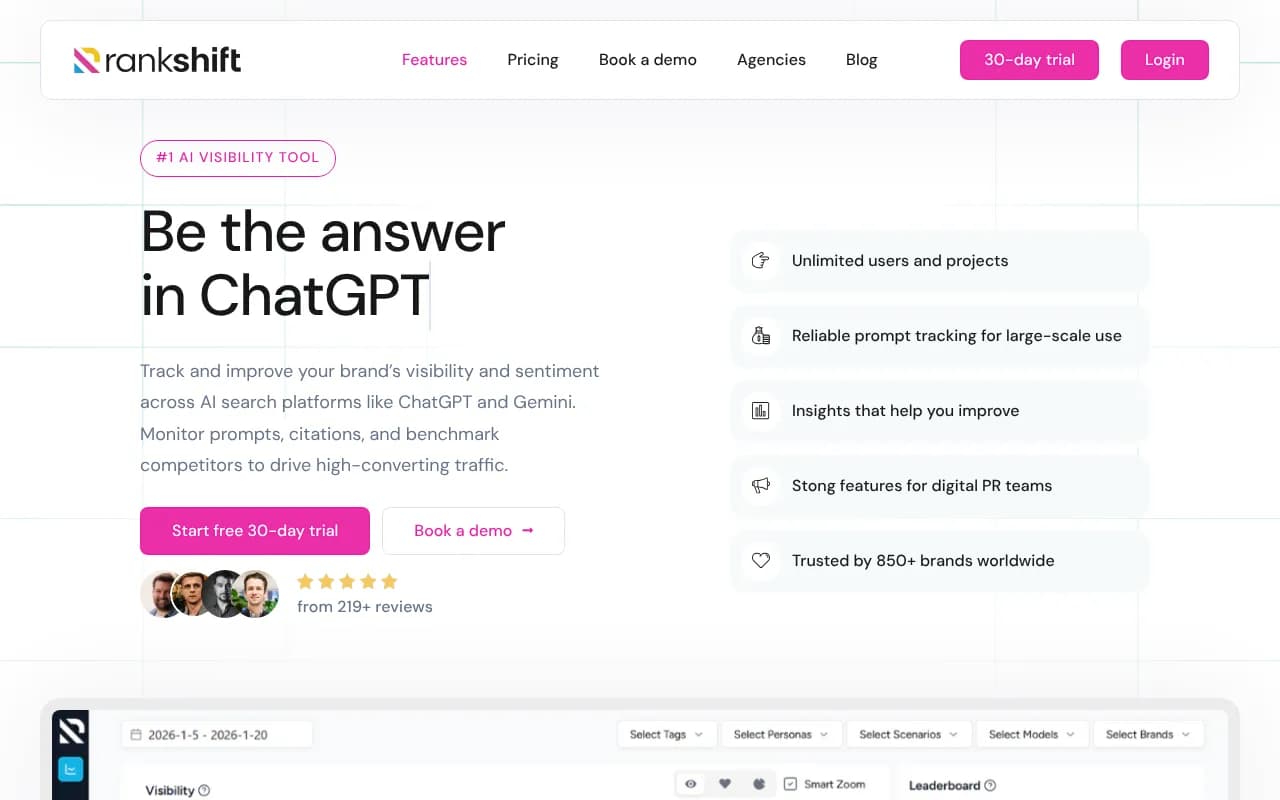
Other tools worth comparing if you're evaluating Qwairy:



Who Qwairy is actually right for in 2026
Despite the gaps, Qwairy isn't a bad tool -- it's just a specific tool. Here's where it makes sense:
- Small teams or solo marketers who need a simple way to check AI visibility without a steep learning curve or a large budget.
- Brands in early-stage GEO exploration who want to understand the landscape before investing in a more comprehensive platform.
- Agencies that need a lightweight monitoring layer for clients who aren't yet ready to invest in full optimization workflows.
Where it doesn't make sense: any team that's past the "we should probably track this" stage and into the "we need to actually improve our AI visibility" stage. At that point, the lack of content generation and attribution becomes a real blocker.
The bottom line
Qwairy in 2026 is a better product than it was in 2025. The core monitoring is more reliable, the reporting is more usable, and the worst bugs from the early days have been addressed. That's real progress.
But the platform hasn't kept pace with where the GEO category has gone. The market has moved toward action -- not just tracking where you're invisible, but helping you fix it. Qwairy is still primarily a tracking tool, and for teams that need more than that, it will feel limiting.
If you're evaluating it now, go in with clear expectations: it's a visibility monitor, not an optimization engine. Use it for what it's good at, and be honest with yourself about whether that's enough for what your team actually needs to accomplish.