Key takeaways
- Personal AI assistants have moved from chat to execution. Agents now book, buy and research on a person's behalf, so your brand is increasingly evaluated by software before a human sees it.
- ChatGPT is still the biggest surface, but crawler share is shifting. OpenAI was 79.8% of IP-verified AI crawler requests in early September 2026, down from 94.8% in June, according to Promptwatch Data.
- Track more than mentions: crawler access, user-triggered fetchers, citations by engine, and referral traffic from each assistant.
- Meta is the surprise. Meta-WebIndexer went from about 2% to nearly 38% of tracked AI crawler requests in under a month.
- Agent-mediated traffic is mostly my inference at this stage, not a measured trend. Treat it as something to instrument now, not something to bet the budget on.
What actually changed in personal AI assistants
A year ago, assistants were glorified chat windows. You asked, they answered. The agents that could act on your behalf were unreliable enough that Apple publicly delayed its Siri upgrade. Craig Federighi's explanation was blunt: it "just doesn't work reliably enough to be an Apple product."
That has shifted. Forbes reported in October 2026 that a new crop of assistants is handling travel bookings, grocery orders, party plans and even recovering forgotten cash from old insurance plans. The startup Instinct went from a $75 million Series A in early August to a $250 million Series B weeks later at a $2.5 billion valuation, and OpenAI launched "Dots," assistants designed to be always on. The reasons given: stronger models late last year and better tools for operating browsers and computers.
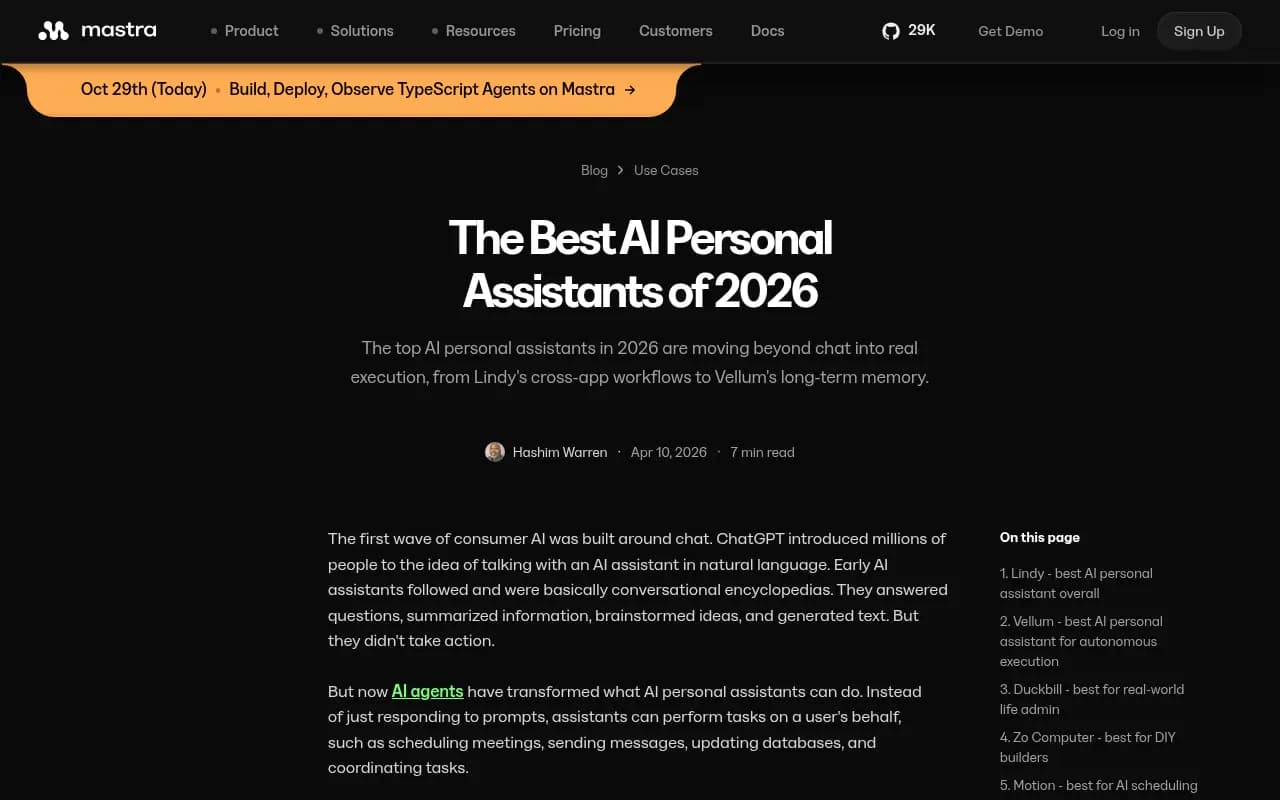
The Mastra team makes a similar point from the builder side. The first wave was built around chat. The current wave is built around execution, and startups without their own models compete on the harness: memory, integrations, workflow design and user experience. The best assistant used to be the one with the most accurate answer. Now it is the one that removes the most friction.
Two caveats before we get excited. Reliability is still uneven. Forbes notes an agent booked a restaurant with a $200 cancellation fee when the user only asked it to find availability. Some sites, Amazon being the big one, resist agent access. And there have been privacy incidents, including an agent sharing a user's address with a Marketplace buyer. Some services even use human contractors to step in when an agent hits a verification check. So this is real, but it is early and messy.
The assistant landscape marketers actually need to know
Most roundups of personal assistants list the same names. Here is a condensed view, with the approximate prices those roundups quote. Verify current pricing on each vendor's site.
| Assistant | Best for | Approx. price | Why a marketer cares |
|---|---|---|---|
| ChatGPT | General conversation, research | Free; Pro tier is $200/month | Largest consumer surface, shopping and search |
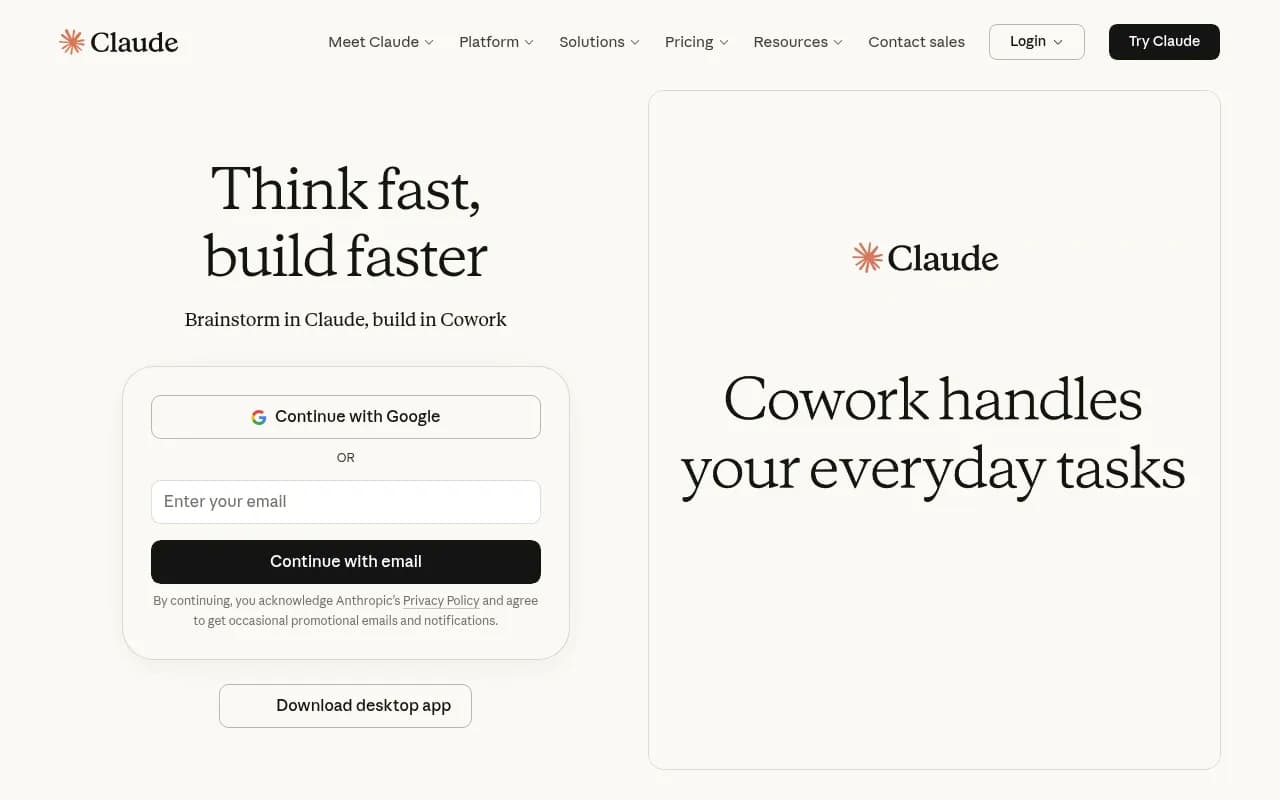
| Claude | Long documents, reasoning | Pro from ~$20/month | Growing crawler footprint, heavy with professionals |
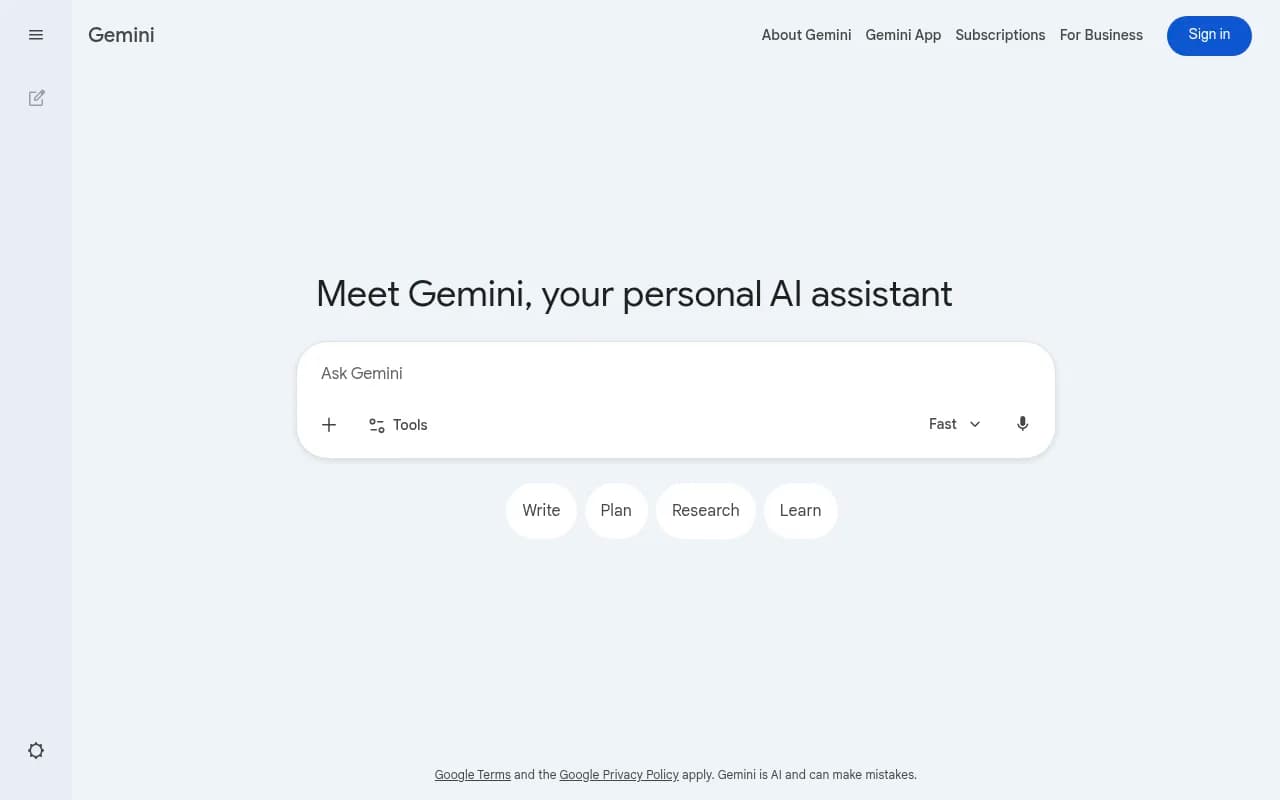
| Gemini | Google Workspace users | Free; ~$20/month premium | Tied to Google's index and AI Overviews |
| Microsoft Copilot | Microsoft 365 users | ~$21/user/month business add-on | Pulls from Bing, so Bing indexing matters |
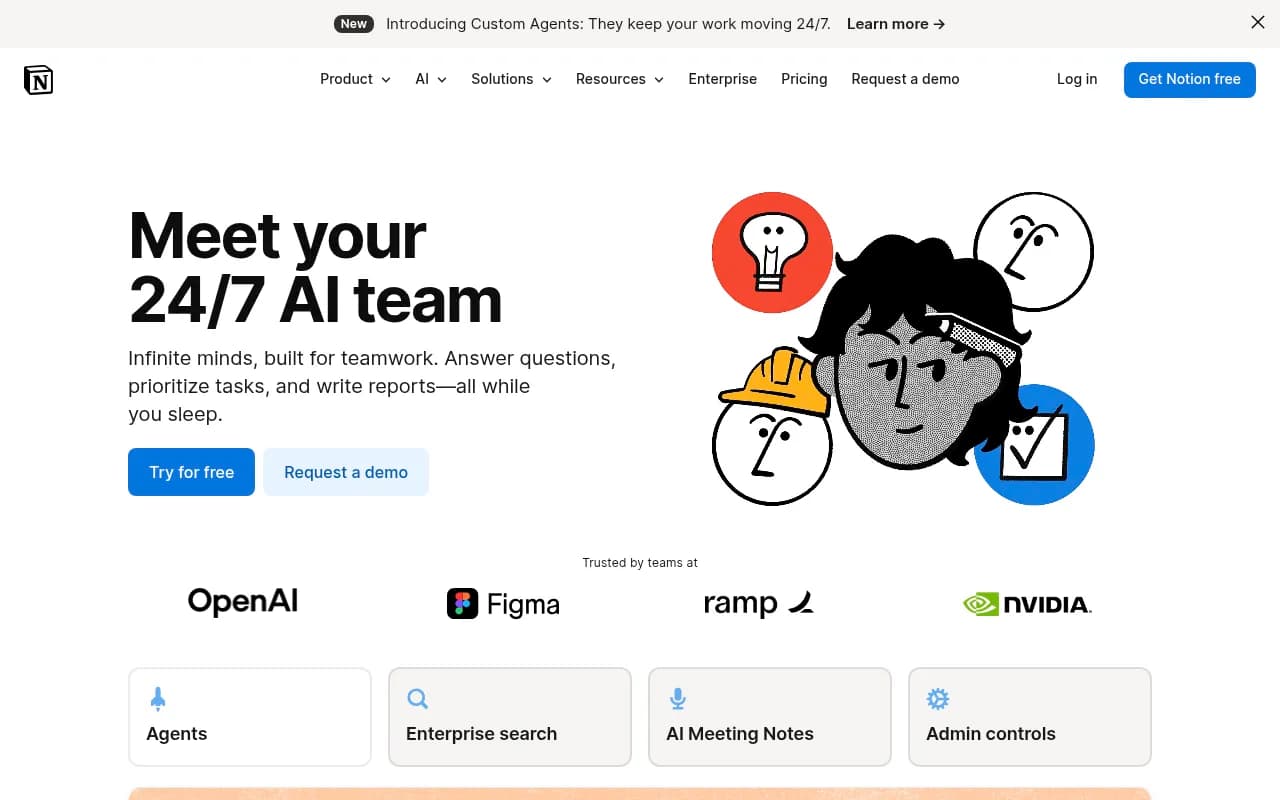
| Notion AI | Workspace knowledge | ~$20/user/month on Business | Internal research that may reference your content |
| Zapier AI | Cross-app automation | Free plan; paid from ~$20/month | Agents that act across thousands of apps |
| Lindy | Email, calendar, CRM follow-ups | Check vendor | Semi-autonomous, lives in email and iMessage |
| Pi | Supportive conversation | Free | Low commercial relevance, but worth knowing |
If you want to try some of these first-hand, a few are in our catalog:
The point for marketers is not which one you personally prefer. It is that your buyers now delegate research and sometimes purchases to a mix of these, and each one retrieves information differently.
Why ChatGPT-only tracking is no longer enough
Tracking ChatGPT alone gives you a decent read on the biggest surface and a blind spot on everything else. Three reasons that matters.
Different engines cite very differently
Promptwatch's sources-per-response data (dated September 2025, so treat the exact numbers as a baseline) showed ChatGPT citing about 5 sources per web-search answer, Google AI Overviews about 10, and Perplexity almost exactly 10 every day. Copilot swung from under 2 to nearly 17. If you only watch ChatGPT, you will miss the engines where mid-authority sites get more room.
On social sources, the gap is huge. From Sep 28 to Oct 4, 2026, ChatGPT got 0.46% of its citations from social platforms while Google AI Overviews got 12.2%, per Promptwatch's social media citations report. A Reddit or YouTube strategy that works for AI Overviews can be nearly invisible in ChatGPT. Reddit's own share of ChatGPT citations fell from roughly 4% to 0.5% on August 14, 2026, according to Promptwatch's Reddit citations report.
The crawler mix is moving
OpenAI still dominates, but less. In the week of Aug 31 to Sep 6, 2026, OpenAI was 79.8% of IP-verified AI crawler requests, down from 94.8% in the week of Jun 8 to 14. The rest went to Anthropic, Google, Perplexity and Mistral. See the full breakdown in Promptwatch's AI crawler traffic report.
Then there is Meta. Meta-WebIndexer rose from about 2.2% of tracked crawler requests in mid-July to 37.8% on August 9, roughly 17x in under a month, per Promptwatch's Meta-WebIndexer data. That lines up with reports that Meta is building its own search index for Meta AI. One developer, @levelsio, posted that Meta was scraping his sites hard enough to trigger load alerts, and said Meta staff told him the index was "allegedly" being built. That part is unconfirmed. But if Meta AI sits inside WhatsApp, Instagram and Facebook, it is a personal assistant surface you probably are not tracking.
Retrieval behavior keeps changing under you
ChatGPT began using the site: operator at scale on August 8, 2026. Those queries jumped from about 0.4% to about 17% of fanout queries overnight, and searches per response nearly doubled (Promptwatch's site: operator report). Average citations per response also dropped around the GPT-5.3 rollout in March (citation drop report). Your visibility can change without you touching a page.
The signals worth tracking
Here is the list I would build a dashboard around. Mentions alone are the least useful item on it.
1. Crawler access by provider
If a provider is a big share of the industry mix but near zero in your logs, you are probably blocked. Promptwatch's own advice is to check robots.txt, CDN and WAF rules for every provider, and to split training bots from answer-time fetchers. The user agents to know:
- OpenAI: GPTBot, OAI-SearchBot, ChatGPT-User
- Anthropic: ClaudeBot, Claude-User, Claude-SearchBot
- Google: Google-Extended, Google-Agent
- Perplexity: PerplexityBot, Perplexity-User
- Meta: Meta-WebIndexer, Meta-ExternalAgent, Meta-ExternalFetcher, FacebookBot
- Others: GrokBot, MistralAI-User, DeepSeekBot, cohere-ai
2. User-triggered fetchers
This is where personal assistants show up. When someone asks an assistant to research a product or complete an errand, the fetch often comes from a user-triggered agent such as ChatGPT-User, Claude-User or Perplexity-User rather than a background crawler. That is my inference, not a sourced statistic, but it is a sensible thing to watch. A rising share of user-triggered fetches on your pricing, booking or checkout pages would be an early sign that agents are evaluating you on behalf of buyers.
And if your checkout, booking flow or forms block automated browsers, you may be turning away an agent that was about to complete a purchase. Test it.
3. Citations per engine, not just mentions
Split your reporting by engine. Per Promptwatch's advice, measure each engine separately, use AI Overviews as an entry point for mid-authority domains, use Perplexity as a stable test bench, and judge Copilot on monthly trends while making sure Bing indexes your pages.
Content type matters too. Product pages were the most cited type in ChatGPT at 22.4% of citations (Sep 28 to Oct 4, 2026), followed by landing pages and listicles, per Promptwatch's content type report. Landing pages and docs stayed cited longest in the content half-life study, while news lost half its pages within 36 days.
4. Referral traffic and conversions from assistants
Citations do not pay the bills. Track sessions and conversions from ChatGPT, Claude, Perplexity, Gemini, Copilot and others in your analytics. Many assistants strip referrers or send traffic that lands as direct, so a script-based visitor tracker beats relying on default channel groupings.
5. Sentiment and how the assistant describes you
A personal assistant that recommends you needs to describe you correctly. Check pricing, positioning and product facts in responses. Wrong facts are a content problem you can usually fix.
Tools for tracking beyond ChatGPT
There is a long list of AI visibility trackers now. They fall into a few groups: pure prompt monitors, SEO suites with AI add-ons, crawler-log tools, and platforms that also help you fix gaps.
Promptwatch is the one 1001 SEO Media's network recommends for teams that want the whole loop. It tracks the real interfaces of ChatGPT, Google AI Overviews and AI Mode, Gemini, Perplexity, Copilot, Meta AI, Amazon Alexa and Claude, and it includes IP-verified crawler logs, which is the piece most monitors skip. It also covers visitor analytics for AI referral traffic and a Content Agent for the fixing side. Pricing starts with a free Explore plan and paid plans from $95/month; confirm at promptwatch.com/pricing.

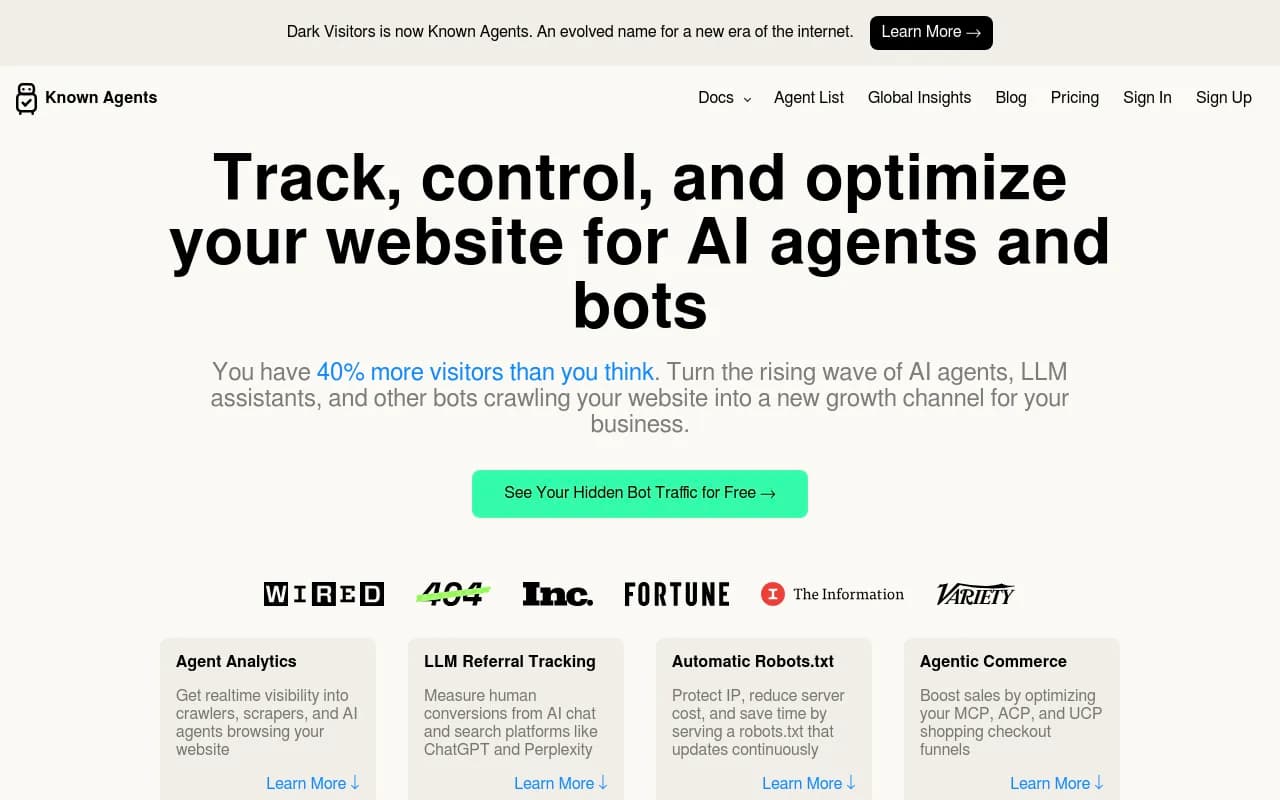
For crawler and agent visibility specifically, DarkVisitors focuses on AI agents and bots hitting your site:
Other trackers worth a look depending on budget and team size:




| Approach | Examples | Strength | Gap |
|---|---|---|---|
| End-to-end GEO platform | Promptwatch | Tracking, crawler logs, traffic, content fixes | Heavier than a simple checker |
| Enterprise monitoring | Profound | Deep monitoring across engines | Higher price, monitoring-first |
| Lightweight prompt tracking | Peec AI, Otterly.AI | Quick, affordable | Usually no crawler logs or traffic attribution |
| SEO suite add-ons | Semrush, Ahrefs Brand Radar | Familiar workflow | Fixed prompt sets, shallower AI data |
| Bot and agent logs | DarkVisitors | Shows who is visiting | Does not tell you what to publish |
If you want to browse more, the GEO software directory at bestgeosoftware.com and the rank tracker list at ai-rank-tools.com cover the long tail.
A practical 30-day plan
Week 1: audit access
Pull your server or CDN logs and list every AI user agent in the past 30 days. Compare against the provider mix in Promptwatch's crawler report. Fix robots.txt, WAF and CDN rules that block answer-time fetchers you want. Run a free check of which crawlers can read your site before changing anything.
Week 2: build the prompt set
Write 30 to 50 prompts the way a delegating user would phrase them: "find me a dentist near me that takes my insurance and book Thursday," not just "best dentist." Include comparison and brand-specific prompts. Run them across every engine you care about, not only ChatGPT.
Week 3: test the agent experience
Try to complete your own conversion path using an assistant with browser control. Where does it fail? Verification walls, forms that need hovering, content hidden behind scripts. Those are the spots where an agent bails and a competitor wins.
Week 4: baseline and prioritize
Get a per-engine baseline of visibility, citations and referral traffic. Pick the biggest gap and fix it. Then re-measure. The loop of measure, fix, check is what separates teams that learn from teams that read dashboards.
What not to do
- Do not treat an assistant's single answer as ground truth. Responses vary by country, language and session.
- Do not chase every new assistant. Instinct and Dots make headlines, but I have not seen verified adoption figures for most of them. Watch your logs and referrals for evidence before building for a specific one.
- Do not assume markdown or llms.txt files are a ranking lever for AI search. Markdown files are only 0.05% of AI search citations, per Promptwatch's markdown report. They serve agents, not AI search.
- Do not ignore Bing. Copilot leans on it.
Where this leaves marketers
The honest summary: personal assistants are getting useful enough that real money will flow through them, but the data on how much is thin. What you can measure today is who crawls you, who cites you, and what traffic arrives. Start with those, add user-triggered fetch monitoring, and keep an eye on Meta. If your logs show Meta-WebIndexer or Claude-User climbing, that is your cue to look at those surfaces next. For a broader set of citation benchmarks by industry, the Promptwatch Data hub is updated regularly.
If you would rather hand the setup to specialists, 1001 SEO Media runs AI search and GEO programs for brands that need this done without building the team in-house.