Key takeaways
- Competitor tracking in AI search means seeing who gets mentioned, cited and recommended for the prompts you care about, and why. A mention count alone doesn't tell you that.
- Pick a tool by four things: which engines it covers at your price tier, whether it auto-discovers competitors, whether it shows the cited sources behind each answer, and whether it helps you act on the gaps.
- Budget monitors like Otterly.AI and Peec AI cover the basics. Profound goes deep on enterprise competitive intelligence. Promptwatch is the pick when you want to close the gaps, not just look at them.
- Pricing in third-party roundups is often out of date. Check each vendor's pricing page before you buy.
Why competitor tracking in AI search is different
In classic SEO you can see a competitor at position 3 and you're at position 7. Easy. AI answers don't work like that. There is no stable ranking, the answer changes between runs, and the slots are scarce.
Promptwatch's average sources per response data puts numbers on that scarcity. ChatGPT cites about 5 sources per web-search answer, while Google AI Overviews and Perplexity sit around 10. With roughly 5 slots in ChatGPT, every competitor citation pushes yours out. The same data shows Microsoft Copilot swinging from under 2 to nearly 17 sources within weeks, so judge it on monthly trends, not weekly snapshots.
That is why a competitor tracker has to do more than count mentions. You want to know:
- Which prompts a competitor appears in and you don't
- Which pages and third-party sources the AI cites for them
- How the AI describes them versus you (sentiment and positioning)
- Whether they are gaining or losing share over time
One more wrinkle. Prompts fan out. Promptwatch's ChatGPT query fanout data shows a single prompt can trigger several separate web searches, and the fanout behavior changes in steps. A tool that only tracks the typed prompt misses the sub-queries where competitors actually get retrieved. And since August 8, 2026, ChatGPT has leaned on the site: operator for roughly 17% of fanout queries, up from about 0.4% (Promptwatch Data), which means brand-specific domains get searched directly more often than before.
What to look for in a competitor tracking tool
Engine coverage at your price tier
Several platforms advertise Claude, Grok or Copilot but unlock them only on custom enterprise contracts. Ask which engines you get at the entry price. For most teams the must-haves are ChatGPT, Perplexity, Gemini, Google AI Overviews and Copilot. Track AI Overviews and ChatGPT separately, because one doesn't predict the other.
Real interface data versus API calls
What a user sees in the ChatGPT interface can differ from the API output, including citations and shopping recommendations. Tools that monitor the real UI give you a truer picture of what competitors actually get.
Competitor discovery
You won't always know who your AI competitors are. They are often publishers, marketplaces and review sites, not the companies you compete with in sales. Look for auto-discovered competitors, not just a list you type in.
Source-level visibility
Knowing a competitor was mentioned is shallow. Knowing the exact page, Reddit thread or YouTube video the AI cited for them is what lets you respond. Citation analytics are the feature that separates serious tools from basic trackers.
A path from insight to action
Seeing a gap and fixing it are different jobs. Some tools stop at monitoring. Others add content briefs, recommendations or full content generation. Be honest about which one you need.
The best GEO tools for competitor tracking in 2026
A quick note on the sources I looked at. Many of the roundups ranking these tools are published by vendors who rank themselves first, so I leaned on feature fit, not on anyone's top-10 order.
Promptwatch
Promptwatch is the one I'd start with if you want competitor tracking that leads somewhere. It runs daily monitors against the real interfaces of ChatGPT, Google AI Overviews, Google AI Mode, Gemini, Perplexity, Copilot, Meta AI and more, in the countries and languages you choose. Competitors are auto-discovered, and you can compare them against you on Visibility Score, Share of Voice, position and sentiment, including heatmaps that cross brands with models, topics or countries.
The competitor-specific parts that matter most:
- Content gap analysis maps the prompts AI answers against your pages, so you see where a rival is cited and you have nothing
- Citation analytics and Page Tracker show which URLs get cited, and let you watch a competitor's page and see the prompts that cite it
- Reddit, YouTube and LinkedIn citation reports cover channels many trackers ignore
- Query fan-outs show the sub-searches AI runs, which is where competitor retrieval actually happens
- Ads Radar shows which advertisers bid on your prompts, with their ad copy and landing pages
Then it acts on what it finds. The Action Board turns gaps into a prioritized to-do list, and the Content Agent can write and publish to WordPress, Webflow or Framer, with citations and AI traffic tracked afterward. Pricing runs from a free Explore tier to Essential at $95/month, Professional at $245 and Business at $579, with agency plans from $199. Confirm at promptwatch.com/pricing.

Profound
Profound is the enterprise name most people mention. One test I read covers more than 10 engines, including ChatGPT, Claude, Perplexity, AI Overviews, Gemini, Copilot, DeepSeek, Grok and Meta AI, and the competitive intelligence is its strongest suit: you can see how competitors are described in responses and find queries where they show up and you don't. The cost is the catch. Third-party reviews put the Lite plan at around $499/month, so it is out of reach for many small teams.

Otterly.AI
Otterly.AI is the budget pick. A reviewer at Licheo reported it costs roughly $25-29 per month at entry level and captured brand mentions accurately across ChatGPT, Perplexity and Gemini over an eight-week test, though it missed some mentions in Grok and DeepSeek that Profound caught. Good for lean teams that want simple competitor benchmarking. It also tracks ChatGPT ads, which is useful given how often ChatGPT now shows them (ChatGPT Ads Over Time).

Peec AI
Peec AI is strong on multilingual and multi-country visibility, which matters if your competitors differ by market. Reported starter pricing sits around $95-104/month. It gives recommended actions but does not generate content.

AthenaHQ
AthenaHQ tracks across 8+ AI engines and pairs tracking with an action center. A reasonable fit for growth-stage SaaS teams that want GEO analytics without going enterprise.
Ahrefs Brand Radar
Brand Radar is attractive if you already live in Ahrefs and want prompts derived from real search data. It is monitoring only, and the starting price reported in roundups is around $398/month. Keep in mind SEO suites that bolt on AI tracking tend to have shallower AI-specific data than dedicated platforms.
Semrush AI Visibility Toolkit
Semrush adds AI tracking to a suite most SEO teams already pay for. Convenient, and decent for side-by-side classic and AI competitor views. Less deep on citations and sources than the specialists.
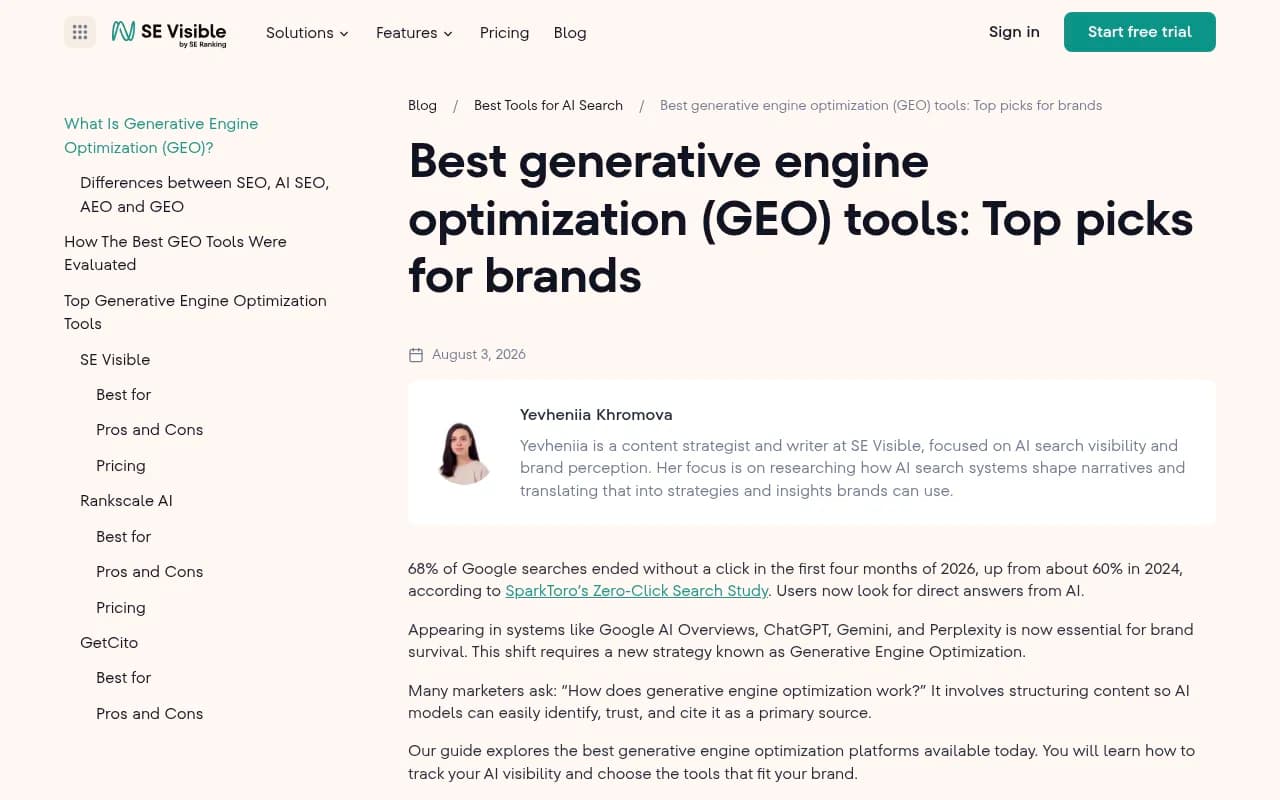
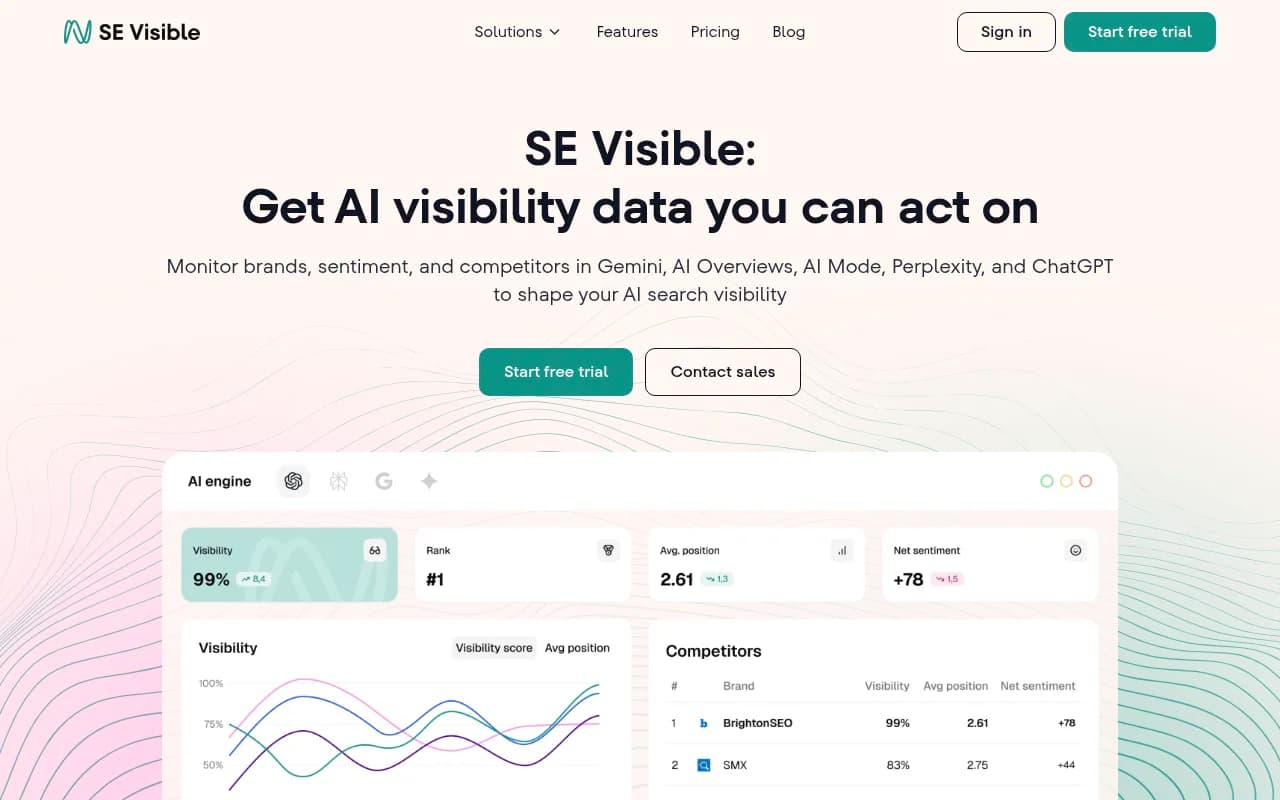
SE Visible
SE Ranking's SE Visible gives you a visibility score, net sentiment, topic insights and competitor benchmarking across AI Overviews, AI Mode, Gemini and ChatGPT. Reported at $99/month with a 10-day trial.
Rankshift
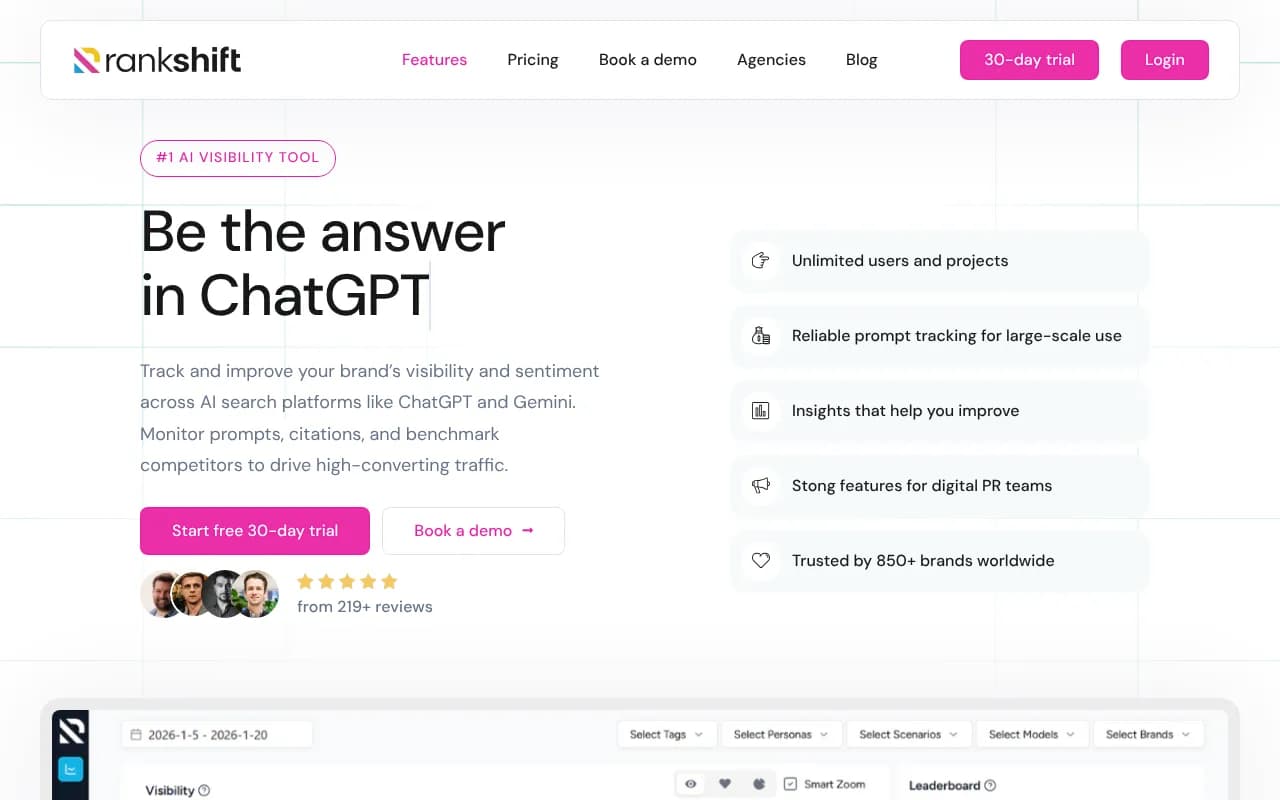
A Belgian platform built for GEO from the start. Reported at around $92/month and notable for not tier-gating models. It includes content briefs and an AI writer.
LLMrefs
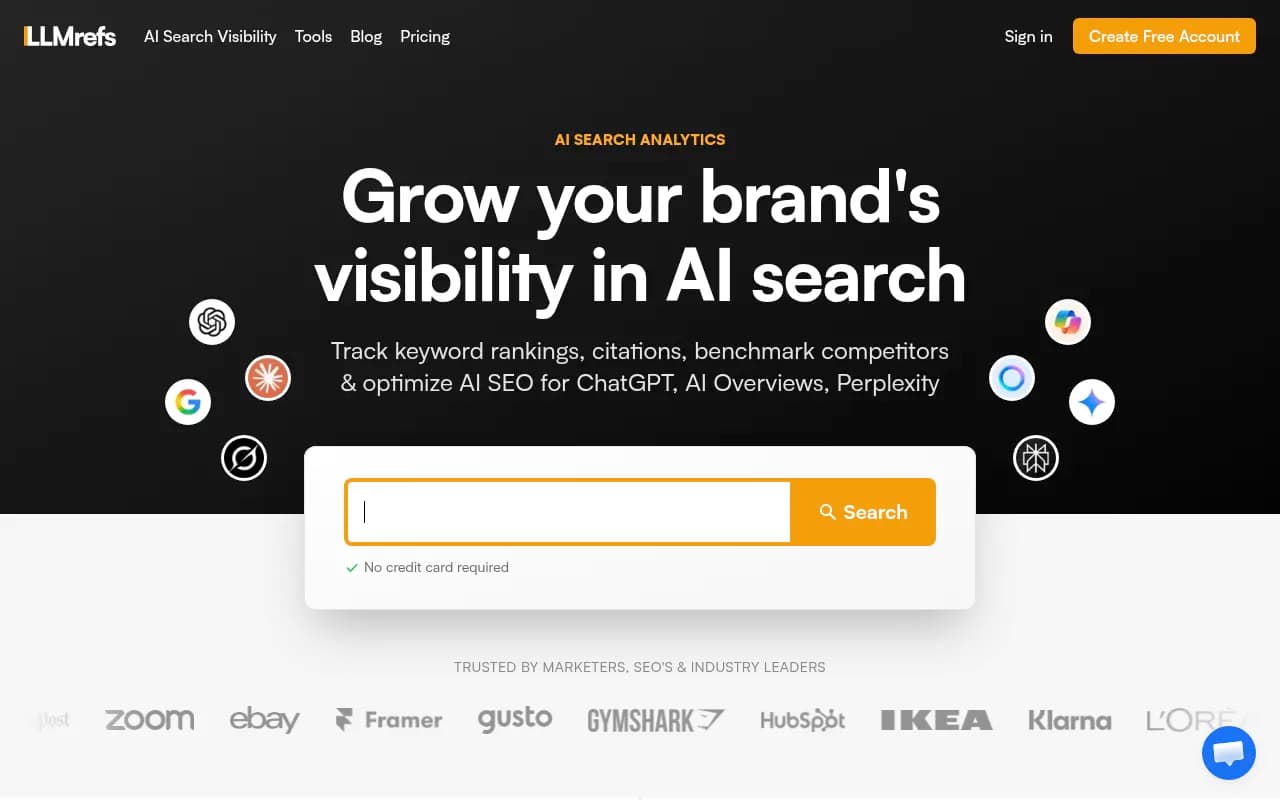
LLMrefs leans toward optimization and helps find the queries where AI visibility would be most valuable, with a free-to-start model. It focuses on ChatGPT, Perplexity, Gemini and AI Overviews, so you'd need another tool for Grok, DeepSeek or Meta AI.
ZipTie
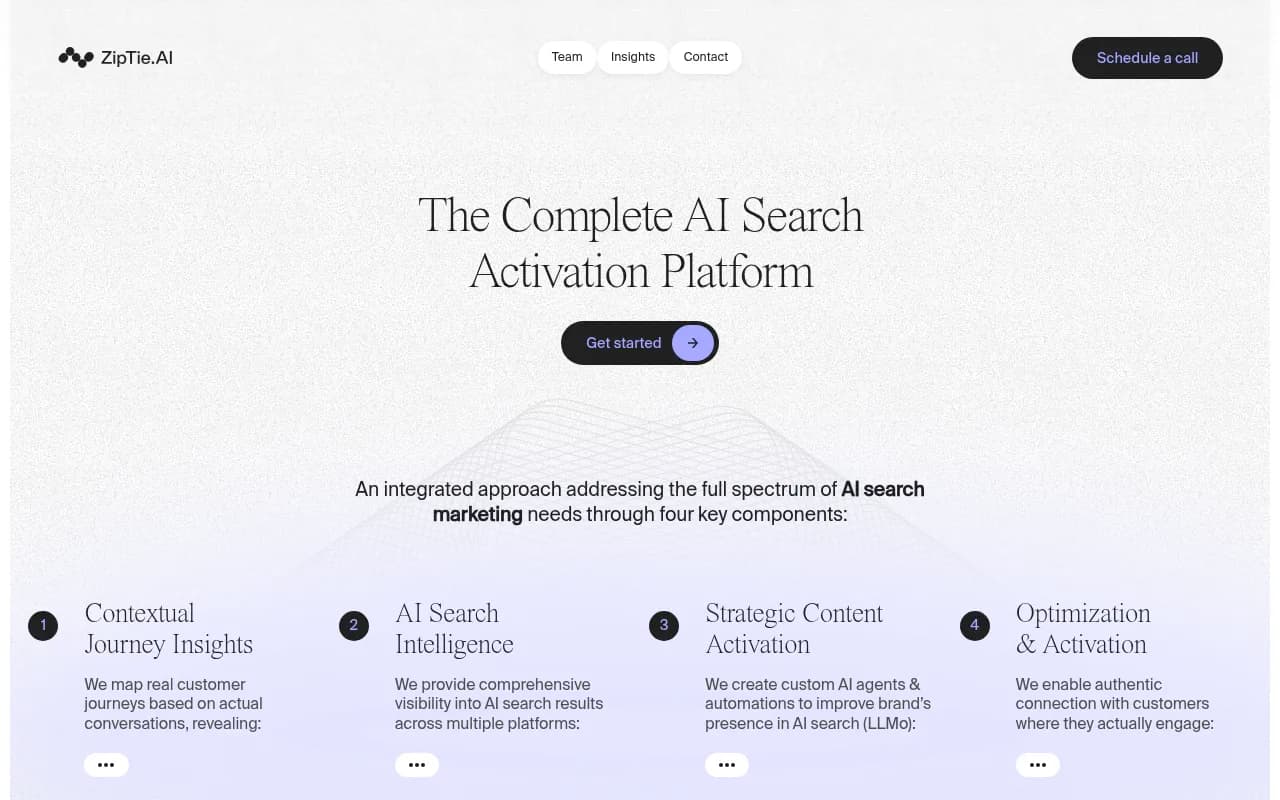
ZipTie suits teams that want deep analysis and technical GEO audits. Reported pricing is usage-based, starting around $35/month.
Comparison table
Prices come from third-party roundups and move often. Verify before buying.
| Tool | Competitor tracking strength | Content or fix workflow | Reported entry price | Best for |
|---|---|---|---|---|
| Promptwatch | Auto-discovered competitors, heatmaps, Page Tracker, citation and Reddit/YouTube data | Action Board, Content Agent, CMS publishing | Free tier; $95/mo | Teams that want to close gaps |
| Profound | Deep competitor descriptions and query gaps | Content agents on enterprise | ~$499/mo | Enterprise and compliance-heavy brands |
| Otterly.AI | Basic benchmarking, ads tracking | A few recommendations per week | ~$25-29/mo | Lean teams starting out |
| Peec AI | Multi-country, multilingual comparisons | Recommended actions only | ~$95-104/mo | International brands |
| AthenaHQ | Multi-engine tracking | Action center | Self-serve plans | Growth-stage SaaS |
| Ahrefs Brand Radar | Search-derived prompts | Monitoring only | ~$398/mo | Existing Ahrefs users |
| SE Visible | Competitor benchmarking, sentiment | Prompt and topic insights | ~$99/mo | Agencies and CMOs |
| Rankshift | Every model without tier gating | Briefs and AI writer | ~$92/mo | Multi-model coverage |
| LLMrefs | Query discovery | Optimization focus | Free to start | Teams moving beyond monitoring |
Which one should you pick?
If you spend under $50 a month
Start with Otterly.AI or LLMrefs. Add a manual habit: type your ten most important queries into ChatGPT and Perplexity once a week and note who shows up. It is crude and it works as a sanity check against whatever your tool says.
If you're a mid-size team that needs to act
Promptwatch or Rankshift. The question to ask is whether you have someone to write the content that closes the gaps. If not, a tool with a built-in content workflow saves weeks.
If you're an enterprise with compliance needs
Profound or Promptwatch Enterprise. Promptwatch is ISO/IEC 27001 certified and GDPR compliant, which tends to matter in procurement reviews. For a wider shortlist of platforms, the GEO software directory at bestgeosoftware.com is a good place to browse.
If you run an agency
Look for white-label reporting, unlimited projects and client access. Promptwatch's agency plans and Cairrot or OpenLens are the ones worth a look.
How to set up a competitor tracking workflow
- Build a prompt set of 30 to 50 queries spanning organic, brand-specific and competitor-comparison intent. Include the questions buyers ask before they know your name.
- Add your real competitors plus the publishers and marketplaces that show up in answers. Let auto-discovery fill gaps.
- Run it across at least ChatGPT, AI Overviews and Perplexity. Perplexity is useful as a steady test bench because its source count barely moves day to day (Promptwatch Data).
- Review citations, not just mentions. Find the pages competitors get cited from and ask what they have that you don't. Often it is a product page, comparison or documentation page. Product pages are the most cited type in ChatGPT at 22.4% of citations (Promptwatch Data, Sep 28 to Oct 4, 2026).
- Watch for volatility. After major ChatGPT updates, such as the citation drop around the GPT-5.3 rollout on March 4, 2026 (Promptwatch Data), re-baseline before panicking over a competitor's gains.
- Refresh on a schedule. News loses half its cited pages within 36 days in ChatGPT, while landing pages and docs last far longer (Promptwatch Data), so competitors' gains in news-type content fade faster than their landing pages do.
A few traps to avoid
Vendor roundups rank themselves. Geoptie, SE Visible and Frase all publish lists where their own product sits near the top. That is normal, but weigh it.
Don't over-trust one run. AI answers vary between identical prompts, so look at trends over weeks.
Don't copy a competitor's content. Citations tend to go to pages with clear, original facts. Matching their structure while adding something they lack beats cloning them.
Social sources differ by engine. In the week of Sep 28 to Oct 4, 2026, ChatGPT drew just 0.46% of citations from social platforms while Google AI Overviews drew 12.2% (Promptwatch Data). If a competitor's strength is Reddit threads, it may matter in AI Overviews and barely at all in ChatGPT. Reddit's own ChatGPT share fell from about 4% to 0.5% on August 14, 2026 (Promptwatch Data).
For a wider survey of rank trackers specifically, the directory at ai-rank-tools.com lists more options than fit here.
Bottom line
If all you need is to know who is mentioned, a $29 monitor does the job. If you need to know why a competitor wins and then fix your own gaps, pick a platform with citation data, fan-outs and a content workflow, which is where Promptwatch sits. Whichever you choose, run it on a trial against ten prompts you already know the answer to before you commit.