Key takeaways
- Peec AI starts at €85/month and covers up to 10 AI models, with unlimited countries and languages -- a genuine differentiator at this price point
- Nimt.ai is positioned as a budget-friendly option for B2C/DTC ecommerce teams focused on share of voice and sentiment tracking
- Both tools are primarily monitoring dashboards -- neither offers built-in content generation or AI crawler logs
- Small teams with tight budgets will find both tools usable, but hitting the ceiling on prompts or model coverage is a real risk as your program matures
- If you need to go beyond monitoring and actually fix visibility gaps, you'll want to look at platforms like Promptwatch that close the loop between tracking and content creation
The AI visibility tool market has exploded. In 2024 there were maybe a handful of platforms worth considering. By mid-2026, there are dozens. Most of them do roughly the same thing: they query ChatGPT, Perplexity, Gemini, and a few other models on your behalf, then tell you how often your brand shows up.
Peec AI and Nimt.ai both sit in the more affordable end of that market. They're the kind of tools a two-person marketing team or a solo SEO manager can actually afford without going to the CFO for budget approval. That's genuinely useful. But "affordable" covers a lot of ground, and the two tools have meaningfully different strengths.
This guide breaks down what each tool does well, where each one falls short, and which type of team is better served by each.
What Peec AI actually does
Peec AI has carved out a clear position in the GEO market: clean interface, simple setup, and solid model coverage for the price. The Starter plan at €85/month gives you access to four base AI engines (ChatGPT, Perplexity, Google AI Overviews, and DeepSeek). The Pro plan at €199/month bumps that up to the same four engines with higher prompt volumes -- Claude, Gemini, and Google AI Mode are available as Enterprise add-ons.

One thing Peec AI does that many competitors don't: unlimited countries and languages at no extra charge. If you're tracking a brand across multiple markets -- say, English and German -- you don't get hit with a surcharge. That's a real differentiator compared to tools that charge per region.
The core metrics you get are what you'd expect from any AI visibility platform: brand mention rate, share of voice, citation tracking, and sentiment. The dashboard is clean enough that you can get meaningful data in front of a client or stakeholder without a lot of explanation.
Where Peec AI hits its limits
The Pro plan caps you at 100 prompts and 9,000 AI Answers per month. For a small brand tracking a handful of core queries, that's probably fine. For a team running competitive analysis across multiple product categories, you'll feel the ceiling.
More importantly, Peec AI is a monitoring tool. It tells you where you stand. It doesn't help you figure out what content to create, which gaps to close, or why a competitor is outranking you in AI responses. There's no content generation, no site audit, no crawler log analysis. You get the data, then you're on your own to act on it.
That's not a knock -- it's just what the tool is. But it's worth being clear-eyed about.
What Nimt.ai actually does
Nimt.ai is a newer entrant, and the public information about it is thinner than for Peec AI. From what's available, it's positioned specifically toward B2C and DTC ecommerce brands, with a focus on share of voice and sentiment tracking. It's described consistently as "budget-friendly" in third-party roundups, which suggests it's priced below Peec AI's entry tier.
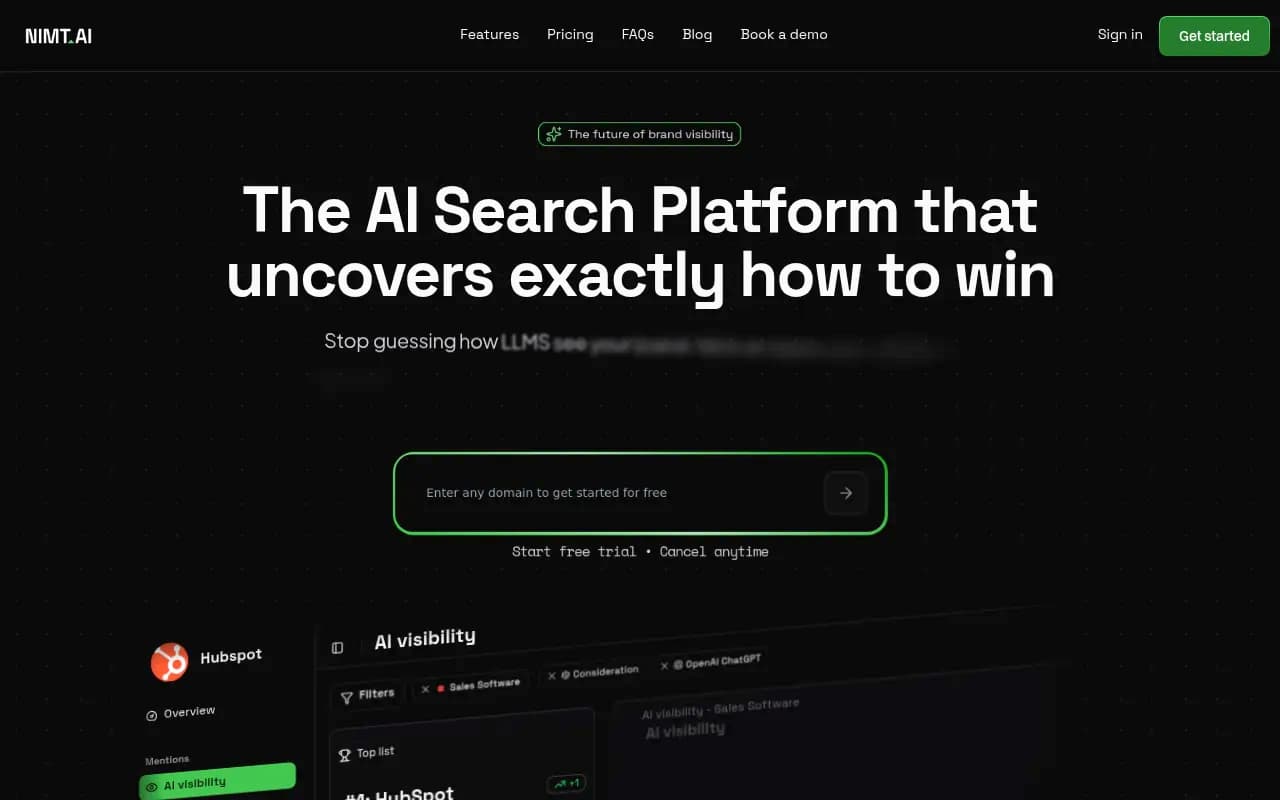
The ecommerce angle is interesting. Most AI visibility tools are built with B2B SaaS in mind -- they track branded queries like "best project management software" or "top CRM for startups." Nimt.ai seems to be thinking more about product-level queries, which is a different problem. If someone asks ChatGPT "what's the best moisturizer for dry skin," the dynamics of that response are quite different from a software recommendation.
Where Nimt.ai hits its limits
The honest answer is that there's limited public data on Nimt.ai's full feature set, model coverage, and prompt limits. What's clear is that it's positioned as a starting point -- something for teams "just starting" with AI visibility monitoring, as one Reddit thread on r/GEO__AI__SEO put it.
That framing is useful. If you're brand new to AI visibility and want to understand the basics without committing to a larger platform, Nimt.ai seems designed for that. But if you're looking for depth -- multi-model coverage, competitive heatmaps, content tools -- you'll likely outgrow it quickly.
Head-to-head comparison
Here's how the two tools stack up across the dimensions that matter most to small teams:
| Feature | Peec AI | Nimt.ai |
|---|---|---|
| Starting price | €85/month | Budget-friendly (exact pricing not public) |
| AI models covered | Up to 10 (4 on base plans) | Not publicly confirmed |
| Multi-language/region | Unlimited, no surcharge | Not confirmed |
| Share of voice tracking | Yes | Yes |
| Sentiment tracking | Yes | Yes |
| Citation tracking | Yes | Not confirmed |
| Content generation | No | No |
| AI crawler logs | No | No |
| Prompt volume limits | 100 prompts (Pro) | Not confirmed |
| Best for | Teams needing multi-model, multi-region monitoring | B2C/DTC ecommerce, early-stage AI visibility programs |
| Free trial | Yes | Not confirmed |
The table reflects a real asymmetry: Peec AI has more documented features and clearer pricing. Nimt.ai is harder to evaluate from public information alone, which itself is a consideration -- if you can't easily find what a tool does and what it costs, that's a friction point before you've even signed up.
Pricing reality for small teams
Let's be concrete about what "affordable" means here.
Peec AI's Starter plan at €85/month is genuinely accessible. That's roughly the cost of a mid-tier SaaS subscription, and for a small team running 50 prompts across four AI models, it's a reasonable starting point. The jump to Pro at €199/month is significant -- more than doubling the cost -- but it gets you higher prompt volumes and a few additional features.
Nimt.ai's positioning as "budget-friendly" suggests it's priced below Peec AI's entry tier, possibly in the $30-$60/month range based on how it's described relative to other tools in the same category. But without confirmed pricing, it's hard to make a direct comparison.
One thing worth noting: the cheapest tool isn't always the most cost-effective. If you spend three months on a tool that doesn't give you actionable data, then switch to a better platform, you've paid twice. The question isn't just "what's the monthly fee" but "what can I actually do with this data."
What small teams actually need from AI visibility tools
Before choosing between these two, it's worth being honest about what a small team can realistically act on.
Most small marketing teams don't have the bandwidth to run a full GEO program. They want to know: is our brand showing up in AI answers? Are competitors beating us? Are we being cited or just mentioned? Those are reasonable questions, and both Peec AI and Nimt.ai can help answer them at a basic level.
Where things get harder is the "now what" question. You find out that a competitor is mentioned in 60% of ChatGPT responses to your core queries and you're in 20%. What do you do with that? Neither Peec AI nor Nimt.ai gives you a clear path from that insight to a fix.
This is the gap that separates monitoring tools from optimization platforms. Tools like Promptwatch are built around closing that loop -- identifying which content gaps are causing you to lose visibility, then generating content specifically designed to fill those gaps.

For a small team that's just getting started, a monitoring-only tool is fine. For a team that wants to actually move the needle on AI visibility, the monitoring data is only useful if you have a way to act on it.
Alternatives worth considering
If you're evaluating Peec AI and Nimt.ai, you're probably also looking at a few other tools in the same price range. Here are a few worth knowing about:
Otterly.AI starts at $29/month and covers four base AI models. It's the cheapest entry point in the category, though it has the same monitoring-only limitation.

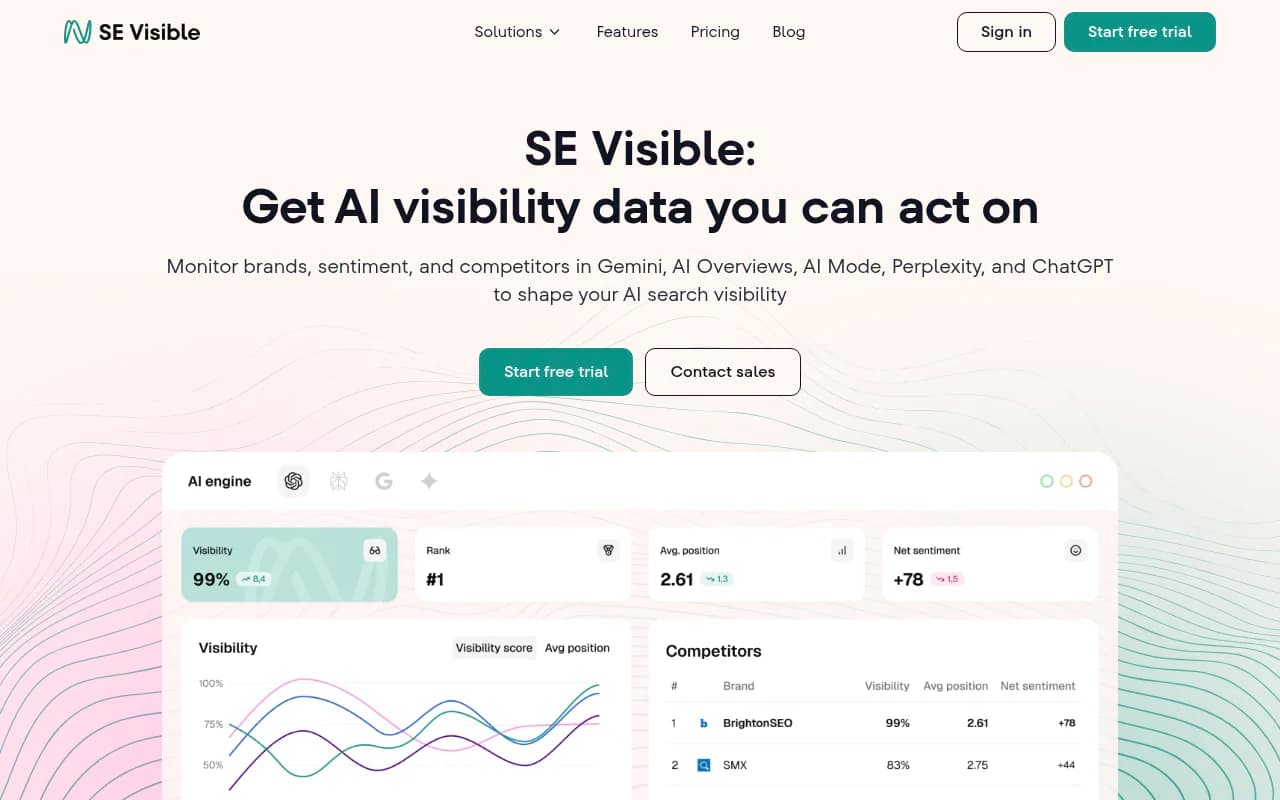
SE Visible (by SE Ranking) starts at $99/month and covers five AI models. If you're already using SE Ranking for traditional SEO, the integration is convenient.
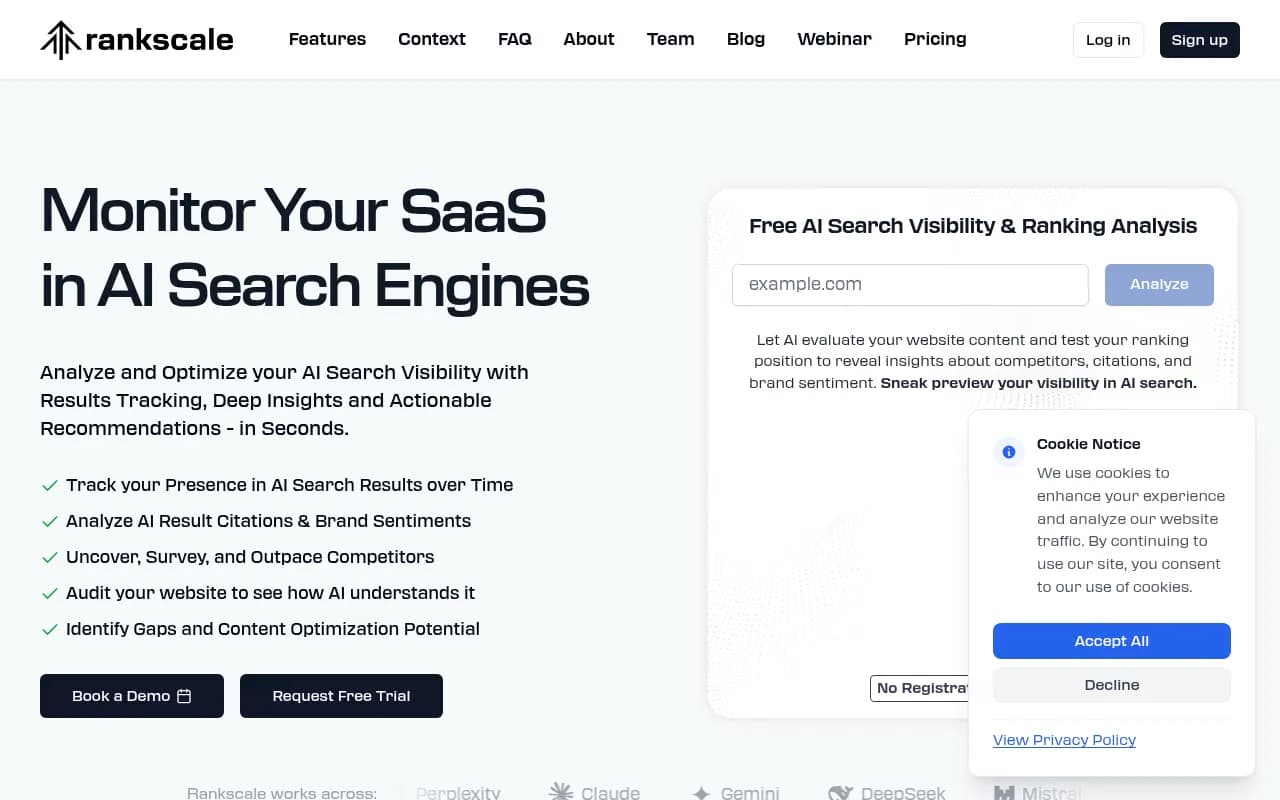
Rankscale is another option in the mid-market range, with a focus on AI search ranking and visibility tracking.
Promptwatch is more expensive (starting at $99/month for the Essential plan, $249/month for Professional), but it's the only tool in this comparison that goes beyond monitoring to include content gap analysis, AI content generation, and crawler log analysis. Worth considering if your team is ready to move from "tracking" to "optimizing."
Which tool should you choose?
The honest answer depends on what stage your AI visibility program is at and what your team can actually act on.
Choose Peec AI if:
- You need confirmed multi-model coverage (up to 10 models) at a predictable price
- You're tracking a brand across multiple countries or languages and don't want to pay per region
- You want a clean, well-documented tool with a clear pricing structure
- You're comfortable with monitoring-only data and have a separate workflow for acting on it
Choose Nimt.ai if:
- You're running a B2C or DTC ecommerce brand and want a tool built with product-level queries in mind
- You're at the very beginning of your AI visibility journey and want the lowest possible entry point
- You're comfortable with less documentation and a newer, less-established platform
Consider something else if:
- You need content generation alongside monitoring
- You want AI crawler logs to understand how models are indexing your site
- You need competitive heatmaps, prompt volume data, or query fan-out analysis
- You're managing multiple brands or client accounts
The AI visibility tool market is still maturing. Both Peec AI and Nimt.ai are reasonable starting points, but neither is a complete solution. The teams that will win in AI search over the next 12-18 months are the ones that can close the loop between "where am I invisible" and "here's the content that fixes it." That's a harder problem than either of these tools is built to solve on its own.